An informational interview is a scheduled conversation with a working fashion professional, not a job interview. The informational interview questions to ask a fashion professional below are built to get past the polite one-liner and into the actual work, so you leave with an accurate picture of the role and a real contact you can call on later.
The tricky part isn’t finding questions. It’s finding questions that a working professional can’t answer from a LinkedIn profile in five seconds. Generic ones get polite one-liners. The ones that produce useful detail are specific to the person’s job, their season, and their career route.
These are the fifteen I keep coming back to, grouped by what you’re trying to learn. Swap the bracketed parts for the role you’re interviewing, and the list works for a buyer, an editor, a stylist, a PR lead, or an independent designer.
Table of Contents
- Informational Interview Questions to Ask a Fashion Professional at a Glance
- 1. What attracted you to your current role in fashion?
- 2. Which part of your job do you enjoy most, and which part is harder than outsiders expect?
- 3. What skills have mattered most in your fashion career so far?
- 4. How did you get your first opportunity in the industry?
- 5. What is one mistake you made early in your career?
- 6. How do you keep creative work fresh without chasing every trend?
- 7. How do you decide which trends or ideas are worth pursuing?
- 8. How do you give useful feedback without crushing someone’s confidence?
- 9. What do you look for when reviewing a portfolio or creative work?
- 10. How have you built a personal brand without making everything about yourself?
- 11. Which professional relationships have had the greatest impact on your career?
- 12. How do you prepare for an important meeting, show, launch, or presentation?
- 13. How do you stay current when fashion and media change so quickly?
- 14. What would you change about the fashion industry if you had the authority?
- 15. What advice would you give someone trying to enter your field now?
- Frequently Asked Questions
- How many informational interview questions should I prepare?
- How should I change the questions for a designer, stylist, buyer, editor, or publicist?
- What if a fashion professional cannot share confidential information?
- How do I ask for advice without making the conversation feel like a job request?
- What should I send after an informational interview?
- Conclusion: Ask One Better Question, Not Ten Generic Ones
Informational Interview Questions to Ask a Fashion Professional at a Glance
| # | Question | What it tells you | Best for |
|---|---|---|---|
| 1 | What attracted you to your current role in fashion? | Entry routes and motivation | Every career path |
| 2 | Which part do you enjoy most, and which is harder than outsiders expect? | The real daily work | Choosing between roles |
| 3 | What skills have mattered most in your fashion career so far? | Transferable skills | Building a plan |
| 4 | How did you get your first opportunity in the industry? | How people actually get in | Cold outreach success |
| 5 | What is one mistake you made early in your career? | Risks you can avoid | Early-career planning |
| 6 | How do you keep creative work fresh without chasing every trend? | Creative process | Design, styling, editorial |
| 7 | How do you decide which trends or ideas are worth pursuing? | Commercial judgment | Buying, merchandising, PR |
| 8 | How do you give useful feedback without crushing someone’s confidence? | Communication style | Team and management roles |
| 9 | What do you look for when reviewing a portfolio? | How you are judged | Anyone with creative work |
| 10 | How have you built a personal brand without making everything about yourself? | Visibility with restraint | Freelancers and creators |
| 11 | Which relationships have had the greatest impact on your career? | What actually compounds | Network building |
| 12 | How do you prepare for an important show, launch, or presentation? | A repeatable process | Anyone with live events |
| 13 | How do you stay current when fashion changes so fast? | Signal versus noise | Staying relevant |
| 14 | What would you change about the industry if you had the authority? | Values and direction | Long-term fit |
| 15 | What advice would you give someone trying to enter your field now? | Current, specific next steps | Closing any conversation |
Use the table as a menu rather than a script. Three or four questions is plenty for a 30-minute call, and more than that leaves the professional short of breath and short of answers.
1. What attracted you to your current role in fashion?
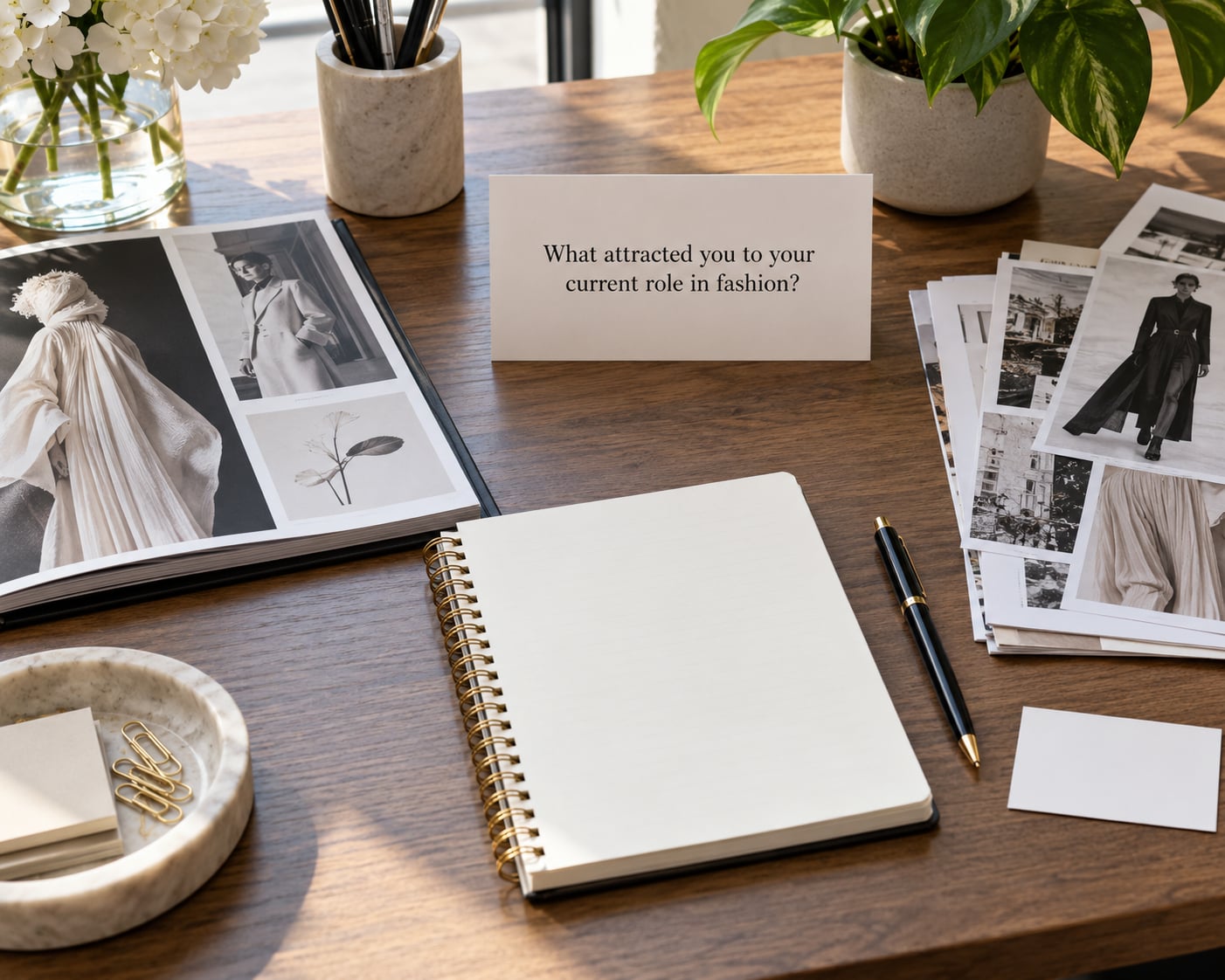
Career origin questions are the fastest way to learn how someone got in. A buyer who came up through a small brand and a buyer who moved over from consulting took completely different routes, and both routes can be open to you.
Ask them to describe the moment they knew the role fit, not just the job description. “Tell me about the day you decided this was it” produces a story with texture, and stories carry the useful details: which class, which person, which mistake, which door.
Listen for the answer that matches your own situation. If you are studying textiles and they got in through an internship, that route is live for you. If they came from retail management, you know where to start asking.
2. Which part of your job do you enjoy most, and which part is harder than outsiders expect?
The glamorous version of fashion work and the daily version are rarely the same thing. Ask this one early. The part someone likes least about their job tends to yield the most useful answer on the whole list.
This question is doing two jobs. The first half tells you what to keep in mind when you are exhausted at 9pm on a market week. The second half tells you what skills the job quietly demands: negotiation, spreadsheet work, chasing an unpaid invoice, or reshooting a look three times because the lighting was wrong.
A good follow-up if they give you a polished answer: what did you stop doing after your first year, once you realised nobody was watching? That shift is usually where the real trade-off lives.
3. What skills have mattered most in your fashion career so far?
You are trying to separate transferable capabilities from technical knowledge. Almost nobody starts with the technical part, and most people who succeed invest early in the part that transfers.
Likely answers include trend awareness, written communication, project management, visual judgment, and the specific skill of getting a disagreeing team to a deadline. That last one shows up in almost every role, from showroom to newsroom.
Then ask the harder version: which skill would you have started earlier if you could go back? People answer this quickly and honestly, and it usually names the exact gap in your own plan.
4. How did you get your first opportunity in the industry?
Networking gets sold as a mysterious shortcut, and that framing makes it useless. Ask directly and the answer becomes concrete: what they applied to, who they emailed, what they attached, and what evidence they offered instead of experience.
The most useful version of this question asks about the thing that worked, not the thing that didn’t. “What made you reply to that email?” will tell you more about what to write in yours than any template.
Then close the loop with a specific request. “Could you send me the name of the person who replied when you reached out?” gives you an action while the conversation is still warm.
5. What is one mistake you made early in your career?
Mistake questions get defensive if they sound like a judgment. Framing it as “what would you undo” signals that you are after the lesson rather than the confession.
The answers cluster in a small number of shapes: assuming the brief said one thing when it said another, missing a deadline they thought someone else owned, taking a role for the title instead of the work, and saying yes to an opportunity without reading the contract.
Whatever they name, respond with empathy rather than advice. “What would you do differently now?” is the follow-up that turns a small anecdote into a rule you can actually apply.
6. How do you keep creative work fresh without chasing every trend?
This is where you find out whether someone’s taste is a habit or a reflex. People with durable creative careers usually describe a routine: references they return to, a non-fashion interest that feeds their eye, or a rule for what they refuse to copy.
Ask for a specific example rather than a philosophy. “Tell me about a piece you killed recently, and why” reveals more about editing judgment than any statement about originality.
The question adapts cleanly by role. A stylist might talk about reference images and client wardrobe reality. An editor might talk about a story that didn’t get commissioned. A designer might talk about a fabric she couldn’t source at the right hand-feel.
7. How do you decide which trends or ideas are worth pursuing?
Anyone can name a trend. The skill is deciding which ones to spend money, time, or a page on. This question separates people who read fashion from people who trade on it.
Good answers name a decision and show the reasoning: does it last beyond one season, does the fabric support it, does it suit the audience, does it belong to the brand or does it borrow someone else’s identity.
One specific example teaches more than any general opinion. If they describe a trend they passed on and what happened to it, you learn their criteria and their evidence at the same time.
8. How do you give useful feedback without crushing someone’s confidence?
Creative review is where most fashion work gets made and unmade. How someone handles a note tells you more about working with them than any description of their taste.
The revealing part is whether they can separate personal dislike from job-specific feedback. A buyer who says “I don’t like it” without a reason is difficult to work with. A buyer who says “it won’t hold on the floor in this fabric” is teaching you her trade.
Ask for a time a note changed the direction of a project, and what the note was. You learn the vocabulary they use and the standard they hold, which is exactly what you need if you want their feedback on your own work later.
9. What do you look for when reviewing a portfolio or creative work?
If you are preparing applications or creative opportunities, this is the question with the highest return on your preparation time.
Stylists, editors, buyers, and brand teams assess different things, but four things keep showing up: clarity of thought, context for the choices, a point of view you could summarize in one sentence, and evidence of process rather than just finished images.
Ask them to critique a piece of yours, ideally a small one. A stylist will tell you instantly whether the looks cohere. An editor will tell you whether the story is legible. Both answers are cheaper than finding out after an application.
10. How have you built a personal brand without making everything about yourself?
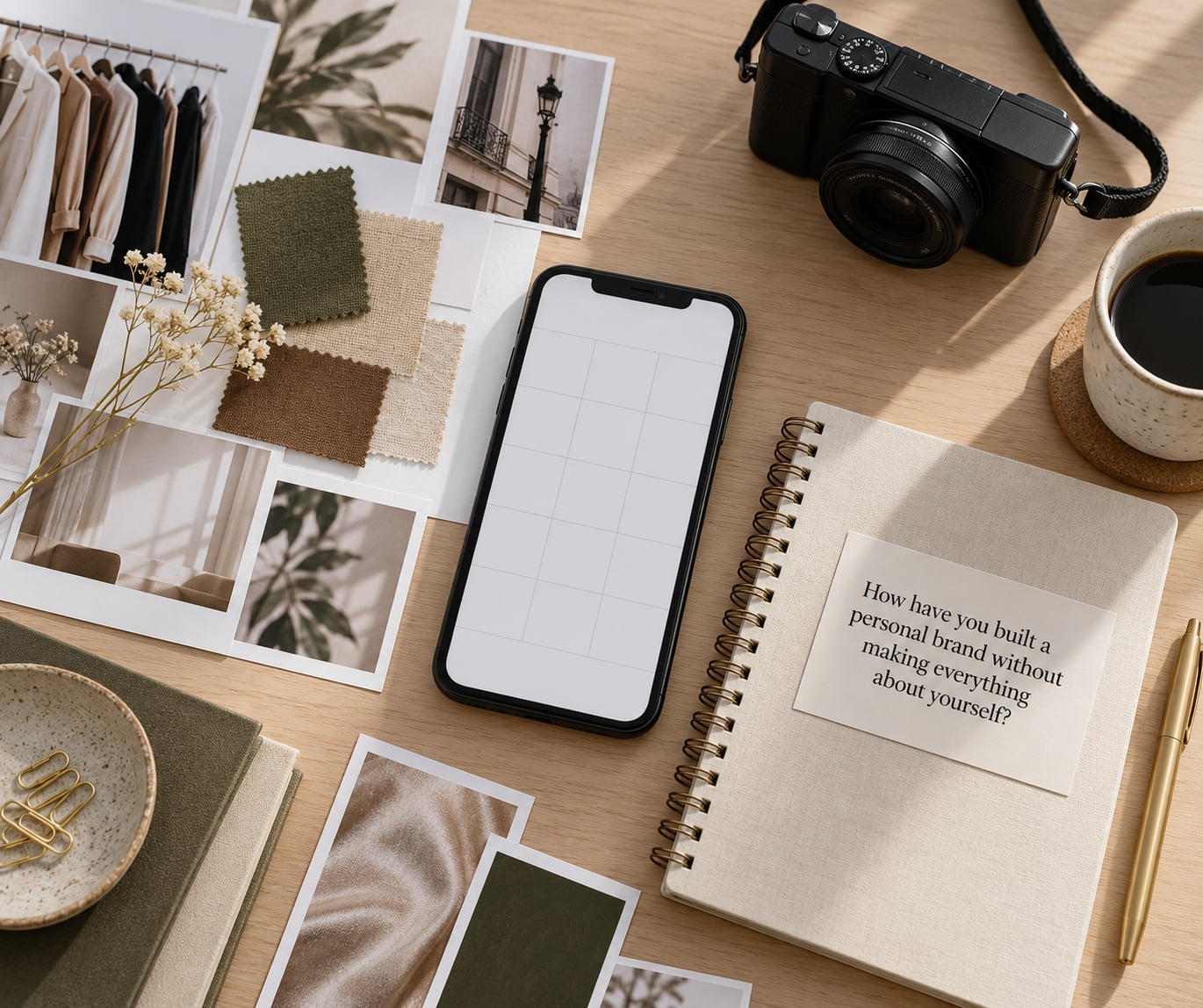
Personal branding advice usually arrives as “post more, be consistent.” That skips the hard half, which is knowing what you give away when you give attention away.
Working professionals tend to describe a boundary: they share process and expertise rather than results, they credit collaborators rather than claiming the room, and they post at a pace they can sustain for years instead of weeks.
Ask what they stopped posting and why. The answer is usually about the moment attention started costing them something, and it gives you a realistic version of the trade instead of an aspirational one.
11. Which professional relationships have had the greatest impact on your career?
Careers in fashion are built on a small number of people who called you back. This question lets the professional name those relationships in their own words, including the qualities that mattered.
Watch for what they credit. If they say it was someone who gave honest feedback early, or someone who brought them into a room, you have learned what to be like yourself, not just who to find.
Reciprocity is the part beginners skip. Before you send the thank-you, give something small back: a relevant article, a useful introduction, or a note about how their advice changed your application. Networking that only extracts rarely survives the first year.
12. How do you prepare for an important meeting, show, launch, or presentation?
Preparation questions are underrated because the answer is a process you can copy. Ask for the actual steps rather than “do you prepare” and most people will happily give you their sequence.
Common elements include research on the room and the people in it, a written outline with timings, a rehearsal at least once out loud, shared documentation, a backup of every file, and a named contingency for the thing most likely to go wrong.
Then ask what they changed after the first plan failed. Everyone’s process has been revised by a real event, and the revision is usually the most useful part of the answer.
13. How do you stay current when fashion and media change so quickly?
The honest answer here is that most people read a small number of sources well. Trade publications, runway analysis, brand archives going back decades, and a handful of direct conversations tend to beat endless scrolling.
Ask what they no longer pay attention to and why. Fashion media has changed hands and changed formats repeatedly, and someone who stopped reading a source two years ago can tell you why the replacements work better.
For your own habits, aim for a point of view rather than an inbox. Being able to say why a season feels the way it feels is worth more in a conversation than having read everything about it.
14. What would you change about the fashion industry if you had the authority?
This is the question people remember you for, and it needs a little care. Keep it about systems rather than individuals: how work gets scheduled, how credit gets assigned, how suppliers are treated, how the digital channel gets resourced.
You get values and priorities without the awkwardness, and the answer often lands on something concrete, like commission structures, sample handling, or how quickly feedback loops.
If the answer points at a gap, it may also point at an opportunity, and it tells you whether this is a person whose standards you would enjoy working under.
15. What advice would you give someone trying to enter your field now?
Close on advice, but make it specific by giving them something to react to. Tell them your background and your goal in one sentence and ask them to make the advice useful for that person rather than for fashion in general.
Answers here often include a specific first step: which publication to read, which type of assistant role to target, which freelance clients pay on time, or which skill to fix this winter.
Finish by asking for one concrete action you can take, or one person you could talk to next. Asking for a referral is described by people who network regularly as the highest-return question available, and beginners almost never use it.
One last thing: expect them to ask about you. That is normal, not a turn in the conversation. A short honest answer about your background and what you are trying to figure out is enough, and it is their cue to offer something.
Frequently Asked Questions
How many informational interview questions should I prepare?
Prepare six to eight and ask three or four. Most professionals say a short set of well-targeted questions produces better answers than a long list, and going in with a handful keeps the conversation flowing instead of feeling like an interview you are conducting. Write the extra questions down and let the conversation decide which ones fit. If the person starts answering your fifth question without being asked, you have plenty.
How should I change the questions for a designer, stylist, buyer, editor, or publicist?
Keep the structure and swap the specifics. For a buyer or merchandiser, push toward sell-through, stock turn, and how a decision gets made. For a stylist, ask about client relationships and reference building. For an editor, ask about story development and what gets killed. For a publicist, ask about launch timelines and client boundaries. For a designer, ask about development cycles and production compromises. The person decides what matters most in their week.
What if a fashion professional cannot share confidential information?
That is a normal boundary, and respecting it is part of the impression you leave. Say something like: no problem at all, I’d rather not ask anything you are not comfortable with. Then reframe around the industry rather than the employer, asking what these roles generally look like or what the equivalent looks like at another company. People will often answer the general version of a question they cannot answer specifically.
How do I ask for advice without making the conversation feel like a job request?
Ask for advice about a decision, not for a job. Instead of asking whether they are hiring or could put in a word, say you are deciding between two directions and would value their read on which one they would choose. Advice is easy to give and hard to refuse, and it still teaches you how they think. Never say that you want to work at their brand, and do not hint at it either.
What should I send after an informational interview?
Send a short thank-you message within 24 hours, sooner if the meeting went well. Reference one specific thing they told you and how it changed your thinking, keep it under 150 words, and confirm the one action you agreed on. If you asked for a referral, mention the conversation you want to have next. Then wait four to six weeks before following up, and make the second message worth reading.
Conclusion: Ask One Better Question, Not Ten Generic Ones
Pick one professional whose work you actually respect and whose route resembles the one you are considering. Then personalize three questions: one about their career path, one about the work itself, and one about what they would change right now.
Treat these as informational interview questions to ask a fashion professional, not a script to survive. The goal is a real working relationship, which is how most people get their first introduction in this industry.
End with something specific in your follow-up, and start with the person today rather than waiting for a perfect moment that is not coming in 2026.