Wait five to seven business days after your pitch, send one follow-up of under 100 words in the original email thread, and then move on. That single short note is the difference between a pitch that quietly disappears and one that turns into a commission. It takes about ten minutes to write, and the etiquette is simple: be brief, add something new, and make it easy for the editor to say yes or no.
I have watched talented writers lose assignments to silence rather than to rejection. The idea was strong, the pitch was clean, and nobody ever followed up. That is the part that stings, because a follow-up is not pestering. It is how a busy editor’s inbox actually works.
Editors typically work through 30 to 40 pitches a day, and high-volume commissioning editors report opening as many as 400. A pitch sent in March may sit unread until July. One publishing blog documented an editor opening an eight-month-old pitch and commissioning it on the spot. Silence is a scheduling fact, not a verdict on your work.
What follows is the process I would use for any pitch that matters: how to follow up with an editor without being annoying, when to write, what to put in the note, and where the professional boundary sits. It works the same whether you are pitching a reported fashion feature, sending a stylist portfolio, or following up on an op-ed placement.
Table of Contents
- What You Need
- How to Follow Up With an Editor Without Being Annoying: Step by Step
- 1. Confirm That a Follow-Up Is Appropriate
- 2. Wait the Right Amount of Time
- 3. Follow Up With a Short Reference, Not a Re-send of the Whole Pitch
- 4. Add Useful Information Instead of Asking for Attention
- 5. Set a Professional Boundary After One Follow-Up
- Common Mistakes
- Frequently Asked Questions
- How long should I wait before following up with an editor?
- Is it okay to send a second follow-up if the editor does not respond?
- What should I say when an editor has not replied to my pitch?
- Should I follow up with an editor after a submission deadline has passed?
- Can a polite follow-up hurt my chances of working with an editor again?
- Conclusion
What You Need
You cannot write a useful follow-up without the original message in front of you. Pull it up before you type a single line.
- The original pitch, including the exact working title and the date you sent it.
- The stated response window, if the publication publishes one. Many magazines and trades list a timeline in their contributor guidelines.
- The submission guidelines, where follow-up rules are often spelled out.
- One new piece of information: a fresh clip, a tighter angle, a corrected portfolio link, a confirmed date.
- Your exclusivity terms, if any were agreed, plus the publication’s stated window.
Submitting through a platform like a freelance marketplace or a submission tool changes the rules completely. Those systems usually route pitches into a queue that only pays out when an editor pulls an assignment, so a polite email note rarely helps and can look like a duplicate submission.
How to Follow Up With an Editor Without Being Annoying: Step by Step
1. Confirm That a Follow-Up Is Appropriate
Start by checking whether the publication has invited one. Experienced freelance writers treat submission guidelines as binding, and they override every general rule you have read online.
Some outlets ask for no follow-up at all. Others promise a response within two weeks or within thirty days. A trade publication that says it replies in six to eight weeks is not ignoring you at week three.
Then look at your own history with this editor. If you missed a deadline, if you accepted a pitch request and went quiet, or if this is the third unanswered message you have sent, the follow-up is not welcome. If you have been prompt, professional and easy to work with, a brief note is entirely reasonable.
Gatekeepers and assistants deserve a different standard. If you have never spoken with the commissioning editor, address your note to the person who actually handles the queue, or skip it. Writers on r/freelanceWriters frequently raise the same point: the person reading your pitch may be an assistant who literally cannot assign it.
2. Wait the Right Amount of Time
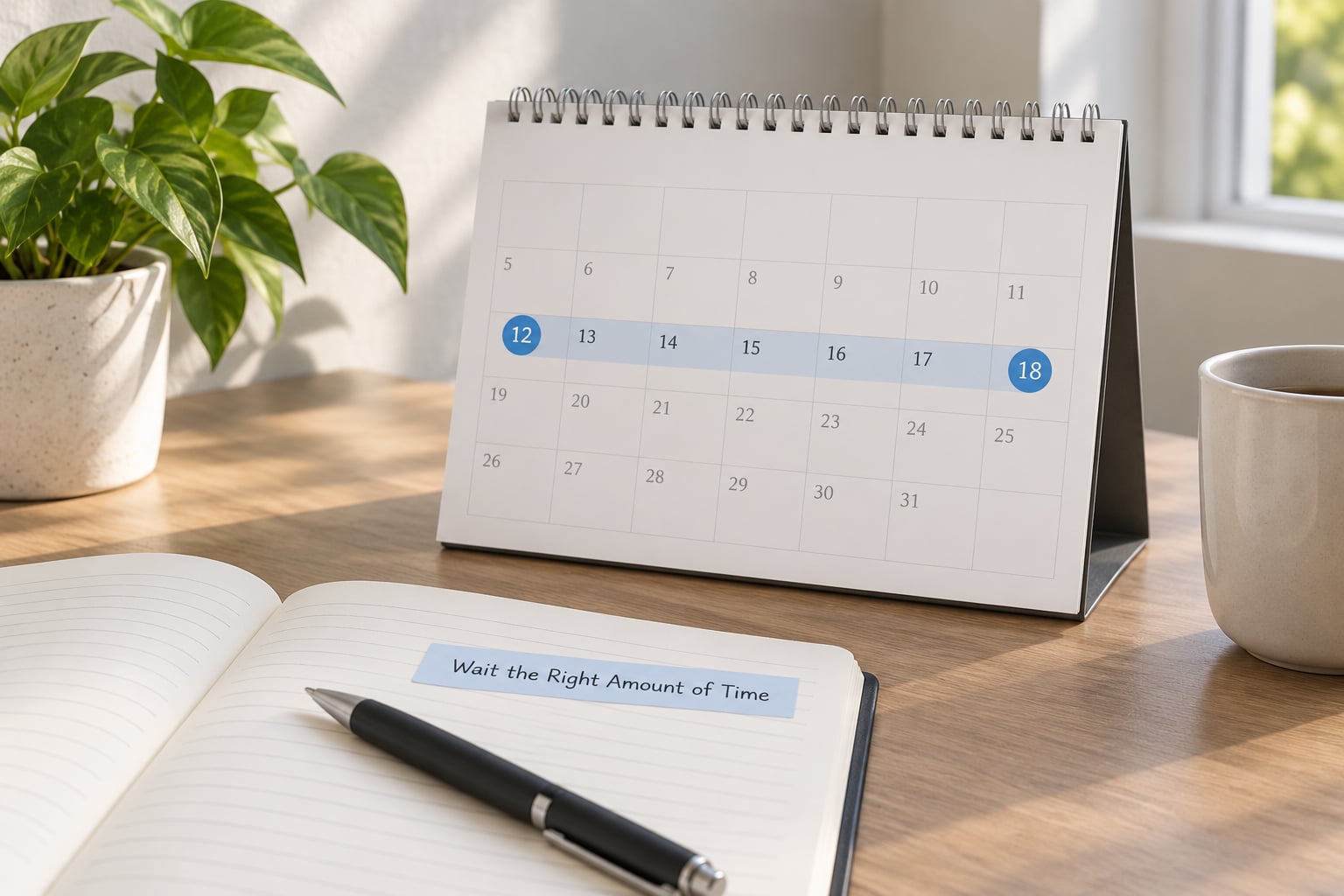
Five to seven business days is the standard wait for a first follow-up. Timely pitches move faster, evergreen ones move slower, and anything tied to a fixed date compresses the whole window.
| Pitch type | Wait before first follow-up | Follow-ups to send | Maximum length |
|---|---|---|---|
| Cold pitch, no stated window | 7 to 10 business days | One, then a final note | Under 100 words |
| Timely pitch tied to a date | 2 to 3 business days | One | 60 to 80 words |
| Portfolio or stylist submission | 2 to 3 weeks | One | Under 100 words |
| Essay or op-ed with a stated deadline | 10 days after the deadline | One | Under 100 words |
| Delivered work, invoice or payment query | 7 days after the agreed date | One, then a firm second | Under 120 words |
In fashion and beauty, the calendar rewrites these numbers. Market week compresses everything into a few days. Seasonal closes mean the runway coverage you pitched in February may not be commissioned until August. Embargoed coverage has its own schedule, and a shoot date you cannot attend is new information worth including in a follow-up.
The signal that another note is appropriate is simple: the date you gave yourself has passed and you have nothing new to offer. If you do have something new, the timing conversation changes entirely.
3. Follow Up With a Short Reference, Not a Re-send of the Whole Pitch
Reply inside the original thread. Starting a fresh email with the same body copy reads like a duplicate submission, and many editors never see the first message again once a new thread begins.
Name the piece in a few words so the editor recognises it instantly, then stop. Something like: Following up on the piece about vintage denim sourcing I sent on the 12th. That is specific enough. If your subject line was distinctive, quoting it works even better.
Add the word “follow up” to the subject line if the thread has been long. A short, clear subject line helps the editor file it, which is the whole point of how to follow up with an editor without being annoying.
Never apologise for the follow-up. Sorry to bother you, sorry for the delay, and I know your inbox is full all signal anxiety rather than professionalism, and experienced writers on r/writers put it plainly: always follow up if you have not heard back after the given time, and make sure it is professional and well-written.
4. Add Useful Information Instead of Asking for Attention
A follow-up that only asks for attention asks the editor to do you a favour. One that carries new information does the editor a favour, and that is the version that gets replies.
- Applicant or contributor: mention a newer clip that sharpened the original idea, and name the piece in one clause.
- Freelance contributor: flag a new reporting development, a named source who came through, or a corrected fact in your pitch.
- Stylist or creative: note an updated availability window around the shoot dates, or one new portfolio image.
- Publicist: offer the news peg that broke after you pitched, plus a usable quote or a clear embargo detail.
Apply one test before you hit send: would this update change the editor’s decision if they read it today? If not, it is filler. If yes, it earns the interruption.
A gentle close keeps the pressure off. Happy to send the full outline if that helps, and either way thanks for your time. That sentence does more work than it looks like.
5. Set a Professional Boundary After One Follow-Up
One follow-up, and occasionally a final note a week or two after that, is the limit. Writers on r/Screenwriting describe the same boundary: one follow-up a few weeks after an initial email is fine, but no more.
Send your final note only if something real has changed. A new assignment, a date you know has passed, or a second piece that suits them better. Then close the loop so neither of you is left waiting: I will assume this one is not moving forward, and I appreciate your time. If the timing shifts, my door is open.
Silence after that usually means one of three things: the pitch is not for them, the slot is already filled, or they never got it. None of those are judgments about your ability.
If an editor replies weeks or months later with a commission, treat it as a win, not an embarrassment. Reply warmly, confirm terms, and deliver on time. Late yes is still yes.
If you already delivered the work and payment stalls, the tone changes. A short factual note about the agreed fee and date is not pestering. A second note that sets a clear deadline is fair, and beyond that, professional channels and contracts take over.
Common Mistakes
Almost every annoying follow-up contains one of these. Each has a direct fix.
| Do not write | Write instead |
|---|---|
| Sorry to bother you, I know you are busy. | Following up on the piece I sent on the 12th. |
| I know this is probably not for you, but. | I have a sharper version of the angle now, and I can send the outline. |
| Just wondering if you had a chance to look at my pitch. | The reporting has moved since I wrote, so the angle is stronger. |
| Did you get my email? Any response would be great. | Closing the loop on this one, since the date has passed. |
| Resending the original pitch as a new email. | Replying in the original thread. |
| Sending three follow-ups in two weeks. | Sending one, then waiting for a real change. |
Other mistakes worth naming. Copying unrelated people on a nudge, such as the editor’s colleagues or a publicist who has no stake in your pitch, turns a small request into a campaign. Demanding a response by a date you invented is worse. Assuming rejection and sending a bitter note is a bad trade, because the same editor commissions next season.
Multi-channel pressure counts too. An email plus a LinkedIn connect plus an Instagram DM reads as three follow-ups, not one. Choose one channel, the one you originally used.
On rejection, reply briefly and warmly when it is a flat no. A gracious note costs you nothing and keeps the door open for the next pitch, which is how most repeat relationships with editors actually begin.
Frequently Asked Questions
How long should I wait before following up with an editor?
Wait five to seven business days after a standard pitch with no stated response window. Shorten that to two or three days for a timely idea tied to a fixed date or an event. Lengthen it to two or three weeks for portfolio submissions and to ten days past a stated deadline for essays. If the publication publishes its own response window, that number wins over any general rule.
Is it okay to send a second follow-up if the editor does not respond?
A second note is acceptable when it carries genuinely new information, such as a stronger angle, a reporting development or a corrected link. Space it at least a week after the first and keep it short. A third message is where writers get labelled as pestering, so stop unless something real has changed. Silence after one follow-up usually means no, or not now.
What should I say when an editor has not replied to my pitch?
Name the piece in one clause, add one new piece of information, and ask a simple question. No apology, no explanation for how long it has been. Something like: following up on the vintage denim piece from the 12th, I have a new source who strengthens the second section, happy to send the outline either way. Keep the whole message under 100 words.
Should I follow up with an editor after a submission deadline has passed?
Yes, a single brief note is reasonable about ten days after a stated deadline, because submissions and assignments run on separate schedules. Mention the piece by name and note that your availability is unchanged. If you have not heard anything after that one note, treat the slot as closed and pitch elsewhere. Repeatedly checking in after a deadline does not create urgency, it creates friction.
Can a polite follow-up hurt my chances of working with an editor again?
A short, professional note in the original thread does not hurt you and can be the reason you get commissioned. What damages a relationship is demanding a reply, sending several messages in a row, or copying unrelated people. If you were told not to follow up, do not. Knowing how to follow up with an editor without being annoying means honouring their stated guidelines and keeping your own count at one.
Conclusion
Verify the timing before you write anything, using the publication’s own response window where one exists. Reference the original message in a few words, reply inside the same thread, and add one piece of information the editor can actually use. Ask a simple question, keep it under 100 words, and never apologise for writing.
Then send one note. If the silence continues, make your professional exit, pitch somewhere else, and get back to work. Persistence without pressure is what earns a second look from an editor in 2026.