Client etiquette is simply the set of unwritten professional rules that govern how you communicate, set boundaries, price your work, handle feedback, and treat people before, during, and after a project. Get them right and you get hired more often, paid faster, and referred to people who are already waiting for you. Get them wrong and the work still gets done, just quietly, and the money follows the people who already respect you.
I’ve spent years on both sides of this, as a stylist taking bookings from clients and agencies, and as a freelancer chasing invoices that should have landed weeks earlier. Most of the awkwardness I hit came down to the same handful of habits, and the good news is that habits can be written down and repeated.
This guide walks through 12 client etiquette rules every freelancer should know, with a quick-reference table first, then one rule at a time. Each one comes with a concrete behaviour you can use tomorrow, plus what to say when the moment turns awkward. Budget about 20 minutes to read it and another 30 to put the written parts into your contract and kickoff email.
Table of Contents
- Client Etiquette Rules Every Freelancer Should Know at a Glance
- 1. Reply professionally and confirm the next step
- Say this, not that
- 2. Set communication expectations before starting
- 3. Ask for clarification instead of guessing
- 4. Respect agreed scope and avoid surprise work
- 5. Be dependable without being constantly available
- 6. Present work with polish and care
- 7. Make feedback and revision requests manageable
- 8. Use professional invoices and payment terms
- 9. Protect confidential information
- 10. Communicate changes early
- 11. Treat collaborators and meeting participants well
- 12. Close the project professionally and ask for feedback
- Frequently Asked Questions
- How should freelancers handle client emails that arrive after hours?
- What is the 5 C’s of email etiquette for freelancers?
- How do you tell a client politely that a request is extra paid work?
- What should a freelancer do when a client pays late?
- How do you separate friendship from business with a client?
- Conclusion
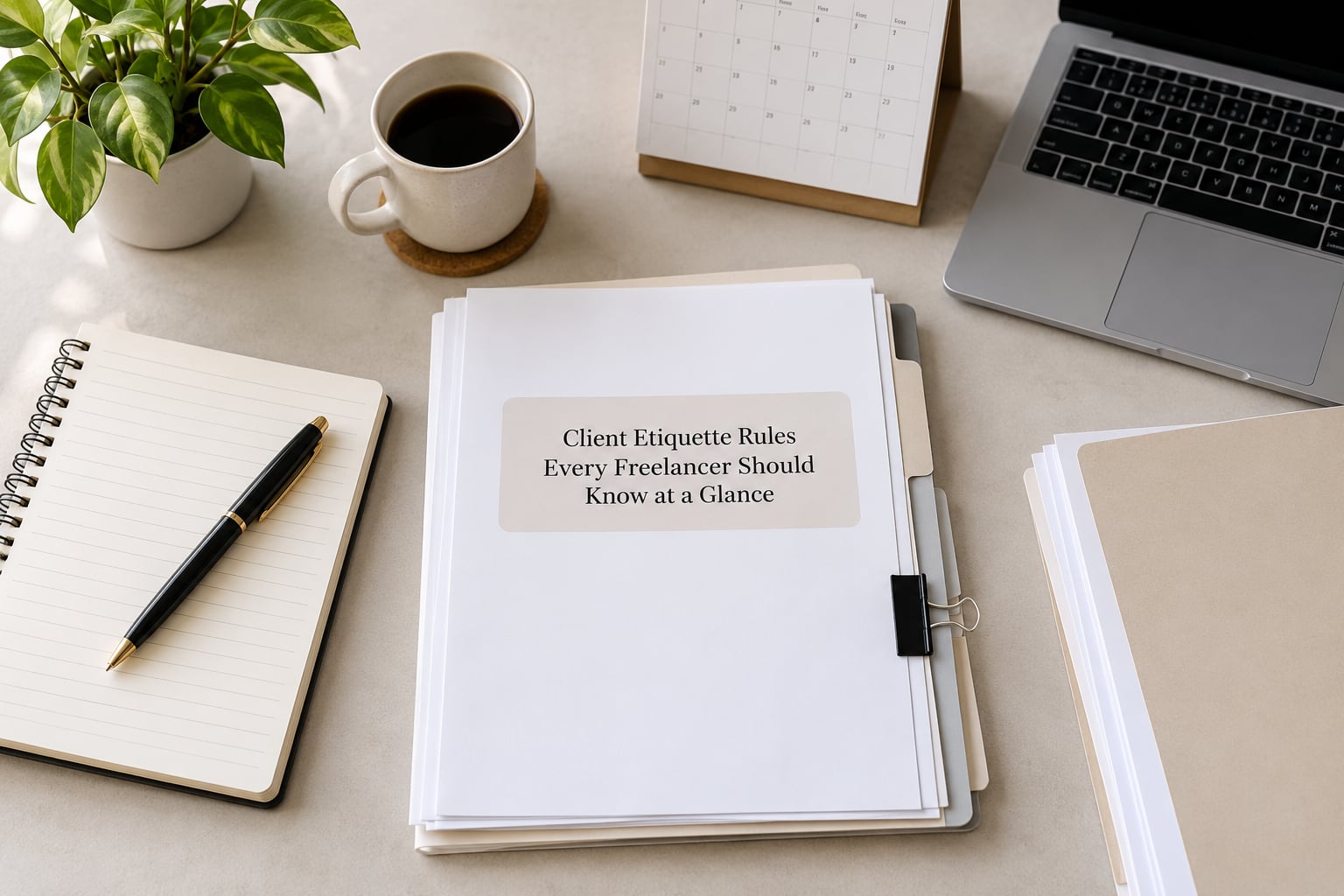
Client Etiquette Rules Every Freelancer Should Know at a Glance
| Rule | When it applies | What good looks like |
|---|---|---|
| Reply and confirm a next step | Every message you receive | Acknowledged within your stated response window, ending with one clear action |
| Set expectations up front | Before any work starts | Response times, hours, meeting channel and escalation path written down |
| Ask instead of guessing | When a brief has gaps | Two or three specific questions before you open the file |
| Protect the agreed scope | When a request lands outside it | Priced in writing, approved in writing, then started |
| Be dependable, not always on | Across the whole project | Deadlines met, updates on a fixed rhythm, evenings protected |
| Deliver polished work | At every submission | Clean files, sensible names, short cover note |
| Make revisions manageable | When feedback arrives | One consolidated request, agreed number of rounds |
| Invoice professionally | At deposit, milestone and close | Clear terms, due dates, a late fee, a written chase schedule |
| Keep information confidential | Always | Signed NDA, locked-down sharing, portfolio rights agreed in advance |
| Communicate change early | When something slips | Headline first, cause, impact, options, decision deadline |
| Treat everyone well | In meetings and credits | On time, prepared, disagreeing respectfully, crediting others |
| Close properly | At the end | Files handed over, invoice sent, specific feedback requested |
1. Reply professionally and confirm the next step
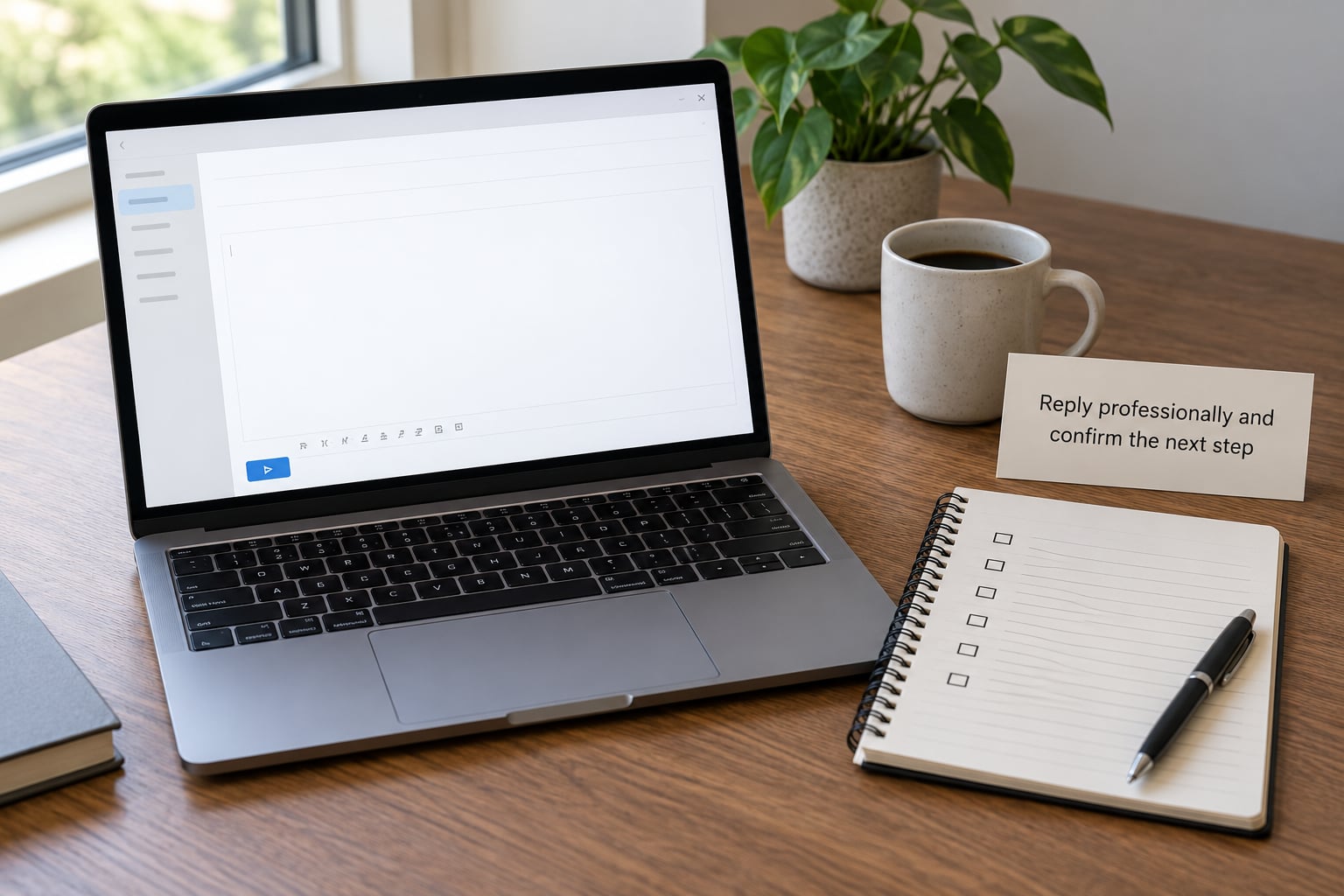
Acknowledge every message, even the ones you do not have time to answer properly. Most freelancers lose work quietly here: a client sends four questions on a Friday, hears nothing until Monday, and quietly hands the next project to someone who answered.
The distinction that saves you time is between urgent and routine. Urgent means a real deadline is at risk today. Routine means it can wait until you’re at a desk. Answer urgent things first and tell routine things when you will get to them.
Every reply should end with one explicit next step, stated by you rather than left for the client to infer. “Let me know what you think” hands the whole problem back. “I’ll have the two options to you by Thursday at 4pm” closes the loop.
Say this, not that
The phrasing matters more than people think. These swaps cost nothing and change how professional you sound.
| Instead of | Say |
|---|---|
| “Sorry for the slow reply, I’ve been so busy.” | “Thanks for the note. I’ll have an answer to this by Thursday.” |
| “That’s not really my area.” | “That’s outside what I handle. I can point you to someone who does, or we can scope it separately.” |
| “With all due respect…” | “I see it a different way. Here’s the reasoning behind my approach.” |
| “Just checking in, any update?” | “Status on the logo: first concepts are in progress, on track for Friday.” |
| “No worries, take your time!” | “No problem. Does Friday still work for you?” |
| “Honestly, I’m not sure about that.” | “That’s outside what I can answer with confidence. Let me find out and come back to you.” |
2. Set communication expectations before starting
Most boundary problems are really expectation problems. Nobody agreed to anything, so everyone assumed the worst about the other person, and now you are apologising for a Tuesday evening.
Put four things in writing at kickoff: your typical response time, your working hours, which channel is for what, and who to contact if something is genuinely urgent. A short paragraph in your kickoff email does it. Frame it as protecting them too.
Be specific rather than generous. “Usually within two business days” is enforceable. “As soon as I can” is not, because you will eventually reply on a Sunday night and your client will notice.
| Message type | Reasonable expectation | Example |
|---|---|---|
| Genuinely urgent | Same working day | Production is down, a launch moved forward, an approval is blocking others |
| Normal project question | One business day | Copy questions, a choice between two options, scheduling |
| FYI or feedback | Two to three business days | A reference image, market notes, a long thread forwarded to you |
| After hours | Next working morning | Anything arriving outside your stated hours |
3. Ask for clarification instead of guessing
A wrong assumption buried in three weeks of work is expensive for both of you. Five clarifying questions at the start costs you fifteen minutes and reads as professionalism, not hesitation.
Ask about the things that actually change the work: who the audience is, where the deliverable will be used, what the brand voice should sound like, how many rounds of revisions are included, who has final approval, and what the real deadline is and what it depends on.
Offer a default with each question so you do not stall waiting for an answer. “I’m assuming a warm, conversational tone for email, unless the existing brand guide says otherwise. Shout if that’s wrong.” Silence becomes approval, and you have kept moving.
4. Respect agreed scope and avoid surprise work
“Can you just also…” is the most expensive sentence in freelancing. It usually arrives warmly, framed as a small favour, and quietly doubles your week. This is scope creep, and the etiquette around it is entirely about handling it early and in writing.
The protocol takes four steps. First, name it out loud in neutral terms: “That’s outside the scope we agreed.” Second, price it separately instead of folding it in. Third, write it into the schedule with a new date. Fourth, get written approval before you start.
Saying yes to something free once sets the pattern for every project that follows. Raising the price of the next one feels like the only way to recover, and clients notice far less than you think they do.
Say this, not that. “Happy to add that. It’s a 4-hour change and I’d want to move the delivery date to the 18th so the original deadline still holds. Want me to put that in writing?”
Two habits help here. Send short progress updates even when nothing has changed, because regular contact is what stops a small favour from turning into a surprise deadline. If you work for styling clients or agencies, show the work in progress as a quick video walkthrough; it settles a disagreement about direction faster than ten messages ever will.
5. Be dependable without being constantly available
Professionalism is keeping promises you made, not being reachable every minute you are awake. Two freelancers can both reply fast and only one of them is easy to work with, because reliability is about the promises you keep, not the speed of your thumbs.
Build reliability with three things: a realistic deadline you commit to, an update rhythm the client knows (Friday progress, say), and a buffer. If you promise Thursday, promise the Tuesday before it, not the Wednesday, so a small problem does not become a broken promise.
Have a contingency plan before you need one. Know which assets you can pull from your own archive, who you could subcontract to for a day, and what part of the project can ship in two pieces if the full version slips.
The boundary part is simple. Protect your evenings, turn on an out-of-office auto-reply, and if you do answer out of hours once, do it knowing the client will remember it as your availability. You taught them the rule.
6. Present work with polish and care
How you hand something over tells the client how seriously you take their business. Nine times out of ten the underlying work is fine and the presentation is what lands badly.
Check the file before it goes out: it opens, it is the right size and format, links work, and no draft or placeholder text is hiding on slide four. Export a preview and look at it once. It takes two minutes and catches things you cannot see in an editing window.
Name files the way the client will name them, with a consistent pattern: BrandName_Asset_Description_v02.ext, plus a date stamp in year-month-day order. Version numbers matter because version three always exists and nobody remembers which one is current.
Your cover note should be three lines maximum: what’s included, where the files are, what you need from them next and by when. Do not re-explain the whole project. They were there for it too.
7. Make feedback and revision requests manageable
Feedback arrives as a hundred separate comments, each triggering its own reply and its own round of work. That is how a two-day project becomes two weeks of small changes nobody agreed to.
Consolidate. Once a week, or once a round is complete, send one message: “I’ve gathered everything from this round. Here’s the full list. Send anything I’ve missed by Thursday and I’ll treat it as round two.” One thread, one deadline, one clear count.
Confirm the number of revision rounds in writing before work starts. Two is common. Beyond that, further changes are new work, and that conversation is far easier to have at kickoff than at delivery.
Ask for feedback that is actionable. A specific note (“the logo feels heavy against the wordmark”) gets you work you can do. “Make it pop” gets you a guess. When a note is vague, restate what you heard and confirm before you redo anything.
And separate the work from your ego, because there is no prize for defending a direction the client has rejected. Correct course, keep the professional tone, and do not take the win.
8. Use professional invoices and payment terms
Payment etiquette is one of the hardest skills to learn and the one clients respect most. Being paid on time is a professional standard, not a favour you are quietly grateful for.
Ask for a deposit up front, commonly half the project fee, and build it into your contract rather than treating it as a negotiation. Put the due date on the invoice itself, not just in the terms and conditions, along with the payment window you are offering (net-15 or net-30), your accepted methods, and a late fee percentage that starts accruing after the due date.
Agree a kill fee at the start: a set amount you are paid if the project is cancelled after a certain point. It exists because your calendar does not refill on its own, and because it changes the conversation from a favour to a contract term.
If an invoice goes unpaid, follow a written schedule. A friendly note two days before the due date. A firm note on the day it is late, restating the amount, the date and the late fee. A short final notice a week later with a clear deadline and a mention of pausing work. Then stop work and pause politely.
Late payments are almost always an admin failure rather than a rejection of your work. Chase on a schedule and the problem disappears for most clients within two reminders.
9. Protect confidential information
You will see things you cannot share: unreleased products, campaign plans, private client lists, someone’s medical details, or an unfinished body of work that belongs to them. Handling that well is one of the fastest ways to become someone’s long-term partner.
Sign an NDA before you receive anything sensitive, not after. Use proper permissions on shared folders and links, and check whether the client’s IT team has specific rules for external tools before you upload a brief into your own project management app.
Separate your personal and client devices where you can, and never reuse a client asset in a portfolio piece without written permission. Agree portfolio rights in the contract: some clients want approval before anything public, and some do not want the work shown at all.
Keep a list of who on the client’s side has access, and revoke your own access when the project closes. Leaving a freelancer logged into a shared drive is a small leak of trust.
10. Communicate changes early
Bad news travels badly. A delay you mention on the due date looks like failure; the same delay you mention two weeks out looks like management. The rule is simple: tell them while you can still do something about it.
Use a five-part format. Lead with the headline so they do not have to read for it. Then the cause, the impact on dates or scope, your options with a recommendation, and the decision you need from them along with the date you need it by.
“The final photography is delayed to the 22nd, so delivery moves to the 25th. Options are compressing the retouching window to three days, shipping the social cutoffs on the 20th as planned, or pushing everything a week. I recommend the second. Can you confirm by Friday?”
Missed approvals are the most common cause of a slipped deadline, and they are not your fault. Say so early, without blame: “I’m blocked on the copy approval. I can start the layout with placeholder text and swap it in later, or wait. Which do you prefer?”
11. Treat collaborators and meeting participants well
Your reputation with a client is partly built by the people in the room with you, and partly built by how you treat the people who are not in it. Treat an assistant who reschedules your call the same way you would treat the founder.
Arrive on time, come prepared, and send notes afterwards with decisions and owners. Agree the meeting rhythm at kickoff, because a weekly call that everyone dreads becomes a reason to end the relationship. If a recurring meeting stops producing decisions, propose ending it.
Be clear about discovery calls. Many unpaid calls run far longer than the first conversation suggests. Agree in advance that anything past 30 or 45 minutes is billable at your standard rate, or cap discovery at two calls before you quote.
Disagree well. Attack the idea, not the person, and give a reason. Politeness without a position is how you end up making things you quietly think are wrong.
Give credit where it is due. Name the photographer, the assistant, the developer, and the client who made the work possible. Internationally, respect time zones, local holidays, and different norms around directness, because what reads as bluntness to you may be neutral in their culture.
12. Close the project professionally and ask for feedback
The end of a project decides whether there is a next one. Most freelancers deliver the files and disappear, which leaves the client with nothing to say about you when someone asks for a recommendation.
Send a handover message: where the final files live, which formats are included, what access they have, and any licences or terms that apply. Then send the final invoice with the payment terms you agreed, and confirm once the project is closed in writing.
Ask for a testimonial with specifics attached, because “it was great” is not reusable and “she turned a vague brief into a shoot calendar that ran on the first day” is. Give them three questions and a deadline, and offer to draft it for their approval.
Then ask about the next thing, without pushing. A referral question is easy to answer: “Is there anyone in your network who is struggling with the same problem you came to me with?” Most people are happy to point you somewhere and will not think twice about it.
If a project ends badly, end it well anyway. Send the files, invoice for the work completed, and do not deliver a parting shot. The industry is small, and how you behave at the end is what people repeat.
Frequently Asked Questions
How should freelancers handle client emails that arrive after hours?
Reply the next working morning and set the expectation at kickoff. If the message is genuinely urgent, say what would make it urgent and when you can act. The real mistake is answering instantly on a Saturday once: most clients will read that as your normal availability, and the boundary is gone.
What is the 5 C’s of email etiquette for freelancers?
Courteous, concise, clear, correct, and confirm. Be polite, keep it short enough to answer without opening another tab, state the ask plainly, check names and dates before sending, and end by confirming what happens next and when. Every one of the five removes a round trip from the thread.
How do you tell a client politely that a request is extra paid work?
Name it without judgement, price it separately, and give a new date that keeps their original deadline. A script that works: that sits outside the agreed scope, here is what it takes and what it costs, and I can hold your original delivery date by moving that piece to the 18th. Ask for approval in writing before you start.
What should a freelancer do when a client pays late?
Chase on a schedule, not on emotion. A friendly note two days before the due date, a firm note on the day with the amount and late fee restated, and a final notice a week later with a deadline. Pause new work during the chase, keep every message factual, and escalate to a collections process if it continues past 60 days.
How do you separate friendship from business with a client?
Keep the warmth and drop the exceptions. Socialise in person if you genuinely enjoy their company, but never let a friendly relationship move deadlines, discounts or scope. If a request is purely a favour, decide whether you would do it for a client you do not like. If not, treat it as a paid add-on or decline politely.
Conclusion
If you only do two things this week, put your response times, revision rounds, deposit and kill fee in writing at kickoff, and start every reply with a named next action and a date. Those two changes cover most of what turns a decent freelancer into a booked one.
Everything else in these client etiquette rules is a habit layered on top of that foundation. Write them down, say them once at the start of a project, and stop spending your energy defending them later.