A fashion stylist assistant supports a lead or celebrity stylist by organizing the wardrobe, sourcing clothing and accessories, steaming and prepping garments, coordinating fittings, building mood boards, and getting every look camera-ready for shoots, shows, and client appointments. Hourly pay for the role commonly sits between $15 and $35 an hour in the US, and the figure moves with your market, your employer, and how much of the wardrobe you own.
That range deserves a caveat before anything else. The highest-looking numbers on job boards are often base pay before commission, and the lowest ones belong to commission-only retail roles where the posted “salary” is really a fraction of what you take home. Both halves of the query — the job description and the pay — matter together, because the posting rarely tells you which one it is selling.
Table of Contents
- Fashion Stylist Assistant Job Description and Pay at a Glance
- What Does a Fashion Stylist Assistant Do?
- How Much Does a Fashion Stylist Assistant Earn?
- What Affects Fashion Stylist Assistant Pay?
- What Skills and Qualifications Employers Look For
- How to Find and Compare Job Offers
- Ways to Increase Your Earning Potential
- Frequently Asked Questions
- How much do fashion assistants get paid?
- What skills do you need to be a fashion assistant?
- How do you become a stylist assistant?
- What are the responsibilities of a wardrobe assistant?
- What are the responsibilities of a wardrobe stylist?
- Do fashion stylists get paid well?
Fashion Stylist Assistant Job Description and Pay at a Glance
Here is the short version of the role, the four titles the industry uses for it, and how the pay structures differ.
| Title | Who employs you | Core work | Typical pay basis |
|---|---|---|---|
| Stylist assistant | Agency, brand, or independent stylist | Prep looks, source pieces, manage fittings and shoots | Hourly or flat day rate |
| Wardrobe assistant | Private client or wardrobe owner | Inventory, garment care, closet organization, packing for travel | Hourly, often part-time |
| Wardrobe stylist | Production company, film or television | Costume continuity, fitting actors, maintaining looks across scenes | Salary or per-day contract |
| Personal stylist assistant | Independent personal stylist or image consultant | Client shopping appointments, fitting prep, follow-up and resale returns | Hourly, plus client tips |
Pay structure matters as much as the number attached to it:
| Structure | How it works | What to watch |
|---|---|---|
| Hourly | Paid for every hour on the clock | Whether prep, sourcing, and returns count as paid time |
| Salaried | Fixed annual salary for set hours | What the hours actually are; leadership pay on top |
| Commission plus base | A small base plus a percentage of sales | The split, and whether the base is a real floor or a token |
| Commission only | No base, a percentage of what you sell | Income depends on foot traffic and personal sales |
| Flat day rate | A set fee per call or per shoot | Whether travel, returns, and the following day’s prep are inside it |
| 1099 freelance | You invoice, you pay your own taxes | No benefits, no paid time off, no unemployment protection |
All pay figures in this guide are typical US ranges collected from job boards and salary aggregators in August and September 2026. They vary by region and shift over time, so treat them as benchmarks for negotiation rather than quotes.
What Does a Fashion Stylist Assistant Do?
The stylist sets the creative direction and makes the final calls. The assistant executes and logistics-manages everything underneath, which in practice means twelve recurring jobs.
- Wardrobe organization. Pulling, hanging, sequencing, and re-hanging garments so a look can be built in the order it gets filmed.
- Sourcing clothing and accessories. Finding requested pieces in showrooms, from vendors, or through resale platforms, often on a same-day turnaround.
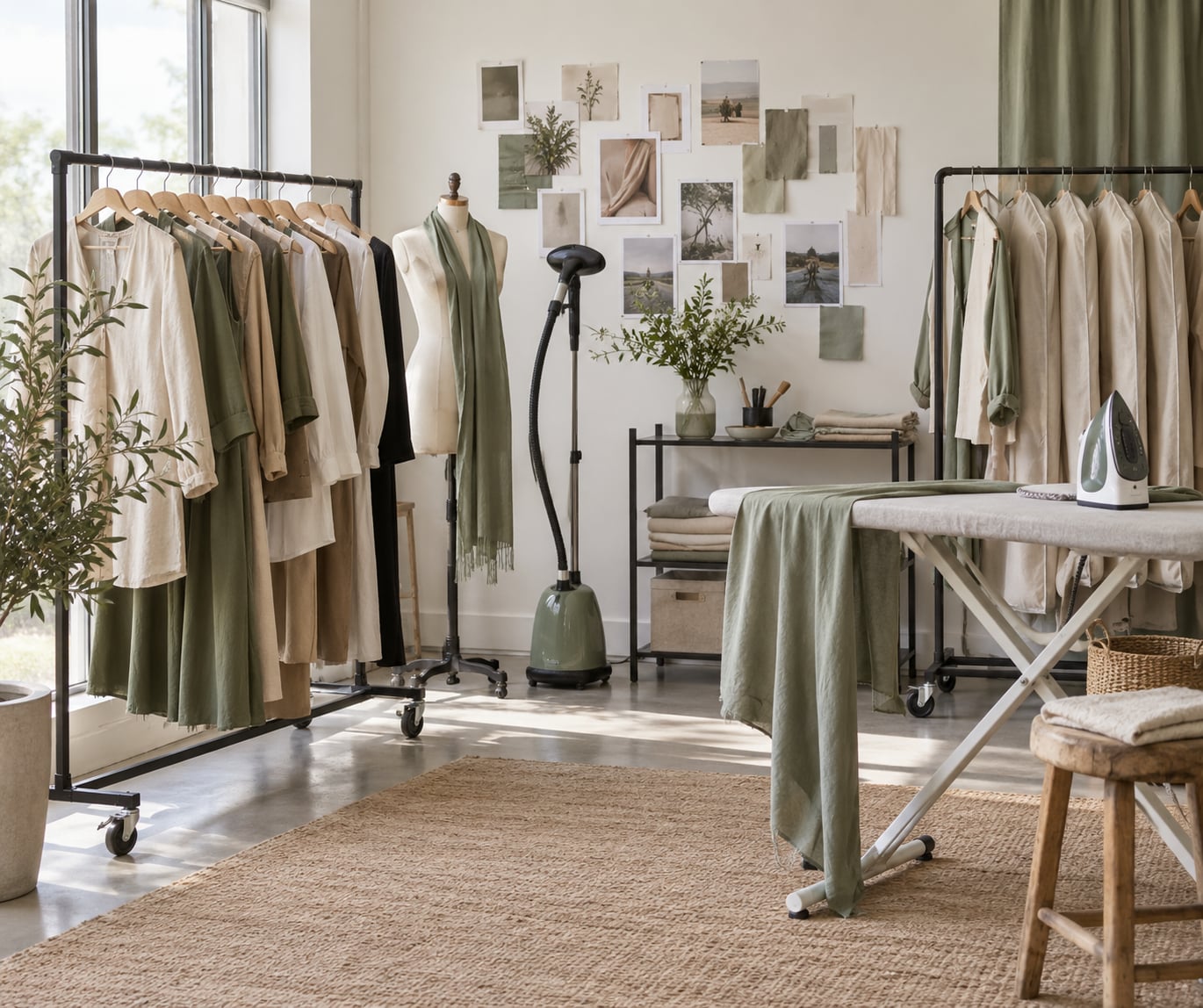
- Garment care. Steaming, pressing, and de-wrinkling. A steamer and a properly pressed dress shirt are named requirements in real postings, not nice-to-haves.
- Light sewing and alterations. Hemming, replacing buttons, taking in a waist. A TheFashionSpot hiring thread listed hems, pants, and buttons as hard requirements alongside steamer operation.
- Fitting coordination. Booking the room, pulling the looks in advance, keeping the fitting on schedule, logging what changed and why.
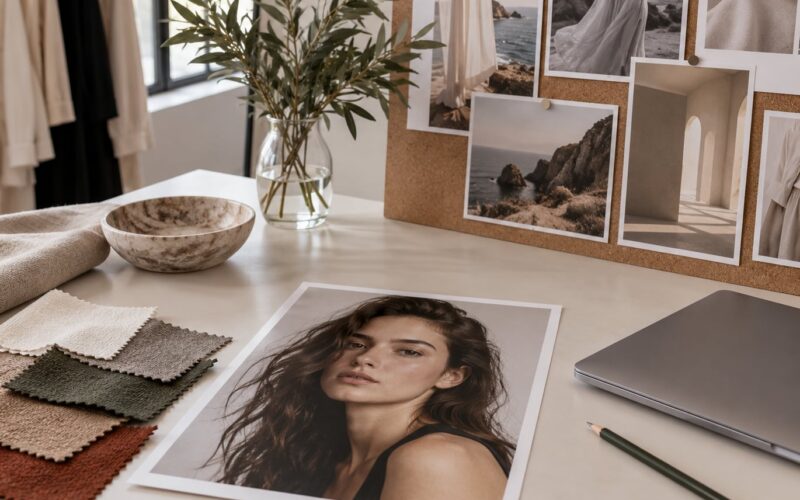
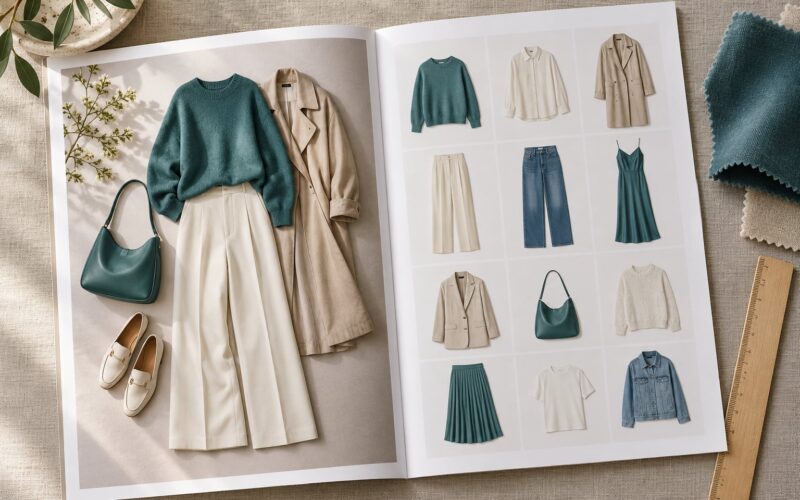
- Mood boards and look books. Building the visual reference the stylist works from, and the digital version the client signs off on.
- Look prep and set packing. Labeling, sequencing, and packing outfits for a shoot, then tracking which ones were actually worn.
- Inventory and check-in logging. Recording what came in, where it went, and what condition it returned in, especially on rental or resale stock.
- Returns and resale handling. Getting garments back to the vendor or buyer on time. Late returns are the fastest way to damage a working relationship.
- Digital updates. Keeping the look book, styling software, and shared spreadsheets current so the whole team sees the same version.
- Client intake. For personal styling work, asking the pointed questions that establish a client’s preferences, lifestyle, and constraints.
- On-set assistance. Steaming between takes, swapping pieces mid-shoot, and fetching alternates fast when a look fails under lights.
A shoot day runs long. On an editorial or commercial job, expect an early start for prep and load-out, fittings through the middle of the day, then the shoot itself with a second prep window for the next setup. On a personal styling job it looks different: appointments spaced through the day, each one a full outfit assembled from scratch, plus returns afterward.
How Much Does a Fashion Stylist Assistant Earn?
Most assistant roles in the US pay between $15 and $35 an hour. Below that floor, you are usually looking at commission-heavy retail work, and above it, specialty or leadership-track roles that come with more responsibility than a straight support job.
| Role or market | Published figure | Source |
|---|---|---|
| Stylist assistant, luxury department store | $21.93/hr average | Indeed, Saks Fifth Avenue |
| Assistant stylist, New York City | $17-$20/hr plus client tips | Glassdoor job postings |
| Celebrity stylist assistant, Illinois posting | $15-$25/hr posted range | ZipRecruiter |
| Freelance fashion stylist, Beverly Hills | $17-$30/hr posted range | ZipRecruiter |
| Stylist assistant, Columbus OH | $26-$35/hr base plus leadership and Star Level pay | Indeed |
| Fashion stylist, Jacksonville FL | $17.40/hr average | ZipRecruiter |
| Commission-only fashion stylist, nationwide | $8.17/hr average; $36,100/yr median | ZipRecruiter |
| Wardrobe stylist (the next title up) | $76,496/yr average, about $37/hr | Salary.com |
Two caveats on that table. The $8.17 figure is the commission-only average, which measures sales performance rather than what an employed assistant earns, and it is not a fair comparison to an hourly assistant wage. Editorial career sites still circulate a $25,000-$60,000 annual range for styling assistants, with roughly $50,000 for New York and $45,000 for Los Angeles, but those numbers are several years old and carry no stated source. Use them as a rough band, not a benchmark.
For freelance and day-rate work, there is no clean public average. A flat day rate covers one call or one shoot, and the real number depends on how many hours the day actually takes. Convert everything to an hourly figure before you compare offers.
Paid hours versus unpaid hours. This is the question assistants most often skip, and it changes the true rate more than any market difference. Ask whether sourcing, steaming, returns, and travel are billable. A $20/hr day rate that covers twelve billable hours out of a sixteen-hour day is a $15/hr job.
What Affects Fashion Stylist Assistant Pay?
Beyond the posted range, six factors move the number you actually take home.
Market. New York and Los Angeles carry the highest nominal rates because the work is there, and the cost of living eats a large share of the difference. A $20/hr rate in either city and a $17.40/hr average in Jacksonville are not the same lifestyle, even though the hourly numbers look close.
Employer type. A styling agency running editorial shoots, a brand in-house team, an independent stylist, and a retail floor are four different businesses with four different cost structures. The Columbus posting at $26-$35/hr is not comparable to a commission-only retail role, because leadership pay sits on top of the base.
Wardrobe ownership. Who supplies the clothes, shoes, and equipment changes the job. If you are expected to own a steamer, a full kit of tools, and your own client wardrobe, that has real value, and it is fair to ask about it directly.
Experience and scope. Handling fittings independently, sourcing on your own, and managing returns without supervision all justify a higher rate than prepping and carrying. The move from assistant to stylist is where the jump shows up: the wardrobe stylist benchmark sits well above every assistant figure in the table.
Travel and per diem. A traveling assistant role should separate the day rate from the per diem, and state whether travel days and return days are paid. Ask for it in writing.
Tips and commission. Client tips are real money in personal styling. The worked example from a New York posting: base pay of $17-$20/hr, with tips on top. Assuming a 20% tip rate on a $300 outfit at a 6% store commission gets you $36 on the sale, but only on the hours spent in front of the client. Spread across a full shift including prep and returns, the effective rate is lower than the number that looks impressive.
Benefits count too. Health coverage, paid time off, and a retirement match are worth real money that a 1099 rate never provides, and plenty of unadvertised offers underpay precisely because they do not have to price those in.
What Skills and Qualifications Employers Look For
Employers screen for a short, concrete list. Here is what shows up in real postings, and how you can prove you have it.
- Garment care technique. Steaming without water spots, pressing a dress shirt properly, knowing when a fabric cannot take heat. Prove it with a five-minute before-and-after of a garment you saved.
- Light sewing. Hems, buttons, darts, taking in a waist. The FashionSpot employer list named hems, buttons, steamer use, and pressing a shirt perfectly as the screening criteria.
- Organization and inventory discipline. Logging check-ins, tracking returns, and knowing where every piece is at any moment. A simple spreadsheet template in your portfolio does more than a paragraph claiming you are detail-oriented.
- Sourcing judgment. Knowing where to find a specific piece fast: showroom contacts, resale platforms, rental houses, brand PR teams. A short list of vendors you have actually worked with is persuasive.
- Written direction and discretion. The same thread that listed the technical skills also implied assistants work unsupervised from written instructions. Confidentiality matters when you handle a client’s closet or a celebrity’s schedule.
- Communication and energy. Fitting a client’s preferences from pointed questions, reading a room, and staying useful under a shoot deadline without being asked twice.
- Digital fluency. Styling software, shared look books, spreadsheets, and a clean photo workflow. Most assistants now hand over digital work, not just garments.
- Fit and fashion literacy. Size and fit records, fabric identification, and enough trend awareness to answer a question about why a trend is moving.
A degree helps, and programs like FIT, Parsons, and FIDM are named for a reason. They are not required. Plenty of working assistants came through retail, personal styling, or costume departments instead, and a portfolio with real evidence in it beats a certificate every time.
How to Find and Compare Job Offers
Search the standard boards and company career pages, then read the posting differently than most applicants do.
- Identify the title, then the actual work. “Stylist assistant,” “wardrobe assistant,” and “junior stylist” can describe the same job. Read the duties, not the header.
- Find the real number. If a range is posted, work out whether it is base, base plus commission, or a draw against commission.
- Ask what counts as an hour. Sourcing, steaming, returns, errands, travel, and the day after a shoot.
- Ask about the tools and the wardrobe. Who supplies the steamer, the kit, the clothes, the shoes, and the client wardrobe.
- Confirm the schedule and the floor. Guaranteed minimum hours, per-call minimums, cancellation terms, and how far ahead you are booked.
- Ask what the path looks like. How many assistants has this employer promoted to first assistant or stylist, and how recently.
Some red flags are worth walking away from. Unpaid “experience” or unpaid trial days with no end date. Commission-only when you are doing support work rather than selling. A posting with no hours, no rate, and no named employer. Duties that expand weekly while the rate stays fixed, which is how scope creep works in this industry. And a wardrobe expectation with no mention of who pays for the pieces.
Ask these questions in writing before you accept. Assistants on forums consistently describe negotiating blind as the thing they regret most, because the applicant is the only person at the table who does not know the real number.
Ways to Increase Your Earning Potential
Five moves raise what you can charge, in roughly the order they become available.
- Build a portfolio with evidence. Before-and-after garment photos, mood boards you built, look books you organized, a spreadsheet that tracked an actual wardrobe. Three strong pieces beat a long resume.
- Get specific. Editorial, commercial, e-commerce, red carpet, bridal, menswear, personal shopping. A specialist in one lane commands a premium over a generalist, and referrals come from specialists.
- Build the technical skills properly. A course or practice time on steaming, pressing, and hems is a rate argument, because it removes the reason a stylist is nervous about handing you a client.
- Keep the contacts. Assistants move through agencies, studios, retailers, and freelance stylists. The contacts from your first job are the reason the second one exists.
- Negotiate with the numbers in front of you. If a comparable role in your market posts at a certain hourly average, an offer below that is a conversation, not a verdict. Ask in writing, give a day for a response, and be ready to walk.
The ladder itself is short and worth mapping: stylist assistant, then first assistant to a lead stylist, then stylist, then lead or head stylist, and for a few, creative direction. The wardrobe stylist benchmark of roughly $76,500 a year is the clearest marker of what the far end looks like from inside the entry role.
Frequently Asked Questions
How much do fashion assistants get paid?
Stylist assistants typically earn $15-$35 an hour in the US, with a luxury department store assistant averaging about $21.93/hr and a New York personal styling posting at $17-$20/hr plus client tips. Commission-only retail roles average far less, around $8.17/hr, because that figure tracks sales performance rather than an hourly wage. Freelance day-rate work varies most, since the total hours behind a single call change the effective rate.
What skills do you need to be a fashion assistant?
The most-screened skills are concrete: operating a steamer, pressing a dress shirt properly, light sewing such as hems and buttons, and garment care for delicate fabrics. Beyond technique, employers look for inventory organization, fast sourcing, written direction without supervision, discretion with client wardrobes, and digital fluency with look books and shared spreadsheets. Proof beats adjectives, so a portfolio with garment care before-and-afters carries more weight than a claim that you are detail-oriented.
How do you become a stylist assistant?
Start with a small portfolio: before-and-after garment care photos, two mood boards, and one look book you assembled. Apply to retail styling floors, personal styling businesses, and agencies for assistant roles, where entry-level postings often ask for availability and coachability rather than years of experience. Learn steaming, pressing, and hems now, because those are the requirements that screen people out. Expect unpaid work to be common, and set a limit on how much of it you will absorb.
What are the responsibilities of a wardrobe assistant?
A wardrobe assistant manages someone else’s closet rather than styling for a shoot or a camera. Duties center on garment care, hanging and sequencing by outfit, logging what comes in and goes out, keeping records of size and fit, arranging repairs and alterations, and packing for travel or events. The work is steadier and less deadline-driven than editorial styling, and it is usually part-time and hourly, often sharing a role with personal shopping appointments.
What are the responsibilities of a wardrobe stylist?
A wardrobe stylist works in film or television production and is responsible for costume continuity: what an actor wears in one scene has to match the previous scene, across weeks of shooting. Duties include pulling and returning costumes from rental houses, fitting actors, steaming and repairing between takes, photographing looks for the continuity record, and coordinating with the costume designer. It sits above stylist assistant on the ladder, with an average benchmark near $76,500 a year.
Do fashion stylists get paid well?
It depends entirely on which side of the industry you are on. Editorial and wardrobe styling pay salaried or day-rate wages and rarely include commission, while retail and personal styling can pay a modest hourly base with commission and client tips on top, which swings with foot traffic and sales. The reliable comparison is wardrobe stylist at roughly $76,500 a year against a stylist assistant range of $15-$35 an hour. Track the ceiling you are aiming at, not the average.
Start with the part nobody researches: which hours count. Before you compare two offers at all, get the answer on prep, sourcing, returns, and travel, because that single detail separates a $20/hr job from a $15/hr one wearing the same title.
Then make one thing you can show. A steamer demo, a five-look book, a mood board for a season you were not hired for. Then apply to postings that name a real rate, and ask for the number in writing. That is the whole sequence, and it starts today.