A fashion publicist spends most of the day on media relations: researching who covers a beat, writing pitches that fit what those writers actually publish, following up, and logging who replied. Around that sit press releases, line sheets, sample deliveries, show seating and client calls. Most of it is unglamorous and repeatable, and that is exactly why the job holds together.
Anyone asking what does a fashion publicist do all day usually pictures a runway show. The show is a few hours. The work around it is nine months.
Table of Contents
- What Does a Fashion Publicist Do All Day? 2026
- The Core Responsibilities of a Fashion Publicist
- How Is a Fashion Publicist’s Day Structured?
- A Typical Fashion Publicist Daily Schedule
- What Fashion Publicists Do Before a Major Event
- What Does a Fashion Publicist Do All Day During Show Week?
- How Fashion Publicists Pitch Stories to Media
- How Much of the Job Is Communication?
- What Does a Fashion Publicist Do When Something Goes Wrong?
- How to Start a Career in Fashion Publicity
- Frequently Asked Questions
- Do fashion publicists work only during fashion week?
- How many hours a week does a fashion publicist usually work?
- What skills do I need to become a fashion publicist?
- Is a fashion publicist the same as a stylist?
- Can you work in fashion PR without an agency?
- Start With the Work Behind the Headlines
What Does a Fashion Publicist Do All Day? 2026
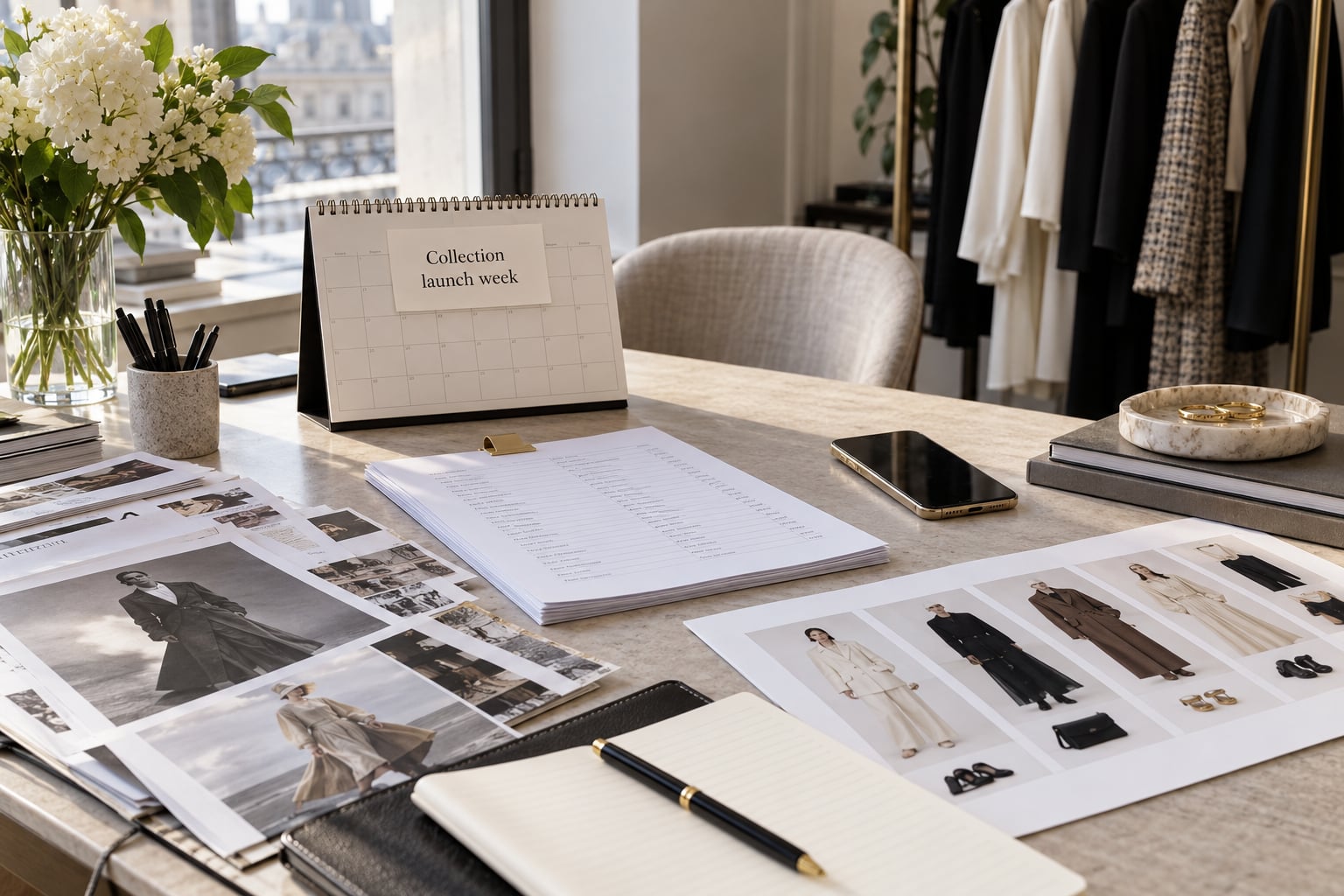
A fashion publicist earns coverage for a label by managing relationships with editors, stylists, photographers and writers. They write the materials, send the samples, arrange access to shows and showrooms, and keep a record of what came of it.
The day looks different depending on where you sit. An agency publicist juggles several labels at once and moves between their problems hourly. An in-house publicist works inside one brand, attends internal launch meetings and answers the same small group of writers repeatedly. A freelance publicist carries one or two clients end to end, including the invoices nobody trains you to write.
That last part surprises people. Freelancers spend a slice of every week on contracts, scoping and chasing payment, which is the unglamorous tax on running your own list.
The Core Responsibilities of a Fashion Publicist
Seven areas fill most publicist weeks, and they rarely take turns. Two land on the same afternoon more often than not.
- Media relations. Researching editors and outlets, pitching, following up and keeping the relationship warm between campaigns.
- Writing. Press releases, media kits, look book captions, line sheet copy, talking points and the short version a designer can say on camera.
- Event production. Press days, showroom appointments, showroom weeks, launches, presentations and the seating plan that goes out weeks ahead.
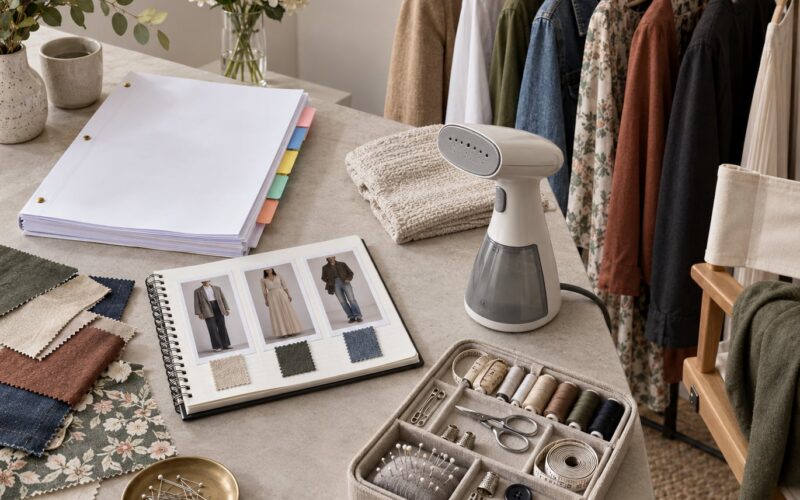
- Sample and seeding logistics. Choosing who receives a piece, tracking where it is, and getting returns processed so the next editor does not receive last season’s coat.
- Brand counsel. Advising the founder or design team on what can be said publicly, by whom, and in what order.
- Monitoring and reporting. Reading coverage as it lands, clipping it, and reporting reach and earned media value back to the client.
- Crisis response. Getting ahead of bad news, coordinating a response, and documenting what happened.
How Is a Fashion Publicist’s Day Structured?
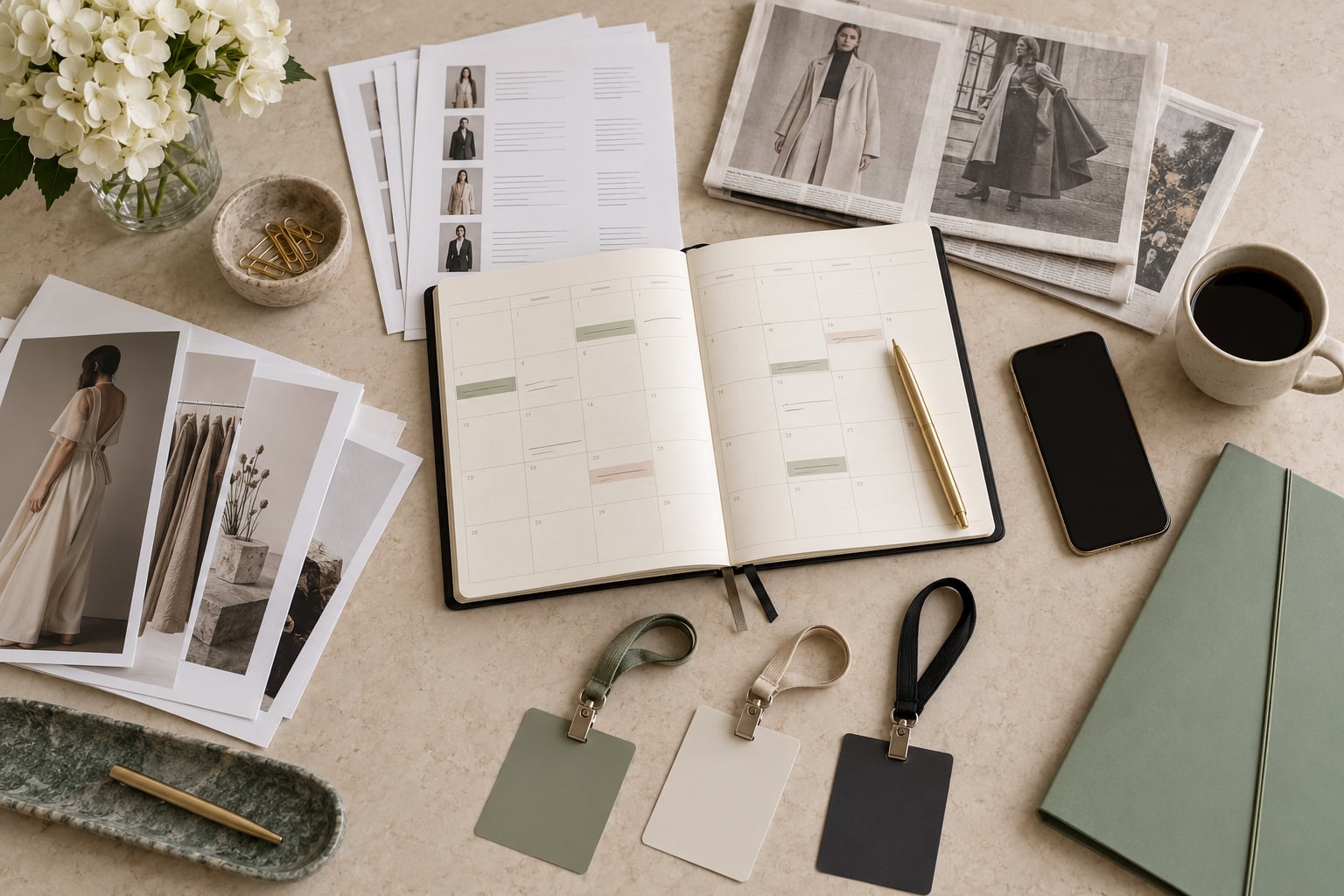
Think of it as three layers. The daily layer is fixed: monitoring coverage first, then pitching and writing, then follow-up and logistics, then tomorrow’s plan. The weekly layer is a rhythm: a client call, a database update, a report, a check on outstanding samples. The monthly layer is where the money and the calendar live, with budgets, contracts and launch dates moving around them.
A publicist who loses the daily layer loses the job quietly. Relationships decay faster than any other asset in communications, because a writer who is ignored once simply stops replying to the next email.
A Typical Fashion Publicist Daily Schedule
This is a plausible weekday at an agency handling a launch in six weeks. Treat it as a shape, not a script.
| Time | What usually happens |
|---|---|
| 8:00-9:00 | Monitoring sweep across Google Alerts, media monitoring tools and the overnight inbox. Two replies from yesterday still need answers before anything new goes out. |
| 9:00-10:30 | Pitching. Editor list built for the collection, angles drafted, emails sent one at a time rather than blasted. |
| 10:30-12:00 | Writing and editing. Press release revisions, media kit copy, designer talking points, replies to interview requests. |
| 12:00-13:00 | Lunch, usually at a desk, often with a designer or account director debriefing the day’s angles. |
| 13:00-14:30 | Follow-up on unreturned pitches plus sample tracking. Where is the coat, who signed for it, has it been photographed. |
| 14:30-16:00 | Client or designer call. Progress, coverage so far, what is landing and what is not, decisions on next moves. |
| 16:00-17:30 | Event and logistics work. Seating charts, showroom appointments, press day timing, briefing the venue or show producer. |
| 17:30-19:00 | Logging pitches and coverage in the database, writing tomorrow’s list, sending what was promised. On show weeks this runs late. |
Exact hours vary by agency, client, launch calendar and event schedule. In-house teams often start earlier because internal meetings come first; freelancers often start later because the day is built around other people’s inboxes.
What Fashion Publicists Do Before a Major Event
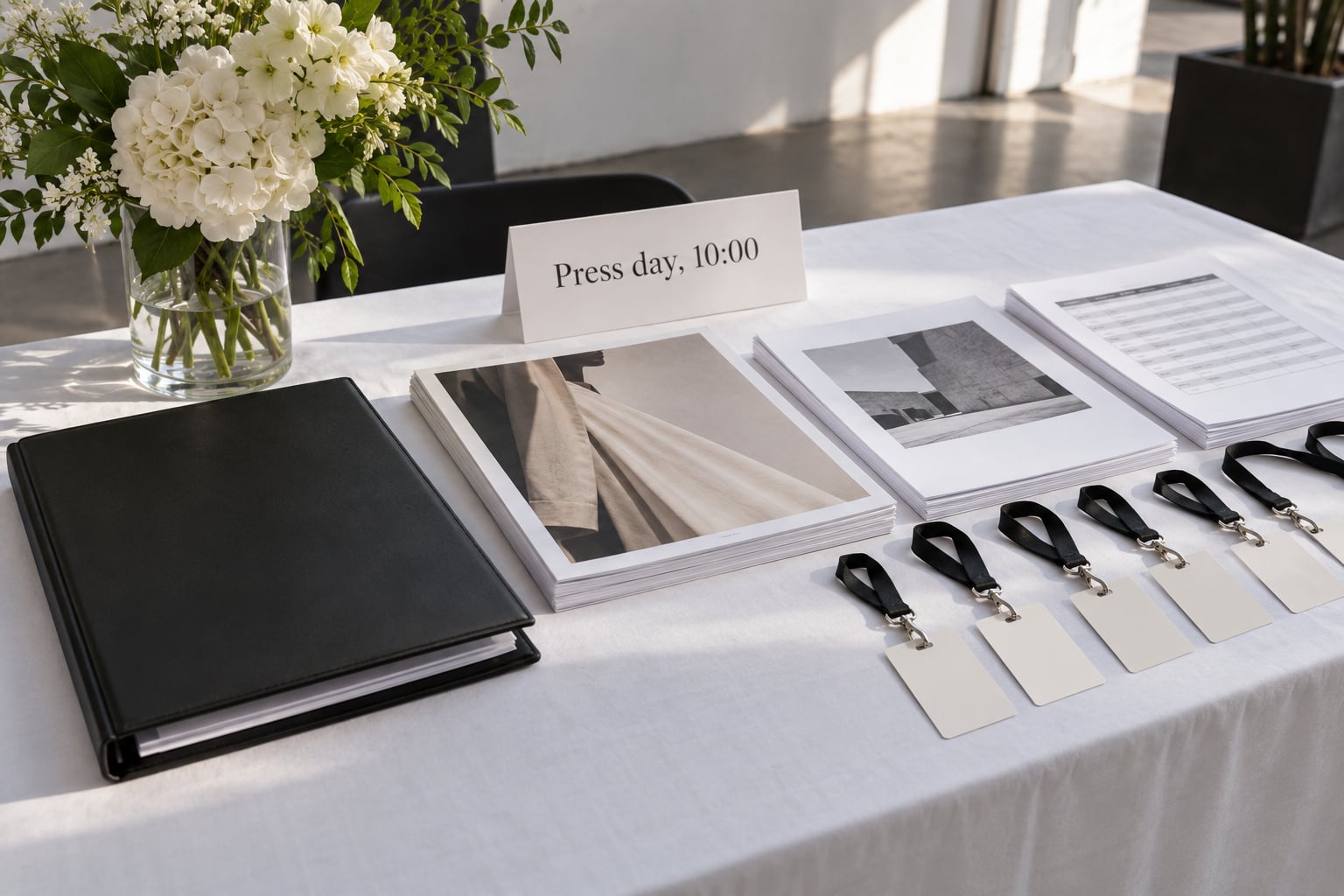
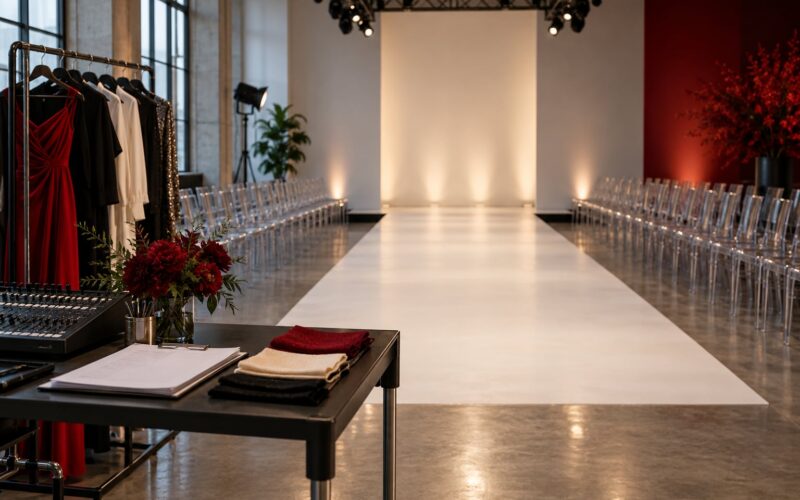
Show work starts months earlier and the last ten days are the loudest. The guest list is assembled first, then the seating, then the outreach that fills it.
The list is a working document rather than a name dump. A publicist decides who serves a business purpose, who delivers reach, and who will simply take a seat from someone useful, then confirms every response with the designer’s approval before invitations go out.
Seating is politics with a floor plan. Front row placement is negotiated in advance with people who matter to the brand, and the schedule is reworked whenever a designer asks for a change at 4pm the day before.
Press materials are assembled in parallel: press release, media kit, look book, digital press book, line sheets for each look with fabric and pricing details, credit list, and often a printed set of quotes for designers to reuse.
On the day itself, the publicist briefs venue staff, walks the seating, handles last-minute access, watches the show for reactions worth capturing, and manages who is where afterward. The professional version of that moment is small: a good photograph, a considered quote, and a follow-up list ready before the audience reaches the exit.
What Does a Fashion Publicist Do All Day During Show Week?
It becomes a different job with the same skills. The schedule compresses: a 7am call with the design team, a 9am seating walk, a show or presentation every afternoon, then a nightly block of notes, thank-you messages and tomorrow’s pitch lists. The practical part of surviving it is deciding in advance what will not happen that week, because something always does.
How Fashion Publicists Pitch Stories to Media
A pitch works when it matches something the writer already publishes and the brand genuinely has to say. Publicists read a writer’s recent work before contacting them, because a pitch built on the wrong assumption is dead on arrival.
The uncomfortable part, and the part rarely written down, is that most pitches go unanswered. Good publicists treat silence as ordinary and keep following up politely, twice at most, then move on. Relationship does not require an answer, only a real reply eventually.
| Stage | What it looks like in practice |
|---|---|
| Research | Checking recent articles, noting the angle the writer favors and the kind of brand they have covered before. |
| Angle | Finding one specific story: a material, a founder, a technique, a reopening. Not the whole brand. |
| Tailor | Rewriting the opening lines for that writer. Two sentences that prove you read their work. |
| Send | One email, one subject line that describes the story rather than the product, sent at a civil hour. |
| Follow up | One short bump after three to four days. No guilt, no essay, no apology for bothering them. |
| Deliver | Confirm logistics: images, credit, embargo, sample shipping, interview timing. |
| Close the loop | Thank them, note whether it ran, update the record so the next pitch is better informed. |
When it works, the follow-up work starts immediately. Someone has to confirm credit lines, get the images cleared, and make sure the piece appears in the coverage report at month end. The pitch is the visible part. The delivery is the job.
How Much of the Job Is Communication?
Nearly all of it. The honest answer to what does a fashion publicist do all day is that the day is made of conversations, and the interesting question is which ones. These ranges are illustrative rather than measured averages, since the split changes with every client list and launch calendar.
| Activity | Share of a working day |
|---|---|
| Email, pitching and follow-up | 25-35% |
| Writing and editing press materials | 15-20% |
| Meetings with clients, designers and teams | 15-20% |
| Calls and interview coordination | 10-15% |
| Sample and event logistics | 10-15% |
| Monitoring, reporting and database admin | 5-10% |
| Social and digital support | 5-10% |
The smallest lines are the ones that surprise newcomers. Digital support and reporting get treated as leftovers, then quietly absorb the whole afternoon when a launch lands badly.
What Does a Fashion Publicist Do When Something Goes Wrong?
Crisis work is less dramatic than the outside imagines, because most of it happens before anyone has said anything publicly.
The sequence is usually monitoring first, then internal alignment. A publicist who sees a story forming has very little time, and the first task is to get the client and design team in one room or on one call with the same facts. Once the facts are agreed, someone has to choose a response: ignore it, respond privately, issue a short statement, or do nothing until the attention passes.
Whatever gets decided, it gets written down. Who said what, when, and to whom, so the next person joining the account does not contradict the last person. Decisions during a crisis are rarely perfect on the first pass, and the documentation is what makes the second pass better.
There is no formula that produces a good outcome, and publicists who promise one are selling something. What is controllable is speed, accuracy and consistency of message.
How to Start a Career in Fashion Publicity
The entry route is narrower than most career guides admit, but it is not closed. Six steps cover it.
- Learn the beat before the job. Read the publications you would pitch, note who covers fashion and beauty and what they actually write about, and keep notes.
- Write every day. A press release, a pitch, a five-line brand story. The craft is short and the bar is high.
- Build a small body of work. Two or three sample campaigns with a named angle, a target list and a sample pitch beat a degree for most hiring managers.
- Take the unglamorous work first. Internships and assistant roles in this industry run on logistics: packing samples, organizing returned jewelry from a shoot, chasing credits, updating a media database. It is where the artifacts get learned.
- Pick one client to study deeply. Know a label’s collections, its founder, its pricing tier and its competitive set well enough to brief a writer in ninety seconds.
- Follow through in public. Send the follow-up, get the credit line confirmed, log the result. Reliability is the trait that moves people up, and it is entirely in your control.
One internship diary on PR Couture describes an ordinary office day as sorting returned jewelry, reaching out to stylists and introducing assets, and that is an accurate description of entry level in the field. People on forums like r/PublicRelations make the same point from the other side of the ladder: the first year is logistics, and the pitching comes later.
Frequently Asked Questions
Do fashion publicists work only during fashion week?
No. Show weeks are the loudest part of the calendar, but they occupy a few weeks a year. The steady work sits between them: pitching, press materials, sample returns, showroom appointments, client reports and long-term editor relationships. Publicists working for an emerging label may have a completely different pattern, with quieter months spent building a media list from scratch and campaign weeks spent pitching it.
How many hours a week does a fashion publicist usually work?
Most weeks run somewhere around 40 to 50 hours, and show weeks stretch well past that. Accounts that live or travel during a runway schedule add travel days and late finishes on top. A publicist who tells you a fashion PR job is nine to five is describing an in-house role with no live events. Ask how the last month actually ran rather than what the contract says.
What skills do I need to become a fashion publicist?
Short, clear writing comes first. After that: research habits, an instinct for what a specific editor would care about, organization under deadline, and the ability to be told no fifty times without losing interest. Fashion knowledge helps because you need to talk about fit, fabric and price with a designer, but most of the technical knowledge is learned on the job through reading and asking.
Is a fashion publicist the same as a stylist?
No, and the two jobs sit on opposite sides of the same event. A stylist chooses and fits clothes for a person, a shoot or a red carpet. A publicist decides who gets access, prepares the press materials and assets a stylist needs, and manages the relationships that make the appearance happen. At a show you will see both, working from separate plans toward the same morning.
Can you work in fashion PR without an agency?
Yes, and many publicists do it as freelancers handling one or two labels at a time. It gives you direct client contact and a shorter decision chain, and it costs you shared resources, a support team and the media database an agency maintains. The work itself is identical: pitch, write, ship samples, manage the show and report the coverage. The extra job is running the business around it.
Start With the Work Behind the Headlines
Pick one label you like and write down what you actually know about it: the founder, the last two collections, the fabric, the price range, who covers it and what they have not covered yet. Turn that page into one pitch and one organized follow-up plan. That single exercise covers more of what does a fashion publicist do all day than any job description will, and it is exactly the kind of preparation the role rewards.
This guide was updated for 2026 to reflect current industry practice.