A lookbook is a visual, editorial presentation of a collection built to make a buyer want it. A line sheet is a data document that lists every style with specs, prices and ordering terms so a buyer can actually place an order. Most brands send both, to the same buyer, for opposite jobs.
That split trips up more new labels than anything else in wholesale. Brands build a beautiful lookbook, send it after an appointment, and sit waiting for a PO. Meanwhile the buyer is scrolling back through your email trying to find the wholesale price, the size run and the ship window.
Small brands usually hit the same wall from the other side. They skip the lookbook because a styled shoot feels expensive, ship a bare spreadsheet, and wonder why nobody remembers them at the next market. Neither document does the other’s job, and pretending otherwise is the expensive mistake.
Table of Contents
- What Is a Lookbook vs. a Line Sheet? at a Glance
- What Is Each Document Used For?
- How Do Their Formats and Content Differ?
- Page layout and photography
- What a line sheet actually contains
- How Styling Changes the Message
- Who Uses Each Document?
- Which One Should You Choose?
- Frequently Asked Questions
- Can a lookbook replace a line sheet?
- Do I need both documents for a small fashion collection?
- Should a line sheet include model photography?
- What information belongs in a fashion line sheet?
- Is a lookbook the same as a lookbook presentation?
- Conclusion
What Is a Lookbook vs. a Line Sheet? at a Glance
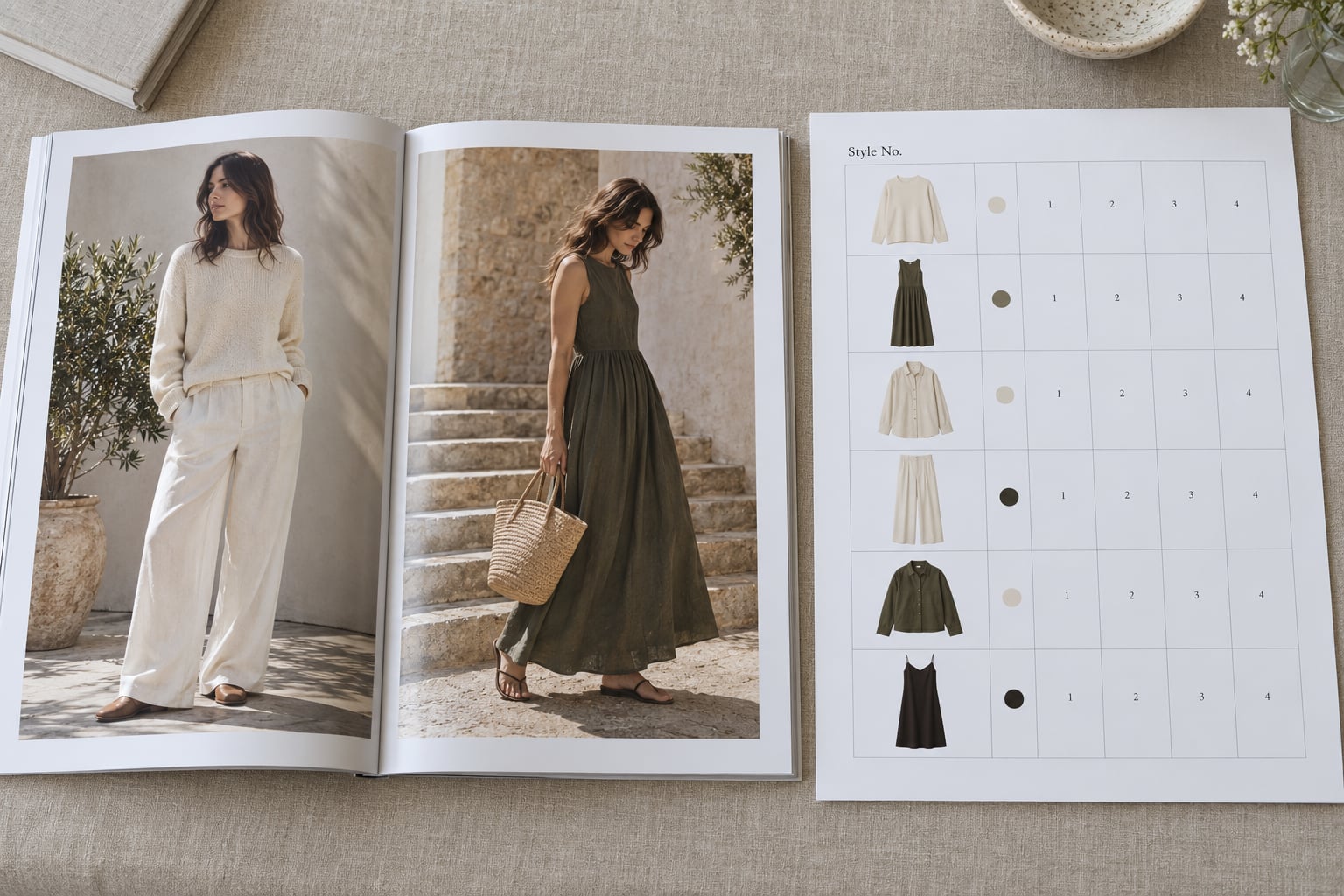
Here is the short version, side by side.
| Criterion | Lookbook | Line sheet |
|---|---|---|
| Primary purpose | Sell the feeling and the idea of the collection | Let a buyer order the collection accurately |
| Main audience | Buyers, press, stylists, showroom clients, your own team | Wholesale buyers, merchandisers, sales reps, order desks |
| Visual style | Editorial layouts, full-bleed styled photography, mood | Consistent grid, clean backgrounds, small images |
| Product information | Minimal or none; sometimes a style number in a caption | Style number, colorway, size run, fabric content, MOQ |
| Styling | Complete looks with accessories, hair and makeup | Single garment or product, flat or on white |
| Order quantities | Never | Per style, per color and per delivery minimums |
| Pricing | Rarely, and never itemised | Wholesale price plus suggested retail per style |
| Season and delivery details | Season name on the cover at most | Delivery window and order cut-off date on every page |
| Format and length | Print or PDF, often 20 to 60 pages, mobile-friendly | Usually 2 to 8 pages, built to be forwarded and printed |
| When it gets sent | Before the appointment, to open the conversation | At or immediately after the appointment, to close it |
What Is Each Document Used For?
A lookbook is a mood document. It shows the collection as it was meant to live in the world: full outfits, a location, a cast, a point of view. Its job is emotional. Buyers who flip through a good lookbook should be able to say what the brand is about without reading a single word.
A line sheet is a working document. It answers the questions a buyer types into an order form: what is the style number, which colors are available, what does the size run look like, what is the minimum, when does it ship. It is skimmed, printed, forwarded to a colleague and marked up with a pen.
Both usually land in the same inbox, sometimes as one PDF. The lookbook earns the appointment, the line sheet converts it. A designer working through a season will usually build the lookbook first, because the imagery shapes the collection, then pull the specs out of the tech pack once production is locked.
How Do Their Formats and Content Differ?
Page layout and photography
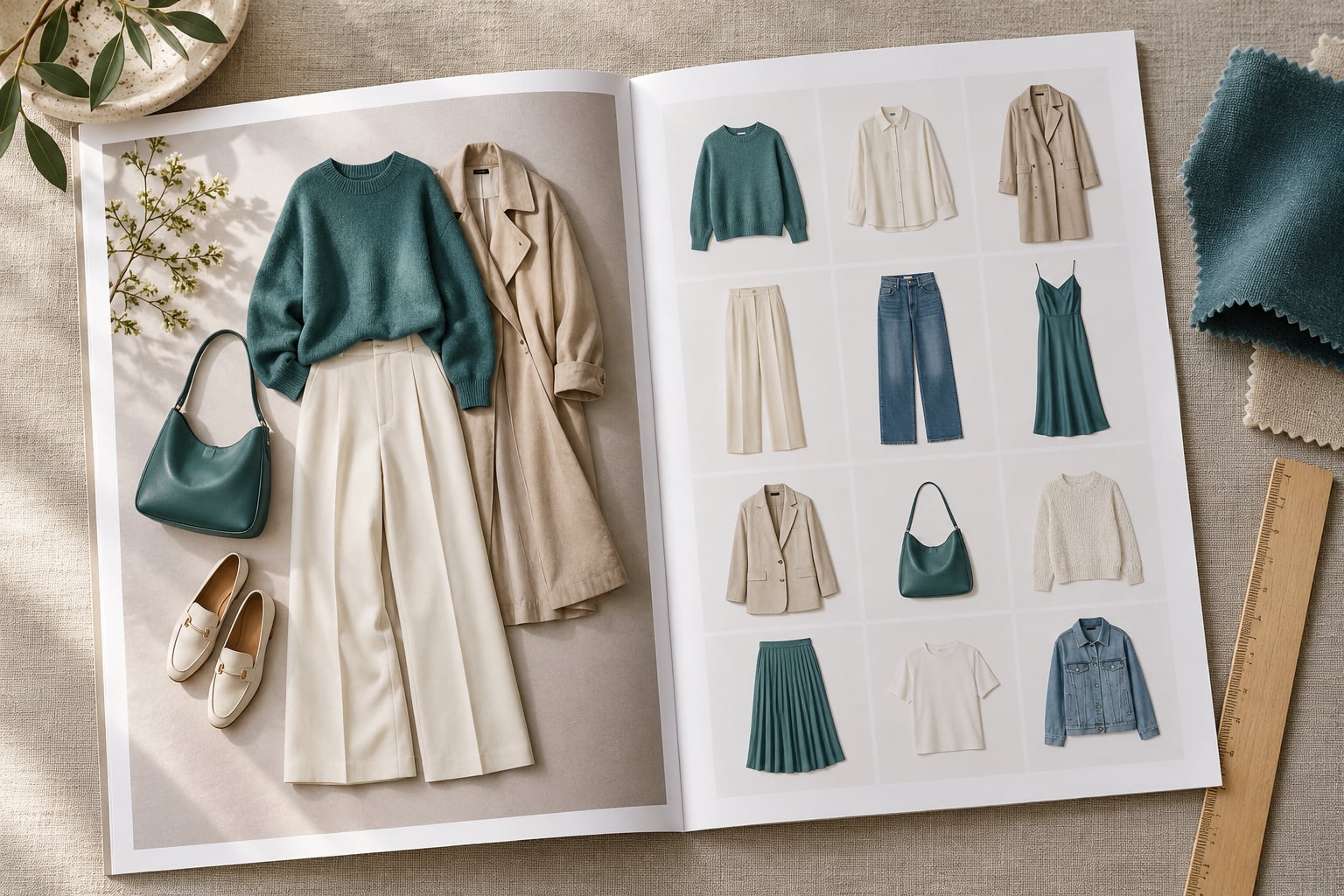
A lookbook page is composed like a magazine. Images run full bleed or sit off-centre with white space around them, type is minimal, and pages are numbered for no reason other than tidiness. Photography is shot on location, usually with a model, and the crop matters more than the garment.
A line sheet page is composed like a spreadsheet that got a designer. Every style sits in the same position on a strict grid, at the same size, in the same order from the first page to the last. Images are small, clean and consistent, because the buyer is comparing forty styles and any variation in scale reads as sloppiness.
What a line sheet actually contains
Row by row, a working line sheet carries the fields a buyer needs to write an order without emailing you first:
- Style number, short and memorable, ideally coded to season and category
- Product image plus a color swatch or the back of the garment
- Color names buyers can repeat accurately, with hex or Pantone references where relevant
- Size run with the actual garments in each size
- Fabric content and care
- Wholesale price and suggested retail, so the buyer can see their margin
- MOQ expressed per style, per color, per delivery or per market
- Delivery window and order cut-off date
- A named contact, usually the sales rep, with a phone number and email
A real example row looks like this: style 2417, four colors, sizes XS to XL, 60% cotton and 40% linen, wholesale 38, retail 96, minimum six per style, ship January 15, order by November 1. That is a complete order. Nothing else is needed.
Lookbooks carry almost none of that. A well-made lookbook might name the season, list the credits for the photographer and stylist, and put your website at the bottom. Anything more starts competing with the imagery.
How Styling Changes the Message
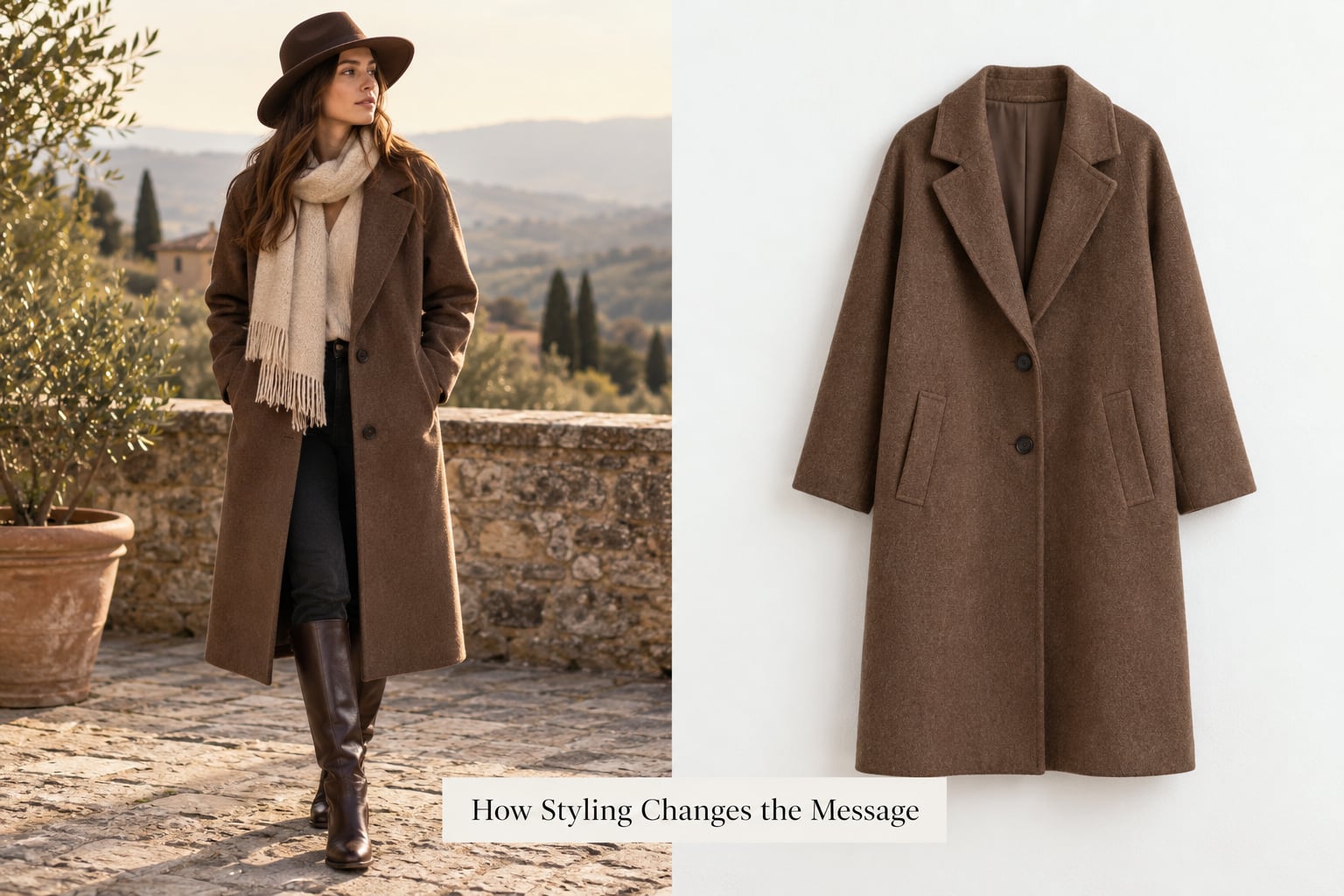
Styling is not decoration in a lookbook. It is the argument. A trench shown with leather boots and a knit scarf is selling a lifestyle and a price point; the same trench on a white background against a white wall is selling volume and margin. Buyers read that difference instantly, even if they never consciously notice it.
Location, casting and art direction carry the same weight. Who is in the frame, what season it looks like, whether the palette runs dusty or saturated, whether the model is moving or still. Those choices tell a multi-brand buyer whether your clothes sit next to theirs in a store, and they tell press what to write about.
Line sheets deliberately strip this back. Isolation is a feature. When a style is styled, a buyer cannot tell the difference between the shirt you are selling and the jacket you put on the model to sell it, and shoppers will return the jacket. Clean product information keeps the comparison honest.
Veteran buyers put it plainly: a clear technical sketch beats a bad photo, and most sheets omit the back of the garment. If you only have styled imagery, shoot the piece flat as well.
Who Uses Each Document?
The lookbook circulates outward through creative relationships. Press and stylists use it for coverage and pulls. Showroom clients use it to imagine the floor. Your own marketing and social teams repurpose the same pages all season, which is one reason a shoot produces more value than it appears to on the day.
The line sheet circulates inward through operations. Buyers use it to build an order and to justify it to a merchant. Merchandisers use it to plan the buy against the season calendar. Sales reps work from it in the appointment and refer back to it afterward when the buyer has lost the thread. Order desks, warehouses and production partners use it to check that what is knitting matches what was approved.
Responsibilities do overlap at one point: the person who signs the order off usually needs both. The creative team approves the lookbook because it represents the brand, and the merchandising team approves the line sheet because it is the contract.
Which One Should You Choose?
Choose a lookbook when your goal is storytelling: pitching a new account, showing a market or trade show collection, building press interest, or helping a buyer fall for the season before they check a single number. Choose a line sheet when your goal is accuracy: ordering, reordering, inventory planning, or any conversation where someone needs wholesale price, size run and delivery dates in writing.
You will need both more often than not. The practical version for a small brand is one shoot that feeds both documents: styled and location images go into the lookbook, flat shots and detail crops go on the line sheet, and the tech pack fills in the columns. That removes the main cost objection to owning both, which is that a second document sounds like a second production budget.
A few other things worth doing with either document. Keep page counts honest: a lookbook runs long by design, a line sheet should not run past a handful of pages unless you are shipping a full catalog. Export both as mobile-friendly PDFs, since most buyers open them on a phone between appointments. Print line sheets in advance, because buyers mark them up. And name your minimums clearly, because ambiguity there is what stalls orders for weeks.
Frequently Asked Questions
Can a lookbook replace a line sheet?
No. A lookbook builds desire but carries almost no ordering data: no style numbers, no wholesale prices, no size runs, no delivery window. A buyer who only has your lookbook still has to email you for the details before writing an order. The reverse also fails, because a line sheet alone will not make anyone remember your brand between buying appointments.
Do I need both documents for a small fashion collection?
Yes, in practice. Many small labels get through with one and one half: a lookbook for the pitch and a single-page line sheet for the styles they are actively selling. If your collection is under about fifteen styles, a two-page line sheet with a cover is plenty. The lookbook can start as a slideshow of the same images, printed only when you have a real appointment list.
Should a line sheet include model photography?
Rarely, and never styled shots. Buyers need to see the product alone, on a clean background, at a consistent size across every style on the page. Model shots belong in the lookbook where they sell the mood. If you have no flat images, line art or technical sketches will do more for you than lifestyle photography that hides the colour.
What information belongs in a fashion line sheet?
Style number, product image, color names, size run, fabric content and care, wholesale price, suggested retail, minimum order quantity, delivery window, order cut-off date, and a named contact with a phone number and email. Season and delivery details belong in the header or footer of every page so a buyer printing page three still knows what he is looking at.
Is a lookbook the same as a lookbook presentation?
They share a purpose but not a format. A lookbook is a document, usually a designed PDF or printed booklet, that a buyer can reopen, forward and flip through alone. A lookbook presentation is usually a slide deck or live walkthrough you deliver in person or on a call. Many brands prepare both from the same images, but the deck gets narrated and the document does not.
Conclusion
A lookbook earns attention with imagery and styling. A line sheet converts that attention into an order with numbers. They serve the same buyer at the same moment in your season, and neither one works as a substitute for the other.
So name your immediate goal before you start designing. If the meeting is about convincing someone, build the lookbook. If it is about closing an order or restocking an account, build the line sheet. If you are doing both in one conversation, shoot once and build both from the same images.