To become a wardrobe stylist for TV, you build a portfolio, get assistant work on real sets, learn continuity and script breakdowns, then book through a production agency or a union list. Most people spend six to eighteen months of unpaid or low-paid crew work before a first paid wardrobe call. The skills are learnable and the entry gate is experience, not a degree.
The confusing part is that nobody titles the job the way you expect. A “wardrobe stylist” on a scripted series might report to a costume supervisor, who reports to a costume designer, who reports to a production designer. Meanwhile the same person does the job a “costumer” does on a commercial and the job a “costumer” does on a feature film. Getting comfortable with that vocabulary is the first real step.
This guide is for people targeting scripted series, talk shows, reality TV, news and broadcast, commercials and music videos, and it works for career changers with no fashion training. It is not a guide to theatre costume design, which is a different craft with a different job market.
Short version of the path:
- Pick the specific wardrobe role you are aiming at.
- Build a focused styling portfolio and a reel that shows range.
- Learn script breakdown, research and continuity tracking.
- Assemble a working kit you can carry onto a set.
- Write a resume, contact list and reel a booking team can read in two minutes.
- Get real credits, documented, with testimonials.
- Network with wardrobe departments through specific outreach.
- Prepare for call sheets, fittings, set conduct and your first solo booking.
Table of Contents
- What You Need Before You Can Work in TV Wardrobe
- Formal qualifications: what actually helps
- Step-by-Step: How to Become a Wardrobe Stylist for TV
- 1. Decide Which TV Wardrobe-Styling Role You Want
- 2. Build Versatility and a Professional Styling Portfolio
- 3. Learn TV Research, Continuity, and Wardrobe Logistics
- 4. Organize a Compact Wardrobe Working Kit
- 5. Create a Resume, Contact List, and On-Camera Reel
- 6. Get Real Credits and Testimonials
- 7. Network With Producers, Stylists, and Wardrobe Departments
- 8. Prepare for On-Set Work and Start Booking Jobs
- Common Mistakes That Stall a Wardrobe Career
- Frequently Asked Questions
- How quickly can I become a wardrobe stylist for TV?
- How much do entry-level TV wardrobe stylists make?
- Do I need a fashion degree to become a TV wardrobe stylist?
- Do TV wardrobe stylists need to belong to a union?
- How do I get TV wardrobe experience with no credits?
- Conclusion
What You Need Before You Can Work in TV Wardrobe
Nobody hands you a checklist at the start, so here is one that reflects what wardrobe teams actually look at. None of it requires a formal qualification. What it requires is proof that you can hold a character, a budget and a deadline at the same time.
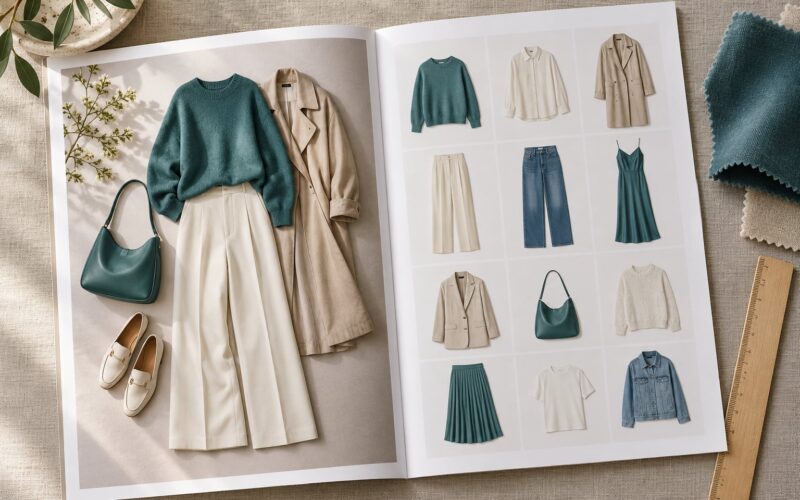
A portfolio that shows range. Twelve to twenty edited looks beat a folder of sixty. It has to cover different eras, body types, budgets and moods, because that range is what a costume designer is scanning for when they are deciding whether to return your email.
A resume with production work on it. Even assistant days count. Department, show or project name, your title, the supervisor you worked under, dates and hours.
An on-camera reel. TV is a moving image business. A short reel of outfit changes, fittings and set footage tells a hiring team more than a contact sheet of stills, because it shows you understand how clothing behaves in motion and on camera.
A current contact list. Every supervisor, stylist, rental house and coordinator you have worked with or spoken to, with roles and the project where it happened. This becomes your booking channel long before an agent does.
A working kit. Detailed in step 4. It is the cheapest credibility you will ever buy.
Wardrobe experience of some kind. Personal styling, retail styling, alterations work, wardrobe rental, theatre or event styling all count. They are not TV, but they prove you can fit, alter, organize and deal with a real person on a deadline.
Formal qualifications: what actually helps
A fashion degree is not a requirement for TV wardrobe work. What it gives you is pattern knowledge, fabric theory and a piece of paper that opens internship applications. If you have none of that, garment construction courses, alterations apprenticeships and costume rental house jobs teach the same things with better timing.
Styling certificates and boot camps vary wildly. Stylists working in the field are blunt about the return: a certificate does not get you a booking, real named on-set experience does. Buy a workshop when you need one specific skill, such as breaking down a garment or building a mood board, and skip the expensive package programs when what you actually lack is credits.
Expect to spend real money getting started, and expect most of it to go on kit, transit and unpaid long days rather than tuition. Courses and certificates in the US typically run from a few hundred dollars for a single workshop to several thousand for a full program, and prices vary widely by provider.
Step-by-Step: How to Become a Wardrobe Stylist for TV
1. Decide Which TV Wardrobe-Styling Role You Want
Pick a target before you spend a dollar or an hour. Entry points and advanced roles look nothing alike, and applying for a lead stylist job with no set experience is the single most common way people get filtered out instantly.
Wardrobe or costume assistant. The classic entry point. You steam, organize, mend, fit, log and run errands. Little or no design authority, total learning. Expect long days, often unpaid, and no guarantee you move up. You are ready to move on when you can take a script and build a costume plot without being prompted.
On-set wardrobe assistant. Same craft, different location. You live on the floor with actors, handle last-minute changes and keep continuity while the cameras roll. Useful on multi-camera shows where speed matters more than design range.
Freelance stylist or wardrobe stylist. You own whole looks or whole characters for a project, usually sourced from vintage, rental and retail. You are ready when you can build a look under a modest per-episode budget and defend every choice to a director who has already made up their mind.
Lead television wardrobe stylist or costume designer. You own the look of a show, manage a department and answer to the production designer. Realistically this arrives after years on sets and only through recommendation.
Most first credits come through assistant work, freelance shipping for other stylists, personal styling or wardrobe departments outside TV. That is not a consolation prize. It is the route.
Ready for the next step when you can name, without hesitating, who your supervisor would be on a small independent production.
2. Build Versatility and a Professional Styling Portfolio
Television styling is not about your taste. It is about reading a script, a character and a production’s budget, then making a decision someone else can photograph. Your portfolio has to prove that judgment, not just that you own nice clothes.
Build a color palette per project, not a mood board of unrelated outfits. Group looks so a viewer can see the logic: three shapes for a 1920s scene, four for a modern office, one for a funeral. That grouping is what a costume designer is checking for.
Shoot finished looks yourself if you have to. Lay them out, get natural light, keep the background plain, photograph front and back. Include one detail shot per look, because continuity and close-ups are where costume decisions get judged.
Three portfolio pages is a workable online version:
- Page one, TV and film: period work, contemporary scripted work, multi-camera work, anything with production context.
- Page two, range: plus-size bodies, menswear, kids, period and modern, vintage sourcing, live television or commercial work.
- Page three, process: your breakdown, your research, your fittings, your continuity sheets. Process is the differentiator, because anyone can photograph an outfit they borrowed.
Cut anything you cannot explain in one sentence. If you do not know the fabric content or why you chose that silhouette, it will read as borrowed.
You are ready for the next step when a working stylist who does not know you can look at your portfolio for two minutes and describe your eye accurately.
3. Learn TV Research, Continuity, and Wardrobe Logistics
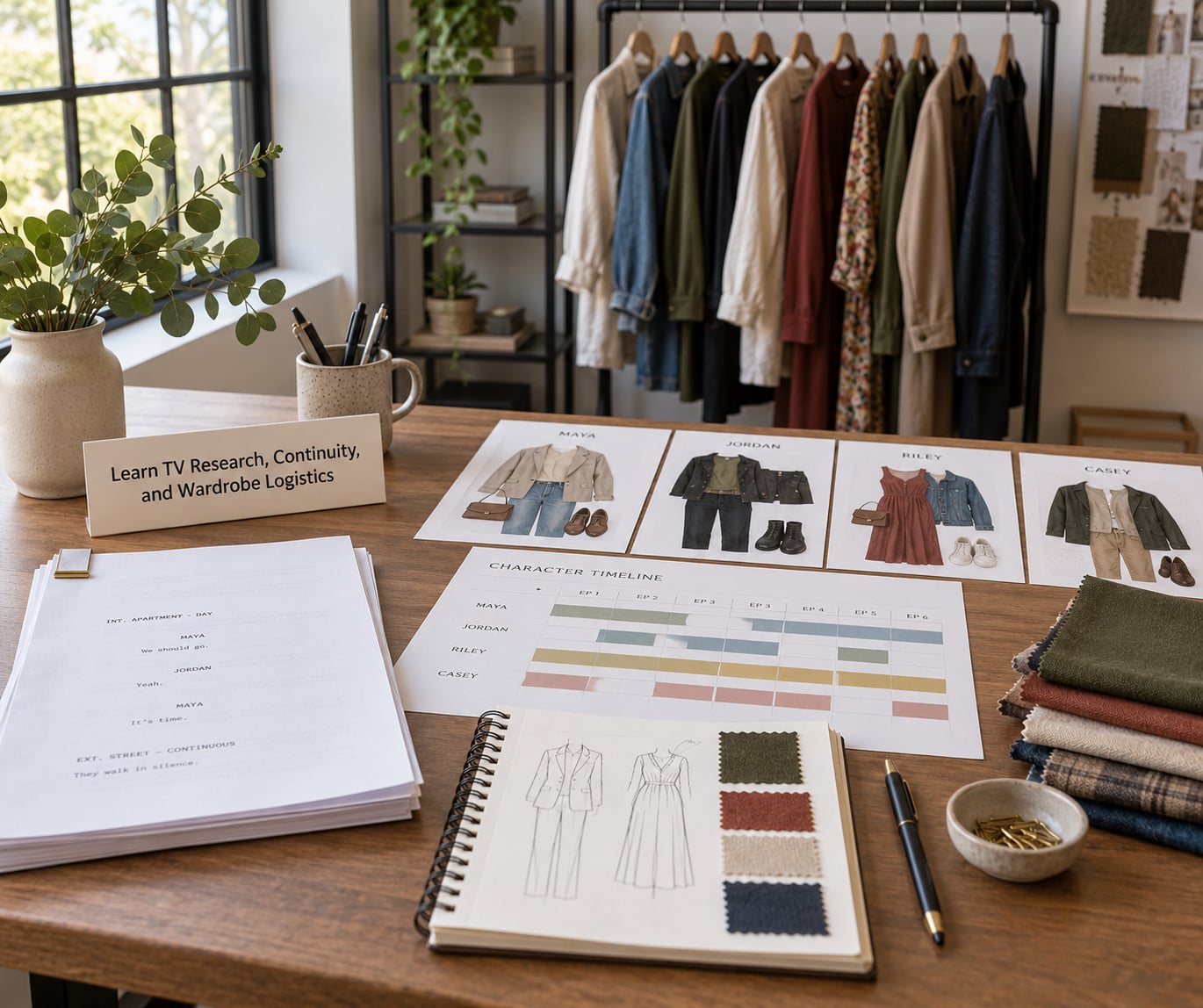
This is the part that separates TV wardrobe from everyday personal styling, and it is where most self-taught stylists are weakest.
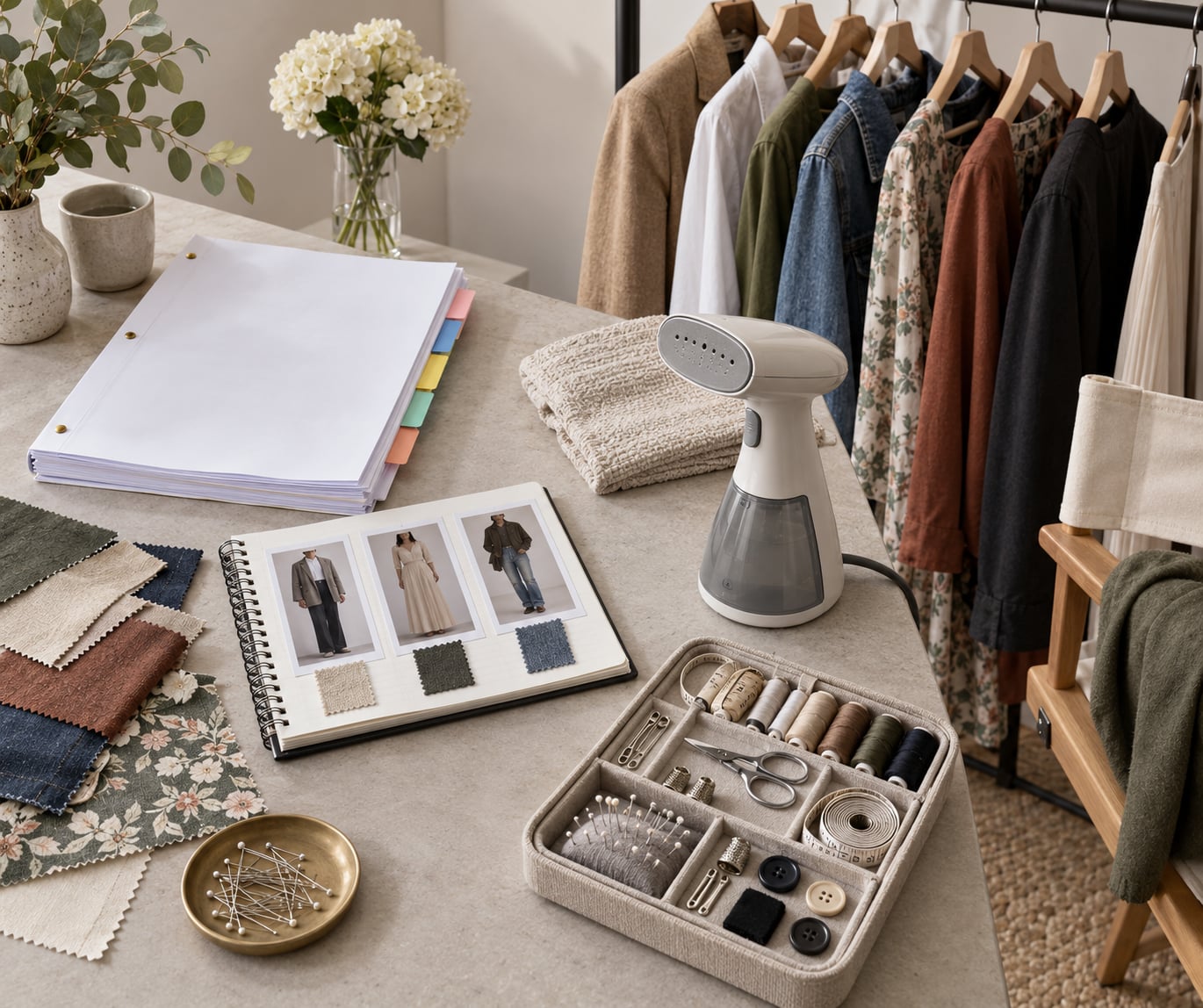
Script breakdown. Read the script, then mark every scene: who appears, what time of day, what weather, what activity. A breakdown artist on a large show does this in dedicated software; on a small show you do it in a notebook with colored tabs. Every garment decision downstream starts from this list.
Character research. Build the person before you build the clothes. Backstory, occupation, income, generation, politics, religion, military or institutional affiliation. Most wrong looks on set come from a costume guess made before anyone asked what the character does for a living.
Continuity. Series are shot out of order across weeks. Scene 14 might be filmed three days after scene 4, and a costume that appears in both has to match exactly, including which button is undone and where the watch sits. Your continuity sheet is your memory. Photograph each look as it lands on the actor and log it by scene number.
Duplicates. Any garment that crosses multiple days, gets wet, gets bloody, gets torn down, or sits under a hot light gets a duplicate made or bought. Discovering a missing duplicate at 6am is a bad day.
Fittings. Bring options, not favorites. Three of each category so the director can react to something real. Write down sizes for every actor, including shoes and undergarments, because that list gets reused for the whole season.
Garment tracking and receipts. Every item leaving the truck gets logged with a number, and every purchase gets a receipt. Wardrobe receipts go back to accounting and they decide whether the department gets paid for what it spent.
Camera reality. Pure white and striped fabrics flare and moire on camera, so they get tinted. Dark solids read flat. Denim and corduroy wear unusually fast under a hot multi-camera rig. Knowing this is a genuine edge and it costs nothing to learn.
Communication. You work with designers, producers, hair, makeup, script supervisor and camera. The person who is right and blunt gets a longer career than the person who is right and vague.
A simple process for one character: read their scenes, note time and weather, research occupation and era, choose five anchor pieces, break them into day looks plus changes, plan duplicates for anything damaged, build a continuity sheet per scene, then confirm every choice with the director at the fitting and log what changes.
Ready for the next step when you can hand someone a breakdown for a character and explain what you would build first, second and third.
4. Organize a Compact Wardrobe Working Kit
Knowing what is in your kit and what belongs to production saves the version of you that forgot the safety pins at 5am. Most of this is inexpensive, and all of it is worn more than you expect.
Yours, always on your body:
- A garment tracking system, whether that is a numbered tagging gun with a matching log or a photo log on your phone.
- Sewing kit: needles, thread in neutral colors, small scissors, tweezers, seam ripper, spare buttons, a few safety pins.
- Tape: gaffer tape, double-sided fashion tape and lint tape.
- Lint roller and a garment brush.
- Stain remover wipe, blotting paper and a stain pen.
- A travel sewing kit that does actual mending, not just pinning.
- Comfortable shoes you can stand in for twelve hours and walk a parking lot in.
- Weather protection for the location, whatever it is.
- A compact steamer if you can get one into your bag.
- Secure storage: a lidded bin for small items, a garment bag for anything irreplaceable.
Production supplied, so you confirm before day one: garment racks with numbered hangers, the wardrobe truck or holding room, steamers, pressing boards, full sewing and repair supplies, drying racks, irons, breaking-down scissors, rolling racks, garment bags, clips, tags, and the wardrobe receipts book.
Pack a second copy of anything critical. A duplicate set of pins costs nothing and saves a fitting.
Ready for the next step when you can name, for any given production, which items you supply and which items you request. Being asked and not knowing is the thing that gets noticed.
5. Create a Resume, Contact List, and On-Camera Reel
Wardrobe resumes are short and factual. Every line is a credit, a supervisor you can vouch for, or a skill someone needs on Monday.
Format it like this:
- Header: name, city, phone, email, portfolio link, reel link.
- Production experience: project or show, role, department, supervisor, dates, hours. Include student, independent and volunteer work.
- Related styling work: personal, retail, editorial, events, alterations, rental houses, each with one line on what you actually did.
- Skills: steam and press, machine and hand sewing, fitting, breakdown, vintage sourcing, continuity and record keeping, inventory systems, breakdown software if you know it.
- Education: school, program, relevant coursework. No program, leave it off or list what you studied.
- References: two or three supervisors who will pick up the phone.
Never inflate. Interviewers in this industry talk to each other constantly, and a single confirmed exaggeration follows you for years. Write your bartending, runway assistant, wedding styling or merchandising internship exactly as it happened, then translate it into wardrobe language without inflating it.
For the reel, cut forty to ninety seconds. Include one fitting moment, one on-set moment, one before-and-after breakdown, and one look that clearly belongs to a specific character. Overlay the project name and your role. Sound matters more than most people expect.
Your contact list is the third document and nobody asks for it. Keep it in a spreadsheet: name, role, production, how you met them, last contact date, what you talked about, what you can offer. That last column is what turns a stranger into a referral source.
Tailor the package for the job. A commercial booking wants speed and retail sourcing. A period series wants research depth. A talk show wants live reliability. Send different versions of the top of your resume.
Ready for the next step when a stranger can read your resume and contact list in two minutes and know exactly what to call you about.
6. Get Real Credits and Testimonials
Television credits are hard to land because you need credits to land them. The workaround is to build credits in places that are not yet television, then treat them properly.
Assist independent stylists. Offer to work unpaid for a set number of days in exchange for a credit and a testimonial. Put the agreement in writing before you start, including what happens if it runs long.
Work in costume rental and alteration shops. This is one of the most reliable entries into the industry and it is mentioned repeatedly by people who made it through. You learn periods, fabrics, garment condition, repair turnaround and how designers source. Rental houses introduce you to designers directly.
Style short-form video. Shorts, social series, music videos, branded content and podcast video all run at a pace closer to television than a photo shoot does, and most of them hire inexperienced people.
Support photographers. Studio and on-location shoots, backstage and tour wardrobe. Busy photographers are the fastest source of on-set hours.
Work local productions. Student films, community theatre with camera, local cable access, high school and community broadcasts, regional commercial shoots, and live events. Every local film office and regional film commission keeps a production calendar worth checking weekly.
Document each engagement properly. Get the supervisor’s full name and title, the project name, your dates, your hours and what you did. Ask on the last day for a short written testimonial, five sentences about your reliability and your work, plus permission to use images you took. Ask on the last day, because the day after, everyone has forgotten.
Volunteering has a cost that nobody warns you about: long unpaid days with no guarantee you move up. People working in this field describe it as an apprenticeship, and they are right. Decide in advance how many projects you will do for free before you start asking to be paid, and hold that line.
Ready for the next step when you have two or three documented credits and two testimonials from people who supervised you on a set.
7. Network With Producers, Stylists, and Wardrobe Departments
Cold outreach is not networking. It is a lottery ticket. It helps, but the work comes from relationships, and relationships come from being useful in a room where wardrobe people already work.
Follow the project structure to find the right contact. Wardrobe reports up through the costume supervisor and costume designer to the production designer. For entry-level work, the assistant wardrobe supervisor and the wardrobe department are far more reachable and far more useful to you than a showrunner is.
Where the contacts live: the credits on every show, costume rental house websites, production designer and costume designer professional networks, crew directories, production agency rosters, trade publications, regional production listings and local film office contact sheets.
Keep the outreach short and specific:
Subject: Wardrobe assistant available, breakdown and continuity experience
Hi Ana, I worked with Marcus Bell on the two-day commercial earlier in the season and handled steaming, fitting notes and the garment log. I have also assisted on a student series, where I built the continuity sheets for a four-episode character arc. I am looking for wardrobe assistant days on non-union television and I am available weekdays. My reel and resume are here. If there is anything useful I can take off your plate, I am happy to help.
One week later, follow up once:
Hi Ana, following up once on my note. If you ever need a set of hands on a fitting day or a breakdown built, say the word and I will be ready.
Then stop. Two messages total, then back to building.
Ways to build relationships that do not feel like begging: referrals from people you have already worked for, volunteering for productions in your own market, trade events and costume showcases, professional groups and mentorship programs, costume rental houses, and social media where you post useful process notes rather than availability announcements.
If you are not in Los Angeles or New York, this matters more than anything else in this guide. Ask every contact where they got their last three bookings. Regional markets, broadcast and news operations, touring, live events and commercial work all have wardrobe departments, and most of them hire locally with no union requirement.
Ready for the next step when someone asks what you are available for and you can answer with dates.
8. Prepare for On-Set Work and Start Booking Jobs
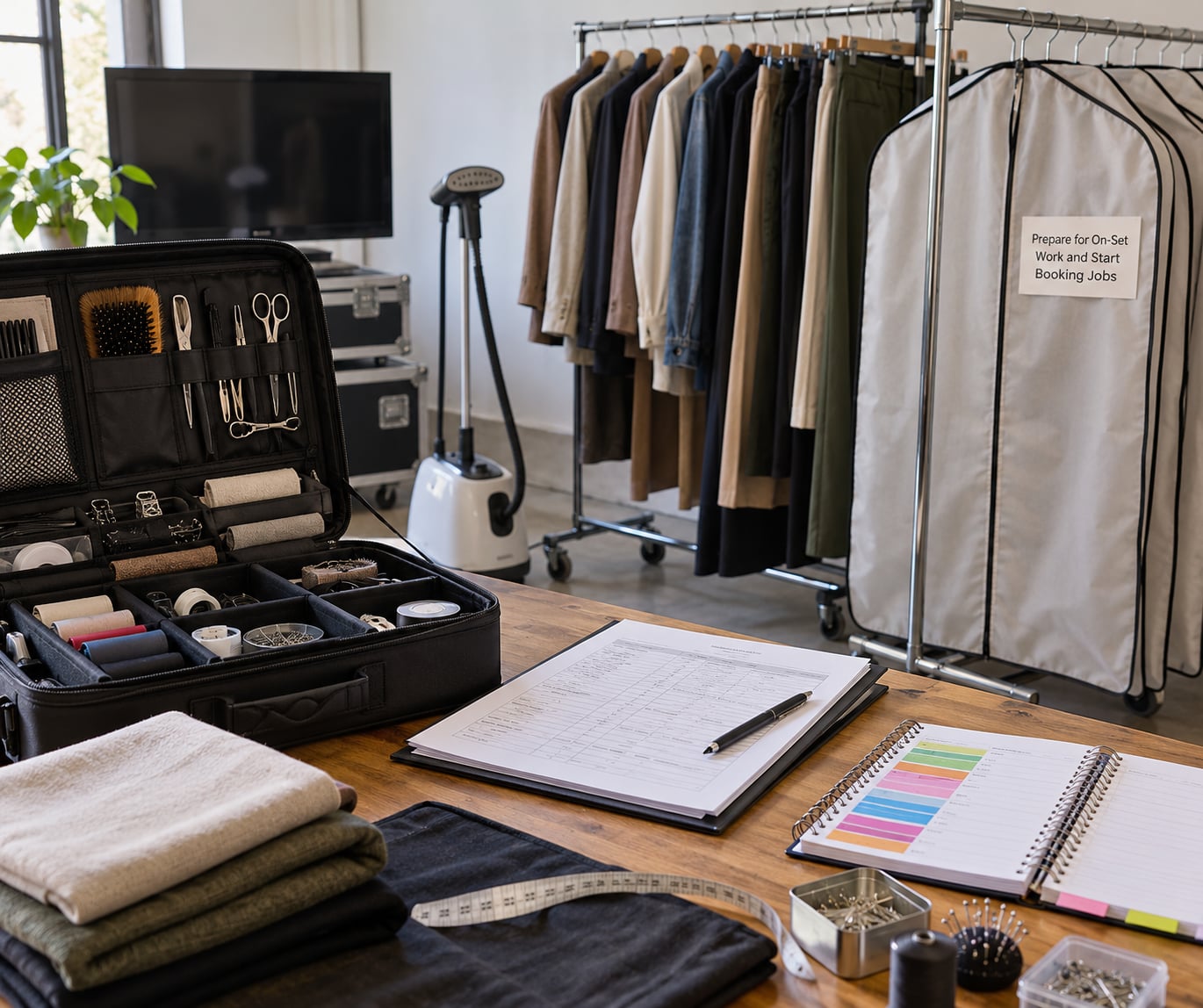
The first call is where the job becomes real. Everything above exists to get you here.
Before the first call:
- Read the call sheet the night before and again in the morning.
- Know whether the production is union or non-union, and what that changes for you.
- Know your call time, crew park or stage door, parking rules and who to ask for at check-in.
- Arrive fifteen minutes early. Bring ID, your kit, water, food and a charged phone with a portable battery.
- Bring your breakdown notes, size lists and continuity sheets.
On the day, the habits that keep you employed:
- Steam and press before the actor arrives, never during.
- Log every garment in and out with numbers that match the department system.
- Keep changes visible to the director and the actors, and make them calmly.
- Photograph each final look per scene.
- Hold receipts for anything you spend.
- Report problems early. An early problem is a scheduling note. A late problem is a reshoot.
Set conduct. Wardrobe is one of the first departments on set and one of the last to leave. Be on time, be discreet about what you hear on set, never post set photos before the producer approves them, and treat actors as professionals regardless of how the day is going.
Handling last-minute changes. When a director wants something different five minutes before a take, do not argue in the moment. Confirm the change, note the new look in the continuity sheet, make the change, and mention the wardrobe implication to your supervisor quietly afterward.
After the day. Send a short thank-you to your supervisor with anything you promised to follow up on. Mark your contacts. Log your hours. Turn around and ask whether next week is covered before the crew disperses.
Repeat work comes from being dependable under pressure, not from being visible at parties. Union and non-union work are both real career paths, and each has its own eligibility and booking rules, so ask about them early.
Ready to consider yourself a working wardrobe stylist once you have completed your first full call from check-in to wrap without needing a rescue.
Common Mistakes That Stall a Wardrobe Career
Applying for lead stylist roles with no set experience. Fix: target assistant and stylist positions for your first year. Post-production work, fashion editorials and commercial styling are different businesses with different clients.
Showing an overedited personal-styling portfolio. A polished closet full of curated outfits reads as consumer styling. Fix: rebuild one page around character and script context, including your research and breakdown.
Ignoring budgets and timelines. A beautiful look that costs more than the per-episode allowance is not a look, it is a reshoot. Fix: build a look twice, once ideal and once inside the number.
Relying on one specialty. Only period work, only plus-size work or only denim is a smaller market than you think. Fix: keep a specialty and deliberately add one uncomfortable genre every year.
Neglecting continuity records. Fix: photograph and log by scene from day one, even on student work. It is a habit that is nearly impossible to retrofit later.
Communicating vaguely. “That looks wrong” gets no action. Fix: name the problem and the fix in one sentence, then ask for a decision. “The hem reads heavy under the studio key light, I would lose two inches or tint it down. Which do you want?”
Treating networking as spam. Ten identical messages to ten costume supervisors is not outreach. Fix: one specific message, one follow-up, then spend the following month being useful to someone.
Writing a resume that inflates. Fix: describe exactly what you did, then note the skill it proves. Interviewers in this industry compare notes, and reputation is the whole currency here.
Three tips that hold up: learn the department’s job titles so you ask for the right person, get written confirmation of any unpaid arrangement before you start, and treat every garment log as if an accountant will read it, because one may.
Frequently Asked Questions
How quickly can I become a wardrobe stylist for TV?
Plan on six to eighteen months of active work before your first paid wardrobe call. That window is filled with assistant days, costume rental work, short-form styling and portfolio building. Six months is realistic if you already move through garment rooms confidently and are near a production market. Longer is common if you are starting cold or working from a quiet city. Speed comes from credits, not from more courses.
How much do entry-level TV wardrobe stylists make?
Entry-level wardrobe work is almost always paid as a day rate rather than a salary, and the range depends heavily on market, union status and how many hours a call runs. Beginners typically earn less per day than established stylists because many calls run long and unpaid assistant days are common early on. Talk shops, broadcast, commercial and regional work sit at the lower end, union scripted work at the higher end.
Do I need a fashion degree to become a TV wardrobe stylist?
No production will turn you away for lacking a fashion degree. What a wardrobe department cares about is whether you can fit, steam, mend, log garments, track continuity and work a twelve-hour day without complaining. A degree helps with pattern knowledge and opens internships, and it is genuinely useful if you want to move toward costume design. If you skipped it, alterations work and costume rental cover the same ground.
Do TV wardrobe stylists need to belong to a union?
No, and plenty of working wardrobe stylists never join one. Union and non-union work are two parallel tracks with different eligibility rules, rates and booking routes. Non-union commercial, regional and independent productions hire directly and are open to newcomers. Union work lists, such as the costume and allied crafts locals in the major film markets, run on experience, work history and permit lists, so it is a later step rather than an entry requirement.
How do I get TV wardrobe experience with no credits?
Assist an independent stylist, work in a costume rental or alteration shop, style short-form video, support photographers, and take local productions through your regional film office or film commission. Every one of those produces a real credit, a supervisor who can vouch for you and images for a portfolio. Document each project and ask for a short written testimonial on the last day, while the person still remembers you.
Conclusion
How to become a wardrobe stylist for TV comes down to four things: a focused portfolio that proves judgment, real on-set hours with documented credits, the unglamorous production skills of breakdown and continuity, and relationships with people who can call you first. Nobody hands you the last one, and it is the only one you cannot build alone.
Do one thing this week. Choose the single role you are targeting, revise one portfolio page so it reads as television work rather than personal styling, and identify one costume rental house, wardrobe department or short-form production near you where you can offer to assist. That first conversation is the whole game.