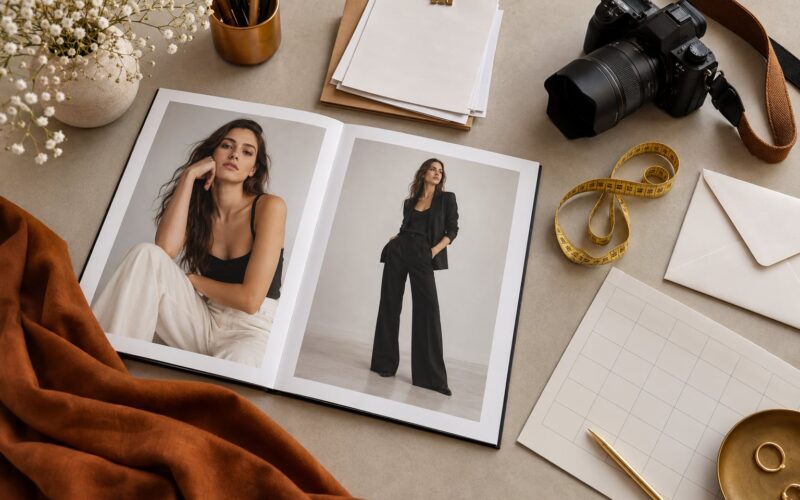
You can get signed by a modeling agency without a scout. The route most beginners use is straightforward: build a small, current set of photographs, put together accurate measurements and a clean résumé, find agencies that already represent your look, and submit directly to them through their own contact details. The whole process is free if you handle it correctly, and it takes most new models a few months of steady work rather than a single lucky break.
Scouts still exist, but street scouting covers a small slice of the industry now, and most bookings move through submissions, open calls, and referrals. A model with nine years and three major markets behind them told me that everything they did before signing came through email, from an official agency address.
What follows is the process as it works in 2026, including the parts that trip people up and the ones that cost beginners money they should never spend.
Table of Contents
- What You Need
- Step-by-Step
- Build a scout-ready portfolio before applying
- Create a professional modeling résumé
- Find legitimate US modeling agencies
- Check whether the agency accepts open submissions
- Send a targeted application to each agency
- Prepare for tests, callbacks, and self-presentation
- Follow up once, then evaluate any offer carefully
- Common mistakes
- Protect yourself and keep improving
- Frequently Asked Questions
- Can a modeling agency sign you if no scout discovered you?
- Do legitimate modeling agencies charge applicants to sign them?
- Should a new model use an agency or work independently?
- How long does it take to get signed without a scout?
- What should I put in my first portfolio if I have no experience?
- Can an agency require an exclusive modeling contract?
- Conclusion
What You Need
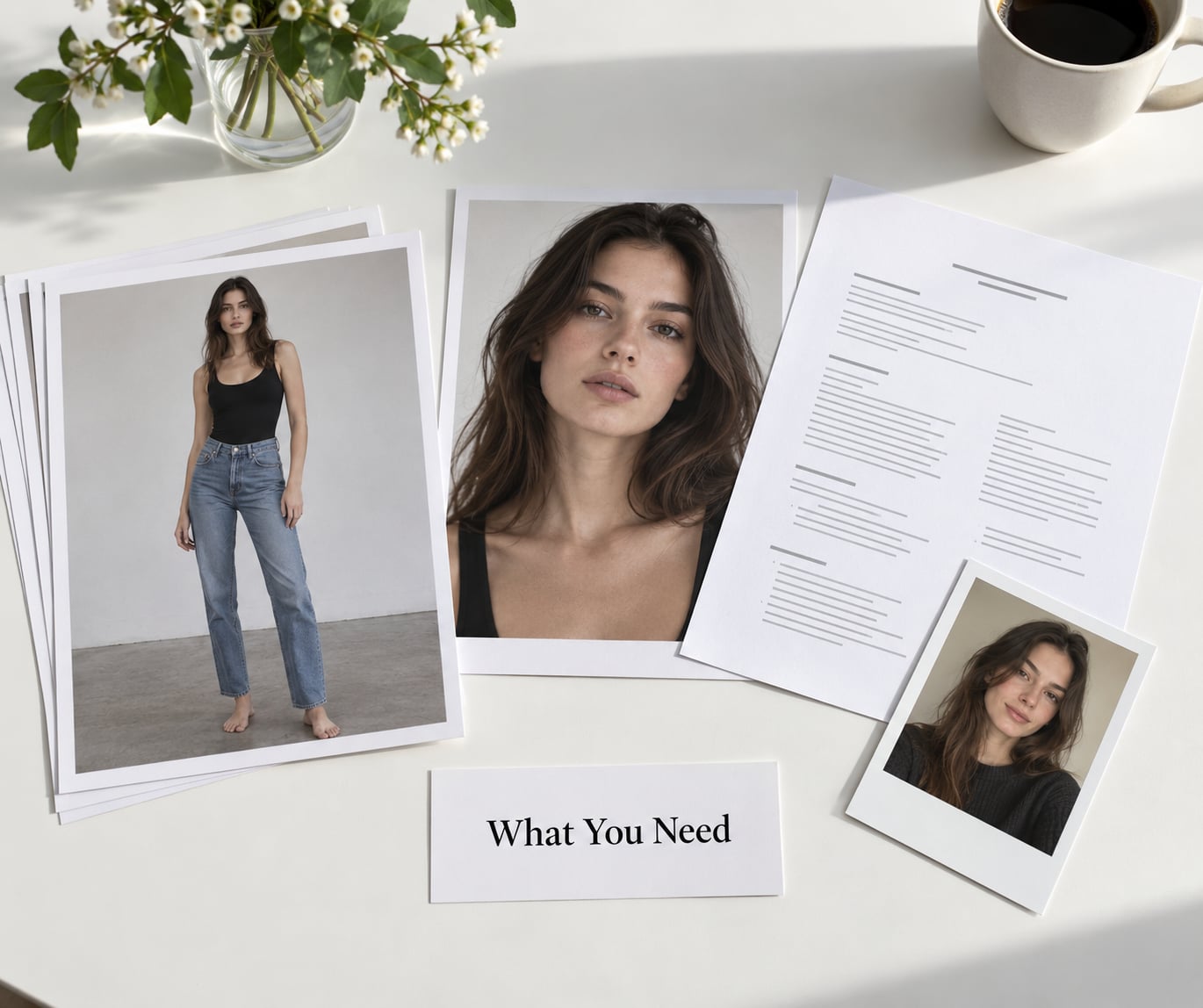
Before you contact a single agency, you need four things and a strict budget rule. The budget rule is the easiest: a legitimate agency does not charge you to be signed, to submit, to be listed on its website, or to attend an evaluation. As that nine-year model put it, a legitimate agency will never make you pay for anything except a test shoot, and even that is usually fronted and deducted from earnings later.
Your first item is a set of current photographs. Five to ten strong images beats forty mediocre ones, and every image should be recent, unretouched, and in natural light.
The second is a list of accurate measurements. Bust, waist, hips, height, shoe and eye colour, and hair colour. Use a soft measuring tape, wear nothing bulky over the areas you are measuring, and have someone else read the numbers rather than trying to twist and read at the same time.
The third is a one-page résumé. Most agencies want something they can skim in fifteen seconds, not a biography.
The fourth is a shortlist of agencies you have actually researched, along with the reason each one fits. If you cannot name something specific about an agency’s roster or client list, you are not ready to submit to it yet.
Now the warning. Any agency promising a guaranteed signature, a fixed income, or a signed contract in exchange for an upfront fee is not a modeling agency. Neither is one that wants money before it has met you or seen any of your work.
Step-by-Step
Build a scout-ready portfolio before applying
A portfolio does not need to be a printed book or an expensive shoot. It needs to show variation and it needs to be current. Six months is roughly the limit before a photograph starts working against you, because agencies book on how you look now.
A workable beginner set includes a clean headshot, a three-quarter shot, a profile, and two or three full-length shots showing how you hold a relaxed standing pose. Form-fitting clothing in a plain colour reads better than loose or patterned pieces. Avoid heavy filters, skin smoothing, and any editor who reshapes your face or waist.
You can take these yourself at home against a blank wall near a window. If you would rather work with someone, ask a photography student or a friend who shoots to do it, and offer to be their model in exchange for the files. Photography students needing models is a genuinely useful trade, and it happens constantly on university campuses and at art schools.
One more piece of the portfolio you should build early: a short walk video if you are aiming at fashion or runway. Stand, walk toward the camera, turn, walk back. Unedited footage tells an agency more about your walk than a still does.
Create a professional modeling résumé
Keep your résumé to one page and make it easy to scan. Most models build theirs in a simple document and keep a PDF version ready to attach.
Include your name, email, phone number, and the city you are based in or willing to travel to. Then your measurements, listed clearly with units in both inches and centimetres so the same sheet works for agencies in different markets. Follow that with eye colour, hair colour, and any distinguishing features worth noting plainly.
Next comes experience. If you have none, write none. Do not list unpaid poses you did for a classmate as professional work. Instead, add the skills that actually get you booked: posing experience, dance, gymnastics, swimming, horseback riding, yoga, or a valid driver’s licence if you are open to driving to castings.
Finish with your availability and any split between modelling and other work. A line that says you are available weekdays and open to travel tells a booking department more than a photograph does.
Update the résumé after every booking and any time a measurement changes. A stale number on a résumé is the kind of small error that quietly costs you callbacks.
Find legitimate US modeling agencies
The single biggest research mistake is treating every agency name the same way. Agencies specialise by market and category, and the sector you are trying to break into decides who will even look at your submission.
Fashion modelling generally requires more height than commercial work, which is why the height question comes up so constantly in search. Runway boards often ask for a minimum around five foot ten for women and six feet for men, with commercial and curve divisions frequently working with less. The requirement is set per board, not for the industry as a whole, so an agency with a mature or curve division may not care at all about the number you have been worrying about.
Commercial, lifestyle, and promotional modelling is where most beginners book their first paid work, and those divisions care far more about how you communicate on camera and how reliably you show up.
To separate real agencies from the rest, check three things. Does the agency have a physical office you can verify and a client list that makes sense? Do the models already on its roster resemble you in height, age range, and category? Has anyone in the industry you respect been booked by them recently? Agencies with verifiable reputations turn up through industry directories and past booking credits, so spend the time to check rather than assume.
Check whether the agency accepts open submissions
Not every agency accepts unsolicited material, and the ones that do usually say so plainly on their own website. Look for a submissions page or a contact address that belongs to the agency’s domain rather than a third-party platform or a private messaging account.
Read the submission guidelines before you write anything. Some want five photographs and nothing else. Some want no makeup and no styling. Some want a video. Some only accept submissions from models living in their city or state. Some run open calls instead of digital submissions and expect you to show up in person.
This is where a lot of wasted effort gets avoided. Following the stated rules is the fastest way to get your material moved to the top of someone’s pile.
One rule worth keeping close: use the agency’s published contact information only. A model who spent nine years in major markets told me that if an account messages you from anything other than the agency’s official account, check whether that official account follows or verifies it. If it does not, stop there. Every legitimate conversation before signing happened over email, from an official domain.
Send a targeted application to each agency
Write each one individually. A model who submitted to a commercial agency and received a reply the next day inviting her to a short call within the week had sent something specific, not a mass blast with fifty attachments.
Keep it short. Six lines of body text, a subject line naming the market and category you are applying for, and only the files that agency asked to receive.
A structure that works:
Subject: Commercial submission for [city or region] availability
Hello [name or bookings team],
I am applying for representation on your commercial division. I am based in [city], available for local bookings, and open to travel. I have attached the number of images your submissions page requests and a one-page résumé with current measurements.
I have no professional booking credits yet, and I would rather tell you that than imply otherwise. I am working toward a commercial and lifestyle board, and I am available for an evaluation at your convenience.
Thank you for your time.
[Name]
[Email]
[Phone]
Send it from an email address that matches your name rather than something playful. A one-line professional signature at the bottom is enough.
Apply to a manageable number at a time. Ten thoughtful submissions a week beats fifty, and they go to different agencies rather than several emails to the same inbox.
Prepare for tests, callbacks, and self-presentation
If an agency replies, the next step is usually a conversation, a video call, or an in-person evaluation. A new model described exactly this: a fifteen-minute video call a week after applying, which turned out to be the entire first conversation.
Bring or prepare a small set of extra photographs so you are not relying on email attachments that may not open. Know your measurements cold, including your height in shoes. Be clear about your availability and what you are hoping to do, because that tells them whether you fit their clients.
Wear something simple and fitted that you can move in. Expect a walk, some posing, and questions about your experience and where you want to be in a year. Expect them to talk about training, especially for newer faces, because that is normal and not a warning sign.
Two things get noticed more than looks: arriving when you said you would, and being coachable during the session. Ask for feedback afterwards. People who listen and adjust are the ones who get invited back.
Follow up once, then evaluate any offer carefully
If you hear nothing for two or three weeks, send one short follow-up. Restate who you are, name the date you applied, and attach nothing new. After that, let it go. Repeated messages land badly and change nothing.
Silence is normal. Agencies receive thousands of submissions and book very few new faces each month. Most rejections are about timing and roster space rather than anything you did wrong, and a reply that tells you to contact other reputable agencies is usually a genuine suggestion rather than a polite brush-off.
When an offer does arrive, slow down. Ask for the agreement in writing before signing anything, and read these parts carefully: the commission percentage, the contract length, the exclusivity terms and which markets they cover, the parent company or umbrella clause, how usage rights are handled, and what the termination notice looks like. Exclusivity is normal in fashion modelling and frequently limiting in commercial work, so you need to know what you are agreeing to give up.
Bring the contract to someone experienced before you sign. Adults have signed away months of work over a clause they skimmed.
Common mistakes
Paying a large upfront fee for representation or a guaranteed contract. There is no version of this that is normal. Agencies represent models in exchange for commission on bookings, not for entry fees.
Submitting old photographs. Work from two years ago does not represent you now.
Over-retouching. Heavy smoothing changes how you look in person, and agencies meet you eventually. Send unfiltered images.
Mass-emailing the same message to forty agencies with forty attachments. It reads as volume, not effort, and it violates the submission rules most agencies publish.
Chasing. Two or three follow-ups at most, spaced out and short.
Signing an exclusivity clause without reading it. Know which category and which territory you are giving up before you hand over the pen.
Letting a photographer push you into underwear or nude poses because the industry does it that way. You can say no and still build a working book. Images shot under that kind of pressure rarely end up in a portfolio anyway, since they usually cannot be used commercially.
Protect yourself and keep improving
If you are under 18, bring a parent or guardian to every meeting and do not send photographs without a parent present in the conversation. No legitimate US agency will ask for images before speaking with your guardian. That is not negotiable and it is a fast exit signal.
Keep a simple record of every expense, contract, and conversation you have with an agency, including the date. It takes five minutes a month and it settles arguments later.
Keep training while you submit. Take classes, practice the walk, learn to express something with your face in a still frame, and keep replacing your weakest images. Bookings go to models who show up prepared, and preparation is a skill you can work on while you wait for replies.
Also know that you do not have to stop at one agency. Freelance booking platforms are a legitimate way to pick up work while you chase representation, and plenty of working models use both. That model recommended the platforms they used ten out of ten and still signed with an agency.
Frequently Asked Questions
Can a modeling agency sign you if no scout discovered you?
Yes. The large majority of new faces are signed through direct submissions, open calls, and referrals rather than street scouting. Agencies publish submission guidelines, and interested models are invited to an evaluation or conversation. A scout only changes how you were noticed, not whether you can be represented.
Do legitimate modeling agencies charge applicants to sign them?
No. A real agency earns commission from the bookings it makes, so it never charges you for representation, submission, website listing, or an evaluation. The one exception is a test shoot, which reputable agencies usually front and deduct from your later earnings. Any upfront fee for signing is a red flag, not a normal cost.
Should a new model use an agency or work independently?
Both, at first. An agency handles submissions, bookings, and contract negotiation, which is hard work for a beginner to run alone. Independent booking platforms let you pick up work and build credits in the meantime. Many working models keep both, treating the agency as long-term development and the platforms as income while you grow.
How long does it take to get signed without a scout?
Weeks to a few months is realistic, and longer is common. Most agencies review submissions in batches and add new faces only when they need them for a client or a development slot. If you hear nothing after two or three weeks, one short follow-up is fine. After that, keep improving your images and applying elsewhere.
What should I put in my first portfolio if I have no experience?
Keep it small and honest: five to ten current images covering a headshot, a three-quarter, a profile, and two or three full-length shots. Wear form-fitting clothing in a plain colour, use natural light, and skip retouching. Add a short walk video if you are aiming at fashion or runway, since movement tells an agency more than a still frame.
Can an agency require an exclusive modeling contract?
They can, and many do, especially in fashion. Exclusivity usually limits you to a specific category, territory, and length of time, sometimes through a parent company. Read which market and which category you are giving up, how long the term runs, and how you would terminate it. Ask an experienced person to review it before you sign.
Conclusion
Start today, not after you feel ready enough. Pick out five to ten current photographs, write down your real measurements, finish a one-page résumé, and research five agencies that already represent your look and category. Then send one tailored application at a time, using each agency’s own submission rules.
If anyone asks you for money to be signed, pass. That single filter will keep you out of nearly every bad situation while you build the work that gets you callbacks.