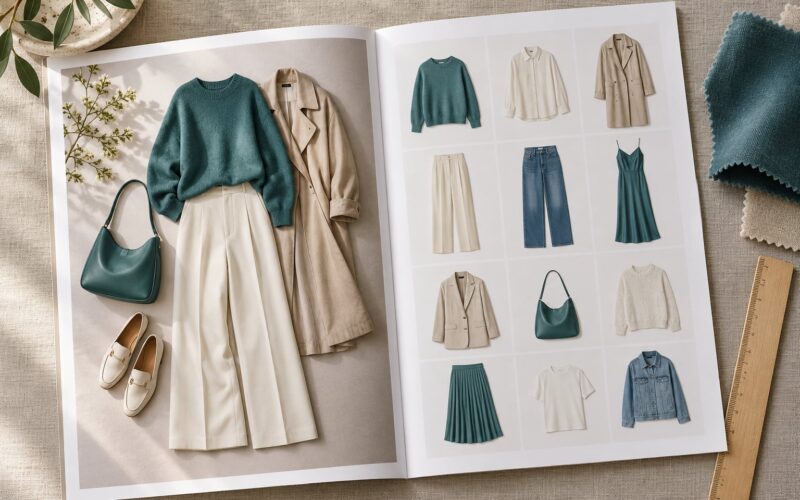
You can break into fashion PR with no experience, and the fastest route is proof of work rather than a lucky internship. Pick one segment of the industry, build two or three mock campaigns that a stranger can understand, then use them to start conversations with working publicists and editors.
What does a fashion publicist actually do? A fashion publicist gets a brand in front of editors, stylists and creators by pitching story ideas, arranging samples and shoots, writing press releases and press kits, running media events, and preparing clients for red-carpet appearances and fashion week. Every piece of that is a skill you can practise before anyone hires you.
The catch is that nobody hands you a chance to practise. So this plan is built around producing one tangible result per step: a niche, a portfolio, a vocabulary, a contact, a credit, an interview and a relationship. Each step creates the thing the next step needs. Nobody I know landed a first PR role from a job board alone.
Table of Contents
- What You Need
- A target segment
- A contact list
- Writing samples
- Press-release templates
- A digital portfolio
- A professional email account
- A project tracker
- How to Break Into Fashion PR With No Experience: Step by Step
- 1. Start Your Plan to Break Into Fashion PR with No Experience
- 2. Build a Portfolio That Proves You Can Do the Work
- 3. Learn the Fashion PR Basics
- 4. Contact Brands and Publicists With a Specific Plan
- 5. Get Real Credit Through Small and Proactive Assignments
- 6. Apply Without Experience Without Hiding Your Value
- 7. Build Relationships and Turn One Opportunity Into the Next
- Common Mistakes
- Frequently Asked Questions
- Can I work in fashion PR without an internship?
- What should I put in a fashion PR portfolio with no experience?
- Is it acceptable to create a fictional fashion campaign for a portfolio?
- How do I ask a publicist for a job when I have no experience?
- Should I work for free to get fashion PR experience?
- How long does it take to break into fashion PR with no experience?
- Conclusion: Start With One Credit-Building Project
What You Need
Assemble these seven things before you send a single application. Most beginners apply with two of them and wonder why nobody replies.
A target segment
Pick one lane, not “fashion.” Luxury accessories, streetwear, beauty, talent management and emerging designers all reward different kinds of research. A narrow target makes your outreach specific, and specificity is the whole game.
A contact list
A spreadsheet with names, outlets, beats, email addresses, last coverage date and a note on what each person writes about. Forty to sixty well-researched contacts beat a thousand scraped ones.
Writing samples
Three pieces you wrote yourself: a short pitch email, a one-page press release and a paragraph of trade-adjacent copy. Put them somewhere a stranger can read them without asking.
Press-release templates
Download two or three real examples from a brand press office so you can see the structure. Study the headline, the dateline, the boilerplate and the contact block.
A digital portfolio
A simple personal site or a well-organised document works. Fashion publicists read on phones between meetings, so make sure each project opens cleanly on a small screen.
A professional email account
Firstname.lastname at a mainstream provider. A cutesy address with three numbers and a sparkle in it costs you interviews in this industry.
A project tracker
A single sheet listing every contact, the date you reached out, what you sent, what came back and when you follow up. This is the difference between persistent and exhausting.
How to Break Into Fashion PR With No Experience: Step by Step
Seven steps, in this order, because each one produces the raw material the next one needs. Do not skip to step four with an empty portfolio, and do not spend three months on step two without talking to anyone.
1. Start Your Plan to Break Into Fashion PR with No Experience
Choose one industry segment and learn what the jobs inside it actually are. Luxury and beauty PR lean on relationships and event execution. Streetwear and emerging designer PR lean on fast pitches, seeding and social-first coverage. Talent PR is a different job again, built around appearances and press lines.
Then decide which kind of company you want to assist: a boutique agency, a full-service shop, a brand-side communications team or freelance work. Write down your choice in one sentence. “I want to assist a small agency covering emerging accessories brands in Europe” is a plan. “I want to work in fashion” is a wish.
This step works when you can name your preferred segment and the kind of company you want to help, and explain in two sentences what that publicist’s job involves day to day.
2. Build a Portfolio That Proves You Can Do the Work
This is the part that actually gets you replies. Most beginners apply with nothing, so the hiring manager reads a hundred identical emails. Two or three mock projects do the opposite.
Keep the work honest. Label it “self-initiated project,” “spec work,” or “unsolicited campaign concept.” Never present a fictional campaign as paid work. People in fashion talk to each other, and a false claim ends the conversation before it starts.
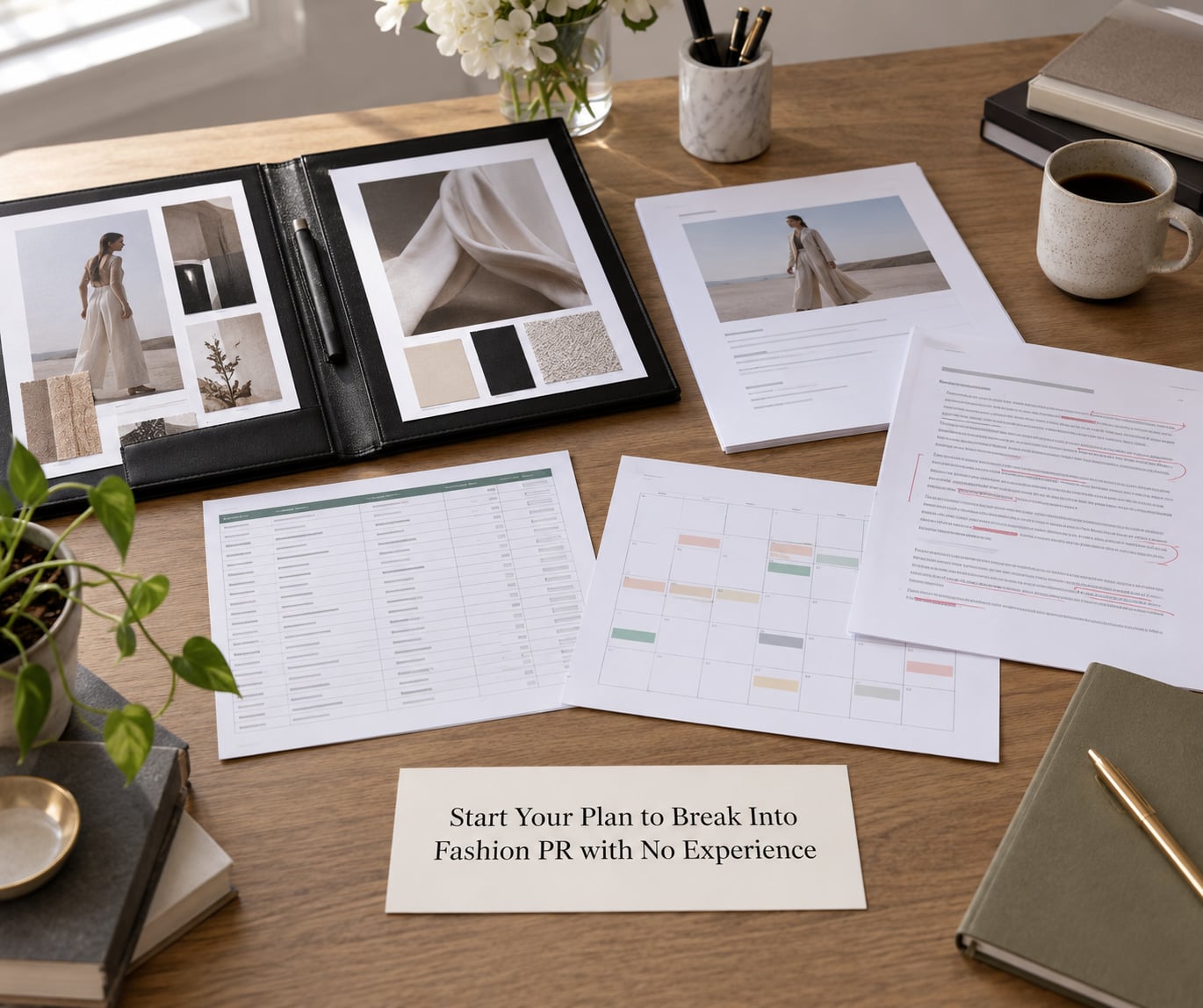
A complete mock project for a brand you genuinely like should contain six pieces:
- Campaign brief. The client, the objective, the target audience and the timeline, in one page.
- Press release. 300 to 400 words with a headline, a dateline, quoted founder, body copy and a media contact.
- Media pitch. One email under 150 words to a named editor, tied to a specific story idea.
- Editorial calendar. Six to eight weeks of coverage moments mapped to news hooks, launches and seasonal moments.
- Media list. Thirty to fifty real, working journalists with beats and recent relevant coverage.
- Outreach plan and rationale. Which outlets, in what order, why that story suits that reader, and what a good result looks like.
The pitch matters as much as the release. Telling an editor about a brand is noise. Telling them why a story about this brand’s founder belongs in their January issue is a pitch.
This step works when a stranger can open one project and understand the client, the objective, the audience, the outreach strategy and the expected result without asking you a single question.
3. Learn the Fashion PR Basics
You do not need a course. You need the vocabulary and a handful of practical skills, and most of them you can learn in a fortnight.
Media targeting means building lists by beat and by what each person actually covers. A beauty editor who has never run a accessories story is not your target.
Pitch writing means under 150 words, one idea, written to one named person. Subject lines get opened or ignored, so keep them plain and specific.
Press-release structure is headline, dateline, lead paragraph, supporting detail, quotes, boilerplate about the company, and a reachable contact. Editors mostly need the first two paragraphs, so put the news there.
Sample requests involve logging what to send, to whom, from which office and when it needs to arrive. Getting this wrong costs a client money and a relationship.
Embargoes mean agreed publication dates. Ask for an embargo, get the time and zone confirmed in writing, and never hint at a story that is under embargo.
Red-carpet preparation means show-call times, seating, transport, hair and makeup call times, standing positions and who holds the phone. Fashion week logistics are unglamorous and decisive.
Brand assets are the approved images, credits, line sheets, fact sheets and logos. Using an unapproved image is how assistants lose jobs.
Measurement means knowing whether a pitch landed: coverage secured, placement quality, traffic, and whether the story ran at all.
Client communication means a short update, whether or not there is good news. Publicists who report silence get blamed for silence.
This step works when you can walk through a PR deliverable from purpose to follow-up without pausing on jargon.
4. Contact Brands and Publicists With a Specific Plan
Outreach fails when it is generic. “I’d love to learn about fashion PR” is a request for someone’s time with nothing in return. “I built a spec campaign for your autumn collection and I think the hardware angle fits a features slot” is a reason to reply.
A usable message has four parts: who you are in one line, why you picked this person specifically, one concrete thing you did or made, and one low-friction ask. Twenty-minute coffee, fifteen-minute call, or feedback on one page of your media list. Never ask for a job in a first message.
Who to contact: editors and writers who cover your segment, stylists who shop your category, boutique and department-store managers, brand founders, and publicists who post about their work. Assistants are often the most responsive people in the industry, and they remember who was polite to them last year.
Follow up once, seven to ten days later, adding something new rather than writing “just bumping this.” Then stop. Two messages is persistent. Twenty is a nuisance.
Outreach works best outside fashion week, when assistants are buried in logistics and nobody has time. In January, April and September, people are planning and budgets are open.
This step works when every message names a reason for contacting that person and asks for one small next step.
5. Get Real Credit Through Small and Proactive Assignments
Mock work proves you understand the craft. Real work proves you can do it with consequences. The gap between those two is what hiring managers are actually looking for.
Where beginners find real assignments: local fashion events and pop-ups, independent designers producing a first lookbook, fashion podcasts that need show notes and guest outreach, stylists sourcing product for shoots, photographers managing press access, nonprofit fashion events and charity sales, freelance writers who need a publicist to pitch their feature, and small startup brands with no communications team.
Nobody has to advertise these roles. Look at who is visibly doing PR badly or not at all, and offer to fix one specific thing. “I noticed your spring drop has no press contact listed. I built a press list of 40 relevant editors with beats and recent coverage. It is yours if useful.”
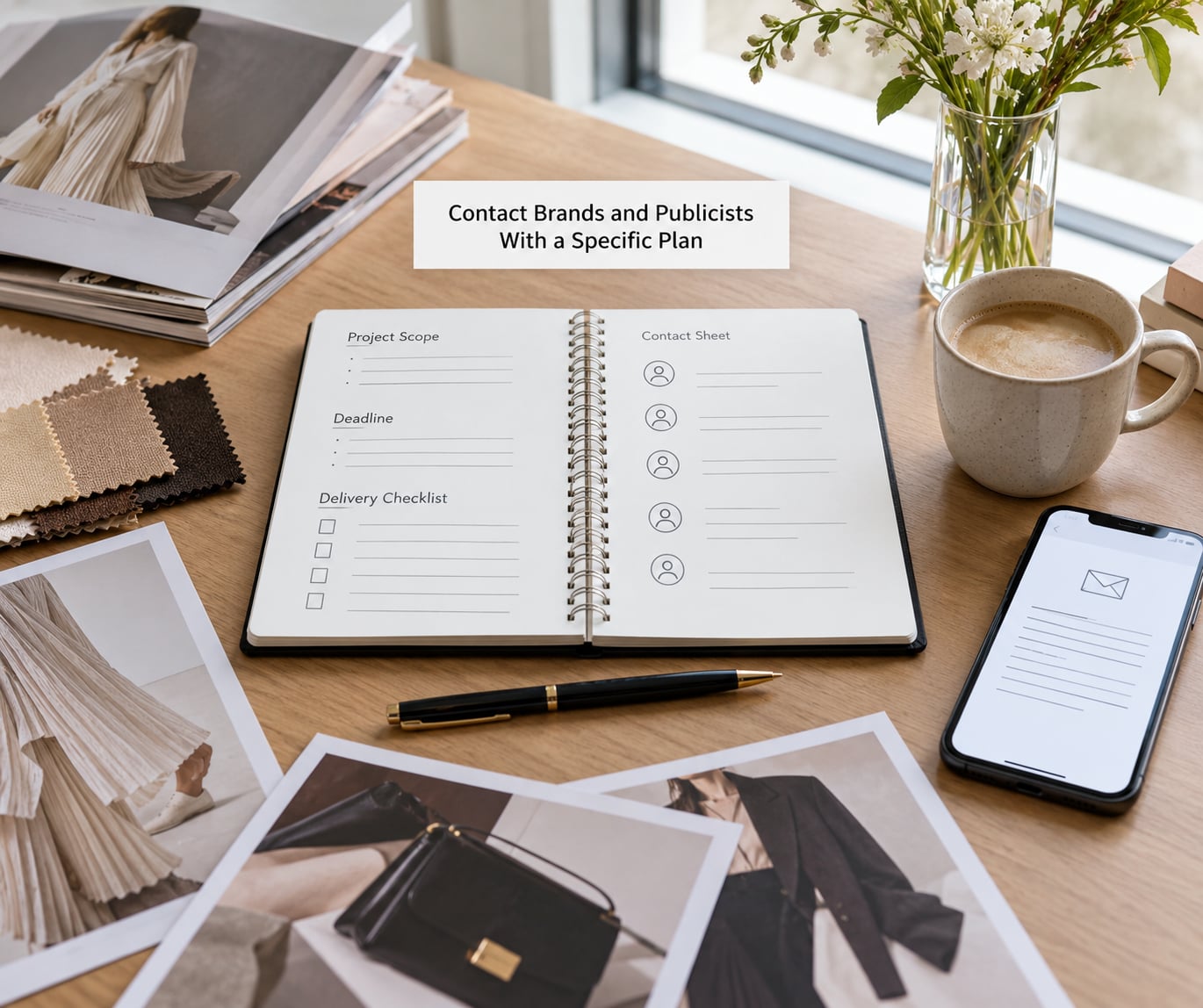
Put the terms in writing before you start. Send a short scope message: what you will deliver, by when, who approves it, how you will be credited and who owns the final version. That single message protects you and makes you look more professional than most paid assistants.
Keep the credit accurate. A freelance project, a volunteer project and a paid role read differently on a resume, and you should write each one exactly as it happened.
This step works when the finished assignment can be shared as a portfolio project or described accurately on a resume, with a deadline you actually hit.
6. Apply Without Experience Without Hiding Your Value
Rewrite your resume in the language of the job. A restaurant shift becomes “managed client requests and resolved service issues under time pressure.” A retail job becomes “built visual merchandising displays and sourced product availability.” A writing degree becomes “produced 40 pieces of long-form copy on deadline.”
Keep it to one page. Three sections: what you have done, what you have made, and who you have worked with. Every line should end in something a publicist does.
Prepare for the questions you will actually get. Why fashion PR? Why us? Which brand would you pitch right now and to whom? What would you do if a client missed a deadline? Tell me about a time you handled something at short notice. If you have completed projects, walk through one in detail: the objective, your approach, what happened and what you would change.
Be honest about unpaid work, and be specific. “I did a three-month unpaid internship at a small agency, sourced samples, wrote 30 pitches and logged every result” is strong. “I worked in PR” is weak. Beating around the bush about an unpaid stint reads badly, and specifics are what convince people.
Many entry-level interviews are closer to chemistry meetings than skills tests. Ask who the clients are, how the team splits accounts, and what a first three months look like. Agencies that cannot answer those questions are telling you something.
This step works when every claim on the page is true and every example answers what you did and what came of it.
7. Build Relationships and Turn One Opportunity Into the Next
The first project is not the goal. It is the receipt. Send a thank-you note within a day, a short debrief of what happened, and a specific update thirty days later, whether or not anything ran. A publicist who remembers you as the person who closed the loop is the person who calls you first.
Ask for feedback once, and take it seriously. Then keep a relationship log with dates, because people move between agencies every eighteen months and old contacts are the ones who tell you a role is opening before it is posted.
Set boundaries early. Do not become the person who works every event for free indefinitely, does not get credit, or cannot say no. Free help with a clear scope and named credit is a trade. Unlimited free help with nothing in return is not, and it is how people burn out.
Keep your own records of results. Coverage secured, dates, placements, impressions if you have them. When you apply to the next role, you can describe outcomes rather than activity, and outcomes are what separate candidates.
This step works when every finished project produces documented results, new contacts, or a recommendation you could actually cite.
Common Mistakes
- Claiming experience you do not have. Invented clients and fake campaigns are the fastest way to end a conversation. Label spec work as spec work; it carries no penalty and plenty of hiring managers admire the initiative.
- Sending mass outreach. Fifty near-identical emails to publicists get filtered. Ten researched messages get two replies, and one reply can change everything.
- Writing vague applications. “I am a hard worker and a team player” tells a publicist nothing. One specific line about their client proves you read it.
- Doing unpaid work with no scope. Agree deliverables, deadlines, approval rights and credit in writing first, by email. No terms means no credit and no evidence later.
- Chasing every editor in the industry. Ten carefully chosen contacts beat a list of 400. Relevance is the entire filter.
- Skipping media research. Naming a story the editor already published two months ago is the fastest way to lose trust. Check the last six months before you pitch.
- Measuring outreach by follower counts. Coverage placements and results matter. A small tier-one feature beats a large post that no client can use.
Two execution tips. Send something every week for three months: a pitch, an update, a spec asset, a note on a story you could pitch. Consistency compounds, and silence ends opportunities quietly. And write your outreach down. The people who get hired are usually the ones who kept going after the twentieth no.
Frequently Asked Questions
Can I work in fashion PR without an internship?
Yes. Plenty of working publicists started with self-initiated projects, freelance help and small independent brands instead of an internship. The internship route is faster because you learn on the job, but a portfolio built from real assignments carries the same evidence. If you can show what you pitched, what ran and what you produced, hiring managers rarely ask where the work came from.
What should I put in a fashion PR portfolio with no experience?
Put two or three self-initiated projects in it, each with a brief, a press release, a pitch, an editorial calendar, a media list and a short note on why you chose that approach. Label them as spec work. Add anything real you have produced, from event recaps to feature drafts, even if unpaid. Cover the reasoning, because interviewers are usually testing how you think rather than how many logos you have.
Is it acceptable to create a fictional fashion campaign for a portfolio?
It is standard practice, as long as you say it is fictional. Agencies and hiring managers read spec work all the time and most prefer a well-researched concept over an empty page. What is not acceptable is presenting invented work as paid employment. Label every mock project clearly, and make sure your claims elsewhere on your resume stay equally accurate.
How do I ask a publicist for a job when I have no experience?
Do not ask for a job in a first message. Explain who you are, say specifically why you chose them, mention one piece of work you did for their client or sector, and ask for twenty minutes of advice or feedback on one page. If a relationship builds, ask about freelance help or an assistant opening later, when the conversation already has a reason behind it.
Should I work for free to get fashion PR experience?
Short, scoped, credited work for an independent designer, event or podcast is reasonable, especially early on. Undefined, ongoing, uncredited work is not, and a long unpaid stint can leave you with nothing to show. Set the deliverables, deadline, approval process and credit terms in writing before you start, and keep the project short enough to finish alongside a job search.
How long does it take to break into fashion PR with no experience?
Budget six to twelve months of consistent work, and expect longer without either an internship or a freelance project. People in the forums describe two to five year waits for an assistant role even with internship experience, so treat any promise of a fast track with suspicion. What you control is the volume of quality outreach and finished projects per month, not the timeline itself.
Conclusion: Start With One Credit-Building Project
Knowing how to break into fashion PR with no experience comes down to producing evidence while nobody is paying you. Choose one segment, learn what its publicists actually do, build two or three mock campaigns that a stranger could follow, then turn them into conversations with people doing the job now.
Do one thing this week: pick your niche, select one contact you genuinely admire, and send them a single page of real work with a specific question attached. Everything else in this plan follows from that message.