To use a round brush for volume, rough-dry your hair until it is roughly 80% dry, section it, then lift each section to 90 degrees or more at the root before you dry it. Keep light upward tension, aim the dryer at the base of the lift, and hit the cool shot before releasing. That lift-dry-cool sequence is the whole trick.
A blowout that falls flat is almost never a bad brush or bad product. It is a sequence problem: the root was never lifted high enough, the section was dried while it was still soaking, or the hair was released hot and cooled into whatever shape gravity wanted.
Table of Contents
- What You Need
- Step-by-Step
- How to Use a Round Brush for Volume at the Roots
- How to Use a Round Brush for Volume on the Top
- How to Use a Round Brush for Volume Without Frizz
- Common Mistakes
- Tips for Long-Lasting Volume
- Frequently Asked Questions
- What size round brush should I use for volume?
- Should I use a round brush on completely dry hair?
- How do I get volume at the roots with a round brush?
- Do I roll the round brush upward or away from the scalp?
- What temperature should I use when blow-drying with a round brush?
- Can a round brush work on short, fine, or thick hair?
What You Need
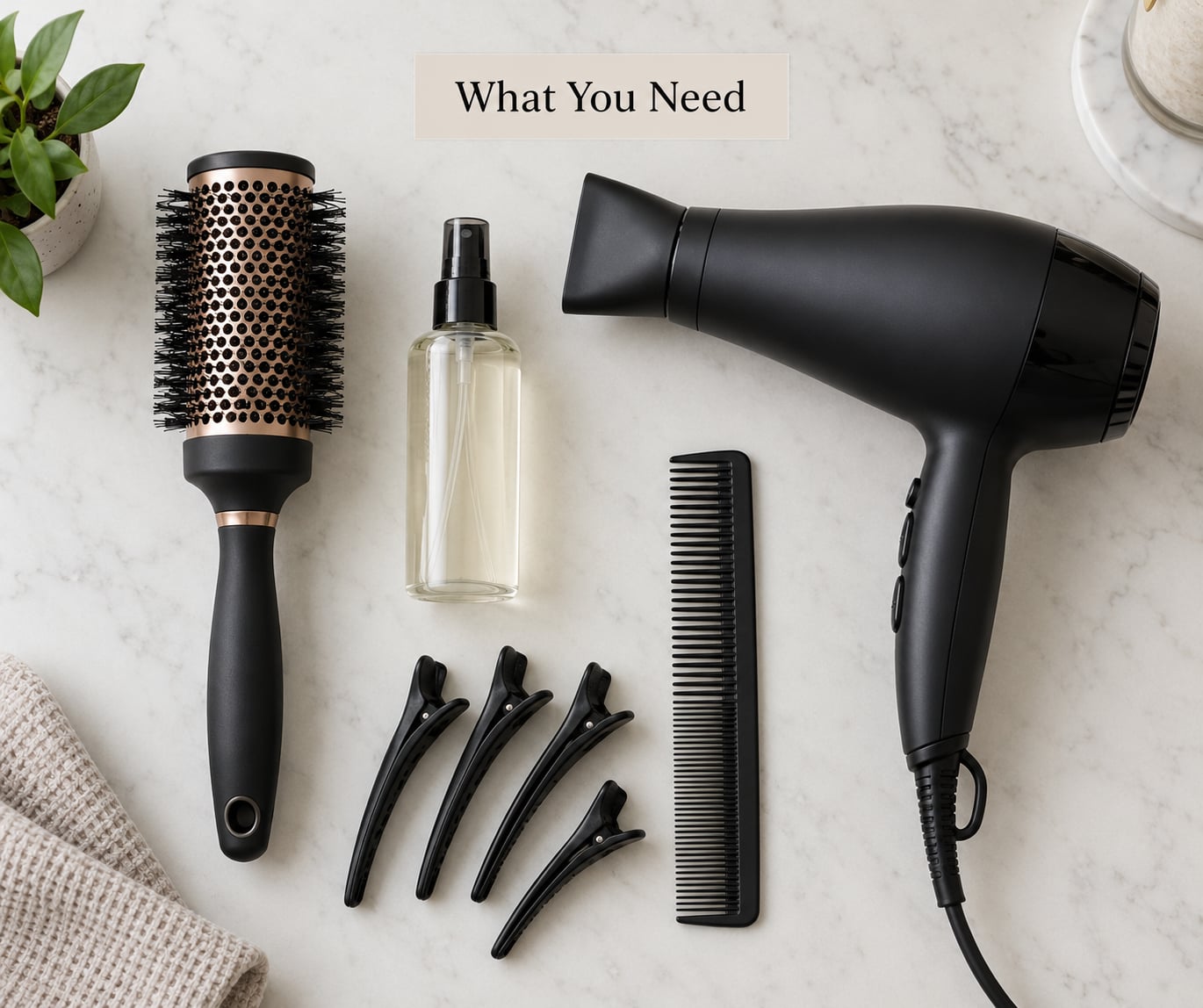
A round brush with a barrel size close to your section width, a blowdryer with a concentrator nozzle, and a heat protectant are the three things that matter. Everything else is convenience.
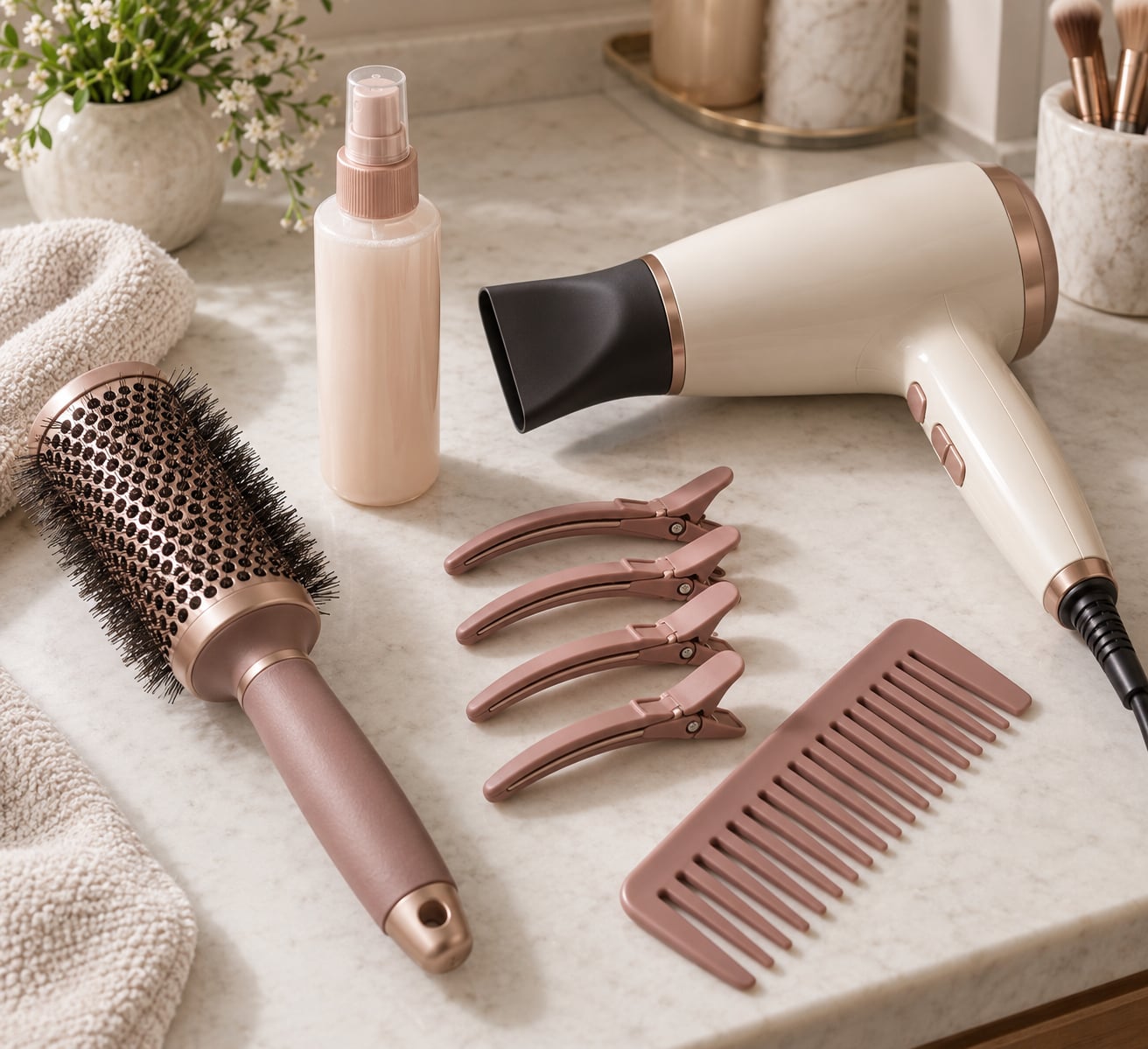
- Round brush. For volume, most people land on a 1.25 to 1.5 inch barrel. Fine or short hair usually does better at 1 inch or smaller, because a small barrel gives you more control and more tension on a thin section.
- Blowdryer with a concentrator nozzle. The narrow nozzle directs airflow along the barrel. Without it, air diffuses and your roots barely lift.
- Heat protectant. Apply it to damp hair before the dryer, not after. It goes on before the heat does.
- Volumizing product. A lightweight mousse or root-lift spray, worked into damp roots. Heavy cream at the base will flatten the very lift you are trying to build.
- Sectioning clips. Two or three. Sectioning is the fix that fine-hair people hear about most, and it is the one that works.
- Wide-tooth comb. For detangling each section before the brush touches it.
- Light-hold hairspray. Optional, for the finish.
Step-by-Step
Read the whole sequence once before you turn the dryer on, then work through it slowly. The first two passes will feel awkward. That is normal.
How to Use a Round Brush for Volume at the Roots
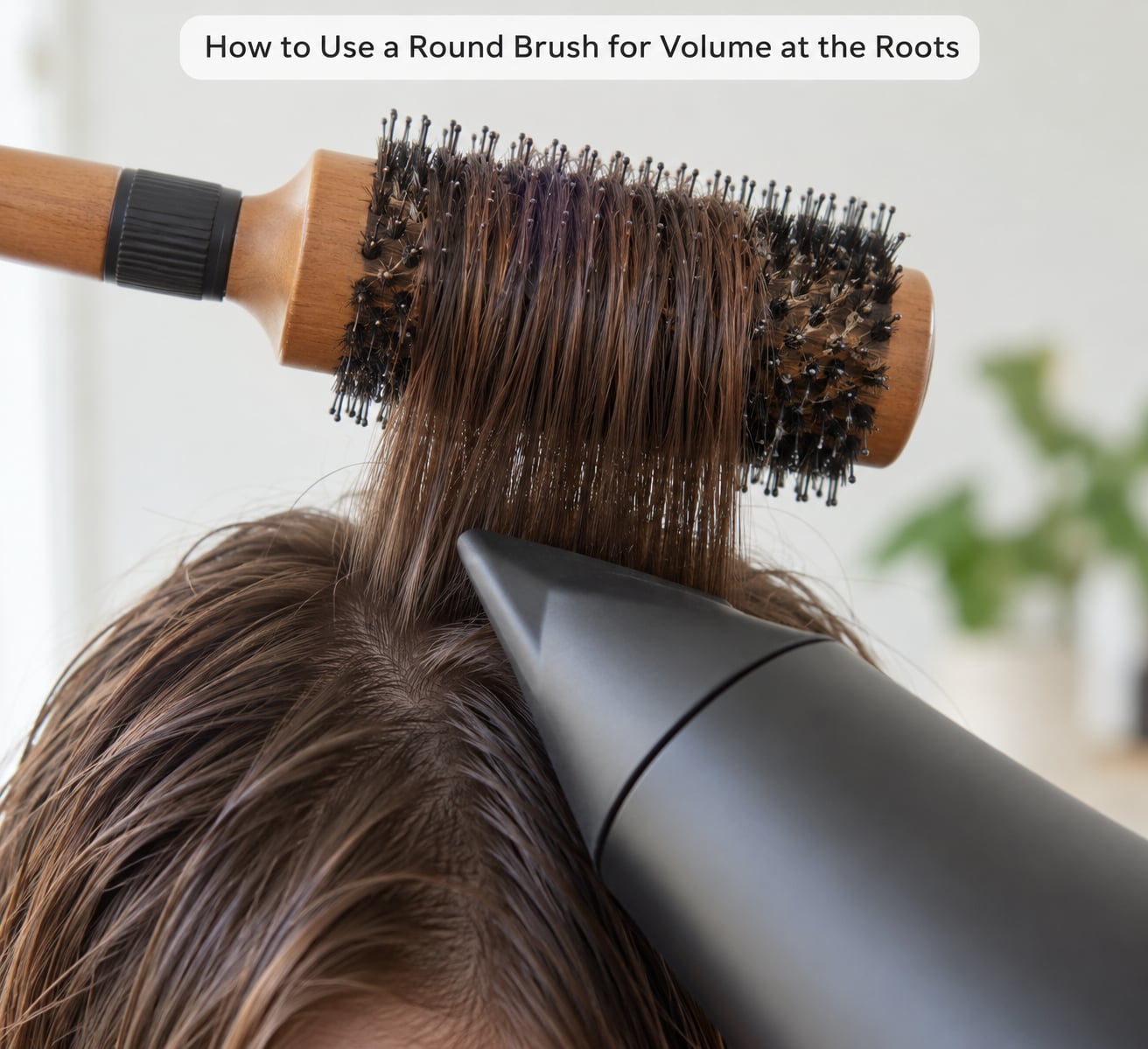
Take a section no wider than your brush barrel, clip everything else out of the way, and comb it through from ends to root first. Place the brush under the section at the scalp, then lift your elbow until the hair stands straight up from your head — 90 degrees or higher.
This overdirection is where the volume comes from. Hair dried in its natural fall line dries flat, no matter what you put on it.
Point the nozzle at the base of the section, right where the brush meets your scalp, and dry it for 5 to 10 seconds until you feel the warmth turn cool. Do not pull the brush down yet. Let the heat do the work at the root first.
Then roll the brush slowly forward and down toward the ends while you keep the dryer following the brush, never blowing against the direction of travel. Airflow that fights the shape gives you frizz and flyaways instead of shine.
How to Use a Round Brush for Volume on the Top
Top volume lives in the crown, and the crown is where people rush. Section from ear to ear, then clip the front pieces forward so you can get to the back.
Lift a crown section straight up, brush the underside first, and dry the base for the same 5 to 10 seconds. Only when that root area is dry do you move into a side-to-side motion, rolling the brush across the top of your head rather than straight down.
Think of the crown as one horizontal surface you are drying in circles, not as hair hanging down. Once it is fully dry, hit the cool shot and let it fall. If you pin it with a clip too early, it flattens where the clip sat.
How to Use a Round Brush for Volume Without Frizz
Frizz shows up when the hair dries faster at the surface than underneath, so the outer layer shrinks while the inside is still wet. Three things fix it.
- Product placement. Work a smoothing serum or mousse through the mid-lengths and ends first, then use your volume product only at the roots. Rough-dry to 80% so the surface is already mostly dry before you shape it.
- Consistent heat. Medium heat and high speed for roots, then lower the speed as you travel down the shaft. Constant blasting at one spot is what creates the puff you are trying to avoid.
- Smooth passes. Keep tension steady from root to tip. The brush is a guide, not a detangling tool — if it snags, stop and re-comb.
Finish with 10 seconds of cool shot at the ends. Cold air sets the temporary bond pattern that holds your shape.
Common Mistakes
Almost every flat blowout traces back to one of these six.
- Brush too small for the section. The section is wider than the barrel, so the brush rolls the ends only and the roots get no tension. Fix: section narrower than the barrel.
- Drying hair completely before styling. Hair that is already bone-dry cannot be overdirected or shaped. Fix: stop the rough dry at about 80% and leave it damp enough to move.
- Pulling the brush down. Dragging instead of rolling tightens the cuticle and creates a crease or a snapped hair. Fix: rotate the brush, keep tension light and steady.
- Crowding the crown. Working one thick top section means the underside never dries. Fix: quarter-inch-wide crown sections, dried one at a time.
- Too much heat. Cranking the dryer to high to save time dries the outside while the inside stays wet. Fix: medium heat, high speed, nozzle 6 to 8 inches away, moving constantly.
- No cool-down. Releasing a hot section lets it settle before it sets. Fix: 10 seconds of cool shot, then release.
Tips for Long-Lasting Volume
Once the crown is dry and cooled, mist a light-hold hairspray from about 10 inches away and let it settle before you touch anything. Comb the front pieces into place with your fingers rather than a brush, because each brush stroke knocks a little volume back out.
For the next morning, sleep in a loose high pony with a silk scrunchie, or braid the crown and leave the rest down. A dry shampoo at the roots gets you most of the way back before a 60-second spot re-blow on the crown.
One last thing worth knowing: blowouts set in hydrogen bonds, and those bonds reform as moisture gets back into the hair. In humid weather, a little anti-frizz product at the lengths does more for your volume than any amount of extra drying does.
Frequently Asked Questions
What size round brush should I use for volume?
For most people chasing root volume, a 1.25 inch barrel is the sweet spot. Fine, short, or straight hair usually does better at 1 inch, because the smaller barrel gives you more tension on a thin section. Dense or thick hair, and anyone smoothing long lengths, works better at 1.5 to 2 inches. The rule: your section should always be narrower than the barrel.
Should I use a round brush on completely dry hair?
No. Once hair is fully dry, it stops responding to the brush, so you cannot lift the roots or smooth the lengths properly. Rough-dry until the hair is roughly 80% dry, then shape. If it already went completely dry, add a light mist of water or leave-in to bring it back into a workable range before you start.
How do I get volume at the roots with a round brush?
Slide the brush under the section at the scalp and lift your elbow until the hair sits at 90 degrees or more, so it points upward rather than falling to one side. Aim the concentrator nozzle at the base of that lift and hold for 5 to 10 seconds until the root area feels warm, not wet. Then roll down toward the ends while the dryer follows behind the brush.
Do I roll the round brush upward or away from the scalp?
For volume, roll the brush away from the scalp, from the root toward the ends, while the dryer follows the brush along that path. Rolling upward and into the scalp creates a bend at the root and pulls. The exception is the first 5 to 10 seconds at the base, where you hold the brush lifted away from your head and dry the root before you roll at all.
What temperature should I use when blow-drying with a round brush?
Medium heat and high speed at the roots, where you need fast airflow to move water out, then lower the speed as you travel down the lengths. Keep the nozzle 6 to 8 inches from the section and keep it moving. A cool shot for the last 10 seconds sets the shape and closes the cuticle, which is what reduces frizz and flyaways.
Can a round brush work on short, fine, or thick hair?
Yes, but the settings change. On short or fine hair, use a 1 inch barrel and lift the section high; the shorter the hair, the more of the volume comes from direction rather than barrel size. On thick or dense hair, work narrower sections and expect more time. On curly or frizz-prone hair, use less product at the roots and finish with a cool shot.
Start with one section at the front, right where you can see it, and hold the brush up at 90 degrees for the full 5 to 10 seconds before you roll. Get that one right and the rest of the blowout writes itself.