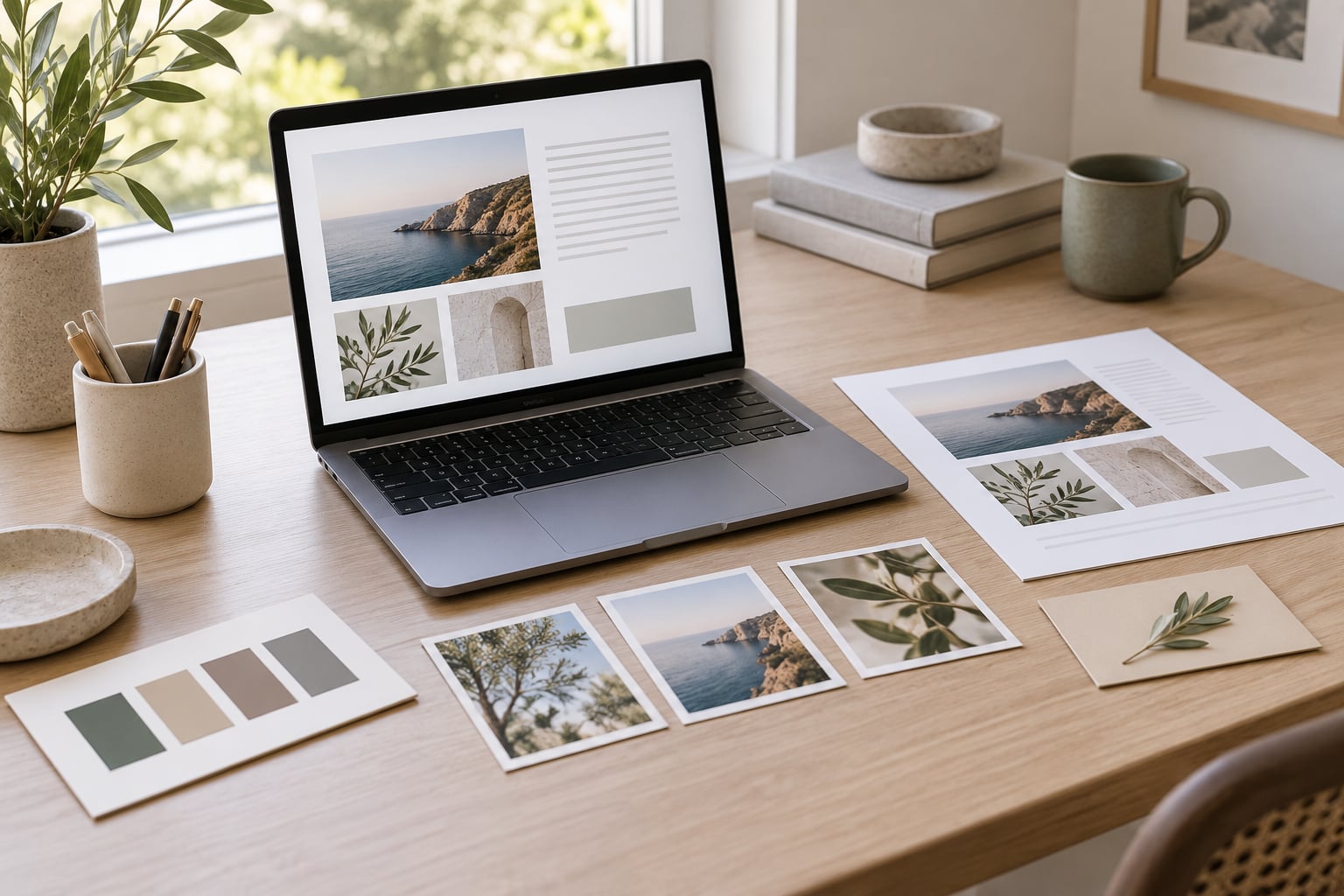
A media kit for brand deals is a short document, usually one page, that tells a brand who you are, who sees your content, what results you have produced, and how to work with you. If you know how to write a simple media kit, you can build one in a single sitting and reuse it for every pitch that follows.
The format has not gone out of style, even with brands running discovery through in-app tools. What changed is what gets read first: audience quality and engagement, not a follower number. A kit that states real numbers, names a date range, and shows proof of past work gets shortlisted. A glossy kit with vague claims gets closed.
Below is the build order I would use, the exact sections to fill in, and the sentences to copy. Fashion and beauty examples run through it because fit matters more than polish in those categories.
Table of Contents
- What You Need
- Step-by-Step: How to Write a Simple Media Kit for Brand Deals
- Choose the Information a Buyer Needs First
- Write a Clear Bio and Positioning Statement
- Add Audience and Engagement Details
- Show Relevant Proof and Content Examples
- Present Services, Deliverables, and Rates
- Design and Export a Shareable Media Kit
- Common Mistakes
- What to leave out
- Frequently Asked Questions
- What should be included in a media kit?
- How long should a media kit be?
- Should I include pricing in my media kit?
- What file format should I send a media kit in?
- How do I customize a media kit for each brand?
- How often should I update my media kit?
- Conclusion
What You Need
Before you open a template, gather the raw material. Most of it lives in your phone already.
- Contact details — a real email address you check daily, your name, and your handle on each platform.
- Bio material — your niche, your location, and the one thing you do that is different.
- Audience insights — screenshots or exports from Instagram Insights, TikTok analytics, and YouTube Studio, plus Google Analytics if you run a site.
- Partnership history — brands you have worked with, campaign results, published features, and any testimonials you can quote.
- Content examples — three to five pieces that show your range, saved as square or vertical images and one or two vertical videos.
- Rates or deliverables — what a collaboration includes and what you charge, or a rate framework you follow.
- Visual assets — a headshot, a logo or wordmark if you have one, and one or two fonts and colours you actually use.
A simple kit is one PDF plus a few links. Anything longer belongs on a hosted page you attach, not inside the document.
Step-by-Step: How to Write a Simple Media Kit for Brand Deals
Choose the Information a Buyer Needs First
A partnership manager opens your file with one question: does this audience overlap with my customer? Answer that before they ask you to prove anything else.
Work out what to write in this order:
- Who you are and what you cover, in two sentences.
- Whether your audience matches the brand’s customer.
- Proof that the audience pays attention.
- What a partnership looks like and what it costs.
- How to reply.
Everything else is optional. When people ask how to write a simple media kit, this ranking is what keeps the page short. A long personal story at the top is the fastest way to lose a reader who has twenty other tabs open.
- Name and headshot. Your name, handle, one clear photo — some brands skip kits that use stock imagery.
- Bio. Two lines on niche, location, and angle. It sets the frame for everything below it.
- Social stats. Followers by platform with a date. Shows scale, but rarely decides anything.
- Engagement rate. Likes plus comments over reach, averaged. Proves the audience acts, not just scrolls.
- Audience demographics. Age bands, top cities, gender split, interests. This is the overlap check a buyer is actually running.
- Past work. Three to five examples with results. Turns a promise into evidence.
- Deliverables. Posts, reels, stories, newsletter, appearance. Lets a buyer imagine the work before asking.
- Contact and call to action. Email and booking link. Without it, a good kit still goes nowhere.
Write a Clear Bio and Positioning Statement
Write the bio last, once you know what you want to be hired for. Two sentences, no adjectives you would not say out loud.
Fill in the blanks: “I am a [location]-based creator covering [niche] for an audience that is [description]. I focus on [format or angle], which is why my posts about [topic] regularly reach beyond my follower count.”
A fashion example: “I am a London-based stylist sharing affordable outfit breakdowns for women in their late twenties. Most of my audience saves a post before buying, which is why the last six sponsored Reels each pulled over 40,000 views from people who did not follow me.”
Cut anything you cannot back up. “Loved by women everywhere” tells a buyer nothing, and buyers have learned to read past it.
Add Audience and Engagement Details
Report numbers from native platform tools, each with the date range you pulled them from. Instagram Insights, TikTok analytics, and YouTube Studio all export a screenshot you can drop in.
List the four figures a buyer will actually read: average engagement rate, average views or reach on the last ten posts, audience age bands with the largest share, and top cities or countries. Everything else is decoration.
Engagement rate beats follower count in almost every small-creator conversation I have seen. Brands price on attention, and attention is what your average reach shows. A 9,000-follower account posting consistently to 6,000 real people is more valuable than a 90,000-follower account posting to empty rooms.
Be honest about weak numbers. A kit with one honest platform beside three dead ones reads as carelessness; a kit that admits a TikTok audience is small and growing tells a brand you know your own business.
Show Relevant Proof and Content Examples
Pick three to five examples and tie each one to a claim. A screenshot of a Reel with 41,000 views proves reach; a product link with recorded conversions proves your audience buys.
If you have partnered with a brand before, include the campaign, the deliverable, and one result. If it was gifting only, say gifted and keep it separate from paid work so nobody thinks you inflated it.
Testimonial line: “Working with [brand] was the smoothest campaign I have run — brief on time, product fit, and the Re outperformed the agreed reach by 30 percent.” One sentence with a number beats three adjectives.
No brand deals yet? Gifting, affiliate sales, a strong owned-content example, a published feature, or a client testimonial for freelance work all count as proof. Packages with brands still carrying your tag are legitimate proof of fit — label them honestly as collaborations.
Present Services, Deliverables, and Rates
List three partnership options instead of a menu of twelve. For each one, name the deliverable, the timeline, and what it includes.
Example: Reel partnership — one 30-second vertical video, concept agreed in advance, two rounds of edits, published to Instagram and TikTok, tagged and product-linked, three-month category exclusivity.
Should rates go in the kit? Usually not as a flat number on the front page. A short range, or a line reading “rates depend on scope, usage rights, and exclusivity,” keeps the conversation open and stops you anchoring too low before you know the brief.
Where you do publish figures, price them off the numbers in your own kit: typical reach, engagement rate, and the production time the deliverable takes. A frame that saves a buyer money on editing is worth more than a bigger follower number with no production.
Design and Export a Shareable Media Kit
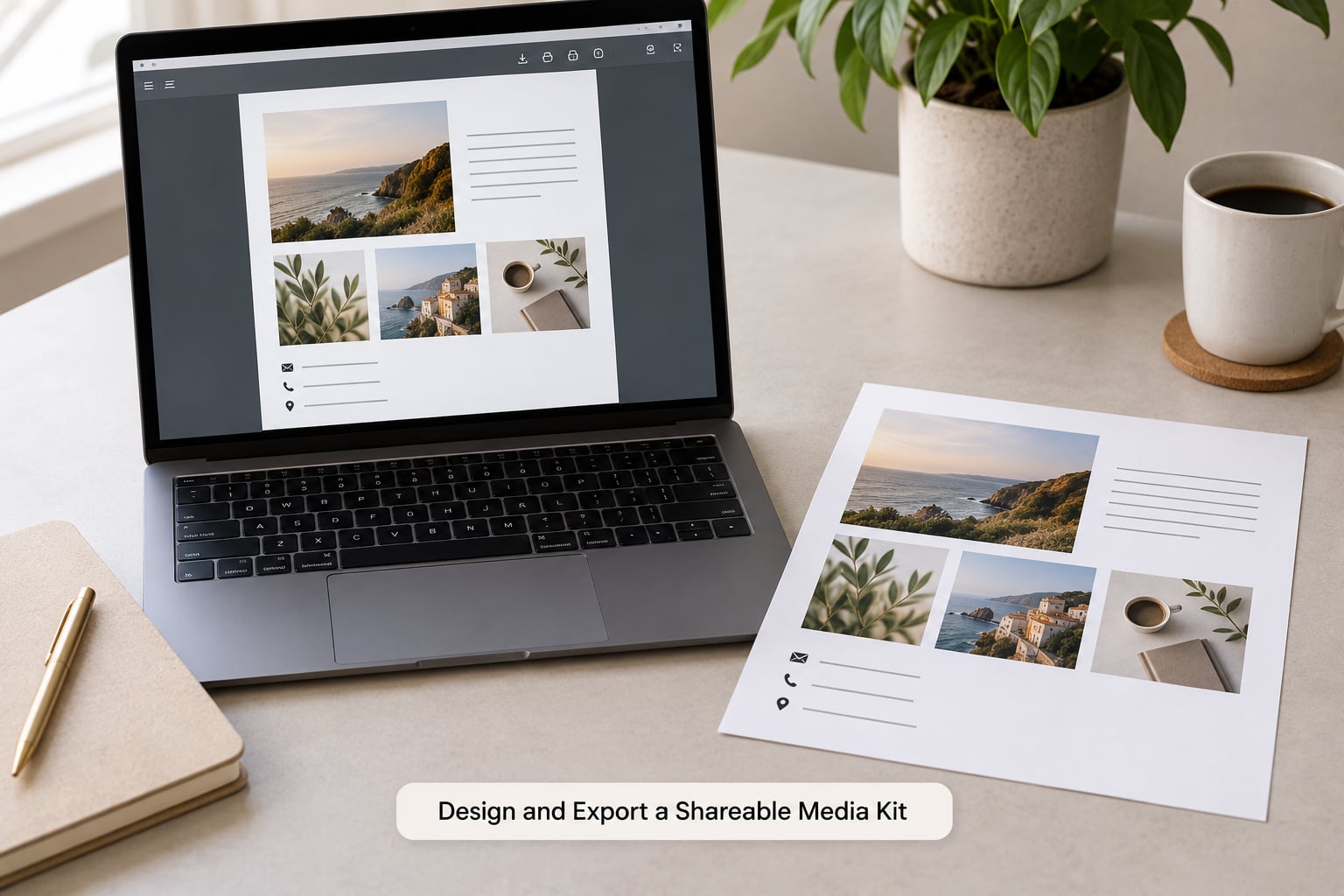
Layout does less work than content, but bad layout undoes good content. Use one type family in two weights, generous margins, and a single accent colour. Canva and Google Slides both export a clean PDF without fuss.
Before you send, run this check:
- Readable on a phone screen, with no squinting.
- Contact email present twice — top and bottom.
- Every number carries a date or a stated period.
- A named call to action: reply, or book a call, not “get in touch.”
- Exported as PDF, under a few megabytes, with a filename like Firstname-Lastname-Media-Kit-2026.pdf.
- Nothing linked to a post that has been deleted or set to private.
Also host it somewhere with a link — a Notion page or a simple site section — so a brand can forward it to a colleague who was not on the original email.
Common Mistakes
Most ignored kits fail on one of a handful of things.
- Follower count as the headline. Fix: lead with audience and engagement, keep follower numbers in a single line with dates.
- Stale metrics. Fix: pull numbers fresh the week you update, and write “last 90 days” beside them.
- No contact details. Fix: email and booking link in the header and the footer.
- A vague bio. Fix: niche, location, format, and one specific claim you can support.
- Unverified results. Fix: screenshot the analytics view next to the number so a buyer can see where it came from.
- Too many deliverables. Fix: three options. Twelve reads as a price list, not a collaboration.
- Inconsistent branding. Fix: one font pair, one accent colour, one photo style across every page.
- Over-designed layout. Fix: if a buyer has to hunt for the email, the design is working against you.
- A long CV. Fix: education, work history, and awards do not belong here. Past campaigns do.
Tailor each version. Swap the top two examples for work closest to the brand’s product, and add one line naming the specific product and why your audience already uses it. A mass-sent kit is obvious within seconds.
What to leave out
Drop anything that does not help a buyer decide. A long CV, a press-clipping dump, three self-congratulatory adjectives, screenshots of follower graphs with no annotations, and any claim you cannot source all belong in the bin.
Usage rights deserve one short line, because they are where creator income quietly leaks. State how long a brand may repost your content, whether the content stays on your profile, and whether the brand can run it as its own paid ad. One sentence: “Content is owned by me; brand use is included for 90 days, organic and paid, with category exclusivity for 30 days.” Extra usage can be quoted as a line item rather than agreed later in your favour.
Creators who mainly sell UGC rather than audience sometimes skip the media kit entirely. A portfolio of ten to fifteen videos sorted by category, with conversion numbers, turnaround time, and a rate card, does that job better than a document built around a follower count you rarely use.
Frequently Asked Questions
What should be included in a media kit?
Include your name and headshot, a short bio, social stats with dates, engagement rate, audience demographics, three to five content or campaign examples, your partnership options, and a clear call to action with contact details. Brands read for audience fit first, so put those numbers near the top and keep everything else short.
How long should a media kit be?
One page works for creators with one platform and one clear niche. Four or five clean pages work better once you add audience demographics, several case examples, and website traffic, because the detail is there without crowding. Whatever the length, the first page must work alone — many partners only see page one.
Should I include pricing in my media kit?
You can, but a range or a note about what drives the price is safer than a single number. Scope, usage rights, and exclusivity all shift the cost, and a flat figure anchors the conversation low before you have seen the brief. If you do publish rates, tie them to your own reach and engagement numbers so the price reads as evidence-based.
What file format should I send a media kit in?
Send a PDF. It keeps your layout intact on every device, works in email, and opens without asking anyone to install anything. Keep the file small, name it clearly with your name and the year, and also host it online so the brand can share a link internally. Check every embedded link still resolves before you attach it.
How do I customize a media kit for each brand?
Keep your core one-pager and make a copy for each prospect. Swap the two or three examples closest to their product, add one line about why your audience already buys from them, and mention the format they asked for. The audience and engagement data stays the same because it is true, and that is what makes the personalised version credible.
How often should I update my media kit?
Refresh it every quarter and any time something big changes. Pull fresh screenshots from Instagram Insights, TikTok analytics, and YouTube Studio so the numbers carry a visible date. If you have new campaign results, add them and archive older ones — a kit with fifteen case studies is harder to read than one with five strong ones.
Conclusion
Start with the positioning sentence, then go collect proof: fresh analytics screenshots, dated, plus three examples that fit the kind of brand you want. Lay both into a one-page PDF with your contact details at the top and the bottom, and that file is done for every pitch that follows.
That is the whole job when you know how to write a simple media kit for brand deals. Refine it from there — each reply teaches you which number a buyer cared about, and you move that number up the page.