
To become a casting director for fashion you need an eye for talent, working relationships with model agencies and photographers, and the admin stamina to manage bookings, options and show logistics. Nobody hands you a job title, so the work happens in stages: learn the business, assist someone good, cast small shoots for free, then charge.
The honest version takes longer than most job ads suggest. Most casting directors people admire started by answering emails for an agency booker or cold-messaging photographers, and the real career is built on repeat bookings, not a single lucky discovery.
This guide walks through the seven stages in order, plus what you need before you start, how casting actually gets paid, and the mistakes that burn beginners fastest.
Table of Contents
- What You Need
- Industry knowledge you can actually use
- Relationships, not a list of names
- Materials and software
- Personal qualities that survive the job
- Step-by-Step
- Step 1: Choose the Area of Fashion Casting You Want to Build
- Step 2: Learn How Fashion Campaigns and Auditions Work
- Step 3: Build Industry Relationships Before You Need a Job
- Step 4: Create a Professional Casting Profile
- Step 5: Assist Established Casting Directors and Producers
- Step 6: Practice Managing Submissions and Auditions
- Step 7: Land Your First Casting Project and Grow the Business
- Common Mistakes
- Treating casting as a popularity contest
- Ignoring the brief
- Failing to confirm availability
- Skipping the option and usage conversation
- Being transactional with agencies
- Confusing agency casting with independent casting
- Frequently Asked Questions
- How much do casting directors make?
- Do you need a degree to become a casting director?
- Who usually hires a casting director?
- Is being a casting director hard?
- How do I get a casting internship or assistant job?
- Can casting directors work remotely?
- Conclusion
What You Need
What you need to become a casting director is mostly knowledge and access, not a qualification. You need to understand how a brief becomes a casting requirement, know which agencies hold which talent, own a casting profile you can send in one click, and have enough organisational stamina to hold three dates, six measurements and a set of option deadlines in your head at once.
Here is what to gather before you start chasing work.
Industry knowledge you can actually use
Learn the vocabulary first, because it is how you sound credible in an email. Casting director, model agent, booker, scout and creative director are five different jobs, and beginners who blur them get dismissed immediately.
- Brief — the document from the brand or designer describing the campaign, the mood, the deliverables and the budget range.
- Selects — your shortlist of recommended talent. First-round options are the names held while the client decides.
- Option period — the window where talent is held and cannot be booked elsewhere, usually a few days.
- Show call — the fixed time talent must arrive at a runway venue, often earlier than the show.
- Digitals and polaroids — recent unretouched images you review when a comp card is out of date.
- Comp card — the model booker’s standard card with measurements, range and contact details.
- Mother agency — an overseas partner agency that handles a model’s international work.
- Usage rights and kill fee — how long imagery can run, and what is owed if a confirmed booking is cancelled.
Relationships, not a list of names
Knowing people is not the same as being known by them. A casting director’s real asset is a small number of agencies and photographers who would take a call from them. That takes months of sending useful things, not one networking event.
Materials and software
A casting deck, a spreadsheet you can actually filter, and a way to receive large headshot drops. Industry tools used for this include Casting Networks and Spotmodels for agency databases and submission management, and tools like LaunchPad The List and A Casting for brief and contact workflows. You do not need all of them on day one.
Personal qualities that survive the job
Good taste gets you hired once. Organisational calm, discretion and the ability to say no politely are what keep you booked. A veteran model booker described the work as thankless, with 3 a.m. calls and demanding clients, which is a fair warning for anyone romanticising it.
Step-by-Step
Step 1: Choose the Area of Fashion Casting You Want to Build
Pick one lane before you build anything. Runway casting for fashion week is a fast, high-pressure show-casting job. Commercial and editorial casting is slower, brand-led and more about storytelling. E-commerce and social content casting runs to volume and measurement specs. Stylist and creative talent casting sits closer to production than modelling.
They differ in timeline, budget scale and who signs you off, so choosing one first keeps your portfolio coherent. If you want proof, watch one full show casting end to end and write down every step you see.
Step 2: Learn How Fashion Campaigns and Auditions Work
A campaign starts with a creative brief. The designer or brand describes the mood, the reference images, the number of looks, the shooting dates and the budget band. Your job is to translate that into a casting requirement — how many people, what range of heights and sizes, what look, what availability.
Then you research. You search agency rosters, contact bookers for updated measurements and availability, and scout street and open calls for faces no agency has signed yet. What comes back is a shortlist of selects with notes explaining why each one fits. Once the client approves, you negotiate fees, dates and usage, then confirm every booking in writing.
Knowing how to communicate this clearly is the skill that gets you a second call from the same client.
Step 3: Build Industry Relationships Before You Need a Job
Do the unglamorous version of networking. Reply to photographer and stylist callsheets properly. Send bookers a concise note about a model you think suits a specific brief, rather than a generic CV. Show up at small independent runway shows instead of the big four, where the casting credits are often printed on a single sheet.
Forum discussions about agency careers come back to this again and again: insiders describe most agency roles as friend-of-a-friend, and aspiring creatives complain of networking without standing out. The difference is specificity. A message that names a brief, a season and two candidates reads as work. A message that asks to be remembered reads as noise.
Step 4: Create a Professional Casting Profile
Your profile is the thing a producer opens at 6 a.m. Put your name, contact details, city, casting categories and any credits on one page. Below it, a short note on your eye: the kind of casting you specialise in, the range you have worked with, and the kind of brand that suits you.
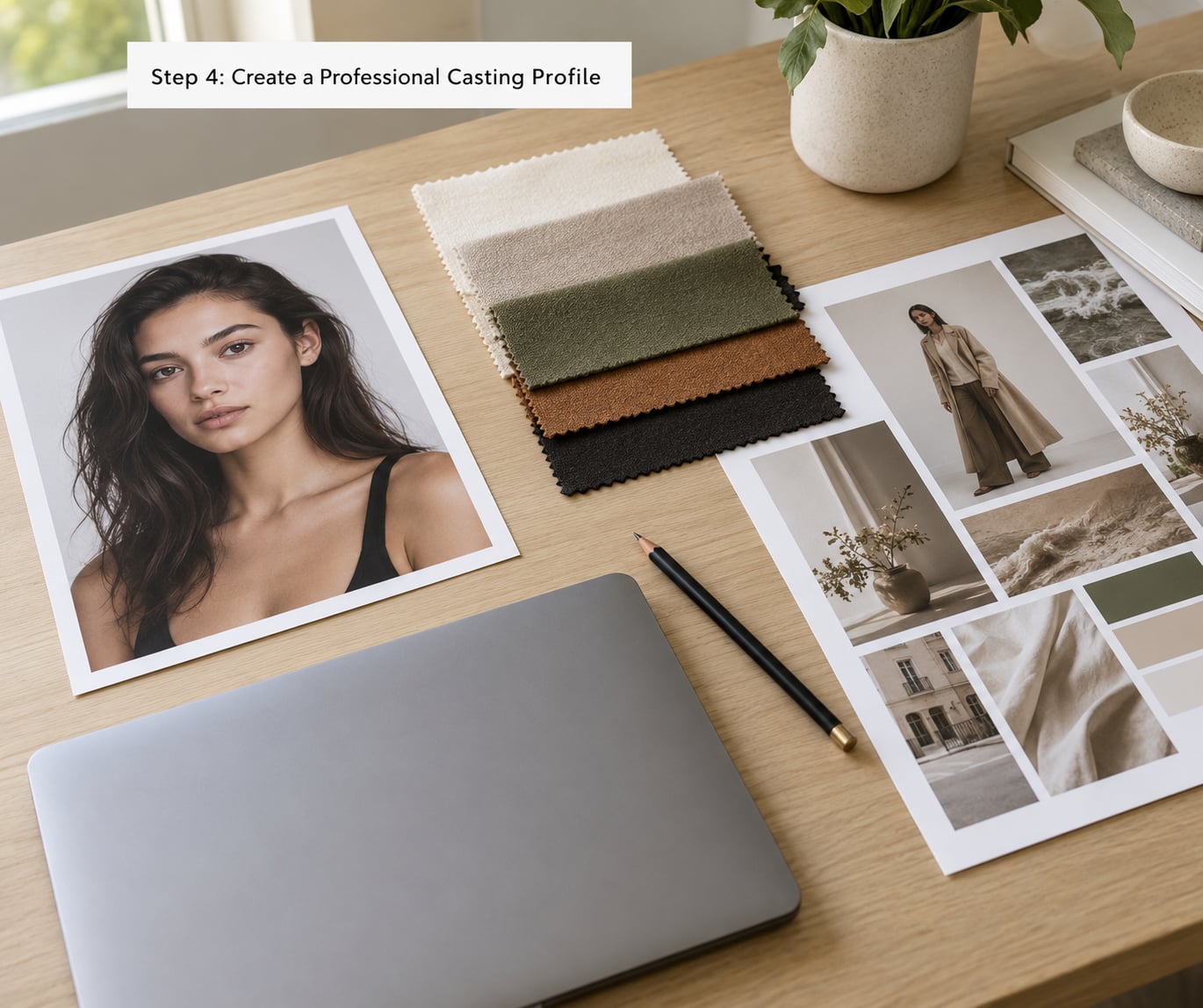
If you have no paid credits, build the portfolio with self-initiated projects. Cast and shoot a small editorial with a photographer you admire, using your own network or a friend who models. Three well-executed fake campaigns with a mood board, cast list and final selects do more than a certificate course, because they show your taste rather than your attendance.
Keep your digital presence tidy. If you post casting work, a plain professional presence with the images and credits visible is enough. Delete the posts that make a photographer look bad.
Step 5: Assist Established Casting Directors and Producers
The assistant route is the apprenticeship nobody advertises. You will submit headshots, chase measurements, build schedules, manage call sheets and confirm shows. It is repetitive and often unpaid, and it is also the fastest way to learn how a real casting runs.
To get one, target small casting companies, independent designers producing their own shows, and production companies that handle lookbooks. Offer to help with a specific task rather than asking for a job. If you take unpaid work, set a limit: defined hours, defined deliverables, and an agreed end date with a written reference or recommendation at the end.
Step 6: Practice Managing Submissions and Auditions
Run the process yourself on a small project so you can prove you can do it. Build a spreadsheet that filters on measurements, availability and range, tag every headshot by look, and write one line per candidate explaining the fit.
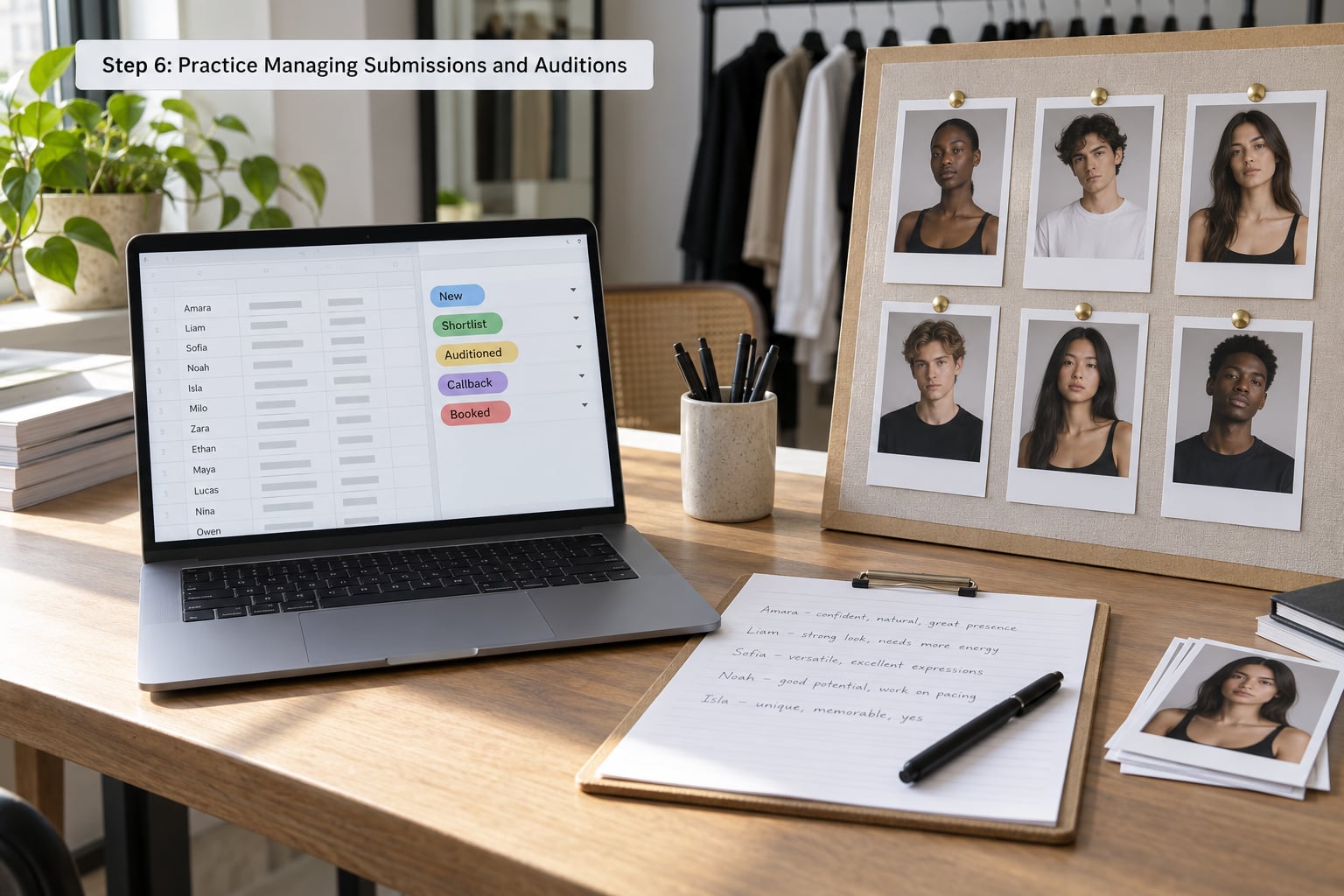
Hold a real audition rather than judging from images alone. Watch people move, talk to them about the brief and note how they respond. Then confirm availability in writing before you present anyone, because one no-show on shoot day costs more than ten hours of casting.
Save the process documents afterwards. Your shortlist, your notes and your final reason for each selection become the case study you send to the next client.
Step 7: Land Your First Casting Project and Grow the Business
Your first paid casting job usually arrives from someone who saw one of your self-initiated projects. Pitch it as a small service: one shoot, a stated number of looks, a delivery date and a clear fee. Know how to become a casting director for fashion by pricing what you are actually doing, which is sourcing, casting, booking, on-the-day support and delivery of the final selects.
There are four common pay structures. A flat project fee covers a defined scope of work. A day rate pays for the days booked, usually the strongest fit for show casting. A retainer pays monthly for ongoing work such as e-commerce campaigns. A commission model exists where the casting director is paid by the booking, and it is less common than the other three.
State your fee in writing before you start, along with usage rights, expenses, and a kill fee if the client cancels after confirms. Ask for feedback after delivery, then ask whether they need casting for the next project. Repeat work is the whole business model, and this is where you learn how to become a casting director for fashion rather than just doing the job once.
Common Mistakes
These are the errors that cost beginners clients and referrals.
Treating casting as a popularity contest
Choosing the most-followed faces instead of the right faces for the brief. The talent that reinvents itself and delivers something unexpected is what people remember. Build a case for each name in one line, tied to the brief.
Ignoring the brief
Casting eight people when the brief asks for three, or bringing in a look the brand ruled out in the reference images. Read the brief twice, then message the client with any ambiguity before you start sourcing rather than after.
Failing to confirm availability
Presenting talent who has already been optioned elsewhere, or who is double-booked on the shoot date. Confirm in writing with the agency, and keep a dated record of every conversation.
Skipping the option and usage conversation
Confirming talent without discussing how long imagery runs or who pays if a booking collapses. Usage terms that are vague at booking become expensive later, especially when work goes digital and outlives the campaign.
Being transactional with agencies
Treating bookers as a list of names to email. Bookers protect their models, and they remember who was respectful and who was not. Ask about the model, respect the agency’s relationship with them, and never go around a booker to contact a model directly.
Confusing agency casting with independent casting
You can work in-house, freelance for brands, or cast for an agency that puts its name on the work. Each has different freedom and different money, and freelancers carry their own admin and tax. Know which one you are offering.
Frequently Asked Questions
How much do casting directors make?
It depends entirely on the structure. In-house casting directors at agencies and brands are usually salaried, and the total package includes benefits and travel. Freelancers charge a flat fee per project, a day rate for show casting, a monthly retainer for ongoing campaign work, or sometimes commission per booking. The variable that moves a freelance number most is volume: someone casting one lookbook a month and someone booking a season of e-commerce are on very different footing.
Do you need a degree to become a casting director?
No, and most working casting directors do not have one. A fashion or arts degree helps you understand the design side, but nobody hires on the certificate. What gets you work is taste you can show, agency relationships, and proof that you have run a casting process end to end. If you do study, a course covering photography, styling and visual storytelling speeds up the learning curve.
Who usually hires a casting director?
Independent and established fashion brands, design labels around fashion week, advertising and creative agencies handling fashion campaigns, e-commerce teams producing ongoing content, and modelling agencies that need show or campaign casting. In-house roles are usually advertised by agencies. Freelance work comes mostly through photographers, stylists and production companies who already trust you and need casting for a specific project.
Is being a casting director hard?
Getting started is the hard part, because there is no formal ladder and most opportunities come through people you already know. Once you have two or three credible projects, the work becomes more predictable. The daily difficulty is different from the entry difficulty: logistics, options, early call times, last-minute cancellations and clients who change their minds after selects. Insider accounts describe the job as thankless for good reason.
How do I get a casting internship or assistant job?
Contact small casting companies and independent production companies rather than the big agencies, which mostly hire internally. Offer one specific thing you can do well, like building a lookbook submittal or chasing confirmations for a small show. If a casting director needs unpaid help, agree defined hours, defined deliverables and a written end date in exchange for a reference. Vague open-ended volunteering helps nobody.
Can casting directors work remotely?
Most of the job can be. Sourcing, research, shortlisting, contacting agencies and booking are all done from a desk, and many freelancers work entirely remotely once their relationships are in place. The parts that need presence are auditions, fittings and show days. Show casting during fashion week is almost always on location, and the closer you get to the brand, the more travel you should expect.
Conclusion
The path to becoming a fashion casting director is unglamorous and specific: learn the vocabulary, choose a lane, assist someone good, cast your own projects, then charge for what you deliver. Relationships do more work than credentials, and the booking, option and usage layer is where a casting director earns their fee.
Start this week. Pick one specialty, study the casting credits of one real show, and send one casting professional a message offering something specific you can do. That single message is the step most people never take.