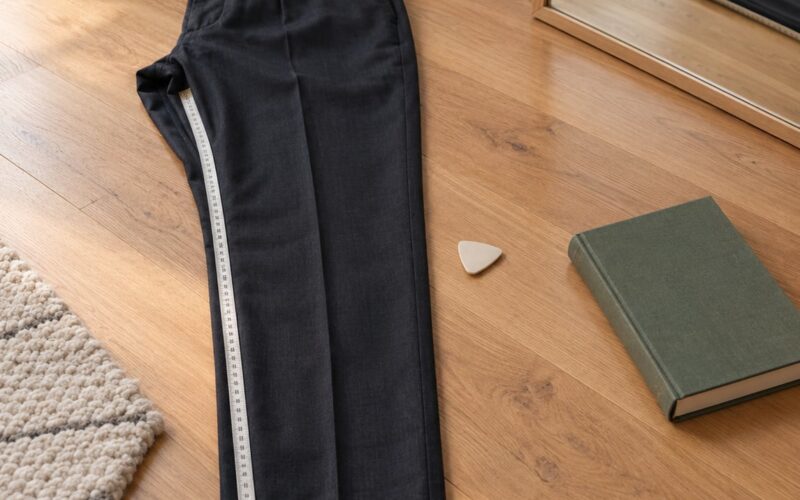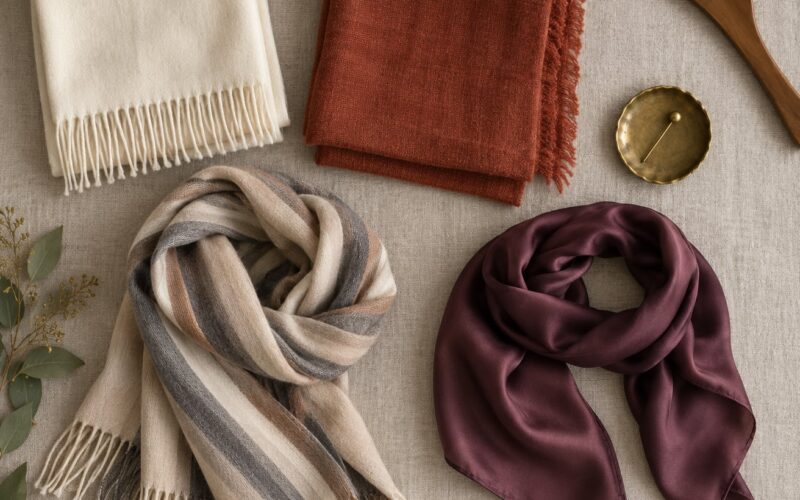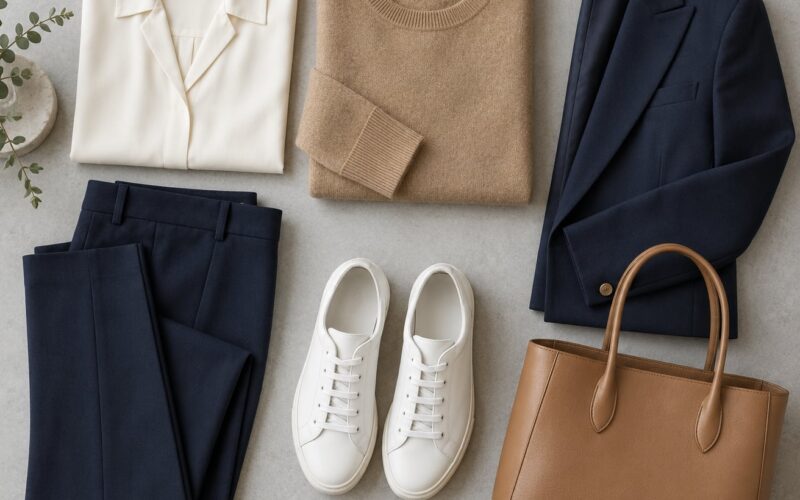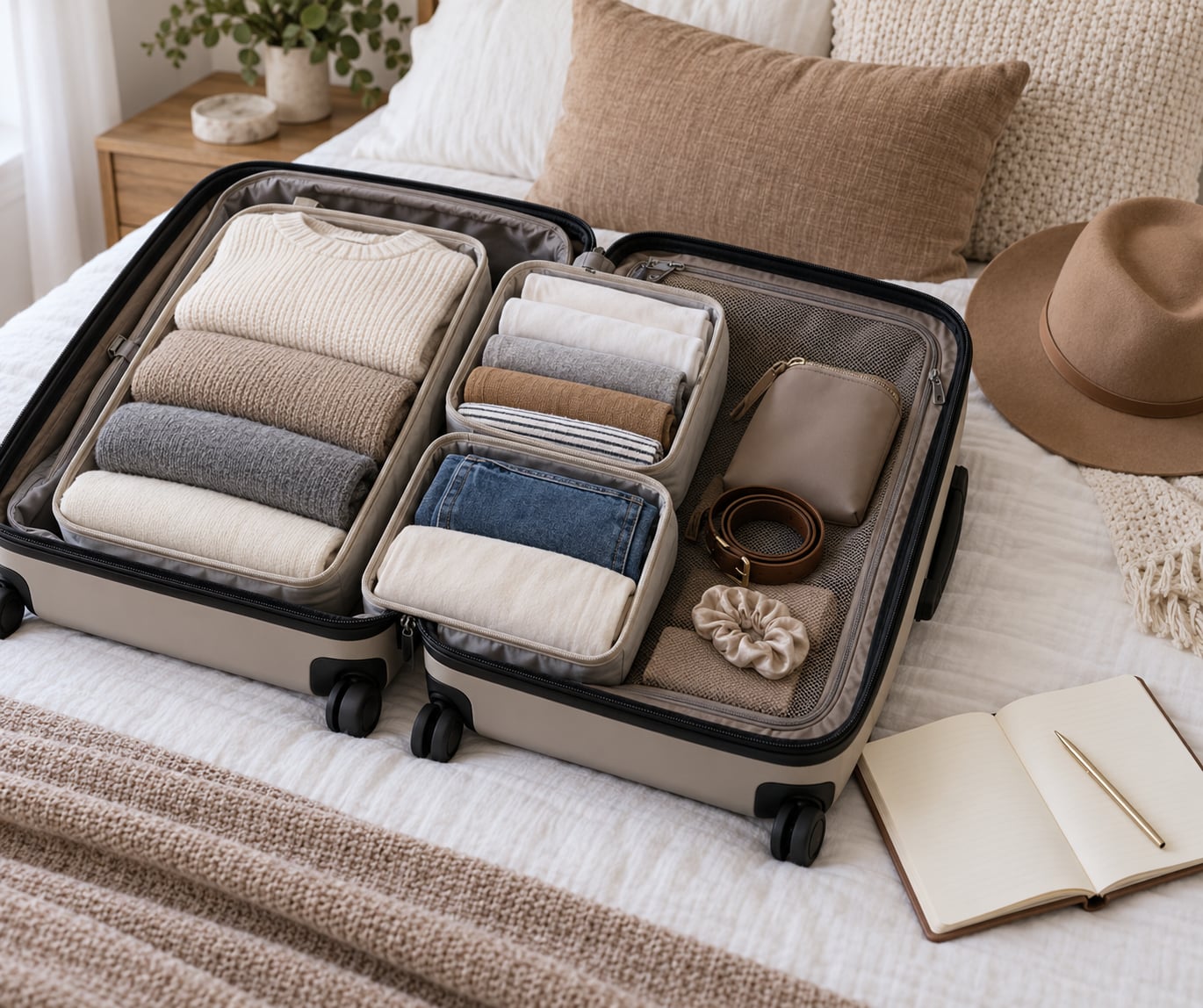
Packing for fashion week comes down to one number most people get wrong: two complete outfits per show day, not one, plus a single backup look. The day starts with a morning show or presentation and ends with an evening show, dinner or party, and street-style photographers are working the whole time. Once you accept that, learning how to pack for fashion week takes about an hour of planning and one carry-on.
The method below is the one I hand friends who fly into New York, London, Milan or Paris every season: build backwards from the show calendar, cap the wardrobe at pieces that mix, and keep the heavy logic out of your suitcase. Nothing here needs buying.
Table of Contents
- What You Need Before You Pack
- Step-by-Step: How to Pack for Fashion Week
- 1. Map Your Fashion Week Schedule
- 2. Build a Capsule Wardrobe Around Your Schedule
- 3. Pack for the Weather and the City
- 4. Pack Shoes, Accessories, and Essentials
- 5. Dress for Long Event Days and Fast Changes
- 6. Leave Room and Do a Final Test Pack
- Common Mistakes: Packing for Fashion Week the Wrong Way
- Quick Packing Tips
- Frequently Asked Questions
- How many outfits should I pack for fashion week?
- What should I wear to a fashion show?
- Should I bring separate outfits for street-style photography?
- How do I pack for fashion week in bad weather?
- What shoes are best for a full day of fashion week events?
- The Short Version
What You Need Before You Pack
You need four things settled before you open the closet: your show calendar, the venues, the forecast for each city, and the dress codes. Gather these and the packing decisions make themselves.
- Show calendar. Dates, show times, seat type (seated or standing) and venue for each show, plus presentations, press appointments, dinners and parties.
- Venue addresses. Show venues are rarely next to your hotel. Add transfer time between stops.
- Transit plan. Whether you are walking, using the subway or calling a car changes your shoe and bag choices more than anything else.
- Weather, checked per city. February in New York and September in Milan need completely different layers.
- Dress codes. Some shows are strictly black tie, many are “wear what you would wear to a nice dinner”. Find out before you pack, not the night before.
- Footwear shortlist. Decide every pair now. Shoes are the bulkiest, heaviest packing problem and the least often optimised.
- Backup essentials. Printed invitations, chargers, a power bank, band-aids, a safety pin, medication and identification.
Photograph or forward every invitation to your email and print them. Phone batteries die in exactly the venues where phones matter most.
Step-by-Step: How to Pack for Fashion Week
1. Map Your Fashion Week Schedule
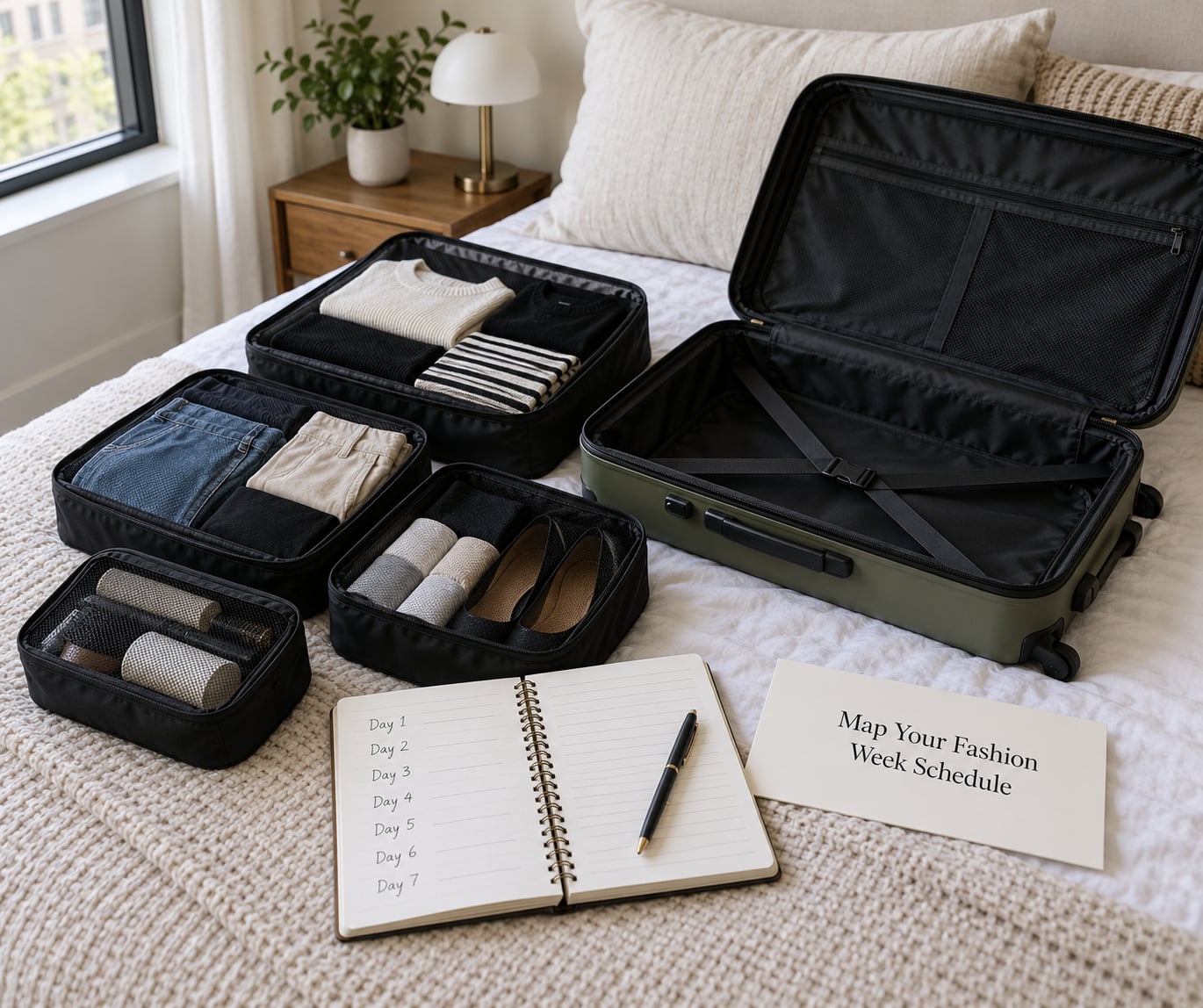
Open a note on your phone and write one line per day, with the outfit required for each entry. A typical Monday reads: 10am presentation, office, 3pm seated show, 8pm dinner. Now count the look changes, not the days.
The formula is simple: outfit count = (show days multiplied by 2) plus 1 backup look. A three-show trip needs seven looks, a five-show trip needs eleven. This is the single most useful thing on this page, because packing for one look per day is why people run out of outfits on day three.
Mark which looks must survive being photographed in daylight and which are for after dark. That tells you where your strongest pieces go.
2. Build a Capsule Wardrobe Around Your Schedule
A capsule wardrobe is a small group of pieces that all work together, so one trouser makes three outfits instead of one. The r/onebag formula that keeps coming up is three bottoms that pair with each other, five or six tops, and one layer that handles both an air-conditioned restaurant and a chilly street.
For fashion week, add three anchors:
- A signature outer layer that photographs well and works over everything, a coat, blazer or trench.
- Polished basics in a neutral palette: black, cream, camel, navy, grey. Neutrals mix with each other without any thought.
- Statement accessories instead of statement clothes. One striking bag or pair of earrings lifts every plain outfit and takes almost no suitcase space.
Add pieces that restyle: a wide-leg trouser worn with a knit in the morning and a silk scarf at night, a slip dress under a fine-gauge knit, a midi skirt with boots and a belt. Check each item and ask whether it works with at least three others. If not, it is a luxury, and you pack it or you don’t.
3. Pack for the Weather and the City
Check the forecast for each city in the week you travel, not the week you book. Then adjust for the reality of the day: shows are usually indoors and often cool, so a layer you can carry and remove matters more than a heavy coat you cannot take off.
Add rain and wind to the calculation. New York in September is often warm and damp, Paris in February is cold and wet, Milan’s September can still swing hot afternoons into cool evenings. Pack one piece that handles precipitation, a coat that closes over everything, and shoes that tolerate a soaked pavement.
Know how much you will walk. Ten miles between a morning show, an afternoon appointment and an evening show is normal in New York and London. That number decides your bag: a soft structured tote that holds a folded jacket and a pair of flats beats a rigid evening bag.
4. Pack Shoes, Accessories, and Essentials
Plan two or three pairs for a full week, no more. Shoes take up more suitcase volume than anything else you own, and the pair you will wear all day matters more than the pair you look best in for twenty minutes.
Do this instead. Pack one pair that is genuinely comfortable for standing and walking, one that is polished enough for front row and dinners, and one weather backup. Wear the bulkiest pair in transit. Add a foldable or ballet flat in your personal item for shows that involve standing room.
Wrap shoes in socks or stuff them with underwear so they hold shape, and put heel caps in your bag. For cold months, lug soles are the difference between walking on ice and not.
Everything small goes into your personal item: chargers, a power bank, printed invitations, band-aids, a safety pin, a small repair kit with thread and mini scissors, medication, identification, a refillable water bottle and two days of underwear and socks as a luggage backup. On a long trip, travellers consistently pack that personal-item backup because checked bags sometimes arrive late.
5. Dress for Long Event Days and Fast Changes
A show day runs roughly 8am to midnight. Plan for that, not for an evening out. Layers you can add and remove are the whole answer: a slip dress over a fine knit, trousers with a shirt that can move to the shoulder, a blazer over the top when the temperature drops.
Favour wrinkle-resistant fabrics. Crepe, jersey, satin blends and heavier knits come out of a suitcase looking intentional, while thin cotton and linen arrive creased and stay that way through a seated show.
Carry the small things that let you change fast without a hotel room: a compact mirror, a hair tie, a small styling product, plaster strips for shoes that have just rubbed wrong. If you can change a top and swap one accessory in a venue lobby in four minutes, you have the system.
6. Leave Room and Do a Final Test Pack
The last step is a test pack one day before you fly. Lay every outfit you listed in Step 1 on the bed and check that each combination is complete, including underwear and shoes. Any look that cannot be assembled from what is in the suitcase gets fixed now or deleted now.
Then pack, weighing the bag. Most airlines charge for overweight checked bags, and a fashion week trip usually fits a carry-on plus a personal item if you use packing cubes and roll soft garments.
Confirm your documents, tickets, identification and boarding details, then leave a third of the suitcase empty. That gap is for show-season purchases, and it is also what lets you bring something home without paying a second bag.
Common Mistakes: Packing for Fashion Week the Wrong Way
Five mistakes account for nearly every ruined fashion week trip. Each has a quick correction.
- Packing one outfit per day. Show days hold two looks minimum. Fix it by counting look changes in your calendar, not days.
- Ignoring footwear comfort. You will stand for 15 to 45 minutes and walk far more than you expect. Fix it with a genuinely comfortable pair plus a foldable flat in your personal item.
- Never checking the weather for the actual travel week. Forecasts shift. Fix it by checking again 48 hours before departure and adding one adaptable layer.
- Packing heavy, bulky fabrics. Thick knits and structured coats eat space. Fix it with one statement outer layer and lighter pieces that layer underneath it.
- Filling the suitcase completely. No room means no purchases and a second bag. Fix it by packing to two-thirds and choosing pieces that mix over pieces that impress once.
Quick Packing Tips
A few things that reliably save time and space. Pack outfits in the order you will wear them, so nothing clean gets buried. Use packing cubes, one per category, because a cube for bottoms and a cube for socks and underwear turn a bag into something you can reassemble in a dark hotel room.
Use compression packing only on knits and outerwear, never on silk, wool crepe or anything you do not want creased. Carry a small repair kit. Choose pieces that photograph well in daylight rather than only under flattering evening light, because that is the light you will actually be photographed in.
Eat a real breakfast before a show day. Presentations often run until mid-afternoon and the free water at venues is not a meal plan. And inside the show: phones down, no runway selfies, bag tucked under your chair, hat off indoors, legs uncrossed.
Frequently Asked Questions
How many outfits should I pack for fashion week?
Pack two complete outfits per show day plus one backup look. A three-show trip needs seven looks, a five-show trip needs eleven. Count look changes in your calendar rather than days, because most show days run from a morning presentation to an evening show, dinner or party. Choose pieces that pair with at least three others so the capsule creates more looks than the item count suggests.
What should I wear to a fashion show?
Aim for polished, photographable and comfortable. A tailored trouser with a fine-gauge knit and a structured coat works for most shows, seated or standing. Keep the palette neutral so one statement accessory, a bag or a pair of earrings, does the visual work. Dress for the temperature of the venue rather than the street, and wear your most comfortable shoes, because the runways are long and the seats are hard.
Should I bring separate outfits for street-style photography?
No, you do not need dedicated outfits. Photographers shoot in daylight near venues, so make sure one or two of your strongest looks are daytime looks with clean lines and visible texture. Keep a compact mirror, a hair tie and a small styling product in your bag for touch-ups between shows. A single striking accessory lifts a neutral outfit and reads on camera without taking up suitcase space.
How do I pack for fashion week in bad weather?
Plan for a coat that closes over everything, one piece that handles rain or wind, and shoes with grip that tolerate wet pavement. Add a removable layer you can carry into warm venues instead of wearing a heavy coat all day. Check the forecast for each city 48 hours before you fly, since late-season forecasts shift often. Keep a plastic pouch in your bag for damp items so they do not wrinkle the rest of the suitcase.
What shoes are best for a full day of fashion week events?
Choose two or three pairs for a full week. One must be genuinely walkable for standing lines and long transfers, one polished enough for front row and dinners, and one weather backup. Wear the bulkiest pair in transit and keep a foldable or ballet flat in your personal item. In cold months, lug soles matter more than height. Bring blister plasters and heel caps.
The Short Version
Start tonight with the calendar, not the suitcase. Write down every look change you actually have, add one backup, then build a small neutral capsule around the pieces that serve the most looks. Check the weather for the cities you are visiting, decide your three pairs of shoes, and leave a third of the bag empty. That is how to pack for fashion week without buying anything new.