You can steam clothes without a steamer, and the three methods that work fastest are a hot shower, an iron held vertically like a steamer, and a spray bottle plus a hairdryer. Each one puts moisture and heat into the fabric so the fibers relax and let go of the crease, then dry smooth. Two of them need no power at all.
Most of us hit this five minutes before we have to leave, with no iron, no board and no steamer in the bag. That urgency shapes everything below. The steps run from about two minutes to a couple of hours, and the order is roughly fastest-to-slowest, so pick the first one you can actually do.
Table of Contents
- What You Need
- Step-by-Step: How to Steam Clothes Without a Steamer
- 1. Use a Vertical Iron for the Fastest Results
- 2. Turn an Iron into a Horizontal Steamer
- 3. Use Shower Steam for Delicate or Flat Items
- 4. Use the Iron and a Damp Cloth for a Handheld Alternative
- 5. Let the Garment Cool and Dry Fully
- Common Mistakes
- Using Too Much Heat for the Fabric
- Spraying Water Straight Onto Delicate Fabric
- Leaving the Iron on One Section
- Hanging Clothes Before They Are Dry
- Wrinkle-Fixing Tips
- Frequently Asked Questions
- Can I steam clothes in the shower instead of using a steamer?
- What temperature should I set my iron to for different fabrics?
- Can I steam polyester, silk, or other delicate clothing?
- How do I get a stubborn wrinkle out without a steamer?
- Is steaming safer than ironing for every type of fabric?
- Start With the Care Label
What You Need
The tool list is short because almost nothing here is specialised. What changes is which combination you already own.
- A clean iron with a steam or spray function. Vertical steam is the closest thing to a real steamer. A spray button plus a pressing cloth works almost as well.
- A garment brush or your cleanest soft clothes brush. Lint and pills hold moisture and block steam from reaching the fiber. Brush first.
- A flat heat-safe surface. A padded ironing board is ideal, but a thick towel on a sturdy table works. Never a plastic or laminate top.
- A pressing cloth. A clean white cotton cloth, slightly damp. This is the barrier between hot iron and delicate fabric.
- A plain towel. For laying the garment down, catching drips and blotting water marks.
- A wooden or padded clothes hanger and a hook or shower rod to hang it from.
- A bathroom with a working shower if you plan to use bathroom steam.
Before you start, check the care label. It tells you the maximum fabric temperature, whether the garment can be steamed at all, and whether it is dry clean only. If the label says do not steam, use bathroom steam from a distance rather than putting an iron anywhere near it.
Step-by-Step: How to Steam Clothes Without a Steamer
Work one garment at a time. Set up the surface, hang or lay the item, and resist re-laying it mid-process. The order below is fastest first, so if you are out of time, stop reading at step one.
1. Use a Vertical Iron for the Fastest Results
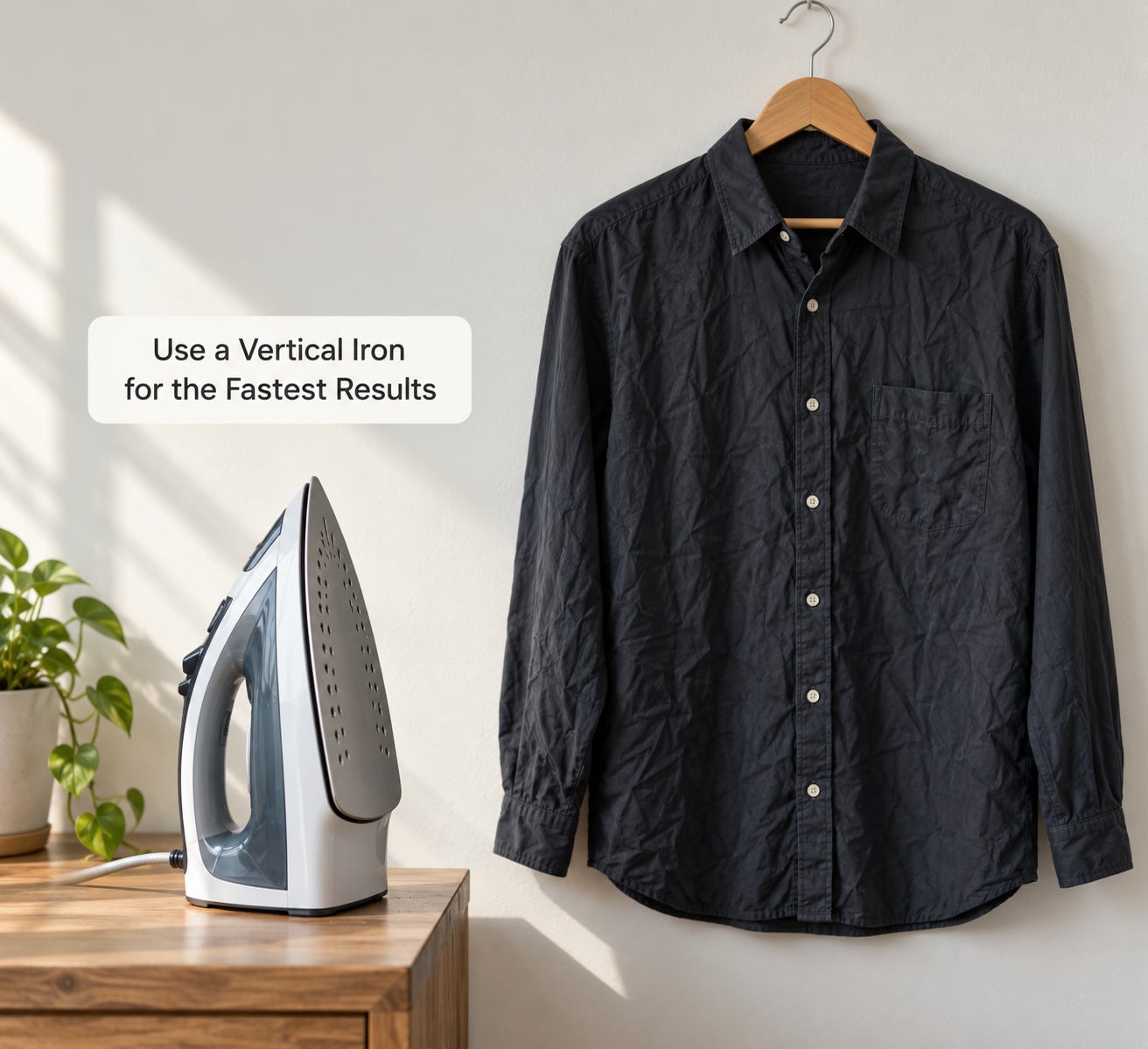
Hang the garment on a hanger with enough shoulder width that it hangs straight, and keep it clear of the floor so steam can rise through it from below.
Set the iron to the temperature the care label allows. Fill the reservoir, set it to vertical steam, and hold the iron a couple of inches from the fabric with the soleplate facing the garment and never touching it.
Start at the hem and work upward, keeping the fabric pulled gently taut with your free hand. Wrinkles loosen within a minute or two on cotton and linen. Let go, step back, and check before you steam the collar and cuffs, which take longest.
2. Turn an Iron into a Horizontal Steamer
Readers without a vertical-steam function can still use the same physics. Lay the garment flat on a padded, heat-safe surface, wrong side up, and smooth it with your palm.
Hover the iron two inches above the fabric and press the steam button in short bursts. On cottons and denim you can make light contact in long strokes. On synthetics, silk or anything marked do not iron, put the damp pressing cloth down first and work only through that.
Move constantly. Park the iron on one section for even ten seconds and you can leave a shiny flat mark that takes a cycle or two to disappear.
3. Use Shower Steam for Delicate or Flat Items
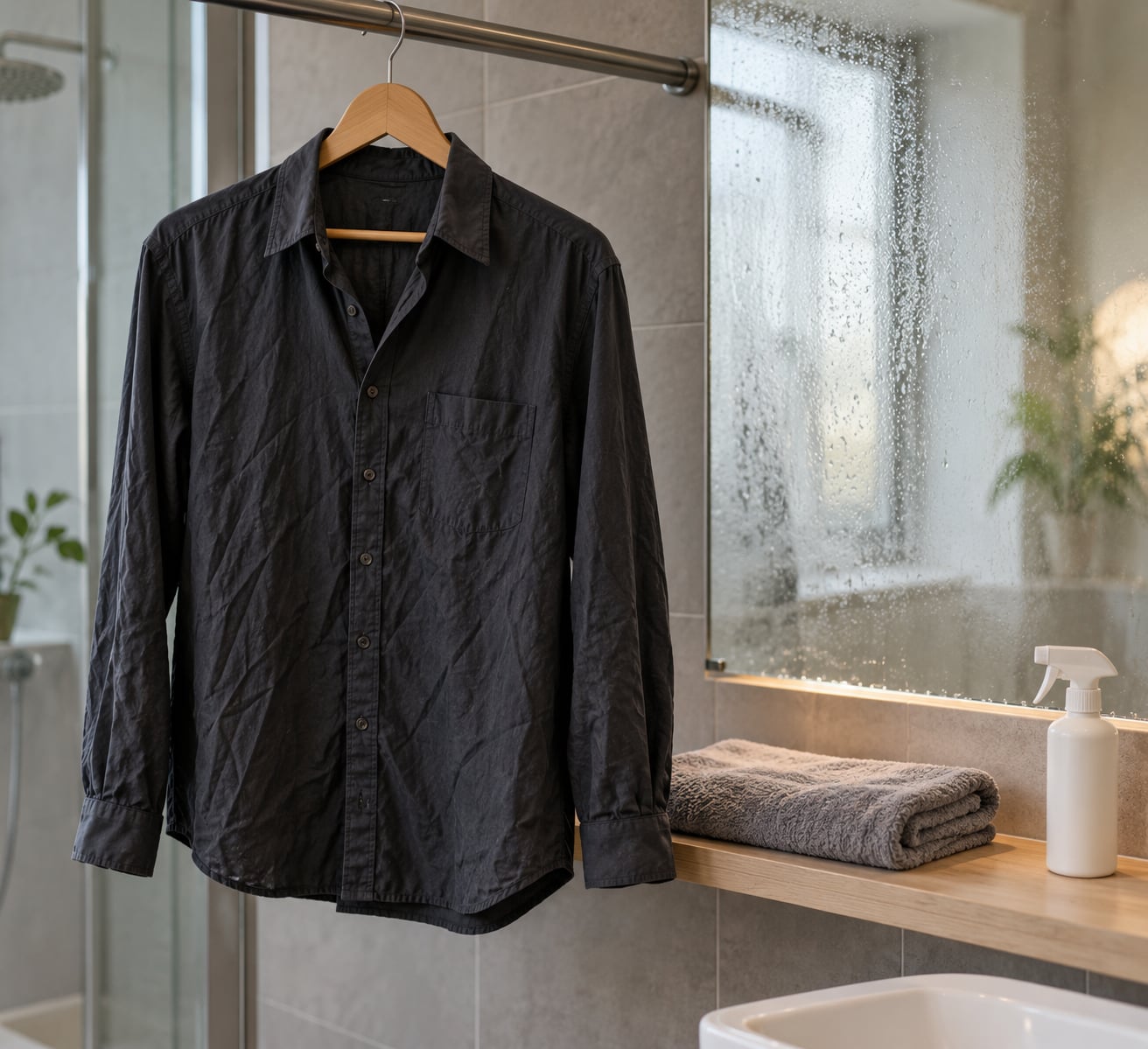
This is the method for silk, rayon, anything dry clean only, and trousers or skirts you would rather not lay flat. Hang the garment on a hanger hooked over the shower rod or a door hook, and set it back far enough that no water reaches it.
Run the shower hot for a few minutes to build up humidity, then close the door and windows so the steam stays in the room. Fifteen minutes is a reasonable target, and a smaller bathroom with a bigger shower usually gets there faster than a large one with a weak shower.
Take the garment out while it is still slightly damp, smooth the fabric with clean fingers, and hang it somewhere with airflow to dry. Steam alone works best on light and medium fabrics; a heavy cotton dress shirt may need the iron afterwards.
4. Use the Iron and a Damp Cloth for a Handheld Alternative
For small areas like a collar, a cuff or a seat seam, you do not need to steam the whole garment. Lay a clean white cloth over the spot so nothing shows through, and check the label first.
Use controlled bursts of steam or a lightly damp cloth, never a soaking spray. Press gently and lift between passes so the heat can travel through the cloth and into the fiber.
Work from the outside of the crease toward the centre so you are not pressing a new fold into it. The white cloth also tells you what is happening: if it picks up a grey mark, stop and use a fresh section.
5. Let the Garment Cool and Dry Fully
This is the step people skip, and it is the reason wrinkles sometimes come back within minutes. Fibers only hold their new shape as they dry, so a garment that is still damp will re-crease as it hangs.
Hang the item in a well-ventilated spot away from direct sun, radiator and dryer vents. Let it cool completely, then run clean, dry fingers over the remaining folds while the fabric is still slightly damp.
Once it is fully dry and no longer cool to the touch, put it on a hanger or fold it. Never put a damp garment into a closet or a drawer; the trapped moisture sets exactly the wrinkles you just removed.
Common Mistakes
Almost every ruined garment I have seen came from one of these. Each one has a simple fix.
Using Too Much Heat for the Fabric
Cotton and linen take high heat. Polyester and nylon glaze and shine at medium. Silk, rayon and viscose should never see a soleplate at all.
Fix: set the dial from the care label, not from habit. When in doubt, drop one notch and repeat the pass instead of pushing harder.
Spraying Water Straight Onto Delicate Fabric
Direct spray leaves water spots on synthetics, and tap-water minerals make the marks show up more as the garment dries. Rayon and viscose actually lose strength when wet, so a soaked patch can stretch.
Fix: mist from a distance, spray the underside, or put the damp pressing cloth between the iron and the garment. Use distilled water in the bottle if you have it.
Leaving the Iron on One Section
Resting a hot iron on a hanger, or sliding it slowly without steam, scorches synthetics fast and puts permanent shine on polyester and nylon.
Fix: keep it moving in long strokes, lift it fully between rows, and never leave it standing on fabric. Put it on a heatproof rest instead.
Hanging Clothes Before They Are Dry
A wet garment hung on a hanger stretches, and a heavy knit grows shoulders fast. Damp cloth in a closet is the worst of both.
Fix: dry flat or under airflow first. Fold knits rather than hanging them, and lay out anything heavy instead of draping it.
Wrinkle-Fixing Tips
A few habits cover most of the awkward cases. For stubborn creases that survive one pass, repeat while the fabric is still warm, not after it cools. For travel, rolling clothes in a suitcase and hanging them in the bathroom the moment you arrive beats fighting creases at the destination.
Layered outfits matter more than people expect. Steam the innermost piece first, from the bottom up, so the outer layer goes on smooth. If an appliance asks for a specific water type, fill it as instructed, since plain tap water in a steam iron leaves the same spots on a shirt as a spray bottle does.
Frequently Asked Questions
Can I steam clothes in the shower instead of using a steamer?
Yes, for most garments. Hang the item on a hanger away from direct water, run the shower hot for a few minutes, then close the door and windows and leave it about 15 minutes. Take it out slightly damp, smooth it with clean fingers and let it dry fully. Bathroom steam works best on silk, rayon, dry-clean-only pieces and anything you do not want to lay flat.
What temperature should I set my iron to for different fabrics?
Follow the care label, which lists the maximum dot rating for that garment. In practice, cottons, linen and denim take the highest setting, polyester and nylon want medium, and wool is safest at low with a pressing cloth. Silk, rayon and viscose should never touch the soleplate. If a label is missing, start one notch lower than you think you need and repeat rather than pushing harder.
Can I steam polyester, silk, or other delicate clothing?
You can, with less heat and more distance. Steaming suits synthetics and silk better than direct ironing because the water does the work instead of the soleplate. Use a damp white pressing cloth as a barrier, keep the iron moving, and keep steam in short bursts. Avoid nylon on high heat, and never spray rayon or viscose directly, since they lose strength when wet.
How do I get a stubborn wrinkle out without a steamer?
Repeat the pass while the fabric is still warm. Work a damp pressing cloth over the area, apply steam in short bursts, and move from the outside of the crease toward the centre. Tugging the fabric gently taut on a hanger helps too. If a crease will not shift after two or three tries, the fiber may have taken a permanent set, and a quick trip through the dryer on a high cycle with a damp towel is usually more effective.
Is steaming safer than ironing for every type of fabric?
Nearly, but not entirely. Steaming is gentler than ironing because moisture carries the heat and the soleplate rarely touches the garment, so it suits more fabrics and produces fewer shiny marks. The exceptions are garments labelled dry clean only, anything marked do not steam, wool and knits that can stretch if hung damp, and heavily glued or laminated items where heat can loosen the finish. The care label decides.
Start With the Care Label
The whole method comes down to four decisions, and they fit in a sentence. Read the label, choose the gentlest option that will still do the job, begin on the least visible or lowest-risk area so you learn what the fabric tolerates, and let the garment dry completely before you wear it or put it away.
Steam is forgiving of wrinkles but not of care labels. Check it, start at the hem, and move upward.