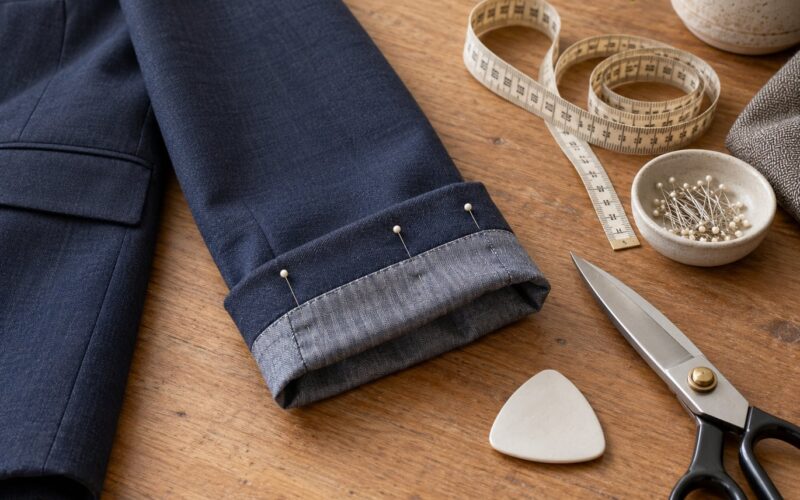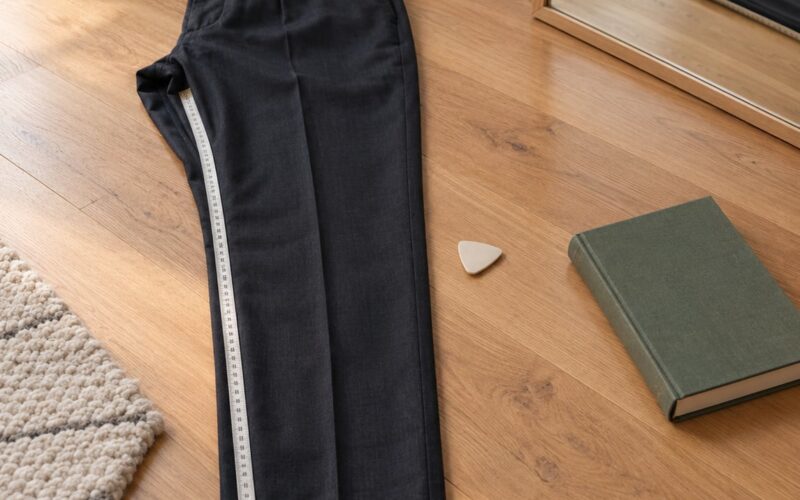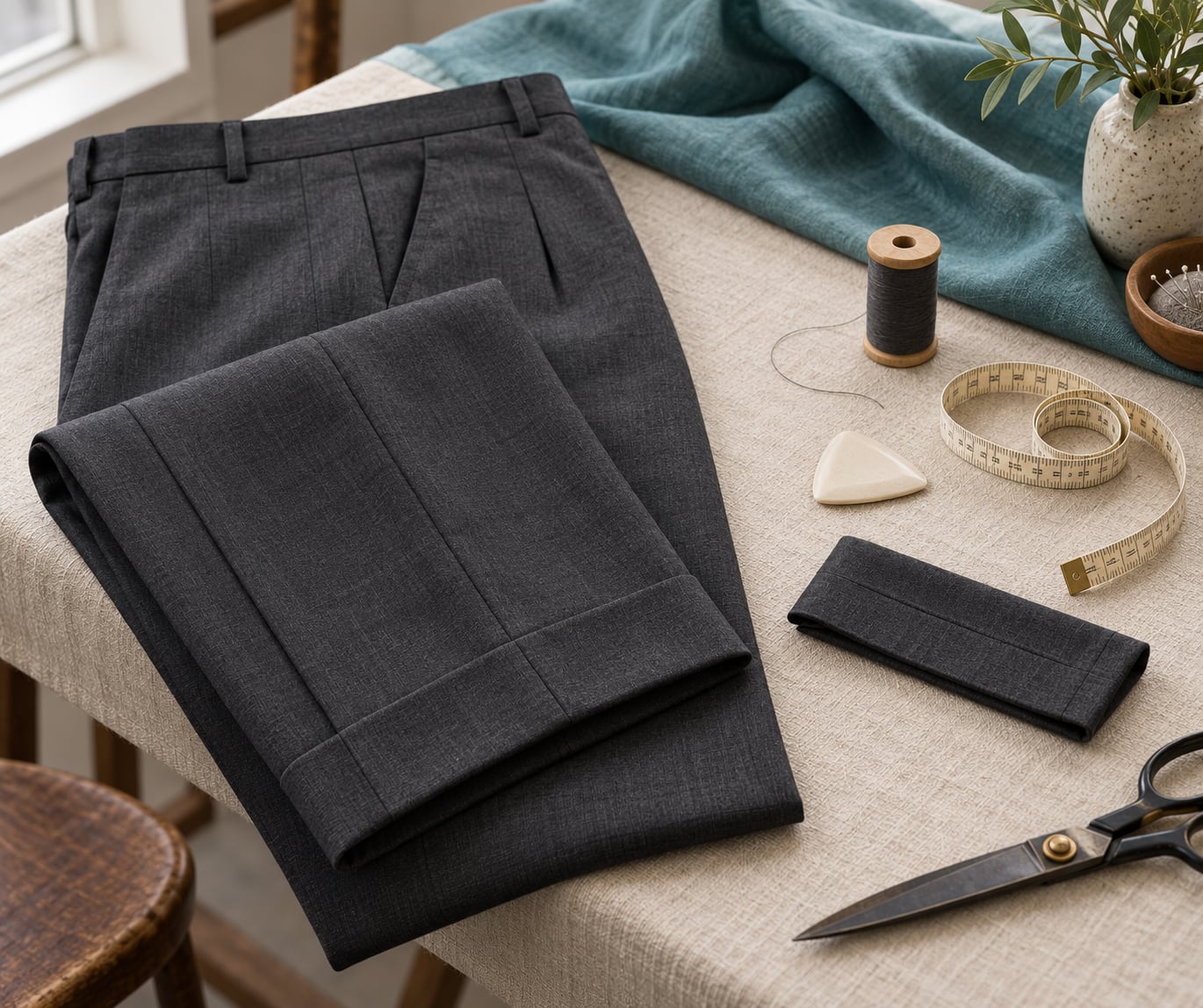
The basic alterations worth paying for are length and proportion fixes: hemming trousers, skirts and dresses, taking in a loose waistband, shortening sleeves, tapering wide legs, and reshaping a bodice or side seam. These jobs change how a garment hangs on your body, and they cost a fraction of what a correctly fitting garment costs new.
Most clothes you own already come close to fitting. The fabric, the shoulders and the general cut are right; one proportion is off. That single flaw is what a tailor fixes, and it is why a $30 hem can change how an entire outfit reads.
This guide ranks ten jobs by return on spend, with typical US alteration ranges and how much skill each one demands. Prices are approximate ranges that vary by city, shop and fabric, and they change over time, so treat them as a benchmark to argue against a quote rather than a promise.
Table of Contents
- Basic Alterations Worth Paying For at a Glance
- 1. Hemming Trousers and Skirts
- 2. Taking In or Letting Out Seams
- 3. Tapering Wide-Leg Trousers
- 4. Shortening Sleeves
- 5. Resizing the Waist of Pants
- How much does a tailor charge to take in the waist of pants?
- 6. Replacing or Repairing Linings
- 7. Repairing Structural Seams
- 8. Adding Pockets or Fixing Pocket Bags
- 9. Converting Dress or Pant Closure Lengths
- 10. Shaping Garments to Your Body
- Frequently Asked Questions
- Which clothing alteration gives the biggest improvement for the money?
- Can a tailor copy the original hem from another pair of pants?
- What should I bring to an alteration appointment?
- Why do some alterations cost much more than others?
- What clothing repairs are safe to do at home?
- How much should I expect to pay for hemming or taking in pants?
- Conclusion: Start With the Fit Problem You Notice Most
Basic Alterations Worth Paying For at a Glance
| Alteration | Garments it suits | Main benefit | Typical US range | Difficulty for a tailor |
|---|---|---|---|---|
| Hemming trousers | Dress pants, chinos, jeans, wide-leg trousers | Clean break over the shoe, sharper whole outfit | 15-30 USD, up to 50 for wide or lined legs | Quick |
| Taking in or letting out seams | Jeans, skirts, dresses, soft tailoring | Removes gaping or pulling fabric | 25-60 USD | Moderate |
| Tapering a wide leg | Jeans, chinos, dress trousers, wide-leg pants | Sharper, more modern lower-leg line | 35-75 USD | Moderate |
| Shortening sleeves | Shirts, blouses, knitwear | Clean wrist, sharper cuff line | 25-45 USD | Moderate |
| Shortening jacket sleeves | Blazers, coats, suit jackets | Exposes the right amount of shirt cuff | 50-100 USD | Moderate to difficult |
| Resizing a waistband | Jeans, dress trousers, skirts, high-rise pants | No gap, no riding up | 25-45 USD | Quick |
| Repairing or replacing linings | Coats, blazers, skirts, jackets | Protects the garment from further wear | 40-200 USD depending on scope | Moderate to difficult |
| Repairing structural seams | Crotch seams, shoulders, jacket sides | Stops a tear spreading through the garment | 20-60 USD | Moderate |
| Adding or fixing pockets | Skirts, coats, casual jackets | Function plus a visible detail | 40-90 USD | Difficult |
| Shaping to your body | Dresses, jackets, coats | Closer fit without distorting the design | 50-150 USD | Difficult |
The pattern here is simple. Jobs that change length or circumference along an existing seam score highest. Jobs that change how a garment is constructed from the inside score lowest, because more of the original design is at risk.
1. Hemming Trousers and Skirts
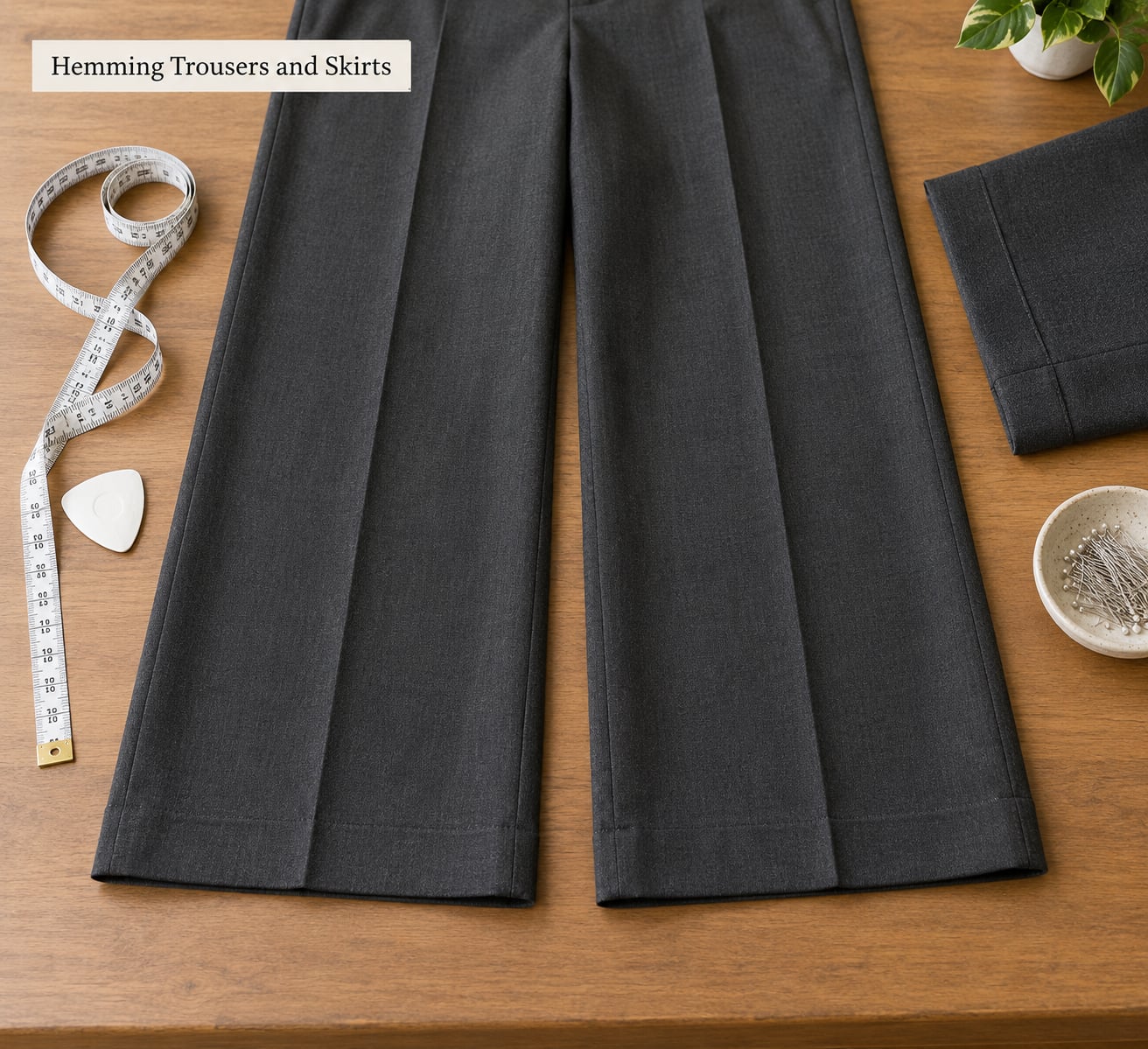
A professional hem is the single best value in this list, and it is the job most often done badly at home. The stitch matters less than the measurement and the press: a hem that was pinned on while the trousers were folded, then finished without ironing, will ripple the first time it is washed.
Ask about the original hem. On a wide-leg trouser in a heavier fabric, cutting into the factory hem removes a design detail, and reproducing it costs more than a plain fold. A basic hem on everyday trousers usually falls in the 15-30 USD range. On wide legs, lined trousers or anything with a visible factory finish, expect closer to 50.
Concrete case: charcoal wide-leg trousers, hemmed to leave a single clean break over a flat shoe with a small front crease. Pin the fold with the trousers on, wearing the shoes you actually pair them with, and check the length from the side rather than the front. Front-on looks longer than it hangs in motion.
2. Taking In or Letting Out Seams
Taking in a seam changes circumference without changing length, which makes it the second-highest return job. Waist, hip and side seams are all candidates, and the reason a quote varies is construction: how much seam allowance is left, whether the garment is lined, and whether the seam is serged, French, or bound.
Loose jeans are the easy version. Taking in the side seams by a small amount after the waistband has been adjusted gives a cleaner line through the hip and thigh without pulling across the waist. On denim, expect 35-60 USD for both jobs in one visit.
Letting out is riskier. A seam allowance is usually around half an inch, which is about one size of room and not much more. Older garments can leave faint press lines, known as ghost lines, where the original crease sat, and those do not disappear when a seam is opened.
3. Tapering Wide-Leg Trousers
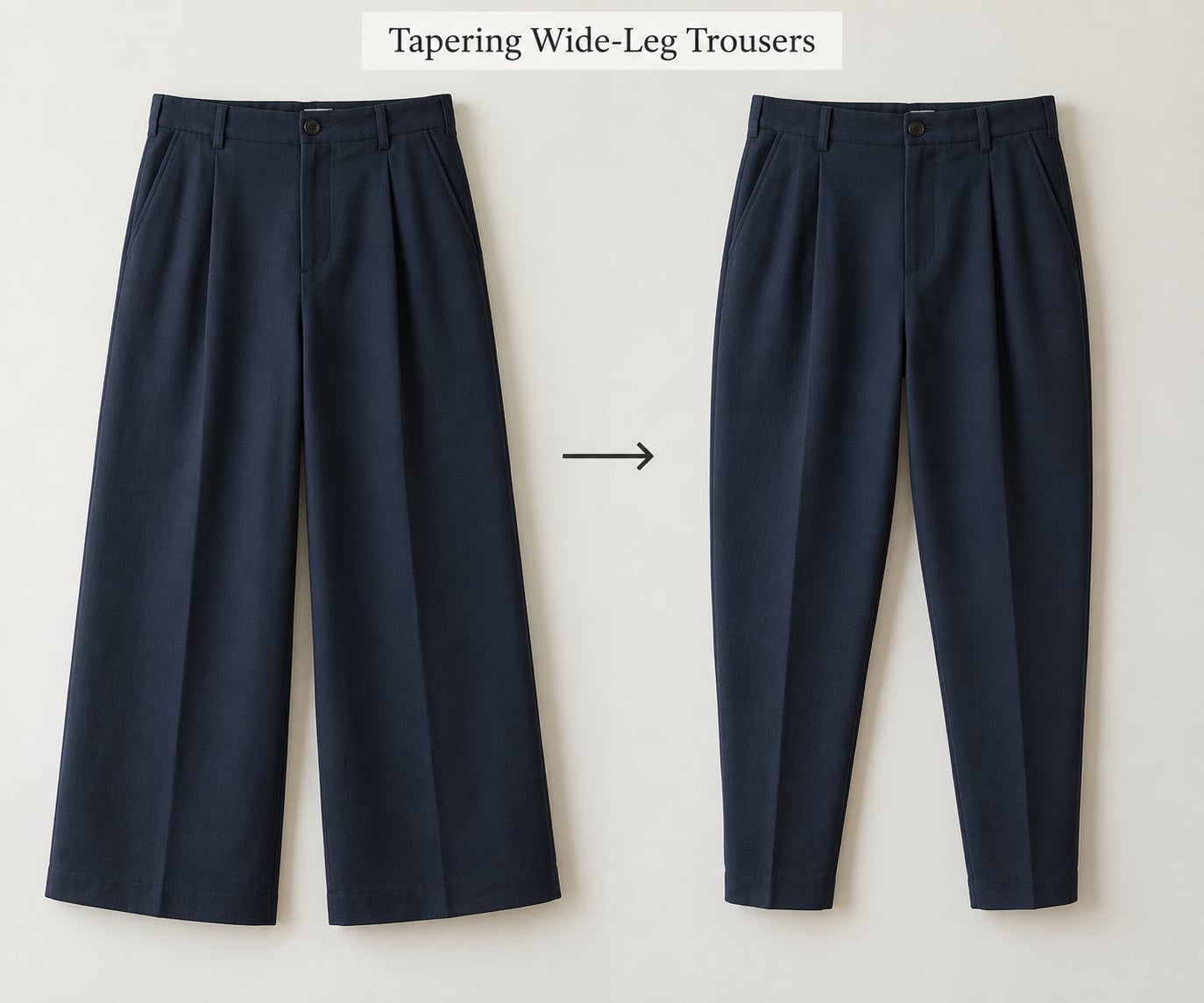
Tapering is not the same as hemming. Hemming changes length and leaves the leg width alone; tapering narrows the lower leg, from the knee down or from mid-thigh, while the hem is reset to match the new width.
Decide the shape before you go in. A straight taper follows the leg, a slim taper narrows sharply toward the ankle, and a gentle taper only trims a few centimetres. Bring a reference photo, ideally of a pair that already fits the way you want.
The cost climbs when the original hem has to be preserved or the lining matched to the new shape. A straightforward taper on cotton chinos usually lands at 35-50 USD. A lined dress trouser or a jean with a preserved factory hem can run to 75.
4. Shortening Sleeves
Shortened sleeves are worth paying for because the error is visible from across a room. The cuff sits at the wrist bone, roughly where a watch would rest, and hitting that line takes measurement skill that home sewing rarely has.
Ask how the alteration is done. A simple sleeve shortening takes up the excess and re-stitches, which shifts nothing. A proper shortening re-sets the sleeve cap from the shoulder seam so the sleeve keeps its original pitch and the cuff sits where the pattern intended. The second is the one worth paying for on structured shirting.
Cuff detail decides the price. Plain cuffs are straightforward at 25-45 USD. Cuffs with buttons, contrasting fabric or working sleeve buttons need to be opened and rebuilt by hand, which moves the job into a longer and pricier category.
5. Resizing the Waist of Pants
Waistband work is quick, cheap and fixes the problem most people notice first: pants that close but leave a gap, or jeans that slide down because the waist is too big while the hips fit.
How much does a tailor charge to take in the waist of pants?
Typically 25-45 USD for a single waistband adjustment on jeans, dress trousers or a skirt with a normal waistband. Adding a matching belt loop, re-hemming because the leg is shorter afterward, or working on high-rise pants pushes it higher. A closed waist on a skirt or structured trouser takes more work, because the closure and the waistband meet in a way that cannot simply be stitched smaller.
Watch for the gap problem. If a pair of trousers is fitted at the waist but gaps at the back, taking in the waistband alone fixes the gap and leaves the seat tight. That calls for side-seam or seat adjustment instead, which is a different, longer job.
6. Replacing or Repairing Linings
Lining replacement earns its place on expensive coats, blazers and lined skirts, because a torn lining is what exposes the garment body to abrasion and sweat. Once the lining shreds, the jacket starts wearing out from the inside.
Partial repair suits a small tear near a vent or pocket. Full relining means the body is re-lined throughout, which is a much bigger job involving removal, pattern work and reattachment, and it can run from 75 to 200 USD depending on the garment.
Read it as protection rather than appearance. On a wool coat you expect to keep for a decade, a relining buys many more years of wear. On a polyester promotional jacket you wore twice, it makes no sense at any price.
7. Repairing Structural Seams
Structural repairs are the ones worth doing immediately, before a small failure turns into a ruined panel. A blown crotch seam on jeans, a detached shoulder seam on a shirt, or an open side seam on a jacket are not cosmetic problems.
A crotch blowout gets a new seam and reinforcement rather than a surface patch, typically 30-50 USD. Shoulder and jacket side seams run 20-60 depending on how much is open and whether the fabric is delicate.
Skip it when the repair quote approaches the value of the garment. Beginners on sewing forums routinely get quoted more than the item is worth for simple jobs, which is the clearest argument for asking for the price before agreeing to anything.
8. Adding Pockets or Fixing Pocket Bags
A missing pocket bag means the pocket lining has dropped, so the pocket looks empty and sags. Reattaching it is modest work at roughly 20-40 USD.
Adding a new functional pocket is a different job. Opening a side seam, cutting the welt or patch cleanly and bar tacking the stress points all have to line up, or the pocket tears out at the corner the first time you put a phone in it. That runs 40-90 USD.
Leave delicate or lined garments to a tailor. A badly placed pocket opening shows on the outside of a silk or lace panel, and the mistake cannot be un-sewn.
9. Converting Dress or Pant Closure Lengths
Formal dresses and event trousers are hemmed against footwear, not against the garment. Heels change the whole line of a dress, so the length that works with flats usually drops too low with heels, and a full-length gown can read as dated rather than elegant.
Bring both shoes if you can. In a fitting room, stand in the shoes you plan to wear and check where the hem falls with a mirror at floor level, not a mirror you look down into. For a straight dress with no train, you usually want one to two fingers of clearance between the hem and the floor.
Layered hemming, where the hem is folded and stitched so raw edges are enclosed, is worth paying a little more for a floor-length dress. It shows no frayed edge when the light hits from behind.
10. Shaping Garments to Your Body
Bodice and side-seam shaping on jackets, dresses and coats gives the most visible improvement and the highest risk, because it changes the garment’s construction rather than its dimensions.
A good tailor works with the design. Taking in a side seam on a wrap dress or shifting a waist seam on a coat follows the garment’s own logic. Pulling in every seam inward at once flattens drape, pulls a collar away from the neck, and leaves shoulder points that no longer sit where they were designed to sit.
Expect 50-150 USD for this work, and go in with the garment, the shoes and the undergarments you will actually wear with it. This is also the job most worth trying on a vintage find, where the fabric is interesting but the pattern predates your proportions.
Frequently Asked Questions
Which clothing alteration gives the biggest improvement for the money?
Hemming, by a wide margin. It is fast, inexpensive at 15-30 USD for everyday trousers, and it fixes the flaw that most makes an outfit look borrowed. Shortening sleeves is a close second because sleeve length is visible from across a room. Both jobs only change dimensions along seams that already exist, so the original design stays intact.
Can a tailor copy the original hem from another pair of pants?
Usually yes, if the reference pair is the same designer or the same factory, since original hems vary between models and production runs. Bring the pair in, or clear photos of the finished edge from the inside and outside. On wide-leg or lined trousers, reproducing the factory hem takes longer and costs more than a plain folded hem.
What should I bring to an alteration appointment?
Wear the shoes and the undergarments you will pair with the garment, because heel height changes hem length and bra choice changes how a bodice fits. Bring the shirt you intend to wear under a jacket so sleeve length can be judged against the cuff. A second pair of trousers that already fits the way you want gives the tailor a measurable target.
Why do some alterations cost much more than others?
Cost tracks risk, difficulty and construction. Hemming reuses an existing fold, while shaping a bodice, matching a lining or rebuilding a cuff involves pattern work and hand finishing. Fabric matters too: a heavy wool or a lined garment takes far longer than plain cotton. Shops also charge more for a specialist than for a generalist.
What clothing repairs are safe to do at home?
Replacing a loose or missing button, re-sewing a hem on a jersey or t-shirt, darning a small hole in a knit, and shortening elastic in children’s trousers are all safe with basic sewing supplies. Leave denim, structured shirting, anything with a lining, and any seam involving the crotch, shoulder or side of a jacket to a tailor.
How much should I expect to pay for hemming or taking in pants?
In most US cities, a simple trouser hem runs 15-30 USD and a waistband take-in runs 25-45 USD. Wide legs, lined trousers and preserved factory hems push both higher. Someone quoted 70 USD for a quality job in one city, while a local shop elsewhere did dress pants for 28 USD with a three-week turnaround, so ask for a written price up front.
Conclusion: Start With the Fit Problem You Notice Most
The best returns come from hemming, sleeve shortening, waistband work and tapering, because each one fixes a proportion that no off-the-rack size solves for your body. Waist seams and pockets come next. Reshaping a bodice or shoulder is worth doing on a garment you love, and worth skipping on a garment you are only tolerating.
The rule of thumb is simple: spend on alterations in proportion to the garment’s cost and how often you will wear it. Alter a 300 USD coat you will keep for ten years. Do not alter a 15 USD shirt to save 5 USD.
Pick the one visible flaw, bring the shoes and the garment you want it to match, and get the work done. Everything else can wait.