A travel outfit formula is a repeatable equation: one base top, one bottom, one shoe, and usually one layer and one bag, rebuilt in a different order each day. Pack a dozen pieces that all talk to each other and those pieces produce far more looks than the number you packed suggests, which is why travel outfit formulas that always look good are built around mixing rather than matching.
Most of the trouble with packing comes down to this: you bring outfits, and outfits can’t remix. Twelve pre-planned outfits means twelve things to lug, and if the temperature shifts by six degrees on day two, none of them fit. Formulas fix that because they store outfits as parts.
What follows is ten equations built for real itineraries, from an eight-hour flight to a week of city sightseeing. Each one names its slots, tells you why it holds together and gives you the swap that changes the look without adding a piece to the bag.
Table of Contents
- Travel Outfit Formulas That Always Look Good at a Glance
- 1. The Monochrome Travel Capsule: One Neutral Color, Three Textures
- 2. The Tailored Trouser and Sweater Formula: Structure Over a Relaxed Knit
- 3. The Denim Jacket Layering Formula: Base, Middle, Outer
- 4. The White Shirt Three-Way Formula: One Piece, Three Settings
- 5. The Travel Athleisure Formula: Technical Top, Tapered Bottom, Clean Shoe
- 6. The Knit Dress and Layer Formula: One Dress, Three Weather States
- 7. The Wide-Leg Trouser Balance Formula: Volume Top, Volume Bottom, Never Both
- 8. The Soft Suitcase Set Formula: Matching Pieces That Separate
- 9. The Long-Coat Formula: One Outer Layer Doing the Work
- 10. The Tropical Mix-and-Match Formula: Breezy Base, Packable Layer
- How to Adapt the Right Travel Outfit Formula to Your Itinerary
- Frequently Asked Questions
- How do I pack more outfits without bringing more clothes?
- What colors are easiest to mix when packing for a trip?
- How do I make airport clothes look more polished in photos?
- What shoes work with the most travel outfit formulas?
- How should I dress for a day with unpredictable weather?
- Can these outfit formulas work in carry-on luggage only?
- Conclusion
Travel Outfit Formulas That Always Look Good at a Glance
| Formula | Best for | Key ingredients | Packing advantage |
|---|---|---|---|
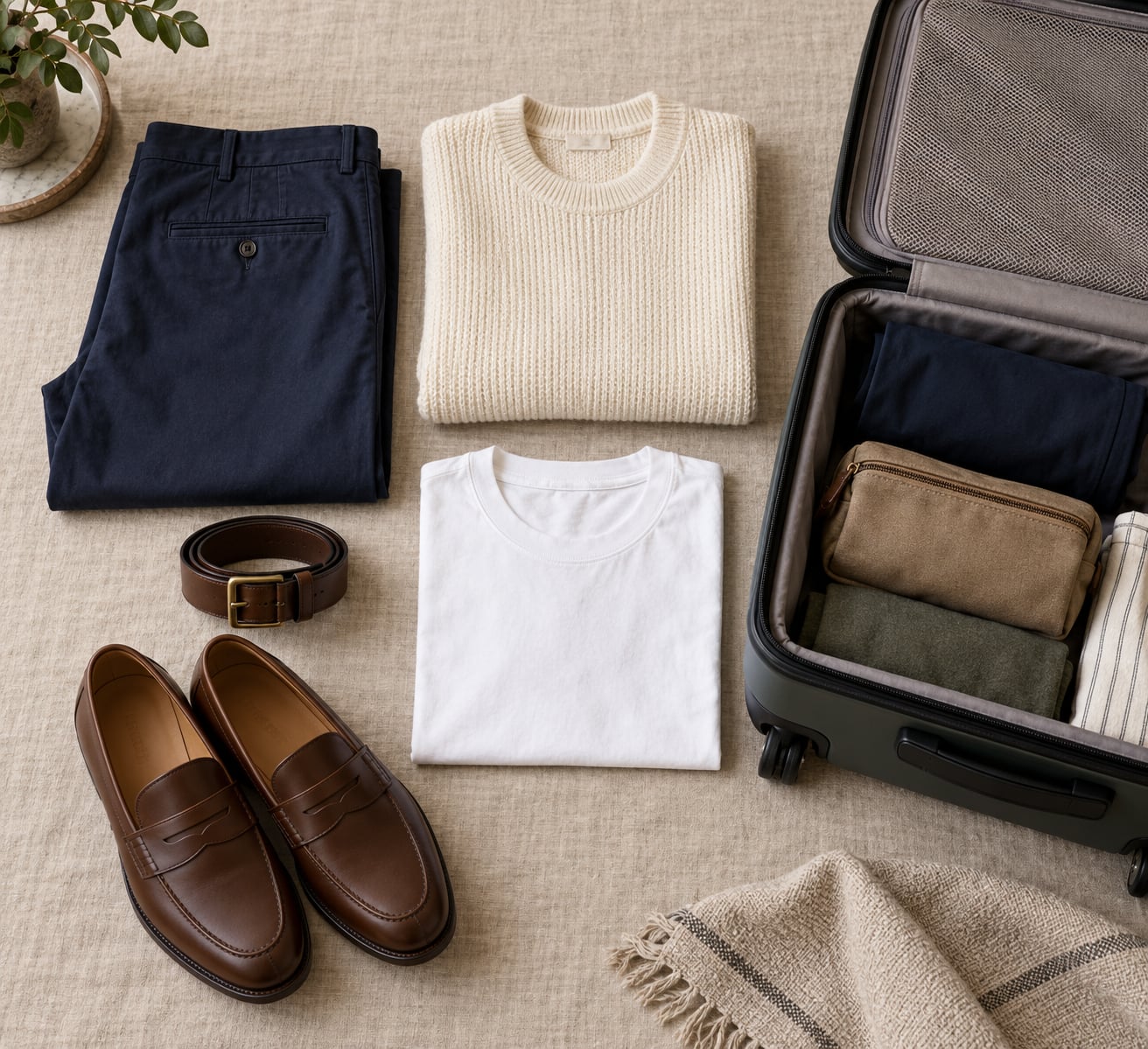
| Monochrome Travel Capsule | Airport, city days, dinners | Navy trousers, cream knit, white tee, brown belt, brown loafers | One neutral base, unlimited combinations |
| Tailored Trouser and Sweater | Business trips, meetings | Charcoal trousers, fine-gauge navy knit, button-down, ankle boots | Knits hide creases better than trousers do |
| Denim Jacket Layering | Variable weather, road trips | Denim jacket, fitted tee, trousers or jeans, sneakers | One outer layer that works spring to autumn |
| White Shirt Three-Way | Small carry-ons, mixed itineraries | White shirt, tailoring, denim, knit | One hero piece styled three times |
| Travel Athleisure | Long flights, casual cities | Technical top, tapered joggers or leggings, clean sneakers | Wrinkle-proof and comfortable for transit |
| Knit Dress and Layer | City breaks, sightseeing to dinner | Knit dress, cardigan or blazer, flats or boots, scarf | One dress plus one layer covers most of a day |
| Wide-Leg Trouser Balance | Long sightseeing days | Wide-leg trousers, tucked fitted top, structured shoe | Fluid bottom with a compact top |
| Soft Suitcase Set | Weekend trips, resort evenings | Matching knit top and trousers or skirt, mules, crossbody | Worn together or split into two outfits |
| Long-Coat Formula | Autumn and winter city trips | Well-cut long coat, knit, straight denim or trousers, boots | Outer layer does the styling heavy lifting |
| Tropical Mix-and-Match | Warm-weather trips | Lightweight tank, midi skirt or airy trousers, packable layer, sandals | Breezy fabrics that dry overnight |
1. The Monochrome Travel Capsule: One Neutral Color, Three Textures
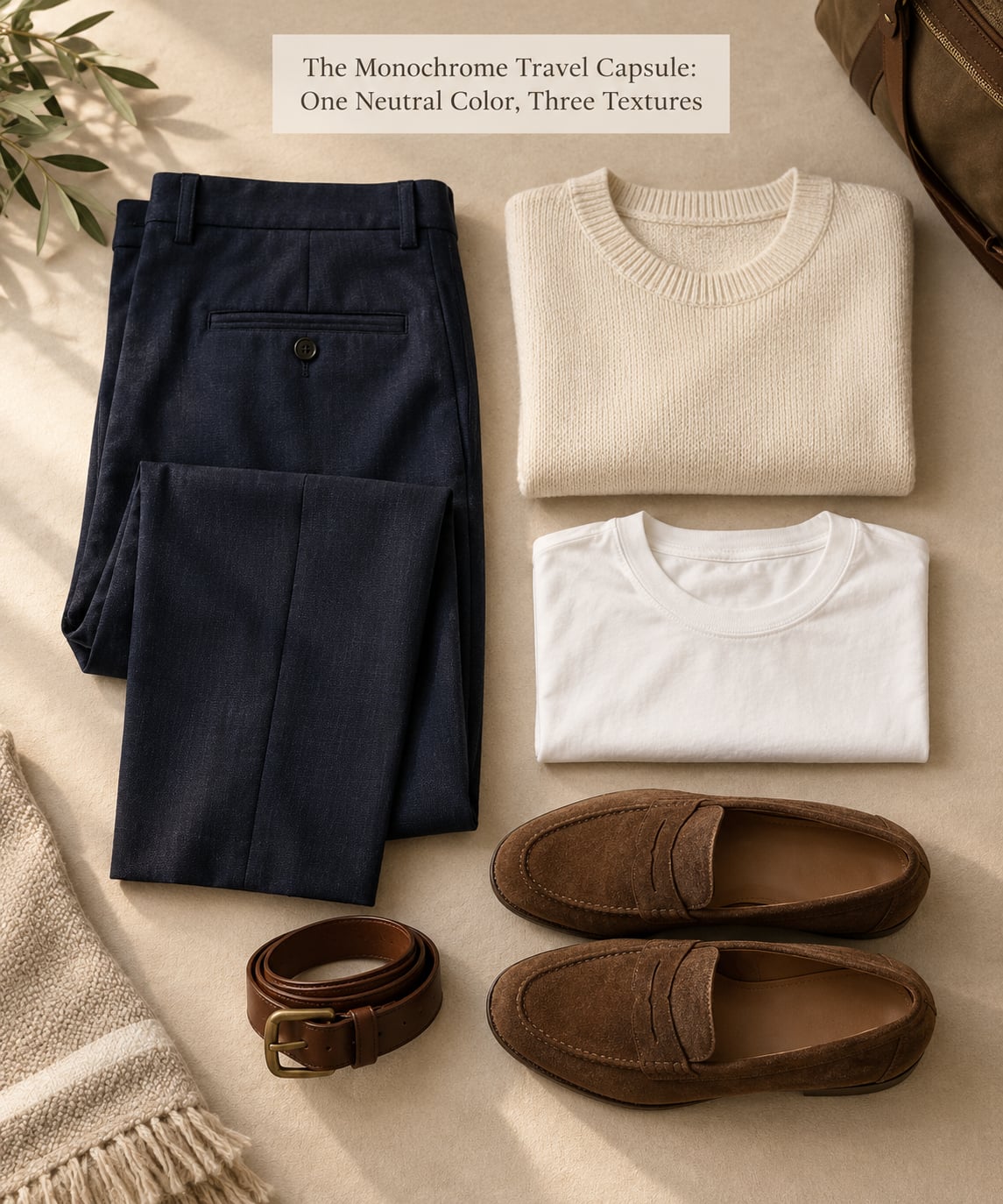
The simplest reliable formula is base + knit + shoe, all in a narrow neutral range. Because every piece shares the same color family, the outfit reads as deliberate instead of busy, and a small wrinkle in one piece stops registering.
Texture is what keeps it from looking flat. Pair a smooth cotton tee, a nubby cream knit and a matte navy trouser, then finish with structured brown leather loafers and a brown belt so the leather tone repeats at the shoe and the waist.
Example: navy trousers, cream knit over a white tee, brown belt, brown loafers. Wear it through the airport, keep the knit on for a dinner and swap the loafers for white sneakers the next morning. One base color, two shoes, three different days.
Swap it for: a warm camel trouser in place of navy, and a soft oatmeal knit, if your trips lean toward warmer architecture and stone cities.
2. The Tailored Trouser and Sweater Formula: Structure Over a Relaxed Knit
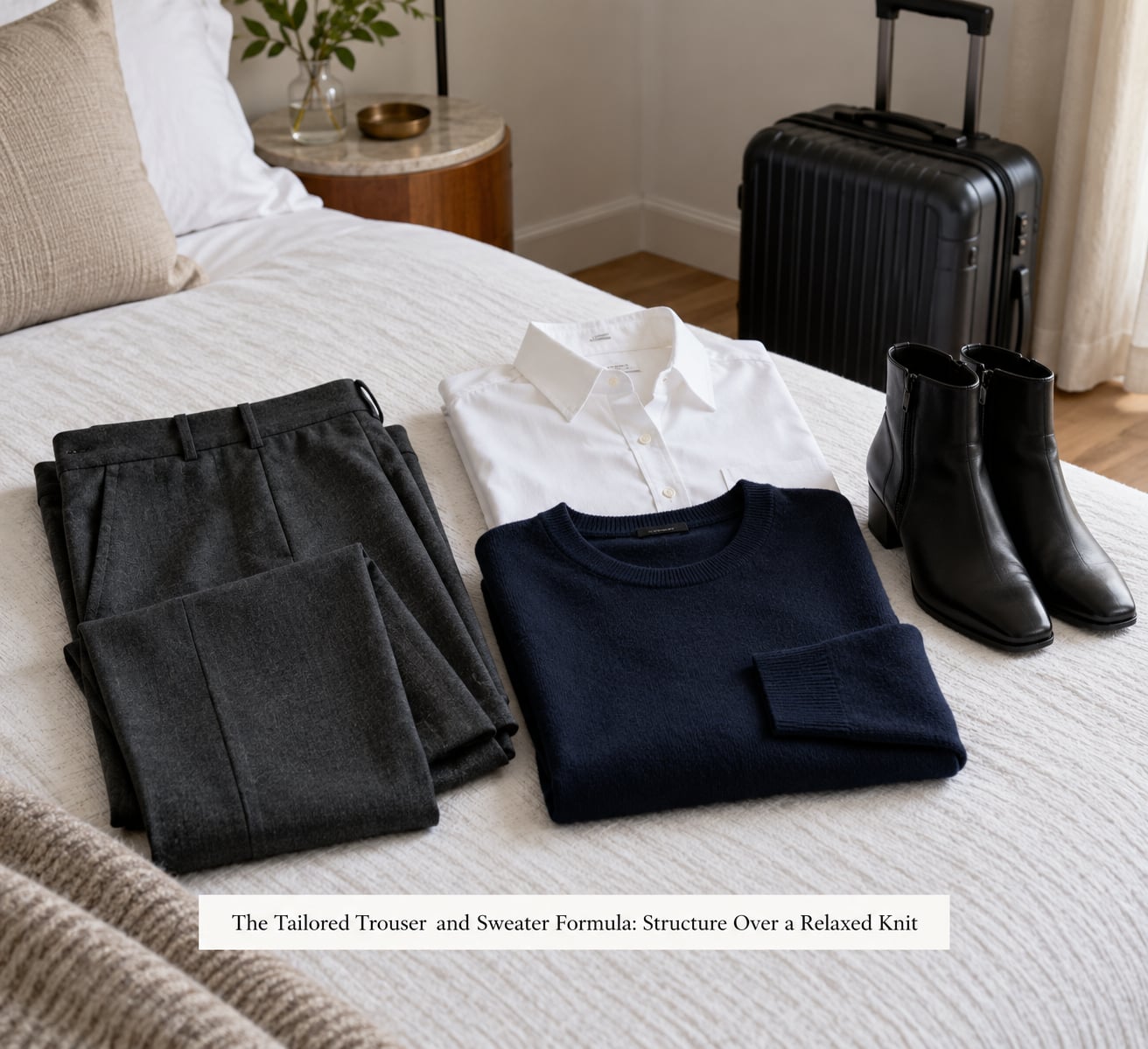
Tailored trousers plus a relaxed knit is the workhorse of business travel, because the trouser supplies the polish and the knit supplies the comfort. A fine-gauge crew or roll neck keeps the silhouette clean, so the look never reads sloppy even at hour ten.
Color, fabric and footwear are the three substitution points. Swap charcoal for camel or deep navy, choose a wool blend or merino over a fuzzy mohair, and replace black ankle boots with pointed flats or low leather loafers when you want the outfit lighter.
A daytime-to-evening version: charcoal tailored trousers, white button-down tucked at the front, navy fine-gauge knit, black ankle boots for the day. After dinner, untuck the shirt fully, switch the boots to flats and add a compact bag, and the same four pieces read as an evening look.
Swap it for: a cropped blazer over the knit on days with a meeting on the calendar; the blazer hides a shirt that has been worn once already.
3. The Denim Jacket Layering Formula: Base, Middle, Outer
A classic denim jacket works as the outer layer in a three-part stack: a fitted base, a mid layer and the jacket. The rule is that the middle layer is the only place you can change, so one jacket serves warm afternoons and cold evenings without another coat.
The pieces underneath do the adjusting. A fitted tee plus the denim jacket works in summer heat. Add a thin knit or a button-down between the two for spring and autumn, and the jacket still closes the same way, which is exactly why denim survives as a travel layer.
To keep it from reading too casual, tighten the base layer, swap the jeans for a straight dark trouser, and choose a clean leather or suede shoe instead of a trainer. The structured shoe is what moves the whole outfit up a notch.
Swap it for: a chore or trucker jacket in the same role for extra durability, or a packable shell if the trip is wet rather than cool.
4. The White Shirt Three-Way Formula: One Piece, Three Settings
A good white shirt can be dressed for dinner, sightseeing or cool weather by changing only what surrounds it. That makes it the highest-return piece in a small carry-on wardrobe.
- Dinner: white shirt tucked into tailored trousers or a midi skirt, with heels or pointed flats and a compact bag.
- Sightseeing: same shirt worn open over a fitted tee with straight jeans and clean sneakers.
- Cool weather: shirt layered under a fine-gauge knit, sleeves rolled once, with trousers and ankle boots.
Tucking matters more than people expect. Fully tucked reads formal, front-tucked reads casual, and untucked works best with something fitted underneath so the shirt has a defined waist. Fabric counts too: a wrinkle-resistant cotton blend survives a suitcase far better than a thin silk that creases from being folded.
Swap it for: a cream or pale blue shirt if white reads too stark under warm indoor light, or a striped version for trips where you will retake a lot of photos.
5. The Travel Athleisure Formula: Technical Top, Tapered Bottom, Clean Shoe
Travel athleisure works when it looks like a travel outfit rather than a gym uniform. The combination is a fitted technical layer with a tapered jogger or a clean legging, finished with sneakers that have a neutral sole.
Texture is the adjustment that removes the gymwear cue. A matte merino or technical knit next to smooth ponte leggings reads considered; the same leggings next to a nylon track jacket reads like the track. Add a tailored trouser, a long coat or straight denim and the base pieces immediately look like travel clothes.
Proportion does the rest. A cropped or tucked technical top with a full-length tapered leg keeps the line clean, and a slim crossbody instead of a bulky tote stops the silhouette from going shapeless. This is the formula that survives a long-haul flight better than anything else on the list.
Swap it for: tailored joggers in a suede-like fabric for an arrival where you want to look sharper without changing shoes.
6. The Knit Dress and Layer Formula: One Dress, Three Weather States
A versatile knit dress plus one outer layer is the fastest route from a sightseeing outfit to a dinner outfit without a second dress in the bag. Pick a knit that hangs rather than clings and a length around the knee or mid-calf, since both hide a long travel day better than a shorter cut.
Hosiery and shoes set the temperature. Bare legs plus flat leather sandals or loafers for warm days, sheer or opaque tights with ankle boots for cool ones, and low block-heeled shoes when the evening calls for more.
A complete packing example: one knit dress, one cardigan, one pair of ankle boots, one flat sandal, one scarf and a compact crossbody. That is warm-weather sightseeing, a cool-weather version and a dinner look without adding another dress. The scarf is the cheapest multiplier in the group; loop it, belt it with the belt or drape it over the shoulders and the same outfit shifts twice more.
Swap it for: a blazer instead of the cardigan for business-heavy trips, or a wrap or kimono-style layer for air-conditioned rooms and sun.
7. The Wide-Leg Trouser Balance Formula: Volume Top, Volume Bottom, Never Both
Wide-leg trousers look intentional on travel days when you balance the volume above them. The rule is a fitted or tucked base layer, so the eye stops at the waist rather than getting lost in fabric from shoulder to floor.
Fabric and shoe choice decide whether the trousers read polished or heavy. A fluid crepe or a lighter wool blend moves while you walk and recovers from a fold, while a structured shoe with a defined heel line keeps the bottom of the leg from disappearing.
A long sightseeing-day example: wide-leg trousers in a fluid navy, a fitted cream long-sleeve top tucked at the front, flat leather ankle boots and a crossbody. Add a coat for the evening and nothing else changes, because the balance is already there.
Swap it for: a cropped top in the same tonal family, or straight trousers with the same top if your day involves a lot of stairs and cobblestones.
8. The Soft Suitcase Set Formula: Matching Pieces That Separate
A matching knit and trouser or skirt set is worth packing mainly because it separates. Wear both pieces together on arrival day, then treat them as two independent items for the rest of the trip, which quietly doubles your outfit count.
Fit matters more than the match. A set that skims rather than clings looks intentional and packs smaller; a set cut too close travels badly and photographs poorly. Add contrast with a leather belt, a different shoe or a single piece of jewelry in a warmer tone.
Airport example: knit top and matching trouser worn together with clean sneakers and a structured tote. Destination example: the knit over the button-down from formula 4, with the trouser belted and loafers instead of sneakers. For packing, fold the knit flat rather than rolling it, lay it on top of everything else in the case, and give it a day to hang in the hotel room before the first outing.
Swap it for: a knit and skirt set for warm-weather trips, where the skirt works with sandals and the knit works over a swimsuit cover-up.
9. The Long-Coat Formula: One Outer Layer Doing the Work
A well-proportioned long coat is the fastest way to make simple staples look considered in cool weather. It adds a vertical line, covers whatever knit you are wearing and takes the outfit from practical to put-together in one move.
Length is the whole game. A coat that ends near the knee works with both dresses and trousers; a coat that hits mid-calf flatters dresses but crowds short hems; anything too long swallows a petite frame. Balance the coat with a slim knit underneath, straight denim or trousers below, and boots that continue the line rather than cutting it.
The color balance keeps the bag small. A camel or charcoal coat over navy trousers, a cream knit and brown boots needs four pieces and produces a week of city outfits. The scarf does the rest, adding color or texture on the days the coat alone feels flat.
Swap it for: a packable shell for wet trips, keeping the same base layers so the formula still works when the coat stays in the suitcase.
10. The Tropical Mix-and-Match Formula: Breezy Base, Packable Layer
Warm-weather formulas are built around airflow and sun rather than layering. The equation is a lightweight tank or tee, a midi skirt or airy trousers, a compact packable layer and one pair of supportive shoes, with a second shoe option if the trip runs long.
Heat and humidity decide the fabrics. Linen and light cotton breathe and dry fast; a fitted tee in a moisture-wicking blend handles a long outdoor day better than a heavy cotton one. Choose sandals with a real footbed for full days on cobblestones, and keep a closed shoe for air-conditioned restaurants and offices that run cold.
Rain is the easy part. A lightweight shell packs down to nothing, and the same layering approach that works in cool weather works in a tropical downpour, so nothing extra is needed. The bigger trap is resort overload: sun hats, cover-ups and swim layers can swallow a bag on their own, so pick one and let the outfit do the work. Keep accessories to two: a woven tote and a single piece of jewelry that works with a dress or a skirt.
Swap it for: a midi skirt for a cooler evening and long walking days, since it covers more of the legs from sun than airy trousers do.
How to Adapt the Right Travel Outfit Formula to Your Itinerary
Travel outfit formulas that always look good survive a long trip because they adjust rather than multiply. Adapt one by moving three variables in order: activity, temperature and laundry access. Choose the base formula by activity first, since that decides how much you walk and how polished the day needs to look.
Then set the temperature band and take the layer that matches it: a knit for cool, a packable shell for wet, nothing at all for hot. Finally, if you have laundry access, you can halve the base pieces and repeat looks freely; without it, you need more distinct bottoms than tops.
Once the base is set, change only one or two pieces to create a new look. Swap shoes, add a belt or layer a knit over what you are wearing. That is usually enough for a visibly different outfit, and it is how these formulas stretch further than the piece count suggests.
Frequently Asked Questions
How do I pack more outfits without bringing more clothes?
Pack parts instead of outfits. Choose three tops, three bottoms and one pair of shoes in a shared neutral palette, and each top works with every bottom for nine combinations before you add a layer. Swap the shoe and the layer and the same pieces produce another six. That is the whole logic behind travel outfit formulas: multiplication instead of addition.
What colors are easiest to mix when packing for a trip?
Neutrals mix best, but only if you vary texture rather than shade. Pick one dark base such as navy, black or charcoal, one mid tone such as camel or olive, and one light such as cream or white. Two pieces of the same color in different fabrics read as a styled outfit, while six pieces in six similar colors leave you with nothing to contrast against.
How do I make airport clothes look more polished in photos?
Photograph the outfit in daylight near a window rather than under terminal lighting, and keep one texture contrast in the frame, such as a knit against trousers. Keep the outfit simple enough that one item reads clearly, and wear the coat or jacket open so the layering reads as shape. Sneakers photographed clean and side-on look far better than they do head-on.
What shoes work with the most travel outfit formulas?
A flat leather loafer and a clean sneaker with a neutral sole cover almost every formula on this list, because both sit inside a neutral palette and both pair with trousers, denim and skirts. Add an ankle boot for cool weather and a flat sandal for warm trips. Three pairs is usually the practical ceiling for a carry-on.
How should I dress for a day with unpredictable weather?
Build a three-part stack and carry the top layer in your personal item rather than the checked bag: a base top, a mid layer and an outer shell. Adjust by removing a layer rather than adding one. The denim jacket formula and the wide-leg balance formula both work here, since they were designed to hold their shape once a layer comes off.
Can these outfit formulas work in carry-on luggage only?
Yes, because every formula here uses the same small set of parts. A carry-on edit of two tops, two bottoms, one knit, one outer layer and three pairs of shoes covers most week-long trips. The 5-4-3-2-1 packing method scales this up for longer trips, while a 3-3-3 edit works for two to four nights. Keep one full outfit in your personal item for arrival.
Conclusion
Start by picking the two formulas that match the activities you actually do most, pack the pieces they share, and add specialized layers only when the forecast asks for them. The monochrome capsule and the tailored trouser pair cover more trips than most people expect, and everything else on this list is built from the same neutral parts.
Every extra piece you add should earn its place by working with at least three others. If it cannot, it is coming out of the bag.