Most people searching how much clothing alterations cost want one number, and the honest answer is that there is no single price. A simple hem runs ten to twenty-five dollars, resizing a garment runs fifty to two hundred dollars, and bridal or couture-level work runs several hundred dollars and up.
For a rough national benchmark, one cost aggregator puts a typical resizing job at about one hundred dollars, based on hundreds of real quotes collected from tailors and seamstresses. Every figure in this guide is a typical US range. Prices vary by region and change over time, so treat these as the shape of the market, not a quote.
Table of Contents
- How Much Clothing Alterations Cost in 2026: Typical US Prices
- Pants, trousers and jeans
- Shirts, dresses and skirts
- Outerwear, suits and formalwear
- Wedding gowns and formal wear
- Men’s versus women’s alterations
- What Affects the Price
- Garment construction, lining and layers
- Taking in versus letting out
- How alteration quotes are actually calculated
- Timing, location and rush work
- Red flags worth spotting
- Ways to Save on Alterations
- Frequently Asked Questions
- How much do clothing alterations usually cost?
- What is the average price to hem a pair of pants?
- Why is hemming a dress so expensive?
- Is one hundred dollars too much for jeans alterations?
- How much do wedding dress alterations cost?
- How long should I allow for clothing alterations?
- Conclusion
How Much Clothing Alterations Cost in 2026: Typical US Prices
Start with the table. It covers the alterations people actually book, from a ten-dollar hem on a pair of trousers to a full gown alteration that runs into four figures.
| Alteration | Typical US range | What pushes it higher |
|---|---|---|
| Plain hem on pants or trousers | Ten to twenty-five dollars | Wool suiting, a cuffed hem, a lined pair |
| Original hem on jeans | Thirty to sixty dollars | Chain-stitch denim, original thread and rivet matching |
| Taper pant legs | Twenty-five to fifty dollars | Lined trousers, wool, cuffed hems to re-cut |
| Take in a waistband | Twenty to forty dollars | Lining that has to be released and reset, zipper work |
| Let out a side seam | Thirty to seventy-five dollars | How far you need to go, set against the seam allowance |
| Replace a zipper | Twenty to forty dollars | Invisible zippers, leather, heavy hardware |
| Shorten shirt sleeves | Twenty-five to sixty dollars | French cuffs, working buttonholes, lined cuffs |
| Hem a dress or skirt | Thirty to one hundred dollars | Multiple lining layers, chiffon, existing hem allowance |
| Take in a dress bodice | Seventy-five to two hundred dollars | Boning, beading, princess seams, corsetry |
| Resize a jacket sleeve and shoulder | Forty to one hundred twenty-five dollars | Working sleeve lining, structured shoulder, vent work |
| Full suit resize, jacket and trousers | One hundred fifty to four hundred dollars | Two garments, lined jacket, keeping trouser crease |
| Hem a coat or overcoat | Fifty to one hundred fifty dollars | Long lining, heavy wool, vent re-finishing |
| Add a bustle | Two hundred to five hundred dollars | Tiered skirt, boning, hand-finishing, lining |
| Wedding gown, full alteration | Seven hundred to fifteen hundred dollars and up | Layered construction, beading, corset, hem by hand |
| Bridesmaid or prom dress | Fifty to two hundred dollars | Strap work, boning, ruching, beading |
| Mend a tear or small hole | Twenty to sixty dollars | Location, fabric, invisible mending on the front |
One buyer of denim reported paying twenty-five dollars a pair for hemming and getting the work back inside a week, while a shopper in Houston described eighteen dollars at one shop against thirty a pair at another in the same market. That gap is normal, and it is mostly about the shop, not the job.
Pants, trousers and jeans
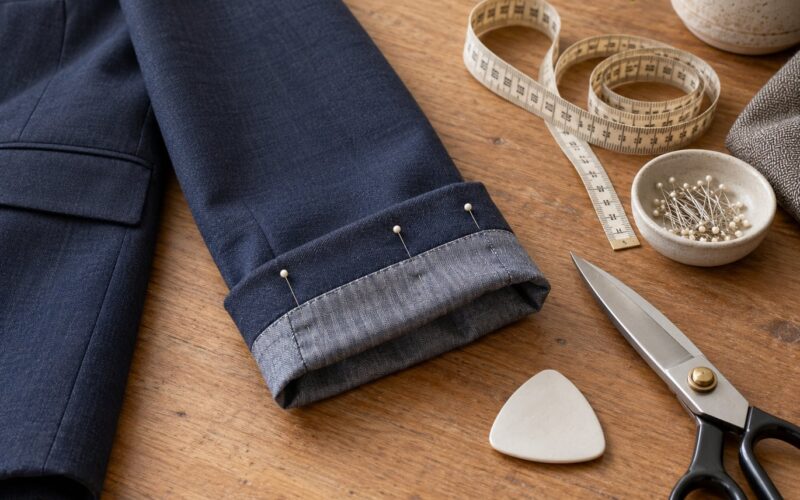
Hemming is the bread and butter of an alterations counter, and it is where the per-job minimum shows up most clearly. On a pair of cotton trousers you are usually looking at a ten-to-twenty-five-dollar job that takes twenty minutes on the machine.
Original hems on jeans cost more, and the reason is technical rather than arbitrary. Denim is sewn at the factory with a chain stitch on a dedicated machine, and a tailor has to unpick that thread with the right setup and then re-sew it in matching thread. A poster in r/williamsburg reported twenty dollars for a classic jean hem at one shop and forty dollars elsewhere in the same neighborhood for the identical request. The premium is real, and it is worth paying if you want the denim to look factory-finished.
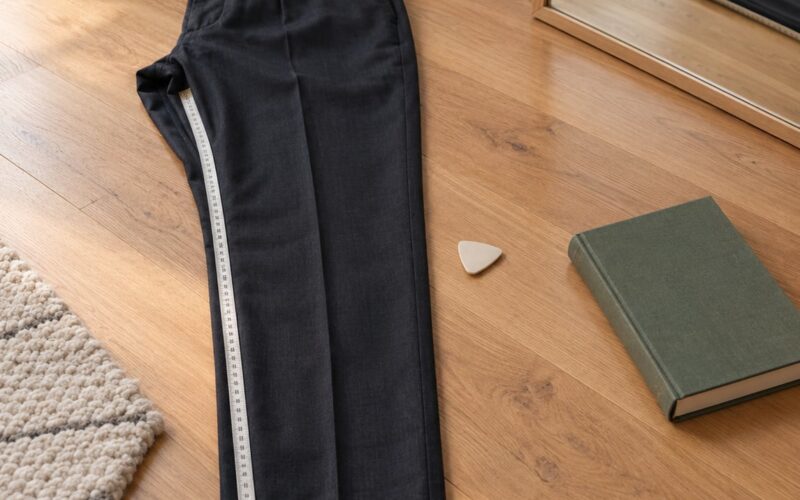
Taper is a different job from hemming because the leg has to be opened, re-sewn and often re-pressed. Taking a waist in is usually cheaper than letting one out, and letting out hits a hard wall: most commercial garments carry only one to two inches of seam allowance. Ask how much room the seam has before you plan around a larger size.
Shirts, dresses and skirts
Sleeve shortening sits in the same band as a pant hem, twenty-five to sixty dollars, and it takes longer when the cuff has buttonholes or a French cuff that has to be opened, moved and closed again by hand.
Dress hems are the first place readers notice how fast a modest job turns complicated. A lined A-line skirt with a modest allowance is one of the cheapest alterations you will ever book. A tiered or multi-layered dress is not, and the same is true of a dress with no existing hem allowance at all, where the tailor has to cut and finish the raw edge from scratch.
Outerwear, suits and formalwear
A jacket costs more than a T-shirt for the same word, alteration, because the work is structural. Sleeves are set into the armhole, shoulders carry padding, and the lining has to be released and re-hung by hand. A lined jacket sleeve resize lands around forty to one hundred twenty-five dollars.
Full suit resizing is quoted for the jacket and the trousers together, typically one hundred fifty to four hundred dollars. Preserving a pressed trouser crease through the alteration is part of the job, not an extra.
Wedding gowns and formal wear
Formal wear is where the money goes, and the spread is enormous. Standard gown adjustments are commonly quoted in the three hundred to eight hundred dollar range, while complex custom work on a heavily structured gown runs past a thousand. Wedding specialists quote higher still, with seven hundred to a thousand dollars described as a standard average by bridal sources we looked at.
One r/weddingplanning poster paid two hundred thirty dollars for a bustle, a belt and shortened straps at the shop where she bought the dress, and watched the woman ahead of her pay seven hundred fifty dollars for a hem and sleeve work. Another, on r/Weddingsunder10k, paid three hundred twenty-five dollars to hem four layers on a twelve-thousand-dollar gown and felt that fifteen hundred would be the same as buying a new dress. The gap between those two bills is not a rip-off story. It is the difference between a standard bodice and hem job and a full restructure.
A common budgeting rule is to reserve twenty to thirty percent of the gown’s price for alterations. Treat it as a planning figure rather than a promise.
Men’s versus women’s alterations
Women’s work skews toward structure, bodices, straps and bustles. Men’s work skews toward hems, sleeves, taper and trouser waistbands, which is why the average men’s job lands lower on the bill.
That split is invisible in almost every published guide, and it is the reason a woman’s dress quote and a man’s trouser quote can look so different for what feels like a similar amount of sewing. When a shop quotes a lot of jobs, check whether the price is per garment or per job. Bundled work is often cheaper per garment than two jobs priced separately.
What Affects the Price
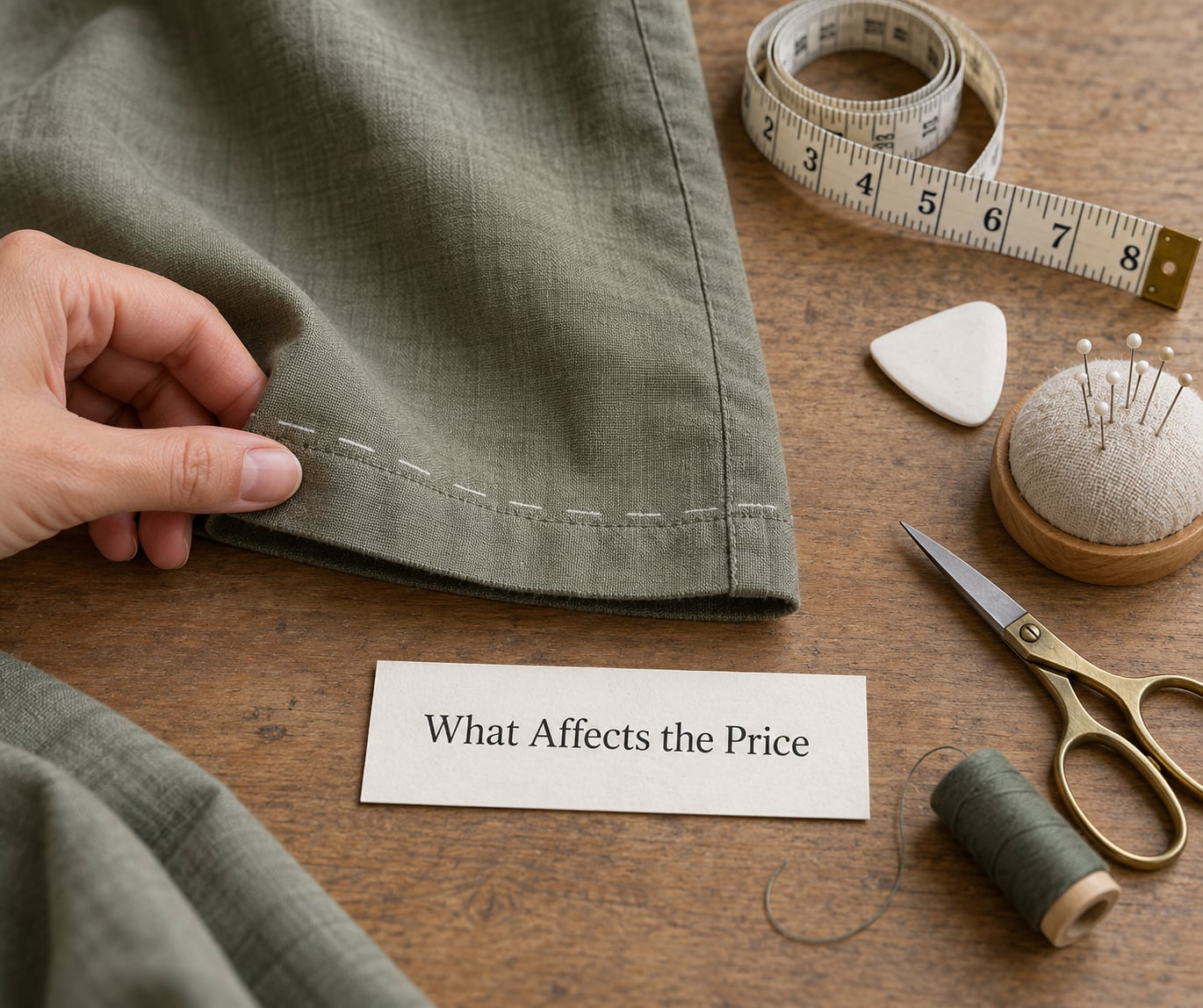
Two garments that need the same-sounding fix can differ by a factor of five, and the gap is almost always explained by construction rather than by the tailor’s mood.
Garment construction, lining and layers
An unlined garment is the cheapest possible alteration. Add a lining and the tailor must release, re-hang and re-finish it by hand. Add three layers of tulle and a hem becomes hours of pinning and hand-finishing.
This is also the answer to why a dress hem costs more than a pants hem. A lined cocktail dress may need its lining shortened, its outer layer shortened, and its raw edge finished with a stitch that does not show. A pair of cotton trousers is one seam and one press.
Taking in versus letting out
Taking in means removing fabric, which is straightforward. Letting out means using seam allowance that the factory already left, and that allowance is usually one to two inches. Beyond that, a tailor has to open a panel, add matching fabric and re-close the seam, which is a different job entirely and a different price.
Decorative details change the calculus too. Beading, lace appliqué, embroidery and corsetry have to be unpicked, moved and re-laid by hand, and a seamstress who is careful with them will price the risk into the job.
Fabric weight matters in a more obvious way. A lined wool overcoat, a structured blazer and a chiffon dress all resist a needle differently, and the last one has to be pinned and cut almost entirely by hand because a machine will pucker it. Dense upholstery-weight fabric, coated cotton and anything quilted also slow the work down.
Specialty materials carry their own premium. Leather and suede are cut and sewed on different machines than woven fabric, and a leather hem alone can run double a cotton one. A vintage garment is a separate conversation again, because the original seam allowance may already be gone.
How alteration quotes are actually calculated
Most shops use one of two models. The per-job model quotes a flat rate for a defined task, which is why a hem is a number rather than an hour. The hourly model charges a base rate plus labor, which is common for tailoring, repairs and anything structural. Tailor forums describe both in practice, with one international example quoting about twelve-fifty per pair for hemming trousers and full project totals running to several hundred.
Before you agree to anything, ask which model applies and what the minimum charge is. A shop with a high per-job minimum is cheaper for the person bringing one pair of pants and more expensive for the person bringing a closet.
Timing, location and rush work
Rush work carries a premium, commonly quoted at twenty-five to fifty percent on top of the standard price. Peak wedding season, roughly April through October, tightens schedules and pushes some shops to add a surcharge or a waiting list.
Geography matters too. A Bay Area or New York quote sits well above national norms, and a shop in the Midwest or South will quote lower for the same job. Forum posters in both the Bay Area and Brooklyn describe prices roughly double what a national average would predict.
Who you take it to matters as much as where you are. A dry cleaner counter is cheapest and fastest for a plain hem, and generally not the place for a lined jacket or a beaded gown. An independent tailor or seamstress handles mid-tier garment work well. A bridal salon or couture atelier charges the most, and what you pay for is specialization: they already know how that designer constructs the gown and how to hand-finish a hem without a line of stitching showing.
Red flags worth spotting
The single biggest complaint in tailor forums is a quote that grows between the fitting and pickup. One bride described being quoted three hundred eighty dollars and charged eight hundred dollars at collection. Ask for the itemized figure at the fitting, not at drop-off.
Other warning signs: a vague starting price with no per-garment breakdown, a fitting fee revealed late, an upfront deposit followed by a declined job, and any promise that a lined or beaded garment will come back looking untouched. Tailors who tell you honestly that a garment cannot be altered well are worth more than ones who take every job. Payment at pickup, not before, is the safer default.
Ways to Save on Alterations
None of this is about finding a bargain tailor. It is about not paying for work you did not need, and not paying twice for the same fix.
- Buy a garment that nearly fits. A pair of trousers with two inches of take-in room is a fifteen-dollar job. The same trousers in a size with no allowance are a panel reconstruction. If two sizes look identical to you, buy the one with more seam left.
- Bundle the work. Bring three pairs of pants at once and ask for a per-garment rate for a bundle. Shops that quote per job will often drop the per-item price, and you save a second trip as well.
- List every change before the fitting. A second trip to shorten sleeves after a hem job is a second charge. Write down what you want done, pin it in the fitting, and hand the list over.
- Ask whether a repair replaces a resize. A fifty-dollar reweave on the seat of a pair of trousers can be the whole job, and no hemming is needed.
- Stay out of peak season. Book in the quiet months, or book a bridal job well before the wedding. Rush surcharges and the twenty-five to fifty percent rush premium mostly disappear when the tailor has room.
- Skip what you can do safely. A straight hem on flat trousers is a common home project if you own a sewing machine. Anything with lining, cuffs, beading or a suit sleeve belongs with a professional.
- Decide whether alteration beats replacement. Once a jacket resize plus a trouser resize runs past a hundred fifty dollars, buying a different size is often the cheaper answer. The same is true for a heavily altered gown.
- Bring the shoes and the undergarments. Hem length is measured against the shoes you will actually wear and the shape you will actually have. A fitting in the wrong shoes produces a hem you will not like.
One last habit pays for itself: ask for the total, in writing, before you leave the shop, and ask what happens if the price goes up. Shops that itemize their quotes up front are the ones readers recommend returning to.
Frequently Asked Questions
How much do clothing alterations usually cost?
Simple jobs like hemming pants or shortening sleeves usually run ten to sixty dollars. Resizing a garment such as taking in a waist, tapering legs or reworking a jacket sleeve runs fifty to two hundred dollars. Full suit resizing, bridal gowns and couture-level work run several hundred to more than a thousand dollars, depending on layers, lining and hand-finishing.
What is the average price to hem a pair of pants?
A plain hem on cotton trousers or dress pants falls between ten and twenty-five dollars, and most counters can turn a pair around within a week. Wool trousers, cuffed hems or lined pairs sit higher, closer to twenty-five or more. An original hem on jeans costs more, often thirty to sixty dollars, because the factory chain stitch has to be unpicked and re-sewn.
Why is hemming a dress so expensive?
A dress hem ranges from about thirty to one hundred dollars because the work is rarely one seam. The tailor may need to shorten an outer layer and a separate lining, match an existing hem, and finish the raw edge so nothing shows. Tiered skirts, chiffon and gowns with no original hem allowance add hours of pinning and hand work, which is why dresses cost more to hem than trousers.
Is one hundred dollars too much for jeans alterations?
Not if the work is explained and itemized. A basic jeans hem is usually ten to twenty-five dollars, and an original hem with matching chain stitch runs thirty to sixty. A bill near one hundred dollars makes more sense when it also covers a waistband take-in, a taper, a zip replacement or a repair, so ask for the per-item breakdown before deciding.
How much do wedding dress alterations cost?
Standard gown adjustments are commonly quoted between three hundred and eight hundred dollars, with complex custom work running past a thousand. Bridal specialists often quote seven hundred to a thousand dollars for a full alteration, and brides with layered or beaded gowns report totals from a few hundred to well over a thousand. Budget twenty to thirty percent of the gown price as a planning figure.
How long should I allow for clothing alterations?
A simple hem or sleeve job usually takes three to seven days, and a fuller project such as a suit resize or a bodice alteration takes one to two weeks. Bridal work runs longer because it needs two fittings, and the second fitting should happen several weeks before the event. Booking early removes rush fees, which are commonly an extra twenty-five to fifty percent.
Conclusion
The market is easier to read than it looks. Hems and sleeve jobs sit in the tens, garment resizing in the low hundreds, and bridal or couture work in the high hundreds and beyond, with fabric, lining, layers and turnaround time doing most of the explaining.
So do this before you walk out the door: bring the garment, wear the shoes, write down every change you want, and ask for an itemized quote before any work starts. Ten minutes at the fitting table is the cheapest insurance against a surprise at pickup.