The short version is simple: to prevent breakouts from makeup, start with clean skin and a light moisturizer, choose non-comedogenic and oil-free formulas, apply them in thin layers, and remove every trace every night. That adds about five minutes to your morning and ten at the sink at night. Nothing exotic required.
Makeup does not create acne out of nothing. It traps sebum, dead skin cells and product residue in the pores it sits over, and the reaction can show up two days later or six months later. That delay is exactly why it is so hard to trace back to the product that did it. The routine below is built around making that trace possible.
Table of Contents
- What You Need to Prevent Breakouts From Makeup
- Step-by-Step: How to Stop Makeup From Causing Breakouts
- 1. Start with clean, calm skin
- 2. Check products before they reach your face
- 3. Apply makeup with less pressure and fewer layers
- 4. Remove makeup thoroughly without scrubbing
- 5. Protect the skin between wear days
- Common Mistakes That Cause Makeup Breakouts
- Applying makeup over unclean skin
- Using expired or shared makeup
- Layering too many occlusive products
- Leaving waterproof makeup on overnight
- Treating every breakout as a product reaction
- Over-cleansing in response to a flare
- Frequently Asked Questions
- Can foundation cause breakouts?
- How can I tell whether my makeup is causing breakouts?
- Is non-comedogenic makeup always right for acne-prone skin?
- What is the best way to remove waterproof makeup without irritation?
- Should I stop wearing makeup if I am breaking out?
- When should I see a dermatologist about makeup-related breakouts?
- Conclusion
What You Need to Prevent Breakouts From Makeup
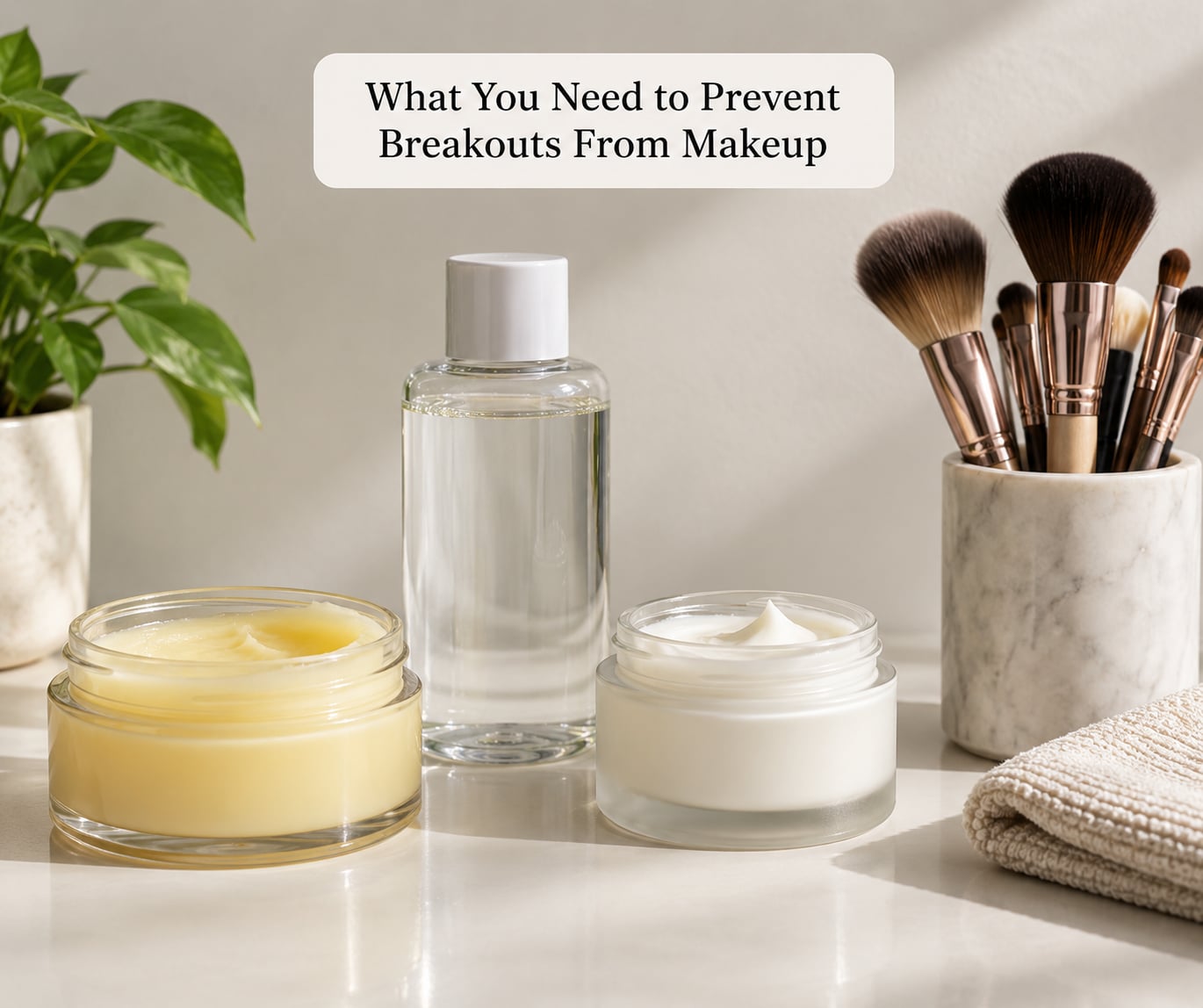
You need very little, and most of it you already own. Treat this list as the setup stage rather than a shopping list.
- Clean hands and a clear sink. You touch your face more than you think while applying makeup.
- A gentle cleanser for lukewarm water. Morning skin needs cleaning, but stripping it is what sets off the rebound oil.
- A light moisturizer suited to your skin. Foundation on bare, dehydrated skin drags and flakes, which means rubbing.
- Non-comedogenic, oil-free products where applicable, and a fragrance-free option if your skin reacts easily.
- A removal method you will actually do. A cleansing balm, a cream cleanser, or micellar water for lighter days.
- A clean tool, not a damp one. A washed brush or a sponge that gets used once and left to dry fully.
One honest warning before you start: there is no such thing as an acne-safe product. What clogs one person’s pores is invisible to another. The American Academy of Dermatology recommends using products labelled non-comedogenic or that will not clog pores, but it is worth knowing that this label is not regulated the way a drug label is, so it tells you more about the manufacturer than it does about your skin.
Step-by-Step: How to Stop Makeup From Causing Breakouts
1. Start with clean, calm skin
Rinse with lukewarm water, pat dry with a soft towel, then apply a moisturizer that suits your skin type. Give it a minute or two to absorb before anything else goes on. If you use a treatment step such as salicylic acid or niacinamide, that goes on before the moisturizer, never after.
The order from thinnest to thickest is: cleanser, treatment, moisturizer, sunscreen, primer, then foundation. Each layer should be able to sit on the one below it. Applying foundation over a heavy, not-yet-absorbed cream traps both the cream and the makeup, which is a small thing that quietly causes trouble for a lot of people.
How do you know it worked? Your skin feels comfortable and slightly tacky before you start, not tight, and foundation goes on without dragging. If the base keeps sliding, the layers underneath were too thick or too wet.
2. Check products before they reach your face
Patch-test anything new on a small area along the jawline or behind the ear and leave it there for the period the label suggests, usually 24 to 48 hours. That catches fast irritation. It will not catch a pore-clogging reaction, because those can take weeks, which is why the elimination method in step 5 matters more than the patch test.
Read the ingredient list, not just the front of the bottle. Fragrance or parfum sitting near the top of the list, essential oils, and heavy occlusive waxes and butters are the ingredients acne-prone skin tends to complain about most. Skip a product you already know has caused you trouble, even if the brand calls it non-comedogenic.
When you can, choose the lighter option. A thin, water-based or mineral formula sits on the surface rather than packing into a pore. You lose a little coverage and you gain a face that is easier to clean at night.
3. Apply makeup with less pressure and fewer layers
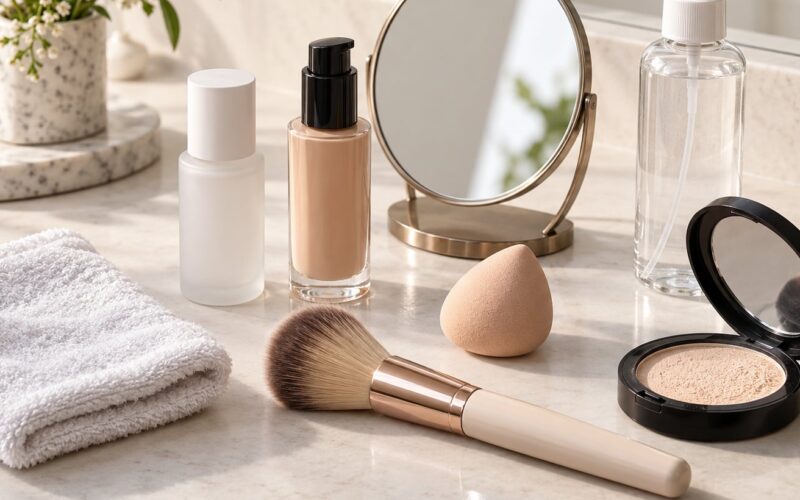
Start with clean tools or clean hands. Tap foundation on with a damp sponge or a bouncing brush, then build thin layers instead of one thick pass. Every additional layer adds another occlusive film over the same pores.
Avoid rubbing. Dragging a brush back and forth across the same spot creates tiny micro-tears, and irritated skin inflames and clogs faster than healthy skin. Let each layer set for a minute before the next one goes over it. If coverage is the goal, spot-treat with concealer rather than adding a full extra layer everywhere.
On weeks when your skin is already flaring, a skin tint or a tinted moisturizer is a reasonable substitute for a full face. It gives you even tone without the coverage you do not need that day. Technique cannot prevent every breakout, but less friction, less occlusion and less product usually means less trouble.
4. Remove makeup thoroughly without scrubbing
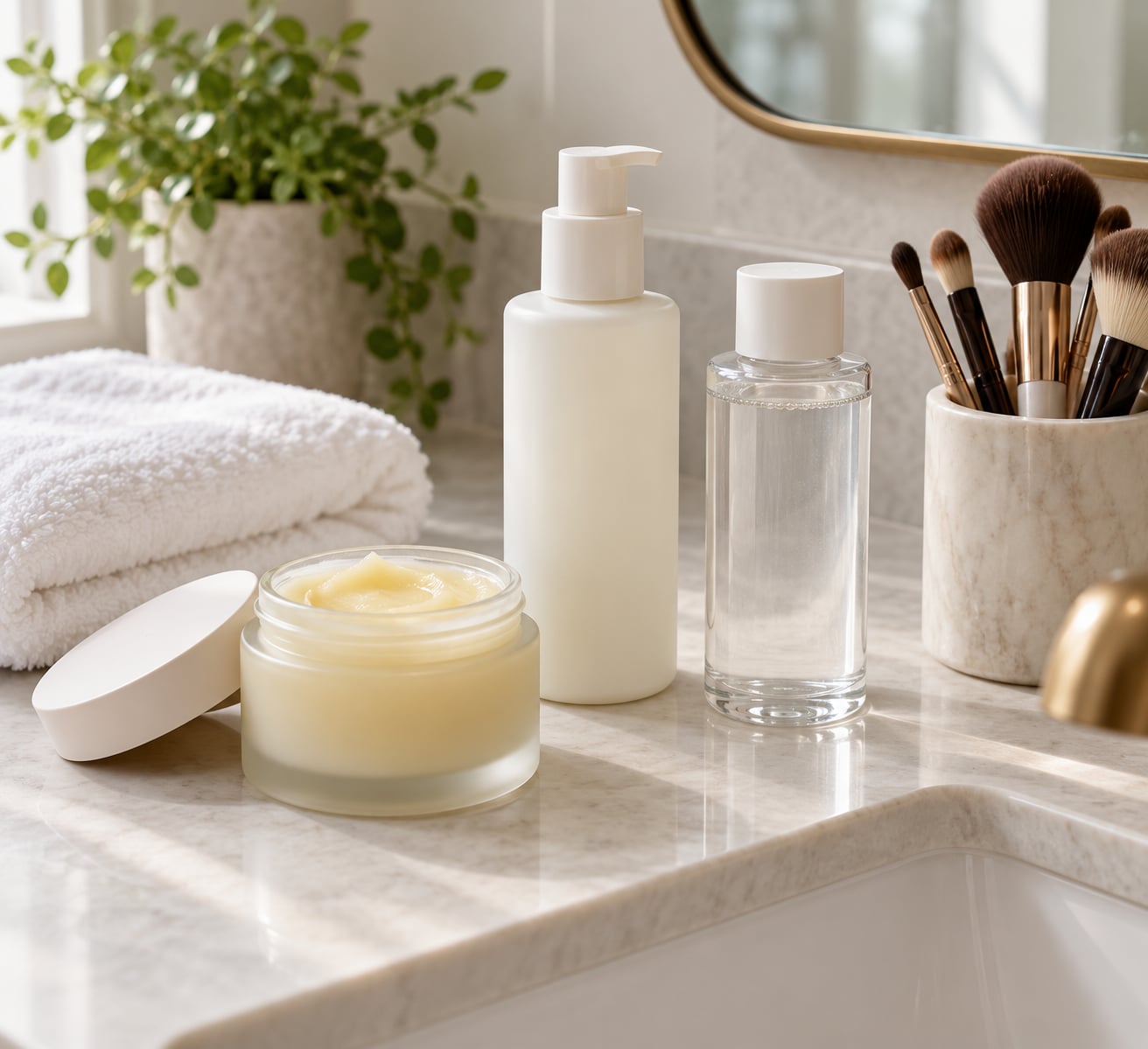
Removal is the single highest-impact habit in this whole guide, and it is the one people skip. If you wear sunscreen, a full base or anything waterproof, use an oil-based cleanser or a balm first and work it in with dry hands for about a minute. Follow with a gentle water-based cleanser and lukewarm water if you still feel residue.
For lighter days, micellar water on a reusable cotton pad is enough. Makeup remover wipes are the fallback I would use rarely, because they tend to leave a film behind and they invite rubbing to get the last bit off. Skip abrasive scrubs and skip forceful rubbing with a rough towel. Pat, then let the skin air dry for a moment before moisturizer.
Patch individual spots with hydrocolloid pimple patches while you sleep rather than covering them again in the morning. It stops you picking, and it protects the spot from another layer of product.
5. Protect the skin between wear days
Give irritated areas a makeup-free stretch. You do not have to go bare-faced for a week, but a few days where you are not covering the same spot gives your pores a chance to clear instead of starting every morning with product over an open follicle.
Change one thing at a time and give it four to eight weeks before judging it. Skin cell turnover is slow, and a routine that looks settled on day five can look different on day thirty. Keep a small note on your phone with the date and the product, because the delay is exactly what makes this hard to remember later.
On hygiene: wash brushes about once a week, keep sponges out of a damp closed case, and change your pillowcase weekly, more often if you sweat. During the day, use a broad-spectrum SPF you like wearing on its own, so there is a non-makeup option for exposed skin.
If breakouts are persistent, painful, spreading or leaving marks, talk to a dermatologist. Nothing here replaces advice for your skin.
Common Mistakes That Cause Makeup Breakouts
Applying makeup over unclean skin
Skincare layers from the night before, sebum and sweat are all still there. Fix: wash with lukewarm water, let the skin dry for a minute, then moisturize. If you are applying straight onto a layer of old product, no foundation formula is going to behave.
Using expired or shared makeup
Mascara is the usual rule of thumb at about three months, and anything cream-based that has changed smell, colour or texture should go, shared or not. Fix: write the open date on the back of anything cream with a pen when you buy it. Old formulas are also more likely to have separated in ways that change how they sit on skin.
Layering too many occlusive products
A rich cream, a primer and a full base in one morning is a lot of seal over the same pores. Fix: keep the moisturizing step light and pick one base product, not three. The same goes for overnight cream plus sleeping masks plus heavy balm.
Leaving waterproof makeup on overnight
Foundation left on overnight keeps sebum, dead skin and residue in contact with the skin for hours, and the eye area is no exception. A stye is the same principle showing up somewhere other than acne. Fix: clean the whole face at the sink rather than at a mirror with a pad, and if you are exhausted, do the balm step at minimum.
Treating every breakout as a product reaction
If you have started a retinoid or an exfoliating acid in the last few weeks, some temporary increase in breakouts can be a purging period rather than a bad product. The difference is pattern: purging tends to look like a general increase of small pimples in areas you normally get them, and it settles. A reaction is usually concentrated where the product sits, with stinging, redness or itchiness. Fix: when in doubt, pause the newest product for two weeks and watch.
Over-cleansing in response to a flare
Washing three or four times a day, adding scrubs and switching to a stripping wash every time you break out damages the skin barrier. Damaged skin is more reactive and clogs more easily, so the flare gets worse. Fix: two gentle washes a day, nothing harsher, and one active at a time.
The prevention tip that ties all six together: change one variable at a time, and give it eight weeks.
Frequently Asked Questions
Can foundation cause breakouts?
Yes. Foundation can contribute to acne cosmetica by trapping sebum, dead skin cells and product residue in the pores it covers. Full-coverage, thick or occlusive formulas are more likely to be a problem than light, water-based or mineral ones, especially on someone who already gets breakouts on the forehead, cheeks or chin. That is also why thorough removal every night matters more than the brand of foundation you buy.
How can I tell whether my makeup is causing breakouts?
Look at timing and location together. Makeup-related breakouts tend to sit where product actually rests, they are usually small whiteheads or clogged bumps rather than deep painful spots, and they often appear on areas you never had trouble with before. Because the reaction can show up weeks or months later, note each new product and the date you started it, then change one thing at a time.
Is non-comedogenic makeup always right for acne-prone skin?
Usually a sensible starting point, but it is not a guarantee. The term is not regulated, so it reflects how a company tested and described its formula rather than how your pores will respond. People on skincare forums report breaking out from products explicitly labelled non-comedogenic, and one product can help them and irritate someone else. Read the ingredient list and patch-test before you commit.
What is the best way to remove waterproof makeup without irritation?
Dissolve it first. Use a cleansing balm or oil-based cleanser on dry skin, massage it for about a minute so it has time to break down the film, then follow with a gentle water-based cleanser and lukewarm water. Skip abrasive scrubs and skip forcing the last stubborn bit with a wipe. If a rough towel is what makes you scrub harder, switch to a soft one and pat dry.
Should I stop wearing makeup if I am breaking out?
Not necessarily. Cutting out makeup entirely for a few days or weeks is a good diagnostic move and a good way to let irritated spots settle, especially if you suspect a specific product. Full-coverage foundation over an open follicle is what tends to keep a flare going, so consider a skin tint or spot concealer instead of a full face while your skin calms down.
When should I see a dermatologist about makeup-related breakouts?
See a qualified dermatologist if breakouts are painful, deep, spreading beyond where you apply product, or leaving dark marks and scars. It is also worth a visit if you have simplified your routine, removed makeup properly and changed your tools, and four to eight weeks later nothing has changed. Products on their own cannot fix hormones, scarring or deeper skin conditions.
Conclusion
Start with one action tonight: remove every bit of makeup properly, then do it again tomorrow with a thinner base and a cleaner brush. Change one thing at a time, give it four to eight weeks, and write down what you started and when. That log is what turns a mystery breakout into a solvable problem. And if the breakouts stay painful, spread or scar, take the notes to a dermatologist rather than trying another product on your own.