The fastest way to protect hair from heat styling damage is to apply a heat protectant to dry or towel-dried hair, keep your tools at the lowest setting that still gives you the style, and never put a flat iron or curling iron on wet hair. Stay under 180°C (356°F) for fine, bleached or color-treated hair, and under 200°C (392°F) for thick virgin hair. Most damage comes from high heat plus repeated passes, not from heat alone.
That whole routine takes about five extra minutes. In exchange you keep a blowout or a curl instead of trading it for split ends in six weeks.
One thing worth clearing up before anything else: heat damages the hair shaft, not the follicle. The strand you can see and touch is dead keratin already pushed up from the scalp, so a bad session leaves you with frizz, brittleness and breakage that grow out over the following months. It does not, in ordinary use, burn out the follicle that made the strand. Most of the dread around a ruined blowout is about damage that regrows out.
Here is the mechanics in plain language, because it drives every other decision. Heat breaks the weak hydrogen bonds inside the keratin cortex at around 60°C, which is why a hot blow-dry alone can change how hair feels. By roughly 200°C (392°F) the protein itself starts to denature, the outer cuticle layer lifts and fractures, and you get the classic trio of frizz, dullness and split ends. A heat protectant puts a sacrificial barrier between the cuticle and the tool, which delays the point where lifting starts. It cannot remove the ceiling, which is why temperature matters more than the bottle you bought.
Table of Contents
- What You Need to Protect Hair From Heat Styling Damage
- Temperature thresholds: what each range does to the shaft
- Step-by-Step: How to Protect Hair From Heat Styling Damage
- Start With Clean, Dry Hair and the Right Products
- Use the Lowest Effective Heat Setting
- Protect the Hair During Each Styling Pass
- Cool, Maintain, and Recover After Heat Styling
- Common Mistakes That Increase Heat Damage
- How to Protect Hair From Heat Styling Damage for Different Hair Types
- How Often Should You Use Heat Styling Tools?
- Frequently Asked Questions
- Does a heat protectant really work if you use it every time?
- Is a heat protectant necessary if I use a low heat setting?
- Do flat irons cause split ends?
- What temperature is best for diffusing curly hair, and can diffusing damage it?
- How often is it safe to heat style my hair?
- How do I know if my hair is breaking off or actually shedding?
- Start With Lower Heat and Consistent Protection
What You Need to Protect Hair From Heat Styling Damage
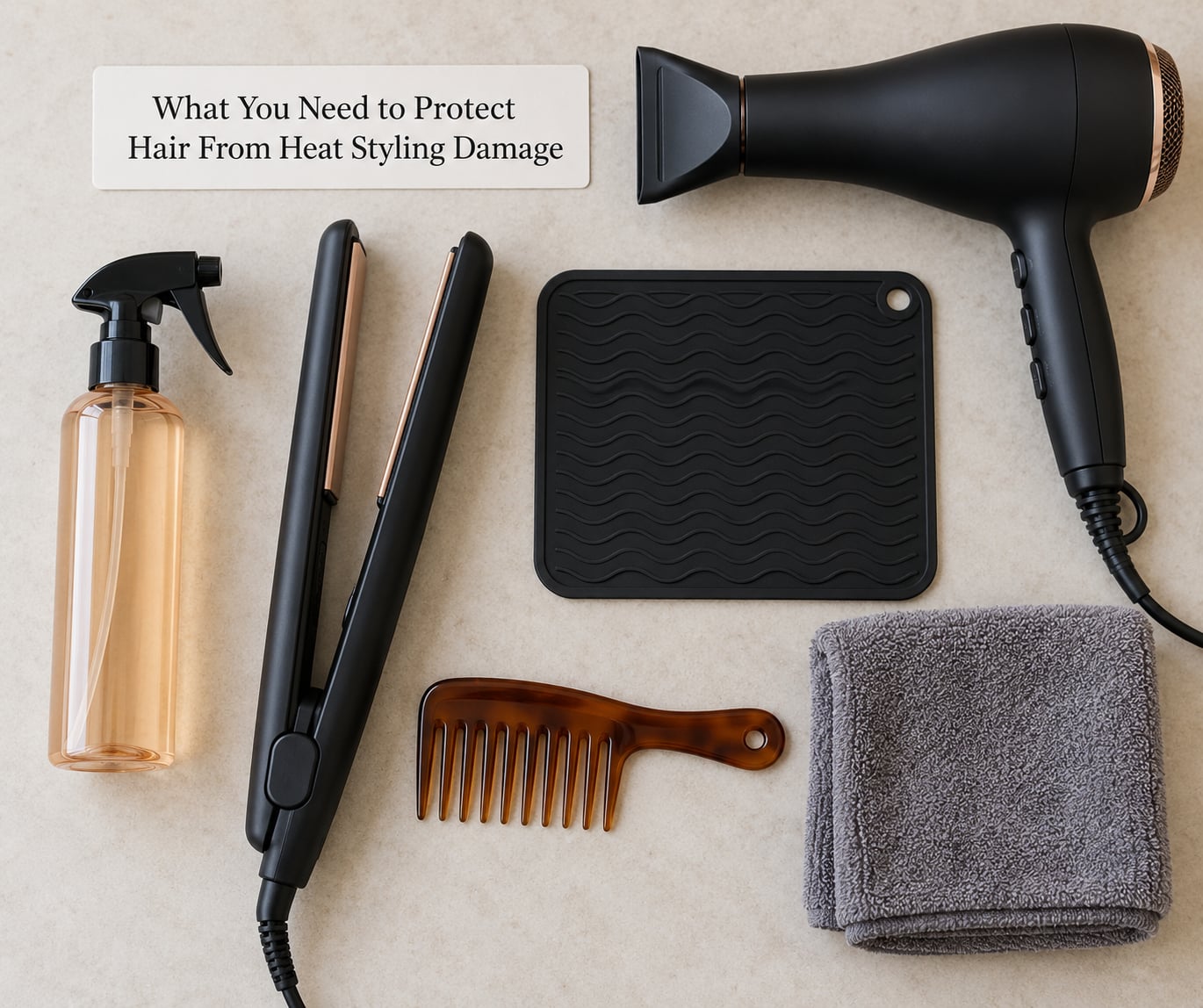
You do not need a shelf full of products. You need a short list, and the order you use it matters as much as the items themselves.
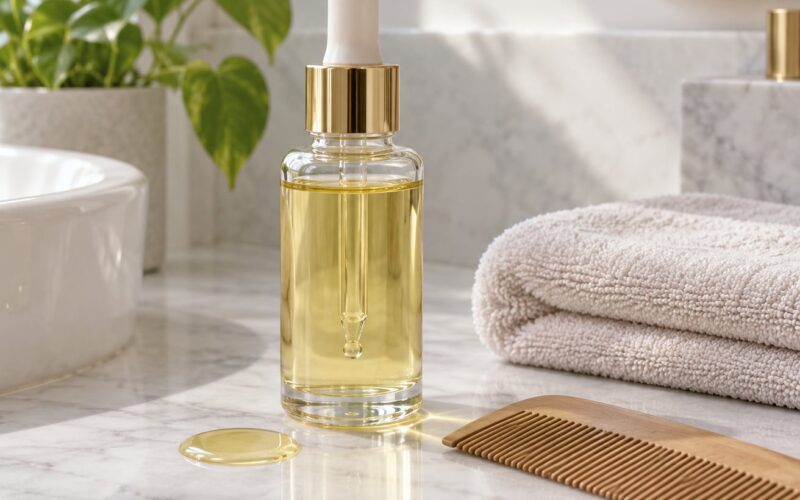
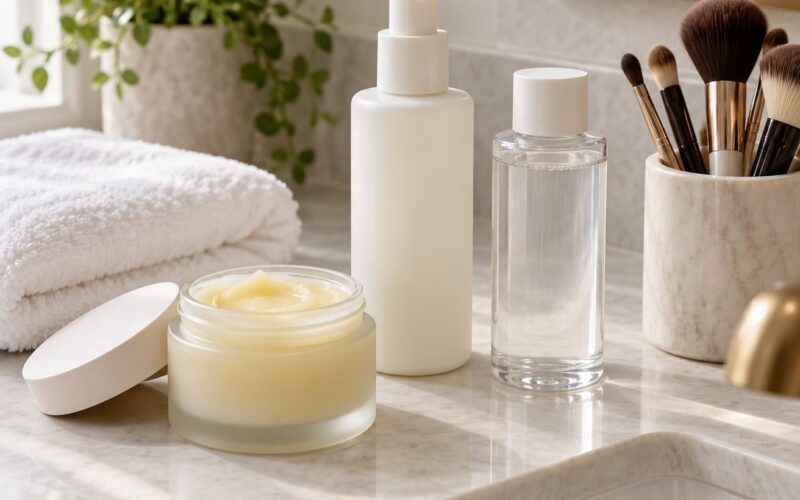
A heat protectant matched to your hair. For most people this is a leave-in spray or a lightweight cream. A formula built around thermal protection polymers or a silicone barrier does the shielding, while ceramides and hydrolyzed protein help with the dryness that usually comes with frequent styling. If your hair is bleached or already damaged, pick one with protein in it.
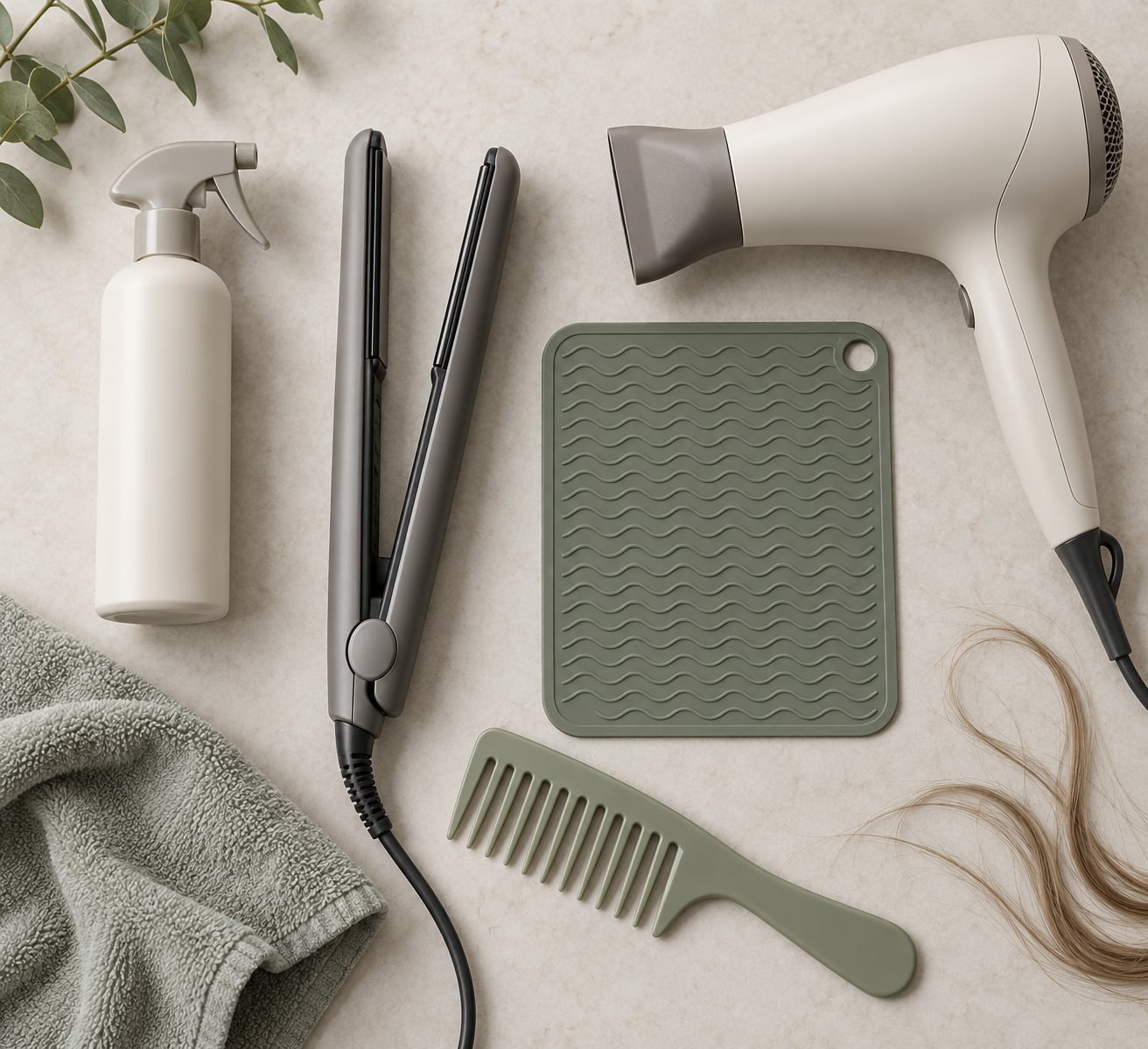
Tools with adjustable heat. A flat iron, curling iron or blow dryer that only runs hot is the thing to replace first, because it forces the choice between no styling and maximum styling. Fixed-temperature tools also make it impossible to do the thing hair stylists say most often, which is drop the setting by one notch.
A heat-resistant surface. A silicone mat or a heatproof counter means you can set a hot tool down without scorching a counter or a cotton towel, which can itself scorch hair when you wrap it in one.
A wide-tooth comb and a microfiber towel. Wide teeth mean fewer passes with a brush to get the tangles out before heat goes near your hair. A microfiber towel cuts down on the rubbing that roughens the cuticle while your hair is still wet and fragile.
Gentle shampoo and conditioner for aftercare. This is the part people skip, and it is where recovery is actually won. Anything sulfate-heavy will strip what styling day already took out.
Temperature thresholds: what each range does to the shaft
- Below 150°C (302°F): drying and diffusing range. Minimal shaft damage, and this is where a blow dryer belongs.
- 150°C to 180°C (302°F to 356°F): the working range for fine, bleached and color-treated hair, and a fine choice for most other types.
- 180°C to 200°C (356°F to 392°F): workable for thick, coarse or virgin hair that has not been chemically treated.
- 200°C to 230°C (392°F to 446°F): high heat. Keratin is already denaturing here, so keep passes short and use it only on hair that is genuinely thick and undamaged.
- Above 230°C (446°F): the zone where most people create their split ends. Professional tools reach here; on your own hair at home there is rarely a good reason to go.
None of this is a promise of a specific number of styles before damage shows. Hair density, porosity, chemical processing and how wet the hair is all shift the point where the cuticle starts to lift, so treat these as guardrails rather than targets.
Step-by-Step: How to Protect Hair From Heat Styling Damage
Start With Clean, Dry Hair and the Right Products
Towel-dry, never rub. Blot or wrap, then let the hair air out until it is at least 80% dry. r/HaircareScience users are blunt about why: water trapped inside the strand turns to steam when a hot plate clamps shut, and that internal pressure fractures the cortex from the inside out. A sizzling sound when a flat iron hits damp hair is that steam, and it is the single most damaging thing in this whole article.
Apply the protectant to hair that is dry or barely damp, not soaking. A few sprays or a roughly coin-sized amount of cream, worked through from mid-length to ends, is enough for most heads. More is not better, and heavier creams on fine hair just make it limp without adding protection.
Detangle before you style, not after. Start at the ends, work upward with the wide-tooth comb, and work in small sections. Roughing out knots with a brush after five minutes of heat is how you turn a style into breakage, especially on bleached lengths that have already lost some of their elasticity.
If you use a leave-in conditioner or a bond-building oil, that goes on first so it can dry into the shaft, and the heat protectant goes on over the top. Order matters because the protectant needs to be the outermost layer when the tool makes contact.
Use the Lowest Effective Heat Setting
Set the tool one notch lower than you think you need, then check the result. If the style falls flat, wait until it has fully cooled and check again before reaching for more heat. Heat that gets switched off and left in place keeps working until the hair cools, so many styles that need 200°C to achieve will sit at 180°C anyway once you give them a minute.
Test on a small hidden section first, near the nape, to see how your hair takes a setting. Porous hair drinks heat and can look done in half the time; bleached hair is the opposite and usually needs a slower pass.
The forum consensus in r/HaircareScience, and it matches what stylists have said for decades, is that turning the dial down protects hair more than any product ever will. A cheaper bottle at 180°C beats an expensive one at 230°C every time. If you only change one habit, change this one.
One more real-world check: is the tool actually staying at the setting you chose? Some tools drift or run hot at the plates, so if your hair is crisping rather than curling, the setting is not telling you the whole story.
Protect the Hair During Each Styling Pass
Section before you clamp. Thin sections heat evenly; a thick section gets cooked in the middle while the ends stay cold, so you go over it again and the ends take the damage.
One pass, then wait. Repeat passes on the same spot are the biggest source of split ends, because you are re-heating an area that has already lost moisture. If it did not take, work from a root to tip pass on slightly different hair rather than hammering the same section.
Keep the tool moving. Parked flat iron plates held shut on one spot concentrate heat in a small area, which is how you get a flat-iron burn mark that splits and peels for months.
Skip the roots. Hair at the scalp is newer, stronger and usually not what you are styling for. Start about an inch down and keep the plates off the scalp line.
Watch the ends. Ends are the oldest part of your hair and the first to go. Turn the tool so the last inch or so is treated with a light pass, or leave the tips slightly less straight than the rest. It reads as intentional rather than damaged.
For the blow dryer, hold it about 15cm, or 6 inches, from your hair, use a concentrator nozzle rather than a wide diffuser on straight styles, and keep it moving. For a diffuser, use low and medium settings only, cup the hair rather than letting it wind loose around the bowl, and take breaks to avoid stretching the curl pattern.
Plate material matters less than temperature but not zero. People in r/Haircare tend to report that titanium plates glide better and snag less, which means fewer repeat passes, while some find ceramic creates hotspots on already-damaged hair. If you catch yourself going over the same section repeatedly, that is a plate problem, not a technique problem.
Cool, Maintain, and Recover After Heat Styling
Use the cool shot on your dryer for the last 10 to 15 seconds of each section. Setting the cuticle down while it is still warm is the cheapest repair step available and it makes the next day’s styling easier because the surface is smooth.
Then let the hair cool fully before you touch it. Hair is at its most fragile when it is hot, and a lot of the breakage people blame on the tool actually happens while they are brushing and rearranging a style that has not cooled.
Wash gently and not too often. Most people do fine with shampoo two or three times a week; daily washing strips the natural oils that keep the cuticle supple, and dry hair is much more fragile under a tool. Work conditioner through the mid-lengths and ends every wash, and leave a leave-in on damp hair after washing.
Bond builders are worth adding if your hair is bleached or color-treated, because they are aimed at the internal disulfides that heat and bleach both stress. They are not a substitute for lower heat, but on processed hair they pair well with it.
Give recovery four to eight weeks before judging anything. Trim split ends every eight to ten weeks, switch to a silk or satin pillowcase, and use a wide-tooth comb on dry hair rather than brushing it out. Damaged hair needs weeks of consistent handling before the texture changes, not two days.
Common Mistakes That Increase Heat Damage
Using a flat iron on wet or damp hair. Fix: wait until hair is at least 80% dry, and stop if you hear a sizzle. This is the fastest way to ruin a head of hair in one session.
Back-to-back heat. Blow drying and then clamping a flat iron on the same hair in one session doubles the exposure, and people rarely count the dryer as styling. Fix: pick one tool for the day, or do a rough dry and finish with heat once.
Cranking the temperature to save time. A higher setting is not meaningfully faster on thick hair because the outer layer heats before the middle does. Fix: lower the setting and section more finely.
Re-clamping the same section. Fix: one pass per section, and use a different subsection for touch-ups. If a section will not hold, that is a product or technique problem, not a heat problem.
Skipping the protectant on a low setting. Users on r/HaircareScience report this one constantly: a protectant used consistently while the temperature stays high still leaves worse split ends. Fix: drop the temperature first, and apply the product on every session including the gentle ones.
Detangling dry, fragile hair with a brush. Fix: use a wide-tooth comb from the ends upward, and mist with water or a leave-in first if the hair is already compromised.
Styling hair that is already breaking. Fix: give it a rest block. If ends are splitting, fraying or snapping during the style, that hair is telling you the answer already.
How to Protect Hair From Heat Styling Damage for Different Hair Types
Fine or thin hair. Less product, lower heat, smaller sections. Stay at or below 150°C (302°F) and work fast rather than hot, because fine strands reach the damage threshold fast and there is little of them to lose. A light spray over a cream works better than a thick cream that weighs the hair down.
Thick or coarse hair. You have more room, but 200°C (392°F) is a sensible ceiling rather than a starting point. Dry your roots first, then rough-dry to 80% before using a tool, and use big sections so the middle actually heats through.
Bleached hair. Bleaching removes the natural lipids and much of the hair’s original protein, so the shaft absorbs heat faster and reacts worse. Cap the flat iron at 180°C (356°F), use fewer passes, and add a protein-based protectant. Color that is not bleach still counts, though: r/HaircareScience users regularly report visible split-end worsening from semi-permanent and permanent color that never touched a lightener.
Curly hair. Heat on hair that is slightly damp or fully dry, never soaking and never bone dry with a protectant-only layer over brittle ends. Diffuse on low or medium, keep the dryer moving, and do not touch up a curl with a flat iron the same day. Daily heat is where most curl damage happens.
Coily and 4C hair. The main risk is tension, not temperature, and that is why the flat iron gets blamed for things it did not cause. Detangle with fingers or a wide-tooth comb in sections, with a slip product such as oil or a leave-in, and never clamp a section that is being pulled taut. If you do straighten, use a flat iron rather than a hot comb, keep it under 180°C (356°F), and work in very small sections with a bone-dry finish.
Hair that is already heat-damaged. Lower than you want, more product than feels necessary, and fewer sessions. Add a bond builder, and give it a few heat-free weeks before testing anything new.
How Often Should You Use Heat Styling Tools?
Once or twice a week is the range most people report tolerating well with a protectant and a sensible temperature, and that matches the general guidance to keep hot styling to a couple of sessions a week where possible. Frequency matters more than any single session: the shaft breaks down cumulatively, so the same setting done weekly is harder on your hair than a hotter setting done once.
Build a simple week around it. Two styling days, then heat-free days using a braid-out, a bun, a scarf or a heatless curl set. r/curlyhair users run exactly this pattern and treat daily heat as off-limits rather than something to minimize.
Watch the signals rather than the calendar. Ends that feel rough, snap when you detangle or start splitting within a few days of a style are telling you the interval is too short, and no product fixes that. Push the next session out a week.
Frequently Asked Questions
Does a heat protectant really work if you use it every time?
Yes, but it reduces damage rather than removing it. Protectants coat the shaft with polymers or silicones that delay the point where the cuticle lifts and the keratin cortex starts to denature. They cannot undo a 230°C pass, and they do not help much if you keep re-clamping the same section. Most people see the benefit only when the product and a lower temperature happen together.
Is a heat protectant necessary if I use a low heat setting?
Use one anyway, and treat the lower setting as the bigger win. Dropping a flat iron from 230°C to 180°C (446°F to 356°F) does more for your hair than any product on its own. The protectant adds a second layer of protection, costs little, and is what keeps a low-temperature blowout smooth through the week. Use both and you have two independent safeguards.
Do flat irons cause split ends?
A flat iron does not create split ends by itself, but it dries the shaft until the cuticle lifts and the cortex splits, which is the visible result people call split ends. High temperatures, repeated passes, and clamping wet or damp hair speed that up considerably. One careful pass at 180°C (356°F) with a protectant is far kinder than three passes at max.
What temperature is best for diffusing curly hair, and can diffusing damage it?
Use the low or medium setting, which typically sits around 150°C to 180°C (302°F to 356°F), and stop as soon as the hair is dry. Diffusing can damage curly hair the same way anything heat-based can, mainly through stretching, over-drying or using it every single day. Cup the curls in your hand as you diffuse, keep the dryer moving, and let your hair cool with the diffuser still in.
How often is it safe to heat style my hair?
For most people, once or twice a week is a range that holds up well when a protectant is used and the temperature stays sensible. Cumulative use matters more than any single session, so two weekly blow-dries are harder on hair than one high-temperature style every two weeks. Watch how your ends feel between sessions and push the interval out when they start snapping.
How do I know if my hair is breaking off or actually shedding?
Breakage happens along the shaft, so you find short pieces of different lengths, frayed ends, and a pile of strands in the brush or drain that are all roughly the same length. Shedding comes from the root, so you see thinner hair at the scalp, a widening part, and strands that taper to a small white bulb. If the part is widening or you notice sudden heavy shedding, book an appointment with a dermatologist.
Start With Lower Heat and Consistent Protection
If you change one thing this month, turn the dial down by one notch on every hot tool you own. Everything else in this guide helps, but nothing protects your hair more than a temperature you did not need in the first place.
Then build the rest around it. Apply a heat protectant to hair that is at least 80% dry, section before you clamp, one pass per section, and keep the tool moving. Stay at or below 180°C (356°F) on fine, bleached and color-treated hair, and no higher than 200°C (392°F) on thick virgin hair. Treat blow drying as a styling step when you plan to use a tool afterwards, and leave heat-free days between sessions.
Be honest about the ceiling here. No protectant blocks all heat damage, and anyone who tells you their product makes 230°C harmless is selling something. What a good routine does is keep your hair intact long enough for the style to matter, and keep the damage you do cause growing out instead of spreading.