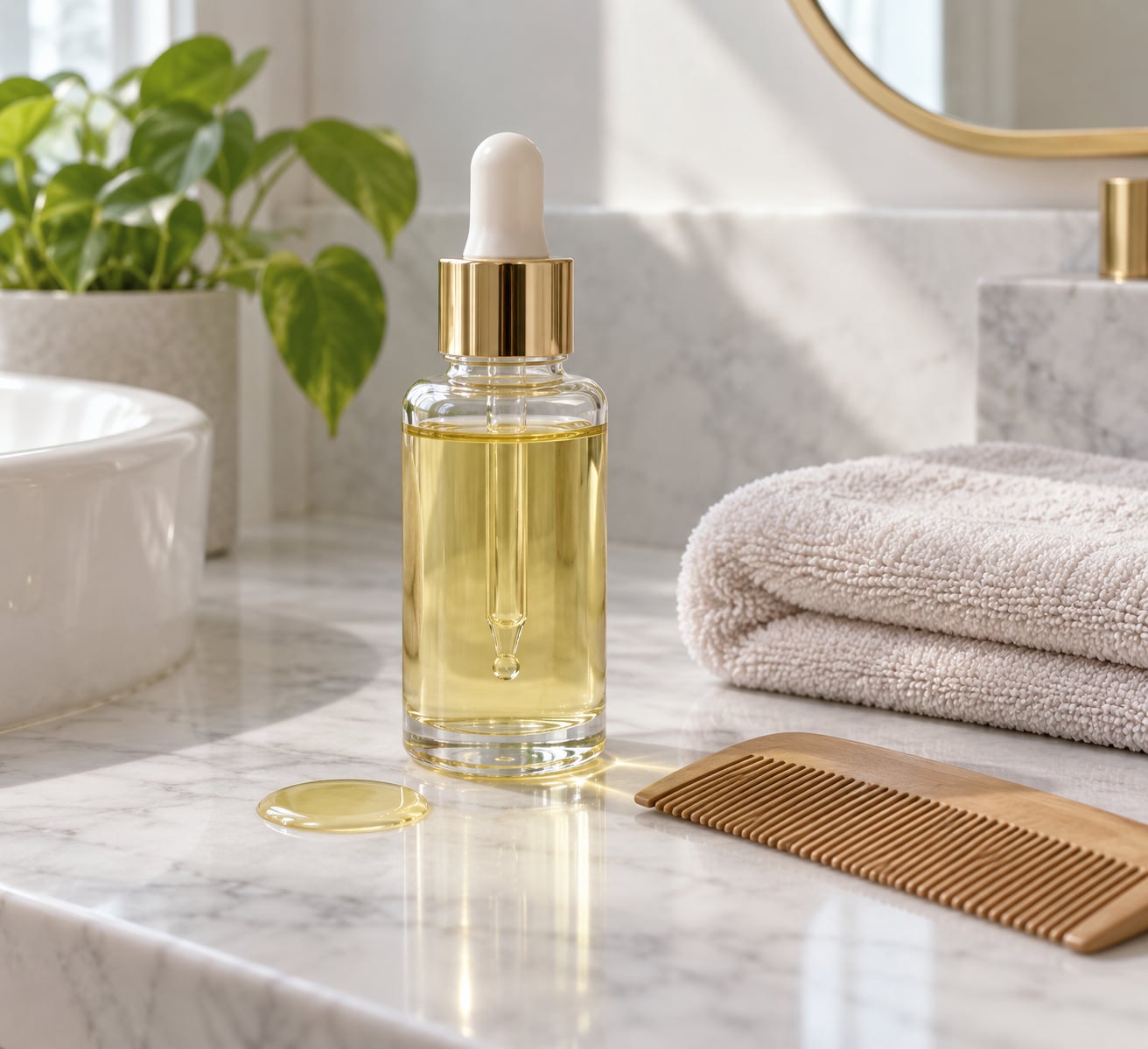
The trick to using hair oil without greasy roots is placement, not restraint. Put one to three drops into your palms, warm them, and work the oil through the mid-lengths and ends only, never the scalp or hairline.
Keep it to a thin film and let it dry before you touch your hair. That is the whole method, and it takes about two minutes.
- Keep oil off the scalp and the hairline. That is where the shine reads as grease.
- Start smaller than feels generous. Fine hair usually needs one or two drops, not a full dropper.
- Apply to damp or towel-dried lengths, or to dry hair if you want more control.
- Warm the oil between your palms first so it spreads instead of sitting in spots.
- Do not rub. Comb or finger-comb it through instead.
- Check your roots when the hair is fully dry before you add anything more.
Table of Contents
- What You Need
- Step-by-Step
- How to Use Hair Oil Without Greasy Roots
- Choose an Oil That Will Not Weigh Down Fine Hair
- Apply the Right Amount for Your Hair Length
- Finish Without Flattening Volume
- Common Mistakes
- Frequently Asked Questions
- Are you supposed to put hair oil on your roots?
- How to oil hair without looking greasy?
- Is it better to oil wet hair or dry hair?
- Can you use hair oil on oily hair?
- How often should you use hair oil?
- How do I remove extra oil without washing my hair every day?
- Conclusion
What You Need
You need very little, and that is the point. Most people fail at this because they buy a heavy product and then try to use discipline to compensate.
A lightweight oil is the first item. Jojoba, grapeseed, argan, sweet almond, and camellia are the usual names in the light-to-medium range. Coconut oil and shea butter sit at the other end and belong on thicker or coily hair, not fine straight hair.
A dropper or a pump applicator bottle matters more than it sounds. Pouring from a large bottle is how people end up with half a cap of oil in their hand. A dropper gives you the count; a small pump bottle gives you a repeatable amount you can do the same thing next week.
A fine-tooth comb distributes a thin film evenly without pushing oil down toward the scalp. A soft microfiber towel dries lengths without the friction of a terry cloth, which leaves frizz you would then be fighting with more product. And a brush that suits your hair type is for the finish, not the oiling: a boar-bristle brush for straight hair to distribute shine, a wide-tooth comb or your fingers for curls and coils.
Step-by-Step
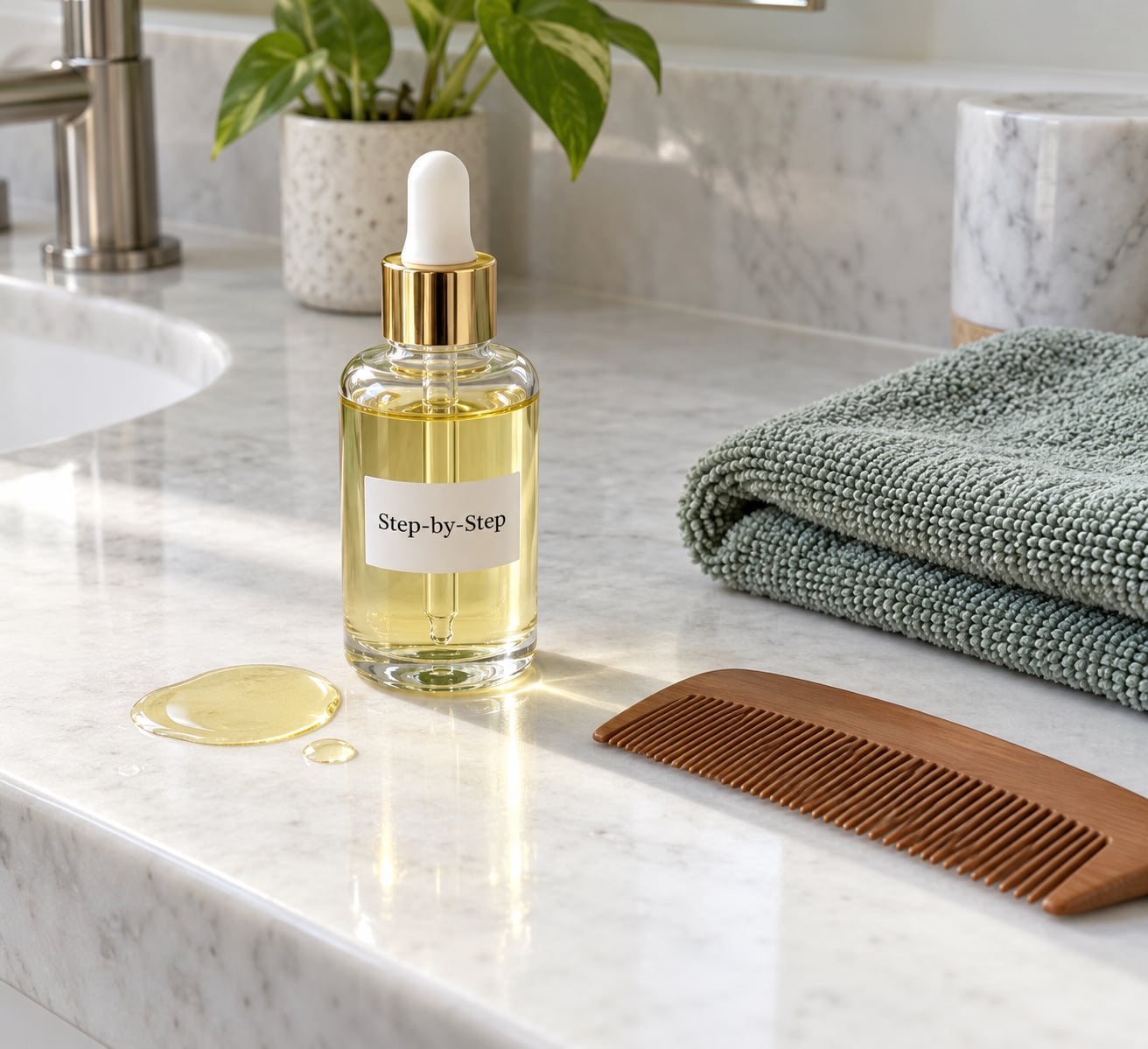
How to Use Hair Oil Without Greasy Roots
Work through these steps in order and stop at the last one before adding more. Each step exists to solve a specific reason roots look greasy.
- Blot the lengths first. Towel-dry until damp but not dripping. Oil spreads further on wet hair, which is convenient and also how it drifts upward toward the scalp.
- Gauge the amount before it touches your hair. One or two drops for shoulder-length fine hair, up to three for longer or thicker hair. Rub your palms together: if they look shiny, that is right. If they look wet, put back half of it.
- Warm the oil in your palms. Thirty seconds of rubbing brings it to body temperature so it absorbs rather than sitting on the surface.
- Apply from the ends upward, stopping at ear level. Scrunch the ends first, then mid-lengths. The zone closest to your scalp stays untouched. Your fingers should never travel above the top of your ear.
- Comb it through. A fine-tooth comb spreads the film evenly and moves any oil that crept toward the scalp back down the shaft. Do not massage the scalp.
- Let it settle, then check. Air-dry or dry low and cool. Look at the roots in a mirror from above and from the side. Clean and separated means you are done. Shiny or stuck together means you used too much, and the fix is a rinse, not more product.
Choose an Oil That Will Not Weigh Down Fine Hair
Choose by finish rather than by marketing language. A fine-hair-friendly oil absorbs into the strand and leaves almost no surface film. A heavy one sits on top, spreads across the crown, and reflects light in exactly the way people describe as greasy.
Three categories behave differently. Pure single oils such as grapeseed, jojoba, camellia, and sweet almond are thin and spread well, which makes them the safest starting point. Richer oils like argan and avocado work at the same small dose but lean slightly heavier, so they suit medium density better than fine hair. Oils with a high saturation point, coconut in particular, are genuinely useful on coily hair and genuinely risky on straight hair.
Water-based leave-ins are a different product entirely. They smooth and add moisture, and they cannot create a greasy film, but they will not give you the same shine. The common mistake is oiling dry hair instead of using a water-based conditioner first. Oil seals, it does not hydrate, so if you skip the leave-in and use oil as your only treatment, your ends will feel coated and still be dry.
Read the ingredient list and be suspicious of heavy silicones and anything described as a butter or a cream masquerading as a light oil. If the label says nourishing, rich, or intensive, assume it is not what you want near your roots.
Apply the Right Amount for Your Hair Length
Use this table as a starting point, then adjust by one drop at a time based on how your hair dries. Less is almost always the right correction.
| Hair type and length | Starting amount | Where it goes |
|---|---|---|
| Fine, straight, chin to shoulder length | 1 to 2 drops | Ends and lower mid-lengths |
| Fine, straight, longer than shoulder | 2 to 3 drops | Ends and mid-lengths |
| Medium density, wavy | 2 to 3 drops | Mid-lengths to ends |
| Thick or curly | 3 to 5 drops | Mid-lengths to ends |
| Coily | A quarter to a half teaspoon | Section by section, roots excluded |
Add a half drop only when the ends feel dry, not when the roots look flat. Those are two different problems and only one of them is solved with more oil.
Finish Without Flattening Volume
Volume is decided at the crown, and the crown is where you did not put oil. Air-dry with your hair lifted at the top, or blow-dry on low and cool with a round brush, directing the dryer downward from about six inches away.
Settle the front sections away from your scalp rather than flat against it. Once the hair is completely dry, look at the roots from the side and from above. If they read clean and separated, your routine worked. If they look dark and shiny, the oil drifted upward during drying, so next time keep the hair dryer on the lengths and never aim it at the scalp.
Common Mistakes
Most greasy-root problems come down to one of a handful of fixable habits.
Using too much. The most common one by a wide margin. Oil is heavier than the sebum your scalp already produces, so even a small excess will spread and flatten the base. Correction: halve your amount and give it a full drying cycle before you judge it.
Applying straight to the scalp. If a drop lands at the root, it migrates. This is the single thing short-video tutorials keep repeating in different words. Correction: start at the ends and work upward.
Picking an oil that is too thick. Coconut oil and butters belong on hair that can carry weight. Correction: switch to a thin oil such as grapeseed or jojoba.
Rubbing the hair after application. Friction drags oil toward the scalp and spreads it unevenly. Correction: comb through once, then stop.
Treating buildup as a need for more product. A film of residue makes roots look greasy even minutes after a wash. Correction: use a clarifying shampoo once every few weeks and reduce the amount of leave-in you layer under the oil.
Touching your hair all day. Oil transfers from your hands to the roots and back again. The people who get the longest clean-looking results are the ones who stop playing with it.
Oiling dry hair and skipping a water-based leave-in. The coated-but-dry look comes from sealing hair that was never hydrated. Correction: leave-in first, oil last, ends only.
A couple of styling habits help more than any product change. Massage the scalp with clean fingers in the shower to distribute sebum rather than let it pool at the base, and keep a wash rhythm that matches your oil production instead of washing twice a day, which strips the scalp and invites more oil back. Between washes, dry shampoo at the roots keeps the base looking clean without adding a film.
Frequently Asked Questions
Are you supposed to put hair oil on your roots?
No, not unless the product label specifically tells you to use it there. Oil applied at the root spreads, weighs down the base, and reflects light as a greasy film. Start at your ends, work upward, and stop around ear level. The one exception is a scalp-focused oiling treatment, and those are meant to be washed out rather than worn between washes.
How to oil hair without looking greasy?
Gauge the amount in your palms first, warm it, then apply from the ends upward through the mid-lengths. Use a fine-tooth comb to spread the film evenly, skip the scalp and hairline entirely, and let the hair dry fully before checking the roots in a mirror. If they look shiny, you used too much, so rinse rather than adding anything.
Is it better to oil wet hair or dry hair?
Damp is better for most people because the oil spreads easily and you can control how far up it travels. Towel-dry until damp, not dripping. Dry hair gives you more control over placement, which helps if your hair is very fine or gets oily fast. Either way, the oil stops at ear level.
Can you use hair oil on oily hair?
Yes. Oily roots and dry ends are a very common combination, and the fix is keeping oil off the scalp entirely while treating the lengths. Use a thinner oil than you think you need, apply it only to your mid-lengths and ends, and wash it out thoroughly so nothing accumulates between washes.
How often should you use hair oil?
Once or twice a week on the lengths is plenty for most hair types, and daily application on the roots is what leads to buildup and a flat crown. If you oil daily, keep it to the ends and a very small amount. Consistency matters less than restraint here. Daily use is fine when the amount stays tiny and the placement stays low.
How do I remove extra oil without washing my hair every day?
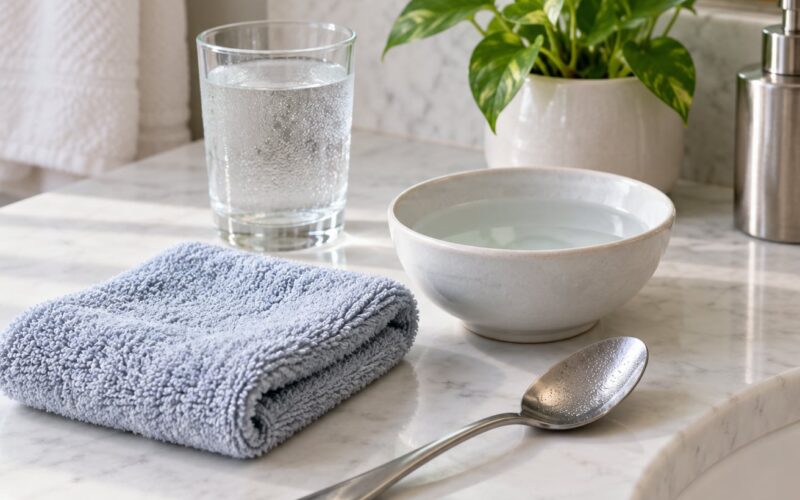
Squeeze the excess out with a towel, then blot the lengths with a warm damp cloth and leave your hair to dry. For a fuller reset, a clarifying shampoo once every few weeks clears accumulated product without needing a daily wash. Dry shampoo at the roots also buys you a day between washes without adding another film to the scalp.
Conclusion
Start here: pick a thin, lightweight oil, warm one or two drops in your palms, and work them through the mid-lengths and ends while keeping your fingers below ear level. Let your hair dry completely, then look at the roots before deciding you need anything else. Most of the time the answer is to use less, not to add more, and never to reach for a rinse in the middle of the routine.