A first-time exhibitor at a fashion trade show needs four things ready before the doors open: a focused sample line, a complete line sheet, a booked appointment list, and a team that knows who to talk to first. A fashion trade show first time exhibitor guide boils down to that sequence, and most first-show disasters trace back to skipping one of the four. Give yourself three to six months of runway, because the contract, the samples and the paperwork all move on someone else’s clock.
This is written for emerging apparel and accessories labels that have never sold wholesale, plus fabric and trim vendors entering a sourcing market for the first time. It is also written for designers who have shown clothes to friends and assume the floor works the same way. It does not, and the gap between those two things is what the next few sections close.
Table of Contents
- What You Need Before You Sign the Contract
- How much does it actually cost to exhibit?
- Step-by-Step: How to Prepare for Your First Fashion Trade Show
- How to Choose the Right Fashion Trade Show
- How to Decide Between Your Own Booth and a Sales Rep
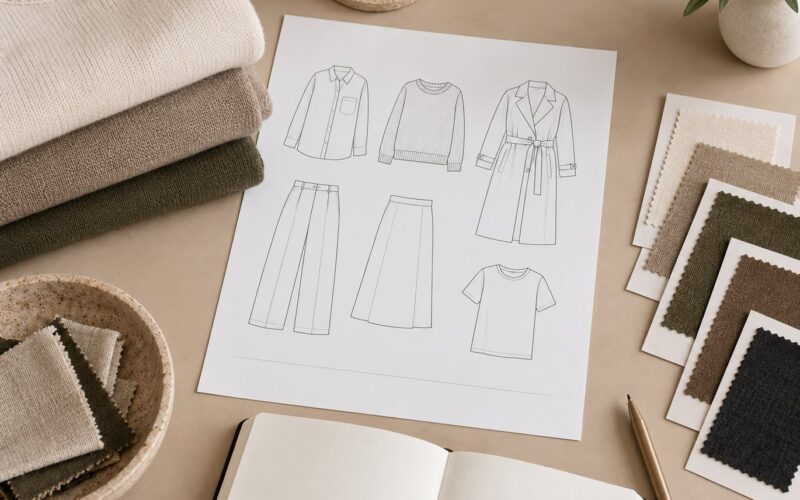
- How to Define Your Brand and Product Assortment
- How to Apply and Organize Your Booth
- How to Prepare Sales Materials and Lead Capture
- How to Staff the Booth for Buyer Conversations
- How to Look the Part at a Fashion Trade Show
- How to Turn Booth Traffic into Useful Leads
- How to Follow Up After the Show
- Common Mistakes First-Time Exhibitors Make
- Frequently Asked Questions
- How much does it cost to exhibit at a first fashion trade show?
- What should a first-time exhibitor checklist include?
- How do I prepare for a trade show as a small brand?
- Do I need a line sheet to exhibit at a fashion trade show?
- How do I follow up with buyers after a fashion trade show?
- Should a small brand use a sales rep instead of exhibiting at a booth?
What You Need Before You Sign the Contract
Before the shopping begins, you need eligibility confirmed: a registered business entity, a wholesale price list, and enough sellable units to justify an order. Most markets will not take an application from a brand with no line sheet and no pricing, so those two documents come first, before any booth conversation.
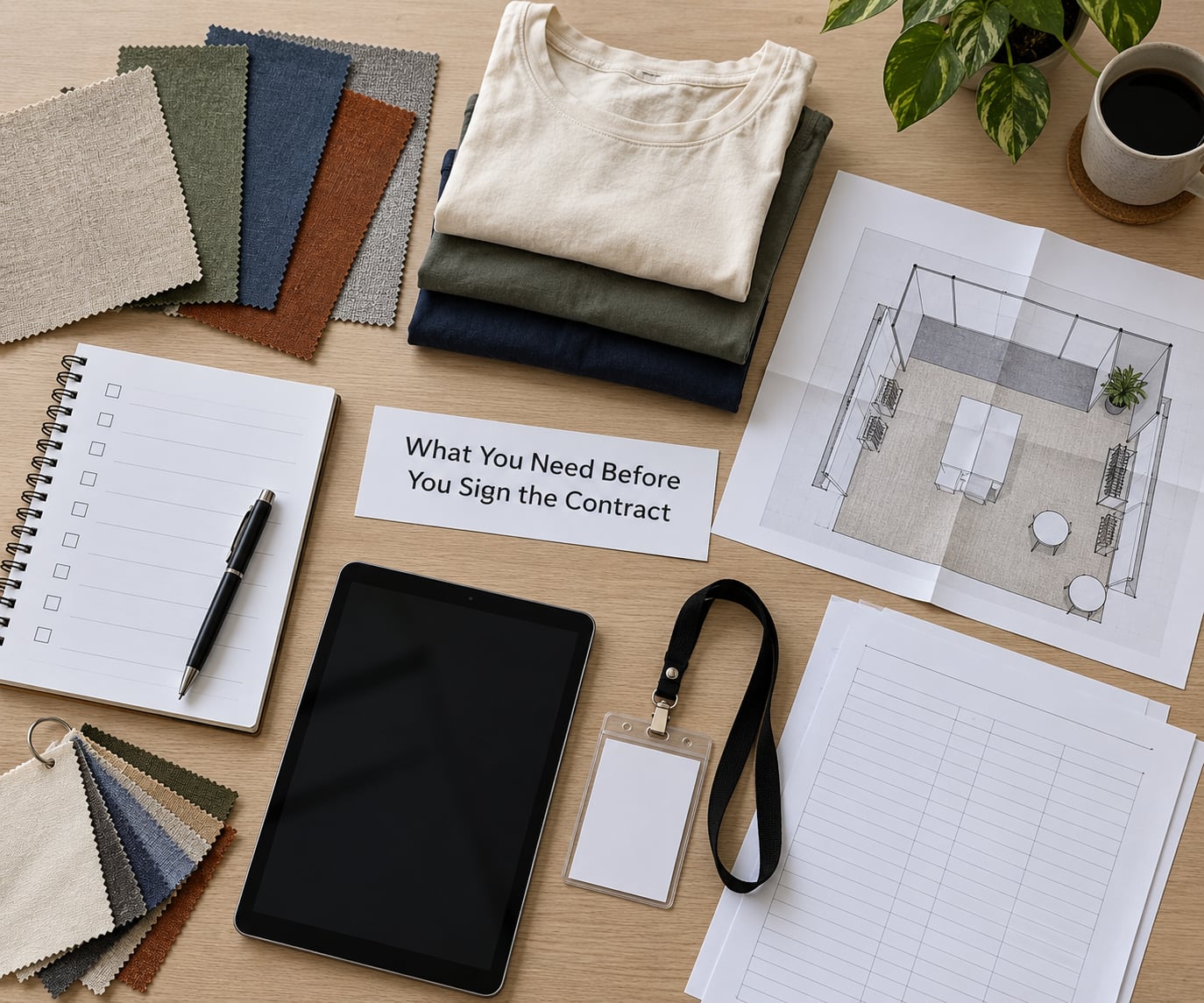
The rest of the preparation list runs like this. Booth planning, with a floor plan sketch that includes a fitting corner and a mirror, not just a rack and a table. Sample inventory counted twice over, because pieces disappear and get damaged in transit and on the floor. Payment setup, so an order can be written on a tablet instead of promised and forgotten. Staffing, with at least one person who can cover the booth during a break. Compliance paperwork where your category requires it, such as fiber content and care labelling documentation. A lead-capture workflow decided before you arrive, not improvised on day two.
How much does it actually cost to exhibit?
Nobody publishes a single number because the range is enormous, but the proportions hold. The space rental itself is usually around a quarter to a third of your all-in spend, which means travel, samples and staffing together outweigh the booth fee. One widely cited benchmark puts the booth at 25-35% of total spend. Plan the full picture before you commit to anything.
| Line item | Share of total first-show spend | What drives it |
|---|---|---|
| Booth space rental | 25-35% | Footprint, hall placement, inline versus corner |
| Travel and accommodation | 20-30% | Show city, party size, how many nights |
| Samples, racks, furniture, signage | 15-25% | Whether you rent fixtures or bring your own |
| Staffing and freelance sales help | 10-15% | Two or three people, plus agency help if you book it |
| Freight, garment cases, return transport | 5-10% | Sample volume and distance |
| Giveaways and printed material | 2-5% | Line sheet quantity, packaging quality |
| Contingency | 10% | Damage, reprints, a second trip to the printer |
Then do the deal math, because it changes how you pick a show. Take your all-in spend, divide by your average opening order value, and you have the number of orders that breaks even. If a first show costs roughly what four to eight opening orders would bring you in margin, you know what you are working toward, and you will pick a show by whether those buyers attend rather than by how the booth photographs online.
Step-by-Step: How to Prepare for Your First Fashion Trade Show
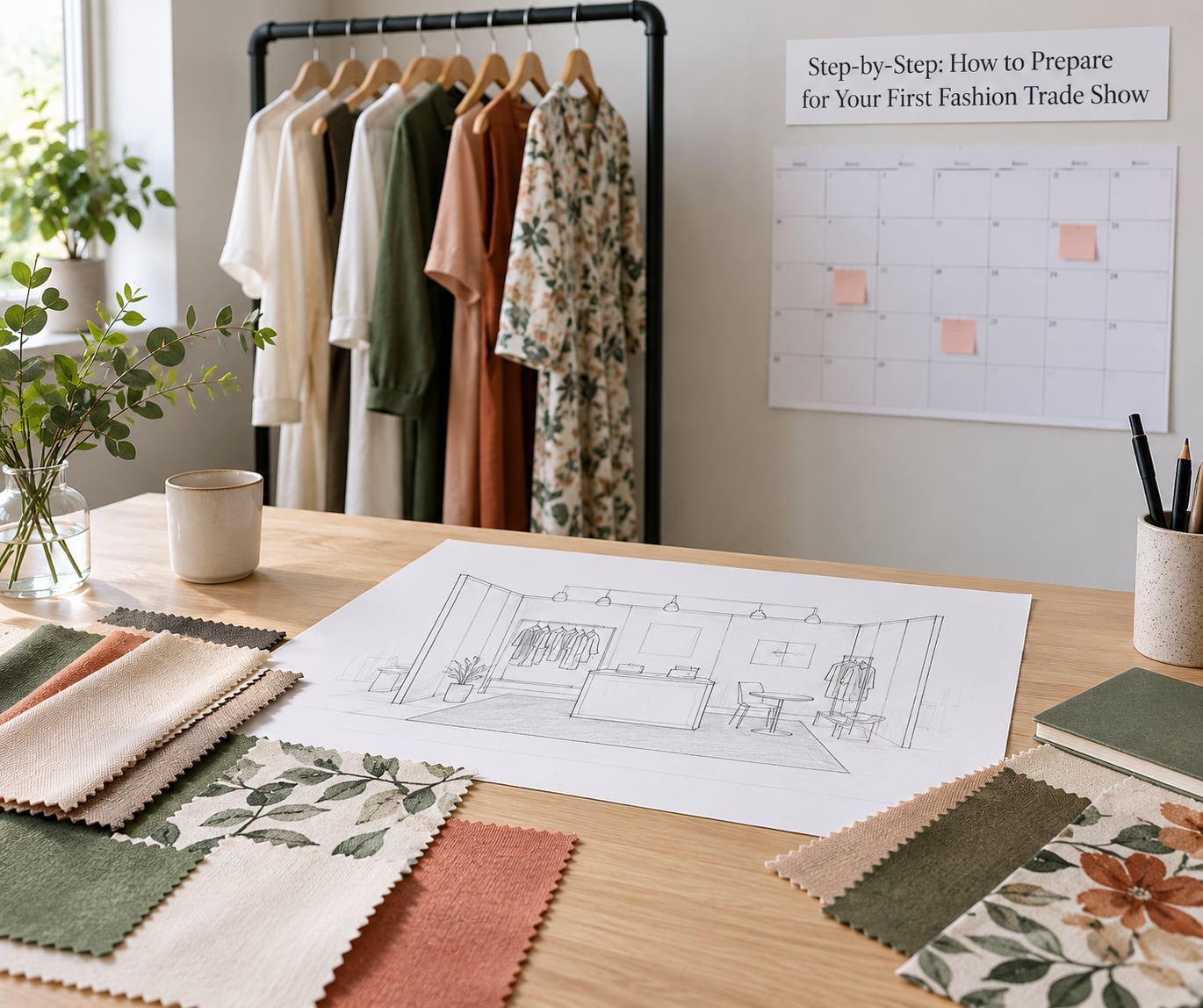
The core process, in order:
- Choose the show whose buyer list overlaps your price point and category.
- Walk the show as an attendee before you ever sign anything.
- Decide between your own booth and an independent sales representative.
- Fix your assortment and build the sample line in presentation order.
- Finish the line sheet, lookbook and wholesale pricing ladder.
- Book buyer appointments before the appointment deadline, not during the show.
- Read the exhibitor manual and build to the setup window.
- Run the booth, then follow up inside 48 hours.
How to Choose the Right Fashion Trade Show
Get the exhibitor prospectus and the buyer list first, and read them properly. You are checking whether the buyers on that list are the buyers you want, whether the price points in the hall are compatible with yours, and how many competing brands already sit in your category. An application gets you a conversation, not a yes. Many organizers also screen for readiness, meaning a complete application with pricing attached beats a polished letter with nothing behind it.
Know which type of event you are walking into. A wholesale market is built for finished apparel and accessories, a sourcing fair for fabric, trim and manufacturing vendors, and fashion week for showing a collection rather than writing orders. MAGIC and its SOURCING counterpart in Las Vegas, Première Vision New York, Coterie, WWIN, Pool, MRket and Agenda all draw different crowds, and the buyer mix matters more than the brand prestige.
The single best piece of advice here comes from an exhibitor rule that predates most of the online advice floating around: never sign an exhibitor contract for a show you have not walked as an attendee. Attend first if you can. It is the cheapest research you will ever do, and it tells you the real traffic pattern, the actual density of your competitors, and whether the appointment system is taken seriously.
Booth placement is assigned by the organizer based on seniority and category. First-timers rarely choose their spot, and they often land in a low-traffic pocket. Build your plan around that reality rather than assuming you will be placed well.
How to Decide Between Your Own Booth and a Sales Rep
A rep-based show sells access to a room of buyers who already have appointments, which is efficient. The cost mechanics usually work as a commission split, sometimes with a showroom or line-show fee on top. Rep-only shows often prohibit the manufacturer from exhibiting directly, so check the exhibitor manual before you build a booth for an event you cannot enter.
Owning the booth keeps your brand story, your samples and your pricing in your hands, and it costs more before the first order lands. The rep route costs less upfront and is the standard advice for genuine first-timers, because a new line often needs introduction before it needs a booth. Either route is defensible. The mistake is signing a booth without knowing what the show’s buyer traffic actually looks like.
How to Define Your Brand and Product Assortment
Bring a focused line, not your entire catalogue. Twelve to twenty styles read as a collection with a point of view; forty read as a stock room. Show buyers what your label is for and let them ask for the rest.
Rack the samples in presentation order, the sequence they would appear in a lookbook. A buyer should be able to walk the rack and understand the story without you narrating it. Sample for every size and colour you intend to sell, and note the piece count so you know what you started with.
Set wholesale pricing before the show, with a price ladder that leaves room for a boutique to mark up. Know your minimum order quantity, your lead time and your delivery window, because those three questions arrive in the first ten minutes of nearly every buyer conversation.
How to Apply and Organize Your Booth
The application is the easy part. The deadline that matters is the exhibitor manual deadline, because it contains the setup window, the freight arrival deadline, the hall hours and the rules for fixture height and signage. Read it twice, then build a dated task list backwards from doors-open.
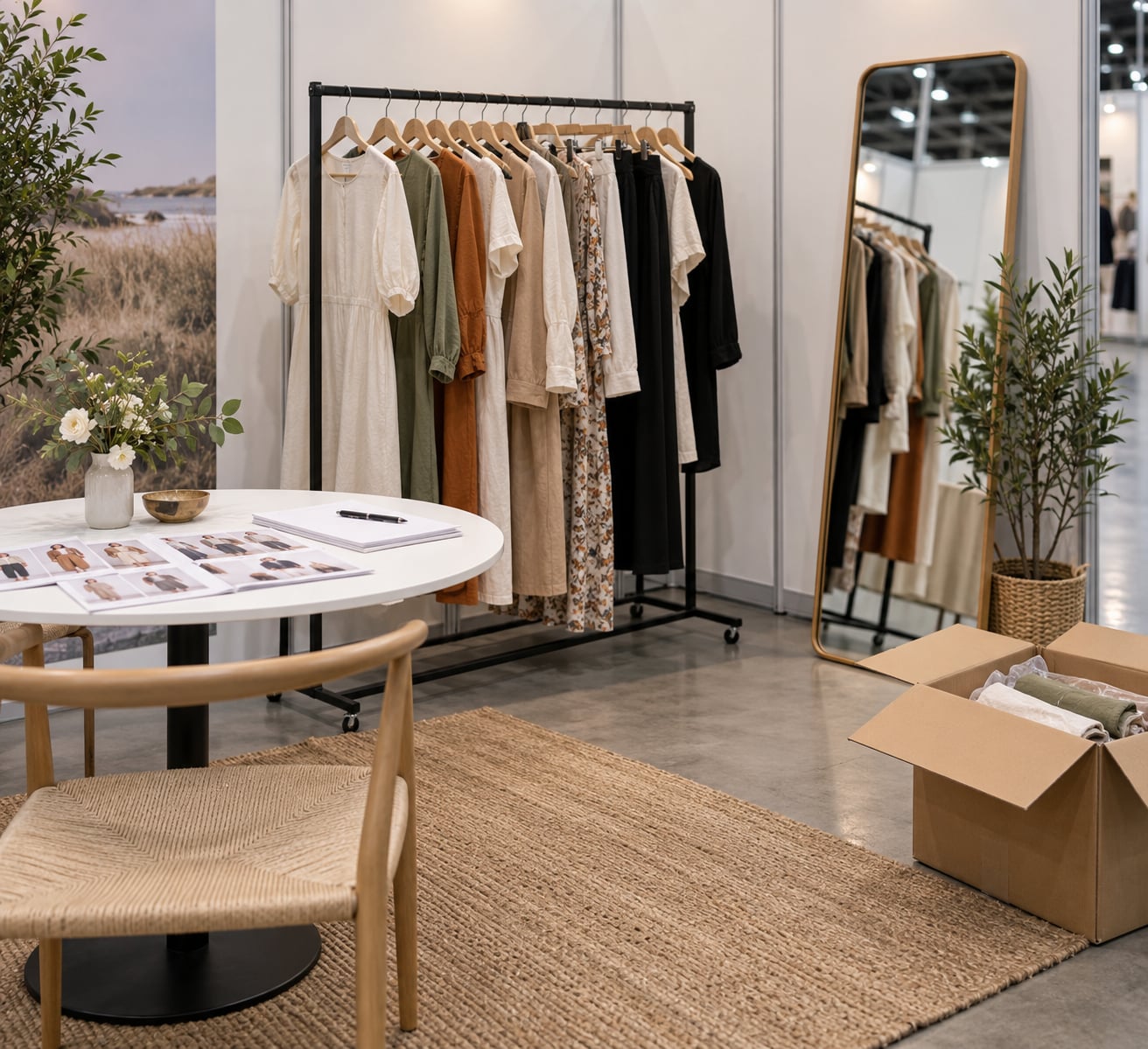
Build the booth around garments, not around a table. You need hanging space for the sample line, a full-length mirror, and a private corner buyers can step into for fitting. Experienced exhibitors keep the booth looking busy through quiet stretches, and they never sit down or turn to each other mid-floor, because a buyer reads an idle booth as a brand that already ran out of business.
Control your samples. Garments get stolen, damaged and left unscuffed-looking by a well-meaning buyer. Keep the piece count visible to yourself, keep fragile pieces off the floor edge, and pack extras rather than showing your minimum.
How to Prepare Sales Materials and Lead Capture
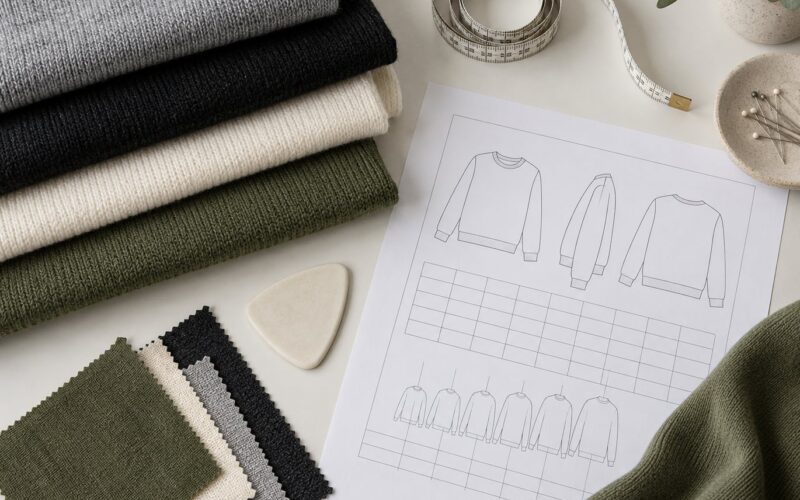
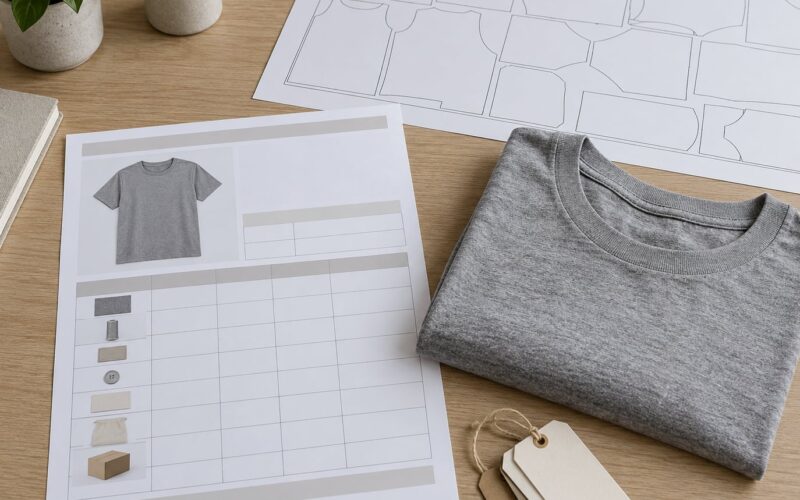
Your three documents do different jobs. The line sheet carries the commercial detail: style numbers, colours, sizes, wholesale price, retail price, minimum order and delivery window. The lookbook carries the visual story. The order form captures the commitment, and it should be one page.
Decide the capture method now. A tablet app, a paper form with a clipboard, or both. Whichever you choose, the workflow is the same: buyer name and company, category, price tier, what they asked about, what you promised to send, and by when. Note it at the end of each show day while you still remember names.
How to Staff the Booth for Buyer Conversations
Two to three people is right for a first booth. One person means no breaks and no bathroom, and by hour six the good energy is gone. Three means one person talking to a buyer while the other two reset the rack and work the aisle.
Give the team three jobs: greeter, product expert, and closer. The greeter stands where the aisle traffic arrives and never stands behind the table. The product expert knows the fit, the fabric and the lead time. The closer handles order forms and next steps so nobody promises a delivery date that the production schedule cannot meet.
Plan breaks in writing. Swap in pairs, ten minutes each, twice a day. It sounds trivial until you watch someone trying to hold a conversation on hour seven of a packed morning.
How to Look the Part at a Fashion Trade Show
Business casual, in clothes that look like your brand. Not a costume, not a t-shirt with the logo on it. Styleforum posters and exhibitors across the industry converge on the same read: clean, put together, comfortable enough to stand in, with shoes you can survive three show days in.
One accessory does real work: a name badge large enough to read from four feet away, worn on the right side where a hand can be extended. Second, wear your samples. If the piece fits you and looks right, offer it as a fit reference and watch what the buyer does with their face.
How to Turn Booth Traffic into Useful Leads
Open with something that is not a pitch. Buyers are walking the floor on a schedule and they can feel a pitch coming. A question about their stores, or a single observation about the season, buys you the ten seconds you need to find out whether they are worth your full attention.
Identify the visitor type early: a buyer actively placing orders, a buyer browsing for next season, a competitor scouting, press, or a supplier. Each needs a different thirty seconds. Over-investing in a competitor costs you a real appointment, and under-serving a buyer costs you an order.
Give the sixty-second version of the line, then stop talking. Style, fabric, price tier, delivery window. If they want depth, they will ask, and you can pull the sample off the rack and put it on them. Emerging designers do best when they show rather than explain, which is the reason for the mirror and the fitting corner.
Ask for a way to follow up before they leave, and ask for permission rather than assuming. Note what they said they cared about, because that detail is what your follow-up email opens with. A card with a name on it is a weak lead. A note saying she wants the olive colourway in six sizes for a coastal store group is a real one.
How to Follow Up After the Show
The 48-hour window is the whole game. Buyers evaluate dozens of new lines and your email is one of hundreds sitting in an inbox, so the first follow-up goes out while the show is still fresh in your mind and theirs.
Sort what you captured into three piles: buyers with a real timeline, buyers with general interest, and everyone else. Email the first pile with the specific thing they asked about, the second pile with a lookbook and an open invitation, and let the rest go. Every message should end with one clear next step, a sample shipment, a call, or a date.
Then close the loop on anything you promised and write down what you learned while it is cheap to write down. Which style got touched most, which price point caused a pause, which question you could not answer. That list is worth more than the booth itself, and it is the reason your second show goes better than your first.
Common Mistakes First-Time Exhibitors Make
Showing too many styles. A forty-piece display reads as inventory, not a collection. Bring the twelve to twenty that tell the story and hold the rest for appointments.
Standing behind the table. It creates a barrier between you and the aisle. Stand beside or in front of it, at the front edge, where the traffic actually is.
Hiding the pricing. Buyers cannot order what they cannot price, and asking around for a number late in a conversation reads as evasion. Price ranges belong on the line sheet from the first conversation.
Going alone. One person cannot staff a booth properly for three days. Minimum two, with a written break rotation.
Trusting badge scans as results. A scan is not a conversation. The follow-up quality depends entirely on what you wrote down at the booth.
Leaving follow-up for the following week. By then you are one of forty emails. Forty-eight hours is the outer limit, and same-night for your best conversations.
Judging the show by foot traffic. A packed hall does not mean buyers, and a slow morning does not mean failure. Count qualified conversations and booked next steps instead, which is the only number that tells you whether to return.
Overpromising delivery. Nothing damages a first relationship faster than a date you cannot hit. Say what is realistic and confirm it in writing.
Frequently Asked Questions
How much does it cost to exhibit at a first fashion trade show?
The booth space rental typically runs about 25 to 35% of your all-in first-show spend, with travel, samples, staffing and contingency making up the rest. Exact figures vary widely by show, hall and city, and costs change from season to season, so ask the organizer for a current quote rather than planning from an online number.
What should a first-time exhibitor checklist include?
Your checklist should cover the application and payment deadlines, the exhibitor manual deadlines for freight arrival and setup, your line sheet and wholesale pricing, a sample inventory count, booth fixtures and a fitting corner, the named staff rota with break coverage, buyer appointments booked in advance, and the follow-up plan for the first 48 hours after the show.
How do I prepare for a trade show as a small brand?
Start by narrowing your assortment to a focused line and completing your line sheet, lookbook and wholesale price list. Book buyer appointments before the appointment deadline rather than hoping for walk-ups, then read the exhibitor manual and build backwards from doors-open. On the floor, stand at the front of the booth, keep the rack in presentation order, and log every qualified conversation before you leave the aisle.
Do I need a line sheet to exhibit at a fashion trade show?
Yes. The line sheet is the document that carries style numbers, colours, sizes, wholesale and retail pricing, minimum order and delivery window, and buyers will expect it before they will place an order. Many organizers will not accept an application without one. The lookbook tells the visual story, but the line sheet closes the order.
How do I follow up with buyers after a fashion trade show?
Send first follow-ups within 48 hours, while the show is still fresh. Segment your contacts into buyers with a real buying timeline, buyers with general interest, and everyone else. Reference the specific thing each buyer asked about at your booth, attach the relevant line sheet, and close every message with one clear next step such as a sample shipment or a call.
Should a small brand use a sales rep instead of exhibiting at a booth?
For a genuine first-timer, a rep-based show is often the cheaper and more efficient route, since the showroom already has a room of buyers with appointments and the cost usually works as a commission split. Check whether the show prohibits manufacturers from exhibiting directly. Owning a booth keeps your story, samples and pricing in your hands, but costs more before the first order lands.
Start with one line sheet, one focused sample line and one shortlist of two or three shows whose buyer lists match your price point. Everything else, the racks, the giveaways, the travel, can be sorted once that trio is settled. Work your way through this guide in order, and your first show will go better than most people’s second one.