If you are trying to work out which lane to aim at, commercial is the easier door to open and the steadier income. High fashion pays far more for a single booking, but there are fewer of those bookings and they cluster in a handful of cities.
That is the short version. The longer version is that the two divisions are different jobs with different physical standards, different clients, different audition processes and different economics, and almost nobody tells beginners how to tell them apart before they commit.
Table of Contents
- What Is the Difference Between Commercial and High Fashion Modeling?
- Commercial Modeling vs High Fashion Modeling at a Glance
- The four main types of modeling
- What Is Commercial Modeling?
- What Is High Fashion Modeling?
- Height and measurement standards in both divisions
- How Do the Auditions and Bookings Differ?
- Commercial auditions are about the camera and the product
- High fashion auditions are about movement and presence
- Who books you is the real difference
- Which Type of Modeling Pays More?
- What Skills and Training Does Each Require?
- Commercial skills
- High fashion skills
- How Much Travel and Time Commitment Is Involved?
- Can a Model Work in Both Commercial and High Fashion?
- Which Modeling Type Is Best for Beginners?
- Which Should You Choose?
- Frequently Asked Questions
- Can beginners start in high fashion modeling?
- Is commercial modeling easier than high fashion modeling?
- Do commercial models pose differently from runway models?
- Can one model work in both commercial and high fashion?
- Is a fashion show necessary to become a successful model?
- How do I know which modeling category to pursue first?
- Conclusion
What Is the Difference Between Commercial and High Fashion Modeling?
High fashion modeling presents clothing. The model is the frame, and runway shows, editorials and lookbooks exist to make a garment, a designer or a collection look like the thing it is meant to be. Commercial modeling sells something. The model is the relatable everyperson who makes a viewer think that could be me buying this, whether the product is a car, a bank account, a sneaker or a sheet mask.
Everything downstream follows from that one difference: who is the hero, the clothes or the customer.
Commercial Modeling vs High Fashion Modeling at a Glance
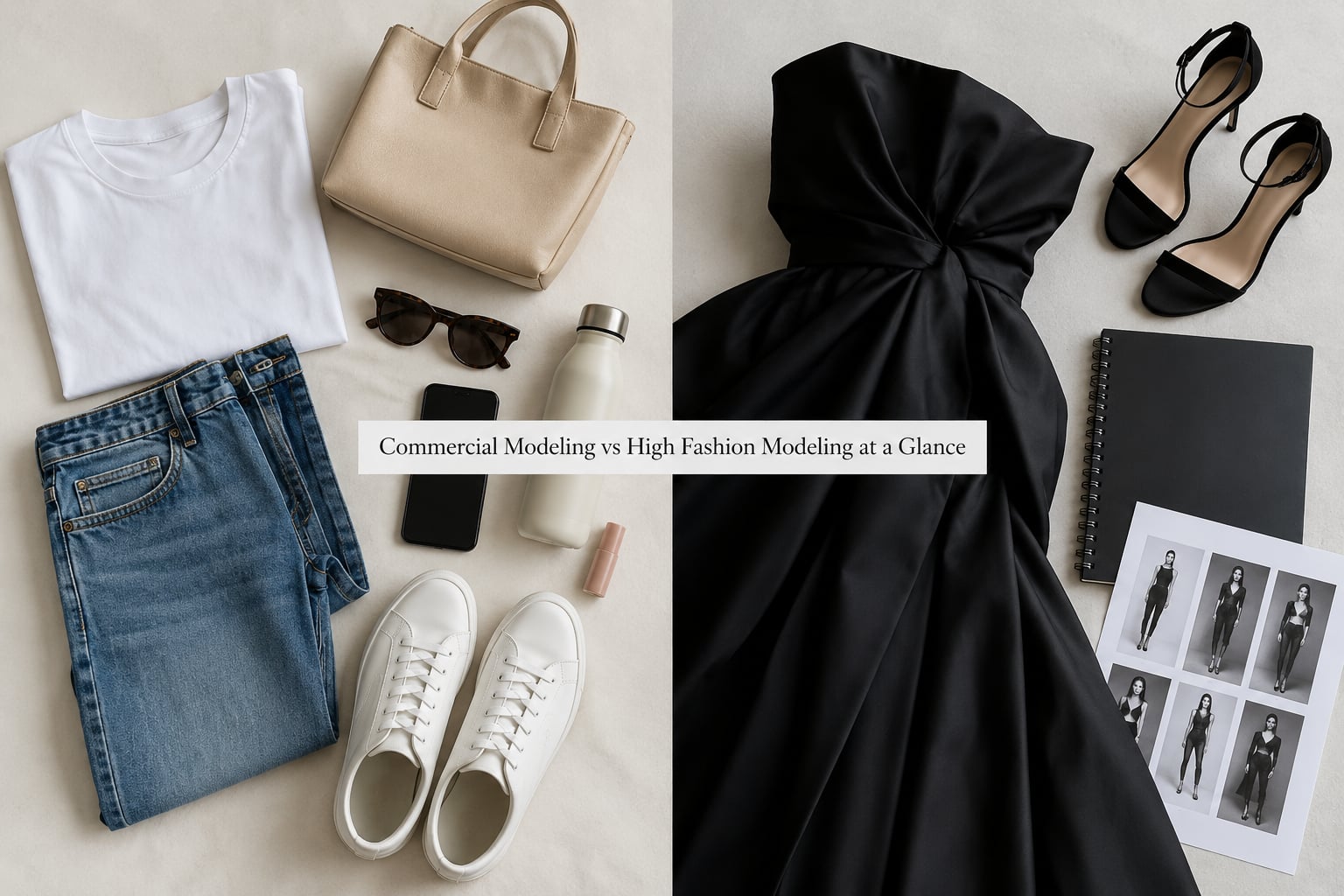
| Category | High Fashion Modeling | Commercial Modeling |
|---|---|---|
| Main purpose | Show the clothes, the designer, the craft | Sell a product, a service or a feeling |
| Who the client is | Designers, maisons, editorial publications, fashion week producers | Brands, agencies, retailers, e-commerce companies, advertisers |
| Typical work environment | Runways, studios, art-directed sets, editorial locations | Studios, warehouses, homes, streets, retail sets |
| How you get booked | Show season casting, agent connections, editorials, open calls | Agent bookings, direct submissions, casting databases, brand hires |
| Height and measurements | Tight, industry-wide standards | Soft, divided into many sub-categories |
| Training that matters | Runway walk, garment handling, posing discipline | Natural expression, product handling, camera comfort |
| Travel | Fashion week circuits, destination editorials | Local and regional shoots, occasional national campaigns |
| How pay works | Flat fee per show or day, plus print and usage fees later | Day rate or flat fee, plus usage, exclusivity and bonuses |
| Consistency | Low. Long gaps between seasons | Higher. Regular repeat clients |
| Competition | Very high, and concentrated in a few cities | High, but spread across many sub-niches |
| Career length | Often short, front-loaded toward new faces | Can run for decades with the right look and reliability |
| Best suited to | Models with runway height who want fashion week and editorial credits | Models who want steady income, variety and transferable experience |
The four main types of modeling
Industry people usually start from a four-part split, then subdivide endlessly. Knowing the four gives you the vocabulary, and the subdivisions are where the actual jobs live.
| Type | What it is | Where it shows up |
|---|---|---|
| High fashion / runway | Designer presentations where the garment is the product | Fashion week, couture, showrooms |
| Editorial | Story-driven imagery for magazines and titles | Magazines, digital publications, lookbooks |
| Commercial / print | Advertising, catalog and product imagery | TV and digital ads, catalogs, packaging, billboard |
| Beauty and glamour | Skin, hair and colour-forward imagery | Cosmetics campaigns, salons, music video, social |
Plenty of working models add fitness, petite, plus-size, mature, automotive, lifestyle and travel to that list, which is another reason the two-way comparison only tells part of the story.
What Is Commercial Modeling?
Commercial modeling exists to move product. The client is paying for a face that makes an audience feel the brand is for them, and the model has to deliver that feeling in a single frame or a thirty-second spot.
Work in this lane includes television commercials, digital display ads, catalogs, packaging, billboard and transit, e-commerce and product photography, and the lifestyle shoots that support retail and social campaigns.
- Beauty and cosmetics work where the face and skin are the selling point and expression carries everything.
- Fitness and lifestyle work leans on health, movement and an aspirational but believable body.
- Automotive and financial services campaigns run through agencies that book models by sub-category rather than by look alone.
- E-commerce and UGC-style content is the newest and most accessible entry point, where brands need volume rather than a single hero face.
- Mature, petite and plus-size divisions have their own boards, their own campaigns and their own steady demand.
What ties it together is relatability. The casting director is asking a question the runway casting director never asks: does the audience see themselves in this person?
What Is High Fashion Modeling?
High fashion modeling is garment-first. You are hired because the clothes look right on you in motion and in stills, and the brief is to make the designer’s work visible without distracting from it.
The calendar runs to seasons. New York, London, Milan and Paris each have their own show calendar, and a model’s name can appear in one and not the next. Alongside the runway sit editorials, lookbooks, campaign shoots for designer brands, showroom presentations and couture fittings.
- Runway technique matters. The walk, the pivot, the timing and how you hold a garment while it swings are trained and refined constantly.
- Editorial concepts give you creative briefs with a story, a location and a photographer’s eye rather than a product to hit.
- Designer campaigns sit between fashion and commercial, with fashion budgets and fashion standards.
- Selection is narrow. Casting is a small number of chosen faces against a very large pool, and the pool refreshes constantly.
The commercial stigma here is real history with limited power today. Before the supermodel era, leading agencies and photographers refused models with a print background and forbade catalog bookings outright. Practitioners on modelling forums describe that rule as background rather than current policy.
Height and measurement standards in both divisions
The height standard exists for a practical reason: runway garments arrive in a single sample size, so the model has to fit the clothes rather than the clothes fitting the model. That is why high fashion requirements are tight and commercial requirements are not.
| Standard | High fashion | Commercial |
|---|---|---|
| Women, height | 5 ft 8 in to 5 ft 11 in, per British Association of Model Agents ranges | 5 ft 6 in to 5 ft 11 in, far softer and split by sub-niche |
| Women, measurements | Dress size 34, up to 34 or 36 at most | No universal standard; each sub-niche has its own range |
| Men, height | 5 ft 11 in to 6 ft 2 in | 5 ft 9 in to 6 ft 2 in |
| Men, measurements | Chest, waist and hip ratios tied to designer sample blocks | Depends entirely on the client’s product and audience |
| Exceptions | Plus-size runway still starts around 5 ft 8 in | Petite divisions start well under 5 ft 7 in; mature divisions start in the 40s |
If you are under 5 ft 7 in, major runway casting in New York, London, Milan and Paris is realistically closed to you. Commercial, beauty, petite, fitness and e-commerce are not, and the forums are full of people building real careers inside those sub-niches.
How Do the Auditions and Bookings Differ?
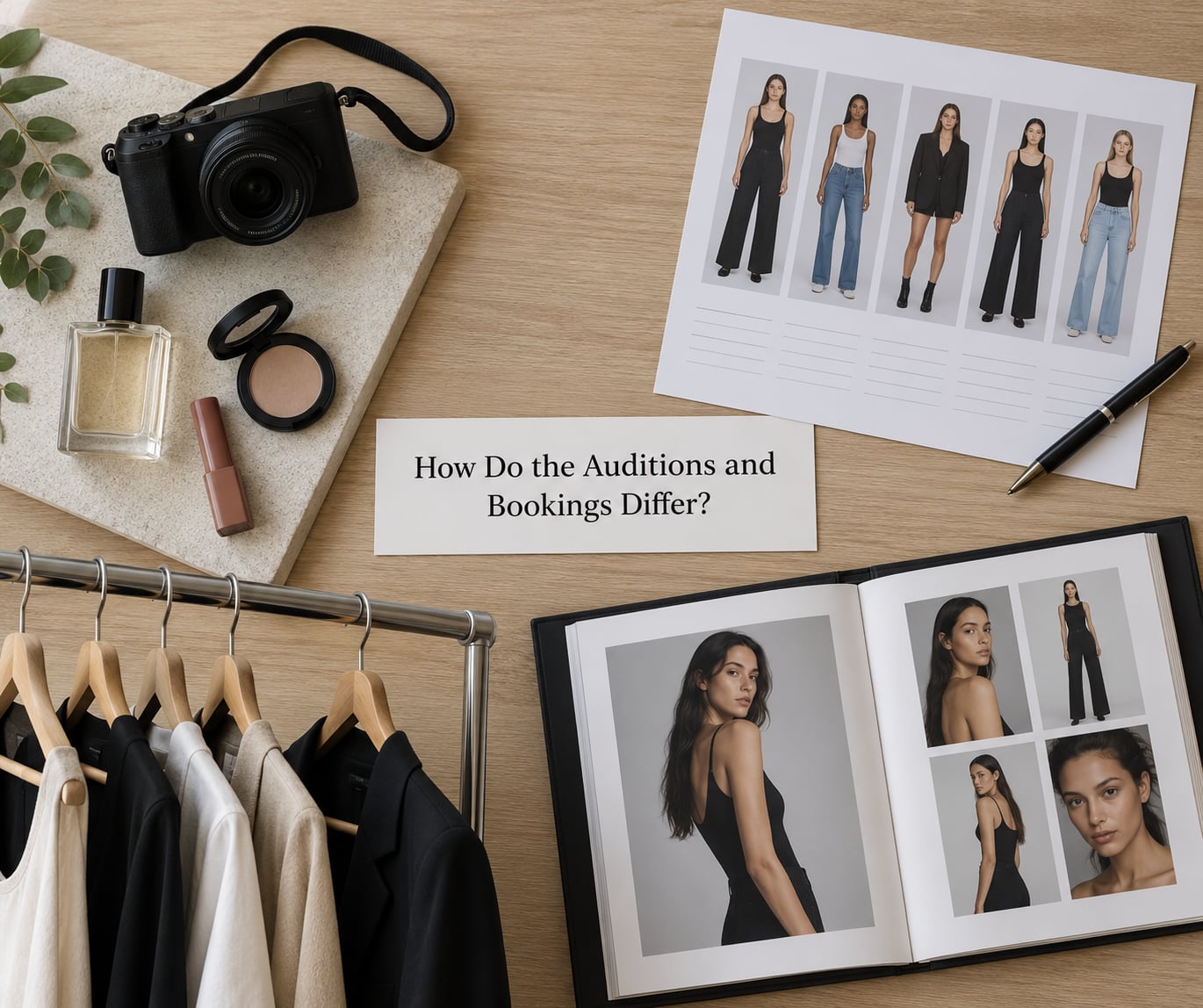
Commercial auditions are about the camera and the product
A commercial audition is usually a short camera test or a filtered self-submission. You are given a brief, a product and sometimes a script line, and you are asked to be usable on camera: natural expressions, a real smile, clean hands, and the ability to hold or wear something without fighting it.
The prep is lighter and the volume is higher. Many commercial auditions now happen through a casting platform where you upload recent photos and a short video, and nobody is measuring your walk in a hallway.
High fashion auditions are about movement and presence
A fashion-week audition is often a line-up of dozens of models walking a corridor past a panel. They watch how you enter, turn, hold the coat and stop. Fitting follows for the shows you are cast in, and garments get pinned on you rather than fitted by you.
Show casting happens on a season cycle, which means the same opportunity may not exist again for months. Preparation is more physical and less improvisational, and a weak walk is the single most common reason a tall model gets cut in the first ten seconds.
Who books you is the real difference
Commercial work flows through agents, casting directors and brand marketing teams, with a lot of direct-to-brand hiring for e-commerce and UGC. High fashion flows through agents and their mother agencies, plus designer teams and editorial staff.
The pattern new models complain about most on r/MODELING is signing with an agency without knowing which board you are on. A commercial division may also represent actors and book fashion-looking people for non-apparel clients, which is useful for your income but tells you nothing about runway. Ask which division your name sits in and who handles that division.
Which Type of Modeling Pays More?
High fashion pays more per booking. Commercial pays more per year for almost everyone working. Both statements are true, and the contradiction dissolves once you separate one day’s fee from a year’s earnings.
Runway fees look impressive because a designer show is a fixed date with a budget attached to the presentation. A runway show fee is a flat payment for the day, and the money the label earns from it happens weeks or months later. Print and campaign fees follow, if at all. One model can have a strong fashion season and earn less than a colleague who shot catalog every week.
Commercial payment is built differently. A commercial day rate covers the shoot itself, and usage, exclusivity and print bonuses are negotiated on top, sometimes months later once the campaign runs. Models doing steady e-commerce and lifestyle work describe it as reliable rather than lucrative, which is why most working models treat it as the income that pays rent while they wait for something bigger.
| Pay element | How it works | Where it shows up most |
|---|---|---|
| Day rate or per diem | A set fee for a day of shooting, including call time | Commercial, especially regional and e-commerce |
| Flat fee | A fixed sum for a specific appearance, such as a show | Runway, showroom, fittings |
| Usage rights | Extra payment for how long and where the images run | Both, weighted heavier in commercial |
| Exclusivity | Extra payment, or an accepted limit, for working with competing brands | Both |
| Print bonus | An additional sum when the work appears in print | Runway and fashion editorial |
| Agency commission | The agency takes a cut, commonly reported around 20 percent | Both, when you are signed |
| Test or unpaid work | Auditions with no payment, common in both lanes | Both, more often at the start |
On modelling forums the same consensus keeps appearing. One long-running thread on the Fashion Spot has models saying high fashion does not pay well unless you are the face clients are booking, while steady commercial and catalog work pays well. Others in the same thread put it the other way, that high-paying jobs have more competition and fewer chosen models. Both are describing the same curve, from different ends of it.
Nobody publishes actual rate cards, which is why the numbers stay murky. Treat any figure you hear, including the ones here, as a reported range that moves with market, city, client and experience rather than a schedule you can plan around.
What Skills and Training Does Each Require?
Commercial skill travels with you everywhere. Posing, camera comfort and a usable range of expressions are the base skill in every branch, and getting them right early makes every later audition easier.
Commercial skills
- Natural expression over performed expression. The camera reads a real reaction instantly and a held pose reads as a held pose.
- Product handling, which looks easy on paper and decides a lot of beauty, lifestyle and e-commerce bookings.
- On-camera continuity across many takes, especially in e-commerce where a page of images needs to look like one shoot.
- Brand awareness, so you understand what a target audience is meant to feel.
High fashion skills
- Runway technique, including the walk, the pivot, the stop and the ability to hold a garment without fighting its movement.
- Posing discipline, where restraint and an unusual angle often beat a smile.
- Awareness of silhouette and fabric, so you can be told to change something and deliver it the same day.
- Season awareness, since casting decisions are made against what is trending and what designers already have covered.
Fitness and grooming matter in both, and neither substitutes for the other. The order of thinking genuinely reverses: in high fashion you serve the garment, in commercial you serve the viewer. Getting that switch right in front of a camera is what runway-only training adds, and it is why some models book runway later than they book commercial.
How Much Travel and Time Commitment Is Involved?
Commercial schedules are local by default. A regional lifestyle shoot might start before dawn and wrap by midday, and a national campaign adds travel but stays on a defined shoot schedule. E-commerce work is often local, dense and repeatable, which suits people who cannot disappear for a month.
High fashion is calendar-driven. Show weeks move to New York, London, Milan and Paris, and being cast in one city frequently means being in another the following week. Editorials add location shoots that can be international and require fittings beforehand.
Call times matter more than people expect. A show might run an hour late or twice on the same day, and a commercial day can stretch when the client changes the shot list. Commercial gives more control over your weeks; high fashion hands your calendar to the season.
Regional reality is worth weighing. Smaller markets such as Toronto, Atlanta or Dallas have very little editorial and runway work, so models there do both out of necessity. If you are not based near a fashion capital, your plan needs to account for that rather than assume fashion-week opportunities will appear locally.
Can a Model Work in Both Commercial and High Fashion?
Yes, and it has stopped being controversial in most markets. Models on the Fashion Spot describe it as completely normal to see the same face doing commercial and high fashion work, and agencies have largely stopped treating catalog bookings as a career offense.
What actually decides whether you can crossover is measurable rather than reputational: runway height, a face and body that fit designer sample blocks, and whether you can reach the casting rooms where that work gets booked.
- Height is the hardest gate. Under 5 ft 7 in is a practical closed door at major shows, and pretending otherwise wastes years.
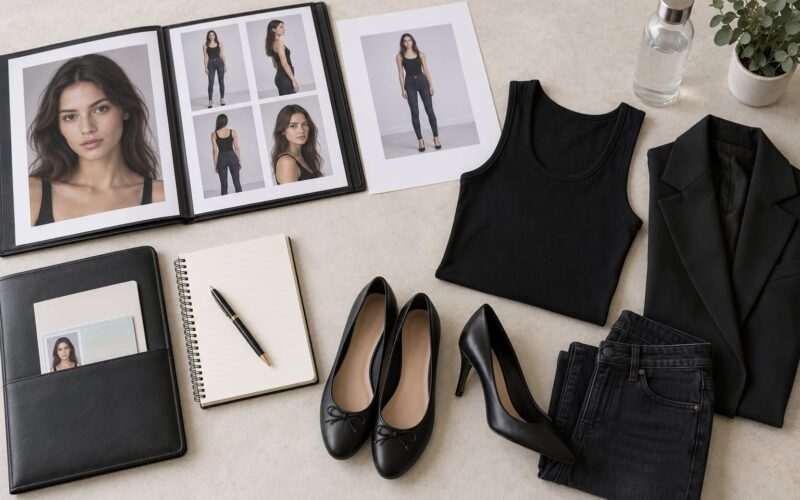
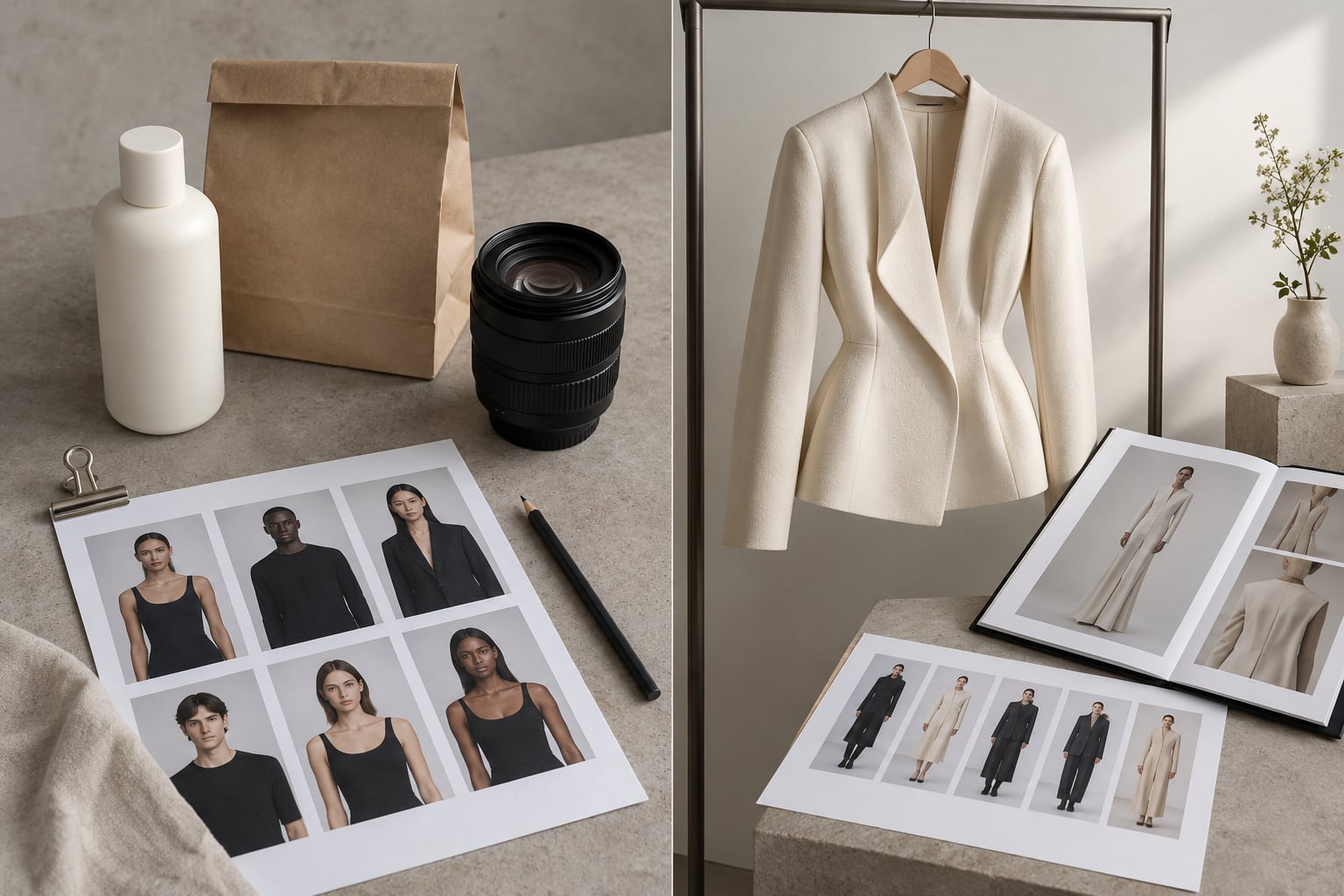
- Portfolio shape matters. One application should not send runway and casting directors the same six images. Build a fashion-leaning set for fashion submissions and a separate commercial set that shows range, expression and product work.
- Agents have to know about both. If the agent handling your commercial work does not submit you for shows, no crossover happens regardless of your look.
- Exclusivity can block it. A brand contract that ties your image usage or your category can prevent work that conflicts, and you should read those terms before signing.
- Small markets force the issue. Where runway work barely exists, doing both is normal and nobody treats it as a compromise.
The realistic pattern, repeated by people who have watched this market for two decades, is that very few models sustain both lanes at the very top. The market tends to reward a clear lane, with crossover as an exception rather than a strategy. Practically, most people build one lane as the income and keep the other as an open door.
Which Modeling Type Is Best for Beginners?
Commercial, for most beginners. It is easier to break into, the work is more consistent, and it gives you a usable portfolio and real camera experience while you work out whether modeling is for you.
The honest version of the argument comes from people who have done both. On Reddit r/Modelling, one poster described being advised toward commercial because demand is higher, and noting that high fashion pays more while jobs are easier to land in commercial. The same sub-niche pattern repeats in r/MODELING threads about which board to sign with.
A quick self-assessment:
- You are under 5 ft 7 in, or you do not have runway proportions. Start commercial. Do not spend years auditioning for a door that is closed.
- Your face is your strongest asset and you are comfortable on camera. Start commercial, where that is the point rather than a distraction.
- You are 5 ft 8 in or taller, comfortable with discomfort, and can get to a fashion capital. Start with runway testing while you take commercial work to pay the bills.
- You want longevity and repeat clients. Commercial has the longer runway, and models in that lane describe working into their 40s and 50s.
- You already have industry representation and a fashion-leaning portfolio. Test high fashion auditions directly, since you are the unusual case.
Which Should You Choose?
Choose commercial if you want steady income, more sub-niches to work in, shorter production days and a career that can last. Choose high fashion if runway, designer credits, editorials and fashion week are the reason you want to do this, and you can absorb lean years. Choose both if you are tall enough and can keep two distinct portfolios in play.
One note on vocabulary, because it causes real confusion. The words high fashion and commercial mean different things to a designer, an agency, a casting director and the public, and industry veterans say outright that nobody agrees on the terms. When a forum poster tells you commercial is a completely different thing from what you assumed, that is usually a division board talking, not a put-down.
Whatever you decide, the first move is the same in both lanes: get recent, honest digitals, build a portfolio that represents the lane you are applying to, and then pick representation deliberately. A signed contract with the wrong board costs more time than any missed audition.
Frequently Asked Questions
Can beginners start in high fashion modeling?
You can audition, but it is harder to start there. Height and sample-block fit decide most runway castings before anyone looks at your portfolio, and the openings arrive on a season cycle rather than continuously. Most beginners build commercial work first because it is easier to book and creates a usable portfolio, then test fashion auditions once they are represented.
Is commercial modeling easier than high fashion modeling?
Most of the time, yes. Commercial casting selects from a wider pool for a larger number of shoots, and the requirements are softer: no universal measurement standard, a wider height range and no runway walk test. High fashion competes for far fewer spots, refreshes its faces constantly and is concentrated in four cities.
Do commercial models pose differently from runway models?
Yes, and the difference is the order of thinking. A high fashion model frames the garment, so expression is restrained and the angle shows silhouette, line and fabric. A commercial model sells a feeling to a viewer, so expression is natural, eye contact is warm and a real smile often works better than a held one.
Can one model work in both commercial and high fashion?
It is normal in most markets, and agencies have largely stopped treating catalog work as an offense. What decides it is runway height, fitting designer sample blocks, access to fashion casting rooms and keeping two separate portfolios. Very few models sustain both lanes at the very top, so most treat one as income and the other as an open door.
Is a fashion show necessary to become a successful model?
No. Plenty of working models never walk a major show and build careers in commercial, e-commerce, beauty and lifestyle work with repeat clients. A show is useful as a credential and an experience, but it is not a requirement, and treating it as one is a common reason beginners give up before they get any bookings at all.
How do I know which modeling category to pursue first?
Start from the constraints you cannot change: height, measurements, location and how you behave on camera. Then check which division actually pays at the level you need, and confirm with your agent which board your name is on. If you are still unsure, take one commercial booking to learn the process while you test fashion auditions.
Conclusion
If you are deciding between commercial modeling vs high fashion modeling, start by checking the one thing you cannot change. Height and measurements tell you whether runway is realistically available; everything else about commercial modeling vs high fashion modeling is negotiable with effort.
Then do three things this month. Get current digitals, build a portfolio aimed at the lane you are applying to, and before you sign anything, ask which division your name is on and who handles it. Commercial modeling is the steadier default for a beginner. High fashion is the harder, more selective goal. Whichever you pick, decide it with the numbers in front of you rather than the stigma.