Knowing how to follow up after a fashion job interview is simple: send a short thank-you within 24 hours, then check in once about a week later, and stop after a third unanswered message. Fashion hiring is relationship work, and a brief, specific note is often the thing that keeps your name on a shortlist full of people who all interviewed well. It takes about fifteen minutes if you write it while the conversation is still fresh.
Below is the process I would follow, updated for 2026: what to gather first, the five steps in order, and the mistakes that quietly cost candidates the role.
Table of Contents
- What You Need
- Step 1: Review Your Interview Notes
- Step 2: Send a Thank-You Note Within 24 Hours
- What the thank-you note needs to include
- Step 3: Choose the Right Follow-Up Channel
- Step 4: Make the Follow-Up Specific and Valuable
- Step 5: Ask for a Clear Next Step and Set a Timeframe
- Common Mistakes
- Frequently Asked Questions
- How soon should I follow up after a fashion job interview?
- What should I write in a thank-you email after a fashion interview?
- Is it better to follow up with the recruiter or the hiring manager?
- What should I do if I do not hear back after a fashion interview?
- Should I send a LinkedIn message after a fashion job interview?
- How long should a post-interview follow-up email be?
What You Need
Before you write anything, gather five things. Missing one of them is what turns a good note into a generic one.
- The interviewer’s name spelled correctly, including any accent or shortened first name they used
- The exact company, brand, magazine, agency, or showroom name — not a guess
- Your interview notes: what they asked, what they cared about, what you promised to send
- A clean link to your resume, lookbook, mood boards, styling credits, or portfolio
- The channel they contacted you on, plus the address or thread you replied to
If you applied through an agency or third-party recruiter, note that separately. You will end up writing to them, not to the brand, at least at first.
Step 1: Review Your Interview Notes
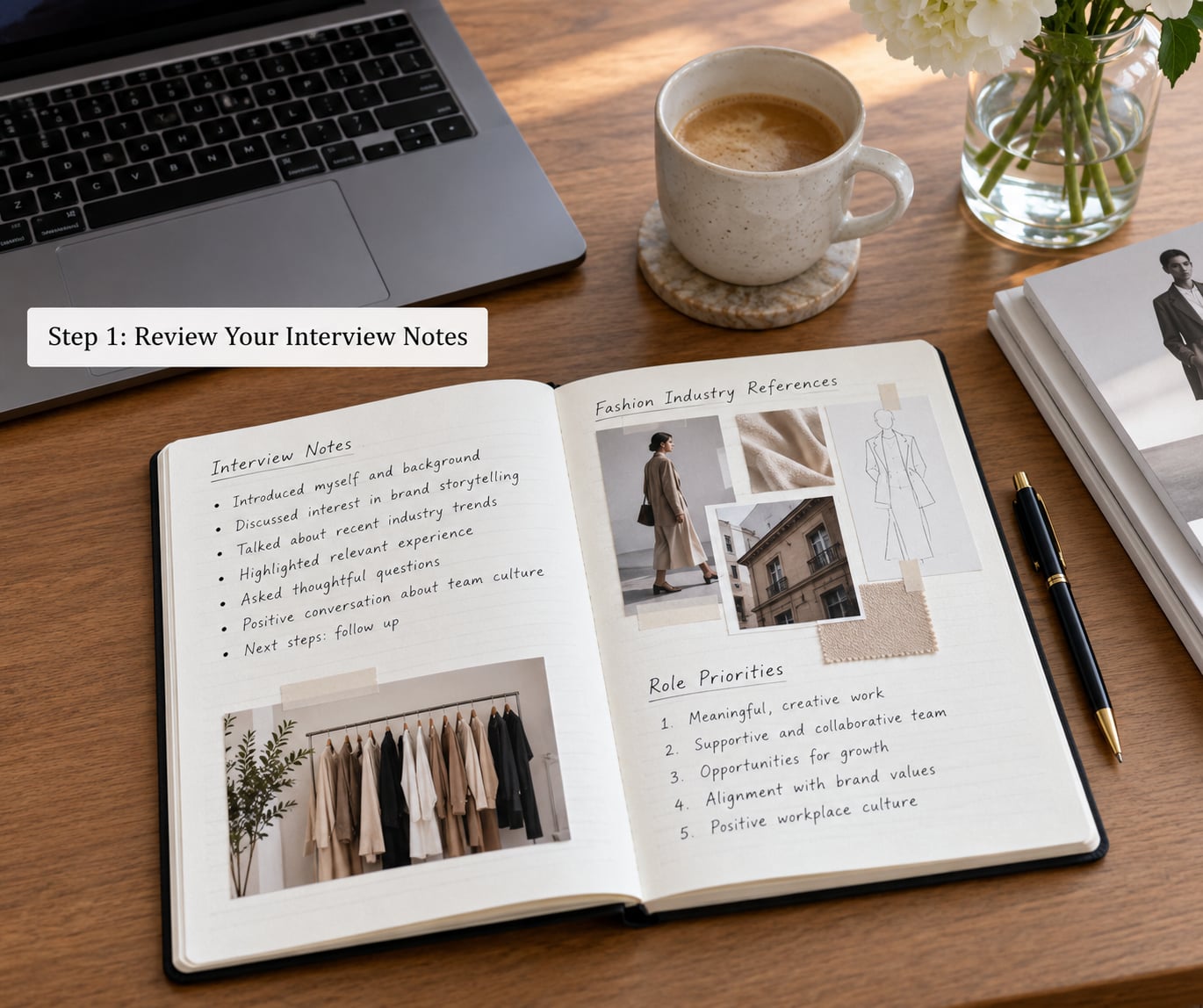
Pull two or three concrete moments out of the interview while they are still clear. A recommendation you gave about a past collection. A question about how the showroom handles appointment-only days. A styling credit they asked you to explain.
Those specifics are the whole point. Recruiters on job boards say the same thing constantly: a note that mentions something only the interviewer would know gets read, and a generic one gets filed. Three sentences about a real conversation beat three paragraphs about your enthusiasm.
Write those moments down now, before you draft anything. Tomorrow you will only remember the parts that flattered you.
Step 2: Send a Thank-You Note Within 24 Hours
Send one short message within 24 hours, ideally the same evening. Forty to a hundred words is plenty, and a handwritten card is a nice extra for design and editorial roles, not a replacement for the email.
What the thank-you note needs to include
- A thank you tied to a specific part of the conversation, not a generic one
- One line of fit for the role, based on something you actually discussed
- Confirmation that you are interested in moving forward
- Any material they asked for, or one extra piece worth offering
A usable version sounds like this: Thank you for the time yesterday, especially the conversation about how you handle showroom appointments during market week. That confirmed the role is where I want to be. I have attached the updated styling credits you asked about and I would be glad to send samples this week.
No asks about timelines, compensation, or start dates in this message. That is a later conversation.
Step 3: Choose the Right Follow-Up Channel
Reply to the same thread you were contacted on. That thread already has your name and role attached, and it is the least effort for everyone involved.
A few situations call for a different route. If an agency recruiter set up the interview, send the follow-up to them and CC the brand contact only if the recruiter introduced you directly by email. If the hiring manager interviewed you while a recruiter handled logistics, reply to the manager, since they are the one deciding. If you applied through a portal with no named contact, use the portal’s message function rather than guessing an address.
LinkedIn works well as a second channel, never as the only one. Several candidates have said a connect request a few days after the thank-you, referencing the same conversation, was the touch that actually produced a reply. Send one message, not three.
Step 4: Make the Follow-Up Specific and Valuable
A week later, send a short follow-up that adds something rather than repeating your resume. In fashion, that something is usually an asset: a lookbook you finished, a mood board for the brand’s next season, a styling credit list, notes from a trade show, or a relevant sample-sale result.
Match the material to the role. A merchandiser can send a sell-through read on a comparable collection. A stylist can offer a short list option set. A design candidate can attach revised sketches that respond to feedback given in the room. An editorial candidate can send a sample page with a written pitch.
Keep it to four short lines: a greeting, one specific reference, one line of continued interest, and a question that makes it easy to reply.
Step 5: Ask for a Clear Next Step and Set a Timeframe
Ask a direct, low-pressure question and let them supply the date. Are there any updates on the process, or would it help if I sent anything else? That is enough.
If a recruiter promised a date and then goes quiet, that promise sets your clock. Candidates get frustrated by this more than anything else in the process, and for good reason, but the fix is the same: wait one or two days past the date they gave you, then send one polite note.
Three touches is the cap: thank-you, one-week follow-up, and a final note. After that, move on. If you are ghosted after a final round, the final note is short, gracious, and closes the loop. People on hiring forums say the same thing constantly: the candidates who get remembered are the polite ones.
If you are rejected, reply once. Thank them, ask for one piece of feedback on your portfolio or styling work, and leave the door open. That request is normal and it is how most fashion relationships actually start.
Common Mistakes
Most follow-ups fail on tone or timing, not content. Here is what to fix.
- Sending it late. A thank-you three days later reads as an afterthought. Fix: same day or within 24 hours.
- Writing a generic note. “Thank you for your time, I am excited about the role” tells them nothing. Fix: name one specific thing you discussed.
- Writing too much. Recruiters repeatedly describe the good ones as three or four short lines. Fix: cap it at about 120 words.
- Going too casual. Text-speak, an exclamation mark chain, or a joke about the interviewer’s outfit. Fix: write to a future colleague.
- Claiming brand knowledge without proof. Naming a collection you clearly skimmed is worse than saying nothing. Fix: reference something real, and admit what you would want to learn.
- Chasing the same person twice in a week. Fix: one touch per channel per week, and stop after three.
- Not asking for a next step. A polite note with no question invites silence. Fix: end with one easy question.
- Following up before the stated timeline passes. Fix: note the date they gave you and wait for it to pass.
One more: if you are managing two processes at once, slow both down slightly. Over-eager follow-ups read as having nothing else going on, which weakens your negotiating position.
Frequently Asked Questions
How soon should I follow up after a fashion job interview?
Send a thank-you within 24 hours, ideally the same evening. Then wait about seven days, or until any timeline the recruiter gave you has passed, before sending a second message. One touch a week is the accepted pace. Three total touches, including the thank-you, is the maximum most candidates should send.
What should I write in a thank-you email after a fashion interview?
Keep it under about 120 words and make the first line specific: reference something you and the interviewer actually discussed, such as a styling credit, a showroom process, or a collection critique. Add one line on your fit for the role, confirm you want to move forward, and attach anything they requested. Do not ask about pay or timeline.
Is it better to follow up with the recruiter or the hiring manager?
Reply to the person who interviewed you, using the same thread they contacted you on. If an agency recruiter arranged everything, the recruiter is your route for updates. If the hiring manager interviewed you directly while a recruiter handled logistics, write to the manager, since they are choosing. Copying both is fine when they were both on the original thread.
What should I do if I do not hear back after a fashion interview?
Wait until any date they promised has passed, add one or two days, then send one short note asking whether there is an update on the process. If they still do not reply, a final gracious message closes the loop, and then you stop. Candidates who add a second contact inside the company often get a faster answer than those who only wait.
Should I send a LinkedIn message after a fashion job interview?
Yes, as a secondary touch, not as a replacement for email. A connect request a few days after your thank-you, referencing the same conversation, is a low-pressure nudge that keeps you visible without pestering. Send one message. If the role was filled, the connection is still worth having in a small industry where people move between brands often.
How long should a post-interview follow-up email be?
Four to six short lines, roughly 80 to 120 words. That is enough room for a specific reference, one line of continued interest, one useful attachment or offer, and a question the recruiter can answer in one line. Anything longer tends to skim. For a final follow-up after being ghosted, two or three lines is more than enough.
Start tonight, not next week. Open the thread where you were contacted, find one detail from the conversation only you would remember, and send four lines that say thank you and ask to keep going. That single message is how to follow up after a fashion job interview without sounding pushy, and it takes less time than refreshing your inbox.