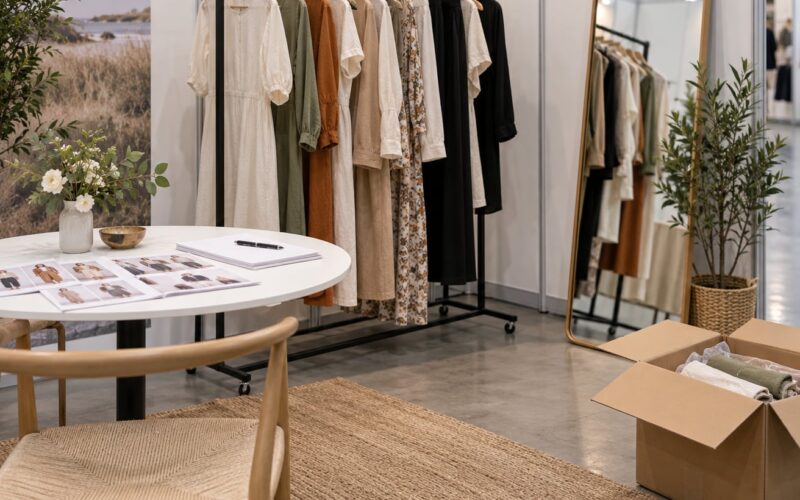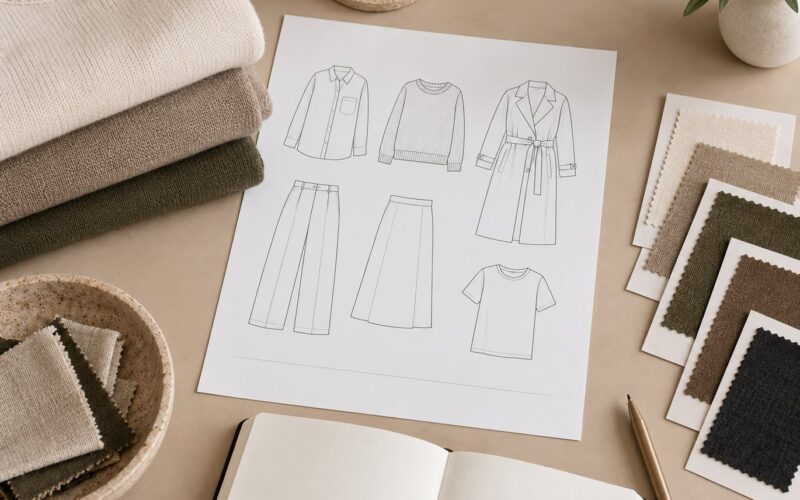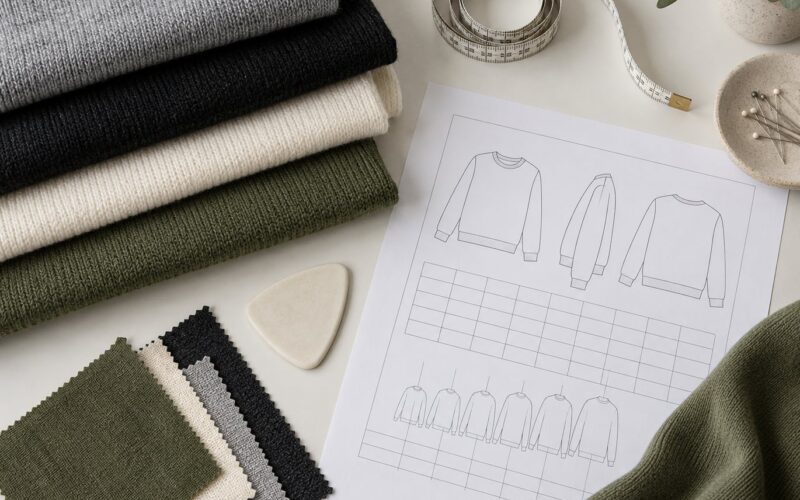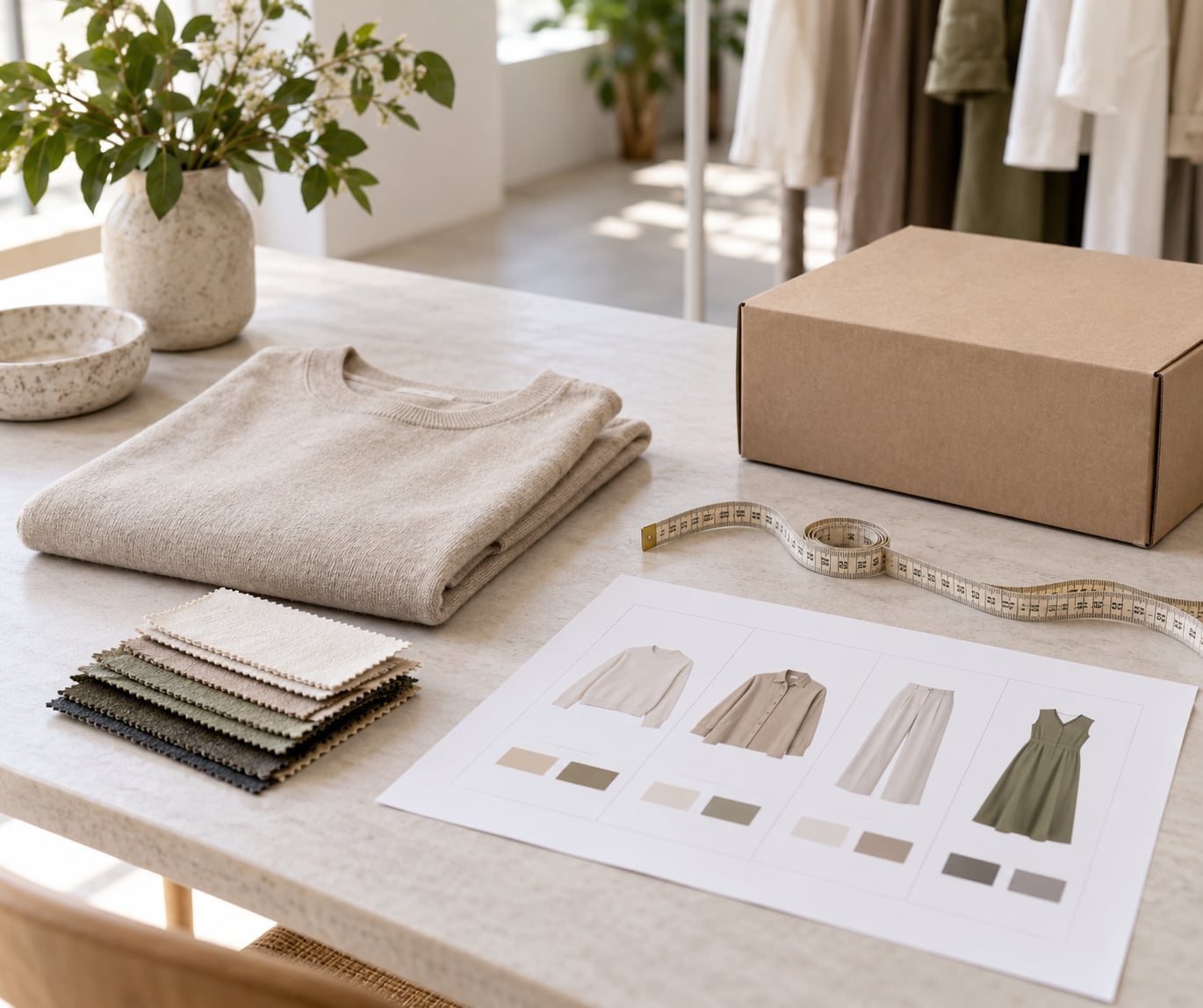
To get your clothing line into a boutique, you need three things ready before you send a single email: a wholesale price that leaves the store room to make money, a line sheet a buyer can understand in ninety seconds, and a list of shops that already sell your kind of clothing. Then you pitch, follow up, and repeat until someone places an opening order. Most of the work happens before a buyer ever says yes, and it usually takes a few months of consistent outreach to land the first handful of accounts.
This guide is written for independent designers and small apparel brand founders in the US who have a sellable line and no retail accounts yet. If you are still choosing fabrics, treat this as the checklist to work toward rather than the sequence to run next month.
Table of Contents
- What You Need
- Step-by-Step: How to Get Your Clothing Line Into a Boutique
- 1. Define the Boutique You Want to Reach
- 2. Prepare a Buyer-Ready Wholesale Collection
- 3. Research Buyers and Contact the Right Person
- 4. Present the Collection as a Retail Story
- 5. Handle Questions, Objections, and Terms
- 6. Follow Up and Build a Wholesale Relationship
- Common Mistakes
- Frequently Asked Questions
- Do boutiques require a minimum order quantity?
- Should I offer wholesale or consignment to my first boutique?
- What wholesale markup do boutique owners need?
- Do I need an LLC before a boutique will order from me?
- How many boutiques should I pitch to land my first accounts?
- What should I do after a boutique buyer says no?
- Conclusion
What You Need
Before you contact a single boutique, assemble the full buyer package. A store owner who cannot answer a question about your pricing, sizing or delivery window will assume you are not ready, and they will be right.
Business basics. A registered business entity, a business license in your state, and a resale certificate. Requirements vary by state, so check with your local secretary of state and tax authority rather than copying someone else’s setup.
A defined product. Ten to thirty styles is a workable starting range. Fewer than ten looks thin on a rack, and more than thirty asks a first-time buyer to take a huge risk. Know your cost per unit in every size, your fabric content, your care instructions and your country of manufacture.
Pricing. A wholesale price and a suggested retail price for every SKU, with a stated markup so the owner can see the margin immediately. More on the math in step 2.
A line sheet and a look book. The line sheet is a clean PDF showing every style on white, with SKU, wholesale price, suggested retail, size run, colorways, fabric content and delivery window. The look book is the mood: styled looks, on-model photography, a short paragraph about who the customer is. Buyers who sell clothes for a living still make emotional decisions, and the look book is what they are actually buying.
Sampled garments in your exact size run. Buyers want to hold the fabric, check the finishing and confirm the measurements. Note the chest, waist, hip and garment length for every size, graded from a base size, so nobody is guessing.
Written wholesale terms. Minimum order quantity, payment terms, shipping terms, lead time, and your return policy. One page. A buyer who has to ask what your return policy is will assume the worst one.
Order tracking. A simple spreadsheet is fine at ten accounts. When you pass thirty, move to a proper order system so you can answer “where is my order” in seconds rather than digging through email.
Step-by-Step: How to Get Your Clothing Line Into a Boutique
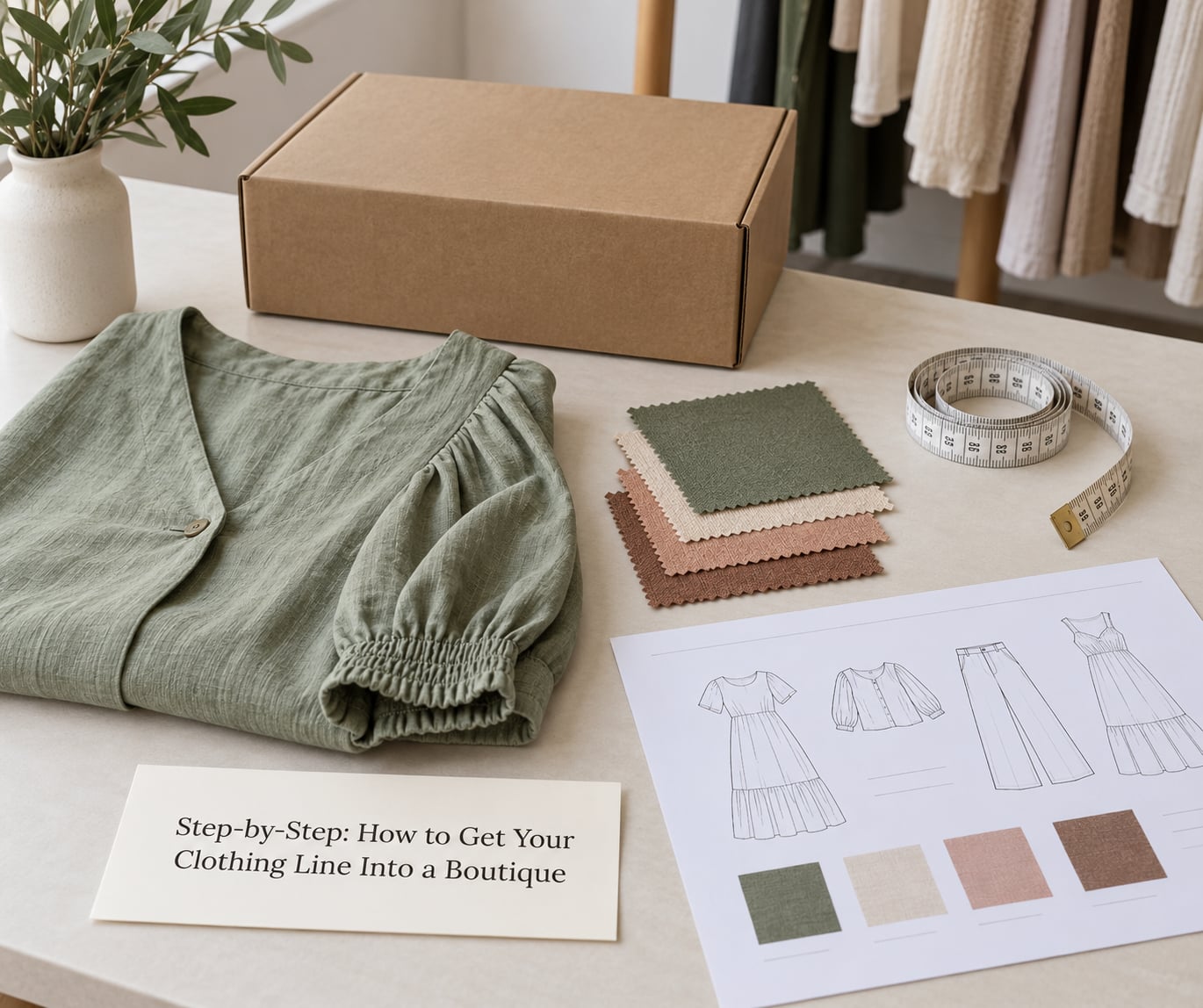
1. Define the Boutique You Want to Reach
Start by writing down the customer you actually design for, then find the stores that already serve that person. A narrow profile beats a big list, because buyers recognise a brand that understands their floor and their neighborhood.
Build the profile on five things: the customer (age, income, how they dress, what they already own), the price band of the store, the aesthetic, the geography, and the brands already on the rails. Look at what a shop already carries. If a boutique stocks three hand-printed labels and you produce machine-stocked basics, the fit is wrong, and no pitch fixes that.
Then make a spreadsheet with roughly fifty stores: name, contact person, email, whether they carry similar brands, and the date you last reached out. Fifty is small enough to work through properly in a month and big enough to produce real results. Designers who email hundreds of generic pitches usually get silence, and the volume never compensates for the irrelevance.
2. Prepare a Buyer-Ready Wholesale Collection
Set your wholesale price so the boutique can hit its own target retail. Most owners work from a markup multiple rather than a margin percentage, because the number on their screen is the price they sell at, not the profit they keep.
Keystone is 2x wholesale, and it is the floor. Independent boutiques usually need 2.2x to 2.5x to cover rent, staff, card processing and the markdowns that happen when something does not sell. A 2.2x markup on a wholesale price of 40 gives a suggested retail of 88, and 2.5x gives 100. At 2x, the store makes 40 per piece, which rarely covers a slow month.
Check your own numbers before you check the store’s. Wholesale revenue minus production, packaging, shipping and your sample costs should leave you a margin you can survive on. If it does not, raise the retail price, cut the style count, or renegotiate production before you start pitching.
Confirm the size run with your factory in writing, and state the delivery window on the line sheet. A buyer planning a spring floor will ask about delivery twice: once about the date and once about what happens when it slips. Have an answer, and keep reserved production capacity for reorders if your manufacturer allows it.
Build the line sheet so each SKU is instantly readable: product name, SKU code, wholesale price, suggested retail, colorways, available sizes, fabric content and care, lead time. Group styles into a hero group that carries the look and a replenishment group that reorders. That grouping tells the buyer how to build a floor instead of guessing.
3. Research Buyers and Contact the Right Person
In an independent boutique, the person deciding is usually the owner, and the owner is often also the person on the floor. Find their name and email before you write. The store’s Instagram bio, their About page, their LinkedIn profile, and a short call to the shop are all legitimate ways to get it.
Write the first email to be about forty words plus a link. Reference something real about the store, say who you are in one sentence, attach or link the line sheet, and ask for a specific next step such as a fifteen-minute call or an appointment at your showroom. Here is a structure that works:
Subject: [Store name] plus the line’s category, for example “Wholesale options for [Store name]”.
Body: one specific compliment about the store that is not flattery, one line on your customer, one line on the collection, the line sheet link, and a single request.
Send it Tuesday through Thursday morning. Ask for the appointment rather than demanding it, and keep the tone level. The goal of the first email is a reply, not an order, and a reply is much easier to ask for than a commitment.
4. Present the Collection as a Retail Story
Open the meeting by describing the store’s customer and how your clothes fit into that person’s life, not by listing fabric weights. Buyers can read a spec sheet in silence. They cannot read intent.
Spend most of the time on the hero styles, because that is where the store’s risk sits. Say which piece sells on day one, which piece builds the outfit, and which piece you would reorder fastest. Offer a complete-look suggestion so the owner can merchandise a mannequin or a table with two or three pieces instead of one lonely top.
Leave a physical sample of your two or three strongest styles plus a printed look book if the meeting is in person. Tell the buyer whether you want the samples returned; a sample returned without a decision is a sample you have to re-pack, and a sample kept without an order is inventory you already paid for. Either way, say it out loud so nobody is guessing.
Take notes during the meeting and read them back at the end. Buyers remember being heard far better than buyers remember being impressed.
5. Handle Questions, Objections, and Terms
The most common buyer question is not about your clothes, it is about risk. Prepare these answers in writing so you never negotiate from memory.
- Sell-through: how much of the collection moves in a season. Give a realistic number, not a boast, and say which styles you expect to lead.
- Minimums: state yours clearly. A low minimum on a first order is a buying tool, not a weakness, as long as you can still fill it profitably.
- Returns and exchanges: most boutiques accept exchanges for size or defects but not returns of unsold goods. Say so in writing before the order, not after a dispute.
- Exclusivity: be cautious. Blanket exclusivity across a category can quietly close a city to you. Limit it by geography or by style, and get it in writing.
- Payment terms: many independent owners ask for net 30, meaning they pay within 30 days of the invoice. Know your cash position before you agree, because that term decides whether an order helps or hurts you.
- Delivery and delays: never promise a date you have not confirmed with production. A late delivery costs you the account; a slightly later honest date rarely does.
Anything that matters after the handshake belongs in writing before the order ships. Keep a signed terms sheet with every account, even if it is one page.
6. Follow Up and Build a Wholesale Relationship
Follow up is where most designers give up, and it is where most accounts are actually won. A simple cadence works: a thank-you note within a day of the meeting, a check-in about two weeks later, a season reminder, and one respectful close-out email that releases them from the thread.
Send a short recap after every conversation listing what was discussed, what you agreed, and what you owe them. Buyers talk to a dozen brands a season; a written record is what keeps you from becoming the one they meant to order from.
When the order arrives, deliver on the date, use the packaging you promised, and include a small rack card or styling note. Ask the owner how the first floor performed after about six weeks, take the criticism seriously, and fix the specific problem. Sizing inconsistency is the fastest way to lose an account, so keep measurements identical between production lots.
Then schedule the reorder conversation before the buyer runs out. Set a reminder at eight weeks, bring new colorways or a restocked hero style, and make reordering one email rather than a fresh pitch.
Common Mistakes
Most designers do not lose accounts because of bad design. They lose them through avoidable process errors, and buyers say so plainly.
Sending a full catalog of 60 styles with no pricing logic. The buyer is thinking: I cannot tell what this brand wants me to buy. Fix it by cutting to 10 to 30 styles and grouping them as hero and replenishment on the line sheet.
No written return or exchange policy. The buyer is thinking: if these do not sell, how do I get rid of them. Fix it by sending a one-page terms sheet before the meeting, not after the first dispute.
Pitching every boutique in a wide radius. The buyer is thinking: this brand does not know my customer. Fix it by building a customer profile first, then pitching 50 closely matched stores.
Unrealistic delivery promises. The buyer is thinking: this vendor misses dates, so I will look foolish on my floor. Fix it by quoting only dates your factory has confirmed in writing.
Inconsistent sizing between production runs. The buyer is thinking: returns will cost me more than the margin. Fix it by locking graded measurements and re-verifying them on every lot.
Disappearing after the first meeting. The buyer is thinking: this brand is not serious about a relationship. Fix it with a dated follow-up cadence and a written recap after every conversation.
Setting a wholesale price below a workable markup. The buyer is thinking: I cannot make money on this floor. Fix it by holding at least 2.2x, ideally 2.5x, and publishing the suggested retail next to it.
Two habits prevent most of these. Send terms before you ask for an order, and treat every decline as data about fit rather than a verdict on your work. Expect a low reply rate on cold outreach and plan for it: most independent owners are running a store, not sitting at a sourcing desk, and one reply for every ten thoughtful emails is a normal result rather than a failure.
Frequently Asked Questions
Do boutiques require a minimum order quantity?
Most independent boutiques expect a minimum, usually expressed per style or as a total opening order value. A common starting range is 2 to 6 units per style, sometimes paired with a minimum spend for the account. Set yours at a level you can reliably produce and profit from, publish it on your line sheet, and treat a lower minimum on a first order as a reason to say yes to a new account.
Should I offer wholesale or consignment to my first boutique?
Wholesale is the default, because the store takes on the risk and the risk is what makes them fast decisions. Consignment, where the boutique sells your pieces and pays you a cut of what sells, is a reasonable way into one or two accounts when you are brand new, but it transfers unsold inventory and waiting time to you. Offer consignment selectively, with a written end date.
What wholesale markup do boutique owners need?
Independent boutique owners generally work from a 2.2x to 2.5x retail markup on wholesale, with keystone at 2x treated as the bare minimum. That spread covers rent, staff, card fees and the markdowns that happen when a style does not sell. Publish a suggested retail with every wholesale price so the owner can see the margin without doing the math, and never drop under 2x to win an account.
Do I need an LLC before a boutique will order from me?
In the US you will normally need a registered business entity, a business license and a resale certificate before a store can buy from you, and some boutiques ask for a W-9 or resale paperwork up front. Requirements differ by state, so confirm the details with your state business office and tax authority. Registering as a sole proprietor is often enough to start; the entity type is a tax and liability decision.
How many boutiques should I pitch to land my first accounts?
Plan on a list of 50 closely matched stores and a response rate somewhere around one in ten. That usually means 15 to 30 real conversations, a handful of sample sends, and your first two or three accounts several months in. Designers who treat the first batch as practice, not as a verdict, get to their reorder customers far faster than those who pitch once and quit.
What should I do after a boutique buyer says no?
Ask one short question before you leave: is it a fit issue, a timing issue, or a numbers issue? Timing and numbers come back later, so ask when they buy and what markup would have worked, and put the date in your calendar. Fit is usually permanent, so cross the store off the list. Then thank them briefly and keep the relationship, because owners change floors and change minds.
Conclusion
Start tomorrow with the spreadsheet, not the samples. Write down the customer you design for, find twenty-five stores that already serve that person, and set a wholesale price at 2.2x to 2.5x retail so the owner can see a working margin on your line sheet.
Getting your clothing line into a boutique comes down to fit, preparation and persistence. A buyer takes a risk with every opening order, and your job is to make that risk small: clear terms, honest dates, consistent sizing and a follow-up that never goes quiet. Send the first ten emails, learn from the answers, and keep going until the reorder email arrives.