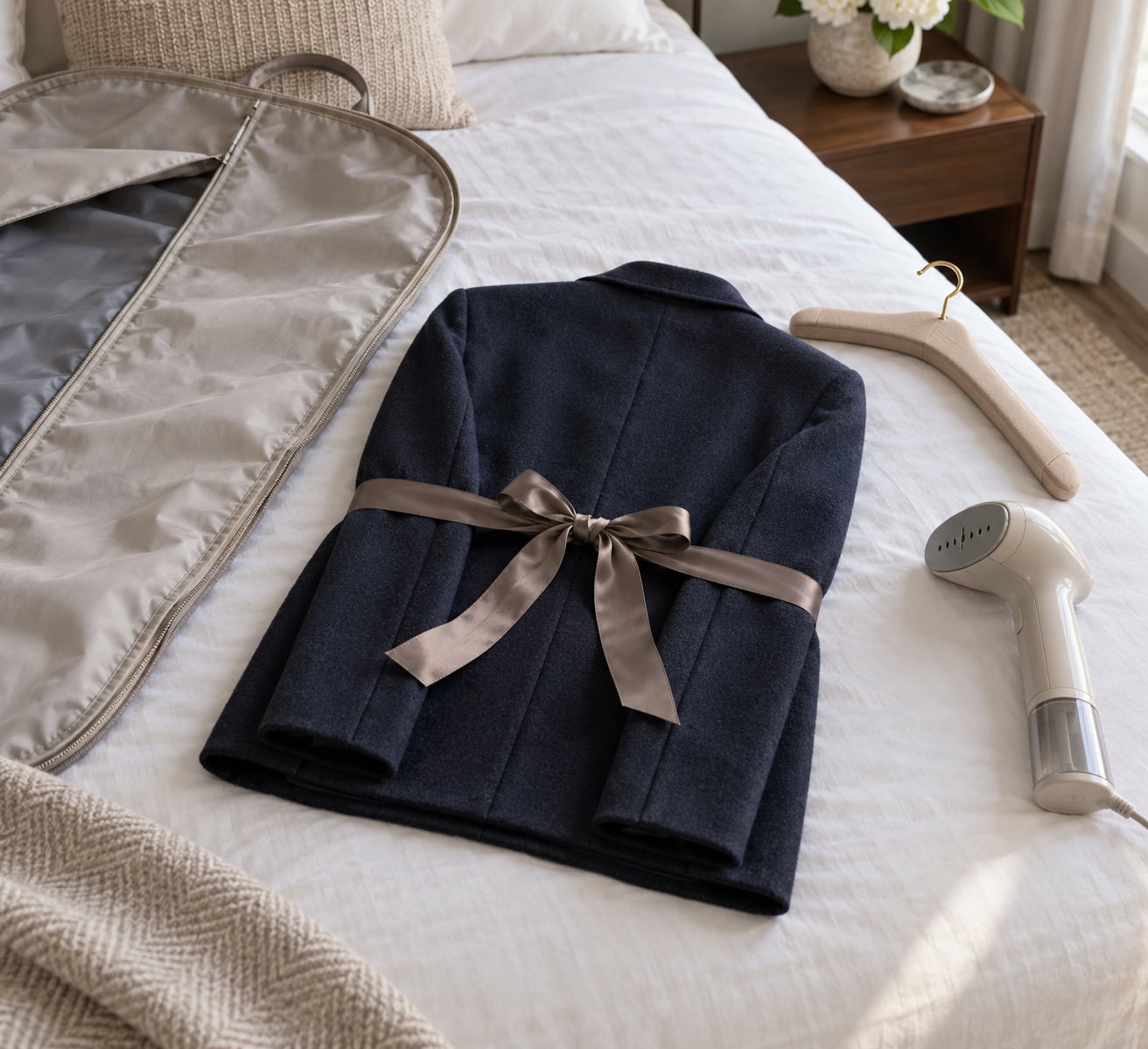
Yes, you can fold a blazer for travel. The trick is to support the construction rather than forcing the jacket into a smaller space: lay it face down, keep the lapels flat and aligned, fold the body once across the middle, and secure the packet loosely. It takes about two minutes and no particular skill.
The shoulders and lapels are what give a blazer away when they have been crushed, not the fabric itself. Folded along the panels the jacket was cut from, it will hang properly again the moment you open it up. Folded like a shirt, you may spend the rest of the trip trying to steam out a shape that no longer exists.
If your airline lets you carry a garment bag into the cabin and the wardrobe on board is full, wearing the blazer is still the most reliable option. This guide is for the other case: you are packing it flat, into a case or a carry-on, and you want it looking press-ready on arrival.
Table of Contents
- What You Need
- Step-by-Step: How to Fold a Blazer for Travel
- 1. Prepare the Blazer for Folding
- 2. Flatten the Back and Smooth the Sleeves
- 3. Create the First Fold Without Bending the Lapels
- 4. Fold It Into a Compact Rectangle
- 5. Secure the Fold Without Crushing the Blazer
- 6. Unpack and Restore the Shape
- Common Mistakes and How to Fix Them
- Frequently Asked Questions
- Can I fold a blazer instead of putting it in a garment bag?
- How long can a blazer stay folded in a suitcase?
- What is the best way to pack a structured blazer without ruining the shoulders?
- Should I use a vacuum bag for a blazer?
- How do I remove wrinkles from a blazer after traveling?
- Can I fold a wool or linen blazer for a carry-on?
- Conclusion
What You Need
None of this is specialized equipment. Each item below solves one specific problem that a folded blazer runs into, and you can leave out anything you do not have without ruining the result.
- A sturdy garment bag or packing folder. It gives the folded blazer a rigid edge to rest against, so the wall of your suitcase cannot press a crease into the front panels.
- Tissue paper. Two or three sheets between the blazer and the clothes around it stop zippers, buttons and belt buckles from marking the face of the jacket.
- A belt, ribbon or soft strap. It holds the loose rectangle together so it does not spring open halfway down the journey.
- A steamer or an iron. Used only after you land, and only if the care label allows it. A “do not press” symbol means steam from a distance and nothing else.
- A wide, padded hanger. Honestly this matters more than anything else on the list, because the first thirty seconds after unpacking decide whether the blazer hangs right.
Leave out anything that shrinks under pressure. Vacuum bags and compression cubes are excellent for t-shirts and terrible for wool or anything lined.
Step-by-Step: How to Fold a Blazer for Travel
Six steps, and each one is there for a reason. The blazer gets folded once rather than rolled or squeezed, so the pressure lands on seams and linings instead of on lapels and padded shoulders. You will know it worked when the packet holds its own shape and the lapels are still flat when you open it.
1. Prepare the Blazer for Folding
Read the care label first. Wool and structured jackets want to hang and breathe; synthetics and unlined jackets tolerate more compression, but a blazer marked dry clean only still gets brushed and hung, never pressed directly onto the face.
Empty both pockets, including the ticket pocket. A pen, a folded handkerchief or a spare pair of socks creates a hard shape that prints through the lining and stays visible for the rest of the trip. Take anything clipped to the lapel off or loosen it.
Fasten the top button only if the design is a two-button or single-button closure, and leave the others open. This is also where you smooth the fabric with your hands, while the jacket is empty and flat. Most of the wrinkles travel out at this stage rather than later with an iron.
2. Flatten the Back and Smooth the Sleeves
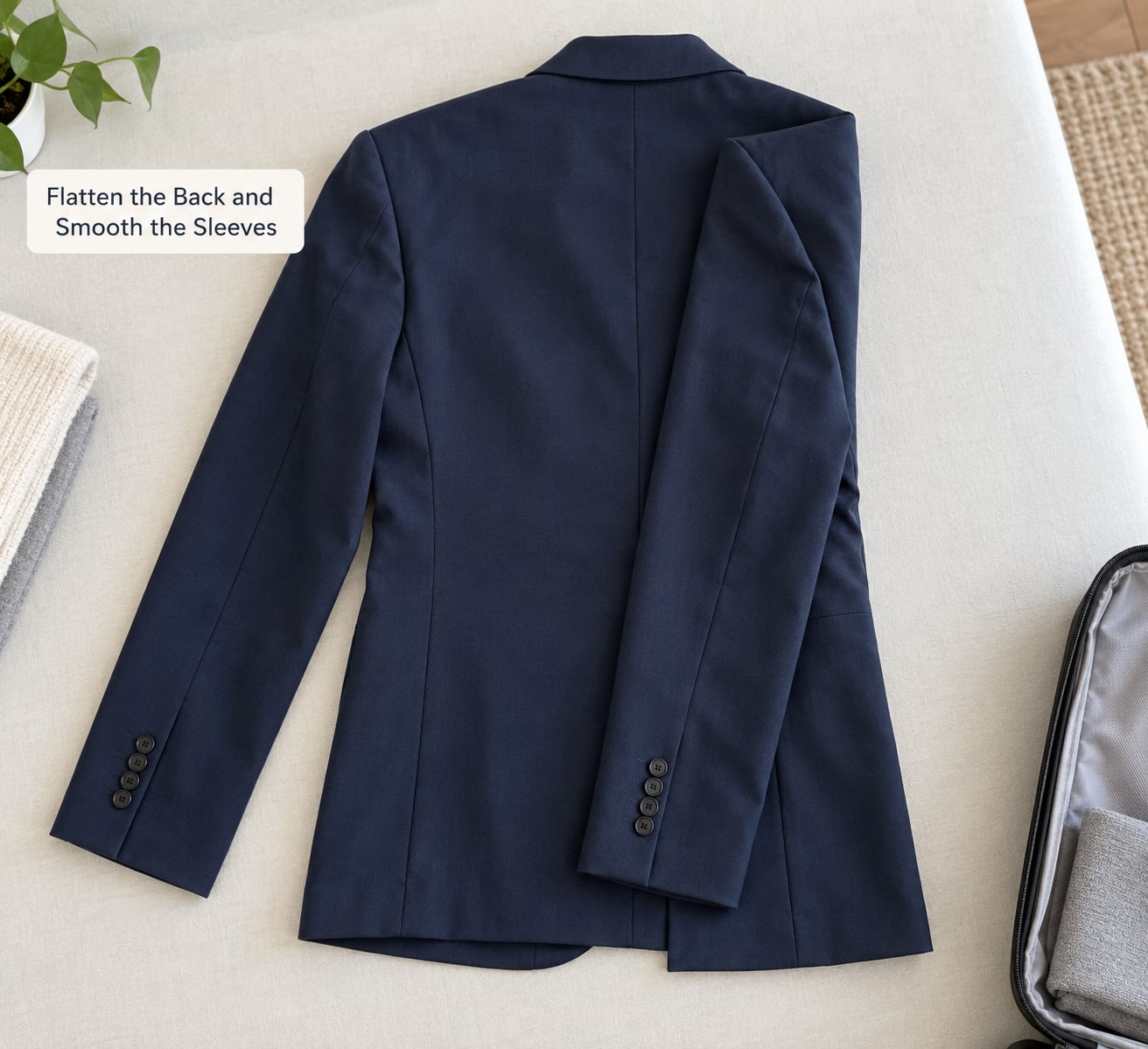
Lay the blazer face down on a clean bed or table. Smooth the back panel with the flat of your hand from the collar downward, then flatten the lining where it has rolled up near the vents.
Bring both sleeves straight down along the body, one over the other, so the cuffs finish level with or just below the hem. Keep your fingers at the shoulder seam while you do it. The instinct is to pull the sleeves inward so the jacket looks narrower, and that is exactly what folds a shoulder inside on itself.
The jacket is now a clean rectangle, roughly 13 to 15 inches wide depending on the size. If the hem curves or sits lower in the back, smooth that line out rather than trimming it.
3. Create the First Fold Without Bending the Lapels
Fold one side of the blazer toward the center, sleeve against sleeve, then bring the other side over it. The two halves meet at the center back seam, and that is the only crosswise fold the jacket will get.
Keep the collar, lapels and shoulder line supported and naturally aligned while you do this. You are not squaring the front panels against each other, you are simply bringing the back halves together. If the lapels start to roll inward, stop, open the fold, smooth them flat, and start that side again.
Lift the packet to check. The shoulders should fall back into place on their own instead of staying bent at the fold line. A fold that holds its crease when you pick the jacket up means the fold landed in the wrong place.
4. Fold It Into a Compact Rectangle
Fold the lower portion upward in one or two controlled sections. Most blazers need a single fold across the body; a longer jacket takes a second one near the hem, and a cropped one may not need any.
Spread the lining as you go so no bulk gathers at the fold. Bulk is what makes a sharp bend, and a sharp bend is what sets a crease that steam will not shift. Straight edges, gentle curves, no squashed corners.
Keep it loose. If the rectangle will not close without shoving, you are folding tighter than the jacket can give, and something is going to be pushed out of shape later.
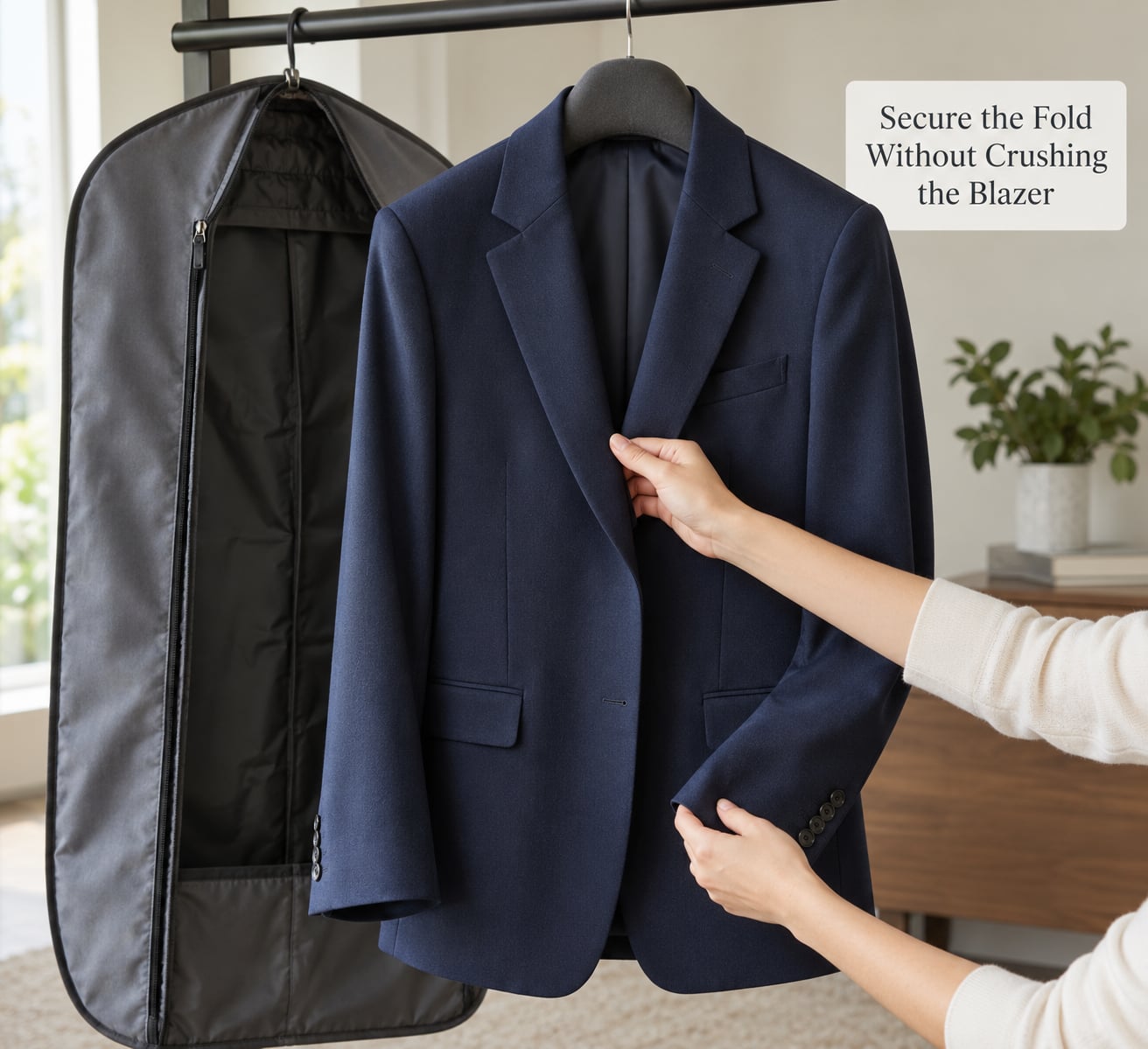
5. Secure the Fold Without Crushing the Blazer
Loop a soft belt or ribbon once around the middle and tie it just loose enough that a finger slides underneath. A strap pulled snug recreates the crushing you just spent two minutes avoiding.
Put the folded blazer in a breathable garment bag or a packing folder rather than loose in the case. Folded blazers belong near the top of the suitcase, above everything else, so nothing rests on the lapels.
Skip vacuum bags and compression cubes for wool and lined jackets. They pull moisture out of the fibers and press the shoulders flat for the whole flight. A plain packing cube around the outside of the bundle is fine.
Leave a couple of inches of slack around the packet. Hard-shell cases have no give, so a tight fit means something gets flattened no matter how well you folded.
6. Unpack and Restore the Shape
Get it onto a hanger within a few minutes of landing. A wardrobe rail, a bathroom hook or the back of a door all work. Do not leave it folded in the bag while you shower and settle in.
Loosen the strap and open the fold gently rather than shaking the blazer out. Turn it right side out as you lift it, then place it on a broad padded hanger so the shoulder seams sit inside the hanger curve rather than hanging over the ends. A wire hanger undoes everything the fold protected.
Smooth the panels with your hands and let it hang. Steam from a shower room is enough for most wool and synthetics. Check the label before reaching for an iron, and if you must press, work from the inside and use a cloth between the iron and the fabric.
Common Mistakes and How to Fix Them
Almost every ruined travel blazer comes from one of these, and all of them are fixable in under a minute.
- Crushed shoulders. This is the shirt fold: sleeves folded across the chest. Fix it by laying the blazer face down, running the sleeves down the body, and folding across the width only. Never pull the sleeves inward at the shoulder seam.
- Bent or rolled lapels. They crease once and often stay that way. Smooth the lapels flat before every fold, and keep the front panels from folding over each other on top of them.
- Pockets left full. A pen or folded pocket square prints through the lining and the outline is still visible after you hang the jacket up. Empty every pocket, including the ticket pocket.
- A crooked or over-tight rectangle. Usually caused by gathering the lining as you go. Smooth the lining flat before each fold, and secure the bundle with a loose strap rather than by squeezing the layers together.
- Vacuum bags and compression cubes. They flatten shoulders and strip moisture from wool. Save them for soft casual clothes.
- Packing the blazer damp. Damp wool packs into hard creases and can smell on arrival. Hang it somewhere with air movement and let it dry completely first.
- Wearing it for six straight hours. Wearing the blazer beats folding it, but sitting in it for a whole flight folds it anyway. Take it off during the meal service and hang it in the wardrobe if the airline offers one, since overhead space on many low-cost carriers is too tight to rely on.
One last check before the zipper goes: hold the folded blazer at both ends and shake it once. If it spreads, springs open or looks lopsided, fix the fold by hand rather than by tightening the strap. Two minutes here saves an hour of steaming later.
Frequently Asked Questions
Can I fold a blazer instead of putting it in a garment bag?
Yes, and most travelers do. A blazer folded face down, with the sleeves laid down the body and the lapels kept flat, arrives in noticeably better shape than one crumpled loose in a case. The one thing a garment bag still wins on is humidity and snagging, since the blazer stays flat in a stiff sleeve instead of being pressed between other clothes.
How long can a blazer stay folded in a suitcase?
A few hours to a couple of days is fine for most wool and synthetics. Past three or four days, especially in warm luggage, the fold starts to imprint itself and the shoulders can settle into the bent position. If the trip is longer than that, unpack it whenever you reach your accommodation and hang it for the night.
What is the best way to pack a structured blazer without ruining the shoulders?
Never fold the shoulders flat. Lay the blazer face down, run both sleeves straight down the body without pulling them inward, bring the sides together at the center back seam, and fold the lower half up once. That single fold keeps the shoulder line supported and sends the pressure into seams and lining instead of the shoulder pads.
Should I use a vacuum bag for a blazer?
No, not for wool or anything lined. A vacuum bag removes moisture from the fibers, flattens shoulder structure and can leave creases that steam cannot fix. Use compression for cotton and performance fabrics, and pack the blazer in a breathable garment bag or packing folder with a soft strap around it.
How do I remove wrinkles from a blazer after traveling?
Hang it on a wide padded hanger first, then let steam from a hot shower reach it while you unpack the rest of the bag. Most travel creases fall out within an hour. For what is left, use a garment steamer held a few inches away, and check the care label before pressing with an iron.
Can I fold a wool or linen blazer for a carry-on?
Yes. Wool and linen both fold well with this method and recover from light creases on their own once they hang. The fabric is less forgiving of sharp bends, so smooth the lining flat before each fold and keep the strap loose. Unstructured linen blazers need less care than a padded wool one, since they have no shoulder structure to damage.
Conclusion
Start with preparation, not the fold itself: empty the pockets, smooth the fabric flat and check the care label. Then fold the blazer once along its own panels, keep the lapels supported, and secure it loosely rather than tightly. On arrival, hang it up and steam it within the hour, and the blazer will come out of the bag looking like it was never folded at all.