You cannot heal a split end, because the only part of your hair that is actually broken is the very tip. What you can do between trims is cut off the frayed pieces, seal what’s left so the fraying slows down, and cut down on the friction and heat that created it. Ten minutes of care a week buys you weeks of smoother-feeling ends.
Here is the honest version. Products make split ends look better and behave better, but they do not fuse two frayed strands back into one. The appearance improves in a day or two, and it stays that way while you keep treating your hair gently. Stop treating it gently and the splits are back, usually somewhere in the middle of the shaft rather than the ends.
Table of Contents
- What You Need
- Step-by-Step: Reducing Split Ends Between Trims
- How to trim split ends between cuts without losing length
- Use a bond-building treatment
- Reduce friction and heat damage
- Keep the ends covered between washes
- Know when a salon trim is necessary
- Common Mistakes
- Frequently Asked Questions
- Can you really get rid of split ends without cutting them?
- What is the safest way to trim split ends at home?
- Does hair oil permanently repair split ends?
- How often should I trim split ends between salon visits?
- Is it better to trim split ends dry or damp?
- What products help prevent split ends from getting worse?
- A Simple Routine to Start
What You Need
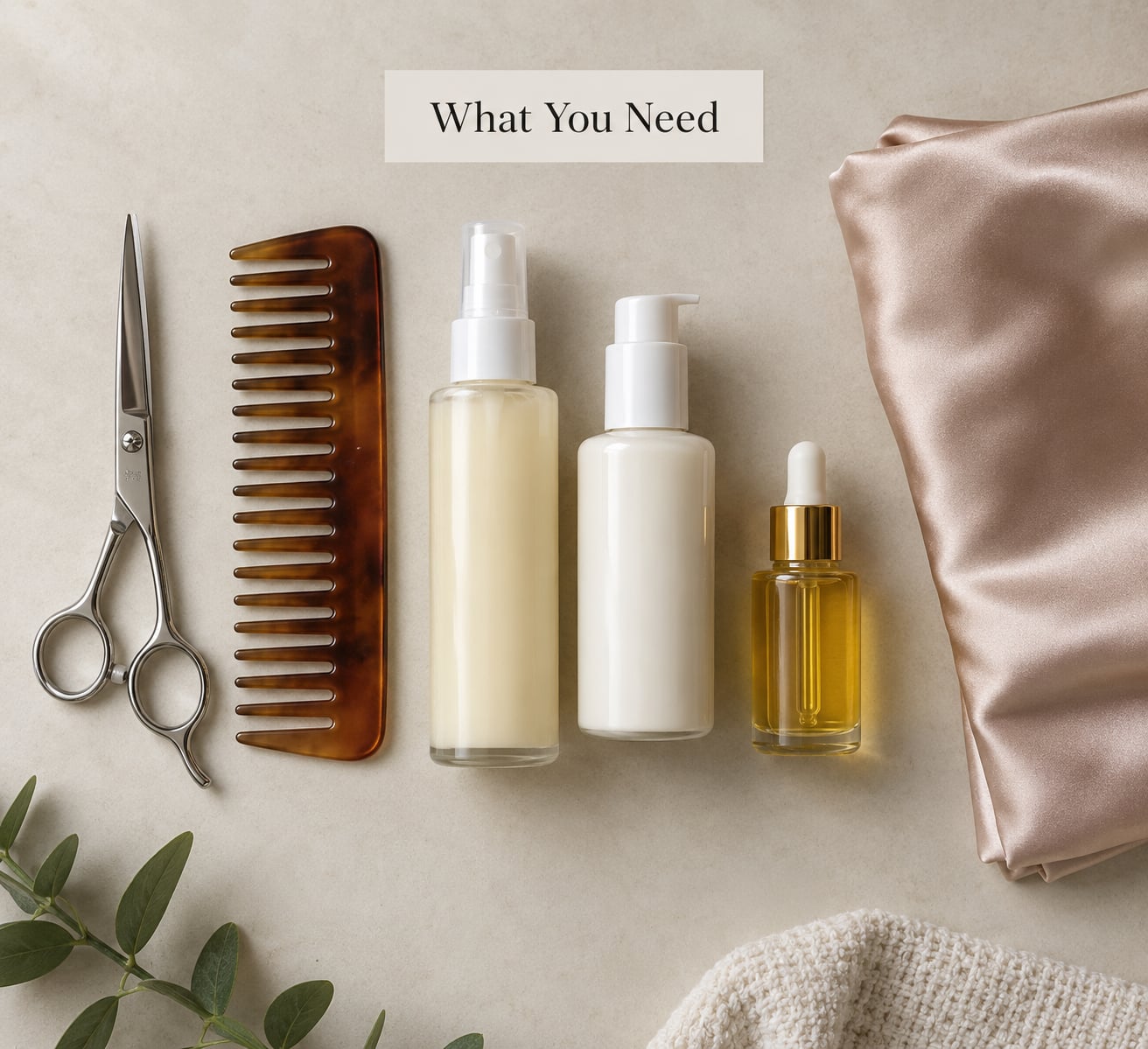
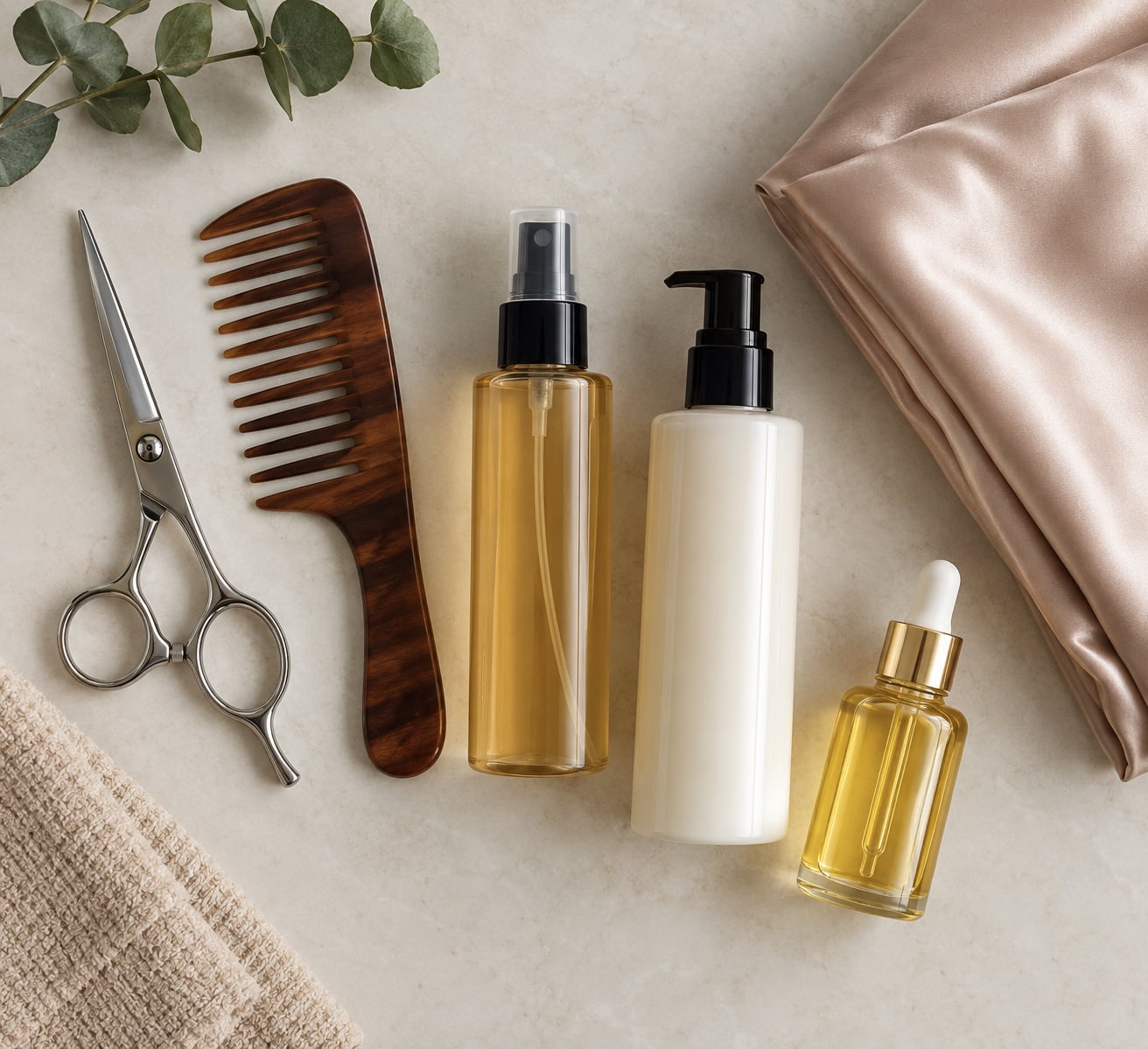
None of this is expensive or required, but it is what separates a careful between-cuts routine from a hopeful one. Sharp haircare shears or thinning shears, a wide-tooth comb, a heat protectant, a leave-in conditioner or hair oil, a silk or satin pillowcase, and a microfiber hair towel are the short list.
Swap the microfiber towel for anything that is not terry cloth. Regular bath towels have loops that catch and snag as you squeeze, and that snagging is a large share of how splits start in the first place.
Step-by-Step: Reducing Split Ends Between Trims
How to trim split ends between cuts without losing length
Trim only the visibly forked or frayed tips, and take off the least amount that makes the end look solid again. Work in small snips rather than one decisive cut, and hold the section between your fingers so the hair is supported instead of hanging loose.
Clean, dry hair is easiest to judge because damp strands lie together and hide damage. Some stylists prefer lightly damp hair because it cuts cleaner and produces less friction at the blade. Either is fine, but never cut soaking wet hair, since wet strands are weaker and can stretch instead of breaking cleanly.
Dusting is the term for removing a very small amount of length, usually a quarter inch or less. A point cut is a different technique where the stylist snips into the ends at an angle to leave texture and thinner sections, and it works better on medium to thick hair. Fine hair that splits easily does best with a blunt or lightly textured dusting and nothing more.
Long-hair regulars on r/longhair report dusting with proper shears every six to eight weeks as the point where their length stopped shrinking while their ends stayed healthy. That interval is a reasonable starting target, though bleached or heat-styled hair tends to need it sooner.
Use a bond-building treatment
A leave-in conditioner, a bond-building treatment, or a deep conditioning mask makes hair more manageable and lowers friction between strands while it works. That matters because strands that slide past each other instead of catching do not fray faster, and hair that is easier to detangle gets handled more gently by accident.
Bond builders work by rebuilding the internal structure of the hair shaft. They genuinely strengthen hair, which reduces breakage along the length, but the split at the tip stays a split. The result is hair that feels better and breaks less, not a sealed fracture.
Reduce friction and heat damage
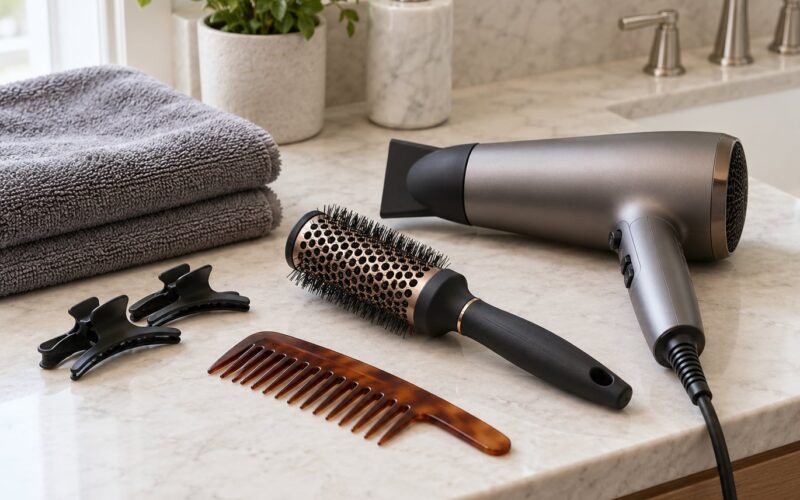
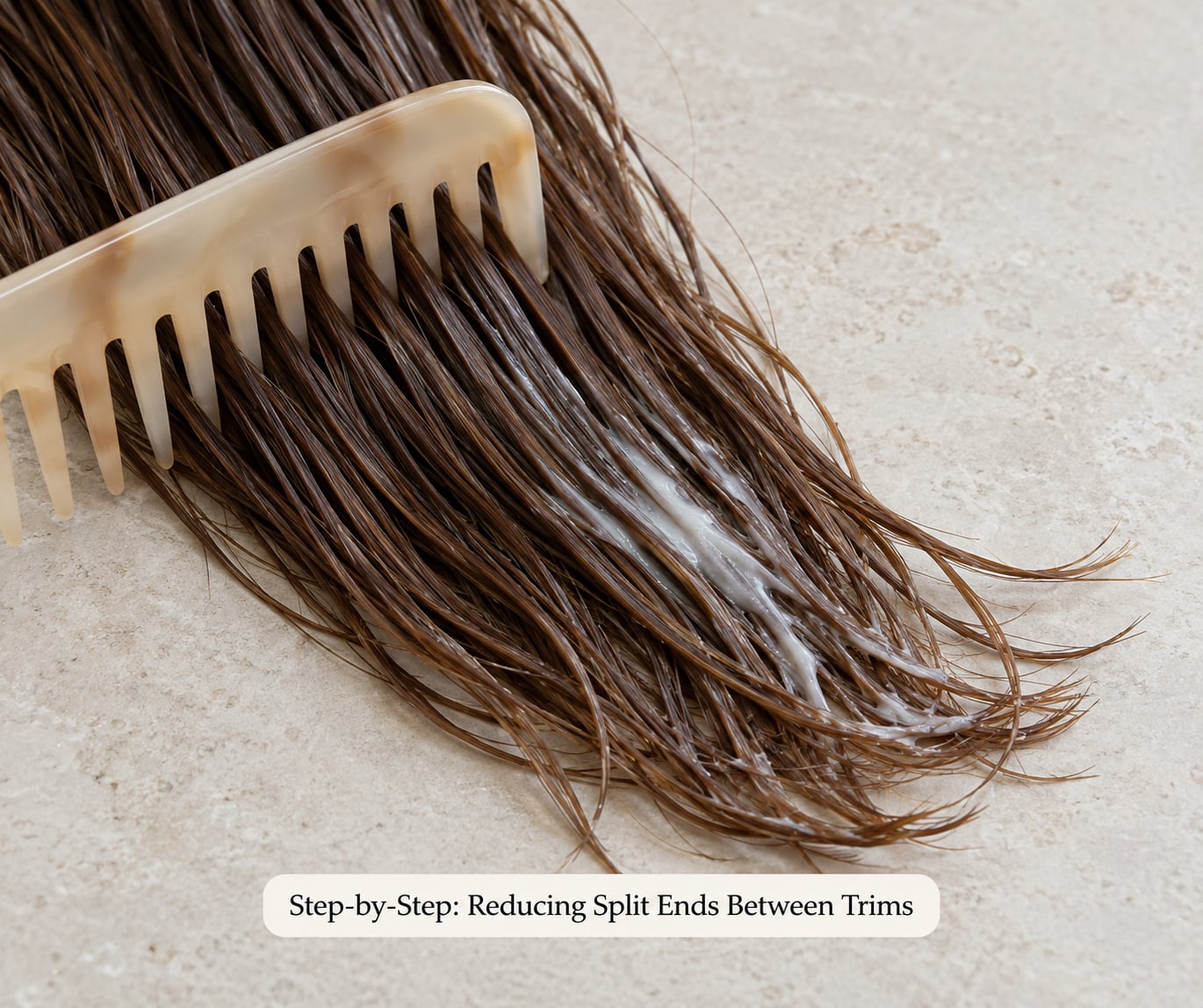
This is where most of the actual progress happens. Detangle wet hair with a wide-tooth comb from the ends upward, working in small sections, and never force a knot loose from the top of your head. Use a boar-bristle brush on dry hair and leave the comb to wet or damp hair.
Apply heat protectant every single time, keep the styling temperature as low as your style allows, and stop using a hot tool on the last two inches of hair. Loose styles that do not pull at the scalp damage the hair far less than a tight ponytail worn all day.
Keep the ends covered between washes
Braids, loose buns, scarves, and satin or silk surfaces all reduce rubbing and tangling while you sleep. A silk or satin pillowcase is the simplest version of this, since it lets strands slide rather than catch on a cotton weave. People on r/Naturalhair reported cutting their split rate roughly in half over three months after adding a microfiber towel and a silk pillowcase together.
Skip styles that pull hard at the roots or hold the ends in a strained position. If a style has to be undone with pain, it was taking something out of the hair as well.
Know when a salon trim is necessary
A salon trim is the right call when damage is spread throughout the lengths rather than concentrated at the tips, when the ends are uneven or severely frayed over a wide area, or when you want a blunt cut and your hair will not hold one. Widespread mid-shaft damage is not something a home touch-up can fix.
Ask for a dusting by name and say how much you are willing to lose, usually half an inch or less. Stylists who are shearing far more than you asked for are common enough that saying the number out loud is worth doing every single time.
Common Mistakes
Using kitchen or craft scissors is the big one. They are not sharper than hairdressing shears, and they crush and tear the strand instead of cutting it, which leaves an end that splits again faster.
Trimming too much at once is the second mistake, and it is usually panic. One snip, check, one more snip. If you are not sure, stop and come back in a week.
Oil on wet hair followed by a hot blow dryer is a bad combination, because the oil coats the strand and holds heat against it. Put oil on damp hair and let it dry, or use a heat protectant and leave the oil for later.
Brushing rough ends dry with a stiff brush tears them out at the bottom. Comb them instead, and hold the section above the tangle so the force goes into the hand rather than the hair.
Relying on heavy gels, glues, or waxes to smooth ends only creates a coating that sheds in the wash. It is a cover-up, not a repair, and readers on the haircare forums are blunt about the fact that petroleum jelly makes hair greasy rather than fixed.
Lastly, treating temporary smoothing as repair. If your ends feel great on day one and split by day four, you were masking damage, and the next appointment will look worse rather than better.
Frequently Asked Questions
Can you really get rid of split ends without cutting them?
No, and anyone selling you a permanent fix without saying the word trim is selling you a coating. Products seal the cuticle and reduce friction, so ends look smoother and fraying slows down, but the two frayed strands stay separate. Between cuts your realistic goal is to slow the damage and keep the split from travelling up the shaft.
What is the safest way to trim split ends at home?
Use sharp hairdressing shears, never kitchen scissors, and work on clean dry hair. Separate a small section, hold it between your fingers, and take small snips while checking after each one. Work from the ends upward rather than cutting across the whole head at once, and stop as soon as the end looks solid.
Does hair oil permanently repair split ends?
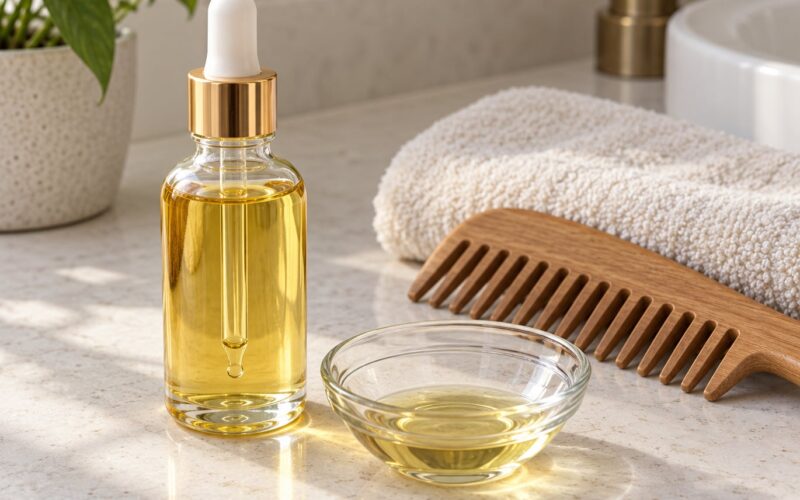
Oil coats the surface of the strand, reduces friction, and adds shine, which is why ends look better immediately. It does not bond the frayed pieces back together. Oils are useful as part of a routine that slows future damage, but on their own they are maintenance, not repair.
How often should I trim split ends between salon visits?
Every six to eight weeks suits most people who are growing out their hair, which is the interval regulars on r/longhair report using successfully. Bleached, highlighted, or regularly heat-styled hair tends to need dusting closer to every four weeks. If you are cutting off more than a quarter inch each time, your routine is causing more damage than the trim can catch up with.
Is it better to trim split ends dry or damp?
Dry hair shows you the true damage because damp strands lie together and hide splits, so dry is better for spotting and judging the trim. Lightly damp hair cuts more cleanly and creates less friction at the blade. Never trim soaking wet hair, since wet strands are weaker and can stretch rather than break cleanly.
What products help prevent split ends from getting worse?
Three things earn their place: a leave-in conditioner or bond-building treatment to make hair easier to handle, a heat protectant used every single time you style, and an oil or silicone-based sealant applied to damp ends. None of them undo existing damage. The protection they add only matters if friction and heat go down at the same time.
A Simple Routine to Start
Start this week with three changes. Stop squeezing your hair with a terry towel and use a microfiber one instead. Detangle damp hair with a wide-tooth comb, from the ends upward, and put heat protectant on whenever you use a hot tool. That alone costs very little and stops most of the new damage from starting.
Then, if the ends still look split, dust them with proper shears instead of letting them travel. When you are getting rid of split ends between cuts, the trim keeps the damage at the tip where it is a cosmetic issue, and the friction and heat changes keep it from coming back. Book a salon appointment when the at-home touch-ups stop holding between visits, which is usually the sign that the damage has spread further up the shaft.
Small habits, done consistently, are what make a cut last. That is how to get rid of split ends between cuts without trading the damage for a shorter style.