How to use jojoba oil on hair and scalp comes down to four things: patch test first, use 1 to 2 teaspoons, massage for 2 to 5 minutes, then wash it out properly. Most people who get it wrong are using far too much and rinsing only once, which is where the greasy, clumpy complaints come from.
Jojoba oil is pressed from the seeds of Simmondsia chinensis, a desert shrub, and it is chemically the closest plant oil to human sebum. That similarity is why it absorbs rather than sits on top of a strand. It works as a sealant, not a water-based moisturizer, so it locks in what is already there instead of adding water.
The whole routine takes about ten minutes plus shampoo time, and getting the dose right is the part most guides skip. Every quantity below is written down, along with the mistakes that cause buildup.
Table of Contents
- What You Need
- Step-by-Step: How to Use Jojoba Oil on Hair and Scalp
- How to Use Jojoba Oil as a Pre-Shampoo Treatment
- How to Use Jojoba Oil as a Light Leave-In Finish
- How to Use Jojoba Oil on the Scalp
- How to Choose Jojoba Oil for Hair
- Common Mistakes
- Tips for Different Hair Types
- When to Stop Using It
- Frequently Asked Questions
- Can I leave jojoba oil in my hair overnight?
- How much jojoba oil should I use on my hair?
- Is it good to put jojoba oil on the scalp?
- How often can I put jojoba oil on my scalp?
- Does jojoba oil cause buildup on hair?
- Can I use jojoba oil as a heat protectant?
- Conclusion
What You Need
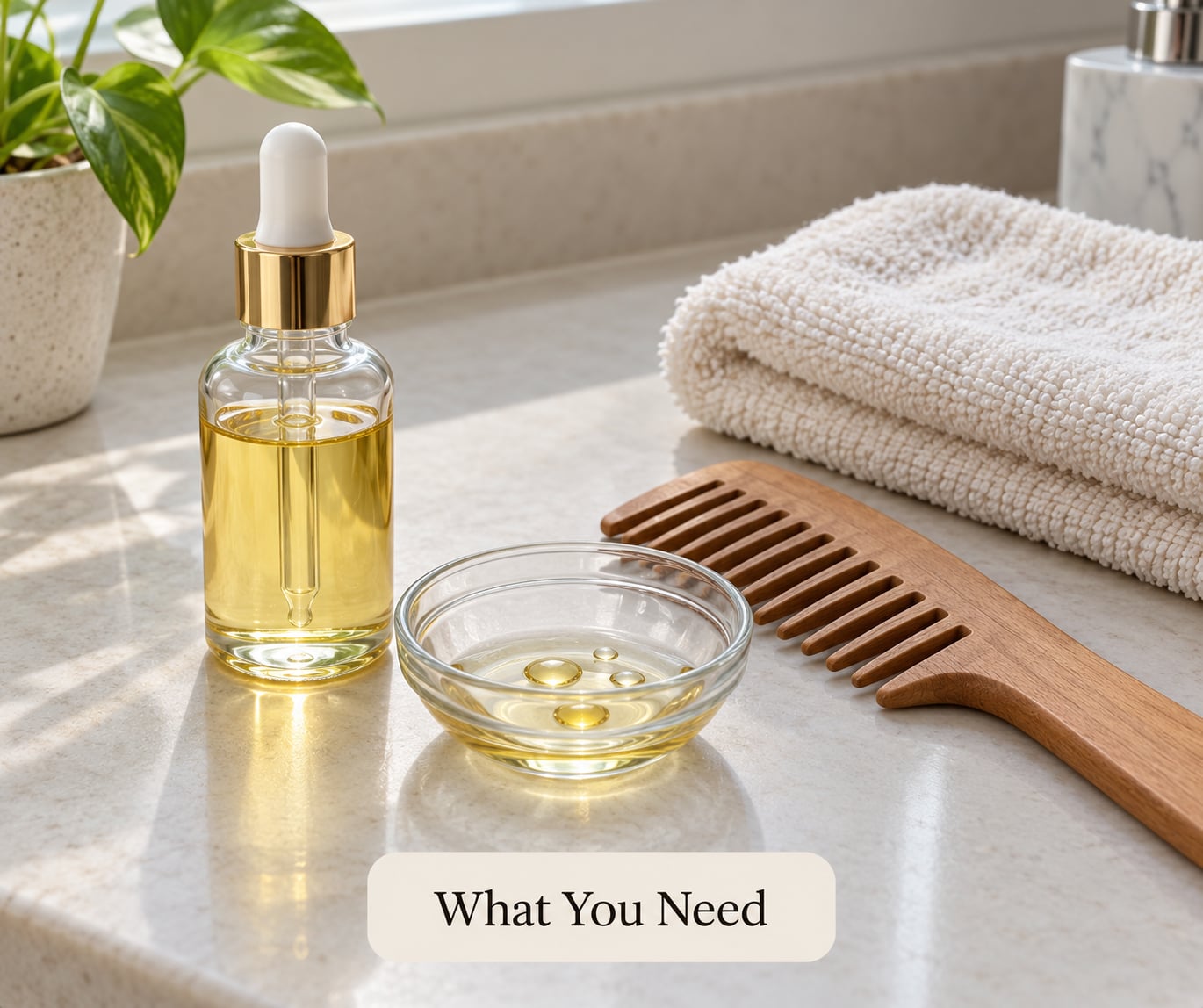
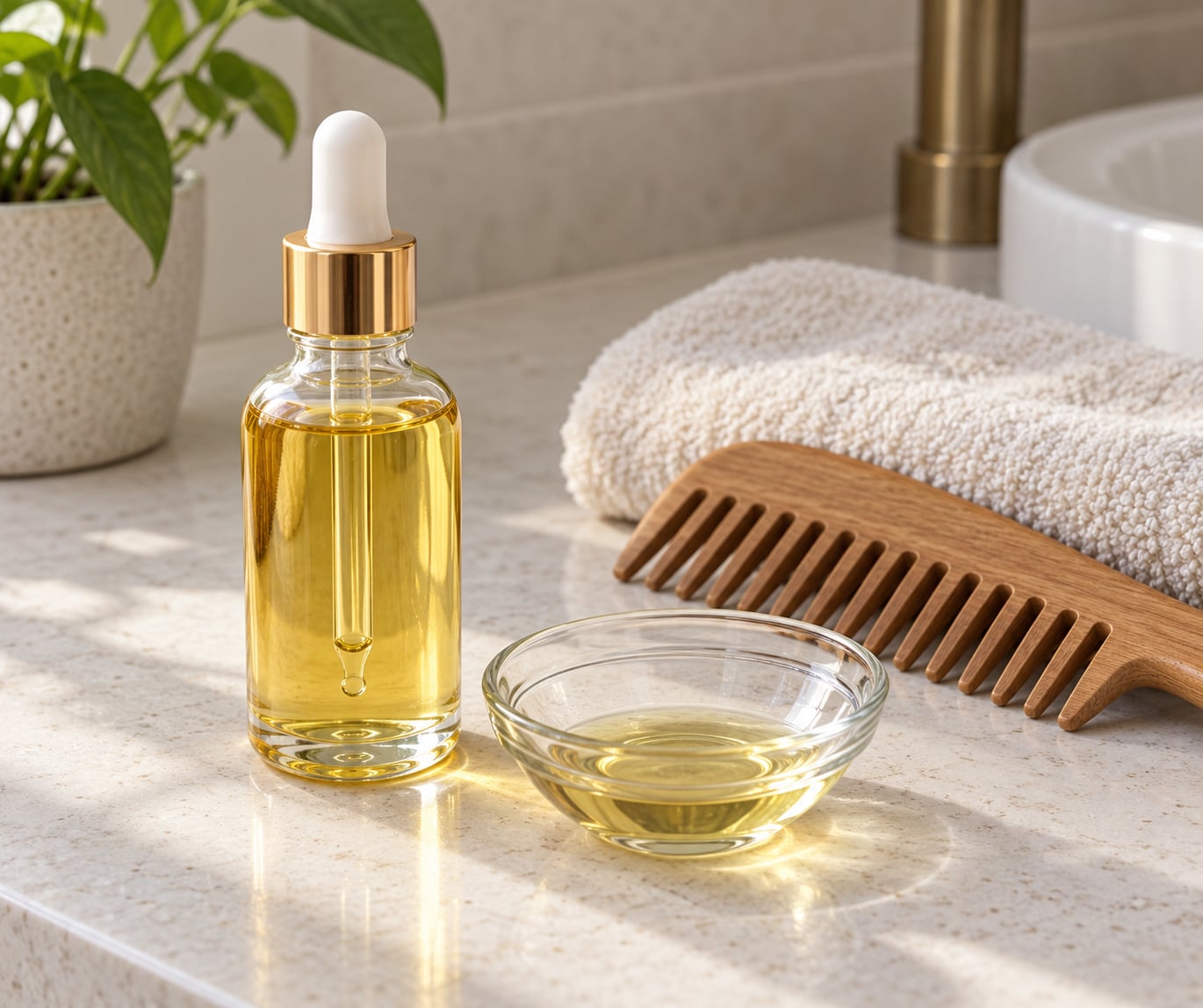
The list is short, which is nice. You need pure jojoba oil, a small bowl or the palm of your hand, a dropper or pipette for sectioned hair, a wide-tooth comb, a soft brush, your usual shampoo, and a towel.
Pick an oil whose ingredient list says one thing: Simmondsia chinensis (jojoba) seed oil. Cold-pressed and organic are the labels worth paying attention to, because refined jojoba is bleached and has more of its natural content stripped out. A dropper bottle is not a luxury here — it is the difference between three drops and half a teaspoon.
Patch test before anything else. Put a few drops on the inside of your wrist or behind your ear, leave it, and check again in 24 hours. Jojoba comes from the same plant family as ragweed and birch, so people sensitive to those plants can react to it too.
Step-by-Step: How to Use Jojoba Oil on Hair and Scalp
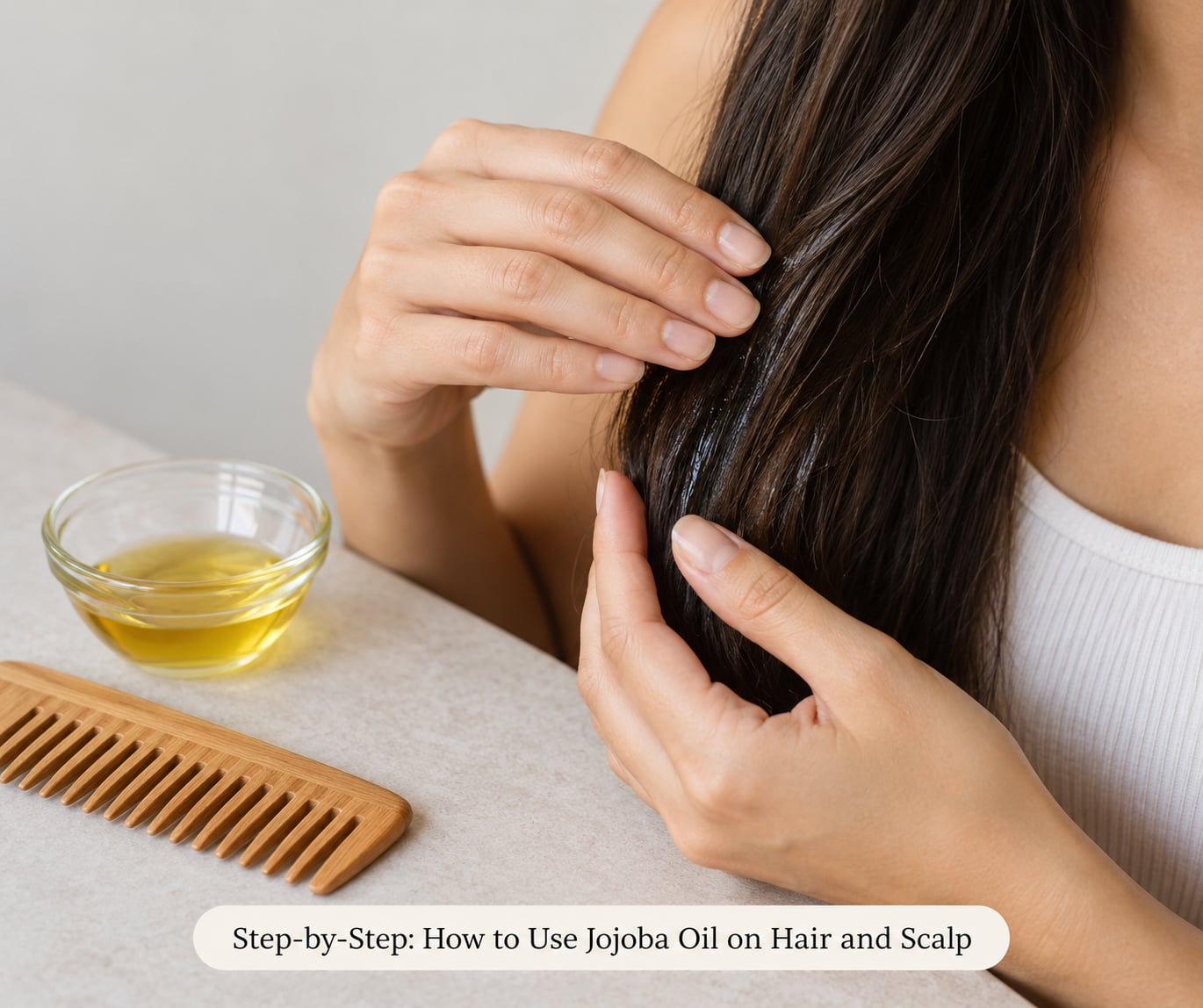
This is the core routine that works for most hair types. Follow it as written the first time, then adjust from there.
- Start on clean hair. Shampoo first, rinse, and leave the hair damp or towel-dry. Oils applied on top of weeks of product residue just seal that residue in.
- Part and dose. Use the tail of your comb to part your hair in sections a few inches apart. Drop 1 to 2 teaspoons of oil along each parting, working from the back of your head toward your face. Thick, long hair takes closer to the full 2 teaspoons; fine hair needs closer to half a teaspoon or less.
- Massage. Use your fingertips, not your nails, in small circles for 2 to 5 minutes. The goal is spreading, not scrubbing. Fingertips flex with the scalp; nails scratch it.
- Let it sit. Leave it 30 to 60 minutes, or overnight under a shower cap if you have time. Longer is fine once or twice a month; every night is where buildup starts.
- Wash it out. Shampoo, and if your hair still feels slick, shampoo a second time. One wash often leaves a film, especially on thick or low-porosity hair.
You will know the dosage was right when the scalp feels lightly coated rather than wet, and your hair dries with a soft shine instead of looking damp.
How to Use Jojoba Oil as a Pre-Shampoo Treatment
A pre-shampoo treatment is the gentler option and the one most people should start with. On long or dry hair, dilute the oil first — mix 1 teaspoon of jojoba with 1 to 2 tablespoons of a water-based conditioner or a small splash of water in a bowl. That dilution spreads further and rinses out faster than pure oil.
Apply the mixture to damp hair, massage the scalp as described above, and leave it 30 to 60 minutes before shampooing. Some people do it on dry hair for extra conditioning, but damp hair distributes it more evenly and reduces the risk of a patchy, heavy result.
Skip the treatment if your hair gets oily within a day of washing, or if you are already using a pre-wash oil regularly. Doing it twice in a week is more than most scalps need.
How to Use Jojoba Oil as a Light Leave-In Finish
For a leave-in, the dose drops to 2 to 3 drops — no more. Warm them between your palms, then press, do not rub, into damp or dry mid-lengths and ends. Stay an inch away from your roots unless your scalp is dry and flaky, because oil at the roots is what makes fine hair look flat by the next morning.
Comb through to distribute it evenly. You want a uniform film, not streaks, and streaks are the reason hair looks clumpy as the oil dries.
Adjust by hair type: 1 drop for fine or straight hair, 2 to 3 for medium wavy, 4 to 6 for thick, curly or coily hair worked through with a styling gel. People using the LOC method often mix 6 or 7 drops into their gel or cream and distribute section by section, which spreads the oil further than a direct drop.
How to Use Jojoba Oil on the Scalp
Yes, it is a good idea to put jojoba oil on the scalp, provided your scalp is intact and you go gently. Clean, dry or damp skin works best. Apply along the partings with a dropper — a common trick for thick, long hair is to run the dropper along each parting from back to front and squeeze, rather than pouring oil over the whole head at once.
Massage for 2 to 5 minutes in small circles. Pressing firmly enough to move the skin is plenty. Any sensation of burning, itching, or spreading redness means wash it out now rather than working it in further.
Be clear about what this can and cannot do. It is a cosmetic oil. It can smooth flaking and make a tight scalp feel more comfortable, but it does not treat dandruff, inflammation, infection, wounds or an ongoing scalp condition. For any of those, see a qualified healthcare professional.
How to Choose Jojoba Oil for Hair
Turn the bottle and read the front, then the back. A single-ingredient jojoba oil lists Simmondsia chinensis (jojoba) seed oil and nothing else. Blends may add argan, coconut, sunflower, or fragrance, which changes the absorption rate and can matter for fine or low-porosity hair.
Cold-pressed and organic indicate less processing. Skip blends with added essential oils if you are allergy-conscious, since fragrance compounds are a common trigger. If you plan to use it as a pre-shampoo treatment, a slightly thicker oil is fine because it rinses; for a leave-in, a lighter oil gives you more control over the dose.
A dropper bottle or a small pour spout makes the difference between consistency and guesswork. Store it somewhere cool and dark, and replace it if it smells different from when you opened it.
Common Mistakes
- Using too much. More oil does not mean more softness. Start at half the amount you think you need, add more next time.
- Oiling an irritated scalp. Redness, itching or broken skin means stop. Oil on inflamed skin is not a treatment.
- Skipping the patch test. One small spot, 24 hours, no guessing.
- Treating wet hair like dry hair. Wet hair dilutes what you apply and gives you less control. Damp hair is the sweet spot.
- Rinsing only once. If your hair still feels slick after shampooing, shampoo again. That second wash is the whole anti-buildup trick.
- Layering it over heavy products. Oil over wax or silicone-based styling seals the buildup and produces the sticky, gum-like texture people describe on low-porosity hair.
Tips for Different Hair Types
Less is usually more with this oil, and individual results vary a lot. Here is where to start.
- Fine, straight hair (1a to 1c): 1 drop, ends only, once a week at most. Root application will flatten it fast.
- Oily scalp, fine hair: use it as a pre-shampoo only. A pre-wash oil can calm a scalp that over-produces sebum without adding weight to the lengths.
- Wavy hair: 2 to 3 drops on damp lengths after washing, scrunched in. Enough to define without crunching.
- Dry or brittle hair: diluted pre-shampoo treatment once a week, lengths only, plus a double wash.
- Thick, coarse hair: the full 1 to 2 teaspoons, and expect to wash twice. Thick hair holds more product and needs more to remove it.
- Curly and coily hair: use it as a sealant after water-based moisture. 4 to 6 drops mixed into gel, applied in sections.
- Low porosity hair: go slowly, once a week at most, and watch for clumping as it dries. If your hair feels sticky a day later, use half the amount next time.
- Protective styles and braids: a few drops along the partings before you style, and sparingly on the lengths. Oiling too close to the scalp repeatedly encourages buildup.
When to Stop Using It
Wash it out and stop if you notice burning, itching, redness, swelling, or discomfort that gets worse over the next few hours. Those are signs of irritation, not of the oil working.
Never apply a cosmetic oil to broken skin, open sores, or an area that is actively flaking and inflamed. And if a scalp problem persists for weeks — persistent itching, heavy flaking, odor, hair loss — stop treating it with oil and talk to a qualified healthcare professional, because that needs a diagnosis, not a cosmetic routine.
Frequently Asked Questions
Can I leave jojoba oil in my hair overnight?
Yes, on an occasional basis, and overnight under a shower cap is the classic way to use it as a deep treatment. It suits dry, long, curly or coily hair that can handle a longer contact time. Sleep in a towel on your pillow if you are worried about transfer, and shampoo twice the next morning. Doing it every night tends to leave buildup, so keep it to once or twice a month.
How much jojoba oil should I use on my hair?
For a scalp treatment, 1 to 2 teaspoons is the usual range, spread along parted sections rather than poured on. For a leave-in finish, use 2 to 3 drops for fine or medium hair and up to 6 drops for thick, curly or coily hair mixed into gel. Half the recommended amount is a common correction for low-porosity or fine hair that turns greasy quickly.
Is it good to put jojoba oil on the scalp?
For most people with an intact, non-irritated scalp, yes. Jojoba oil is the closest plant match to human sebum, so it spreads well and does not feel heavy, and pre-shampoo use can leave a tight or flaky scalp feeling more comfortable. Apply it to clean skin, massage gently for 2 to 5 minutes, and wash it out. It is cosmetic care, not a treatment for dandruff or inflammation.
How often can I put jojoba oil on my scalp?
Once or twice a week as a pre-shampoo treatment is plenty for most scalps. Every other day is more than you need unless you are doing a monthly deep treatment. If your scalp produces a lot of sebum, keep it to once a week. Watch for the signs of too much: hair that looks wet or flat the next day, or a sticky feeling that shows up a few days later.
Does jojoba oil cause buildup on hair?
It can, though usually because of dose or frequency rather than the oil itself. Symptoms are hair that feels sticky, heavy or clumpy as it dries, and a coated scalp. Fix it by cutting the amount in half, spacing treatments further apart, and shampooing twice to rinse fully. A clarifying shampoo once every few weeks also clears residue from styling products that oil has sealed in.
Can I use jojoba oil as a heat protectant?
Jojoba oil is not a heat protectant and should not be treated as one. Dedicated heat protectant sprays and serums are formulated for that job, and a thin oil applied under high heat can smoke and leave the hair feeling heavier. If you like using oil before blow-drying, apply it sparingly, keep the temperature moderate, and use a real heat protectant underneath.
Conclusion
Patch test, then use less oil than you think you need. Start with a diluted pre-shampoo treatment once or twice a week, or a 2 to 3 drop leave-in on damp ends, and wash twice after any treatment.
Give it three or four weeks at that dose before judging it. If hair is soft at the ends but the roots look flat, move the oil down the shaft rather than adding more. Adjusting the routine to your own hair is what works — reaching for the bottle again rarely is.
Last updated October 2026. General beauty information only, not medical advice.