A press day is a scheduled, invitation-only event where a brand shows a curated group of editors, journalists and creators its newest work, hands over press kits and samples, and offers interviews on request. Here is how to run a press day for a small brand: pick one goal, build a list of 15 to 25 real media contacts, give them usable materials, and follow up while the story is still new.
The whole thing takes about six weeks to build and a three-hour window to run. Budget and staffing are the two constraints that decide the shape of the day, so both come before you book anything.
Most small brands I know treat a press day as a photo opportunity. The ones that got real coverage treated it as a service for journalists: easy access, fast answers, good assets, no awkward gaps.
Table of Contents
- What You Need
- Step-by-Step
- How to Run a Press Day for a Small Brand: Set the Goal and Format
- Step 2: Build a Focused Guest List
- Step 3: Create the Media Kit and Press Materials
- Step 4: Invite Media and Confirm Appointments
- Step 5: Design the Experience and Event Flow
- Step 6: Prepare the Team and Press Operations
- Step 7: Follow Up While the Story Is New
- Step 8: Track Results and Apply What You Learned
- Common Mistakes
- Frequently Asked Questions
- How much should a small brand budget for a press day?
- How many guests should I invite to a small brand press day?
- Do I need to provide food, gifts, or product samples?
- Can a fashion press day work as a virtual event?
- When should a small brand follow up with media after a press day?
- Conclusion
What You Need
You need ten things settled before the first payment leaves the account. Missing one of them on the day is what turns a press day into an awkward two-hour wait for three guests.
- One objective. Awareness, editorial coverage, buyer meetings, list growth. Not three. The measurement section at the end only works if there is a single thing you are scoring.
- A budget tier. A shoestring version, a lean version and a polished version. Decide which one before looking at venues, because it changes almost every other choice.
- A date. Tuesday to Thursday, mid-morning, roughly six to eight weeks out. Avoid the Monday after a holiday weekend and the Friday before a major trade deadline.
- Guest criteria. Fit with your product, audience size, geography, and what each contact could realistically do for you.
- Venue requirements. Step-free access if any guest needs it, enough power for your lighting and AV setup, a quiet corner for interviews, and somewhere to store coats.
- Product availability. Count your units honestly before promising samples. A sold-out product still gets talked about, but not the way you hoped.
- Media materials. A one-page fact sheet, a boilerplate paragraph, a founder bio, product descriptions, and high-resolution images in both crop and lifestyle styles.
- Staffing. Someone on check-in, someone on product, someone on hospitality, and one person whose only job is notes.
- A contact list. Every guest, their email and phone, their outlet, their deadline patterns, and whether they have met you before.
- A measurement plan. Decided now, not in the week after, when coverage makes you generous with the numbers.
That list doubles as a printable checklist. Tick each line before you book the date, not after.
On costs, split everything into two piles. Essentials: venue, staffing, product samples, printed materials, basic capture. Optional upgrades: elaborate catering, a step-and-repeat, a video team, a full styling service, a branded gift bag. A shoestring press day can run on a studio you already have access to, homegrown refreshments and one photographer you book by the hour.
One caution on the budget line: the venue is rarely the biggest number. Product seeding usually is, because it scales with your guest count, not your headcount.
Step-by-Step
The workflow below runs from strategy through measurement. Eight steps, and you can do them in this order without skipping.
How to Run a Press Day for a Small Brand: Set the Goal and Format
Choose one primary business goal, then pick the format that serves it. A collection launch and a buyer-meeting agenda are different animals.
Press appointments mean scheduled 20-minute slots. Best when you need coverage and every guest must leave with a clear story. It is the most work for you but the highest hit rate per guest.
Open-house hours mean guests drop in across a window. Best when the goal is relationships and content capture rather than immediate coverage, and it protects you from a rigid run of show.
Showroom sessions are smaller and more curated, often six to ten people with the founder walking through each piece. Best for a first collection or a rebrand people need to be walked through.
Hybrid means a small in-person group plus a live stream for people who cannot travel. It doubles your coordination and only makes sense if your list is geographically spread.
Write down how you will judge the day before you write the guest list. A useful measure for a small brand is appointments kept and coverage filed within 60 days, not headcount or social impressions.
Step 2: Build a Focused Guest List
A focused guest list beats a big one every time. Aim for 15 to 25 names you would be glad to see.
Prioritise by fit first: does this person actually cover your category, and would their readers care? Then look at audience size and geography. A regional lifestyle title with 30,000 engaged readers can do more for a small brand than a national name that never runs the section.
Build outreach in three tiers. Tier one is the ten names you genuinely want in the room, contacted personally by a human. Tier two is twenty names who fit the brief but are not a stretch. Tier three is a wider broadcast list you send only if the first two tiers are thin.
Verify every email address before you send. A bounced invitation is worse than no invitation because it costs you credibility with the list owner.
Do not pad the room. Forty names with fifteen accepts feels like a flop in the room and reads as failure in your own notes. Fifteen names with ten accepts is a good event. Estimating from your yes rate also tells you how many samples to pull, which is usually the number that catches people out.
Step 3: Create the Media Kit and Press Materials
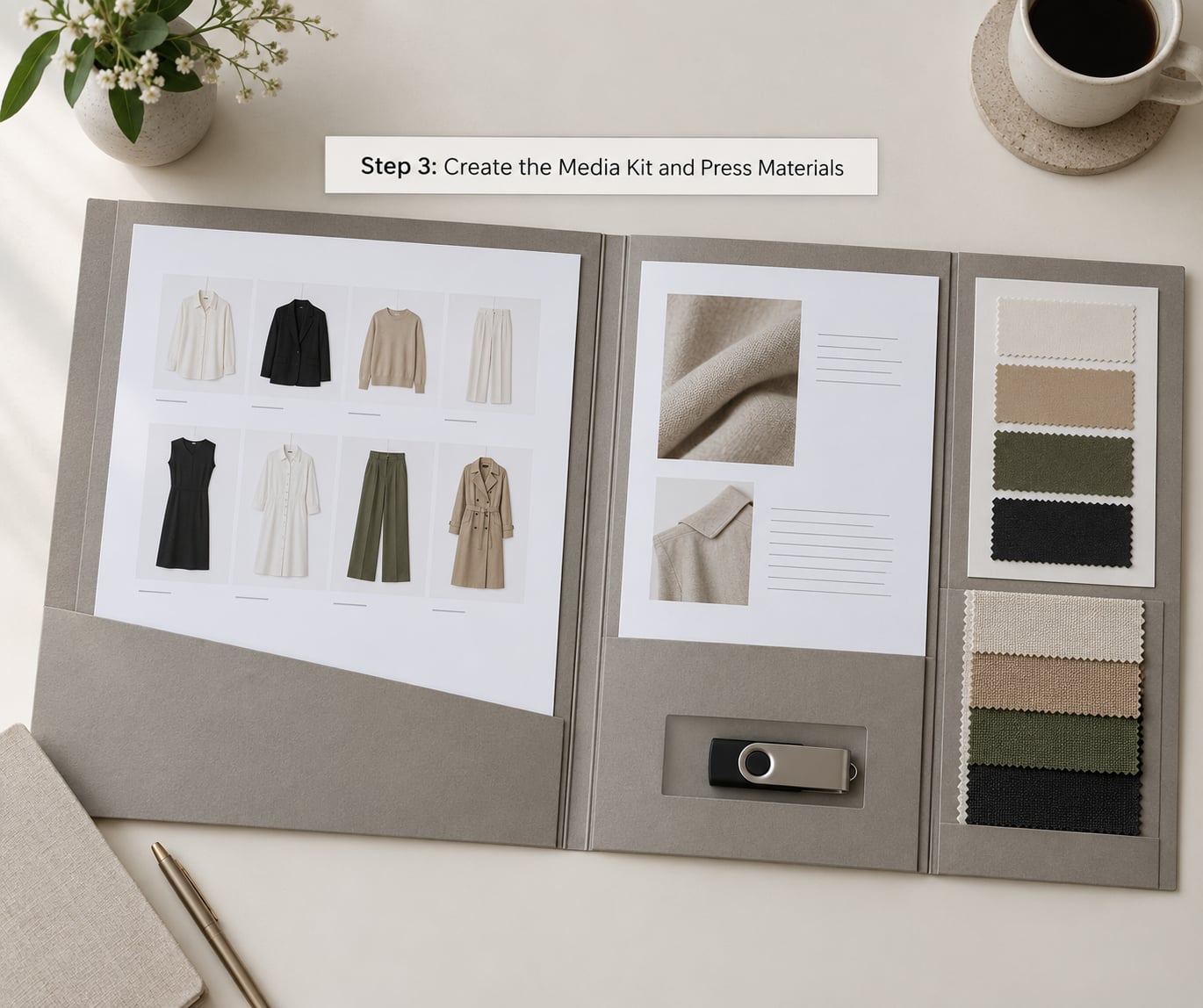
Your digital media kit should fit on one page, with a link for the rest. Editors decide in seconds whether they can use this.
- Brand story and boilerplate. One paragraph, third person, usable word for word.
- Founder information. A short bio and a founder headshot, not a phone snapshot.
- Product details. Dimensions, materials, price, availability and where it can be bought.
- Line sheet. Every style with reference, colourways and sizes in a clean table.
- Images. High-resolution product shots plus lifestyle shots, clearly labelled.
- Brand assets. Logo files and a short note on correct usage.
- Press contact. One name, one phone, one email that a person actually reads.
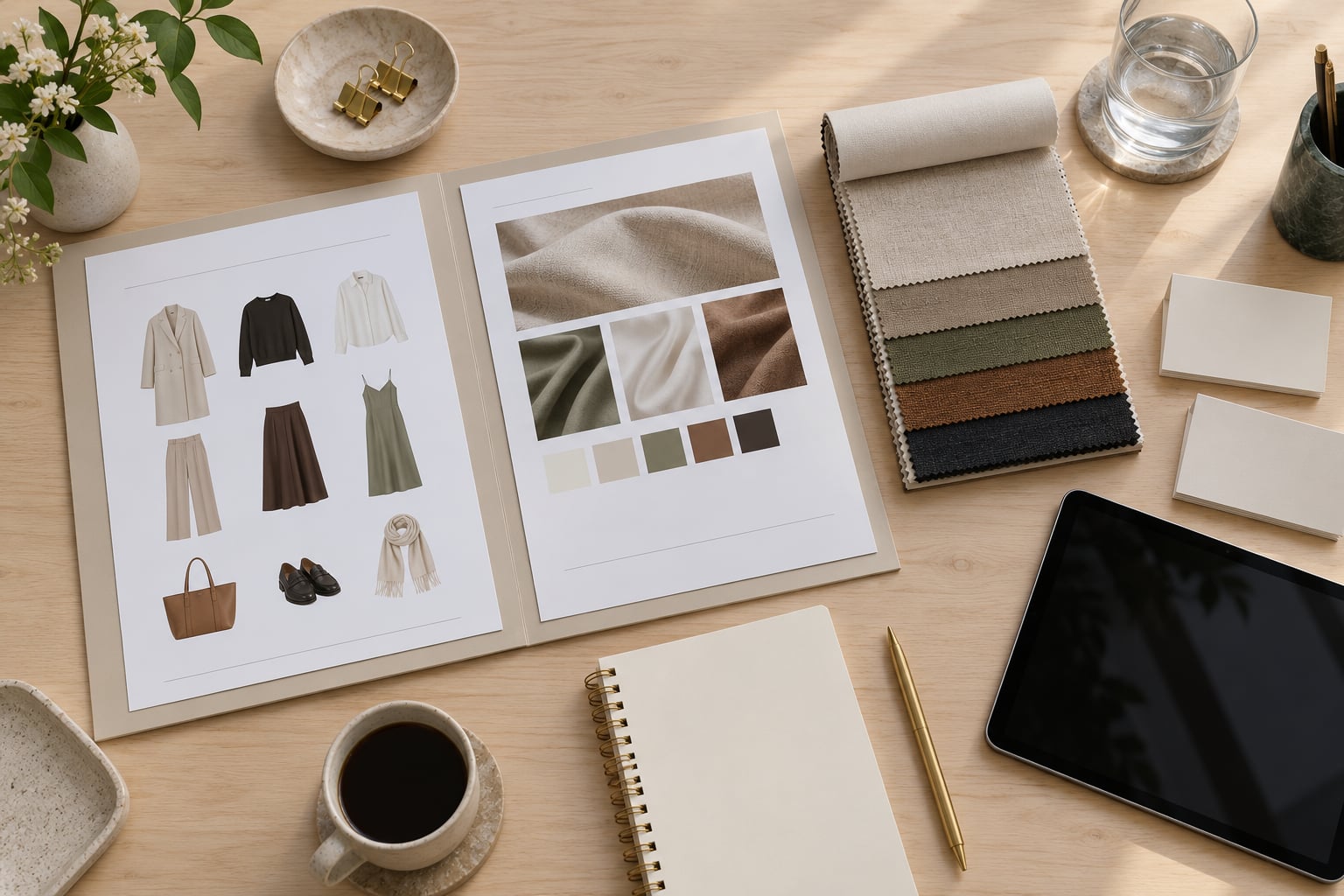
A physical press folder earns its place when your guests take product home with them. Keep it to the same content in print plus fabric and colour swatches. Anything longer than four pages gets skimmed and lost.
Write product copy a reporter can lift without rewriting it. Say what it is made of, what problem it solves, and what it costs. Journalists lose more time rewording vague adjectives than they do rewriting plain facts.
Bundle everything in one link and send it the same day the invitation goes out, not as a follow-up the morning of.
Step 4: Invite Media and Confirm Appointments
The invitation email is the part of a press day that determines turnout, and it takes about fifteen minutes per guest to do properly.
Keep the subject line plain: press invitation, brand name, date, city. A subject line promising an exclusive gets ignored, because everyone else got the same line.
The body should run in this order: one sentence on what you are launching, one on why this person is on the list, the date and time, the address, what you will provide for them, and how to reply. Then stop. Save the founder’s life story for the day.
Offer two or three arrival windows rather than a single time. Working media will tell you which one they want, and that reply is your appointment.
Send one polite follow-up about a week before, a single line. If they have not confirmed 48 hours out, email again asking directly whether to hold their slot.
Handle the admin before the day: any release forms needed for photography or minors, step-free access requests, dietary requirements, and whether anyone wants to bring a photographer or videographer.
Use embargo language only when you have real reason to, and never on more than a handful of guests. An embargo that leaks costs you the whole list.
Keep a confirmed schedule that matches your capacity. If you can host eight appointments well, do not confirm twelve. A no-show gap in your media outreach calendar is the moment your credibility slips.
Step 5: Design the Experience and Event Flow
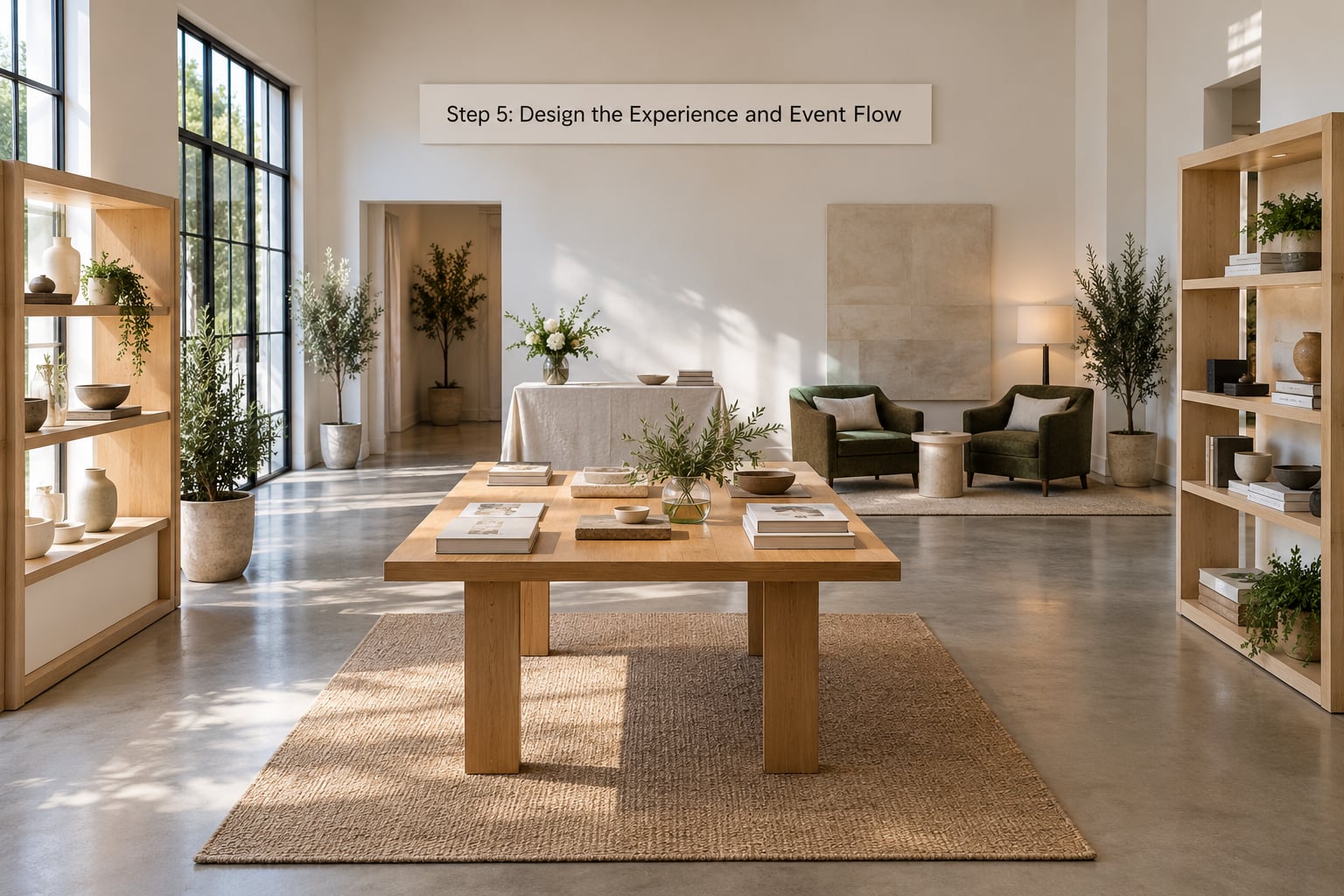
Design the guest journey from kerb to departure. Someone should never wonder where to go next.
Entry runs straight to a welcome table with a sign-in sheet, a badge or credential, and the press folder. Put a phone number on the sign so people can find you without asking.
Then one welcome moment: thirty seconds, thank you, what the day is about. No slides. Presenters lose their room in slide three.
From there, appointments run in short slots while the rest browse. Keep product visible from the entrance but not blocking the route. One central table for pieces you will talk about, secondary displays for browsing.
Lighting matters more than furniture. Even, warm light with no harsh shadows, and no single overhead that flattens fabric. Set music low enough that an interview across the room still works.
Skip strong scent in a small room. It clings to product and follows people into the interview area.
Signage should do three jobs only: brand name, the schedule, and the press contact. Anything else is decoration competing with the product.
Keep it accessible: step-free route, seating with backs, space for mobility aids, and no flashing effects. Keep it comfortable for working media too, which means Wi-Fi, somewhere to charge, and no forced mingling at the end.
Step 6: Prepare the Team and Press Operations
Small teams fail on the day when two people end up doing four jobs. Write the roles down before the week starts.
Assign hosting, check-in, product styling, appointment hosting, photography, note-taking and follow-up. If that is more roles than you have people, cut scope rather than doubling up. Photography and notes are the two nobody should share.
Your run-of-show document needs times, names against each time, and the three things that must not slip. One page, printed, and one copy per person. People perform measurably better with one.
Brief your spokesperson on key messages: three points, each one sentence, and what is genuinely off limits. Run the ten questions editors actually ask, including the awkward ones about pricing, supply and why now. Twenty minutes of practice removes most of the stammering.
Plan for the ordinary failures. A product goes missing, a sample box arrives short, a guest lands forty minutes late, the shoot light blows. Assign one person the authority to solve logistics so the founder never leaves an interview for it.
Protect the founder from being the answer to everything. Founders do the interviews, hand one product story to someone trained on it, and take breaks between slots.
Step 7: Follow Up While the Story Is New
Follow-up is where press days are won or quietly lost. Editors write within days, and anything you send late competes with a fresher story.
Send within 24 hours to everyone who attended, not only to the ones who looked keen. Thank them, answer anything outstanding, send any asset they asked for, and include your approved images already captioned with product names and credits.
Make the images the easiest part of their job. Correct file formats, correct resolution, and a short list of what each image shows.
For anyone who missed the day, a brief note with the images and an offer to answer questions keeps the relationship warm without pressure.
A workable cadence: day one personal email, one week later a single check-in, then one polite note after the editorial cycle has passed. No more than three contacts unless they ask you to stay in touch.
If an article runs with an error, correct the fact quietly and quickly, once, in writing. If coverage does not appear, do not chase it as a complaint. Some stories die in an editor’s queue, and the relationship is worth more than the placement.
Step 8: Track Results and Apply What You Learned
Log what happened within 48 hours, while you still remember which guest asked what.
Record attendance against invitations sent, appointments kept against appointments offered, and qualified contacts you could actually work with later. Then track media mentions, referral traffic during the following week, captures on your list, sentiment, and any buyer or stockist conversation the day started.
Compare the result with the goal you wrote down in step one. If the goal was editorial coverage, coverage count is the score. If it was buyer meetings, count those instead and treat coverage as a by-product.
Write three lines before you file the notes: what worked, what you would change, what to start doing next time. That note is the single most valuable thing you will own when you run the next one, and most brands never write it.
Do not judge the day by guest count or social impressions. Impressions measure how fast you posted, not whether anyone wrote about you.
Common Mistakes
Six problems account for most disappointing press days, and every one has a straightforward correction.
- Inviting too many people. A crowded room slows every conversation. Fix: cap the list at your hosting capacity and let the waitlist exist.
- Starting outreach too late. Six weeks is tight, and three weeks is a scramble that shows. Fix: work backwards from the date and lock the list first.
- Sending a generic pitch. Bulk invitations get filtered because they read as bulk. Fix: one sentence in every invitation naming why that specific person matters.
- Presenting too many products. A wall of product gives nobody anything to write about. Fix: five to eight hero pieces, everything else on browse.
- Failing to confirm appointments. Hope is not a schedule. Fix: chase unconfirmed replies at 48 hours and release the slots you cannot fill.
- Sending unusable assets. Low-resolution images, no pricing, no availability, no contact. Fix: complete the media kit before invitations go out, not the week of.
Five ways to protect both the budget and the brand: borrow the venue where you can, ship samples to attendees afterwards instead of gifting bags, reuse your press kit as an evergreen page, capture your own vertical video so the day pays twice, and always send the same-day photo album to everyone in the room.
Frequently Asked Questions
How much should a small brand budget for a press day?
Most small-brand press days fall into one of three tiers: shoestring, lean or polished. The shoestring version uses a space you already have, simple refreshments and one photographer booked by the hour. Lean adds a proper venue, printed materials and staffing. Polished adds styling, video and catering. Set the tier first, then build the guest list to match it, because product samples and capture usually cost more than the room.
How many guests should I invite to a small brand press day?
Invite 15 to 25 people. That is a realistic yes-rate range for a first press day, and it produces a room you can host properly rather than a crowd you cannot talk to. If you host scheduled appointments, stay within eight to twelve confirmed slots. Never pad the list to look busy. A room where everyone gets real attention outperforms a larger room every time.
Do I need to provide food, gifts, or product samples?
Product samples are not optional if you want coverage. Journalists generally need to try or use a product before recommending it, since their credibility depends on it. Count a minimum of 20 units for a small in-person day, and closer to 50 for a wide multi-product launch. Food helps but is secondary, and generic gift bags rarely earn coverage on their own.
Can a fashion press day work as a virtual event?
Yes, with a different format and different goals. On video you lose fabric, drape and touch, which is most of what fashion press attends for, so lean into showing construction, detail and fit on multiple bodies instead. Expect a smaller guest list, usually your strongest contacts, and measure success by appointment depth rather than headcount. A hybrid day with a handful of people in the room often works better than either alone.
When should a small brand follow up with media after a press day?
Within 24 hours, to everyone who attended. Send a short personal note, any materials they requested, and your approved images already captioned with product names and credits. A single polite check-in about a week later is reasonable, then one more after the editorial cycle passes. Three contacts is usually the limit unless the journalist asks you to stay in touch.
Conclusion
A small-brand press day is a service for journalists first and a marketing asset second. Get the goal, the guest list and the media kit right, and the rest is logistics you can handle in a fortnight.
Start with three things this week: write down one objective you will measure, set the budget tier and date, and build a list of 15 to 25 named contacts who genuinely fit. Only then order samples, book a room or print a folder.