To ask someone to be your mentor in fashion, ask for one small thing first: 20 to 30 minutes of advice on a single question you genuinely care about, once, with no commitment attached. Research them properly, show proof you have done the work, keep the message under 150 words, and then let the relationship grow on its own if that first conversation goes well.
The reason a small ask works is that experienced fashion professionals get several requests a day from people wanting access, placement, or introductions. A request that is specific, brief, and easy to decline is the one that gets a reply. A long letter about your dreams gets archived.
This guide works for personal stylists, stylist assistants, buyers, designers, and fashion editors, whether you are still in school or already working freelance. The approach is current for 2026, and the etiquette has not changed much: respect the time, be easy to say yes to, and never confuse mentorship with a job referral.
If you would rather start from the other end, picking a person is easier once you know what each role in fashion can realistically teach you. That breakdown comes later, under step one.
Table of Contents
- What You Need
- Step-by-Step
- 1. Define What You Want From a Mentor
- 2. Do Your Homework on the Mentor
- 3. Build Credibility Before You Reach Out
- 4. Choose the Right Contact Method
- 5. Write a Short, Specific Request
- 6. Send the Message Without Demanding a Response
- 7. Prepare for the First Conversation
- 8. Follow Up and Protect the Relationship
- Common Mistakes
- Frequently Asked Questions
- What if I do not know the person I want to ask for mentorship?
- How long should I wait before following up after sending a mentorship request?
- Should I ask a fashion mentor to find me a job or introduce me to contacts?
- What if the person agrees to mentor me but only has time for occasional advice?
- How can I make a cold mentorship request more personal without sounding familiar?
- What if the potential mentor says they cannot help?
- Conclusion
What You Need
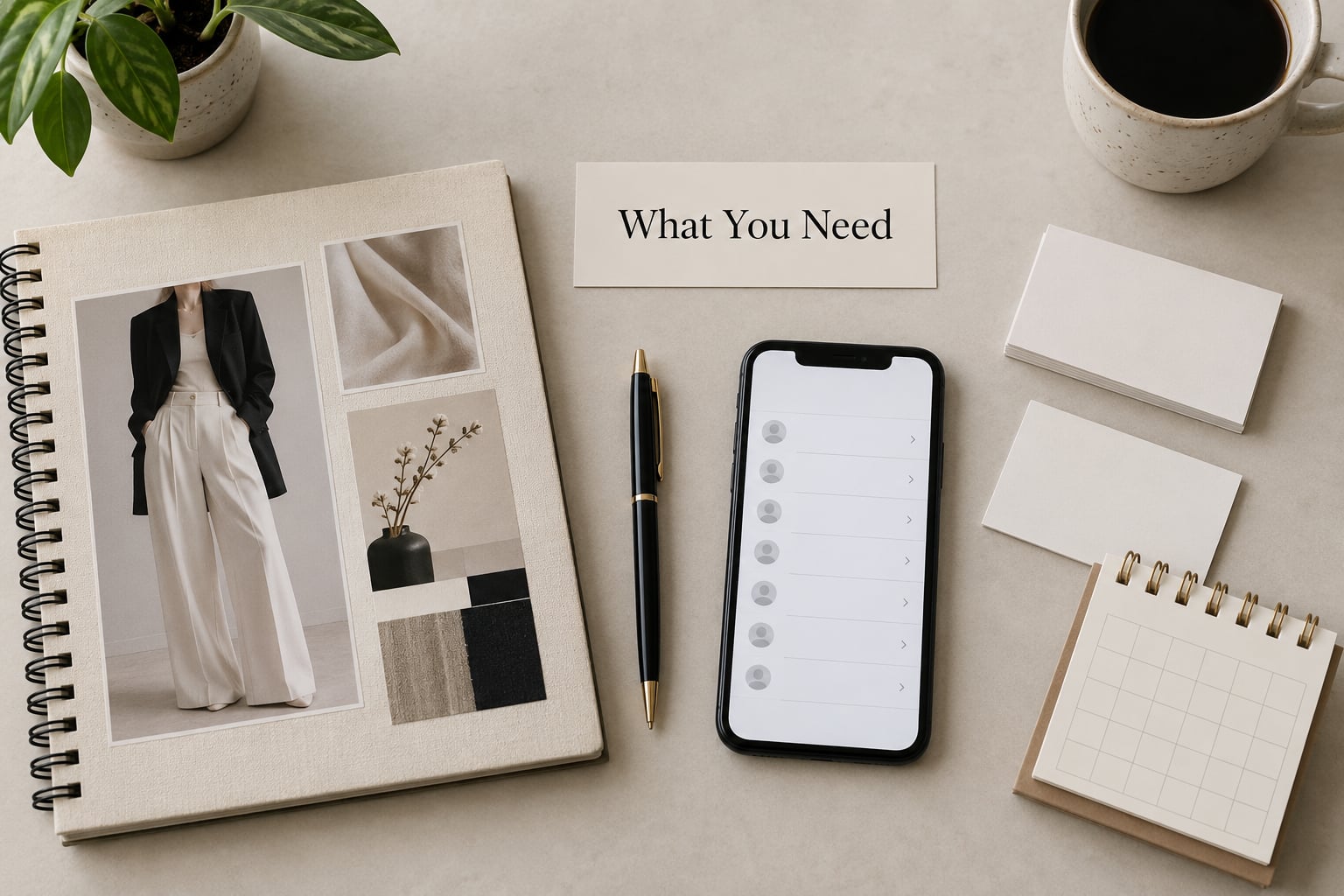
Before you contact anyone, you need five things ready. Without them the message is just a request, and requests get ignored.
One specific question. Not help with my career, not guidance in fashion. One thing: how to get first-time clients without paying for a showroom, or what a first-year buyer job actually involves day to day. A specific question gets a specific answer, and a specific answer is worth the mentor’s time.
Proof you have done the work. A lookbook, a styling credit list, a capsule collection, a set of outfit edits you built for real clients, or a completed course. A portfolio link does more than a paragraph about how hard you have been working.
A short researched message. One or two details that prove you know who they are, such as a specific collection, a styling credit you admired, or an interview they gave about building a brand. Generic admiration reads as a template sent to forty people.
A schedule they can keep. Decide in advance what you are actually asking for, and offer a range rather than a demand. Twenty to 30 minutes by phone or video, once, is the easiest yes in the world. Once a quarter is the next step up, not the opening move.
An easy exit. Say clearly that a no is completely fine and that you will not chase them. This single line makes people far more likely to say yes, because it removes the social cost of declining.
Step-by-Step
1. Define What You Want From a Mentor
Mentorship is advice, feedback, and honest industry insight given over time by someone a few career steps ahead of you. It is not a favor, not a job placement service, and not a way to borrow their contact list. The moment you treat it as those things, you have changed the relationship before it started.
Write your ask on one line. Mine would be: help me understand how to price first-time personal styling sessions so I stop undercharging. One line forces you to know what you want.
Then decide what kind of help you are actually buying. There are four useful kinds, and asking for the wrong one is why people feel let down after a great first call.
| Role | What they can realistically help with | How to approach them |
|---|---|---|
| Personal stylist | Client consultations, body confidence, building a wardrobe that lasts, pricing your time | DM or email, reference a recent outfit set or article |
| Stylist assistant | Showroom logistics, fittings, pulls, trade-week survival, day-to-day credits | Email, be specific that you understand it is an early-career conversation |
| Designer | Portfolio critique, the development process, production reality, presentation | Email with a line about your own work first, not a compliment sandwich |
| Buyer | How buying actually works, vendor relationships, what a seasonal budget looks like | Email or LinkedIn, ask about one buying decision you have seen them make |
| Fashion editor | Writing, editing, pitching, how a story gets commissioned | Email with a published piece of yours attached |
| Creative director | Brand direction, team leadership, what a show or campaign is really about | Email only, and expect that the answer may be a referral downward |
Notice that almost none of these roles can hire you or place you. The ones who can are the wrong people to ask for mentorship, because you would be asking them to do their job for free.
2. Do Your Homework on the Mentor
Spend twenty minutes on their actual work. Read three interviews. Look at the roles they have held and how they talk about their career. Notice whether they give credit to assistants, stylists, and junior people, because that tells you what kind of advice you will get.
This step is also how you avoid asking someone who is a poor fit. A designer who hates talking about business cannot help you build a business. A stylist who built everything from scratch has a very different read on starting out than someone who entered through a family connection.
One warning from the forums worth taking seriously: do not pitch someone in your first year of working together. On r/AskAcademia the consistent advice was to let the relationship develop, show good work, and wait for them to raise it. If you have just started a job or freelance work with this person, be the mentee quietly for now and keep building evidence.
3. Build Credibility Before You Reach Out
You do not need credentials, you need evidence. In fashion that evidence is visual and specific, and it can be built in weeks rather than years.
Build a lookbook of ten to fifteen looks with credits and prices noted. Style two or three friends or family members and photograph the results with their permission. Complete a buyer or merchandising course if you are aiming at buying. Write about what you notice: a short, sharp post about fit or fabric is more convincing than any certificate.
Make sure your Instagram or LinkedIn looks like the work of someone serious, because that profile is the first thing they will open. Pin your best three posts. Remove anything that looks abandoned.
4. Choose the Right Contact Method
Match the channel to the relationship. A stranger gets an email. Someone you have met gets a direct message. A public event gets a spoken sentence, and it works better than you think.
| Channel | Best used when | Tone | Attach or include |
|---|---|---|---|
| Senior roles, designers, buyers, anyone with a public business address | Formal, short, no emoji | Portfolio link or PDF lookbook | |
| Instagram DM | Stylists, editors, designers with an active feed | Warm, brief, one paragraph | Nothing, keep the ask in the message |
| Buyers, corporate roles, people whose work is behind the scenes | Professional, plain | Profile link | |
| In person at an event | Showroom appointments, trade weeks, talks, launches | Warm, brief, thirty seconds | Your card |
| Warm introduction | Anyone at all, if you can get one honestly | Grateful, no pressure on the connector | A sentence the connector can forward |
The verbal ask, said out loud, goes like this: I love what you did with the tailoring on that shoot. I am building a styling practice and I am stuck on pricing. Could I buy 20 minutes of your time for one question? No worries at all if the timing is bad.
In fashion, expect a gatekeeper. Assistants, managers, and publicists screen messages, and going around them is a fast way to lose the chance. Address the assistant politely, or send to the one address listed publicly and accept the delay.
5. Write a Short, Specific Request
Under 150 words. Subject line tells them what it is about. Three moves in the body: who you are in one line, what you noticed about their work, what you want and for how long, plus the no-pressure line.
Cold email template:
Subject: One styling question, 20 minutes of your time
Hi [Name], I am [one line: a second-year fashion student building a personal styling practice, or a freelance stylist six months in]. Your [specific work, e.g. autumn layering edit] made me rethink how I put a client together, and I have a narrow question: how do you price a first session so it covers your time and still feels reasonable to a client?
Would you be open to 20 minutes by phone or video, once? I am completely happy with a short written answer instead if that is easier. And if this is not a good fit, no problem at all, I will not follow up more than once.
Thank you for your time.
[Name, one line of context, portfolio link]
Instagram DM template:
Hi [Name]! I loved your [specific post]. I am [one line about you] and I am trying to work out [one specific question]. Would you have 20 minutes for a quick call, or is there a better person for this? Completely fine if not.
The Instagram version is deliberately short because a long DM gets read once and forgotten. Keep the same three moves and drop the formality.
6. Send the Message Without Demanding a Response
Send, then leave it alone. No reply in seven to ten days gets exactly one follow-up, and a follow-up is not a second version of the first message. It is three lines: reminding them who you are, restating the size of the ask, and releasing them.
What you do not do matters as much. You do not follow up on day three. You do not send a second message the next week. You do not comment on nine of their posts hoping they notice you. You do not tell them what they gain, because that is not how the decision gets made.
Silence is common and usually boring. Assistants filter it, calendars are full, and your message may have landed in a folder they search monthly. Take it as logistics, not rejection.
7. Prepare for the First Conversation
Twenty minutes goes fast, so bring structure. Have your one question ready, plus two or three smaller ones in case the first is answered in five minutes.
Bring something they can look at: a lookbook on your phone, a list of the clients you have styled, a price sheet you are unsure about, or photos of a fit you could not solve. Bring a notebook, not a laptop. Bring no portfolio with fifty unfinished ideas unless you have been asked to review it.
Your job is to listen more than talk, and to end with an action. Before you hang up, say: so the next thing I do is [specific action] by [date]. That single sentence is the difference between a friendly call and a mentor.
Some questions that reliably produce useful answers: what did you wish someone had told you in your first year, what would you change about how you got in, and what does a bad portfolio piece look like from where you sit?
8. Follow Up and Protect the Relationship
Within 24 hours, send a short thank-you. Three lines is plenty. Then do the thing you said you would do, and tell them you did it, with a photo or a line about what changed. People repeat this to me as the single most neglected step, and it is the one that turns a call into a relationship.
After that, keep the cadence they agreed to and nothing more. If they said once a quarter, send a note in six to eight weeks with a specific question and a specific update. If they never set a cadence, ask once, gently, and accept the answer.
When a mentorship fizzles, do not take it personally and do not disappear in disappointment. Thank them, stay friendly, and stay in touch lightly. Plenty of working relationships start as one conversation that got out of hand. On r/Entrepreneur the most common failure is not a wrong ask, it is asking once and then going quiet for two years.
A different tactic that works well: instead of asking one person for long-term mentorship, ask three different people for one conversation each. Advice on r/AskWomen is worth following here. You learn more, nobody is overloaded, and you do not put all your hopes on a single relationship.
Common Mistakes
Sending a long letter. Four paragraphs about your background and your dreams. Cut to 150 words. The person reading it is between fittings.
Asking for everything at once. Mentorship, job help, introductions, portfolio review, and friendship. Ask for one of these now. The rest arrive on their own over a year, or never, and that is fine.
Being too familiar too fast. Fake intimacy, lots of exclamation marks, jokes you are not sure lands. Warmth is good. Ease is good. Performative closeness is not. This worry is the top one on r/AskMen for people approaching senior figures in creative fields, and the fix is simply shorter and more factual.
Asking for unpaid work. Could you style my lookbook for free, or help me with my collection, or do my sourcing. That is a job, not mentorship, and volunteering for it reads as a problem.
Following up repeatedly. Three unanswered messages in ten days ends the possibility permanently. One polite nudge, then silence.
Treating mentorship as placement. The moment you ask for a referral to a specific person at a specific house, the dynamic changes. If they offer an introduction, say thank you warmly. Do not ask.
Disappearing after the first call. You got what you needed and vanished. This is the mistake that makes people wary of mentoring anyone new.
Gifting too much. An expensive gift at the first meeting makes the meeting uncomfortable and hard to pay back. A specific, cheap book or a well-chosen coffee is plenty.
Frequently Asked Questions
What if I do not know the person I want to ask for mentorship?
That is the normal starting point. In fashion, follow the work: read interviews, watch the talks they give, and pick someone whose career path resembles the one you want. Reference something specific they did in your first message so the approach is grounded in their work rather than a generic fan note. Many working relationships in this industry begin with no connection at all, just a well-targeted, small ask.
How long should I wait before following up after sending a mentorship request?
Wait seven to ten days, then send one short follow-up of about three lines. Remind them who you are, restate the small size of the ask, and explicitly tell them you will not write again. If there is no reply after that, stop entirely. Twice is the limit in cold fashion outreach. Repeated messages after a second silence read as pressure, not persistence.
Should I ask a fashion mentor to find me a job or introduce me to contacts?
Not at the beginning. Mentorship is advice and feedback; referrals are a favor with a very different weight. Asking for a specific introduction in your first message ends the mentoring before it starts. If they volunteer one, accept gratefully and do not ask again. Over months, if you have followed through on your commitments, asking whether they know anyone is a normal and reasonable step.
What if the person agrees to mentor me but only has time for occasional advice?
Take it, and do not treat it as a lesser version of what you wanted. A working stylist who answers one sharp question every month or two can be more useful than someone enthusiastic who disappears. Say thank you, send your update, and make each contact earn its place by arriving with a specific question. You can always raise the cadence later if the relationship earns it.
How can I make a cold mentorship request more personal without sounding familiar?
Personal comes from specificity, not warmth. Mention one real detail: a collection, an interview answer, a styling decision you have thought about, a problem you have already tried to solve yourself. That proves you looked and it gives them something to respond to. Keep the language plain and the length short. Enthusiasm is fine; performance is what makes cold outreach feel uncomfortable to both sides.
What if the potential mentor says they cannot help?
Thank them, mean it, and move on without commentary. A no is usually about time, not about you, and it costs you nothing to stay gracious. Do not ask why, and do not ask whether they would recommend someone else, which puts them on the spot twice. Then approach the next person on your list. If a few declines shake you, keep the ask small enough that each one barely matters.
Conclusion
Start today with one name. Write down the single question you actually want answered, spend twenty minutes learning about that person’s work, and send a message of no more than 150 words that asks for 20 minutes and says clearly that a no is fine.
That is the whole method. Keep the first ask small, follow through on whatever you promise, and let the rest build from there.