How to strengthen weak peeling nails? Start by removing the cause, then rebuild the nail plate with moisture and protection. Your nails are keratin, and keratin swells when it soaks and contracts when it dries. Repeating that cycle makes the plate peel and flake, so the fix is gloves for wet work, cuticle oil several times a day, gentle filing, and patience while healthy nail grows in over four to six months.
If your nails already peel, take heart. Most peeling nails are not diseased and not permanently damaged. They are tired. The part you can see peeling is old nail that has been through too many washes, too many removers, or too many sessions of picking at the same edge.
That last part matters most. Every time you pull a lifting edge, you tear it a little wider. The routine below is built around not doing that.
Table of Contents
- What You Need
- Step-by-Step: How to Strengthen Weak Peeling Nails
- Step 1: Stop Further Damage and Reassess Your Routine
- Step 2: Trim and Smooth Peeling Edges Correctly
- Step 3: Protect the Nail Plate Every Day
- Step 4: Support the Nail and Cuticle Area
- Step 5: Track Progress and Avoid Over-Treating
- Common Mistakes
- Frequently Asked Questions
- How long do weak peeling nails take to recover?
- Can peeling nails be strengthened at home?
- Should I cut off peeling parts of my nails?
- Does nail hardener help weak peeling nails?
- When should peeling nails see a doctor?
- Conclusion: Start With Less Damage
What You Need
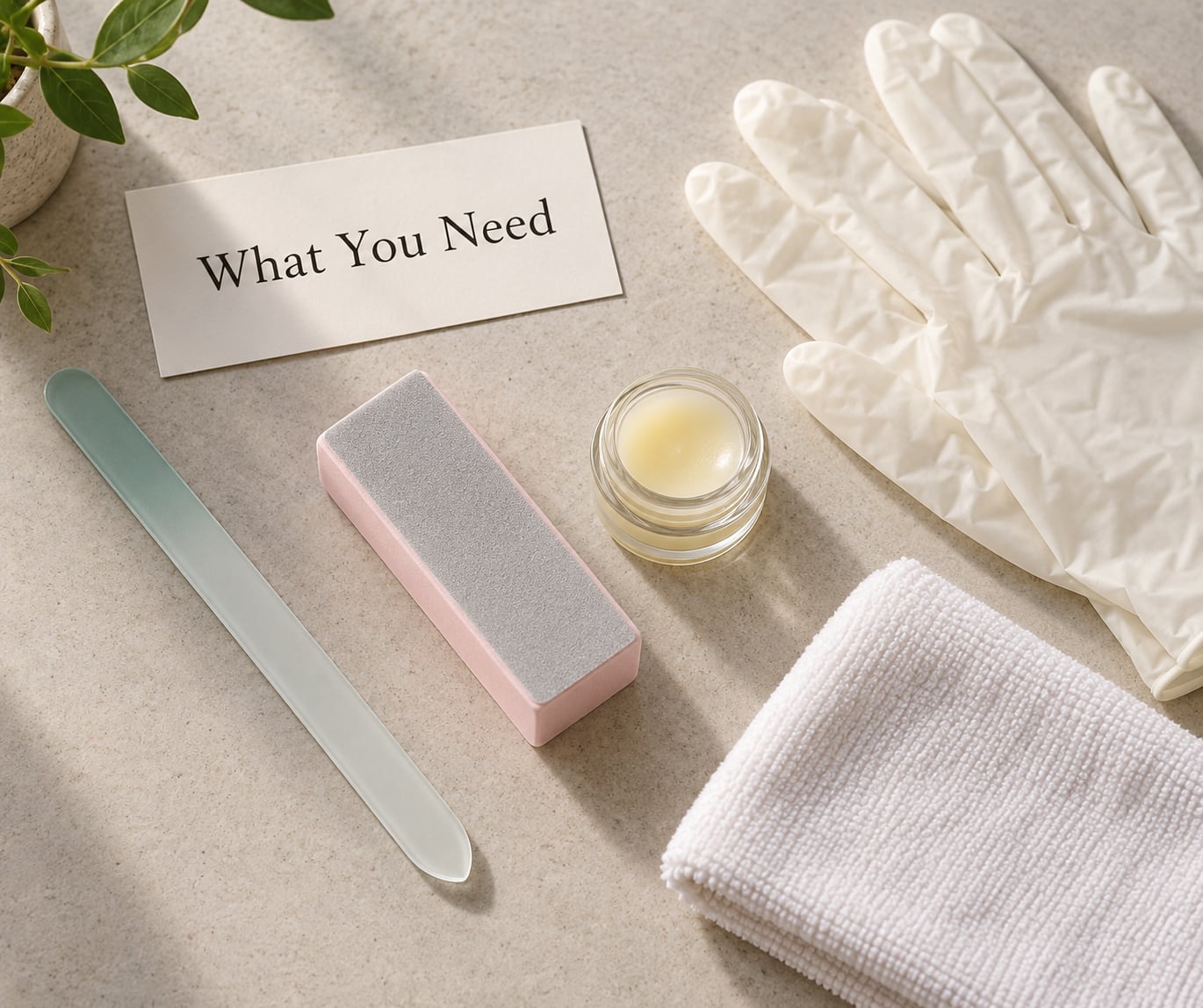
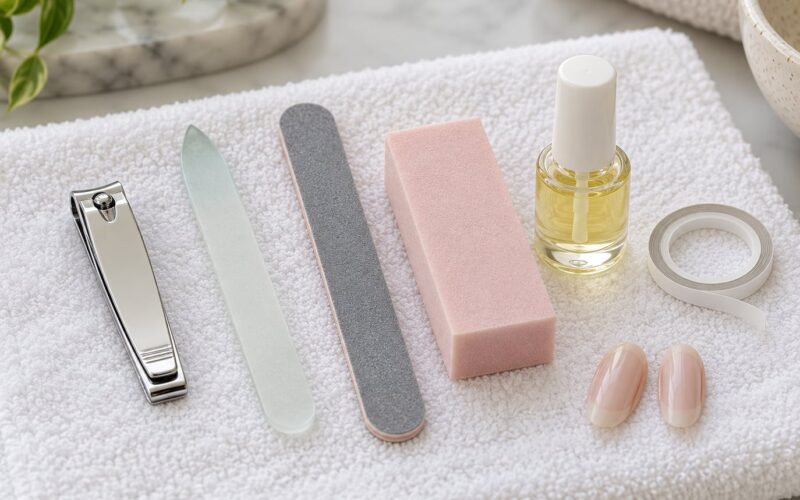
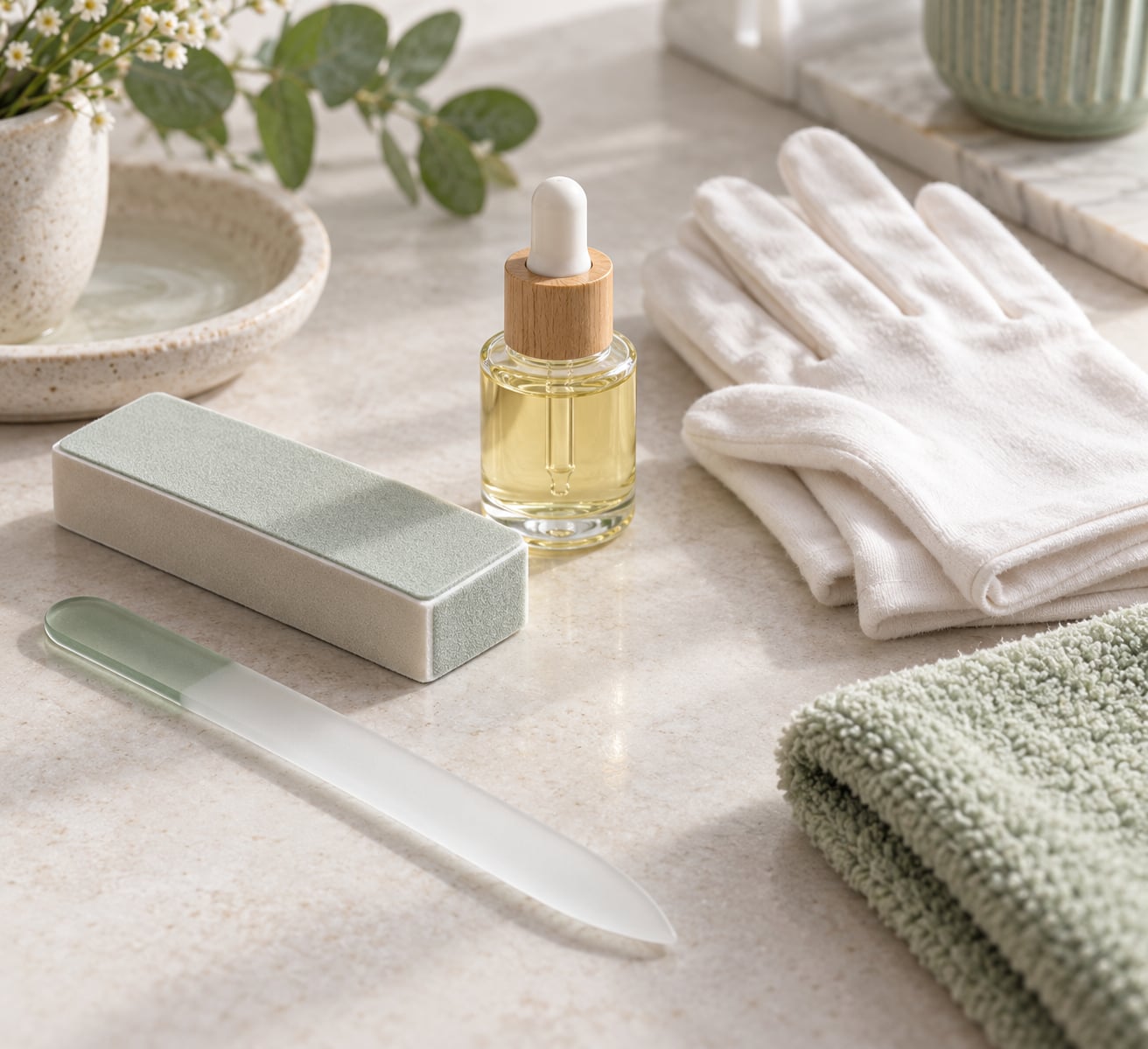
You do not need a large kit. You need five things, and every one of them earns its place.
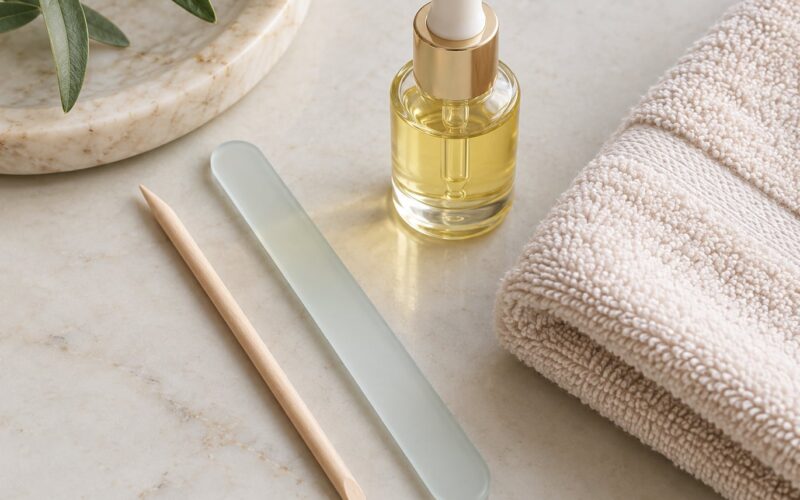
- A glass or crystal nail file. Glass cuts in one direction and does not tear the edge of the plate the way a metal file can. A wooden emery board is fine too, as long as you file in one direction only.
- A buffing block, 180 to 240 grit. Coarse grit shaves down the plate. You want a fine block for smoothing ridges and shine, not thinning.
- A cuticle oil. Any penetrating oil works, including plain jojoba, vitamin E, argan, or solar oil. Users on nail forums name solar oil more often than anything else, largely because it doubles as a nail and cuticle treatment.
- A thick hand cream. Cheap is genuinely fine here. You are buying glycerin and emollients, and you will use it after every handwash.
- Cotton-lined rubber or nitrile gloves. The cotton lining matters because plain rubber traps sweat against the nail, which causes its own kind of peeling.
A soft cloth and a pair of clean, sharp clippers round out the list. Skip anything described as a soaking solution, acetone dip, or strengthening treatment that needs a soak to work.
Step-by-Step: How to Strengthen Weak Peeling Nails
Step 1: Stop Further Damage and Reassess Your Routine
The first step is subtraction, not addition. Look at the last two months honestly and find the thing you repeat.
- Do your nails spend long stretches in water? Washing dishes by hand, swimming, or a job that keeps you wet is the most common driver, and it is the one most people do not count as damage.
- Do you soak before gel, acrylic, or dip removal? Soaking swells the plate, and the remover then strips oil out of it. Nails often peel hardest in the two weeks after an enhancement comes off.
- Do you bite or pick at peeling edges? Both spread the split and can introduce infection around the nail.
- Do you file during every manicure? Repeated buffing thins the plate from the top, and thin plates peel faster.
Change the habit now, before you change anything else. Nail forum regulars report the same thing: the people who improved fastest were not using a better product, they simply cut their time in water on bare nails.
Step 2: Trim and Smooth Peeling Edges Correctly
Clipping nails is not optional. A peeling edge catches on fabric, keys, and pockets, and it tears from there.
Dry your nails fully, disinfect your clippers, and cut straight across a few millimetres shorter than you would like. Follow the natural curve slightly. Rounded or soft-square shapes split less than long tapered ones.
Then take your glass file and smooth only the rough or lifting spots, moving in one direction. Back-and-forth filing creates micro-splitting you cannot see until the plate flakes later. Never tear or pull a lifting edge, even when it is hanging there annoying you. Clip it flush instead.
Do this every two weeks while the nail heals, not daily. Daily buffing is how people accidentally thin a nail plate.
Step 3: Protect the Nail Plate Every Day
Protection does more work than any product you can buy.
Put on cotton-lined gloves for dishes, cleaning, and any wet task. Apply oil before you put the gloves on, not after you come out, because oil applied before water exposure is doing preventive work rather than repair work.
Keep showers short and stop using your nails to scrape, pry, or open things. That last habit does more silent damage than most people realise.
If you want to keep polish on, a protective base coat under colour matters more than the colour itself, and removal matters most of all. Soak for a few minutes at most, push gently with a wooden stick, and never scrape with metal. Soakable polish removes far more gently than anything that requires acetone.
A simple routine beats a complicated one:
- Morning: push back cuticles after a shower, oil the nail plate and cuticles, moisturise the hands.
- During the day: hand cream after every handwash, gloves for every wet task.
- Night: second and third oil application, then a thin layer of hand cream or petroleum jelly massaged into the cuticle area.
- Weekly: trim and file in one direction, review which nails still peel.
Step 4: Support the Nail and Cuticle Area
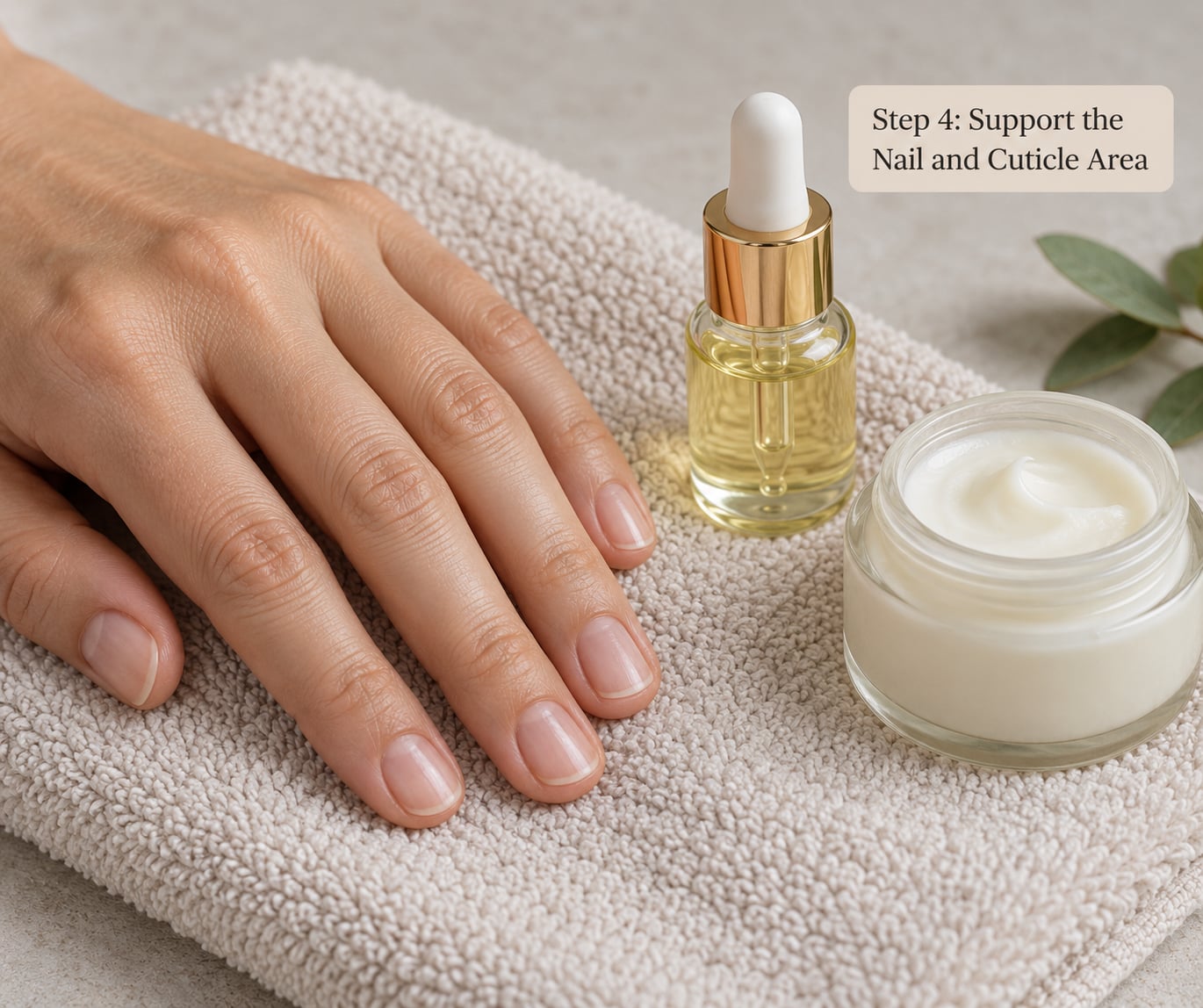
Moisture is what separates a flexible nail from a brittle one. Dry keratin is stiff, and stiff keratin cracks.
Massage cuticle oil into the plate and cuticles two or three times daily. Nail forum posters consistently report that oil applied after every handwash outperforms oil applied once at night, because the cuticle area loses moisture constantly during the day rather than in one nightly window.
On the question of whether petroleum jelly helps: yes, it works well as an overnight seal. It does not strengthen the nail, it slows water loss from the surrounding skin and cuticle. Apply a thin layer at night, massage in, and wipe the excess off in the morning so it does not sit under polish.
Cutting cuticles is worth skipping. Aggressive cuticle work, including some Russian manicures, can thin the seal between the plate and the fingertip, and moisture escapes from there.
On nutrition, keep it general. Nails are keratin built from protein, and a diet short on iron, zinc, or protein can show up in your nails. Eating a varied diet with adequate protein, iron, and zinc is reasonable support. Supplements only affect newly grown nail, which means results lag behind by months, and they help mainly when a deficiency exists. If you suspect a deficiency, ask a doctor or registered dietitian about testing rather than guessing at doses.
This is general information, not medical advice. Persistent nail changes deserve a proper look from a clinician.
Step 5: Track Progress and Avoid Over-Treating
Nails grow roughly three millimetres a month, and a full fingernail takes four to six months to replace. Set your expectation there, then measure against it.
Take a photo of your nails on day one in the same lighting. Every four weeks, take another and note which nails still peel. Within two weeks most people notice fewer hanging edges, because handling changes alone stops the tearing. By four to six weeks you should see new, smoother growth at the base. Full replacement is the six-month mark.
Avoid over-treating. Stacking a hardener, a bond, a treatment, and three coats of polish on a weak plate gives you a thick, rigid nail that snaps instead of peeling, which is a worse problem to fix. One thin coat of a keratin-based strengthener applied daily is enough, and it should be removed and restarted every few days rather than built up indefinitely.
The hardener question deserves a direct answer: it can help by adding structure while new, healthy nail grows underneath, but it does not repair the damage already there. Peeling nails are usually soft and bendy rather than hard, so flexibility, not hardness, is what you are aiming for.
Common Mistakes
Pulling or tearing a lifting edge. This is the single habit that turns one peeling nail into five. The correction is mechanical: clip it flush at the next trim, never pull it.
Biting and picking. Chewing away at a rough edge chews the plate unevenly and spreads the damage sideways. Keep nails short and filed smooth, which removes the reason to reach for them.
Filing too aggressively. Buffing the whole plate every manicure thins it from the top. Use a fine 180 to 240 grit block on ridges only, file in one direction, and stop when the shine appears.
Soaking nails. Ten minutes in warm water to soften cuticles sounds harmless. The soak swells the keratin, and the drying that follows contracts it, which is exactly the peeling mechanism. If you need to soften cuticles, push them back after a normal shower instead.
Treating a product as a quick fix. Strengtheners and hardeners work on the nail that grows next, not the one peeling now. Anyone promising an overnight fix is describing a coating, and coatings peel off in exactly the way you are trying to avoid.
Two smaller ones worth naming. Do not soak off gel or acrylic with acetone sitting on the nail for twenty minutes, and do not paint peeling nails repeatedly without giving the plate a break, because removal cycles are usually the source of the peeling in the first place.
Frequently Asked Questions
How long do weak peeling nails take to recover?
Fingernails grow about 3mm a month and take four to six months to grow out completely. Most people notice fewer peeling edges within two weeks of cutting back water exposure, and visibly healthier new growth at the base by four to six weeks. A full, undamaged nail is a six-month project. If nothing has shifted after eight weeks of consistent gentle care, that is a good reason to see a clinician.
Can peeling nails be strengthened at home?
Yes, for everyday damage caused by water, chemicals, over-filing, and enhancement removal. You protect the nail with gloves for wet work, moisturise several times a day, file gently in one direction, and stop picking. Home care cannot correct a deficiency, a fungal infection, or lifting caused by a health condition, so persistent or worsening peeling needs a professional look.
Should I cut off peeling parts of my nails?
Clip the loose edge flush if you can, but never tear or pull it. A small hangnail caught in fabric will split further, which is how peeling spreads across the whole free edge. File the area smooth with a glass file in one direction after trimming. If the lifting section is more than a few millimetres across, let a professional nail technician trim it instead of digging at it yourself.
Does nail hardener help weak peeling nails?
A thin daily coat of a keratin-based hardener can give the new nail growing underneath extra structure while it forms. It does not repair the damage you can already see. Over-hard formulas make a plate rigid, and rigid nails snap rather than peel, so use one product lightly rather than building up several layers. Remove it and restart every few days to avoid buildup.
When should peeling nails see a doctor?
See a doctor or dermatologist if peeling comes with discolouration, thickening, crumbling, separation from the nail bed, pain, redness, swelling, or pus, or if it starts suddenly and spreads. Nails that lift away from the bed or look thickened can indicate a fungal infection, which needs proper diagnosis and treatment. Also book a visit if you have a chronic condition or suspect a nutritional deficiency, and note that supplements only affect newly grown nail.
Conclusion: Start With Less Damage
Start by doing less, not more. Stop pulling and picking at peeling edges, keep nails short, cut the time your nails spend in water, and put oil on two or three times a day. That combination is what strengthens weak peeling nails, and it works because it stops the cause rather than covering the symptom.
Then give it four to six months, which is the time a fingernail needs to grow out fully. If peeling carries pain, discolouration, thickening, or separation from the nail bed, or if it spreads despite consistent gentle care, book an appointment with a doctor rather than adding another product.