To refresh second day hair fast, absorb the oil at your roots, add a little moisture or product back into your lengths, and finish with one simple style. Most people can do that in about five minutes with a brush, a bit of dry shampoo or absorbent powder, and a hair tie. You do not need to re-wash, and you do not need to rebuild your hairstyle from scratch.
Second-day hair is simply hair that has been washed once and then worn or slept in for roughly 24 hours. Your scalp has had time to produce sebum, your natural oil, which is why the roots look flatter and shinier than they did on wash day. The same sebum is also why many styles hold better on day two, so the goal is to remove the oil where it flattens you and leave it where it helps.
If you are short on time, jump straight to step 3 and pick the method that matches your texture. If your hair is fine and low-porosity, read the warning in step 2 first, because rewetting is exactly what makes that hair frizz instead of fresh.
Table of Contents
- What You Need
- Step-by-Step: How to Refresh Second Day Hair Fast
- Step 1: Reshape Without Rebuilding Your Whole Hairstyle
- Step 2: Reactivate Second Day Curls or Waves
- Step 3: Smooth Frizz and Flat Roots
- Step 4: Make a Polished Ponytail in Minutes
- Step 5: Choose a Fast Bun or Braid
- Common Mistakes
- Common Mistakes and Quick Fixes
- Frequently Asked Questions
- Can I refresh second-day hair without washing it?
- What is the fastest way to make second-day hair look styled?
- How do I refresh second-day curls without making them frizzy?
- Is dry shampoo good for hair every day?
- How do I fix oily roots without flattening my hair?
- What should I do when second-day hair looks greasy?
- Conclusion
What You Need
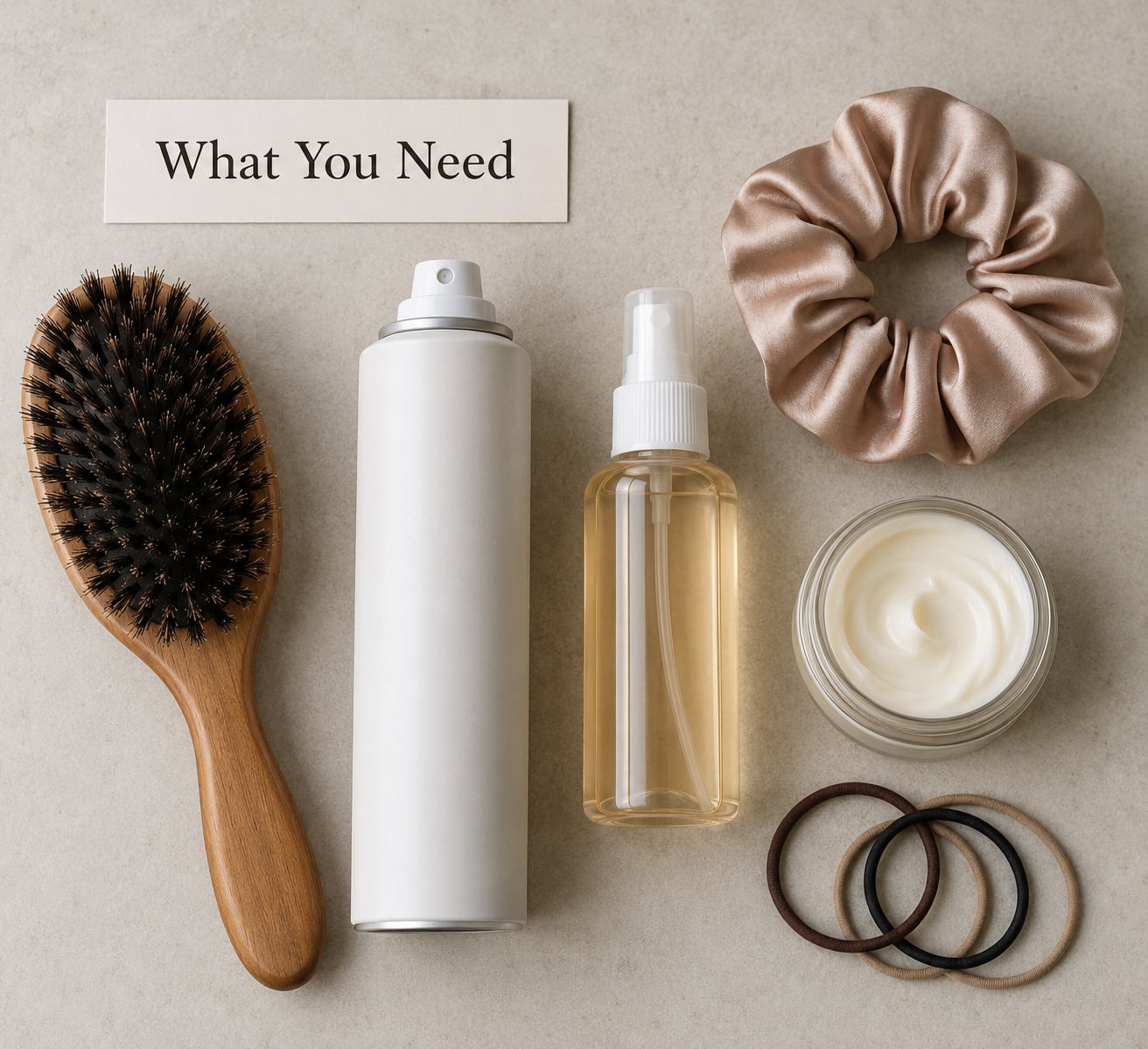
Here is the short list, and almost all of it is optional depending on your hair.
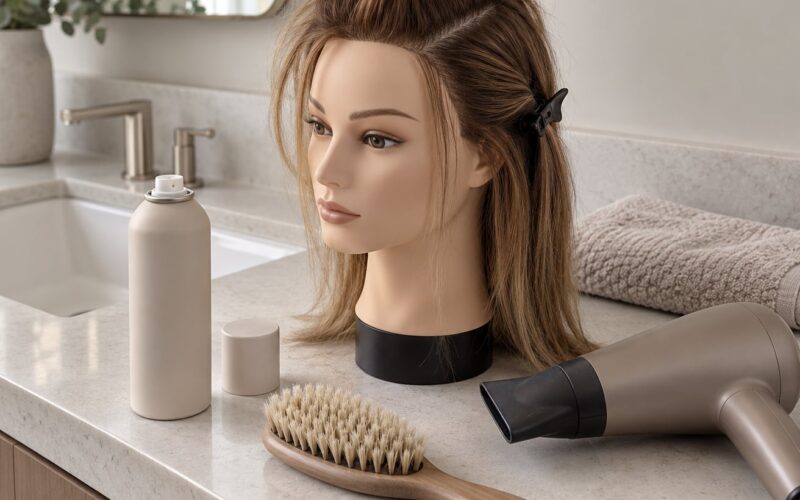
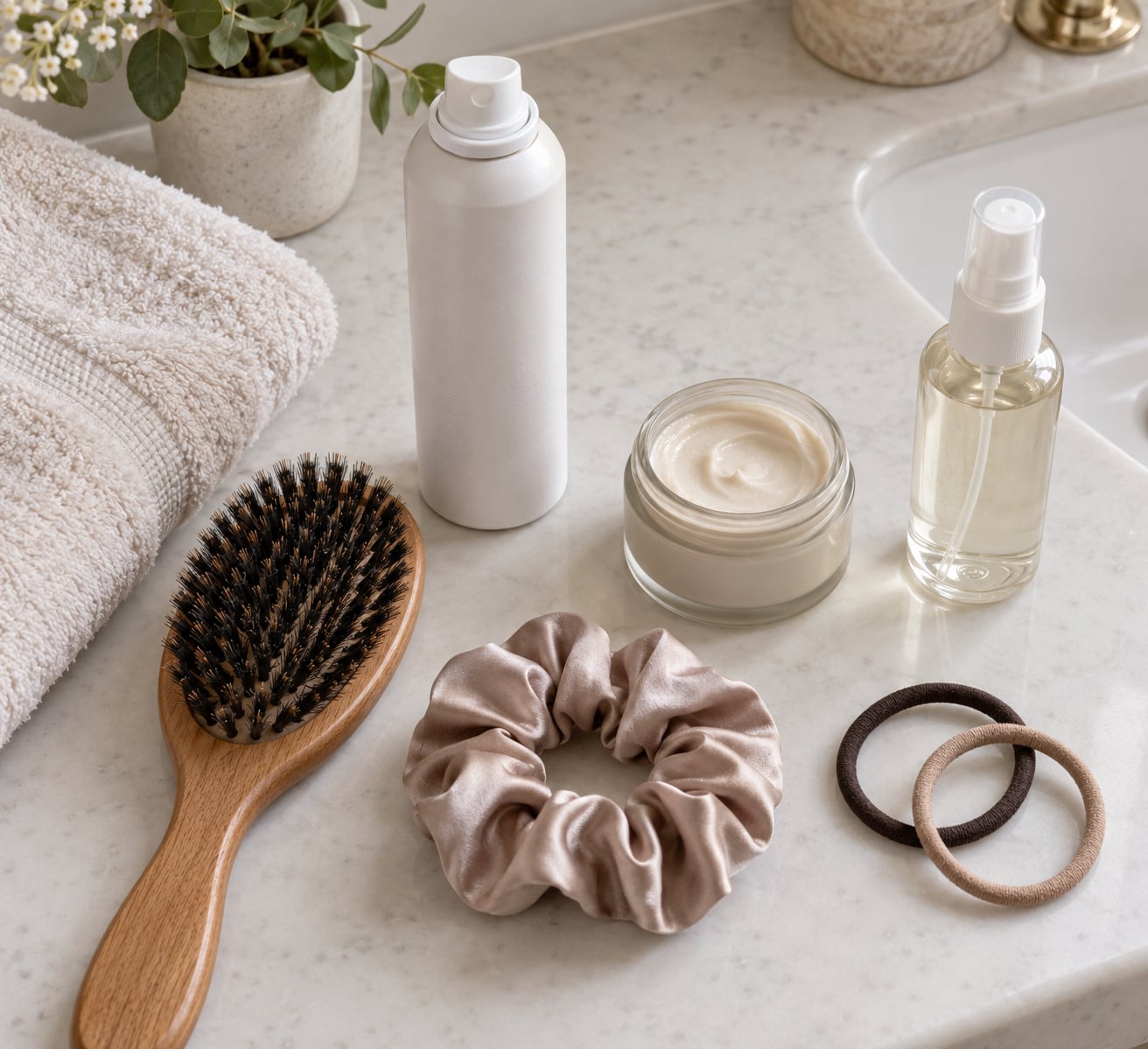
- Dry shampoo or an absorbent powder. The main tool for lifting oil off the roots. Powder formulas leave less residue if you use them often.
- A brush or wide-tooth comb. A brush smooths a ponytail, a wide-tooth comb detangles curls without pulling them apart.
- Heat protectant. Only if you plan to blow-dry. Skip the blow-dry entirely if you can.
- A spray bottle or a fine mist. For rewetting lengths. A mister gives you more control than a sink tap.
- Hair ties and a satin scrunchie or ribbon. One style change hides a lot of second-day flatness.
- Styling cream, gel or a texturizing spray. A cream smooths, a texturizer adds grip and volume, and most people only need one of the three.
Patch-test anything that goes on your scalp, especially new dry shampoos and oils, and give it a full day before an occasion that matters. If your hair gets oily fast, a fragrance-free powder formula is usually the kinder choice.
Step-by-Step: How to Refresh Second Day Hair Fast
Step 1: Reshape Without Rebuilding Your Whole Hairstyle
Two minutes is enough for this one, and it is the fastest fix there is. Take down your previous ponytail or bun, shake the roots loose with your fingers, and massage a small amount of dry shampoo into the crown and along your part line. Wait a minute, then brush the surface of your hair back into the same style.
You are not starting over, you are just re-setting the shape you already had. The sign it worked: the roots look deliberately arranged, a little bit textured, rather than slick and greasy.
Add a light mist to the ends if they feel dry and scrunch them. That is the whole routine, and it works on almost every texture.
Step 2: Reactivate Second Day Curls or Waves
This one needs a warning first. A light mist works well on thick, high-porosity hair, but on fine, low-porosity hair it is the thing that causes frizz. People with coarse, long, low-porosity curls on hair forums report that every rewetting method leaves their hair puffier, not smoother.
If your hair is thick or medium, mist it until it is barely damp, work a small amount of leave-in or curl cream through the mid-lengths and ends, then scrunch each section in an upward motion. Air-dry for a few minutes, or diffuse on low and cool until the curls tighten back up.
If your hair is fine or low-porosity, use less water than you think you need. Target only the areas that have lost their shape, and leave the roots alone. The wavy-hair crowd’s most repeated tip is the same: get the hair damp before you add product, so strands reclump into waves instead of separating into fuzz.
Some people in the curly community skip water entirely on day two and do nothing but scrunch in a bit of gel. That is a legitimate result, especially for 2b and 2c hair that gets oily by day two.
Step 3: Smooth Frizz and Flat Roots
For hair that is doing two things at once, frizzy on top and flat at the roots, this is the fastest all-over option. Work a smoothing cream or a tiny amount of lightweight oil from the mid-lengths down, then use a wide-tooth comb or soft brush in slow passes starting at the ends and working upward.
Blow-dry only the sections that need control, on low or cool, and hit the roots with cool air for about ten seconds at the end. Heat protectant goes on first if the blow-dry is happening at all. You are looking for movement at the roots, not a flat ironed finish.
For flyaways along the hairline, a clean toothbrush with a little hairspray on the bristles smooths them down in seconds. It looks ridiculous and it works.
Step 4: Make a Polished Ponytail in Minutes
A ponytail is the single best disguise for second-day roots because it takes the oily part of your head out of sight. Brush everything back from the hairline, gather it low or mid-height, and secure with an elastic that matches your hair or is covered.
Wrap a clean satin scrunchie or ribbon around the base, which hides the elastic and stops flyaways in one move. Finish with a very small amount of gel or styling cream smoothed over the surface with your palm. If your hair is fine, use a brush with light tension, not a rubber-bristle one, which can snap strands.
A high ponytail works too, especially if your roots are already oily, because the oil sits underneath and stays hidden. The volume at the base does the work for you.
Step 5: Choose a Fast Bun or Braid
Two options, matched to how much time you have. A soft tousled bun takes about three minutes: gather everything, twist loosely, secure with a claw clip or elastic, and pull a few pieces loose at the face. Volume from the loose pieces makes flat roots look intentional.
A loose braid takes closer to five minutes and looks more polished. Split into three sections at the nape, braid loosely, and secure the end. A braid that is too tight pulls on the scalp and shows the roots more clearly, so keep it relaxed.
Texture and length decide this. Thick hair handles a slicked-back bun well, while fine and short hair usually looks better in a high ponytail or a claw clip than in a bun.
Common Mistakes
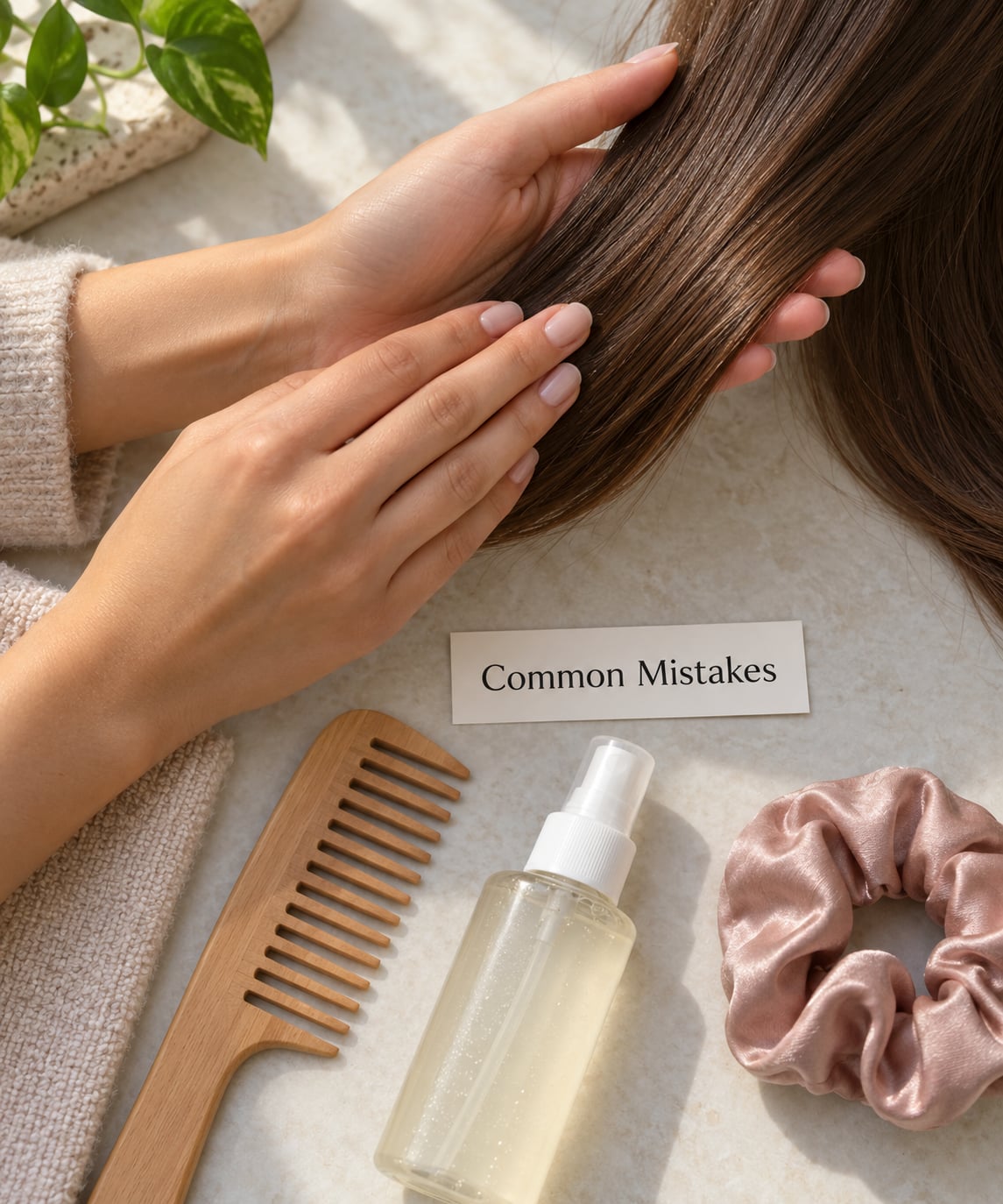
Most day-two disasters come down to five repeat errors, and each has a quick correction.
- Caking on too much dry shampoo. It leaves hair dusty and dull, and the buildup is why day three looks worse than day two. Use less, hold the can about 12 inches away, and focus on the part line and hairline instead of the whole scalp.
- Soaking the hair and rough-drying it. Damp hair plus a towel or scrunching means frizz. If you rewet, blot with a microfiber towel or a cotton T-shirt and let it air-dry as much as you can.
- Using too much styling product. A pea-sized amount of cream or a two-inch spray of texturizer is plenty. More than that flattens fine hair and weighs down curls.
- Pulling a tight elastic. It creates a visible line, indents the scalp and exposes flat roots. Use a soft elastic and stop at comfortable tension.
- Repeated high heat. Re-drying day-two hair flat and hot every morning is what damages it fastest. Detailing only the front pieces on low, or using a toothbrush and gel instead, saves the lengths.
Common Mistakes and Quick Fixes
The fastest way to fix greasy roots without flattening everything is to absorb oil in the smallest possible places. Massage a little dry shampoo or translucent powder along the part line and the hairline only, leave it for a minute to absorb, and brush the surface. Adding more product than that is what turns roots into a stiff, dull panel.
If you have no dry shampoo, corn starch, baby powder or blotting paper all work as an oil absorber. Tap a small amount onto the roots, let it sit two minutes, and brush out the excess. A shine-controlling setting powder along the part line does the same job in a smaller area.
The choice between a two-minute, five-minute and fifteen-minute routine comes down to hair type and what you are walking into. Fine or low-porosity hair usually looks best with the shortest option, since every extra wet step costs you volume. Thick hair that collapses by midday benefits from a texturizing spray and a blow-dry. Curly and wavy hair needs the middle ground, damp but not wet, with product worked in before it dries.
For a 15-minute version, cleanse the scalp with a co-wash or a diluted apple cider vinegar rinse, dry shampoo the roots, rewet the lengths, apply leave-in, and diffuse to full dry. People who work out regularly use that rinse plus dry shampoo at the roots to get through an extra day after sweat. A clarifying shampoo once a week clears the residue that repeated dry shampoo leaves behind.
Patch-test any new product on a small section of scalp first, and skip any method that leaves your hair itching, tight or flaky. A scalp that is irritated on day two gets oilier faster, not less.
Frequently Asked Questions
Can I refresh second-day hair without washing it?
Yes, and most people do it most mornings. Absorb the oil at your roots with dry shampoo, an absorbent powder or blotting paper, then add a light mist to the lengths and scrunch or brush them back into shape. The refresh is about removing oil where it flattens you and reactivating product where it has dried out, not about making the hair truly clean. If the roots still look dirty after a refresh, a co-wash is the gentler reset.
What is the fastest way to make second-day hair look styled?
Change the shape, not the hair. A messy bun, a high ponytail or a loose braid takes the greasy root area out of sight in three to five minutes, and it works on every length. Add a small amount of dry shampoo at the roots first, then finish stray hairs with a dab of gel. A slicked-back bun is fastest, a braid looks most polished, and a claw clip suits anyone who has a few extra minutes.
How do I refresh second-day curls without making them frizzy?
Damp, not wet, and always apply product before the hair dries. Mist only the areas that lost their shape, work a small amount of leave-in or curl cream through the mid-lengths and ends, and scrunch upward. Fine and low-porosity hair is the exception: it puffs up when rewetted, so use even less water and target only the sections that need it. Air-dry where you can, and diffusing on cool adds less frizz than heat.
Is dry shampoo good for hair every day?
It works as a short-term tool, not as a permanent replacement for washing. Every use leaves a little residue on the scalp, and after a few days that buildup can make hair look dull, dustier and easier to get dirty again. Keep it to a few days at a time, spray mainly on the part line and hairline, and use a clarifying shampoo about once a week to clear the film. Patch-test a new formula before putting it on your roots.
How do I fix oily roots without flattening my hair?
Absorb in a small area instead of coating the whole head. Tap corn starch, baby powder or a translucent setting powder along the part line and the hairline, wait two minutes, and brush off the excess. Powder leaves less residue than aerosol dry shampoo, which is why people with fine hair get better results from it. Then add volume back at the crown with your fingers or a light texturizing spray, and put the hair up so the roots are hidden.
What should I do when second-day hair looks greasy?
Keep it simple: a ponytail, bun or braid, plus one absorbing step. A drop of dry shampoo or powder at the roots, a light mist on the lengths and a change of hairstyle will cover almost any case in five minutes. Washing from the roots only, with a co-wash, is the reset when the hair has been accumulating product for several days. Skip repeated heavy brushing, since it spreads the oil down the lengths and flattens everything.
Conclusion
The quickest reliable refresh takes about five minutes: reset the hairline, absorb the oil at the roots, then commit to one style instead of rebuilding the whole look. Start by shaking the roots loose and adding a small amount of dry shampoo or powder at the part line, since that single step does more for second-day hair than any amount of restyling.