To care for cuticles safely at home, clean your nails, soften the cuticle edge briefly with lukewarm water, push back only the loose dead skin using a clean wooden or metal pusher, smooth the edge, and moisturise. Never cut living cuticle tissue, and stop the moment you feel pain. The whole routine takes about ten minutes.
The reason this matters is that the cuticle is not dead skin waiting to be tidied away. It is a seal. It sits where the nail plate meets the proximal nail fold and keeps water, bacteria and fungus out of the matrix, the tissue under your cuticle that grows the nail. Trim it back too far and that seal is gone for weeks.
Most nail damage I see in clients is not caused by a bad product. It is caused by a habit. Someone grabs an orange stick, leans on it, and watches a little blood bead up. Or they soak for fifteen minutes until the skin is wrinkled and soft, then wonder why it peels off in strips for a week.
Gentler method, same neat result. Here is the setup, the five steps, and the mistakes that undo them.
Table of Contents
- What You Need
- How to Care for Cuticles Safely Step by Step
- Step 1: Clean the Nails Gently
- Step 2: Soften Only When Needed
- Step 3: Push Back Excess Cuticle Carefully
- Step 4: File and Smooth the Cuticle Edge
- Step 5: Moisturize the Nail Folds
- Common Mistakes
- Frequently Asked Questions
- Should you cut your cuticles or push them back?
- What should I use to push back cuticles?
- Is it safe to push your cuticles back at home?
- How often should I push back your cuticles?
- How do I deal with a hangnail safely at home?
- Is putting petroleum jelly on your cuticles good?
- Conclusion
What You Need
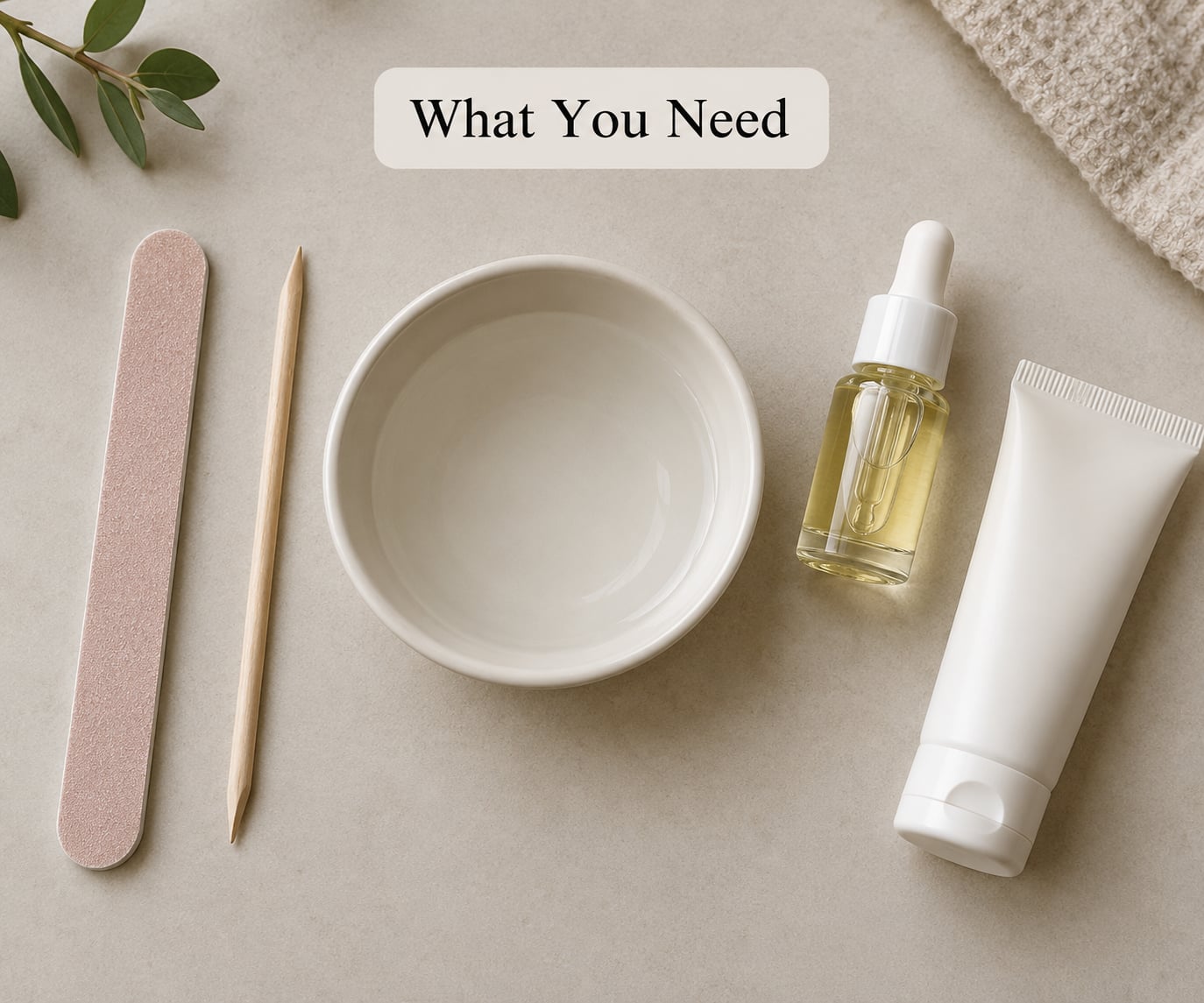
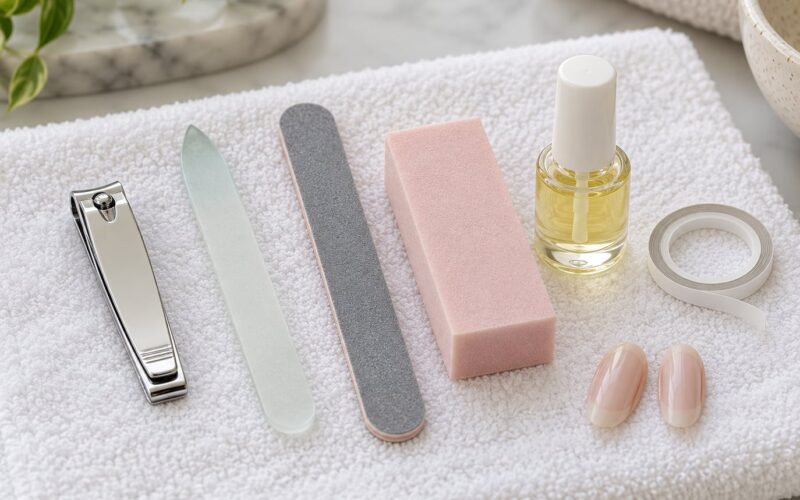
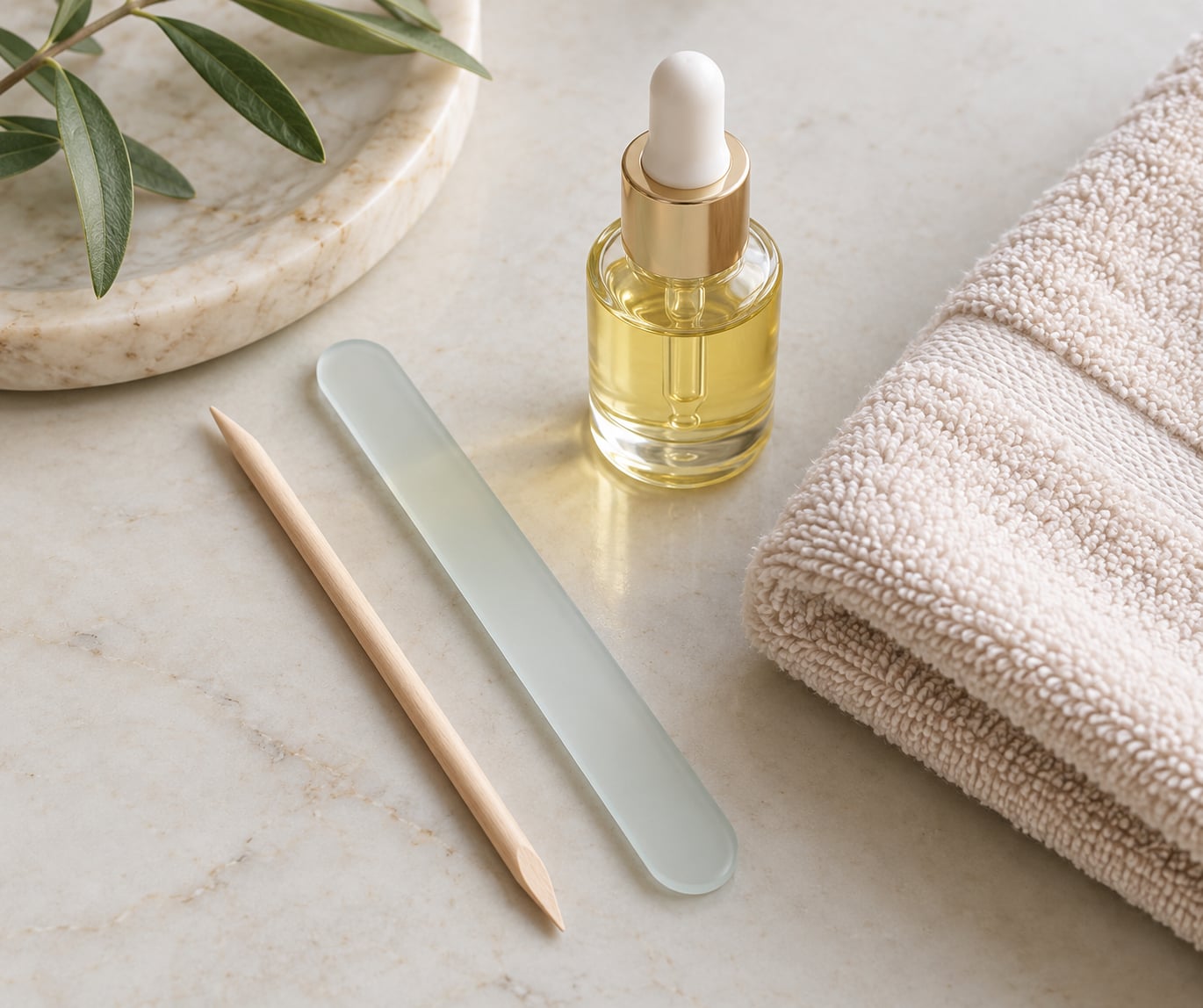
A short list does it. You need a soft nail file or a glass file, a wooden cuticle stick or a metal pusher, a small bowl, a clean hand towel, and something to moisturise with. Cuticle oil is the classic choice, but a thick fragrance-free hand cream works too.
Wipe your metal pusher with alcohol before and after each use. It is the one tool that touches skin, and it is the one most often dropped on the bathroom counter and put straight back into use.
What you can skip: cuticle nippers, acetone, cuticle remover gels, and any metal tool advertised as heavy duty. Nippers belong on a hangnail that is already lifted away from the skin, never on a cuticle attached to the fold. Remover gel strips living tissue and leaves it raw, which is the opposite of safe.
Skip the long soak too. Lukewarm water for three to five minutes is enough to make the cuticle edge flexible. Hot water and twenty-minute soaks strip oils from the skin and leave the cuticle barrier dehydrated and easy to tear.
How to Care for Cuticles Safely Step by Step
Step 1: Clean the Nails Gently
Wash your hands with soap and lukewarm water, then use a soft nail brush under each nail. Dry thoroughly with a towel, pressing rather than scrubbing.
You are looking for clean nails with no residue and no damp skin around the folds. If the skin stays wet, the cuticle will be soft and tear-prone during the next step, so take your time drying.
Step 2: Soften Only When Needed
Soak the fingertips for three to five minutes in lukewarm water with a drop of hand wash. Some people use a cuticle softening cream instead, which works without water at all.
The right texture is flexible, not waterlogged. If the skin looks wrinkly and pale, it has been in too long. Never soak nails that are already irritated, splitting or sore, and never use hot water. A good test: you should be able to press gently on the cuticle edge without resistance, with no stinging.
Step 3: Push Back Excess Cuticle Carefully
Pat dry, then hold the wooden stick or pusher at a shallow angle and walk it along the cuticle edge, moving loose cuticle back and away from the nail plate. Use light, repeated strokes rather than one decisive shove.
You are only moving dead, loosened skin. Anything still attached to the proximal nail fold stays exactly where it is. Set the tool down if you feel pressure or see the skin blanch or spot. Stop immediately if it bleeds.
Hard pressure on the lunula, that pale half-moon at the base of the nail, can leave a textured bump or a pale patch in the nail that takes months to grow out. Rest the pusher lightly, almost hovering, and let the stick do the work.
Step 4: File and Smooth the Cuticle Edge
Take a fine file or buffer and smooth the rough cuticle edge in one direction, staying on the dead skin and away from the nail plate and the living fold.
One direction matters. Back-and-forth filing roughens the edge and encourages peeling. The finished result is a clean line with no torn fuzz, not a shaped, sculpted edge.
Step 5: Moisturize the Nail Folds
Massage a small drop of cuticle oil into each nail fold and the skin around the nail for thirty seconds. Apply it after washing, before bed, or any time your hands are dry.
The massage is the part people skip, and it matters more than the product. It gets oil into the cuticle and the skin around it, where the peeling starts.
Consistent moisture matters far more than making the cuticles disappear. A cuticle that stays soft does not snag on your pocket or your keyboard. A dry one peels, and peeling is what tempts you to pick.
Apply oil after polish, not before it. Oil on the nail plate stops polish from gripping, which is why gel and regular polish last longer when the cuticles are oiled first and the nail plate is wiped clean.
Common Mistakes
Cutting cuticles. Snipping away living tissue removes the barrier that protects the matrix, and the exposed skin can develop paronychia, a bacterial infection at the nail fold that shows up as redness, swelling and throbbing. Fix: push, never cut. Many states restrict cuticle cutting in salons for this reason.
Using sharp or dirty tools. An unclean pusher can move bacteria into a small break in the skin. Fix: alcohol wipe, rinse, dry, and store the tool somewhere it will not sit wet.
Soaking too long or in hot water. Long soaks leave the cuticle over-soft and dehydrated, so it tears rather than moves. Fix: three to five minutes, lukewarm, and only when the cuticle is genuinely raised.
Pushing too often. Doing it weekly is usually unnecessary and can thin the seal. Fix: push only when there is loose, lifted skin to move, which for most people is every few weeks.
Picking, biting and biting hangnails. This is the root cause of most recurring problems, and no tool fixes it while it continues. Fix: keep oil within arm’s reach. The moment your hand drifts toward picking, the oil pen is already in your other hand.
Ignoring chemical exposure. Dish soap, cleaning sprays and acetone strip moisture from the fold. Fix: gloves for washing up, and a coat of balm right after any gel removal, when the cuticle is at its most vulnerable.
Stop the routine and see a doctor or nurse if you notice redness, warmth, swelling, spreading tenderness, pus, or pain that throbbs or keeps getting worse. A cuticle that has been damaged reattaches over weeks, sometimes months, and a nail that is ridged or discoloured as it grows back is usually the seal finally healing rather than a sign of something new.
Frequently Asked Questions
Should you cut your cuticles or push them back?
Push them back. Cutting removes living tissue that seals the nail plate against bacteria, and most states now restrict the practice in salons because of the infection risk it carries. Push only skin that is already loose and lifted, use a clean wooden stick or metal pusher, and stop if you feel pressure or see spotting. If a hangnail is genuinely raised and hanging, nip the loose bit only.
What should I use to push back cuticles?
A wooden orange stick or a metal cuticle pusher both work well at home. The wooden stick is gentler because it has no sharp edge to slip; the metal pusher gives you more control. A glass file is worth owning for smoothing, not pushing. Wipe any metal tool with alcohol before and after use, and never share a tool, since the tool is what can transfer bacteria into a small break in the skin.
Is it safe to push your cuticles back at home?
Yes, as long as you move only dead, loosened skin and keep the pressure light. Sit in good light, clean the tool, and work from the side of the nail rather than pressing straight down. You should never feel pain. If the skin blanches, spots, or starts to bleed, stop. Aggressive pushing damages the lunula and can leave a textured bump or pale patch in the nail that takes months to grow out.
How often should I push back your cuticles?
Only when there is loose, lifted skin to move, which is usually every few weeks rather than weekly. Pushing on a healthy, attached cuticle thins the protective seal without removing anything useful. If you find yourself picking at them between sessions, the problem is dryness rather than length, so focus on cuticle oil and a thick hand balm applied a few times a day.
How do I deal with a hangnail safely at home?
Trim only the part that has already lifted away from the skin, using clean nippers, and leave the attached base alone. Cutting attached tissue opens a small wound in the nail fold, which is exactly where infection starts. Then seal it with a cuticle oil or balm and leave it alone. If hangnails are appearing constantly, or the skin around them is red, swollen or painful, have a clinician look at it.
Is putting petroleum jelly on your cuticles good?
Petroleum jelly is an occlusive, meaning it seals moisture in rather than adding any, so it works well on already-oiled skin but can do very little on dry skin on its own. Apply it over cuticle oil or a thick cream, not instead of them. It is a good overnight option for peeling cuticles, though for everyday use a cuticle oil or fragrance-free hand cream absorbs faster and is far less greasy at the keyboard.
Conclusion
The safest first step is the least dramatic one: clean your nails, soften the cuticle edge for three to five minutes in lukewarm water, then move only the loose dead skin with a clean wooden tool and moisturise the rest. No cutting, no long soaks, no pressure on the lunula.
Consistency is what fixes peeling cuticles, not a single aggressive session. Oil your folds a few times a day, wear gloves for cleaning up, and keep oil within reach so picking becomes a habit you interrupt. And if you notice redness, swelling, warmth, pus, or throbbing pain that will not settle, stop the routine and talk to a doctor or nurse rather than trying to treat it at home.