Wear your hair neat, clean and polished, keep it out of your face, and choose something you can forget about for the whole meeting. That is the whole rule. Everything below is how to do that on your own hair type, in about ten minutes, without a salon appointment you cannot afford this week.
The reason hair matters more than people expect is that it is one of the only things a hiring manager can observe before you say a word. Get it right and it reads as prepared and composed. Get it wrong, and it gives them something to look at instead of listening to your answers.
Table of Contents
- What You Need
- Step-by-Step
- Step 1: Start with Clean, Manageable Hair
- Step 2: Choose a Style That Fits the Workplace
- Step 3: Add Definition and Control
- Step 4: Finish with a Professional Polish
- Common Mistakes
- Frequently Asked Questions
- Should I wear my hair down for a job interview?
- What hairstyle is best for a job interview?
- How should I style natural or curly hair for an interview?
- Is it okay to wear my hair in a ponytail or bun for an interview?
- What if I do not have time to style my hair before an interview?
- Can I use hair accessories or fragrance at a job interview?
What You Need
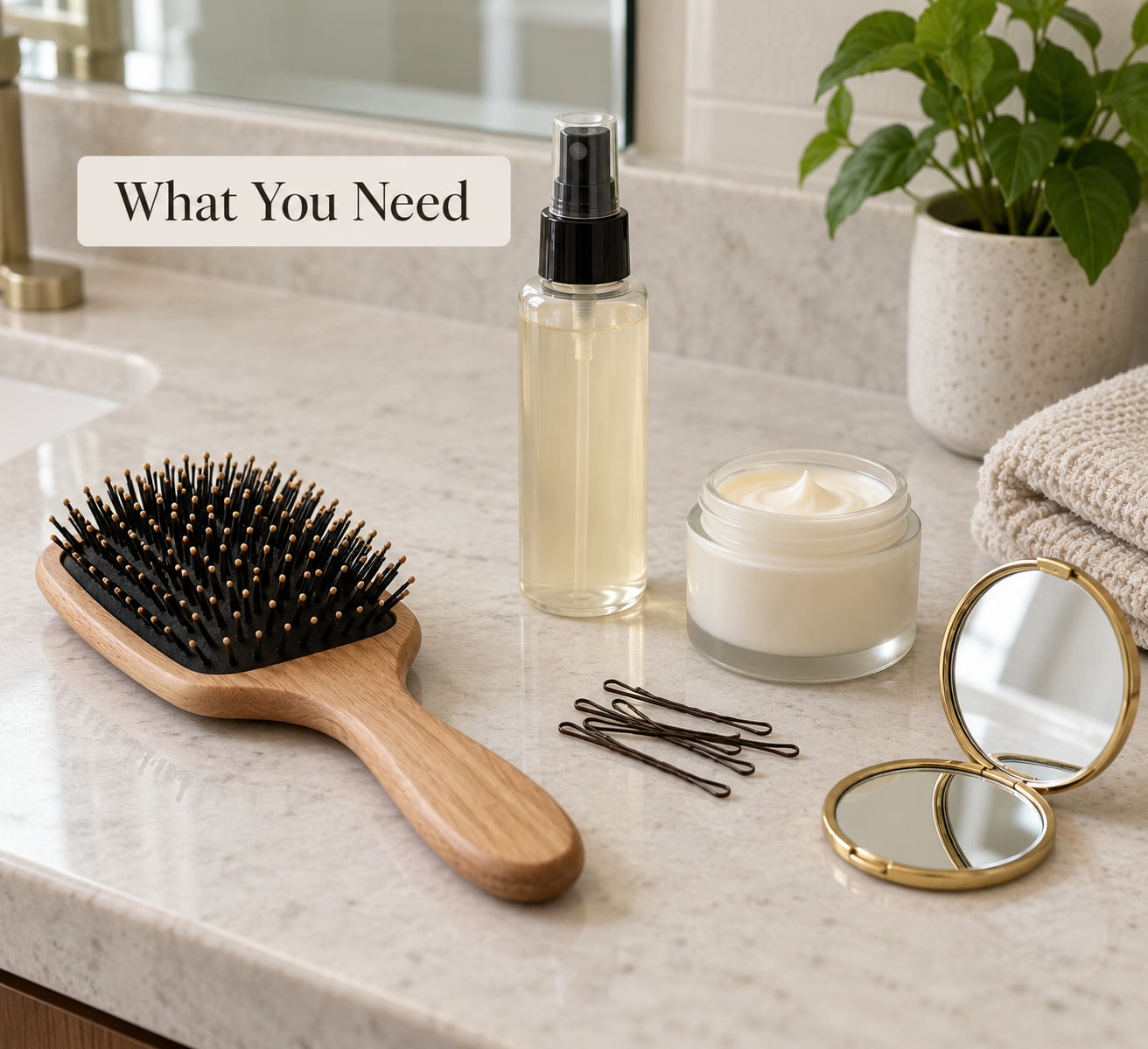
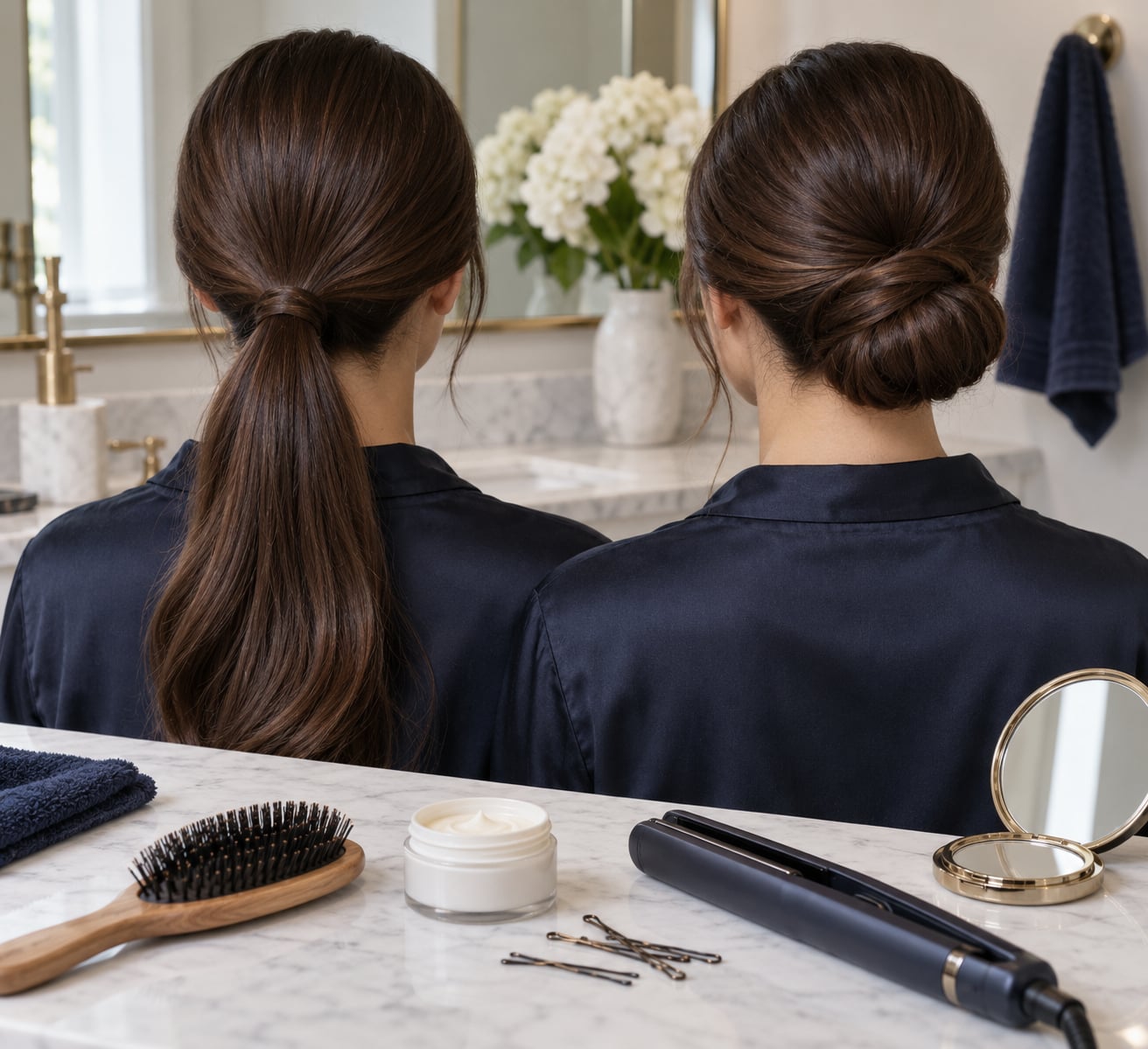
You do not need a kit. You need a brush, one or two products, and something to hold hair back. Everything else is optional.
- A brush or comb. A paddle brush detangles and smooths in one pass. A fine-tooth comb is what you want for a clean part line.
- A heat protectant. If a flat iron or blow dryer touches your hair, this goes on first. It is the cheapest insurance against the dry, frizzy finish that gives an interview away.
- A smoothing product. A cream or light gel for straight and wavy hair, a leave-in or curl cream for curly and coily hair. One is enough.
- Holds. Bobby pins, a bungee, or a hair tie that matches your hair tone. A satin scrunchie beats a thin elastic on textured hair because it does not crease or pull.
- Dry shampoo. Not for the look, for the roots the night before. Washing the night before often leaves fine hair flat by morning.
- A mirror and a minute. The last check catches more problems than any product.
Working on a tight budget? A leave-in conditioner and water are a legitimate blowout substitute for straight hair, and a twist-out does the job a curling iron would. Neither has to cost anything.
Step-by-Step
Step 1: Start with Clean, Manageable Hair
Clean and dry hair is the baseline. Wet or greasy hair reads as rushed no matter how well it is styled, and visible split ends or grown-out roots pull attention to the one thing you cannot fix in ten minutes.
Shampoo the day before rather than the morning of if your hair gets limp overnight, or wash in the morning and blow it dry fully if it holds a style better clean. Condition from the mid-lengths down, then detangle while it is still slightly damp — that is when hair separates with the least breakage.
Short on time? Spray water or leave-in on dry hair, comb it through with wide-tooth comb or your fingers, and let it air-dry while you get dressed. On curly and coily hair, work a little leave-in through damp hair and scrunch, then avoid brushing it once it dries.
Step 2: Choose a Style That Fits the Workplace
Knowing how to style hair for a job interview starts with the room, not the mirror. Conservative fields want the most polished option you can execute. Creative and startup environments allow visible texture and personality. Remote interviews care less about formality and more about how you look on camera.
Here is how the same question changes by setting:
- Consulting, law, finance. Highest polish expected. A low sleek bun or a tidy low ponytail is the safe answer.
- Business casual and corporate support. Medium-high polish. Low bun, half-up, or sleek hair down all work.
- Tech, creative and startup. Medium polish, texture welcome. A neat down style or a simple bun is plenty.
- Healthcare, education and trades. Medium and practical. Tied back or brushed clearly out of the face.
- Retail and hospitality. Comfort first. Anything clean that you will not touch during a long shift.
- Remote or video interviews. Camera-friendly. A smooth low pony or bun with minimal flyaways, since backlight picks up every stray hair.
Whatever the setting, the style has to pass one test: it should be comfortable enough that you stop thinking about it. If pins dig in or your scalp is pulling after twenty minutes, you will spend the interview adjusting, and adjusting reads as nerves.
Keep your hair texture. Straightening coily or tightly curled hair for one interview is not the polished look it is assumed to be, and research on hiring bias against natural Black hairstyles has been documented in business-school studies. Braids, twists, locs and a wash-and-go are professional by default.
Step 3: Add Definition and Control
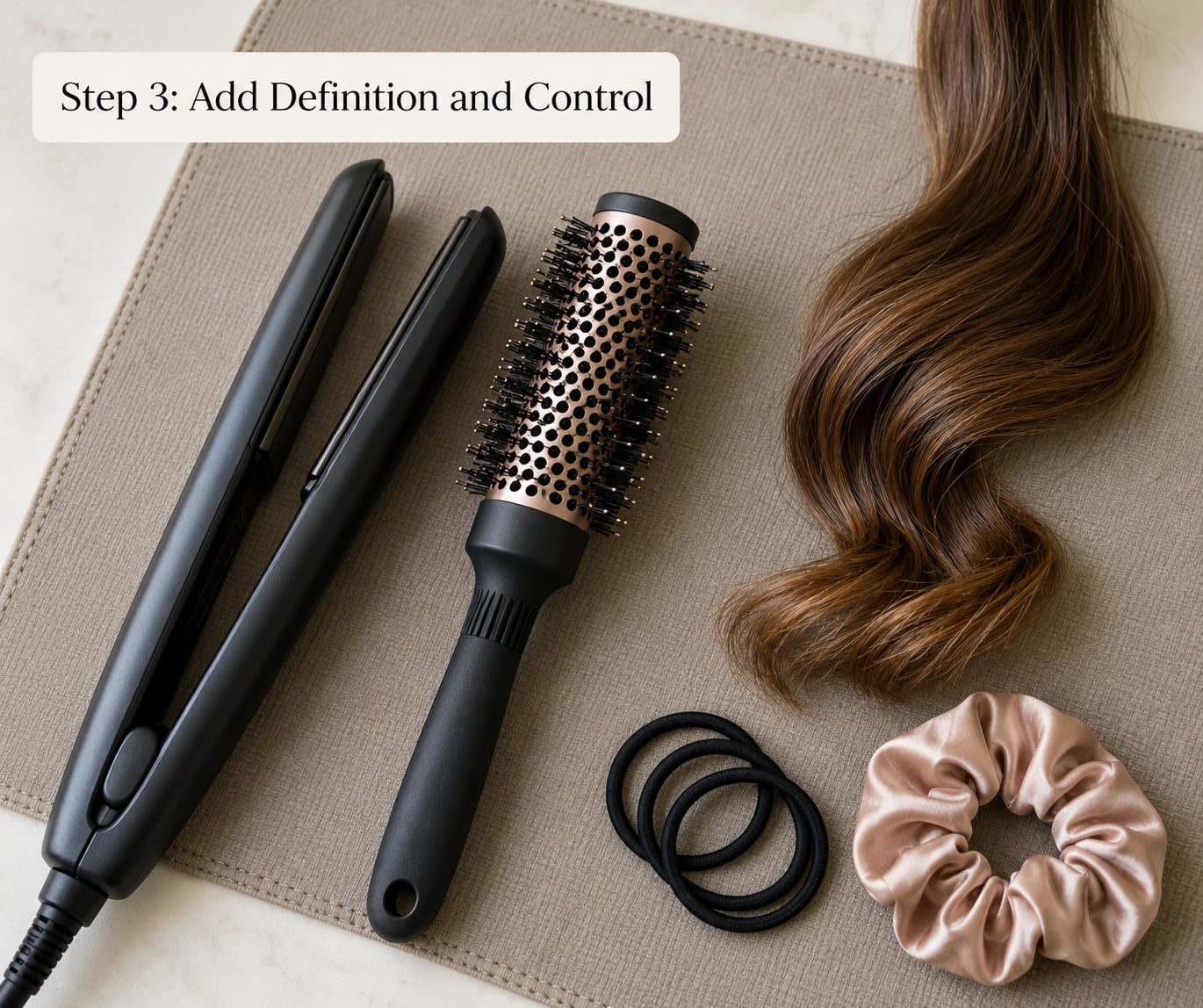
With hair clean and dry, use whatever tool gives you the shape you chose. A round brush and blow dryer smooths straight hair and gives it movement without volume you have to hide later. A flat iron on light damp hair, with protectant underneath, gives the sleekest ponytail or bun base.
For curls, a large-barrel iron on light damp hair with curl cream produces loose waves that fall out naturally. For coily hair, work from the ends up in sections, press rather than pull, and let it cool before you move on. Air-drying alone is a legitimate technique if you know your hair.
For an updo, the low ponytail is the one to learn first. Gather hair at the nape, secure with a bungee or elastic, wrap a small elastic around the base to hide the tie, and finish with a few pins crossed at the base. It takes under five minutes and it works on almost every texture and length.
Then check the hold. Put your hands flat on your thighs for thirty seconds, then look at the shape. Anything that moved needs another pin or a mist of spray, not a full restyle.
Step 4: Finish with a Professional Polish
The finish is what separates polished from done. Mist a tiny amount of flyaway gel or anti-static spray on your hands, press rather than comb, and let it set for a minute. Comb-only flyaway products leave a visible cast you will spot in a bright room.
Balance shine. Too much product reads greasy under interview lighting and on camera; too little leaves hair flat. Aim for hair that looks like itself on a good day, not like it came from a bottle.
Do the final visual check three ways: turn your head both ways in the mirror to check the profile, run your fingers through once to confirm nothing snags, and hold a hand above your hair to spot static. Then sit down for five minutes, stand up, and look again — that last angle catches a collapsed bun or a loose section at the back.
If you can walk out of the room and forget your hair, you are finished.
Common Mistakes
Overdone volume. A teased crown or a bumped blowout dates a look and reads as costume in a conservative room. Fix: keep volume at the front or sides only, or smooth the crown flat with a fine comb and a drop of gel.
Too much shine. Shine that does not fade by lunchtime reads as product, not grooming. Fix: use half the amount you think you need, and blot the ends rather than reapplying.
Distracting accessories. Large clips, pearl pins and anything sparkly pull the eye away from your face. Fix: match accessories to your hair tone, or use plain pins hidden under the style.
Visible product buildup. Gel residue around the hairline and sticky ends are visible on camera and up close. Fix: wipe the hairline with a damp cotton pad and comb the ends lightly.
Bangs you cannot see past. Hair falling into your eyes during a technical answer is worse than a less polished style. Fix: sweep to one side and pin, or keep them tucked behind one ear.
A style that blocks eye contact. Anything that hides one side of your face changes how you read in the room. Fix: shift the part slightly off-centre and keep the front sections clear.
Picking a brand-new style the day of. If you have never done it before, it will go wrong under pressure. Fix: test the look a few days earlier, and if it fails then, wear the simple version.
Fidgeting. Playing with, smoothing or smelling your hair is the behaviour people remember far more than the style. Fix: tie the hair back so there is nothing loose to play with, and keep your hands on the table or in your lap.
One more habit worth dropping: doing hair right before you walk in, in a stairwell, in a parking lot. Ten seconds of nervous touching is what you get instead of a finish you already planned.
Frequently Asked Questions
Should I wear my hair down for a job interview?
Yes, as long as it is clean, controlled and out of your face. Hair down reads more natural and less severe than an updo, and many candidates get callbacks in interviews where they wore it the way they always wear it. It works best when it stays still through the meeting. If you catch yourself pushing it behind your ear, take that as the signal to tie it back before the day arrives.
What hairstyle is best for a job interview?
A neat low ponytail or a low bun is the safest answer, because it keeps hair out of your face and out of your hands and takes under five minutes. For less formal workplaces, hair worn down and sleek, or a half-up style, works just as well. The best option is the one you can execute without practice and then forget about for an hour.
How should I style natural or curly hair for an interview?
Keep the texture and control the shape rather than straightening it. A low ponytail with a satin scrunchie or bungee, a braided style, or defined curls with product applied to damp hair all read as deliberate grooming. Avoid brushing dry curls, which causes frizz and puff. Braids, twists, locs and wash-and-go styles are professional by default, and hiring bias against natural hairstyles has been documented in research.
Is it okay to wear my hair in a ponytail or bun for an interview?
Both are fine and are among the most common choices people make for interviews. What matters is that the ponytail sits low rather than high, the bun looks intentional rather than rushed, and the hair tie is hidden or matches your tone. A high ponytail can read as sporty, so keep it at the nape of your neck. Add a wrap of hair around the elastic to cover it.
What if I do not have time to style my hair before an interview?
Plan for the ten-minute version and rehearse it. Wash or refresh the roots, detangle, apply one smoothing product, blow it dry or let it air-dry, and tie it low. That covers almost every hair type. The things to skip when short on time are new styles, hot tools without protectant, and anything you would need to redo. A clean, simple finish beats a rushed elaborate one.
Can I use hair accessories or fragrance at a job interview?
Keep accessories neutral, small and matched to your hair tone: bobby pins, a bungee, or a scarf. Avoid large clips, bright headbands and anything sparkly, which pull attention to your hair. Skip perfume or cologne entirely, or use one light mist before you leave. Scents linger in a small room and can distract an interviewer sitting across from you.
Start tonight, not tomorrow morning. Wash, condition and detangle, decide on one style you can do without a mirror fight, and rehearse it once so it is not new. On the day, ten minutes of clean hair, one product, and a low tie is enough. The look that gets you hired is the one you stop thinking about the moment you sit down.