Finding a clothing manufacturer for a small brand comes down to three things: a written product spec, a short list of factories that actually make your type of garment, and a paid sample before anyone commits to production. Small brands usually run between 50 and 300 pieces per style, which is small enough that most specialist factories will quote it and small enough that a bad run hurts badly.
The process takes weeks, not days, and it is more conversational than people expect. You are looking for a business partner who will tell you no, ask for better measurements, and hold your quality standard when nobody is watching. Here is the version that works, updated for 2026.
Table of Contents
- What You Need
- Step-by-Step
- 1. Define Your Product and Minimum Order Requirements
- 2. Create a Clear Tech Pack or Product Specification
- 3. Build a Qualified Manufacturer Shortlist
- 4. Request and Compare Quotes
- 5. Check Quality, Communication, and Business Fit
- 6. Order a Sample Before Committing
- 7. Negotiate and Place a Test Order
- Common Mistakes
- Picking a supplier from a directory listing alone
- Approaching factories with no written specification
- Comparing quotes that leave out different things
- Skipping samples to save a few weeks
- Negotiating without a cost breakdown
- Committing to a first order you cannot sell
- Frequently Asked Questions
- What is a typical minimum order quantity for a small clothing brand?
- Do I need a sourcing agent to find a clothing manufacturer?
- Is overseas manufacturing cheaper than producing in the USA?
- How much should a sample cost and is the fee refundable?
- How do I pay a clothing manufacturer safely?
- Should I visit the factory before placing my first order?
- Conclusion: Start With One Reliable Partner
What You Need
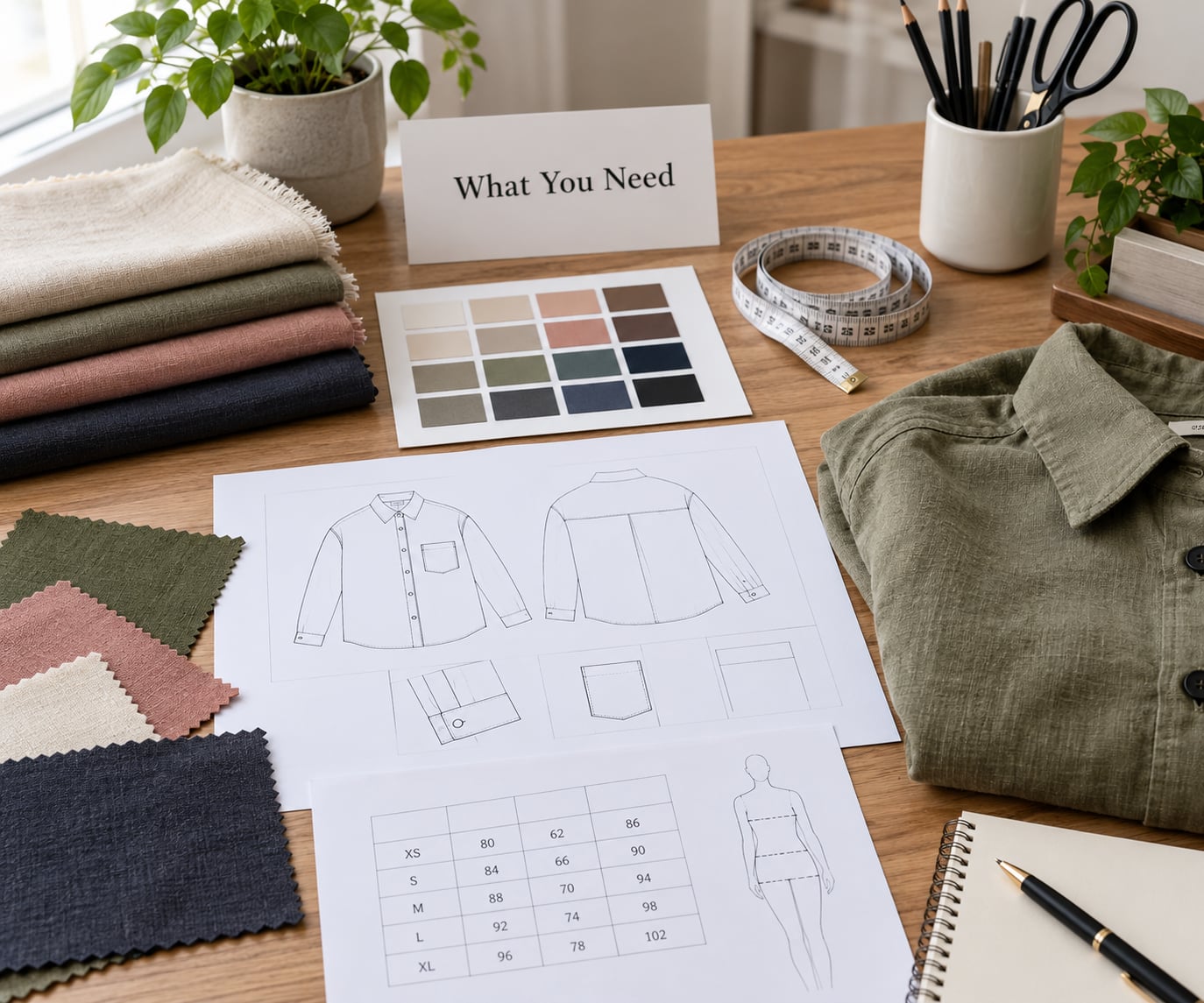
You cannot get an accurate quote from a vague brief. Before you contact anyone, put these on paper or in a shared document.
- A product brief — garment type, target retail price, expected sales volume over the first six months, and the season it needs to hit shelves.
- A spec or tech pack — measurements, fabric details, trims and construction notes. A full version is covered in step 2.
- A size chart with the body or garment measurements you actually want, per size, in inches.
- Fabric notes — composition, weight in GSM, hand feel, stretch, and whether you want the mill to source it or you will supply it.
- Your real MOQ ceiling — the number of pieces per style you can afford to produce and still sell through, written as a single figure.
- Decoration detail — screen print, DTG, embroidery, sublimation, none, and roughly where on the garment.
- A budget ceiling per unit that includes everything, not just sewing.
- Your timeline — the date the product must be in your hands, and the date you need it in your hands by.
One number catches most first-time founders: fabric MOQ and decoration MOQ are different things. A mill may need 300 yards of a particular fabric to dye it in your color, while the printer only needs 24 pieces per color for one run. Ask for both numbers separately, or you will compare quotes that are not comparable.
Step-by-Step
1. Define Your Product and Minimum Order Requirements
Start by writing down what you are making, not what you hope to make. One style, two colorways, three sizes, 120 pieces total, with a per-piece ceiling you can live with.
Small brands typically produce 50 to 300 pieces per style, while the wider industry band sits closer to 200 to 2,000. Vendors that advertise low minimums often apply them per style and per colorway, so a “50-piece minimum” style in three colors is really 150 pieces. That is where first runs quietly get expensive.
Work out the total commitment before you fall for anything: MOQ multiplied by unit cost, plus sample charges, setup and pattern fees, packaging, freight, duty and broker fees. Then ask the honest question of whether you can sell that quantity within a season or two. Unsold inventory at the end of a season is a loss at full price, not just dead stock sitting in a closet.
A workable first order is usually one style, two colorways, a small size run with most of the depth in the middle sizes. It gives you a real garment to sell, real data on fit and quality, and a much smaller number of ways to lose money.
2. Create a Clear Tech Pack or Product Specification
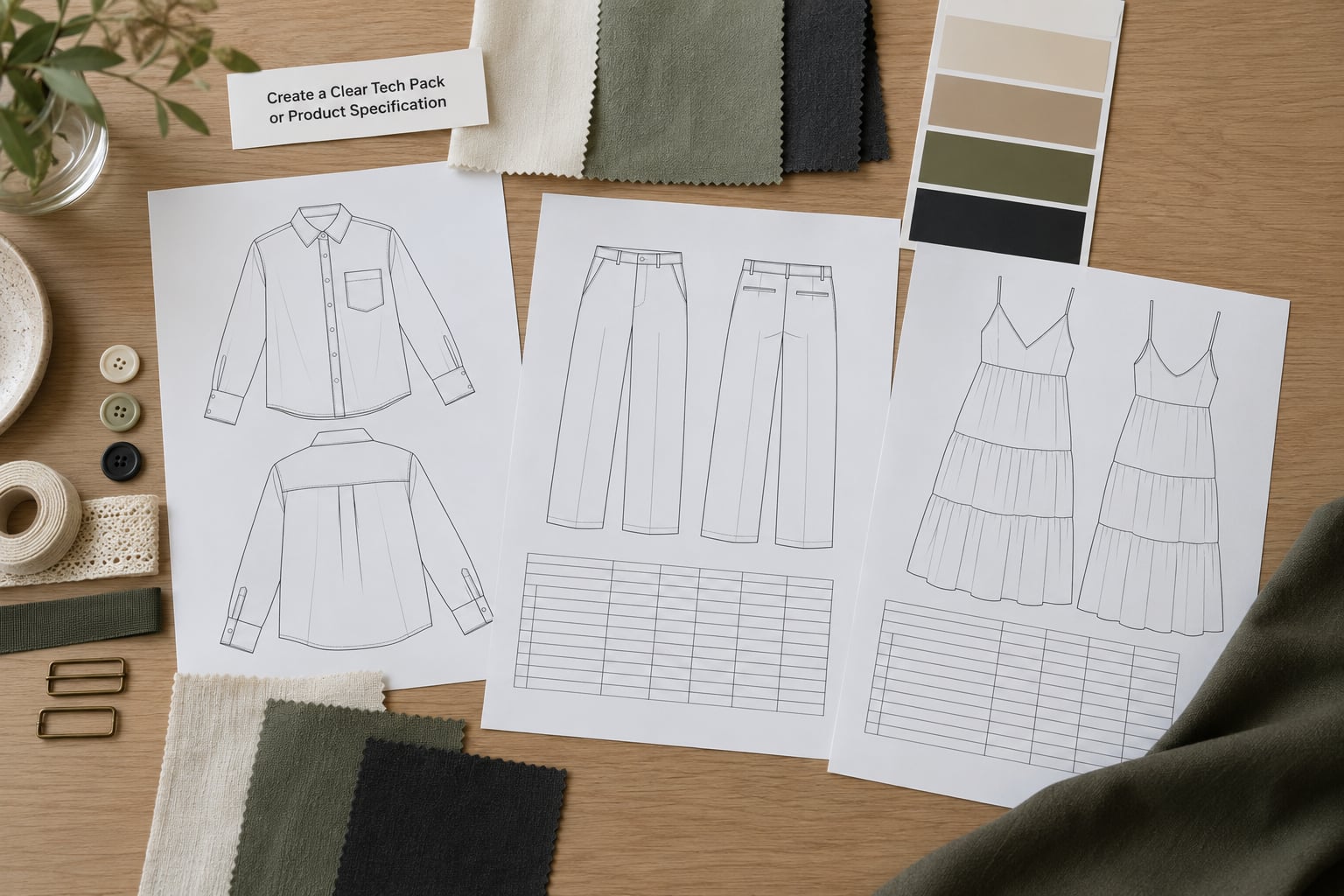
A tech pack is the factory’s working document: everything needed to cut, sew and finish your garment without guessing. Most quote requests get slow or vague because this document does not exist yet.
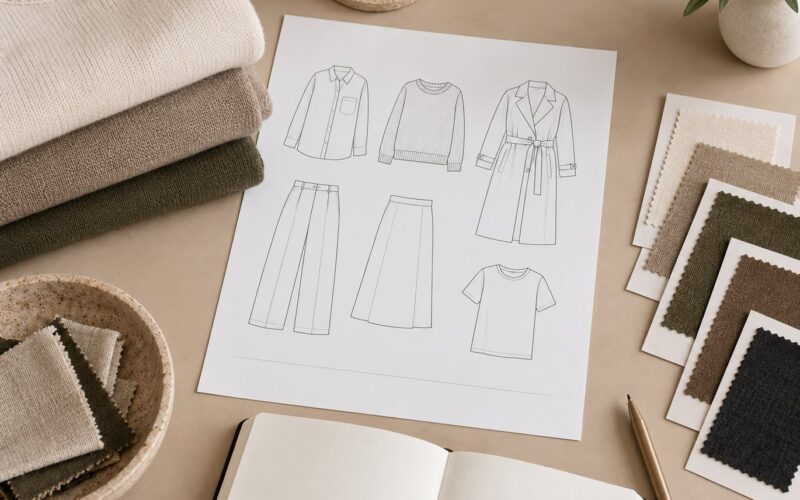
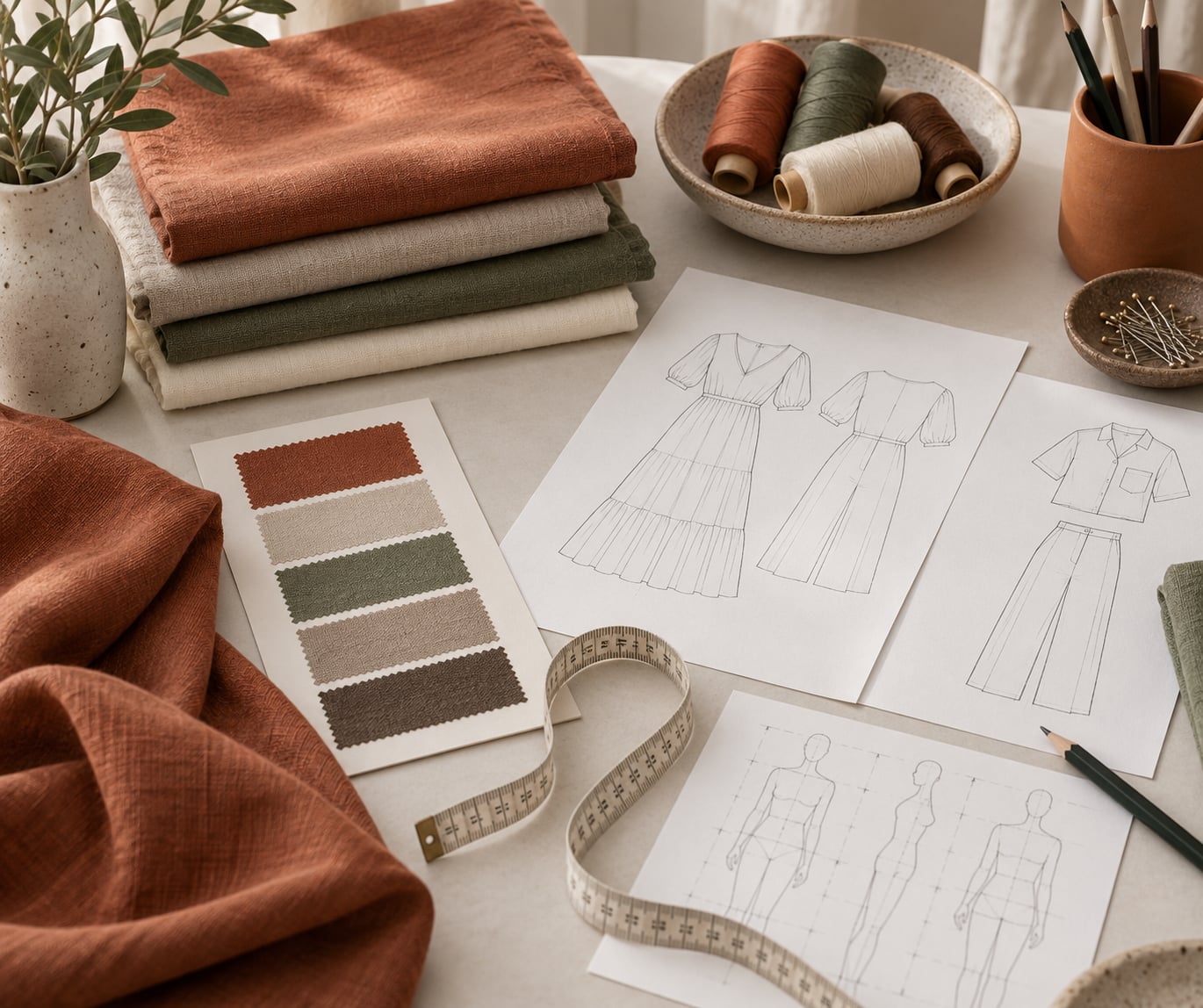
A factory-ready pack usually contains a flat technical sketch with front, back and side views; a point-of-measure table in inches with tolerances; a graded size chart; fabric composition, weight and mill or sourcing preference; a trims list including thread, zipper, button and label suppliers; Pantone color references for every colorway; construction notes such as stitch type, seam finish and topstitching; workmanship and measurement tolerances; and packaging, hangtag, care label and ship carton requirements.
Sample makers call this a spec sheet or spec pack. The name matters less than the contents. A sample room cannot sew what it has not been told, and anything you leave out becomes a decision they make for you.
If you cannot build one yourself, hire a freelance pattern maker or technical designer to draft it from your sketches, your measurements and a garment you already own that fits the way you want. This is a normal, affordable step, and it saves arguments later. Founders on r/ClothingStartups describe the tech pack as the thing that unblocked sampling for them.
3. Build a Qualified Manufacturer Shortlist
Find more candidates than you need, then cut hard. Twelve leads should become three or four serious conversations, and three serious conversations should become one supplier.
Referrals are the highest-signal source there is. Ask other designers, boutique owners and people in your local maker community who they use and whether they would use them again. A factory that already works well with small brands has already solved the problems you have not hit yet.
Trade shows put you in a room with factories in one afternoon. Capsule NY and MAGIC in New York, Premiere Vision in Paris, and Apparel Sourcing UK for overseas sourcing are the ones most relevant to a small apparel brand. Bring printed tech packs, fabric swatches and a card with your MOQ and timeline on it. The useful conversations happen at the stand, not in the after-party.
LinkedIn outreach works better than most people expect. Search for owners, production managers and sample-room staff at factories that make your garment category in your target country. A short message with your category, quantities and timeline gets replies more often than a generic one.
Directories and supplier marketplaces are lead lists, not proof. Many listings are paid placements, which means a great factory may sit low on the list while an aggressive marketer sits at the top. Use them to build a long list, then verify every name through business registration, a factory address and a real conversation.
For overseas capacity, a sourcing agent can shortlist, visit and negotiate on your behalf for a fee or a commission. If you cannot travel and do not speak the language, that fee is usually cheaper than one shipment that goes wrong.
Screen each candidate on product specialization, minimums per style, capacity for your volume, location and shipping options, communication speed, and whether they hold certifications relevant to your fabric and claims.
4. Request and Compare Quotes
Send the same short list of questions to every factory so the answers sit side by side. Three comparable quotes tell you more than ten vague ones.
Ask for the unit price and what is included in it; setup, pattern and development charges; sample charges and whether they are refundable against an order; per-piece decoration cost and its minimum; packaging and labeling cost; payment terms and deposit percentage; lead time for samples and for production; capacity per month; and what happens to the price at 300 pieces or 1,000 pieces.
The headline unit price is the least useful number on the page. Tooling, sampling, packaging, freight, duty and broker fees can add meaningfully to what reaches your warehouse. Two quotes that look identical on unit price can differ by a large margin once landed, and landed cost is the only figure that belongs in your margin model.
Ask each factory to restate your spec in their own words and flag anything they think is wrong or unrealistic. A vendor who quietly accepts an impossible spec is not being agreeable; they are protecting themselves from a dispute at inspection.
5. Check Quality, Communication, and Business Fit
You are assessing a business partner, not a supplier list entry. The signals that matter most are boring and consistent.
Ask for a live video walkthrough of the production floor and the sample room, and pay attention to what you see: is cutting done in-house, is sewing visible, is the space clean and organized, or are you being shown a showroom. Ask who physically cuts, sews and finishes your garment. A company that cannot answer clearly is often a trading company coordinating other factories, and that is fine to work with, but you need to know that before you sign.
Ask for two references from brands they currently produce for, and actually call them. Ask for their minimums in writing, per style, per colorway and per size run. Ask for their current capacity and lead time, and whether the answer holds when your order is small.
Certifications matter when your customers ask about them. A SMETA or BSCI audit covers labor and social practice standards. OEKO-TEX Standard 100 certifies the fabric has been tested against harmful substances, and GOTS applies to organic textiles. Request the certificate number and verify it with the issuing body rather than trusting a logo in an email signature.
Responsiveness predicts more than anything else. Founders on forums such as r/ClothingStartups describe small factories that are perfectly capable of handling a 500-piece order later, provided the terms were discussed at the start. What breaks relationships is not size; it is a factory that goes quiet after the sample.
Set a rule for yourself: if a vendor will not give you their MOQ in writing, will not show you the floor, or pressures you to commit immediately, they are not the partner you want, however good the sample looks.
6. Order a Sample Before Committing
Never commit to production from a photograph and a price list. The sample is where your assumptions meet someone else’s sewing machine.
There are three stages. A development sample tests whether the design works at all: fit, proportions, pocket placement, how the fabric behaves. A pre-production sample tests construction once materials and trims are fixed. A first article sample, approved by you in writing, becomes the reference the bulk run is measured against.
When the sample arrives, put it on a real body and check the fit against your size chart, not against the last one. Then measure every point on the tech pack and compare. Look at seams, stitch density, topstitching, buttonholes, zipper finishes and how the garment is pressed. Check labels and care instructions. Write down every discrepancy as a specific change, not as feedback.
Ask for corrections and a second sample where the problem is structural rather than cosmetic. If the vendor argues that a fit issue is your fault without checking the measurements, that is useful information about the next 1,000 pieces.
Sample fees are common and usually refundable once you place a bulk order. Confirm that in writing before the work starts, because the refund terms are where most of the disagreement happens.
7. Negotiate and Place a Test Order
Treat your first production order as a pilot run. The goal is not volume; it is finding out what goes wrong while the number is still small.
Get a purchase order that names the style, colorways, size breakdown, quantity, unit price, what is included, the production start and completion dates, packaging, shipping terms and the agreed tolerances. Reference the tech pack and the approved first article by name and date so there is a single source of truth.
On payment, a deposit that covers materials is normal. Paying in full up front is not, and any vendor who insists on it is telling you something. The usual structure is a deposit, then the balance released after inspection approval. An escrow service or a letter of credit adds protection when the order is large enough to justify the paperwork.
For an overseas run, hire a third-party inspection company instead of flying out. They check the goods against the spec during production, and they will catch problems a factory’s own photo report will not. Domestic runs are easier; ask to be present at the final inspection.
Before the first order leaves, agree on reorder terms: how long the pattern and fabric are archived, what the price looks like at higher volume, and which grading rules apply if you add a size. Changing the factory later means paying for patterns and fabric again.
Unit cost usually drops as quantity rises, which is the argument for running small, learning, and reordering. Founders describe that pattern often: a first run of 50 to 120 pieces, then a reorder once the fit and quality are proven and sell-through is known.
Common Mistakes
These are the errors that cost small brands the most money, and each has a straightforward correction.
Picking a supplier from a directory listing alone
Paid placement decides who appears first, not who is best. Treat every listing as a lead, then verify the business registration, factory address and floor before you go further.
Approaching factories with no written specification
You will get optimistic quotes you cannot receive. Write the tech pack first, even a rough one, and let the factory correct it.
Comparing quotes that leave out different things
If one quote includes packaging, labels and setup and another excludes all three, you are comparing two different products. Use a fixed checklist for every factory.
Skipping samples to save a few weeks
Sampling costs a fraction of a production run and protects the whole run. Founders who skip it tend to find the problem at inspection, when the money is already committed.
Negotiating without a cost breakdown
Asking for a lower number produces silence or a worse number. Ask what the cost is made of first — fabric, labor, trims, decoration, overhead, packaging — and negotiate the line items you can influence, such as fabric sourcing or decoration method.
Committing to a first order you cannot sell
One style, two colorways, a middle-heavy size run. A pilot run tells you what to reorder; a large run only tells you what you got wrong.
Frequently Asked Questions
What is a typical minimum order quantity for a small clothing brand?
Most small brands produce 50 to 300 pieces per style, though the wider industry band is 200 to 2,000. Minimums are usually set per style, per colorway and per fabric run, so three colorways of a 50-piece style means 150 garments. Ask for MOQ broken down by size run as well, and confirm whether decoration carries its own separate minimum.
Do I need a sourcing agent to find a clothing manufacturer?
Not for a domestic run of a few hundred pieces; you can manage sourcing and inspection yourself. An agent earns their place when you are buying overseas, cannot travel, do not speak the language, or do not have time to verify factories in person. They typically work for a fee or a commission and can visit mills and negotiate terms you could not from another time zone.
Is overseas manufacturing cheaper than producing in the USA?
Overseas production usually wins on unit cost, especially above a few hundred pieces per style, because labor and overhead are lower. Domestic production usually wins on landed cost once you add freight, duty, broker fees, and the value of shorter lead times and easier revisions. For a first run of 50 to 100 pieces, the landed gap often narrows to almost nothing.
How much should a sample cost and is the fee refundable?
Sample charges usually cover materials, pattern adjustments and labor for a single unit, and many factories credit the fee back against a bulk order. Confirm the refund terms in writing before work starts, along with what happens if you change the design and need a second round. If a vendor charges for samples but refuses to say anything about refundability, ask why before you pay.
How do I pay a clothing manufacturer safely?
The standard structure is a deposit covering materials, then the balance released after inspection approval. Never pay in full before production, and never to a personal account or a new bank detail sent by email without verifying it by phone. For larger orders, use an escrow service or a letter of credit so funds are released when agreed milestones are met.
Should I visit the factory before placing my first order?
For a domestic run, yes, it is worth an afternoon and it tells you more than any video call. For an overseas run, book a third-party inspection company or use a sourcing agent who can visit unannounced and report back. A vendor who refuses both a visit and an independent inspection has given you your answer already.
Conclusion: Start With One Reliable Partner
The order of operations matters more than the shortcuts. Finalize your tech pack and size chart, set a realistic budget ceiling and MOQ, research three or four factories that specialize in your garment category, compare complete quotes on the same checklist, and order a sample before anyone commits to production.
Then pick one partner, put the spec, tolerances and payment terms in writing, and run a small pilot order you can sell through. That is the whole method. The brands that survive their first year are rarely the ones with the lowest quote; they are the ones that spent an extra month getting the documentation and the sample right.