To tell if clothing is good quality, ignore the price tag for a minute and look at the inside of the garment: the fiber content, the weight of the fabric, how tight and even the stitching is, and whether the seams are finished rather than raw. Turn it around, tug the side seam, hold the fabric up to the light, and read the care label. Nine checks, about a minute of real time, and you can tell more than almost any brand name will tell you.
I have bought the expensive mistake more than once. A coat that felt wonderful in the shop turned shapeless after one season, and a plain tee that I nearly skipped out on is now the one I reach for first. Nothing about either was obvious at the register. Both needed the kind of inspection nobody does by default.
That is the whole idea here. Quality is not a mood and it is not a logo. It is a set of physical facts you can read off a garment in about a minute, most of them visible if you flip it inside out. Here is how to tell if clothing is good quality, in the order that saves you the most time.
Table of Contents
- What You Need
- Step-by-Step: How to Tell If Clothing Is Good Quality
- How to Tell If Clothing Is Good Quality: Check the Fabric
- Inspect the Seams and Stitching
- Check the Construction and Finishing
- Read the Label and Product Details
- Look for Signs of Wear or Poor Packaging
- Test Comfort, Fit and Workability
- Use Price and Brand as Supporting Signals
- Common Mistakes
- Frequently Asked Questions
- What is the easiest way to tell if a garment is good quality?
- Are natural fiber clothes always higher quality than synthetic ones?
- How can I check clothing quality when shopping online?
- What details show that a garment was well made?
- Is a high price a reliable sign of good clothing quality?
- Conclusion: Start With the Details
What You Need
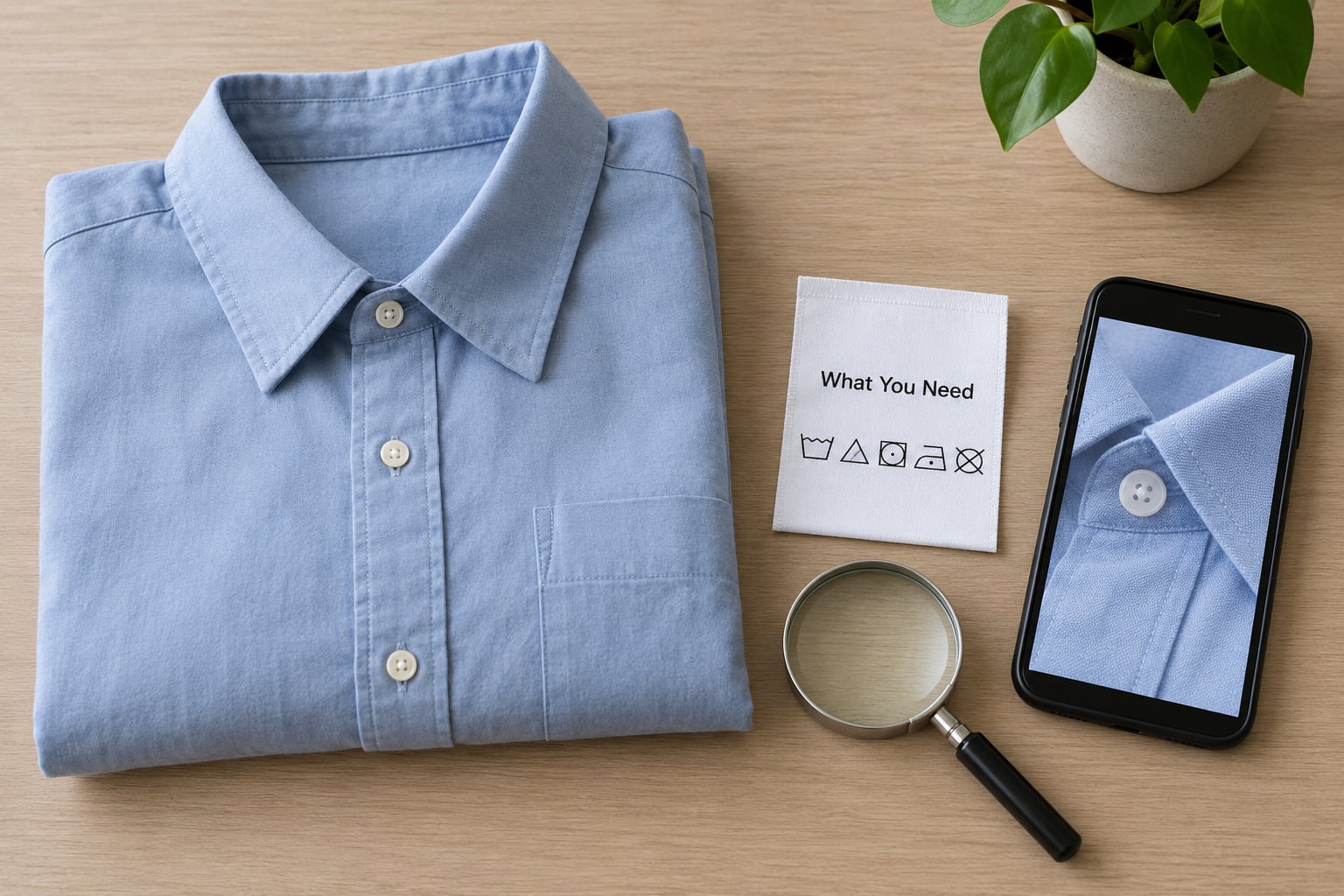
Not much, and all of it cheap or free.
- The garment itself, ideally out of the packaging or the polybag.
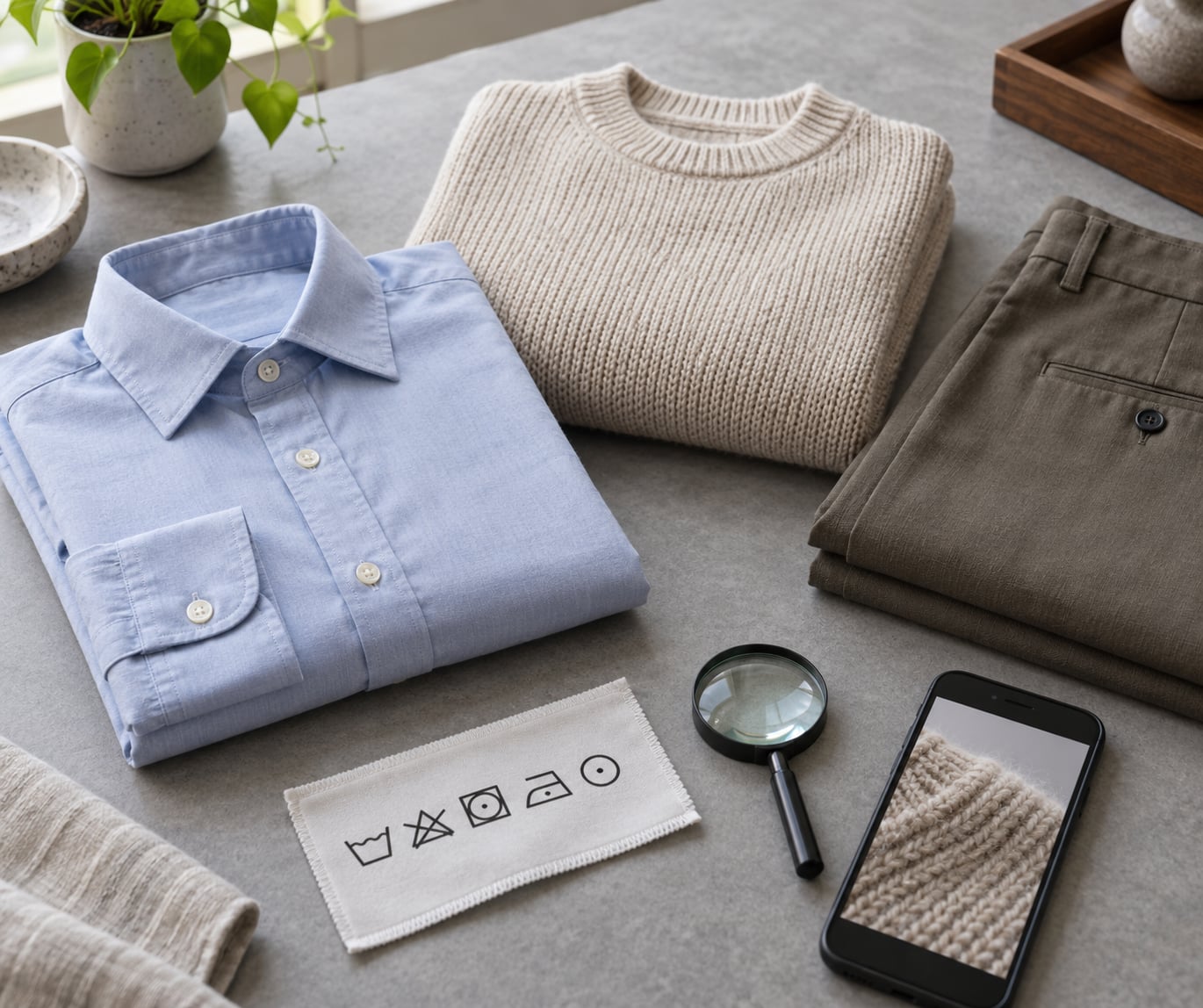
- Its care label, sewn inside the seam where the fabric composition and wash symbols live.
- A magnifier or the zoom on your phone camera. Stitch density is easier to read magnified.
- The product page when you are shopping online, plus the return policy, because the listing is your only view of the inside.
- Two minutes and somewhere with decent light, which is a harder requirement than it sounds.
If you are on a shop floor, hold the item up so the light falls across the surface rather than straight into your eyes. Backlit fabric shows you transparency that front lighting hides completely.
Step-by-Step: How to Tell If Clothing Is Good Quality
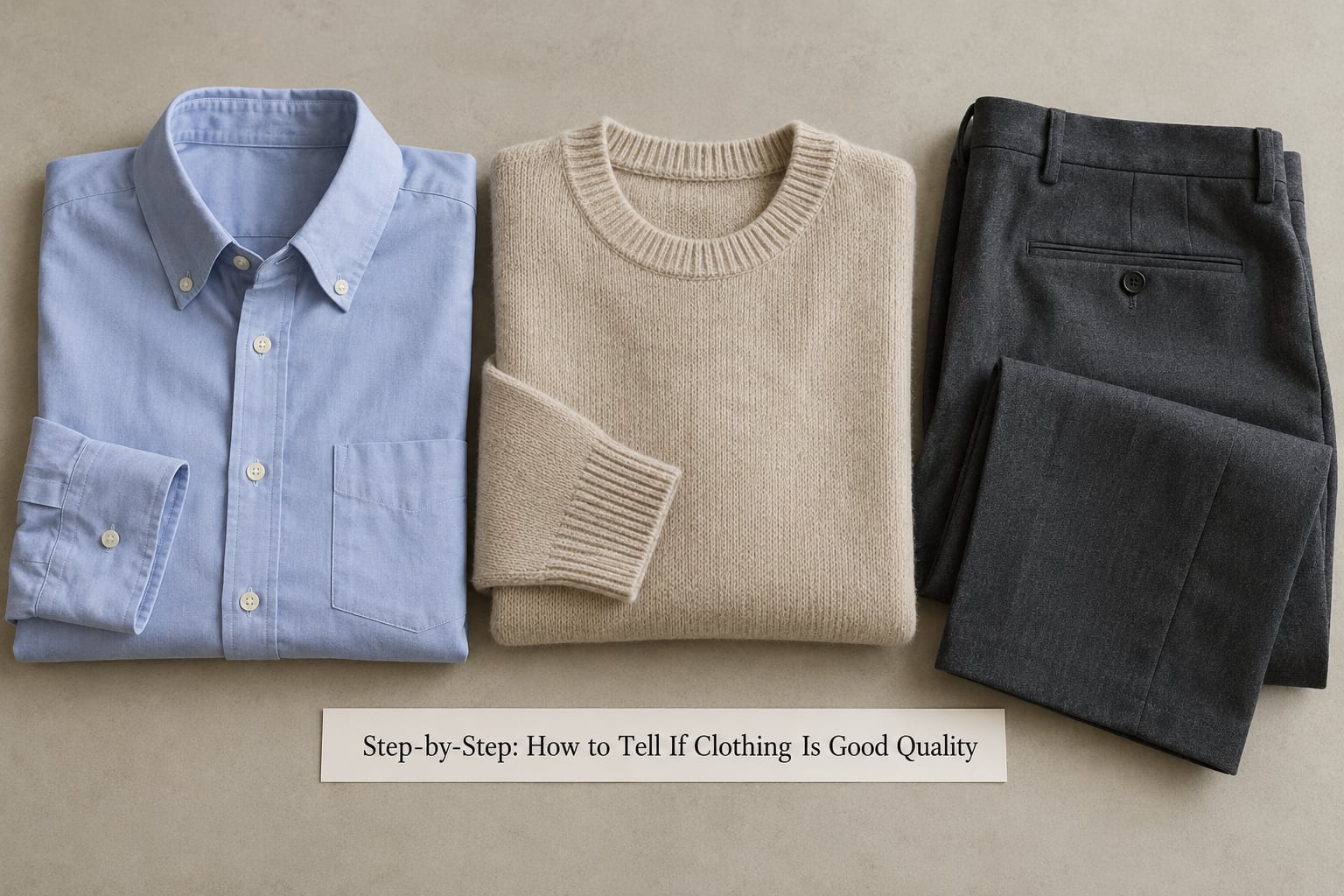
Run the checks in this sequence because each one is cheaper than the next. If the fabric feels wrong, you have saved the effort of counting stitches. If the seams are sloppy, nothing about the buttons is going to rescue the piece.
How to Tell If Clothing Is Good Quality: Check the Fabric
Start with composition. The label lists fibers as percentages, so you know exactly what you are handling. A 100 percent cotton shirt and a cotton-polyester blend are different products with different lives, and the number tells you which one you are holding.
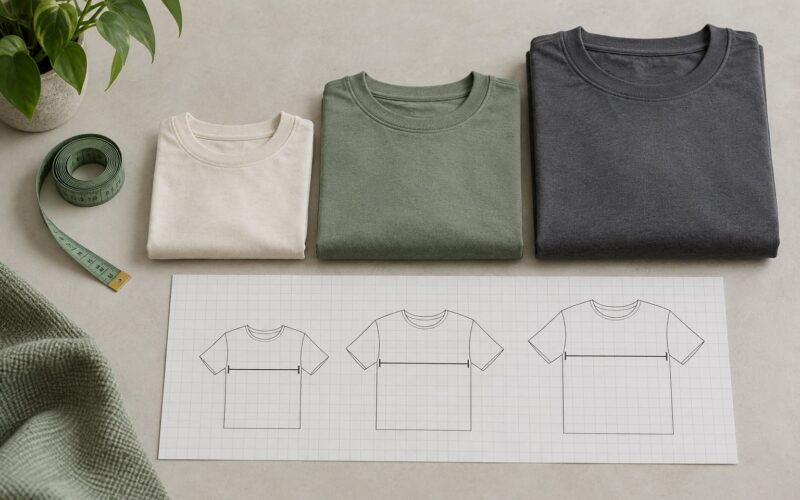
Then check three physical things. Hand feel: rub it between your thumb and finger, does it feel substantial or does it feel like a thin sheet of paper? Weight: knitwear and tees sold by fabric weight in grams per square meter give you a real number, and anything under roughly 250 GSM on a sweatshirt feels thin and washes out fast. Transparency: hold it up to a window or a lamp. Good fabric on a decent weave is opaque where it should be opaque.
Pilling tells the same story from the other direction. Rub the surface firmly with the flat of your hand, roughly twenty times. Cheap jersey and acrylic sweaters start forming fuzzy balls immediately, while merino and tightly woven cotton usually come through clean.
The fiber name alone does not settle quality, by the way. A loosely woven acrylic knit can outlast a badly constructed cotton shirt, because construction beats fiber more often than people expect.
Inspect the Seams and Stitching
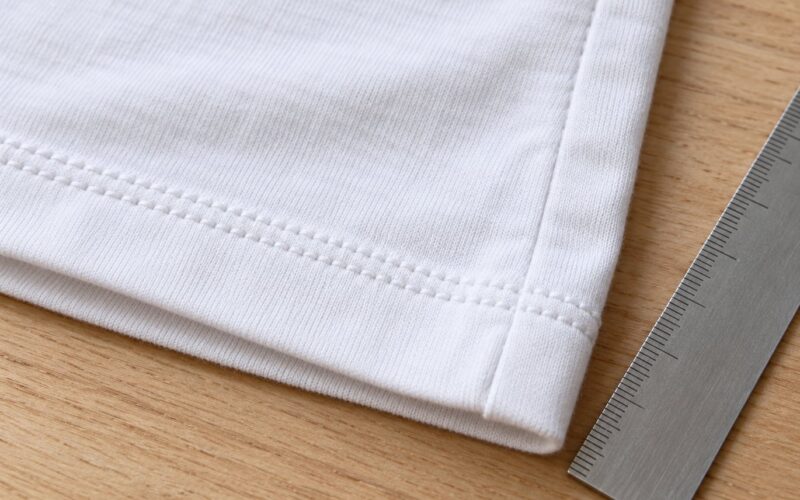
Turn the garment inside out. This is the single fastest way to know whether the price reflects the making, and sewing communities have used it as a walk-away rule for years: if you see raw, serged, overlocked edges inside something marketed as premium, that is your answer.
What good looks like:
- Even spacing, roughly 10 to 12 stitches per inch along a good seam, with no skipped stitches and no wandering thread.
- Finished edges, either bound or turned and stitched, never raw and unfinished.
- Backstitching or a French-finished closure where the seam ends, so the stitch does not unravel the first time you move.
- Double stitching across stress points: armholes, crotch seams, pocket bags, the waistband, the back neck.
- Pattern matching that lines up across the back, the placket and the pockets, which only matters visually on stripes and checks but signals the pattern was cut with care.
Then tug test it. Pull the side seam gently in two directions. It should feel solid with no gaping, and it should spring back. Loose threads, uneven stitch lengths or a seam that opens under a light pull all point the same way.
Check the Construction and Finishing
Turn it back the right way and work down the details, because this is where budget construction shows.
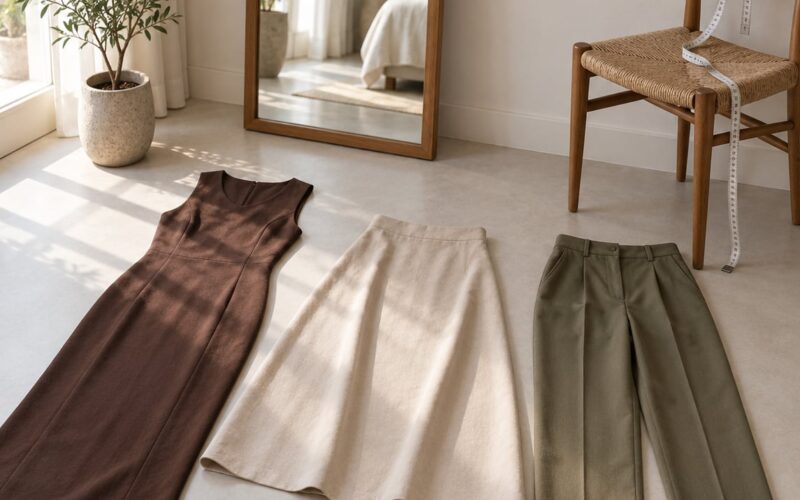
Check the lining on anything that needs it: a dress, a skirt, trousers, a blazer, a coat. Full lining that hangs cleanly and moves with the outer layer is a mark of a real pattern. Partial lining at the back with the skirt seam exposed is normal in mid-range tailoring, so treat it as a judgment call rather than a verdict.
Look at what is invisible from the front. Interfacing behind collars, cuffs and waistbands should be firm, not thin and papery. Collar stands should be stitched down at the tips. Shoulder seams should be smooth with no puckering or a dimple where the arm meets the body.
Now the hardware. Buttons should be sewn on with a shank and double thread where the thread shows, ideally with a spare button and a small bundle of matching thread stitched to the care label. A button sewn straight through with no reinforcement will work loose within a season. Zippers should run smoothly from pull to base without catching; a zipper with a canvas tape behind it is reinforced, a bare zipper is not.
Read the Label and Product Details
Flip to the care label and read three things: fiber percentages, wash instructions, and country of origin.
On the percentages, the main fiber listed first by law tells you what the garment mostly is. Blends are normal and often sensible, a little elastane in a cotton jersey for recovery, a wool-silk blend for drape. What matters is whether the blend was chosen deliberately or is just the cheapest way to hit a number.
Care instructions tell you how the factory expects the garment to be treated. A garment asking for gentle cold washing says something different from one that asks for a normal cycle. Learn the five core symbols, the tub for washing, the triangle for bleaching, the square for drying, the iron, and the circle for dry cleaning, plus the dots that raise or lower the temperature.
On country of origin, be precise about what it tells you. It names the country where the garment was cut and sewn, which is a real signal about labor standards and finishing norms, but it does not mean every fiber, thread and button came from there. It is a clue worth having, never a verdict on its own.
Look for Signs of Wear or Poor Packaging
This check matters most on resale and vintage racks, but new garments arrive damaged more often than anyone admits.
Check for stains along the hem and cuffs, a chemical smell that something has been sitting in plastic, deep wrinkles that set into the fabric, distorted or stretched hems, pulled threads near the shoulder seam, and closures that no longer close properly. On printed graphics, bend the print gently with your thumb. If it cracks or lifts at the crease, it will crack across the chest in a few washes.
Secondhand, add two more. Check for moth holes around the collar and under the cuffs, and count pilling at the underarm seam where fabric rubs hardest. An armpit that has already pilled through is telling you the piece is near the end of its life, not the beginning.
Test Comfort, Fit and Workability
Quality is not only about how it is made, it is about whether the garment works on a body. Try it on and move: reach forward, cross your arms, sit down, walk a few steps.
Look for transparency when you move, since drape changes completely in motion. Check that the shoulder seam sits on your actual shoulder point rather than hanging a centimeter out. Sleeve length should land where you want it, near the wrist bone, with no pulling across the back.
Fabric should feel like part of your wardrobe rather than a costume. A lightweight knit that you can barely feel is a nice property in July and a miserable one in January.
Use Price and Brand as Supporting Signals
Price tells you something real, because labor hours, fiber cost and finishing time all cost money. What it does not do is guarantee a specific garment. Quality swings inside a single brand, and an inexpensive coat with well-finished seams will beat a costly one with raw edges every time.
So run the math that actually matters, cost per wear. Divide what you paid by how many times you expect to wear it. A garment worn two hundred times is cheap at any price point, and one worn six times is expensive at a discount price. Then read labels like OEKO-TEX, GOTS or RWS as a secondary trust signal about how the fiber and the factory were handled, not as a quality score for the stitching.
Common Mistakes
Judging quality by thread count alone. Thread count describes bed sheets more than it describes a garment. On clothing it says nothing about seam finishing, reinforcement or hardware. Fix: count stitches per inch on an actual seam instead, which takes five seconds.
Assuming natural fibers are automatically better. A loosely woven linen that puckers after one wash is worse than a well-constructed cotton twill. Fix: judge the weave, the weight and the making, then the fiber.
Trusting the label without opening the garment up. The front of a shirt can look immaculate while the inside tells a different story. Fix: always turn it inside out.
Buying without reading the return policy. This is the real hazard of online shopping, where fabric and seams can only be inferred from photos. Fix: check the return window and cost before you commit, and prefer listings that state the fiber composition in writing rather than describing the fabric as soft or premium.
Buying the same item twice when a small fix would do. A tailor can re-stitch a hem, replace an elastic waistband or shorten a sleeve, and the garment ends up better than a new cheap one. Fix: measure the garment, not just your body, and check whether an alteration is even possible.
Treating the hanger view as the finish line. Something can hang beautifully and collapse on the body. Fix: put it on and move before you decide.
One last thing, because quality has a second half. Air knitwear between wears, wash cold, fold knits rather than hanging them since gravity stretches the shoulders, turn heavy garments inside out to protect the outer face, and use a fabric shaver on pilling instead of a razor. A well-made garment kept well will outlast a better one left to rot on a hanger.
Frequently Asked Questions
What is the easiest way to tell if a garment is good quality?
Turn the garment inside out and look at the seams first. Finished, bound edges with even stitching at roughly 10 to 12 stitches per inch, reinforcement at the armholes and crotch, and no loose threads are the fastest reliable signals. If those look right, move on to fabric weight, hardware and the care label. If they look rushed, nothing else will rescue the piece.
Are natural fiber clothes always higher quality than synthetic ones?
No. Fiber name is only part of the story, and construction decides more than material does. A loosely woven linen that pucks after one wash is worse than a tightly woven cotton twill. Wool, silk and good cotton have real advantages in breathability and drape, but a well-made blend often outlives a badly made natural piece. Check the weave, the weight and the making first.
How can I check clothing quality when shopping online?
Zoom into every listing photo, especially the close-ups of seams and hems, and look for warped stitching or pattern that fails to line up. Read the fiber description, since a listing that says soft or premium without naming percentages is telling you nothing useful. Then check the return policy before you buy, because online you cannot test drape or transparency yourself.
What details show that a garment was well made?
Look for a spare button and a small bundle of matching thread on the care label, double stitching at stress points, firm interfacing behind collars and waistbands, and lining that hangs freely on anything that needs it. On knitwear, check ribbed cuffs and hem that spring back rather than going slack. Details that nobody sees are usually the ones nobody rushed.
Is a high price a reliable sign of good clothing quality?
Not reliably. A higher price usually reflects better raw materials, more labor hours and better finishing, all real costs. But quality varies within a single brand, and some expensive garments arrive with raw inside seams and rushed hems. Judge the garment in front of you, then use price as background information rather than a verdict.
Conclusion: Start With the Details
If you learn nothing else from this guide, learn the order of the inspection. Fabric first, because it costs you nothing but a moment of touch. Then seams inside out, because that is where rushed making shows first. Then the invisible details, closures, interfacing, lining and the spare button, followed by a wear test on the body.
That is how to tell if clothing is good quality: you learn it by looking, and you stop handing your judgment over to the price tag. Two minutes in the fitting room saves you two seasons of disappointment.