If you are searching for how to wear a slip dress to the office without it reading as eveningwear, four checks do most of the work: midi length or longer, a neckline that stays above the chestbone, opaque or fully lined fabric, and a structured layer over the top. Add closed-toe shoes and undergarments with no visible straps, and the whole thing reads as office chic.
The slip dress gets labeled lingerie-adjacent because of what it looks like out of the bag on a hanger. On a body, with a blazer, it looks like a silk sheath dress that happens to be more comfortable than the one you wear to interviews.
Budget about five minutes of extra decision-making in the morning. The hard part is not the styling, it is picking the right dress in the first place.
Table of Contents
- What You Need
- Step-by-Step: How to Wear a Slip Dress to the Office
- 1. Choose the Right Slip Dress for Your Workplace
- 2. Add a Modest Layer Underneath
- 3. Create a Structured Outer Layer
- 4. Style Legs and Footwear: How to Wear a Slip Dress to the Office in Closed-Toe Shoes
- 5. Keep Accessories and Makeup Polished
- 6. Adapt the Outfit for Summer, Winter, and Dress Codes
- Common Mistakes
- Frequently Asked Questions
- Can I wear a slip dress to a professional office?
- What should I wear under a slip dress for work?
- Are slip dresses business casual or too revealing?
- Can I wear a slip dress with tights to work?
- What shoes look professional with a slip dress?
- How can I style a slip dress for a conservative workplace?
- Conclusion
What You Need
Everything below converts one delicate dress into something you can sit in for eight hours and walk out of the building feeling professional.
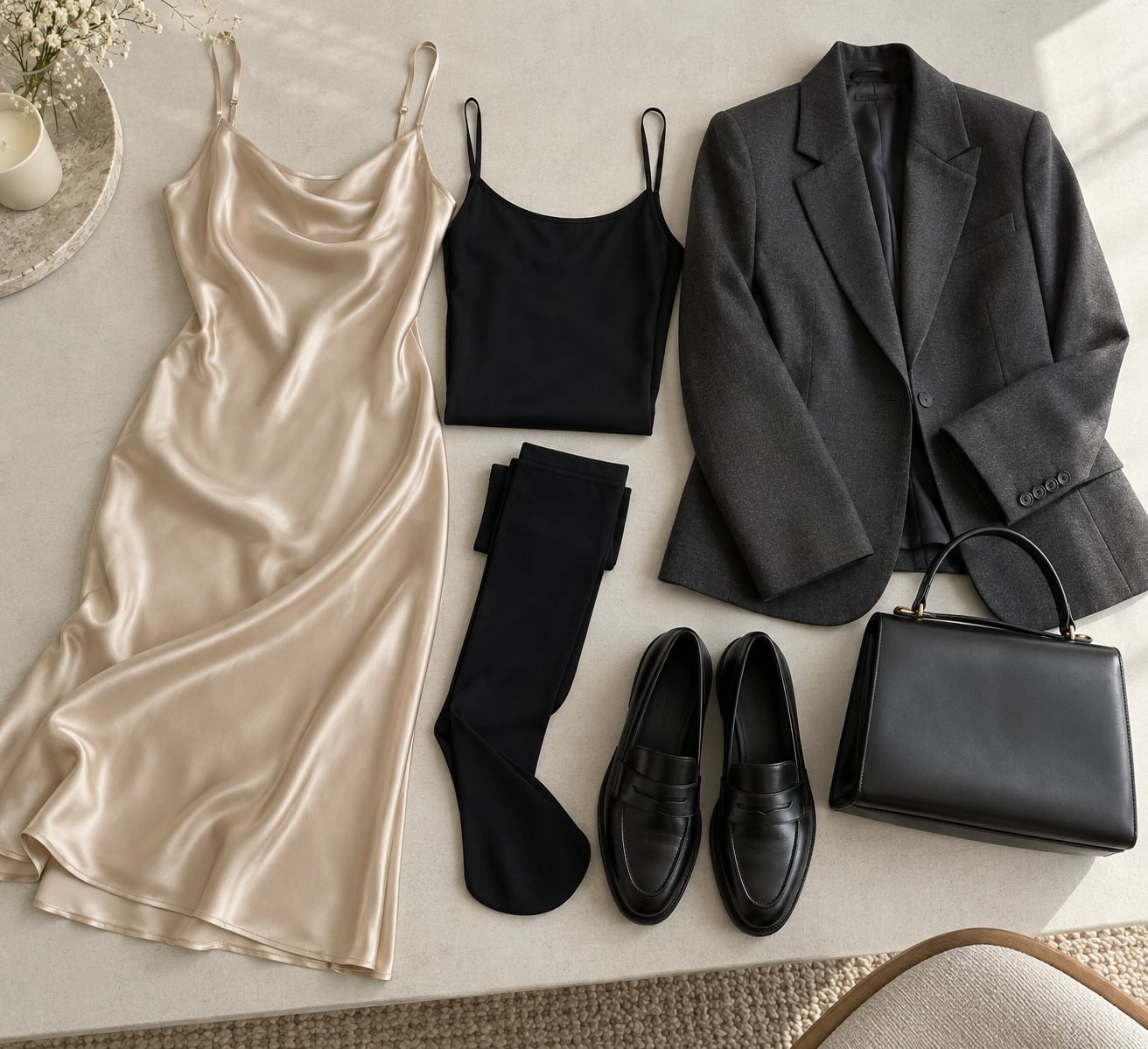
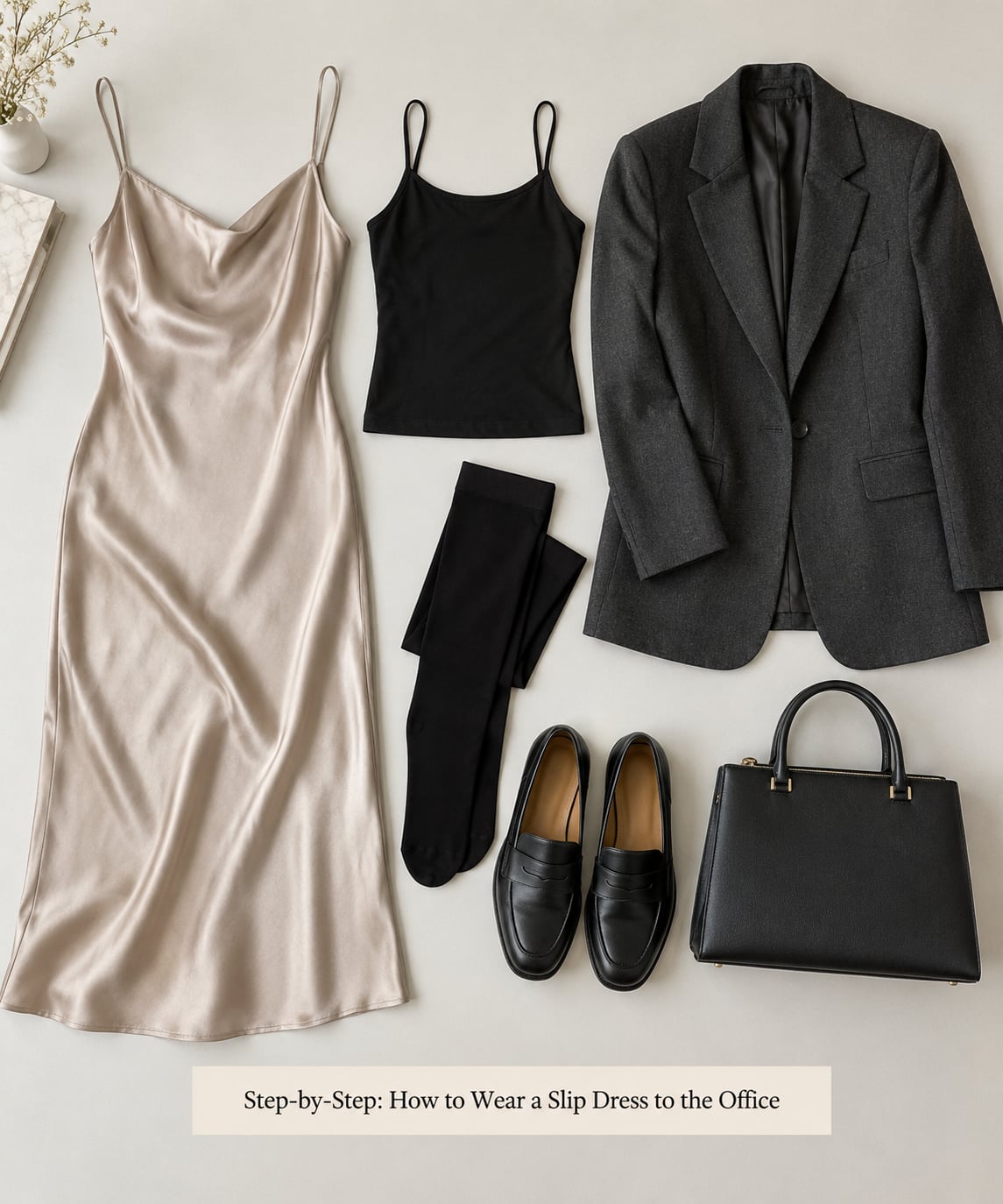
- A base layer: a camisole, bralette, fitted tee, half slip or bodysuit in a shade close to your skin tone or the dress color.
- A structured outer layer: a tailored blazer is the strongest option, then a longline blazer, a long cardigan that hits mid-thigh, a knit vest, or a lightweight trench.
- Legwear: opaque tights for business formal and cold offices, sheer hosiery for business casual, bare legs only where the dress code allows and the weather cooperates.
- Closed-toe shoes: leather loafers, low block heels, sleek pumps, ankle boots, or ballet flats. Nothing with a thin strappy back that clicks.
- A work bag: a structured tote or briefcase that keeps its shape when you set it on the floor.
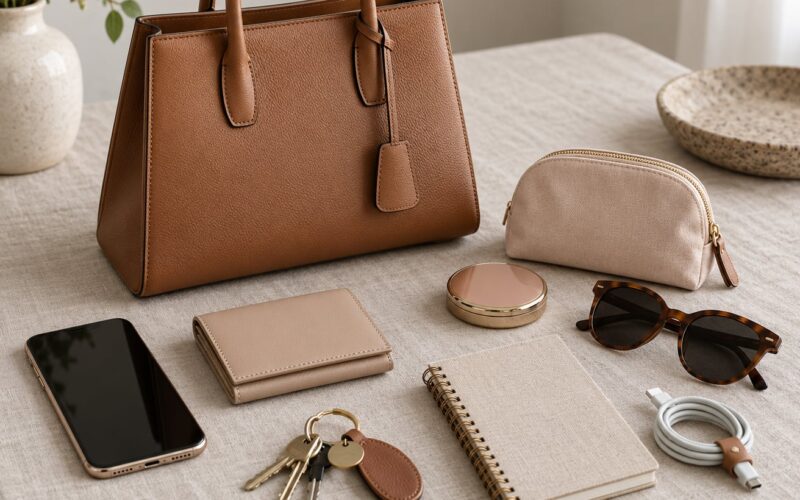
- Restraint in accessories: small studs or hoops, a watch, a belt if the dress has no waist seam.
Step-by-Step: How to Wear a Slip Dress to the Office
1. Choose the Right Slip Dress for Your Workplace
Fabric does more work than people expect. A matte jersey or crepe slip looks closer to a knit dress; a heavy silk or fully lined charmeuse reads expensive. High-shine satin catches every light in the room, and in a conservative office that shine is what gets it questioned.
Length is the least negotiable. Knee, midi and maxi all work. Anything above that is a weekend dress, and no amount of layering changes that.
Neckline is second. A cowl, crew or shallow square neckline sits close to the body without exposing skin. A plunging V does not become modest under a blazer, because a blazer opens.
On strap width, most office guides land in the same place: a spaghetti strap reads lingerie-coded, while an adjustable strap at least half an inch wide reads intentional. If you are between two dresses and one has wider straps, take that one.
Fit matters more than usual because bias cut clings. A dress that gapes at the waist when you sit or gaps under an open blazer when you stand will undermine the whole look. Try it seated before you buy it.
2. Add a Modest Layer Underneath
This is the step people skip, and it is the one that decides whether the dress works or does not. Bias-cut silk shows everything underneath it: waistband edges, seams, bra hardware, the line of a underwire.
Start with the bra. A no-show style with convertible or clear straps keeps the shoulder line clean. Some people deliberately wear visible straps and it works, particularly with a square or cowl neckline where the straps read as part of the neckline.
Next comes coverage. A fitted camisole or bodysuit in a shade matched to your skin tone smooths the torso and stops the neckline from reading as bare skin. A half slip solves the same problem from the waist down and is the easiest fix for a dress that rides up when you sit.
On underwear, cut matters more than color. Smooth-finish or seamless-cut styles disappear under a fluid drape. If the dress is unlined and slightly sheer in daylight, hold it up to a window before you commit.
3. Create a Structured Outer Layer
A layer with shoulders is what converts the silhouette from slip to outfit. Tailoring matters more than the label: a blazer that fits properly at the shoulder and falls straight does more than an expensive one that swallows you.
Keep the length relationship in mind. The outer layer should fall past the widest part of the dress, so a mid-thigh cardigan or a longline blazer works better than a cropped jacket that cuts the silhouette in half.
The practical benefit is real too. Offices run cold in July and freezing in January, and the layer lets you adjust across the day without going home.
4. Style Legs and Footwear: How to Wear a Slip Dress to the Office in Closed-Toe Shoes
Loafers are the safest answer for business casual offices and they work with every fabric. Low block heels give you height and stay stable on a commute. Sleek pumps in a closed toe read more formal and suit a finance floor.
Ankle boots handle winter offices where tights make the outfit too warm by noon. Ballet flats are fine in creative settings but can look unfinished with a silk dress in a formal office.
Avoid strappy sandals, even minimal ones. The straps compete with the thin shoulder straps and the whole thing drifts back toward eveningwear.
On legwear, opaque black tights work with midi lengths in every conservative setting. Sheer hosiery suits a business casual dress code and a slip dress with a darker color. Bare legs only where both the dress code and the thermometer allow it.
5. Keep Accessories and Makeup Polished
Match the jewelry to the room. Small studs, thin hoops, a fine chain and a watch read professional in a law office. In a creative or media setting, a single bold piece is fine and even helpful.
The bag does a lot of quiet work here. A structured tote in a solid color gives the outfit an anchor; a soft drawstring bag makes the whole thing look like a going-out look. Skip a crossbody that cuts across the bodice.
Makeup should look like you made an effort, not like you did. Defined brows, a neutral lip and light coverage of any shine are enough. One coat of mascara and a lip tint usually carry it.
6. Adapt the Outfit for Summer, Winter, and Dress Codes
In a hot office, go with the sleeveless slip, no cardigan, opaque tights removed, and clean leather sandals with a closed toe. If your dress is lined, a camisole alone is enough coverage.
In a cold office, the stack is slip dress over a fine turtleneck with a knit vest, a long cardigan and opaque tights with ankle boots. The turtleneck also solves the neckline question on days when the blazer comes off at your desk.
For a conservative or client-facing day, raise the coverage a notch: the higher-necked dress, the opaque tights, the closed-toe loafer, the minimal jewelry, the calf-length or maxi hem. You can wear the same dress that day without the layering if you are internal only.
On how strict the rules actually are, it varies more than the handbook suggests. People in r/office describe dress codes as mostly aspirational, with real enforcement reserved for genuinely revealing or unclean clothing. That does not mean anything goes, it means know your own floor before you worry about everyone else’s.
For video calls the top half does all the work, so check the neckline and shoulder area in a screenshot before you join. Backward-looking angles are unforgiving on a bias cut.
Common Mistakes
Believing a blazer fixes anything. A low-cut or too-short slip under a blazer still reads as an evening dress, because a blazer is an open frame. Fix the dress, not just the layer.
Skipping the base layer. A camisole or half slip takes about twenty seconds and removes the whole category of problems.
Wearing shiny satin in a conservative room. The fabric’s sheen does the work of a low neckline. Swap to matte jersey or a lined crepe for formal settings.
Pairing with strappy sandals. Two sets of thin straps reads as vacation. Closed-toe shoes ground the outfit instantly.
Going too casual on the rest of the body. Sneakers and a tote with a silk slip undoes all the layering work. Match the seriousness of the shoes to the seriousness of the dress.
Ignoring the seat. Sit down in the fitting room. A dress that rides up or gaps when seated will do both things by 2pm.
Over-layering so the dress disappears. If you can barely see the slip, you are wearing a coat over a slip. That is a valid outfit, but not a slip dress outfit.
Frequently Asked Questions
Can I wear a slip dress to a professional office?
Yes, if it clears four checks: midi length or longer, a neckline above the chestbone, opaque or fully lined fabric, and a structured layer such as a tailored blazer over it. Add a base layer, closed-toe shoes and restrained jewelry. In finance, law or any client-facing role, raise the coverage a further notch with opaque tights and a higher neckline.
What should I wear under a slip dress for work?
A no-show bra with convertible or clear straps, plus a fitted camisole or bodysuit in a tone close to your skin. For the waist, a half slip stops the dress riding up when you sit and smooths waistband edges under bias fabric. Use smooth-finish underwear, since seam and elastic lines show clearly through silk and charmeuse.
Are slip dresses business casual or too revealing?
A plain satin slip with spaghetti straps is usually one step past business casual. Once you add a modest neckline, midi length, opaque fabric, a base layer and a structured outer layer, it sits comfortably inside the dress code. The length and neckline do most of the work, not the fabric name or the price tag.
Can I wear a slip dress with tights to work?
Yes, and opaque tights are the safest choice for conservative or formal offices. Sheer hosiery works under a business casual dress code, especially with a darker or mid-length dress. Skip tights when the office is warm and the hem is midi or longer, since the fabric can crease at the ankle. Test the combination with the shoes before committing.
What shoes look professional with a slip dress?
Leather loafers are the most dependable, low block heels add height and stability, and closed-toe pumps suit formal floors. Ankle boots handle winter offices with tights. Ballet flats are fine in creative settings but can look unfinished with silk in a conservative office. Avoid strappy sandals, which compete with thin shoulder straps and read as eveningwear.
How can I style a slip dress for a conservative workplace?
Pick a higher-necked, fully lined midi or maxi dress in a matte fabric. Add a fitted camisole, a tailored blazer that falls past the widest part of the dress, opaque tights, closed-toe leather loafers and small jewelry. Keep the bag structured and the makeup neutral. Skip the visible bra straps unless the neckline is square or cowl.
Conclusion
Start with the four tests, not with the outfit. Check the length, neckline, opacity and strap width of the slip dress you own, then pick the layer that matches your office: a tailored blazer for a conservative floor, a long cardigan with ballet flats for a relaxed one. Everything else is detail.