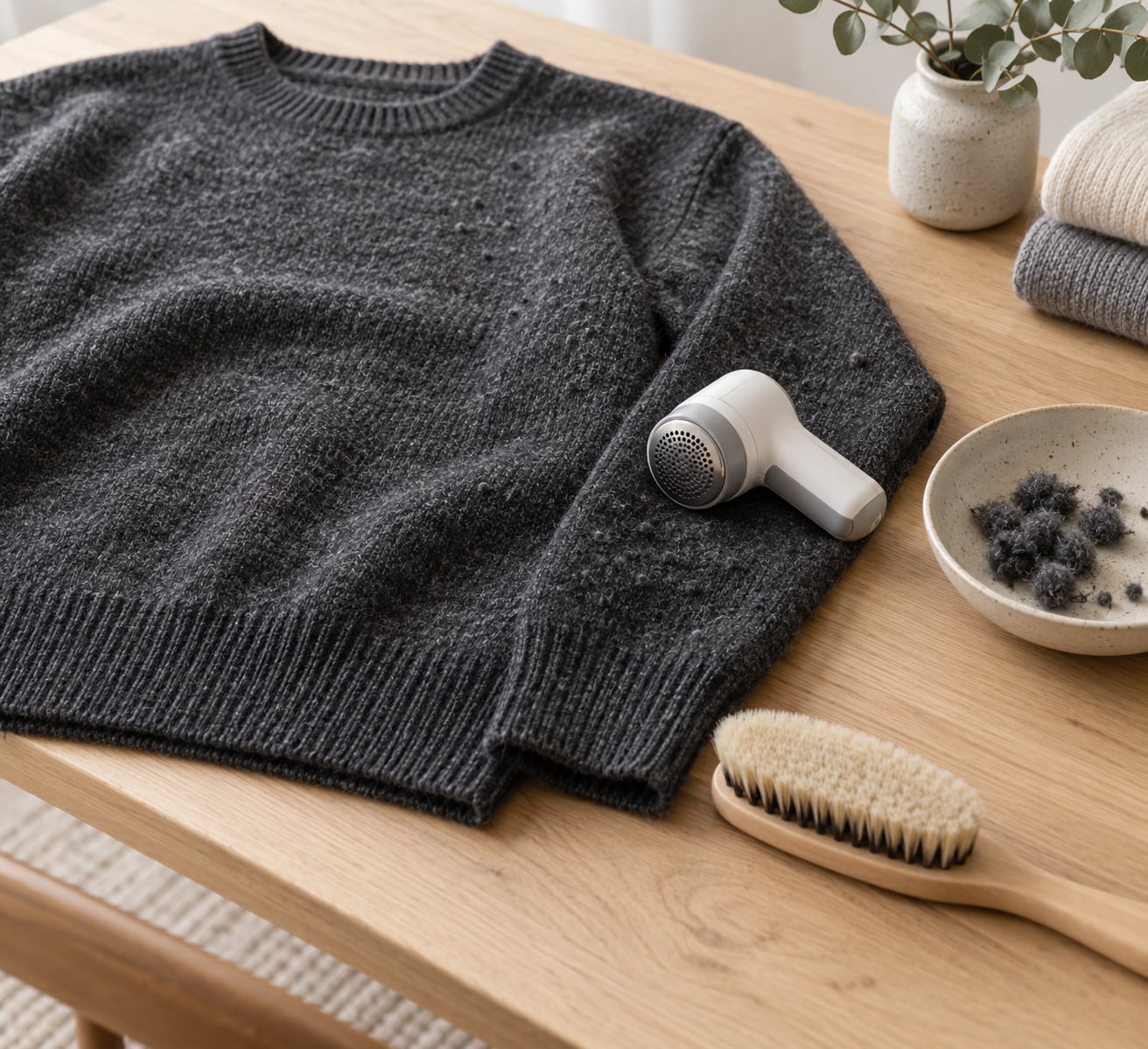
The fastest way to de-pill a sweater is a battery fabric shaver on sturdy knits, and a sweater comb or soft brush is the safer choice on cashmere and fine merino. Whatever tool you pick, the technique matters more than the tool: lay the sweater flat, pull the fabric taut, work in short light passes, and never yank a pill off with your fingers. Ten minutes is enough for a full sweater.
Here is why pilling happens in the first place. Fibers in a spun yarn are not smooth rods; each one is a strand with a loose tip. Rubbing from body movement, a sleeve seam, an underarm, or the strap of a shoulder bag pushes those tips together, and they tangle into a felted knot anchored to the surface of the knit.
One thing worth sorting out early: lint is not pilling. Lint is loose fiber sitting on top of the fabric, and a lint roller or your hand can lift it. Pilling is felted into the yarn itself, which is why a lint roller makes no difference to it and why pills come back after the next wash.
Table of Contents
- What You Need
- Step-by-Step: How to De-Pill a Sweater
- 1. Use a Fabric Shaver for Stubborn Pills
- 2. Use a Sweater Comb for Knit Fabrics
- 3. Use a Lint Ball or Soft-Bristle Brush
- 4. Remove Pills by Hand Carefully
- 5. Try the Freezing Method for Loose Pills
- Common Mistakes When De-Pilling a Sweater
- How to Prevent Sweater Pills From Returning
- Frequently Asked Questions
- Can I use a razor to de-pill a sweater?
- What is the safest way to remove pills from cashmere?
- How do I remove pills from a sweater without damaging the fabric?
- Does washing a sweater get rid of pills?
- How can I keep a sweater from pilling again?
- Are pills a sign that my sweater is damaged?
- Conclusion
What You Need
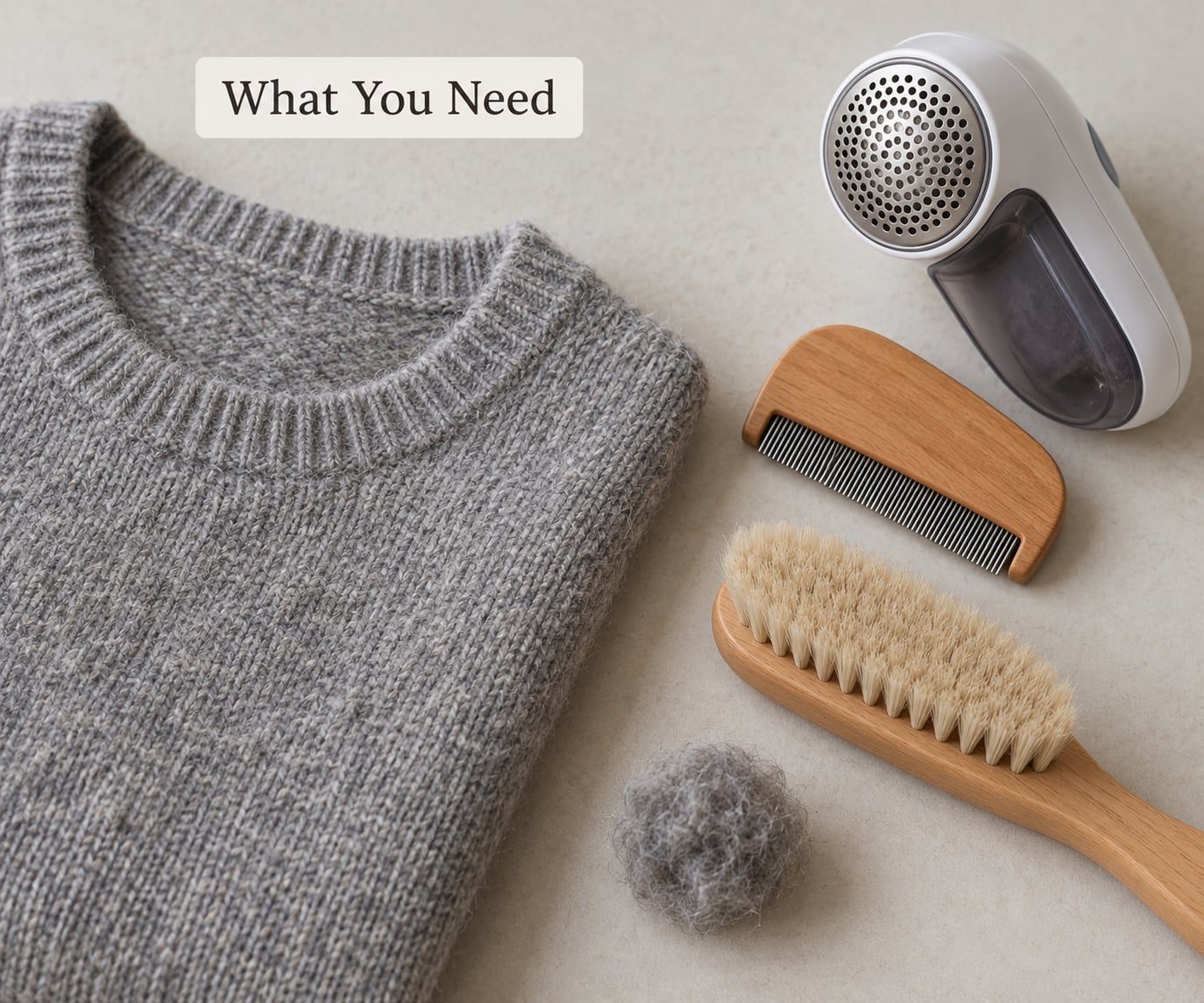
You do not need a full kit. Most people end up using one powered tool and one hand tool, and the rest stay in a drawer for years.
- Fabric shaver (pill and fuzz remover): a small battery or rechargeable unit with a rotating mesh and a debris chamber. Best on dense cotton knits, fleece, acrylic and heavier wool blends. Fastest option by a wide margin.
- Sweater comb: fine metal teeth on a handle that lift pills off the surface instead of cutting them. The safest choice for cashmere, merino and anything ribbed or loosely knit.
- Sweater stone or pumice stone: a handheld stone for dry brushing. Works like a comb, costs almost nothing, and needs no batteries.
- Lint ball or soft-bristle clothing brush: for pills that sit loose on the surface and for delicate knits that cannot tolerate a powered tool.
- Small scissors or snips: for isolated pills on cashmere that are too stubborn for anything else. Sharp points, used close to the fabric.
- Lint roller: only useful for loose lint and shed hair on the surface. It does nothing for felted pills.
A worn disposable razor also works on sturdy fabrics, and it is the cheapest tool in the drawer. Knitters on r/YarnAddicts tend to warn against it anyway, because a fresh blade shaves the knit along with the pill and leaves a bald patch.
Step-by-Step: How to De-Pill a Sweater
The five methods below run from most to least aggressive. Start at the top of the list for a dense synthetic or cotton knit, and drop down the list for cashmere and other fine fibers. Whichever you use, do a test on a hidden inside seam first and check the result under a lamp before you move on.
1. Use a Fabric Shaver for Stubborn Pills
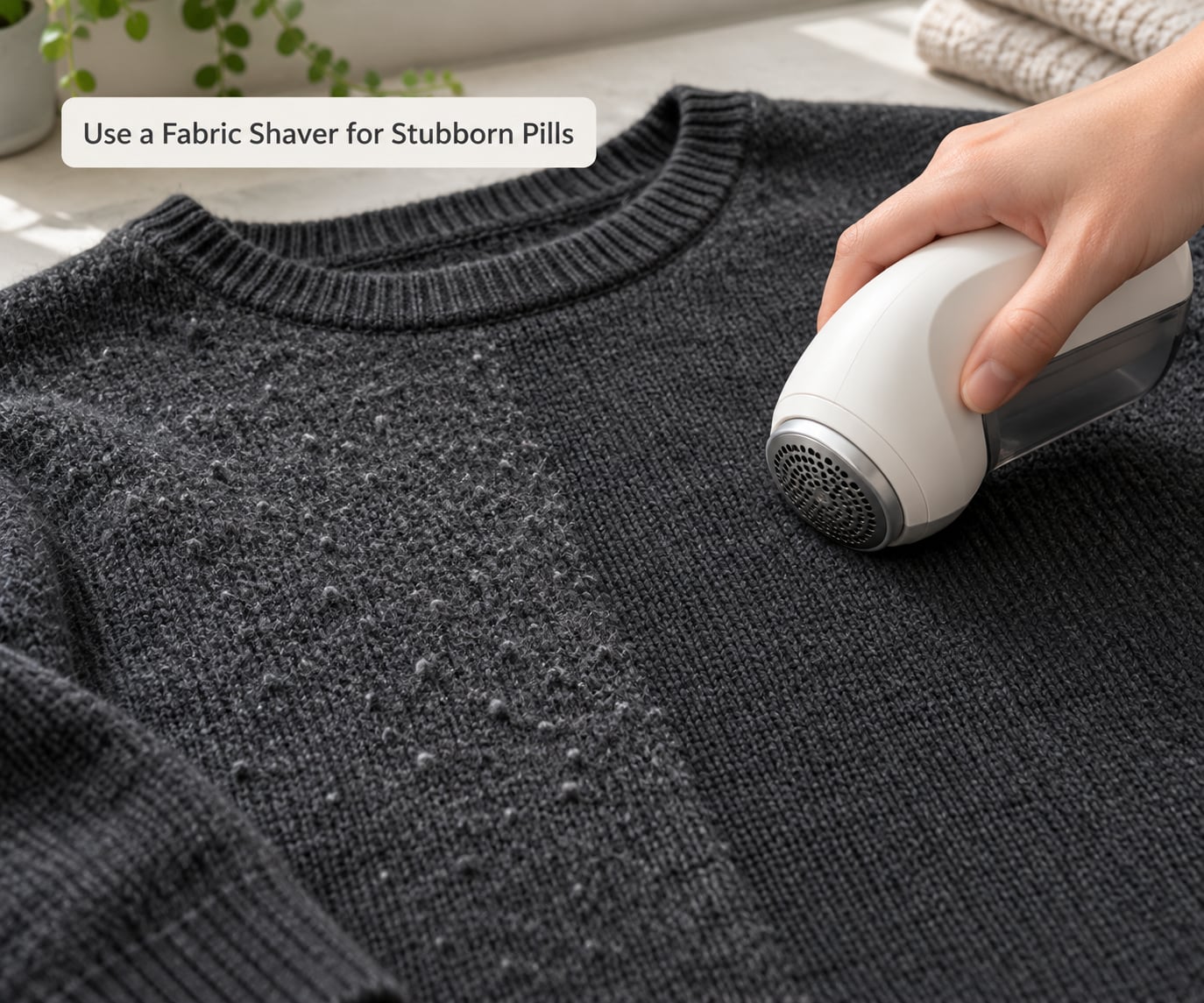
Push the power button and the shaver does most of the work, which is why it is the first choice for pills that are welded into a heavy knit. Lay the sweater flat on a table or ironing board so the fabric is supported, and stretch it gently with your free hand so the surface is taut and the pills stand up proud.
Pass the shaver over the fabric in slow, light strokes, working in sections from the bottom of the sweater upward. Do not press down or push it like a razor; let the mesh and blades do the cutting. Empty the debris chamber every few passes, because a full chamber drags and can snag.
Stop immediately if the shaver catches, if you feel the surface going flat and slick, or if you start to see more knit than fuzz. On a heavy synthetic or cotton sweater that is usually a sign of more pills coming loose, not of fabric being removed.
2. Use a Sweater Comb for Knit Fabrics
A sweater comb is the tool most knitters reach for first, and it is the best general answer to how to de-pill a sweater without risking the fabric. The teeth lift the pill off the surface while leaving the yarn underneath untouched.
Hold the sweater flat and taut with one hand, with the back of your hand resting on the fabric so you can feel the teeth. Draw the comb across the surface in one direction, following the line of the knit, with light pressure. Then lift it and reset rather than going back and forth over the same spot.
Keep the strokes short and watch the direction of the yarn. On a ribbed or cable knit, work along the rib rather than across it, since crosswise strokes can snag the raised stitches. A sweater stone behaves the same way and works on the driest, fluffiest pills.
3. Use a Lint Ball or Soft-Bristle Brush
For pills that sit on the surface and come off with almost no pressure, a lint ball or a natural-bristle clothing brush is the gentlest option there is. This is the right method for cashmere, fine merino and any sweater you cannot stretch without worrying.
Hold the garment loosely rather than pulling it tight, and work in small circular motions, about the size of a coin. Brush with the nap, then brush again in the opposite direction to lift the loosened pills off the surface. A soft brush will not remove felted pills, but it clears the fine fuzz and the loose pills that make a sweater look tired.
4. Remove Pills by Hand Carefully
Some pills sit proud enough to take off with a fingernail or the tip of a small pair of scissors, and that is fine as long as you work close to the surface. Hold the fabric taut on the reverse side so you can see the base of the pill, then snip or lift from the outside in.
Never pull a pill off with your fingers. This is the single most common way people ruin a good knit: the pill is anchored to a loop of yarn, so pulling takes the loop with it and leaves a snag or a run that never comes out. If a pill does not lift cleanly with almost no force, leave it for the comb.
5. Try the Freezing Method for Loose Pills
Freezing does nothing to the fibers, but it hardens the loose pills so they snap off instead of smearing back into the knit. Put the sweater in a breathable bag or pillowcase, leave it in the freezer for about an hour, and take it straight out.
Shake it out over a clean surface or brush it with a soft-bristle brush while it is still cold and stiff. The hardened pills fall away in a rush, which makes this a good first pass on a sweater covered in loose fuzz, or a good way to clear a pile of small pills before you go in with a comb. Cold, dry winters also do this naturally, so a sweater left outside overnight on a dry day gets the same effect.
Common Mistakes When De-Pilling a Sweater
Most damaged sweaters were damaged by one of a handful of habits, and every one of them has a simple fix.
- Using a new razor blade. A fresh edge shaves the knit along with the pill. If you use a razor, use one that has been used a few times and test it on a hidden seam. Better still, use a comb.
- Pulling pills with your fingers. It removes the yarn loop under the pill and leaves a permanent snag. Lift and snip instead, or comb.
- Pressing the shaver hard. Pressure is what cuts fibers and flattens loft. Light strokes, loose grip, and take the shaver off the fabric every few passes.
- Shaving over a curved or unsupported surface. Working on a sleeve that hangs in the air lets the mesh dig in and catch. Lay the garment flat and support it.
- Going over the whole sweater in one pass. Over-depilling flattens the fabric and removes volume, so a sweater can look worse than when you started. Work in small sections and stop once the surface is even.
- Ignoring the care label. A dry-clean-only cashmere jumper should not meet a powered tool. Check the label, and if it says professional cleaning only, that is the answer.
- Working on a pill in a snag. If the yarn has already pulled, stop. Cut the loose thread flush and leave the snag to a professional, or tuck it inside the garment.
If you have already gone too far and the fabric looks shiny or thin, there is no fix for the missing fibers. Stop working on it, lay it flat, and let it relax for a day before deciding what to do next.
How to Prevent Sweater Pills From Returning
Pills form from friction, so prevention is really about reducing friction and heat. Most of it is about how the sweater is washed and dried, not about the tool you use afterwards.
- Wash less often. Every wash cycle rubs fibers together. Spot-clean or air the sweater between washes and you will cut the friction in half.
- Turn it inside out. The abrading outer surface rubs against other garments and the drum instead of against itself.
- Use cold water and a delicate or wool cycle with a low spin. Warm water and a fast spin are the two things that make pilling get worse after an already-clean sweater.
- Use a mild wool detergent, and skip the fabric softener. Softener is neither the cause nor the cure. It leaves a coating that some people find makes fibers loosen faster.
- Put knits in a laundry bag. This keeps zippers, hooks and Velcro from abrading the surface of the yarn.
- Air dry flat. High heat shrinks wool and felts cashmere, and a hot dryer tangles the fibers that were left loose. If you use a dryer at all, use the lint filter and a low tumble.
- Reduce daily friction. Underarms, cuffs, sleeve seams and the area where a crossbody or backpack strap sits are where pills come back first. Loosen the bag, and switch to a smoother lining against the knit.
- Fold, do not hang. Hanging stretches a knit into a shape it does not spring back from, which changes how the fibers sit against each other.
Store sweaters clean. Body oils and food attract the fibers that then tangle, so a knit worn for one evening and thrown in a drawer attracts more pilling than one that was cleaned first.
Frequently Asked Questions
Can I use a razor to de-pill a sweater?
You can, but only on sturdy fabrics like dense cotton knits, fleece and acrylic, and only with a blade that has already been used a few times. A fresh blade shaves the knit along with the pill and leaves a bald patch that will not grow back. Test on a hidden inside seam first. On cashmere, merino or any fine knit, use a sweater comb instead, since a razor takes un-pilled fibers off the surface along with the pills.
What is the safest way to remove pills from cashmere?
Use a sweater comb or a soft-bristle clothing brush, and go slowly. Lay the cashmere flat on a surface, keep it lightly taut, and draw the comb along the line of the knit in one direction without pressing. For a few stubborn pills, hold the fabric from the reverse side and snip them off close to the surface with small scissors. Avoid powered fabric shavers on cashmere, since repeated passes thin the fibers and flatten the loft.
How do I remove pills from a sweater without damaging the fabric?
Keep the fabric flat and taut, work in small sections, and use the lightest tool that will do the job: a comb or stone for knits, a fabric shaver only on dense fabrics. Never pull a pill with your fingers, because the pill is anchored to a loop of yarn and pulling leaves a snag. Stop when the surface looks even, since over-depilling thins the fabric and removes volume that never returns.
Does washing a sweater get rid of pills?
No. Washing usually makes pilling worse. Warm water, a fast spin and rubbing against other garments tangle the loose fiber tips into more felted nodules, so a sweater can come out of the machine with heavier pilling than it went in. Washing is useful for clearing loose lint and surface fuzz, but felted pills have to be removed with a tool while the sweater is dry.
How can I keep a sweater from pilling again?
Reduce friction and heat. Wash less often, turn the sweater inside out, use cold water on a delicate or wool cycle with a low spin, add a mild wool detergent, and skip fabric softener. Air dry flat instead of using a hot dryer, and fold rather than hang for storage. For the areas that pill fastest, loosen bag straps and reduce rubbing under the arms and at the cuffs.
Are pills a sign that my sweater is damaged?
No. Pilling is a normal result of friction on short-fiber yarns, which is why cashmere, merino and acrylic knits pill more than tightly woven cotton or linen. It says something about fiber length rather than about quality, and it is not a hole or a tear. Some pilling can never be fully removed, but depilling restores most of the look, and a sweater that is maintained is far cheaper to keep than to replace.
Conclusion
Start with a fabric shaver if the knit is dense, synthetic or a heavy wool blend, and start with a sweater comb or a soft-bristle brush if it is cashmere, merino or anything fine and ribbed. Whichever you use, lay the sweater flat, keep it taut, work in light passes, and stop as soon as the surface is even.
Check the care label before anything else, keep the sweater away from heat and friction in the wash, and most of the pilling you remove will not be back within the season.