Learning how to read a garment care label takes about a minute and saves you from the two most expensive laundry mistakes there are: a shrunken sweater and a melted synthetic. The symbols are not decoration or brand shorthand. They are a regulated, international language, and once you can read them the care decisions for any garment take seconds.
This guide covers every symbol family you will meet on a sewn-in tag, both in degrees Celsius and Fahrenheit, plus what to do when the label is faded, missing, or telling you something your retailer website does not.
Table of Contents
- What You Need to Read a Garment Care Label
- How to Read a Garment Care Label Step by Step
- How to read a garment tag: the 60-second routine
- 1. Check the Fiber Content
- 2. Find the Washing Instructions
- 3. Read the Drying Instructions
- 4. Look for Special-Care Warnings
- 5. Follow the Label for the Longest Life
- What to do when the care label is faded or missing
- Common Care Label Symbols and What They Mean
- What the Symbols Mean for Common Fabrics
- Common Mistakes That Ruin Clothes
- Frequently Asked Questions
- What if a garment does not have a care label?
- What does the wash bucket symbol mean on clothing?
- Can I wash a dry-clean-only garment at home?
- How do I know whether a fabric can go in the dryer?
- What do the dots and crossed-out symbols on care labels mean?
- Start With the Label and Clothes Last Longer
What You Need to Read a Garment Care Label
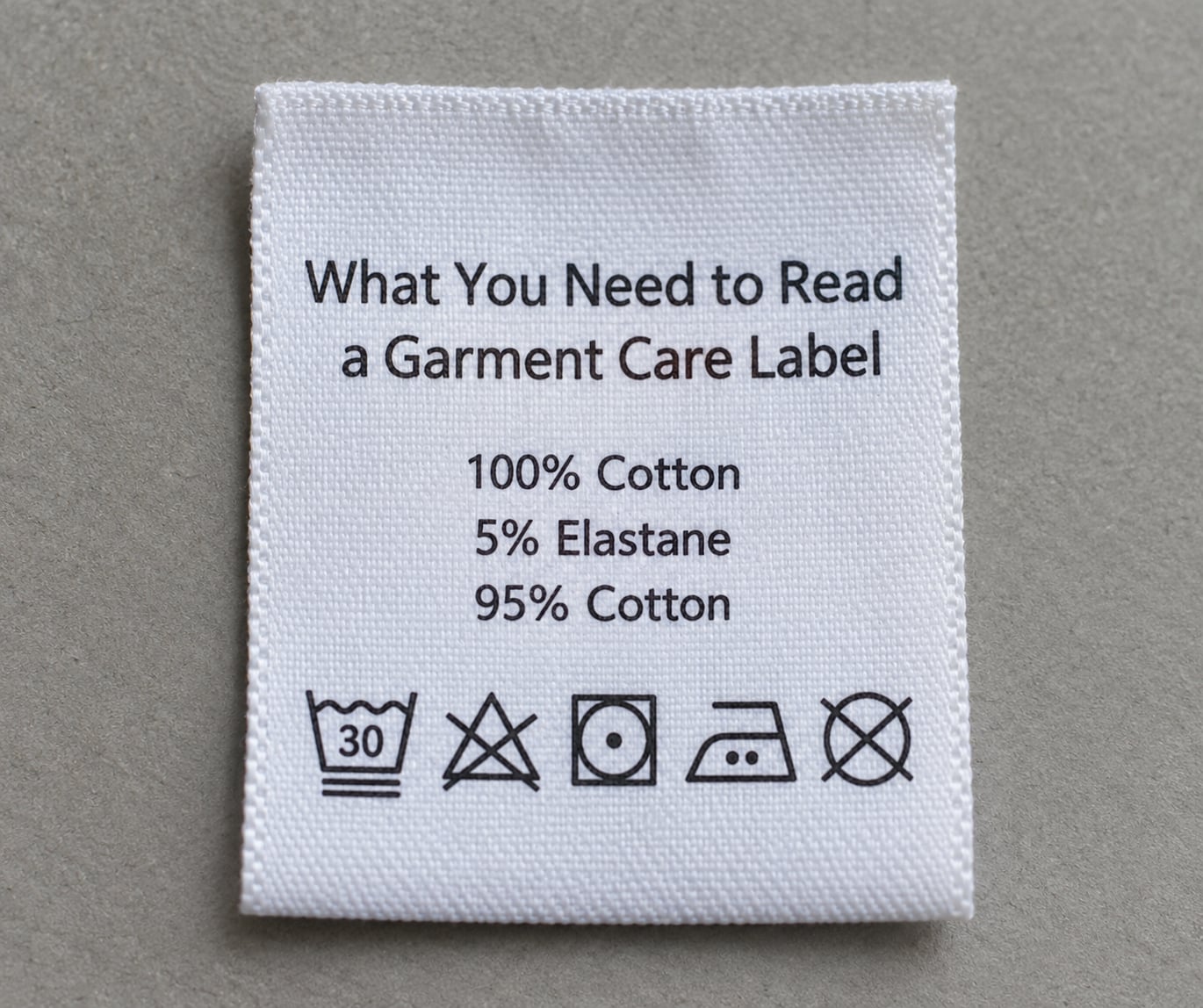
A garment care label has three working parts: fibre composition, the care symbols, and a country of origin line. Fibre tells you what the material is, the symbols tell you how to treat it, and the origin line tells you where it was made. The symbols are the part most people never learn.
They are standardised by ISO 3758, the International Standard for Care Labelling of Textiles, and maintained in Europe through GINETEX. In the US, the FTC Care Labeling Rule requires accurate labelling for most apparel sold here. That matters for one practical reason: the symbols on a garment made in Milan and one made in Ohio mean exactly the same thing, so nothing on the tag depends on guessing at a brand’s preferences.
You need nothing else to read a label. A light source and five minutes of practice are enough, and the five symbol groups below are the whole vocabulary.
How to Read a Garment Care Label Step by Step
How to read a garment tag: the 60-second routine
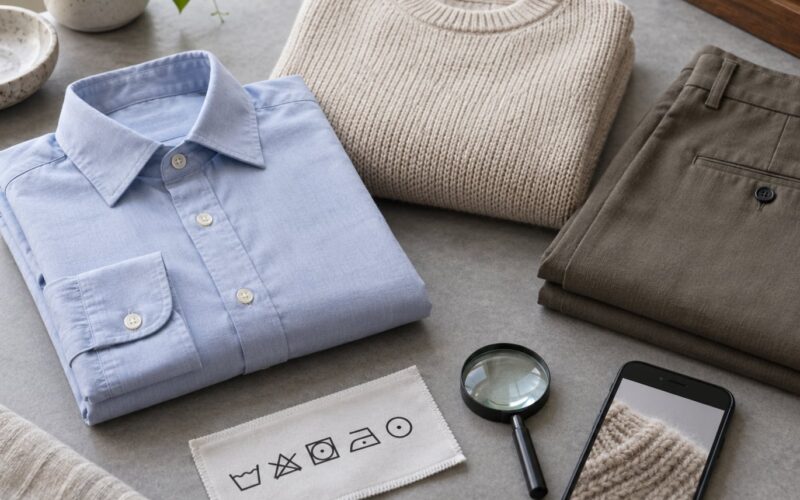
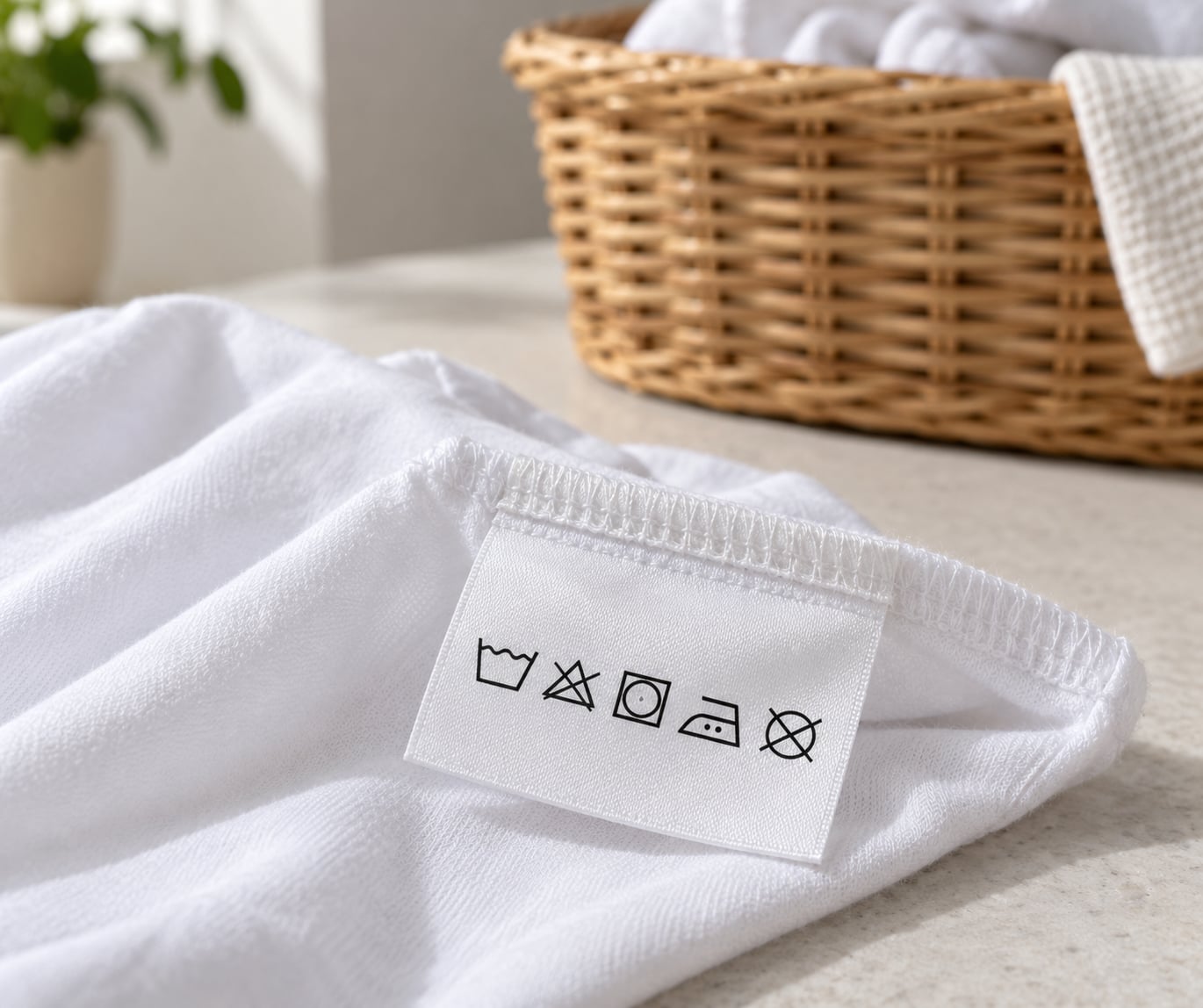
Read the fibre line first, because it predicts how the other symbols will look. Then read left to right through the symbol groups in this order: washing, bleaching, drying, ironing, professional cleaning. Water temperature and cycle come from the wash tub, the drying method comes from the tumble dry or drying shapes, and the ironing dots set your maximum heat.
Nothing on the label is optional decoration. Each symbol is a constraint the manufacturer set, usually because the fabric or the dye failed in testing above it.
1. Check the Fiber Content
The fibre line reads like a recipe, and the order matters: cotton is listed first because it is the largest share. Common percentages are 100% cotton, 60% cotton 40% polyester, or 95% cotton 5% elastane.
Cotton and linen are natural cellulosics that hold their shape reasonably well but weaken with heat and time. Wool and cashmere are protein fibres with scales that snag and felt when they are agitated in hot water, which is why wool garments say hand wash or a wool cycle, then dry flat.
Silk is a protein fibre that dislikes alkaline detergent, hot water, and any wringing at all. Polyester, nylon, and elastane are thermoplastics: they melt or glaze above a specific temperature, which is why a synthetic often carries the strictest ironing dot on the label.
Regenerated cellulose fibres such as viscose, lyocell, and modal behave surprisingly badly when wet. They swell, lose strength, and stretch if you hang a wet garment, so those labels usually say dry flat. Elastane is the stretch fibre in most stretch denim and jersey, and it loses its recovery permanently in sustained high heat, so those garments go in at low temperature and out of the tumble dryer.
The practical trigger for gentler care is almost always the fibre line: anything with elastane, wool, silk, or viscose in it deserves the lowest-risk method the label allows.
2. Find the Washing Instructions
The wash tub is the washing machine symbol. Which symbol means do not wash? The wash tub with a diagonal line through it means the garment must not be washed in water at all, and it is routinely mistaken for a gentler wash. It is the opposite of the hand wash symbol, which is a hand dipped into the tub and means wash by hand in cool water.
Inside the tub, dots set the maximum water temperature. One dot means 30°C (86°F), two dots mean 40°C (104°F), and three dots mean 50°C (122°F). Many machines also print the number directly in the tub, like 30°C, which is the same instruction written out.
A line under the tub sets the agitation and spin. One line under the tub is the mild or permanent press cycle, with less agitation and a slower spin. Two lines are the delicate cycle, with even less. Crossed through, the tub means no washing.
The triangle is the bleach symbol. An empty triangle means any bleach is allowed, including chlorine. A triangle with the letters CL means chlorine bleach only. A triangle with two diagonal stripes inside means only non-chlorine, oxygen or colour-safe bleach. A crossed-out triangle means do not bleach at all, which is what wool, silk, and most elastane blends carry.
Adjust the washer to match, and change the detergent too. Enzyme detergents digest protein fibres, which is useful for cotton and terrible for wool, cashmere, and silk. Those garments need a wool or delicates wash.
3. Read the Drying Instructions
How do I interpret drying symbols? Read the square. A square with a circle inside means tumble dry, and dots inside it give the heat limit: one dot is low heat at 40°C (104°F), two dots are medium at 50°C (122°F), and three dots are high at 60°C (140°F). Lines under the square add a gentler cycle, usually one line for reduced heat and two for a short cool cycle.
A square with a circle and a diagonal line through it means do not tumble dry. Among crossed squares, the specific shape of the lines is what tells you how to dry instead: a vertical line down the middle is line dry, a horizontal line across the middle is dry flat, and a single diagonal line is drip dry. Two diagonal lines usually mean drip dry in the shade, and a shape with lines crossed in the middle means do not wring.
Drying is where more clothing gets ruined than washing. A cotton shirt dried on high heat comes out two sizes smaller, because the label recommended tumble dry at 40°C for exactly that reason. Knitwear hung wet stretches out and dries to a different shape forever, which is why wool jumpers say dry flat and resew the shoulders. Polyester and elastane given high heat glaze, yellow, and shrink in a way that does not come back out.
4. Look for Special-Care Warnings
The ironing symbol is the iron. Dots set the maximum soleplate temperature: one dot is cool at 110°C (230°F), two dots are warm at 150°C (300°F), and three dots are hot at 200°C (390°F). A crossed-out iron means do not iron. A crossed-out iron with steam lines under it means do not steam, which matters on synthetic coatings and some laminates that melt or bubble rather than merely scorch.
The professional cleaning symbol is a circle. A plain circle means dry cleanable, with the letters inside naming the solvent: A is any solvent, P is perchloroethylene and hydrocarbon solvents, F is petroleum solvents only, and W is wet cleaning in water. A crossed-out circle means do not dry clean. Lines or a crossed line beneath the circle narrow the process further, usually to no steam or reduced moisture, meaning no pressing.
Two other warnings travel with labels in plain words. A colour bleeding or wash-separately instruction usually sits near the fibre line. And a warning against fabric softener matters more than it looks, because softener coats the fibre and blocks the absorbency that makes towels work.
5. Follow the Label for the Longest Life
The parts of the label only make sense together. Read the fibre, and the symbols stop being arbitrary. Wool plus tumble dry low plus dry flat is a coherent instruction, not three unrelated warnings, and following all three is what keeps a jumper the same size for years.
When a combination is new to you, test it before committing the whole garment. For unfamiliar colours, dampen an inside seam with plain water and press it against a white cotton cloth; if the cloth takes colour, the dye is not fully fast and you should wash that garment alone in cool water. For unfamiliar knits, mark a 20 cm span with a washable pen or tailor’s chalk, wash and dry the garment, then measure again to see what moved.
For the pieces you wash constantly, a note on an app is enough. The four things worth remembering are the temperature, the cycle, the drying method, and whether bleaching is allowed. Those four cover almost every label you will meet.
What to do when the care label is faded or missing
This is the single most repeated question on laundry forums, and there is no official fallback answer, so you infer. Start with the fibre line, because it still gives you the most reliable signal: wool, cashmere, silk, viscose, and any elastane blend all move to the lowest-risk method, which is cool water, gentle cycle or hand wash, and flat drying away from heat.
Run the colourfastness spot test from the previous section on an inside seam. For a plain white or undyed garment, or one with no visible dye at all, washing risk is low and the only real question is shrinkage, which the marked-span test answers.
When the garment is structured, lined, or expensive, treat dry clean as the default even without a label. When the label contradicts the retailer’s product page, the sewn-in label wins: it was tested with that garment, while the web page describes a product line.
Common Care Label Symbols and What They Mean
This is the reference to come back to. Symbols are listed by group, with the plain meaning and the action that actually protects the garment.
| Symbol | What It Means | What to Do |
|---|---|---|
| Wash tub, no marks | Machine washable | Use the stated temperature and cycle |
| Wash tub, 1 dot | 30°C (86°F) maximum | Set the machine to cold or 30°C |
| Wash tub, 2 dots | 40°C (104°F) maximum | Warm wash is safe |
| Wash tub, 3 dots | 50°C (122°F) maximum | Do not go above 50°C |
| Wash tub with 1 line under | Permanent press, mild cycle | Reduced agitation and spin |
| Wash tub with 2 lines under | Delicate cycle | Use the machine’s gentle program |
| Hand dipped into a tub | Hand wash only | Cool water, mild detergent, no wringing |
| Crossed-out wash tub | Do not wash | Spot clean or professional clean only |
| Plain triangle | Any bleach allowed | Bleach only if the colour and fibre permit |
| Triangle with CL | Chlorine bleach only | Use chlorine, not oxygen bleach |
| Triangle with 2 diagonal stripes | Non-chlorine bleach only | Use an oxygen or colour-safe bleach |
| Crossed-out triangle | Do not bleach | Never bleach, any type |
| Square with circle | Tumble dry | Follow the heat dots |
| Tumble dry, 1 dot | Low heat, 40°C (104°F) | Use low or air-fluff |
| Tumble dry, 2 dots | Medium heat, 50°C (122°F) | Warm tumble is safe |
| Tumble dry, 3 dots | High heat, 60°C (140°F) | High heat only, and rarely needed |
| Crossed-out tumble dry | Do not tumble dry | Air dry using the shape shown |
| Square with vertical line | Line dry | Hang on a hanger or line, shake out first |
| Square with horizontal line | Dry flat | Lay flat and reshape while damp |
| Square with diagonal line | Drip dry | Hang wet and let gravity do the work |
| Wringed shape crossed out | Do not wring | Press water out in a towel instead |
| Iron, 1 dot | Cool, max 110°C (230°F) | Use the synthetic or nylon setting |
| Iron, 2 dots | Warm, max 150°C (300°F) | Use the wool setting |
| Iron, 3 dots | Hot, max 200°C (390°F) | Use the cotton or linen setting |
| Crossed-out iron | Do not iron | Hang or steam from a distance instead |
| Circle with A | Dry clean, any solvent | Hand the garment to the cleaner |
| Circle with P | Dry clean, perchloroethylene | Standard professional dry cleaning |
| Circle with F | Dry clean, petroleum solvents only | Check the cleaner handles F items |
| Circle with W | Wet cleaning in water | A water-based professional process |
| Crossed-out circle | Do not dry clean | Home wash or spot clean instead |
What the Symbols Mean for Common Fabrics
Once you know the fibre, most labels narrow to two or three realistic settings. Here is what the symbols usually work out to for the fabrics people actually own.
| Fibre | Usual Wash | Usual Dry | Usual Iron |
|---|---|---|---|
| Cotton | 40°C (104°F) or warmer, normal cycle | Tumble dry medium | Hot, 3 dots |
| Linen | 40°C (104°F), normal cycle | Tumble dry medium or line dry | Hot while damp, 3 dots |
| Wool and merino | Wool cycle at 30°C (86°F) or hand wash | Dry flat, reshape, away from heat | Warm with a cloth, 2 dots, or steam lightly |
| Cashmere | Hand wash or wool cycle at 30°C (86°F) | Dry flat, never hang wet | Cool iron or steam from a distance |
| Silk | Hand wash cool, silk detergent, no wringing | Dry flat in shade | Cool iron on the reverse, 1 dot |
| Polyester and nylon | 40°C (104°F), normal or permanent press | Tumble dry low, or line dry | Cool iron, 1 dot |
| Cotton with elastane | 30°C (86°F), permanent press | Tumble dry low or line dry | Cool iron, 1 dot |
| Viscose, lyocell, modal | 30°C (86°F), gentle cycle, hand wash preferred | Dry flat, do not hang wet | Low heat or no iron |
| Denim | 30°C (86°F) inside out, to protect indigo | Line dry or tumble low | Hot iron on the reverse |
| Rain shell with DWR finish | Cool water, technical wash, no softener | Tumble low to reactivate the finish | Do not iron coated areas |
Rain shells are the exception worth knowing, because the label instruction feels wrong. Washing a waterproof shell strips its durable water repellent finish, and a short tumble dry on low is what puts the finish back. Skipping the dryer leaves a wet-looking jacket that performs like cotton.
Common Mistakes That Ruin Clothes
Most of these are not care label failures. The label is readable; the behaviour is what wrecks the garment. Here is what goes wrong and the correction for each.
Using hot water on everything. Does washing shirts in hot water shrink them? Yes, and that is the single most common cause. Cotton and linen shrink with heat and agitation, wool felts with heat and agitation, and synthetics lose their shape. Match the water to the dots in the tub, not to how dirty the load is.
High heat in the dryer. Tumble drying on high when the label said low shrinks cotton, felts wool, and glazes synthetics permanently. Dryer heat is also what makes a shirt that fits in the morning fit badly by evening.
Skipping flat drying on knitwear. Hanging a wet jumper lets gravity pull the shoulders out. Dry flat, reshape the sleeves into the body, and dry away from a radiator or vent.
Bleaching wool and silk. Chlorine bleach attacks protein fibres, and the crossed-out triangle on those labels is not a formality. Read the triangle every time rather than by habit.
Reading a crossed-out tub as hand wash. This is the most widespread symbol confusion. A hand dipped in a tub means wash by hand; a tub with a diagonal line through it means do not put this garment in water at all.
Treating symbols as interchangeable. A 30°C tub symbol is not the same permission as a tumble dry low dot, and a line dry instruction is not a gentler version of dry flat for a heavy knit. Each symbol controls one variable.
Overloading the washer. A packed drum cannot move the water through the fabric, so detergent stays concentrated in spots and rinsing is incomplete. Washing full means washing dirty.
Trusting the product page over the sewn label. Online descriptions cover a range, and the tag was tested on your garment. When they disagree, the tag wins.
A few habits help more than any single symbol. Air a garment overnight before deciding it needs washing, which usually is enough on a worn once jumper or blouse. Wash fewer items at a higher concentration rather than many items in a dilute load. And fold rather than hang knits and anything stretchy, since the weight of the garment does the same slow damage to shape that a bad wash does.
Frequently Asked Questions
What if a garment does not have a care label?
Start with the fibre line, because it is the most reliable part of any tag. Wool, cashmere, silk, viscose, and elastane blends all move to the lowest-risk method: cool water, gentle cycle or hand wash, and drying flat away from heat. Test an inside seam with a damp cloth to check whether the colour will bleed, and mark a 20 cm span with a washable pen to check for shrinkage before and after. For structured, lined, or expensive pieces with no label at all, professional cleaning is the safer default.
What does the wash bucket symbol mean on clothing?
The wash tub symbol means the garment can go in a washing machine. Dots inside it set the maximum water temperature: one dot is 30°C (86°F), two dots are 40°C (104°F), and three dots are 50°C (122°F). A single line underneath means a permanent press or mild cycle with reduced agitation, and two lines mean the delicate cycle. A tub with a diagonal line through it means do not wash in water at all, which is different from the hand-in-tub symbol that means wash by hand.
Can I wash a dry-clean-only garment at home?
Sometimes, but not in a normal wash cycle. Dry clean only exists because a specific process protects the garment, and the circle symbol can mean a solvent wash, no steam, or reduced moisture. For a simple lined blouse or an unstructured dress, hand washing cool with a mild detergent, rinsing in the same temperature, pressing water out in a towel, and drying flat often works. For wool, silk, structured tailoring, anything lined, or anything with padding, beads, or an embellished surface, take the label at its word.
How do I know whether a fabric can go in the dryer?
Look for the tumble dry symbol, a square with a circle inside. Dots inside set the heat limit: one dot is low at 40°C (104°F), two dots are medium at 50°C (122°F), and three dots are high at 60°C (140°F). A square with a circle and a diagonal line through it means do not tumble dry, and the line shapes tell you how to air dry instead. If there is no drying symbol on the label at all, air drying is the safe assumption for anything other than plain cotton and linen.
What do the dots and crossed-out symbols on care labels mean?
Dots set permitted heat. In the wash tub they mean water temperature, in the tumble dry square they mean dryer heat, and on the iron they mean maximum soleplate temperature: one dot 110°C (230°F), two dots 150°C (300°F), three dots 200°C (390°F). A diagonal line crossing through any symbol negates it. So a crossed-out wash tub means do not wash, a crossed-out tumble dry means do not tumble dry, and a crossed-out triangle means do not bleach, regardless of what is inside it.
Start With the Label and Clothes Last Longer
Do one thing first: before the next wash, turn a garment over and read the fibre line, then the wash tub, then the drying symbol. Four numbers and three symbols cover the overwhelming majority of decisions you make at the laundry basket.
Match the water to the dots, match the dryer to its own dots, and flat dry anything wool, silk, cashmere, viscose, or knit. Everything else on the tag is a refinement of those choices, and once you know how to read a garment care label, guessing stops being part of laundry day.