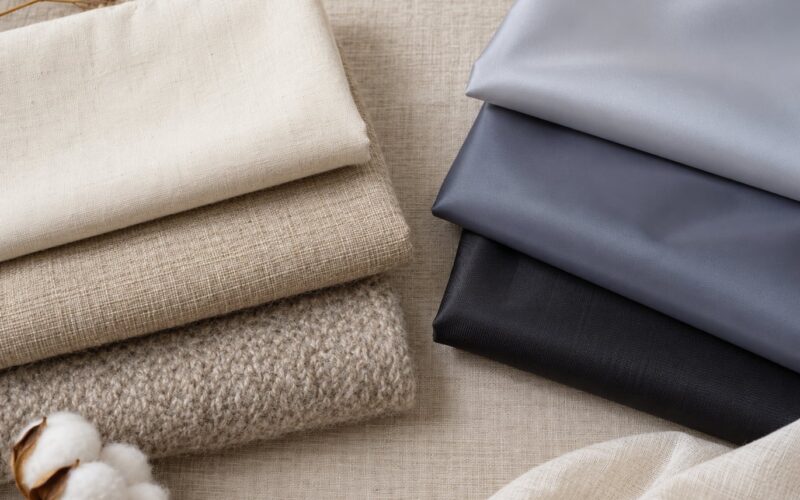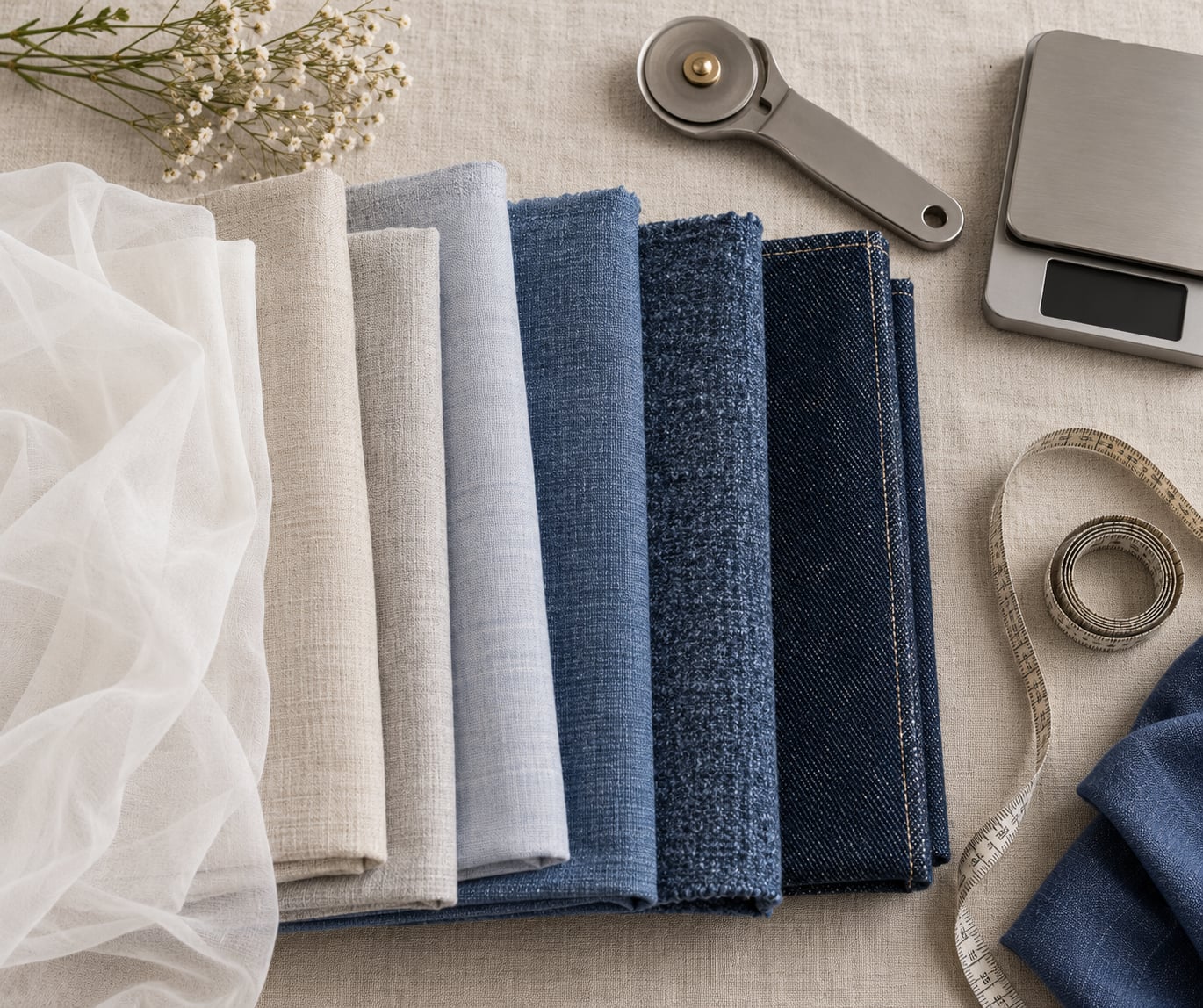
GSM is short for grams per square metre: it tells you how many grams one square metre of fabric weighs. That single number is what GSM means in fabric weight, and it is the fastest way to compare a cotton poplin with a wool suiting before you commit to cutting either one. The higher the number, the more mass sits in that same square metre, so the fabric generally feels heavier, hangs with more structure and hides more of the skin underneath.
Most of us meet the number on a fabric listing or a garment spec sheet long before we know why it matters. Fashion students hit it in a tech pack, dressmakers hit it when a pattern calls for midweight cloth, and beginners hit it when a jersey that looked crisp online turns up in the mail and feels like nothing. Here is how the measurement actually works, what the usual ranges mean, and where the number will mislead you.
Table of Contents
- What Does GSM Stand for in Fabric?
- How Is Fabric Weight Measured in GSM?
- Common GSM Ranges and What They Feel Like
- What GSM Means in Fabric Weight on Product Labels
- GSM vs. Fabric Width, Thickness, and Thread Count
- How to Choose the Right GSM for Sewing and Clothing
- Frequently Asked Questions
- Is a higher GSM always better for sewing?
- How do I convert GSM to ounces per yard?
- Does a higher GSM number mean a fabric is thicker?
- What GSM is best for summer clothing?
- Is GSM more important than fabric width?
- Conclusion
What Does GSM Stand for in Fabric?
GSM stands for grams per square metre, and it measures the mass of one square metre of fabric. A fabric labelled 180 GSM weighs 180 grams for every square metre of its surface, no matter how long the bolt is or how wide the roll happens to be.
Fabric is normally sold by the metre or the yard along a width of 45, 54 or 60 inches, and those two measurements have nothing to do with each other. A 180 GSM fabric sold at 54 inches wide is not heavier than the same fabric at 45 inches wide. Measuring by mass per unit area is the only way to compare two bolts of different widths fairly, which is why the whole industry landed on GSM.
You will also see it written as g/m2, gsm, or weight per square metre. In the United States the same fabric is usually quoted in ounces per square yard, or oz/yd2, and denim is almost always described that way.
How Is Fabric Weight Measured in GSM?
A square of fabric is cut to a known size, weighed on a precise digital scale, and the weight is scaled up to the mass of one square metre. The formula is simple: GSM equals the sample weight in grams divided by the sample area in square metres.
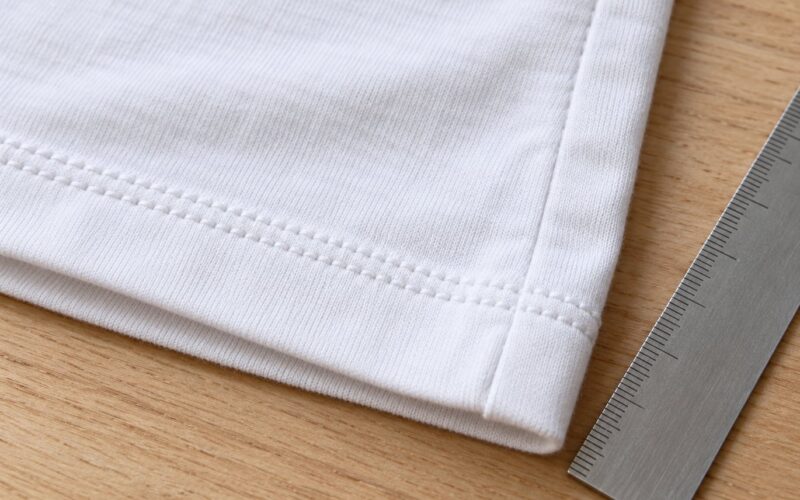
Two sample sizes work well in practice. A proper GSM cutter punches a round 100 cm2 sample, which is the mill standard. At home, cut a 10 cm by 10 cm square: that is 0.01 m2, so divide the weight in grams by 0.01, which just means moving the decimal two places. A 10 cm square that weighs 1.80 g is 180 GSM.
Sample at least 30 cm in from the selvedge, because edges are usually tighter or more compressed than the middle of the roll. Weigh three squares and average them. If you get 1.72 g, 1.80 g and 1.86 g, you are looking at roughly 179 GSM, which is close enough to call the fabric 180.
One thing to keep separate: GSM is mass per area, not thickness. A crisp, tightly woven 180 GSM poplin and a soft brushed 180 GSM fleece can sit at the same thickness and behave nothing alike, because what fills that area is different. Fabric weight tells you how much is there, not what it is made of or how it was built.
Common GSM Ranges and What They Feel Like
The bands below are the ones you will meet most often. The ounce column is there for US denim and blank garment shopping, where nobody uses metric.
| Weight class | GSM range | oz/yd2 | Hand feel and opacity | Typical fabrics and uses |
|---|---|---|---|---|
| Very lightweight | 40–99 | 1.2–2.9 | Fluid, cool, often semi-sheer | Voile, chiffon, organza, georgette, silk lining |
| Lightweight | 100–149 | 3.0–4.4 | Soft drape, sheer to mostly opaque | Cotton lawn, batiste, voile lawn, summer blouses |
| Light to medium | 150–199 | 4.4–5.9 | Light structure, usually opaque | Cotton poplin, viscose challis, ring jersey tees, shirtings |
| Medium | 200–249 | 5.9–7.3 | Substantial drape, fully opaque | Cotton jersey, chambray, French terry, simple skirts |
| Heavy | 250–349 | 7.4–10.3 | Warm, structured, holds a shape | Sweatshirt fleece, terry loop, heavier twill, hoodies |
| Very heavy | 350 and above | 10.3 and up | Rigid, boardy at the densest end | Denim, waxed canvas, workwear twill, bags, outerwear |
Medium weight cotton generally sits between 180 and 220 GSM. Below that you get a fine, breathable cloth that shows a bit through; above it, a jersey that drapes away from the body and holds up to repeated washing.
What GSM Means in Fabric Weight on Product Labels
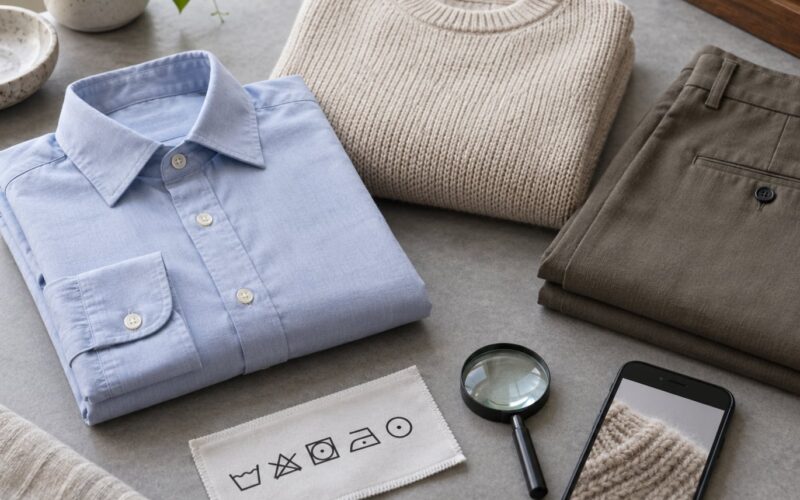
On a fabric product page, GSM is usually printed next to the width, in the specification list or the bullet points. On a finished garment it appears in the tech pack, and on tee blanks it is often given as oz/yd2 instead, so 6 oz/yd2 means 203 GSM and 8 oz/yd2 means 271 GSM.
Watch for listings that give a total item weight instead. A rolled bolt sold as a 5 metre piece has a total weight determined by the width and length, and it tells you nothing about the fabric. What you want is weight per unit area, written as GSM, g/m2 or oz/yd2. If a page lists width alongside it, you can sanity-check the two: multiply the GSM by the area of the whole piece and see whether it matches the total.
GSM vs. Fabric Width, Thickness, and Thread Count
GSM is one number, and it leaves most of the fabric description untouched. It does not tell you the width, the fibre content, the weave or knit structure, how much the fabric stretches, how it drapes, whether it is see-through, or how it wears after twenty washes. All of those still have to be specified separately.
Thread count is the clearest example of a number people borrow from the wrong category. A 300-thread-count sheet is a bedding measure of how many yarns cross one square inch. It says nothing about weight, and sheet companies use it because high counts sound refined. Apparel fabrics are not specified that way at all.
The bigger trap is assuming the number settles everything. A 180 GSM poplin and a 180 GSM rayon challis carry the same weight per square metre, and they cannot be swapped. The poplin is crisp with a tight plain weave and a slight sheen; the challis is fluid, matte and falls into soft gathers. A 200 GSM brushed fleece sweatshirt and a 200 GSM smooth cotton jersey tee weigh the same and behave nothing alike, because one is brushed on one side and the other is not.
What changes those outcomes is yarn thickness, weave or knit density, fibre composition, yarn twist, and finishing such as brushing, mercerising, dyeing or coating. A coated 300 GSM fabric can feel lighter in the hand than an uncoated 250 GSM one, because the finish changes how the surface responds. Sewists who follow Kibbe-style advice land on the same conclusion: hand feel decides, and the number only narrows the field.
How to Choose the Right GSM for Sewing and Clothing
Start with the garment, then pick a band. These are the ranges sewists and designers work from most often.
| Garment or project | Useful GSM range | What that weight gives you |
|---|---|---|
| Summer tops and tees | 120–160 | Breathable, drapey, often slightly sheer |
| Everyday tees | 160–220 | Opaque, soft, holds its shape after washing |
| Shirts and blouses | 110–180 | Enough body for a collar and placket |
| Sweatshirts and hoodies | 280–400 | Warm, structured, resistant to stretching at the cuff |
| Trousers and skirts | 180–300 | Hangs straight, presses cleanly, holds a seam |
| Dresses | 150–250 | Fluid without collapsing, lined or not depending on opacity |
| Activewear | 180–250 | Snaps back, survives repeated washing |
| Denim and jeans | 350–500 | Rigid at first, moulds to the wearer over time |
| Light jackets and outerwear | 200–400 | Body for seams, layering without bulk |
| Bags, aprons, cushions | 250–400 | Stands up, takes a strap, survives hardware |
There is no universal best number, which is the most common thing said in sewing communities when someone asks for a single starting point. The same r/sewing thread that asks whether 130 or 180 GSM is right for a basic tee is answered with the same practical advice: buy the swatch, start near 200 GSM, then move up or down from there.
A few habits make GSM far more useful in practice. Order a swatch before a full cut of yardage, and hold it up to a window, since opacity surprises people more than weight does. Check the stretch, because GSM says nothing about recovery. And expect a small gap between the listed GSM and what arrives: on r/Fabrics a sewist found a 620 GSM swatch that did not match the roll they received, so treat the published figure as a starting point with a tolerance of a few percent, not a promise.
If a pattern lists a maximum GSM with no minimum, as some do at 500 g/m2, that is permission to go lighter rather than a target. Where a pattern says lightweight, medium or heavyweight in words, translate it roughly as under 150, 150 to 300, and above 300 GSM.
One last distinction worth keeping: fabric shrinks because of fibre content and pre-treatment, not because of GSM. A 180 GSM cotton poplin that shrinks three percent in the wash did so because it was not pre-shrunk, and a 200 GSM jersey that holds its size is not more stable by virtue of the number.
Frequently Asked Questions
Is a higher GSM always better for sewing?
No. A higher number only means more mass per square metre, which usually brings more opacity, warmth and structure, but none of those are quality on their own. Experienced sewists pick by hand feel and drape first, then use GSM to confirm the range. Heavy fabric with poor fibre or a sloppy weave still sews badly.
How do I convert GSM to ounces per yard?
Multiply the GSM figure by 0.0295 to get ounces per square yard, or divide it by 33.91. Worked examples: 6 oz/yd2 equals 203 GSM, and 300 GSM equals 8.8 oz/yd2. Going the other way, multiply ounces per square yard by 33.91 to get GSM. This is the conversion denim brands use when they list weight in ounces.
Does a higher GSM number mean a fabric is thicker?
Not necessarily. GSM measures mass per area, not thickness. A tightly woven 180 GSM poplin and a brushed 180 GSM fleece can be about the same thickness while feeling nothing alike, because brushing and yarn structure change how the surface behaves. If thickness matters to your project, feel the cloth or ask for a caliper reading.
What GSM is best for summer clothing?
Roughly 100 to 160 GSM keeps things cool and breathable. Voiles and cotton lawns sit near 100, shirtings and lighter poplins around 120 to 140, and a 150 to 180 GSM jersey is the upper limit before opacity and warmth start to work against you. Below about 100 GSM many woven fabrics become sheer.
Is GSM more important than fabric width?
For most garment decisions, yes, because width changes how many pattern pieces fit on the cut and how many seams a garment needs. A 60 inch wide 180 GSM fabric wastes far less cloth than the same fabric at 45 inches. GSM tells you how the finished piece will behave; width tells you how you get there.
Conclusion
GSM means grams per square metre, and it answers one question well: how much fabric is sitting in a given area. That makes it the cleanest way to compare cloth across different widths, suppliers and countries, and it predicts opacity, warmth and structure well enough to pick a starting range for almost any garment.
So decide the garment first, choose the band from the table above, and then check width, fibre, stretch and drape before you cut. If two candidates sit in the same band, buy the swatch. Your hands will settle what the number cannot.