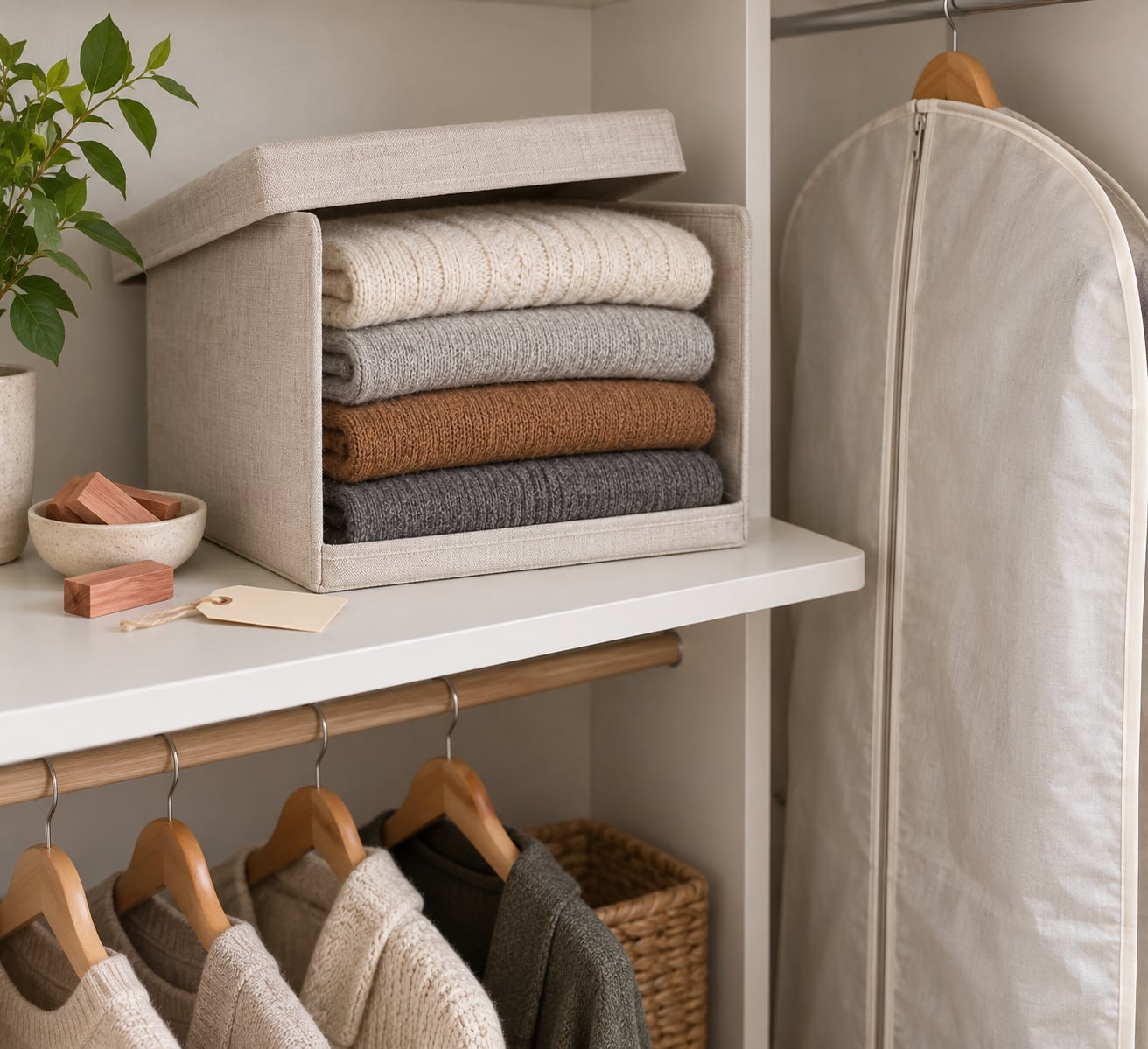
Storing seasonal clothes properly comes down to four things: wash or dry clean every item, sort by fabric type, fold or hang each piece the way its fibres need, and put it in a clean, breathable container somewhere dry and dark. Most ruined sweaters and coats fail at the cleaning step, not the folding one.
The whole job takes an afternoon once a year, and doing it in one sitting beats five panicked trips to the attic. This guide covers supplies, the nine-step process, the fabric-by-fabric rules, and what to check when you unpack.
Table of Contents
- What You Need
- Step-by-Step: How to Store Seasonal Clothes Properly
- 1. Clean Every Item Before Storage
- 2. Sort Clothes by Fabric, Weight, and Season
- 3. Fold Knits and Delicate Garments Correctly
- 4. Hang Structured Garments on the Right Hangers
- 5. Choose Breathable Storage Containers
- 6. Protect Clothes from Moths, Pests, and Moisture
- 7. Label and Date Each Storage Bin
- 8. Know Where to Store Seasonal Clothes Properly: Cool, Dry, Dark
- 9. Check Stored Clothes Before Bringing Them Back
- Common Mistakes
- Frequently Asked Questions
- Can moths survive in a vacuum-sealed bag?
- How should I store my summer clothes away?
- How do you store cashmere and wool sweaters?
- What are the best moth-proof storage bags?
- How long can clothes stay in storage before I should donate them?
- How do you store clothes in an apartment with no closet?
- Conclusion
What You Need
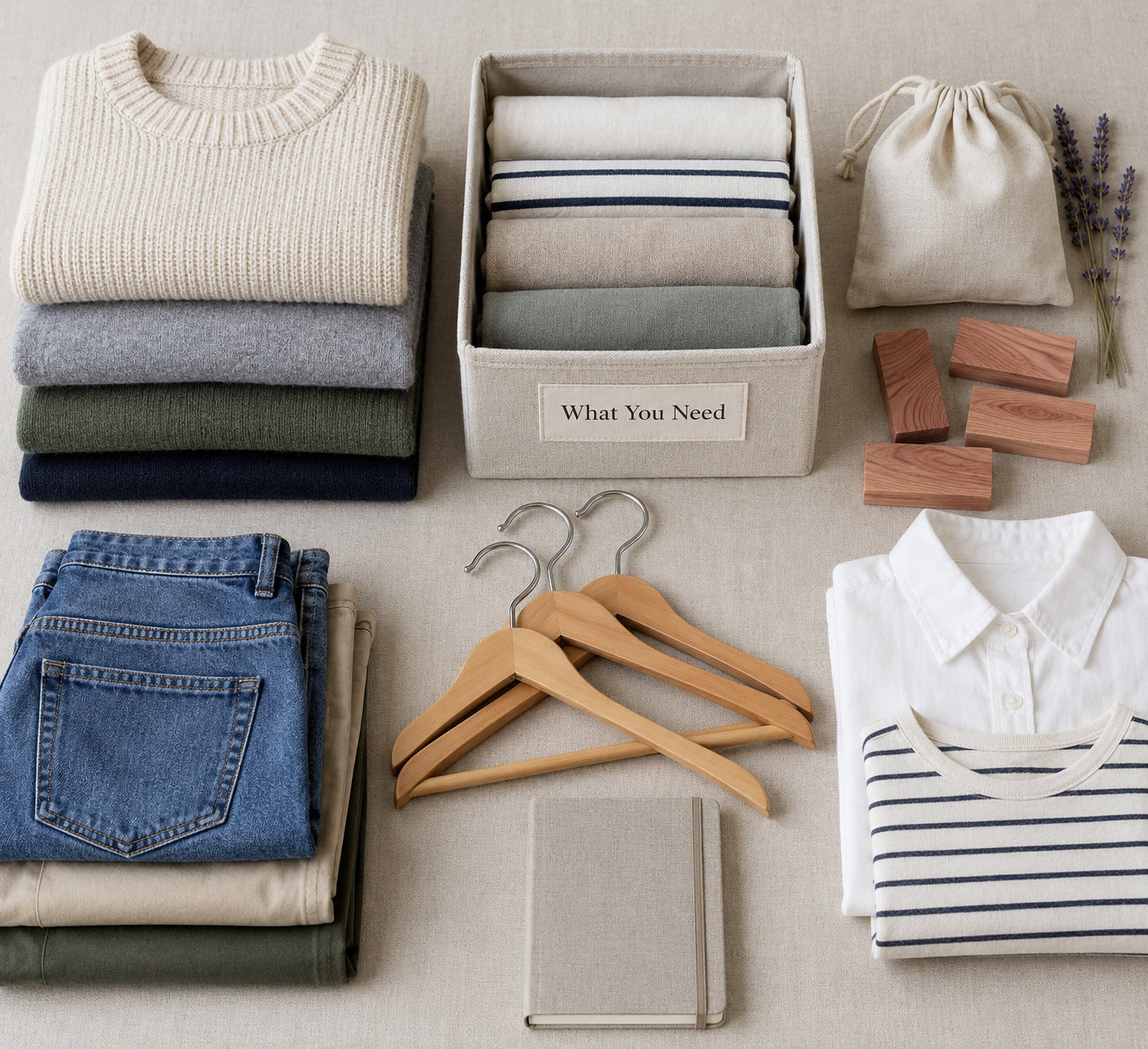
Nothing here is exotic. Gather it all before you start, because mid-task hunting for a lint roller is how half-finished piles of clothing end up shoved into a closet untouched.
- Clean clothing that is bone dry, including anything you wore once and only air out.
- A lint roller or fabric shaver for pilling on knitwear before it sets into the fold.
- Wooden or wide-shoulder hangers for jackets, coats and structured dresses.
- Breathable containers: cotton or fabric bins, acid-free boxes for delicate and vintage pieces, and zippered garment bags for anything you hang.
- Opaque storage boxes where light is a problem, such as a windowless closet that still catches afternoon sun.
- Pest prevention: cedar blocks, cedar planks, lavender sachets or moth paper.
- Labels or masking tape and a pen for marking bins with contents and date.
- Acid-free tissue paper if you own archival or vintage pieces.
- A notebook or phone note for your inventory list and anything you decide to donate.
If money is tight, most of this is free. Clean pillowcases work as dust covers, cleaned mesh produce bags work for small knits, and washed cardboard boxes lined with paper beat an unsealed pile.
Step-by-Step: How to Store Seasonal Clothes Properly
1. Clean Every Item Before Storage
Every garment goes in clean, including the “only worn once” top and the coat you aired by the door. Body oils, sweat, deodorant residue and any trace of food are what clothing moths hunt for, and a single unwashed sweater can contaminate a whole box.
Check the care label before anything else. Wool, cashmere and merino usually want a cool hand wash or a gentle wool cycle with a wool-safe detergent, then a flat dry. Dry-clean-only labels are common on structured tailoring, and for those, take the piece to the cleaner rather than guessing.
One caution worth flagging: solvent residue from dry cleaning can keep attracting moths until the garment has aired for several days in open air. Hang it up after collection and let it breathe before it goes anywhere near a closed bin.
Skip starch entirely. Starch feeds insects and yellows over time, and it is one of the few things you can do before packing that makes damage worse instead of preventing it.
2. Sort Clothes by Fabric, Weight, and Season
Make four piles on your bed and work from them: lightweight knits, structured garments, hard-wearing basics like denim and cotton, and delicate or archival pieces. Knowing how to store seasonal clothes properly starts with this separation, because a bin that mixes a cashmere sweater with a cotton shirt cannot be folded correctly for both.
Weight matters as much as fabric. Heavy denim and wool coats crush anything stacked underneath, so they get their own container or sit on the bottom shelf.
This is also the moment to edit. Try on the outgrown kids’ jumpers and the dresses you have not touched since last summer, and anything that does not fit, is damaged beyond a quick repair, or has not been worn in twelve months goes to donate or sell. The 3-3-3 rule is a helpful prompt here: items you have not worn or used in three months, three seasons, or three years are usually worth letting go of.
Do not let a rarely worn coat guilt-trip you into a decade of storage. Guilt about rarely worn pieces shows up constantly in decluttering forums, and the honest test is whether you would buy it again this year.
3. Fold Knits and Delicate Garments Correctly
Sweaters never hang. The weight of the garment stretches the shoulders into points that no amount of steaming fixes. Fold them loosely, or roll them for small pieces, and skip heavy layers inside the fold so knits do not crease under pressure.
De-pill before folding, not after. Run a fabric shaver over cashmere, merino and wool so the pills do not set permanently along a fold line. The same reasoning explains the moth damage knitters report: holes appearing in a neat row along the crease, because that fold line is where the moth larvae settled first.
Wrap delicate or vintage pieces in acid-free tissue paper before folding. It buffers against creasing and keeps yellowing acids in the box from staining the fabric.
Pack the most-wanted pieces on top so pulling one sweater does not mean unstacking everything above it. And do not overfill a bin; a tightly crammed box is what creates permanent, hard set creases.
4. Hang Structured Garments on the Right Hangers
Hang anything with structure: jackets, blazers, coats, trench coats, dresses, pleated skirts and trousers. Fold it and you get soft shoulders and a rounded back that lasts the whole storage period.
Use wide-shoulder or wooden hangers for anything heavier than a shirt. Thin wire hangers let coats slump, and a wool coat stored all summer on a wire hanger comes out visibly misshapen.
Zip everything closed before it goes in the garment bag so the panel cannot crease around an open front. Stuff the body of a coat with tissue paper or a clean pillowcase to hold the shoulders and chest in shape. Pocket contents go in the trash or a desk drawer, never back into the coat.
5. Choose Breathable Storage Containers
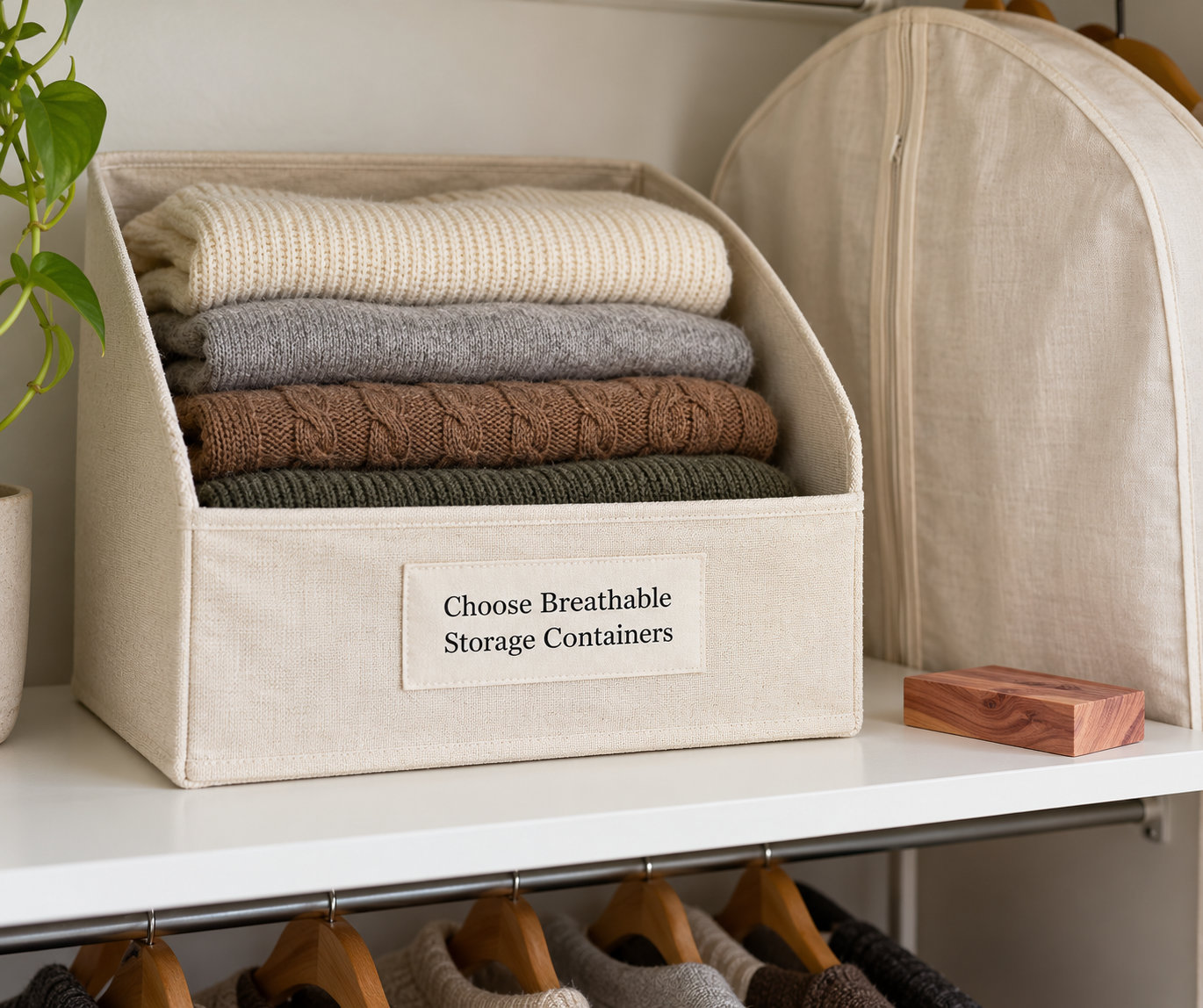
Match the container to the fabric, and this is where most guides get vague. Breathable cotton or fabric bins suit knits and natural fibres. Zippered cotton garment bags suit anything hanging, and they block dust without sealing in moisture. Acid-free boxes are the right call for vintage, inherited and archival pieces.
For storage setups with no closet at all, a sturdy metal shelving unit or a wooden rack keeps boxes off the floor where damp collects. Portable closet rods are fine for light garments but collapse under a row of winter coats, so check the load rating before you trust one with anything heavy.
Plenty of readers on home-organization forums keep off-season clothes in vacuum-sealed bags on a shelf and have no problems at all with moths. That approach is safe for cottons, linens and synthetics, and for short-term trips.
| Fabric or item | Method | Container | Never do |
|---|---|---|---|
| Wool and merino sweaters | Fold loosely | Breathable cotton bin with cedar | Hang them; overfill the bin |
| Cashmere | Fold, tissue-wrap if valuable | Cotton bin or acid-free box | Machine wash; store near moth paper only |
| Down and puffer jackets | Hang loosely or fold | Large breathable bag or box | Vacuum-seal; loft can take months to return |
| Wool and structured coats | Hang on wide shoulder hangers | Zippered cotton garment bag | Wire hangers; compress under stacking |
| Suits, blazers, trousers | Hang with shoulders supported | Cotton garment bag | Fold; vacuum-seal |
| Leather and faux leather | Hang on a broad hanger | Breathable garment bag | Vacuum-seal; store in plastic for months |
| Cotton shirts and linens | Fold or hang | Any bin or bag | Starch before packing |
| Denim and jeans | Fold flat | Opaque bin | Hang heavy denim; cram shelves |
| Swimwear | Fold or roll after a full dry | Small breathable bag | Seal damp; elastic dies in chlorinated water |
| Vintage and delicate pieces | Flat fold in tissue paper | Acid-free box | Fold without tissue; use wire hangers |
| Handbags | Stand upright, stuffed with tissue | Cotton dust bag | Stack them under weight; hang by straps |
| Synthetics and performance wear | Fold or roll | Clear bin or short-term vacuum bag | Store for years in a sealed vacuum bag |
On vacuum bags specifically: they are a compression tool, not a storage upgrade for most clothes. Packed tight for a full season, they flatten loft in down and feather fill, compress wool fibres, and can leave permanent crease lines. Leather and faux leather can crack at the folds under long compression. Reserve them for bedding, travel and cotton, and use them for months rather than years.
6. Protect Clothes from Moths, Pests, and Moisture
Clothing moths are attracted to animal fibres and to the human residue on them, so clean storage plus a well-closed container is a solid double defence. Cedar blocks or cedar planks release a scent moths dislike, and they work best in a breathable bin where the aroma can move through the clothes. Lavender sachets are popular and pleasant, though treat them as a mild deterrent rather than a guarantee.
Moth paper works differently. It releases a chemical that discourages larvae in an airtight container, so it suits sealed bins rather than open cotton ones. Follow the label directions exactly and keep it away from food and pets.
Before closing anything, do a quick inspection. Check fold lines in dark wool and cashmere, wool coat linings, the edges of your carpet, and any item you pulled from a bag you have not opened in months. If you see small holes, silken webbing, or a scattering of fine brown grit, treat the whole box rather than the single garment. The standard move that people agree on is to bag items in plain sealed zip bags or lidded buckets and stop opening the container until the problem is gone.
Silverfish turn up in damp, cool corners more often than in hot attics. Keeping storage off the floor and away from concrete walls removes most of the problem before it starts.
7. Label and Date Each Storage Bin
Write the season, the category and the year on masking tape or a label panel: “Winter 2026 — knits and cardigans”. Date every box, because undated bins turn into archaeological digs and things get left behind when the season never comes back around.
Keep a simple list on your phone or on paper: box number, contents, and what you decided to keep. When you unpack, you will know instantly whether something is missing, and next year’s declutter starts with a list instead of a mountain on the bed.
Label the front, not just the lid. Lids come off.
8. Know Where to Store Seasonal Clothes Properly: Cool, Dry, Dark
Temperature stability and low humidity do more for stored clothes than any container. Aim for a cool, dry room with steady airflow and no direct sunlight. Light fades colour unevenly, heat encourages mildew, and swings between cold and warm bring condensation you cannot see until it smells.
Skip the attic. Roof temperatures swing wildly and most attics are neither cool nor dry. Treat a damp basement with real caution too: concrete walls sweat, and a cardboard box against one can pick up moisture and mould within a season.
If you rent or have no closet, this is the part that gets people stuck, and the honest answer is that the storage unit is the last resort, not the first. Before paying monthly, try under-bed containers with wheels or low profile, over-door hanging racks for short-term overflow, and a labelled box on top of the wardrobe. Many apartment residents store one or two boxes in a dry interior closet and keep the rest cycling through the wardrobe itself.
If you do use a self-storage unit, pick an indoor one that is heated and climate controlled, use a plastic tote with a gasket lid rather than cardboard, and add a cedar block or a small dehumidifier pack in humid months.
9. Check Stored Clothes Before Bringing Them Back
Before you unpack for the season, open each box outdoors or in a well-ventilated room and look at the contents rather than the pile. Sniff for mustiness, check for damp spots or a dusty sour smell, and run your hand over knits to spot holes, pilling or webbing.
Then let everything air. Hang garments for a day so creases fall out on their own, and give folded knits a flat rest before folding into a drawer. Skip the iron straight onto a wool or cashmere piece; steam from a steamer at a distance, or press a clean cloth over it with a warm iron.
Down and puffer jackets need a few hours of air and a shake-out to recover loft after a long compression. If a jacket feels flat, leave it loose overnight before you decide anything is wrong with it.
Common Mistakes
- Storing clothes without cleaning them. Body oils and sweat attract moths. Fix: wash or dry clean everything, and air out dry-cleaned pieces before closing the bin.
- Putting damp garments in a closed box. This is how mildew starts. Fix: let everything dry completely, including swimwear, before packing.
- Hanging knits and sweaters. Weight stretches shoulders into points. Fix: fold loosely or roll, and de-pill first.
- Vacuum-sealing down, leather or wool. Compression costs loft and can leave permanent creases. Fix: use breathable bags for those fabrics and save vacuum bags for cotton and bedding.
- Cramming one bin with a whole season. Overpacking causes hard set creases and hidden damp. Fix: one bin per category, filled loosely.
- Using thin wire hangers for coats and jackets. Fix: switch to wide-shoulder or wooden hangers, and stuff the body with tissue to hold shape.
- Storing in an attic or against a basement wall. Heat swings and damp both cause damage. Fix: use a cool, dry, climate-controlled indoor spot.
- Labeling lids only, or skipping the date. Fix: label the front of every bin and write the season and year.
- Skipping the closet audit. Stuff you never wear takes up the same space as a piece you love. Fix: donate or sell anything untouched for a year.
- Leaving the closet doors open in moth season. Fix: keep doors closed and check stored items at the start of warm weather.
A rotation schedule makes all of this easier. Put away the summer clothes in the first week of autumn and take the winter layers out in the first week of spring, and the job stays an hour long instead of an entire weekend twice a year.
Frequently Asked Questions
Can moths survive in a vacuum-sealed bag?
Not indefinitely. A properly vacuum-sealed bag removes the air larvae need, and adult moths cannot reach clothing inside an intact seal, so sealed storage stops an existing infestation from spreading. It does not kill eggs already laid in the fabric, and the seal can fail or develop pinhole leaks over months. Bagged items still need washing first, because body oils are what attract moths in the first place.
How should I store my summer clothes away?
Wash every item first, let it dry completely, then sort into three groups: knits and lightweight tops folded in a breathable cotton bin, structured items like dresses and skirts on hangers in garment bags, and denim and cotton basics in any lidded bin. Skip the starch, add a cedar block to each breathable bin, and store everything in a cool, dark, dry spot off the floor. Label each bin with the season and year.
How do you store cashmere and wool sweaters?
Never hang them; the weight stretches the shoulders permanently. De-pill with a fabric shaver, fold loosely without heavy layers inside, and wrap valuable pieces in acid-free tissue. Store them folded in a breathable cotton bin or acid-free box with cedar blocks, kept away from direct sunlight and moisture. Inspect fold lines when you unpack, since moth damage often appears first along the crease.
What are the best moth-proof storage bags?
For most seasonal clothing, zippered cotton or fabric garment bags and breathable cotton bins with cedar blocks are the best moth-proof option, because airflow reduces trapped moisture while the closure keeps insects out. Sealed plastic totes work well for airtight protection. Moth paper suits sealed containers. Vacuum bags compress well but can damage down, wool and leather, so treat them as a travel tool rather than a seasonal one.
How long can clothes stay in storage before I should donate them?
Treat twelve months without a wear as your deadline. Seasonal pieces that make it through a full year untouched usually stay untouched, and every extra year of storage costs floor space and re-boxing. While clothes sit in a bin, they should still be checked each year for moth damage, since damage found later is rarely repairable. Kids clothing can be kept longer if the sizing is still realistic.
How do you store clothes in an apartment with no closet?
Spread the load: rolling under-bed containers with low clearance, one labelled box on top of the wardrobe, over-door racks for a short overflow, and a breathable bin for the rest. If your season does not fit at home, an indoor climate-controlled storage unit with gasketed plastic totes is the fallback. Whatever you choose, keep bins off the floor and away from outside walls where damp works upward.
Conclusion
Start with the boring part: wash everything, including the piece you wore once. Then sort by fabric, fold the knits, hang the structured pieces on wide shoulders, and pack them into breathable containers you can label.
Everything else follows from those five principles. Clean clothing keeps moths away, breathable containers protect shape without trapping moisture, labels make next season painless, pest deterrents handle what closing the bin cannot, and a cool, dark, dry location does the rest. Do it in one sitting at the turn of each season and a wardrobe stays worth wearing.