Ask why clothing sizes are so inconsistent between brands and the answer is short: a size label is not a measurement. In the US, no law requires the number on the tag to match any real body dimension, and every labelmaker starts from its own base size, fits it on its own fit model, then grades its own way up and down from there. A size 8 at one brand and a size 8 at another can be garments built from two different bodies.
Once you know that, the whole thing gets less mysterious. There are four main reasons, and they compound each other:
- No universal standard. Labelling law covers fiber content and care instructions, not what a size number means.
- Vanity sizing. Labels that read smaller than the garment genuinely cut are a deliberate commercial choice, not a measurement error.
- Fit models and grading. Each brand approves a base size on a real body with real proportions, then applies its own grading rules to every other size.
- Fabric and production variation. Stretch, drape, shrinkage and factory tolerances move the fit even within a single brand.
None of this is a scandal, and most of it is not done to trip you up. But it does mean the label is a starting hint rather than a promise, and it changes how you should shop. Here is the mechanism, then the practical fix.
Table of Contents
- Why Clothing Sizes Are So Inconsistent Between Brands
- Are US Clothing Sizes Based on a National Standard?
- Body, garment and finished measurements are three different numbers
- How Do Sizing Scales, Blocks, and Fits Differ?
- The Short Version: Why Clothing Sizes Are So Inconsistent
- What Is the 3-3-3 Rule for Clothes?
- What Do the Measurements on a Clothing Label Mean?
- Is a Men’s 32 the Same as a Women’s 32?
- Why Do Stretch, Rigid, and Drapey Fabrics Fit Differently?
- How Do Fashion, Production, Washing, and Shrinkage Change the Fit?
- How Can You Compare Your Size Across Brands?
- Frequently Asked Questions
- Why is a size M not the same at every clothing brand?
- What is the difference between body measurements and garment measurements?
- Do clothing sizes shrink after washing?
- How do I convert US clothing sizes to international sizes?
- What does vanity sizing mean?
- Can I rely on a brand’s size conversion chart?
- Conclusion: Start With Measurements, Not the Label
Why Clothing Sizes Are So Inconsistent Between Brands
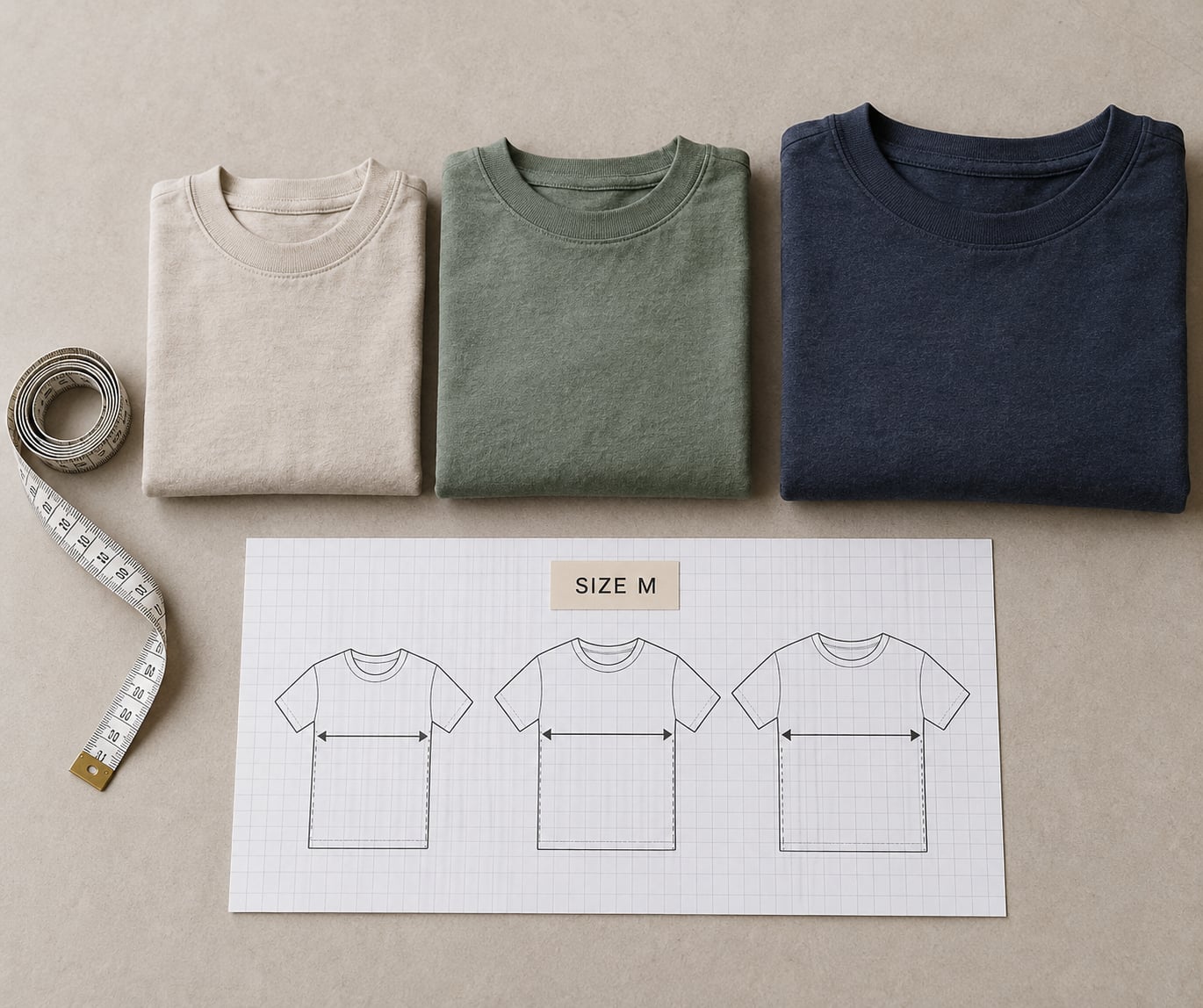
The honest answer to why clothing sizes are so inconsistent between brands is that a size label is shorthand. It stands in for a set of garment dimensions that the labelmaker chose, graded from a base block, and stitched to a certain amount of fabric.
Six things have to line up before a garment can honestly wear a label, and every brand makes six independent choices.
The sizing scale decides which numbers exist at all. American womenswear typically runs 0 to 24 or XXS to 3XL, UK womenswear usually starts at 6 or 8, EU womenswear often starts at 34, and Asian markets frequently use centimeters or S through XXL with no numbers in between. Any conversion chart you have seen is a translator between these conventions, not a description of a body.
The garment block is the actual pattern for the base size, usually a 8 in US womenswear. It gets approved on a fit model, and those proportions stay baked into every other size.
The intended fit is a design decision. The same base block can be graded into a body-skimming silhouette or an oversized one. A deliberately roomy shirt is not a sizing error; it is a fit choice the label never announces.
Ease is the extra room built in beyond the body measurement, and it varies enormously by category. A tee and a blazer cut from similar blocks will not share a waist measurement, because their ease allowances are unrelated.
Fabric behavior decides whether the size on paper survives contact with a body. A stretch jersey and a rigid woven poplin labeled the same letter are not remotely the same garment.
Manufacturing tolerance is the slack in the system. Cutting, sewing and finishing all carry small variances, and a garment at the edge of tolerance measures differently from one in the middle of the run.
On top of all of that sits a labeling rule each brand follows on its own, and the label itself is often the least technical part of the whole process.
There is also drift. A US size 8 in the 1950s corresponded to roughly a 23.5 inch waist. Today’s size 8 at many womenswear brands sits near 27 to 28 inches. The number did not change meaning so much as the body the number describes was quietly redrawn, repeatedly, for market reasons.
Are US Clothing Sizes Based on a National Standard?
Partly, and the part people assume is the part that does not exist. US sizing loosely refers to ASTM measurement conventions and industry practice, and apparel from 1939 onward has been shaped by federal studies of women’s measurements. But those studies describe a population. They do not force a brand to cut to them.
US labeling law is about disclosure, not dimensions. The rules that matter to you cover fiber content, manufacturer identity, country of origin and care instructions. Nothing requires a size number to correspond to any particular body or garment measurement.
So a label is legally meaningful as a piece of information about the garment, and practically unreliable as a statement about your body. That distinction matters more than most people realize, because the failure mode is always the same: shoppers assume the label is a measurement, so they treat a size 10 at an unfamiliar brand as equivalent to a size 10 that already fits.
Body, garment and finished measurements are three different numbers
Labels mix these together, which is a large part of why size charts feel contradictory. Sorting them out is the fastest way to read any chart correctly.
Body measurements describe a person. Bust, waist and hip circumference measured over underwear or a thin layer, with the tape level and the body relaxed. These are the numbers most size charts publish, and they are the least useful on their own, because bodies at the same waist are not the same shape.
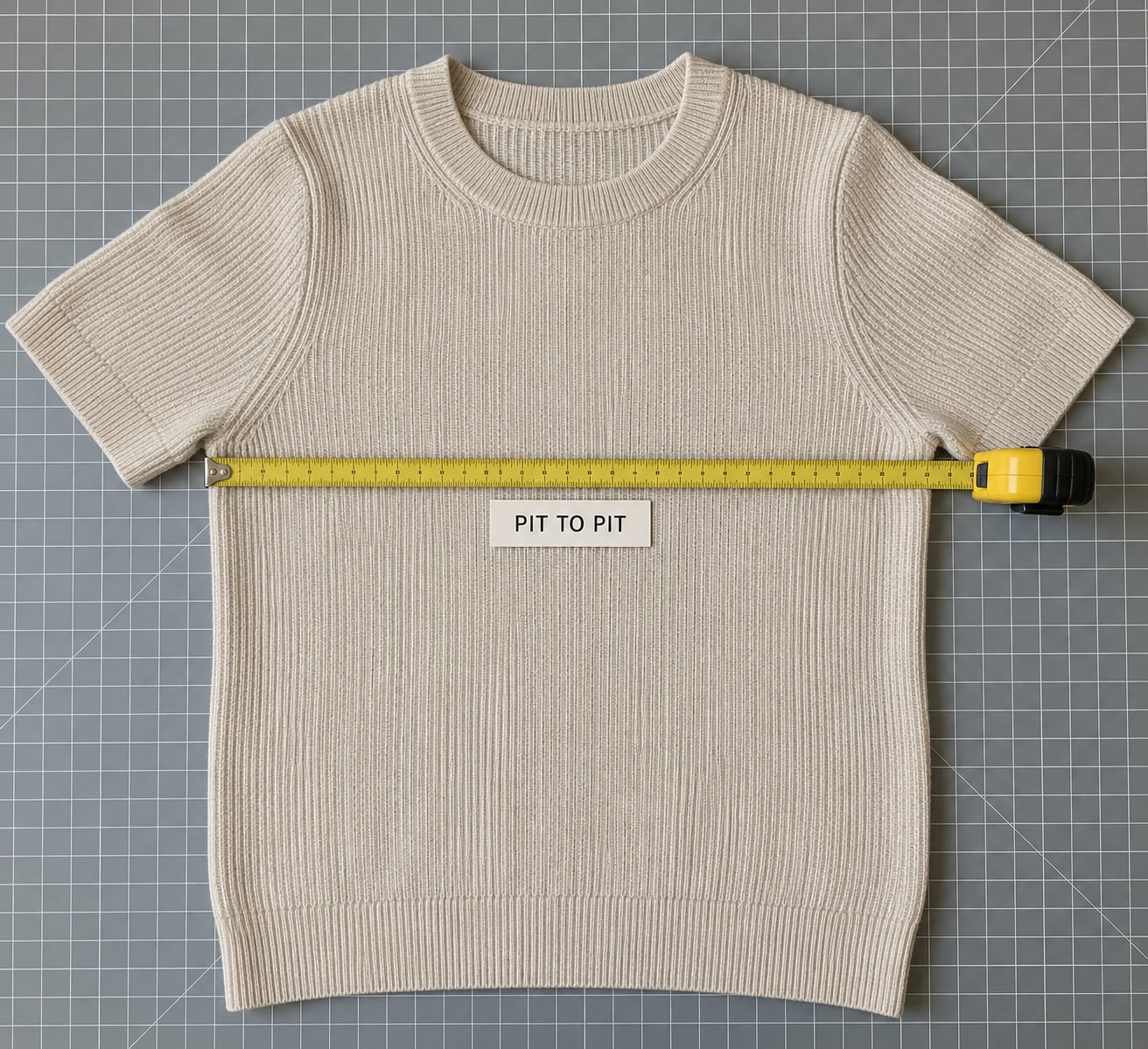
Garment measurements describe the clothing, measured flat and doubled: pit to pit, waist to waist, hip to hip, plus inseam, rise, sleeve and shoulder. These are the numbers that let you predict fit, and they are the ones worth hunting down.
Finished measurements are a specific case, describing the garment after pressing, finishing and laundering. This is the number that reflects what you will actually own in six months.
Most charts also list a model’s measurements and what size she is wearing, which is useful context and frequently a distraction. A model photographed at 6 foot 2 in a size 4 tells you almost nothing about how the garment sits on you.
International standards do exist for cross-border trade. ISO 3635 sets out how size designations are built and labelled, and EN 13402 covers European textile size labelling. The catch is that a standard can tell you how to write down a size without telling your body to change. Programmes like INDIAsize in the UK have spent years trying to anchor labels to real body scans, and progress has been slow for a simple reason: the problem is measurement agreement, and agreement costs money.
How Do Sizing Scales, Blocks, and Fits Differ?
These words get used interchangeably in online conversations and they refer to genuinely different stages of making a garment. Keeping them apart is most of the battle.
| Concept | What it is | Why it changes your size |
|---|---|---|
| Sizing scale | The naming system a brand uses: 0 to 24, XS to XXL, 34 to 56, S to 3XL, or centimeters | Decides which numbers exist and what they roughly correspond to across the market |
| Garment block | The master pattern for one base size, approved on a fit model | Fixes the underlying proportions every other size is derived from |
| Intended fit | The silhouette the designer aimed for, from close-fitting to oversized | A roomy style labeled the same as a slim one measures several inches larger |
| Ease | Extra room added beyond the body measurement, set per category | Knitwear usually carries more, tailoring less, so identical labels differ in wearability |
| Fabric behavior | Stretch, recovery, thickness and drape of the cloth | Determines whether a size holds its shape or grows and sags |
| Grading | The rules for moving the base block to every other size | Proportional grading keeps shape; adding inches changes it, and brands do both |
Grading deserves a second look, because it is where the two systems genuinely part company. Proportional grading scales the whole pattern up and down, so a 12 keeps the shape of the 8: longer torso, longer arm, proportionally wider everything. Direct or linear grading adds a set number of inches to specific measurements, so a 12 can have the 8’s bust with a wider waist, which changes how the garment sits on the body entirely.
Proportional grading tends to flatter and produce a consistent silhouette across the range. Direct grading gives more room cheaply at the sizes that matter commercially. A brand that has quietly switched grading between seasons can change every size it sells without changing a single label.
The Short Version: Why Clothing Sizes Are So Inconsistent
In plain terms, why clothing sizes are so inconsistent between brands comes down to eight things stacked on top of each other: different sizing logic between markets, different intended silhouettes, different base bodies, different grading formulas, different ease allowances, fabric that behaves differently, factory tolerances that move the garment a little, and a label that describes the garment rather than the person wearing it.
The practical consequence is worth stating plainly. A size label is a useful comparison within a brand you already know, and a weak comparison across brands you do not. Treat it as a search tool, not a specification.
What Is the 3-3-3 Rule for Clothes?
The 3-3-3 rule is a rule of thumb that circulates on social media and in older fitting advice. The idea is roughly that bust, waist and hip measurements sit about three inches apart from each other on a well-proportioned figure, and that a body matching that pattern falls neatly into a middle size on most scales.
It is not an industry standard, it is not traceable to a standards body, and no brand grades to it. It survives because it is an easy, memorable shape, and because it describes a real thing: proportion, not size, drives how a garment looks. Two women can both wear a size 12 and have completely different proportions, which is exactly why the same label fits them differently. Use it as a way to think about shape, never as a way to pick a size.
What Do the Measurements on a Clothing Label Mean?
Read a size label as three separate questions. What system is this? What body is it describing? What is the actual garment?
Numeric sizes (0, 2, 4, 6, 8, 10) are the US womenswear convention, and the numbers are not measurements. A size 8 does not mean eight of anything.
Letter sizes (XS, S, M, L, XL, XXL) are the same idea with vaguer names, and the vaguer they are the less they tell you. When a brand says XL, ask what it graded from.
Waist-inch sizing (28, 30, 32, 34) is how most menswear trousers are sold, and it is a genuinely better system because the number is a real measurement. This is the system shoppers ask to have for womenswear, and there is a reason it feels easier: it is not asking you to guess.
Hip-based sizing in some European systems is the reverse: the driving measurement is the hip, not the bust, and the same nominal number on a EU label can correspond to a different body entirely.
On top of the size itself, a useful label or product page carries a fabric and fiber content, a country of origin, a model and her measurements, a garment measurement table, a fit description such as fitted, relaxed or oversized, and sometimes a model wearing size and the height she is shown at. The last two are the most underrated. A brand that publishes garment measurements and states its fit category is telling you exactly what you need; a brand that publishes only a letter has told you almost nothing.
One warning about measurement placement. Charts differ on where the bust is measured (over the fullest point or under the arms), whether the waist is measured at the natural waist or the position a garment would actually sit, and whether the hip figure is taken at the widest point of the body or the garment. Two charts from two brands can both be honest and still disagree by two inches because they measured different landmarks. When a chart is unusable, this is often why.
Is a Men’s 32 the Same as a Women’s 32?
No, and the two numbers barely share anything but the digits. A men’s 32 is a 32 inch waist, flat-laid and doubled, on a garment designed with more room through the seat and thigh. A women’s 32 sits on a different numbering system entirely, frequently corresponding to a US 12 or a UK 18, and its waist measurement could be anywhere in the high twenties depending on the brand.
Numeric labels that collide across genders are a real trap when shopping cross-category, and also when reading conversion charts that fail to specify which system they are converting. If a number is not attached to a system and a unit, it is decoration.
Why Do Stretch, Rigid, and Drapey Fabrics Fit Differently?
Two garments with identical garment measurements, cut from the same size block, in the same size, can feel completely different. The fabric is why.
Stretch is the big one. Knits stretch across the grain and often along it too, so a size that measures slightly small can still be comfortable. Woven cottons and most wovens have little or no give, so the same measurement that was snug becomes tight, and it binds when you sit down.
Recovery is what stretch does after you let go. Good elastane blends spring back toward their original shape. Weaker elastane or a high percentage of a natural fibre that has been overstretched will not, and you get the sag-through-the-waist, baggy-at-the-hip look by the second wash.
Knit versus woven changes drape as much as stretch. A jersey knit drapes close and shows every line underneath. A woven poplin or oxford stands slightly away from the body, which is why a fitted woven shirt can be more forgiving than a fitted knit tee of the same number.
Thickness and structure matter most at the shoulder and sleeve. A fine jersey sleeve is nearly weightless; a heavy twill sleeve cut from the same size chart will feel like a different garment entirely in that area.
Here is the worked example. Take a medium stretch jersey tee and a medium rigid woven poplin shirt, both measured 19 inches pit to pit. On the knit, the extra half inch of give means the body has room and the fabric pulls slightly across the bust, which is comfortable all day. On the poplin, that same 19 inches is a snug fit on a similar body, the seams pull toward the shoulder, and the shirt becomes uncomfortable within an hour. Same label, same number, different garment. The label was never the problem.
This is also why the “true to size” advice on a product page is unreliable. It is describing the label’s accuracy, not the fit. A size that is true to size can still be the wrong cut for you.
How Do Fashion, Production, Washing, and Shrinkage Change the Fit?
Before a garment reaches you, several things happen to it that no size chart records.
Stylistic sizing. Designers add or remove inches on purpose. Waistbands get extra closure so they can be cinched after purchase. Jackets get broader through the chest so the garment is forgiving and comfortable at the same time. None of that is an error and all of it shows up as an unexpected measurement.
Pattern cutting and ease. Ease is set per category and sometimes per style within a category. A shirt, a cardigan and a blazer from one collection can share a size label and have visibly different chest and waist measurements.
Seam construction and finishing. A flat-felled seam behaves differently from a French seam, and pressing, topstitching and overlocking all change the finished dimensions of a garment relative to its pattern. A garment that gets more finishing shrinks slightly compared to its pattern dimensions.
Factory and production-lot variation. This is the one shoppers rarely expect. The same style in the same size, bought twice, can fit differently. On r/femalefashionadvice, readers describe buying the same Banana Republic Sloan Slim Ankle pant in the same size in different colours and finding the hips and crotch noticeably different, with factory switching and lot variation offered as the likely explanation. Consumers have also reported measuring the same brand’s pyjama bottoms a year apart and finding the waistband differed by an inch or more. When brands consolidate suppliers or shift production between seasons, a fit that worked in March can quietly stop working in August without any announcement.
Shrinkage. Natural fibres shrink. Cotton knits that are not pre-shrunk can lose length and width on first washing, sometimes several percent. Wool does not simply shrink, it felts under heat and agitation. Denim is sold wet and unsanforized, so its labelled inseam is deliberately longer than the finished inseam.
The split is between pre-shrunk and not. Pre-shrunk garments have already been through a shrink cycle before cutting, so they relax early and then hold. Untreated natural and post-consumer fibres keep shrinking through their early washes, which is why a garment that felt baggy in the store can be a different fit after three washes.
Which is why the care label is part of the fit information. Air drying a cotton jersey preserves its measurements. Tumble drying it does not. A cheap dry-clean-only blazer is being protected from shape loss, not from a cleaning fantasy, and the difference is a size you can still wear in five years.
How Can You Compare Your Size Across Brands?
This is the part that pays off, and it is mostly arithmetic you do once and reuse forever.
Measure your body properly, once. Bust at the fullest point, waist at the narrowest point without sucking in, hip at the widest point, plus inseam from the crotch to where you want the hem to sit. Keep the tape level, breathe normally, and measure over underwear or a thin layer. Write the numbers down and keep them somewhere you will find them.
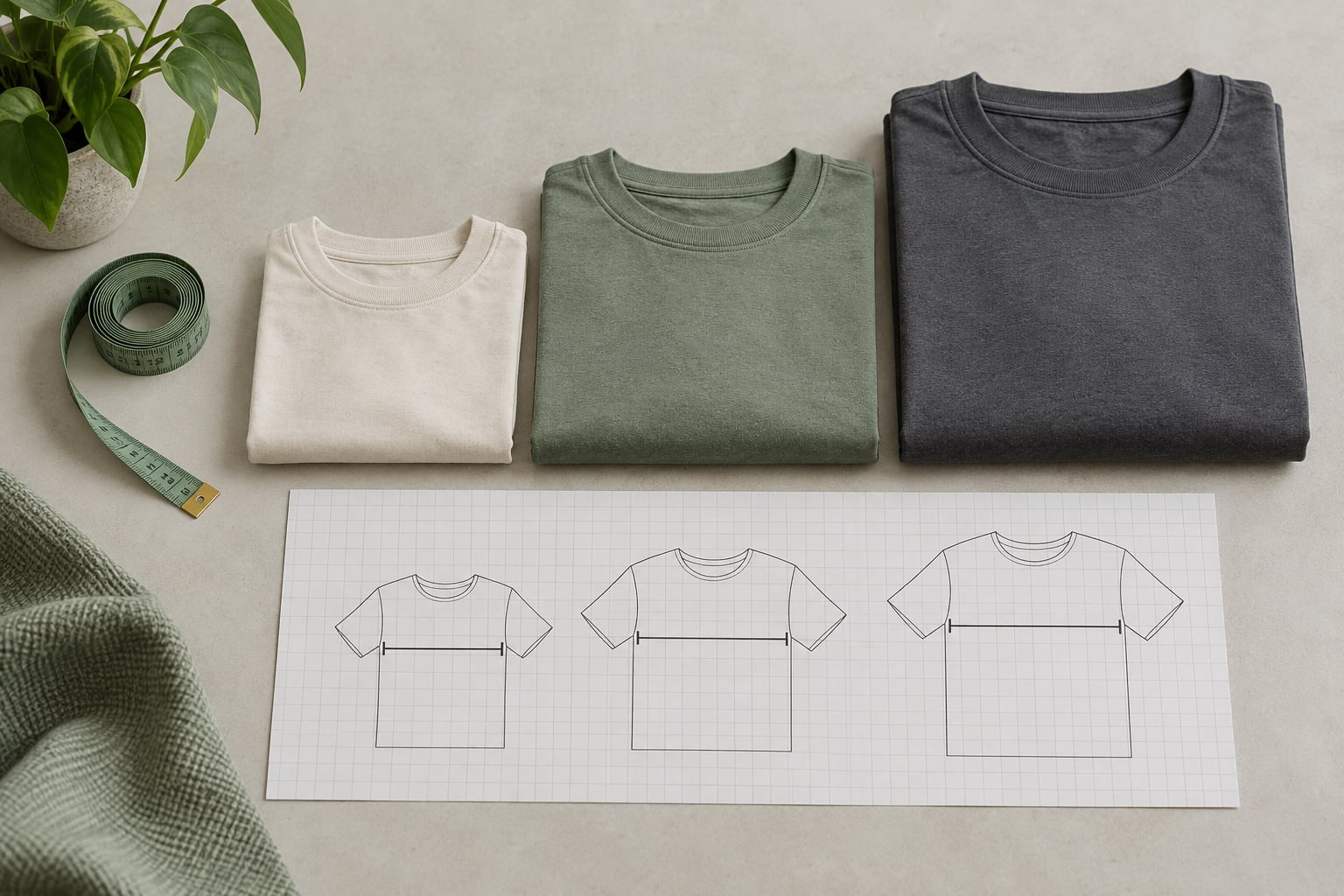
Flat-lay a garment you already own and love. Lay it flat, smooth out the folds, measure pit to pit and waist to waist and hip to hip, and double the width. The inch measurement is a third dimension, so double it. This single habit is the closest thing to a universal standard that exists, and community consensus in sizing threads is that nothing on the label beats it.
Identify the fit category, not just the size. A retailer-sized medium in a relaxed shirt is not the same garment as a medium in a fitted knit. If a page states the fit, use it. If it does not, assume the brand’s sizing follows its general aesthetic, which you can only learn by trying.
Read the fabric before the size. If a garment is a stretch knit with recovery, you can often size down a little and get a cleaner line. If it is a rigid woven, size to your measurements rather than down. Check the fiber content percentage of elastane so you know how much give you are actually getting.
Mine reviews for fit notes, not size notes. The useful review line is not “I’m usually a medium”. It is “runs small through the hips” or “sits longer in the torso”. Real fit feedback is more transferable between brands than label opinions are, because it describes the garment rather than the person.
Build a per-brand profile. Keep a note per brand: your size, the size it runs, and one or two flat-lay measurements that worked. After three or four purchases you will know that a certain brand’s L is equivalent to another brand’s M, which is knowledge no chart hands you and no conversion table can substitute for. The same approach works for menswear, where the inch measurement is on the label already, and for secondhand and vintage, where the garment itself is the only reference you have.
One last habit that pays for itself immediately. On a return policy that allows it, buy the two most likely sizes and return the loser. Retailers have become good at this and it costs you one trip instead of two, but check the policy on worn items and on sale items first.
Frequently Asked Questions
Why is a size M not the same at every clothing brand?
Because M is a position on one brand’s size range, not a measurement. Each labelmaker fits its base size on its own fit model, then grades up and down using its own formula, its own ease allowance and its own ideas about intended fit. Two size M garments can differ by several inches in the chest while both being correct for the label they carry.
What is the difference between body measurements and garment measurements?
Body measurements describe a person and garment measurements describe clothing. Body charts usually list bust, waist and hip on a mannequin-like figure. Garment charts list the actual finished item measured flat and doubled: pit to pit, waist to waist, hip to hip, plus inseam and rise. Garment measurements are the ones that tell you how something will fit.
Do clothing sizes shrink after washing?
It depends on the fiber and whether the garment was pre-shrunk. Untreated cotton knits can lose several percent in the first wash, wool felts under heat and agitation, and unsanforized denim is deliberately cut long and shrinks to length in the wash. Pre-shrunk items relax early then hold. Always follow the care label, and air dry anything you want to keep fitting the same.
How do I convert US clothing sizes to international sizes?
Conversion charts translate numbering systems, not bodies. US womenswear numeric sizes, UK sizes that start higher, EU sizes that start around 34, and Asian S-to-XXL ranges are different conventions, and charts vary by source. A rough chart gets you close enough to try, but only a garment measurement or a per-brand profile will confirm it. Conversion is a starting point, not an answer.
What does vanity sizing mean?
Vanity sizing is deliberately labeling a garment smaller than the body it is cut to fit, so a reader feels pleased by the number on the tag. In the US it is not illegal, because labeling law covers fiber content and care rather than what a size number means. It is a real commercial strategy, which is why a brand’s flattering label and its accurate garment measurement often disagree.
Can I rely on a brand’s size conversion chart?
Use it to shortlist, not to decide. Conversion charts compare numbering systems, and even a well-made one cannot tell you whether a brand cuts generously, how much ease a style carries, or how the fabric behaves. Check whether the chart lists garment measurements rather than just body measurements, note the fit category, and confirm with a flat-lay of something you already own and like.
Conclusion: Start With Measurements, Not the Label
If you take one thing from this, make it your own measurements plus one flat-lay of a garment that already fits. Everything else is detail on top of that pair of numbers.
Why clothing sizes are so inconsistent between brands comes down to something plain: a label is shorthand for a garment, and every brand writes its own shorthand. Once you stop expecting the number to transfer between brands, the problem gets much smaller. Measure yourself, measure a garment you like, note the fit and the fabric, and let the label do the small job it is actually good at.