How to care for color-treated hair comes down to keeping the cuticle flat: wait 48 to 72 hours before your first wash, wash every two or three days with a gentle color-safe shampoo, condition the mid-lengths and ends every single time, and use a heat protectant every time you style. None of that takes more than a few minutes a day, and most of the fading you are probably blaming on your colorist starts in the shower.
Here is the part that confuses people. Color does not fade because the dye is weak. It fades because the cuticle, the thin outer layer of the strand, gets lifted and stays lifted. Anything that pries that layer back open — hot water, sulfates, chlorine, hard water minerals, UV light, a hot flat iron — lets pigment wash out and lets shine leak away.
Keep it flat and the color stays. This guide walks through what you need on the shelf, the routine in order, the mistakes that undo everything, and how to tell when a gloss is due.
Table of Contents
- What You Need
- Step-by-Step: How to Care for Color Treated Hair
- How to Care for Color Treated Hair in the First 48 Hours
- Wash Color-Treated Hair Without Stripping the Color
- Moisturize Without Weighing Hair Down
- Detangle and Style With Less Tension
- Limit Heat, Sun, Friction, and Hard Water
- Protect the Color Until the Next Appointment
- Common Mistakes That Drain Color Fast
- Frequently Asked Questions
- Can I use regular shampoo on color-treated hair?
- How often should I wash color-treated hair?
- Does swimming or chlorine make color-treated hair fade faster?
- Are hair oils good for bleached or color-treated hair?
- How do I know if my color needs a gloss or full appointment?
- Conclusion
What You Need
Six things, and you probably already own four of them. None of this is a shopping list you need to complete in one trip.
- A color-safe shampoo. Look for a gentle, sulfate-free formula you can find again. Many people buy the first unfamiliar label and then abandon it half-used.
- A conditioner made for color-treated hair. This matters more than the shampoo, because rinsing is what pulls pigment out.
- A leave-in conditioner or light oil. One of the two is enough. Fine hair usually needs the leave-in; bleached and textured hair usually needs the oil.
- A heat protectant spray or cream. Non-negotiable if a blow dryer or flat iron ever touches your hair.
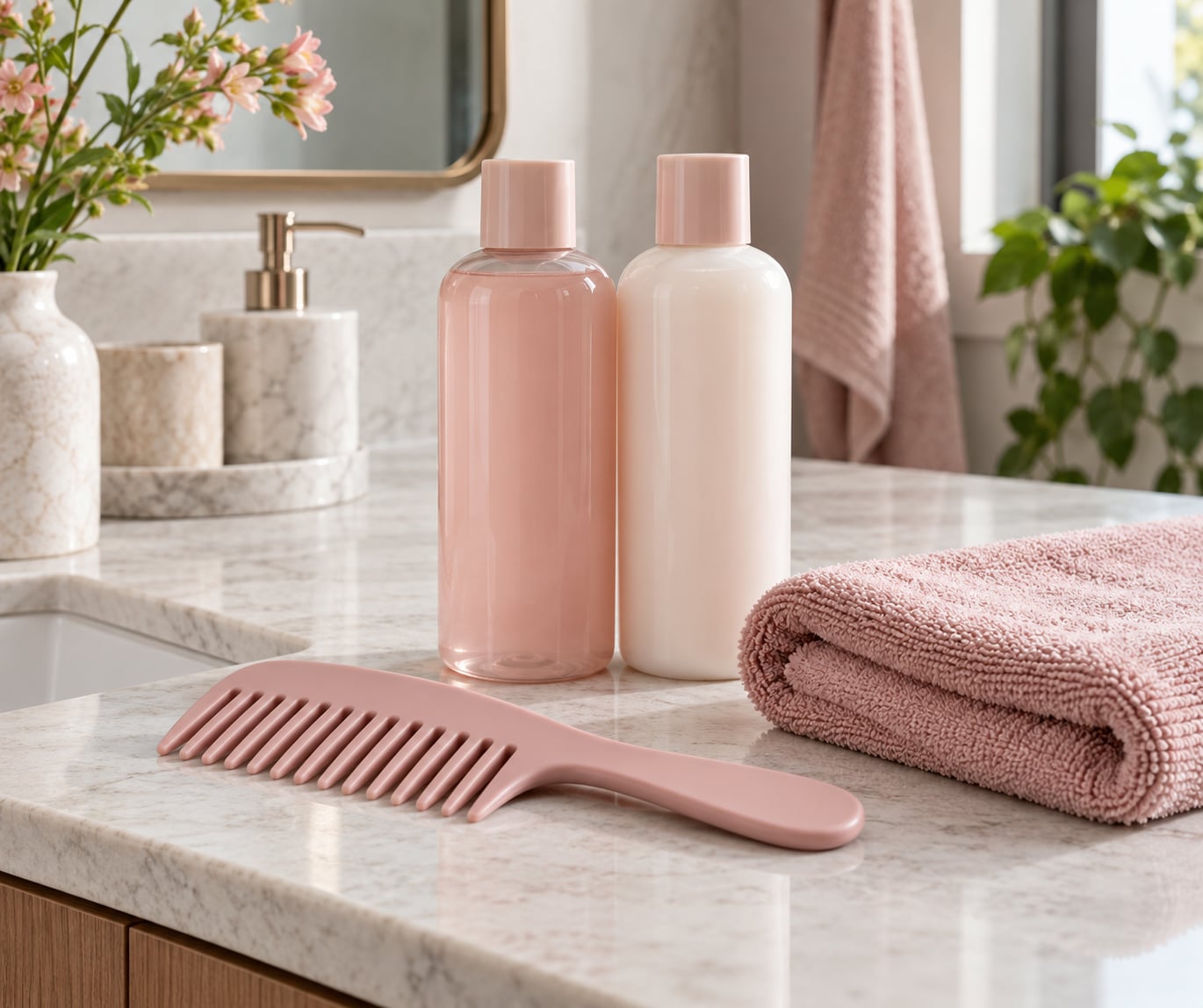
- A wide-tooth comb and a microfiber towel. The comb is gentler than a brush on wet hair. The towel cuts drying time, and time with heat is what damages.
- Protective styling basics. A satin scrunchie, a silk or satin pillowcase, and a hat with a brim for strong sun.
Worth saying plainly: ordinary products are not automatically dangerous to dyed hair. Plenty of people keep their color with a drugstore shampoo and a bottle of coconut oil. The word “color-safe” is not regulated, so the label tells you almost nothing — some products claiming color safety contain sulfates, and some sulfate-free ones strip color just as fast.
So read the ingredient list instead. Sulfates come first on the list and strip fast. You are also looking for sodium chloride if the hair feels heavy or coated, and for alcohol high on the list if your hair feels dry right after rinsing.
On the scalp, introduce anything new cautiously. A treatment that works beautifully on your lengths can irritate skin that has been recently dyed or processed. Patch test if you are sensitive, and keep scalp products away from the color on the lengths.
Step-by-Step: How to Care for Color Treated Hair
How to Care for Color Treated Hair in the First 48 Hours
Here is the question everyone asks, and the one where advice genuinely splits. Some colorists say 48 hours, others say 72. Both are defensible, and the difference matters less than the reason.
- Follow your colorist’s instruction first. Box dye and permanent color settle differently, and the instruction sheet from your appointment was written for the formula they used on you.
- If you were not told otherwise, wait 48 hours. Fresh color continues oxidizing, which is the chemical reaction that deepens and sets pigment. Washing interrupts it before it finishes.
- Stretch to 72 hours if you had bleach or a highlight. Lightened hair has no pigment left in it. The 72-hour window gives your scalp time to calm before you put a strong cleanser on it.
- No heat, no tight styles, no swimming, no heavy sweating. A loose braid or a loose bun is fine. A tight ponytail at the hairline the day after bleaching is the kind of tension that shows up later as breakage.
You will know it worked when you run your fingers through your hair and no color transfers to your palm.
Wash Color-Treated Hair Without Stripping the Color
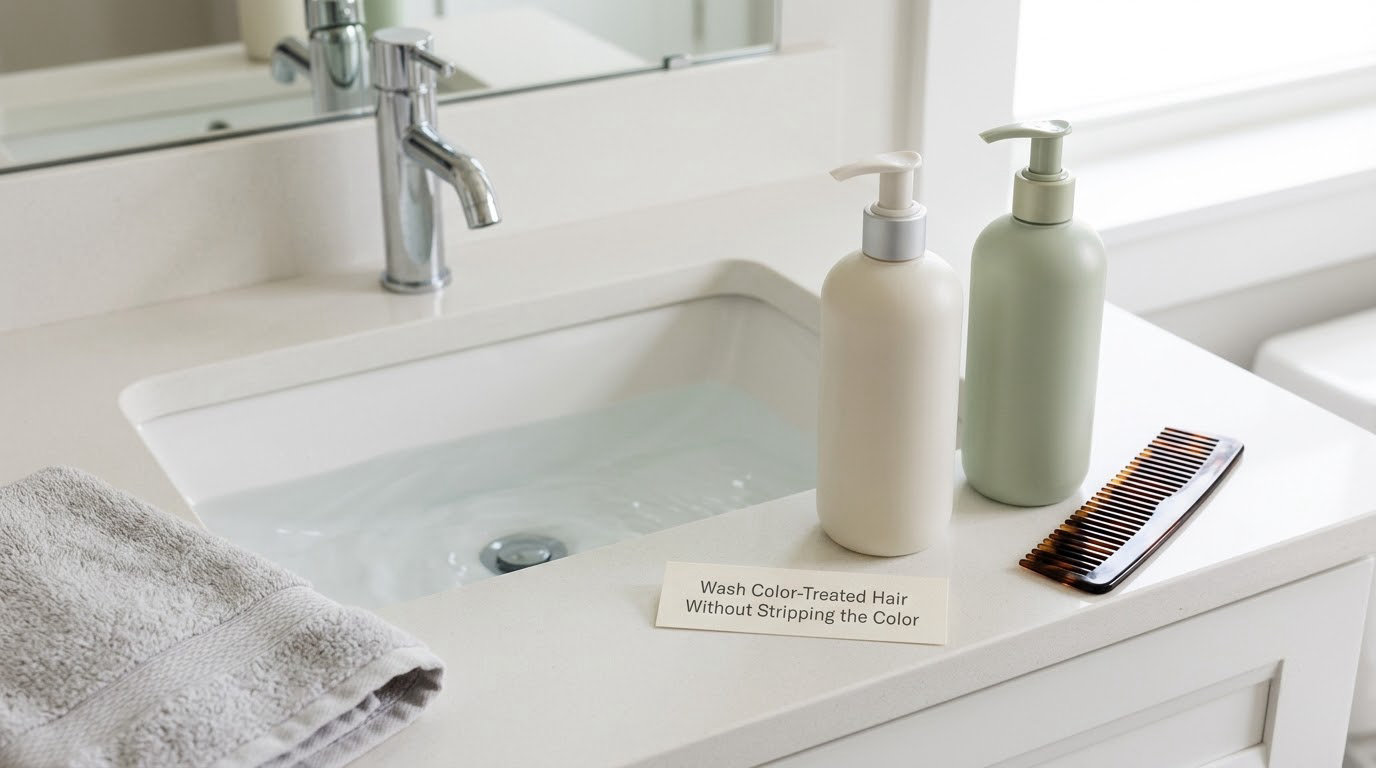
Wash less, wash gentler. Every rinse is an exit route for pigment, so the goal is fewer rinses, each one doing more work.
- Water temperature. Lukewarm for the wash, cool for the last rinse. Scalding water opens the cuticle and swells the strand, and swollen strands grip loose pigment.
- Shampoo at the scalp only. Work it in with your fingertips, not your nails, for about 30 seconds. Let the suds run down the lengths — that is enough. Scrubbing the ends is where people lose color without noticing.
- Second wash only when you need it. Oily scalps, sweat, heavy products. Otherwise one wash every two or three days, or every day for coily and textured hair.
- Silicone-free conditioner where you need it. If your lengths feel coated or your color is going flat despite good technique, silicone buildup is a likely cause. Skip the conditioner on that wash and see what happens.
- Add slip before combing. Conditioner is not fully rinsed out, and that residue is what lets the comb glide instead of catching.
The success signal: hair feels clean and not dull, and you can comb it through without pulling.
Moisturize Without Weighing Hair Down
Conditioner goes on mid-lengths and ends, not the roots. Oil at the scalp is a guaranteed greasy look by day two, and your roots do not need it.
For dry or split-end-prone lengths, a thick conditioner for a few minutes before rinsing does more than a leave-in alone. For porous bleached hair — hair that drinks up water and gets heavy fast — use a lighter conditioner more often instead of a heavy one rarely. For fine hair, the conditioner stays light and the leave-in goes on damp lengths, a small amount, never the roots.
Add a weekly masque or deep conditioning treatment, and a bond-building treatment if your hair has been bleached repeatedly. Masks can also deposit temporary color, so pick a clear or color-safe formula rather than a pigmented one you were not expecting.
You will know the balance is right when strands are soft and comb through with less pulling, and there is no residue or flattening at the roots the next morning.
Detangle and Style With Less Tension
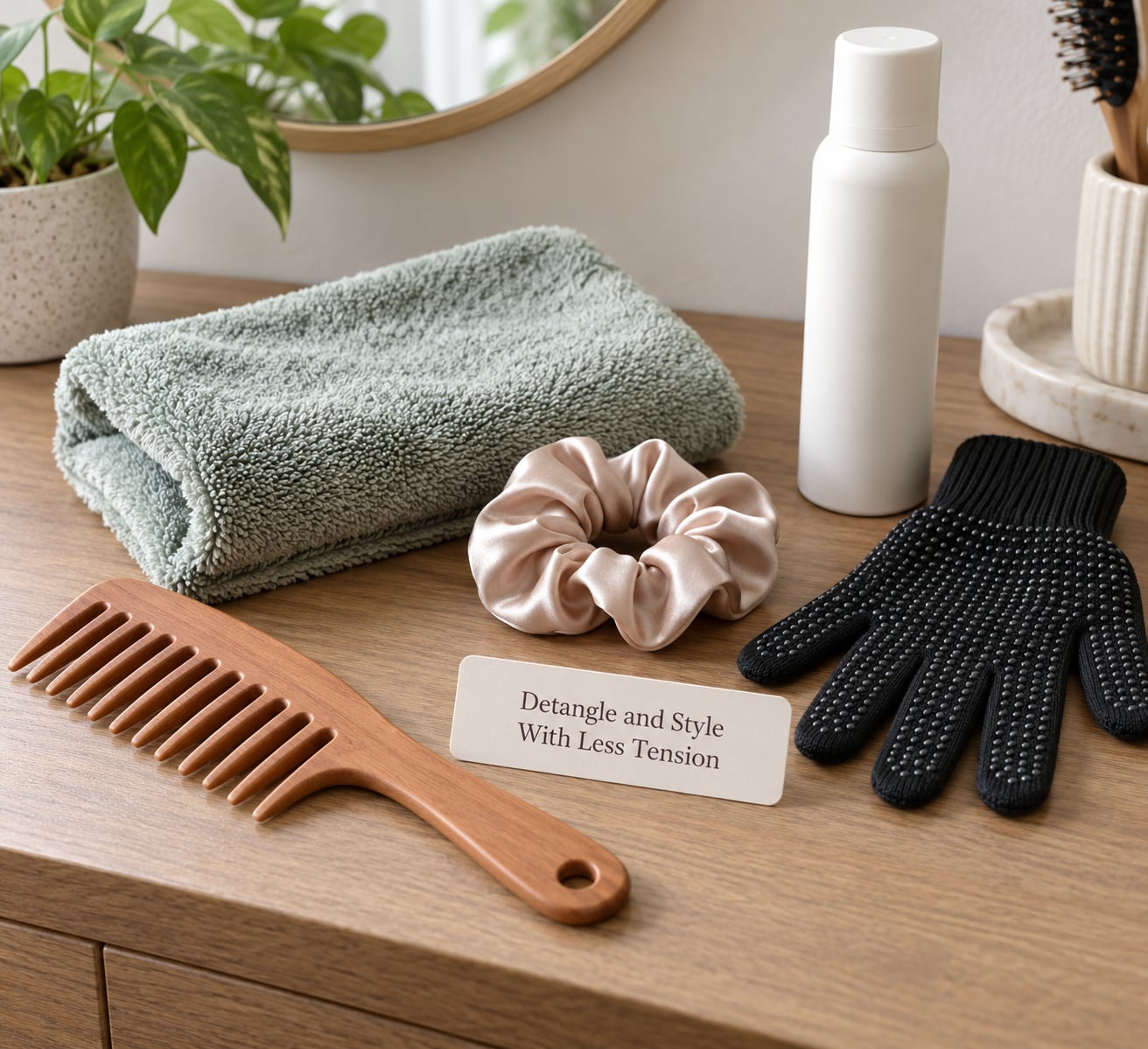
Wet hair stretches and snaps. Handle it damp, never soaking wet and never bone dry.
Work in sections from the ends up, using your fingers first to find the tangle, then a wide-tooth comb to move down toward the roots. Never start at the roots and drag down; that is how you comb out a handful of hair and blame the shampoo.
Choose styles that do not pull: loose braids, a loose bun, a claw clip instead of a tight elastic. Swap cotton elastic for satin, and a cotton pillowcase for silk or satin if you can spare the swap. Both reduce friction overnight, which is where a lot of breakage quietly happens.
Dry by blotting with a microfiber towel, pressing rather than rubbing. Rubbing while wet roughens the cuticle, which is the exact thing you are trying to prevent. Air dry when you have the time, and when you do not, use the blow dryer on medium heat with your protectant already in.
Limit Heat, Sun, Friction, and Hard Water
These four do most of the damage between appointments.
- Heat. Heat protectant every single time, including blow-drying and curling. Use the lowest setting that gets you there, and keep the iron off the same section twice.
- Sun. UV light fades color and oxidizes whatever is left. A hat with a brim beats a UV spray for daily wear. Reapply any UV protectant if you are outdoors for hours.
- Friction. Cotton pillowcases, rough towels, tight styles, and leaning your wet head against fabric. Each one is small, and they add up.
- Hard water. Calcium and iron leave a film that dulls shine and pushes blonde toward brass. If your color fades fast and your shower leaves a ring or a rust-colored stain, this is a real possibility. A chelating treatment or a shower filter addresses it; no conditioner will.
Swimming deserves its own note. Soak your hair in clean water first, saturate it with a leave-in or oil to create a barrier, and ideally wear a swim cap. Getting in the water with dry hair and no barrier is what people regret later.
On clarifying shampoo: it strips buildup, not color. Use it based on what your hair is telling you, not on a calendar — limp hair, a film at the roots, color that looks muddy before your appointment. A clarifying wash is fine before your color appointment and a poor idea right after one.
Protect the Color Until the Next Appointment
Realistic intervals depend on what you had done. A gloss or demi-permanent glaze usually lasts 4 to 6 weeks on bleached hair, and people with hard water or heavy heat styling need it sooner. Permanent color on brunettes and reds lasts longer, usually 6 to 8 weeks, with the shine dropping first rather than the shade.
Blonde and bleached hair needs toning between appointments; toning shampoo neutralizes yellow and orange but cannot rebuild color or shine. Brunettes and reds generally do not need toning. If your hair is in a hard-water area and going brassy, a blue-toning product is the match for orange, and a purple one is the match for yellow.
Stretching an appointment past its window backfires. When a colorist has to correct weeks of brassiness or uneven tone, the fix is stronger chemistry on hair that is already tired. Keeping the gap short is usually the gentler path.
Common Mistakes That Drain Color Fast
| Mistake | Why it drains color | What to do instead |
|---|---|---|
| Waiting many days to wash | Sebum oxidizes fresh pigment and dulls shine | Wash every 2-3 days with a gentle shampoo instead |
| Very hot water | Opens the cuticle and swells the strand so pigment rinses out | Lukewarm to wash, cool for the last rinse |
| Skipping conditioner | Dry hair cuticles let loose pigment escape faster | Conditioner on mid-lengths and ends at every wash |
| Brushing dry hair | Tangles tighten and snap, which reads as shedding later | Comb damp with a wide-tooth comb, ends to roots |
| Frequent heat styling | High heat dries the strand and opens the cuticle | Protectant every time, lowest workable setting |
| Confusing buildup with dry hair | Oiling dry hair just adds weight without addressing the film | Clarify based on buildup, then condition properly |
| Products with drying alcohols or sulfates | Strip natural oils faster than the dye can settle | Read the first five ingredients before buying |
One habit worth keeping: take a photo of your color in daylight the week you leave the salon. Comparing against it in four weeks tells you more about what is actually fading than your memory does.
Frequently Asked Questions
Can I use regular shampoo on color-treated hair?
You can, but it is the most common reason color fades early. Sulfates strip the natural oils and the cuticle film that holds pigment in place. If you are keeping your regular shampoo, use it on the scalp only, keep the water lukewarm, and condition the lengths every wash. Switching to a gentle color-safe formula usually shows a difference by the second or third wash.
How often should I wash color-treated hair?
Every two or three days suits most salon-colored hair, with more frequent washes for fine or oily scalps and for coily and textured hair. Washing less protects color but is not always realistic. The pattern that holds up best is gentle shampoo, conditioned lengths, and a cool final rinse, rather than how many days you wait. Keep the same products so you can tell what is working.
Does swimming or chlorine make color-treated hair fade faster?
Yes, and chlorinated pools are hard on freshly colored hair in two ways. Chlorine oxidizes pigment, and pool water is often hot, which opens the cuticle at the same time. Soak your hair in clean water, saturate it with leave-in conditioner or oil, and wear a cap if you can. A fresh color that has not fully set is at its most vulnerable for the first week.
Are hair oils good for bleached or color-treated hair?
A lightweight oil is one of the best additions for bleached, porous hair, because bleached strands absorb moisture quickly and stay dry. Apply a few drops to damp mid-lengths and ends, never the roots, and use less than you think you need. Very heavy oils on fine hair will flatten it within a day, and some tinted oils can transfer pigment, so check before you use them.
How do I know if my color needs a gloss or full appointment?
A gloss refreshes tone and shine, so it is the right call when the color is the right shade but looks dull or slightly warm. A full appointment is needed when the shade itself is wrong, the roots are more than a couple of weeks past due, or the brassiness is too strong for a toning shampoo. If you are unsure, describe the problem in daylight photos at your appointment and let your colorist decide.
Conclusion
Three things to do this week. Wash more gently and less often. Condition your lengths every single wash, not occasionally. Cut back on heat and friction, which means a protectant every time and a satin scrunchie instead of a cotton one.
None of it needs a whole new bathroom shelf. Consistent, boring care beats trying to undo damage with one product afterward, and it is the difference between a color that looks good for a week and one that still looks good at the next appointment.