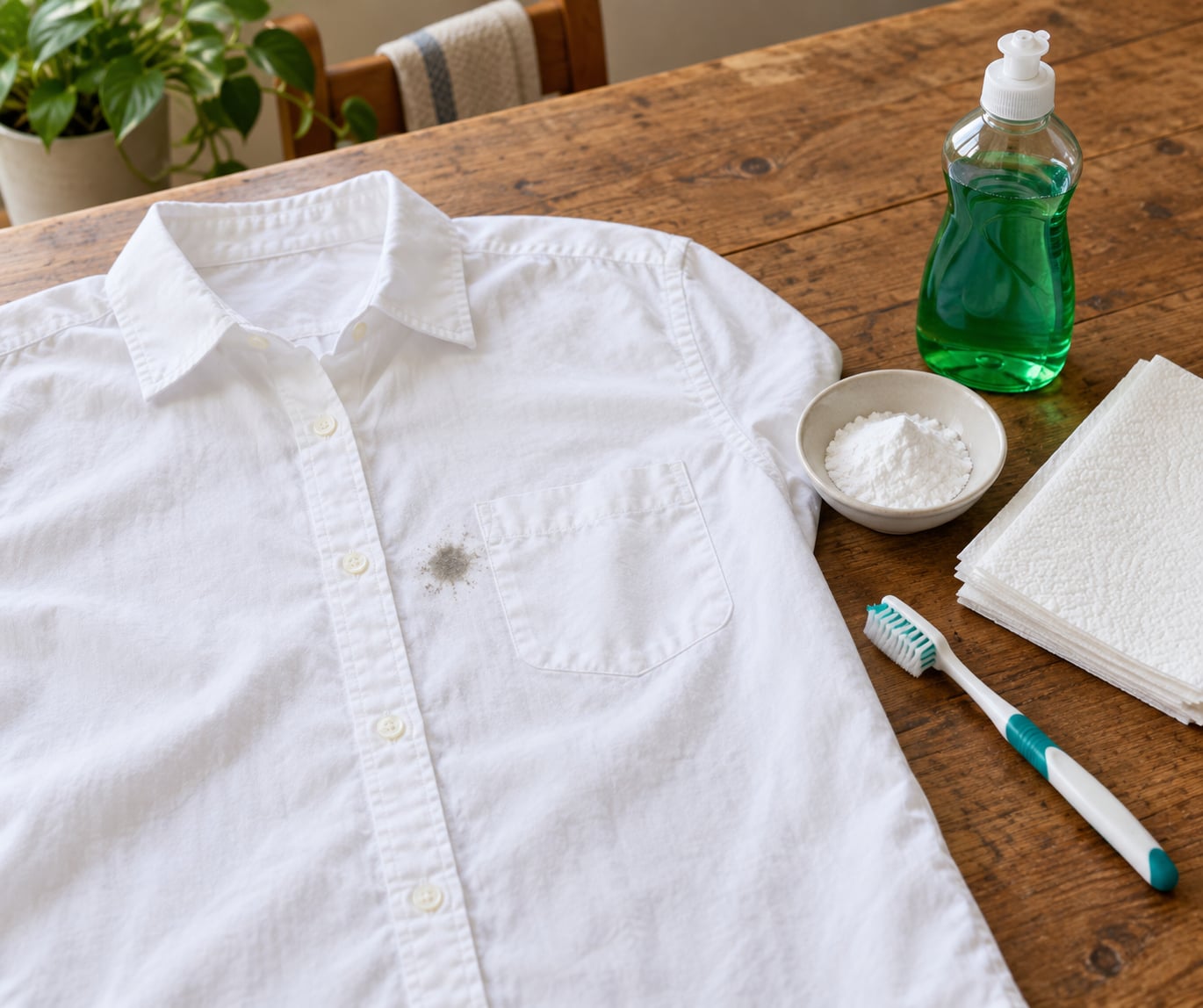
Oil comes out of fabric in five moves: blot the surface grease, absorb what soaks in with a powder, work grease-cutting dish soap into the fibers, rinse from the back of the fabric, then wash on the warmest temperature the care label allows and air dry. Learning how to remove oil stains from clothes is less about products than discipline, because every step takes under five minutes and the two steps people skip are the two that ruin the garment.
Timing matters more than anything else. Grease that hits a shirt at dinner can still lift completely days later if you have not dried it, and the same spot on a blouse that already went through a hot dryer can stay visible after five careful washes. Difficulty is low, effort is low, and the whole thing takes about 20 minutes plus a drying cycle.
Table of Contents
- What You Need
- Step-by-Step: How to Remove Oil Stains From Clothes
- 1. Check the Fabric and Freshen the Stain
- 2. Absorb the Oil
- 3. Pretreat the Remaining Mark
- 4. Wash According to the Care Label
- 5. Treat a Set-In or Persistent Stain
- Common Mistakes
- Frequently Asked Questions
- Does baking soda remove oil stains from clothes?
- Can oil stains be removed from silk or wool?
- Is dish soap safe for removing oil stains from clothes?
- Why does an oil stain reappear after washing?
- Does heat remove oil stains or make them worse?
- Conclusion
What You Need
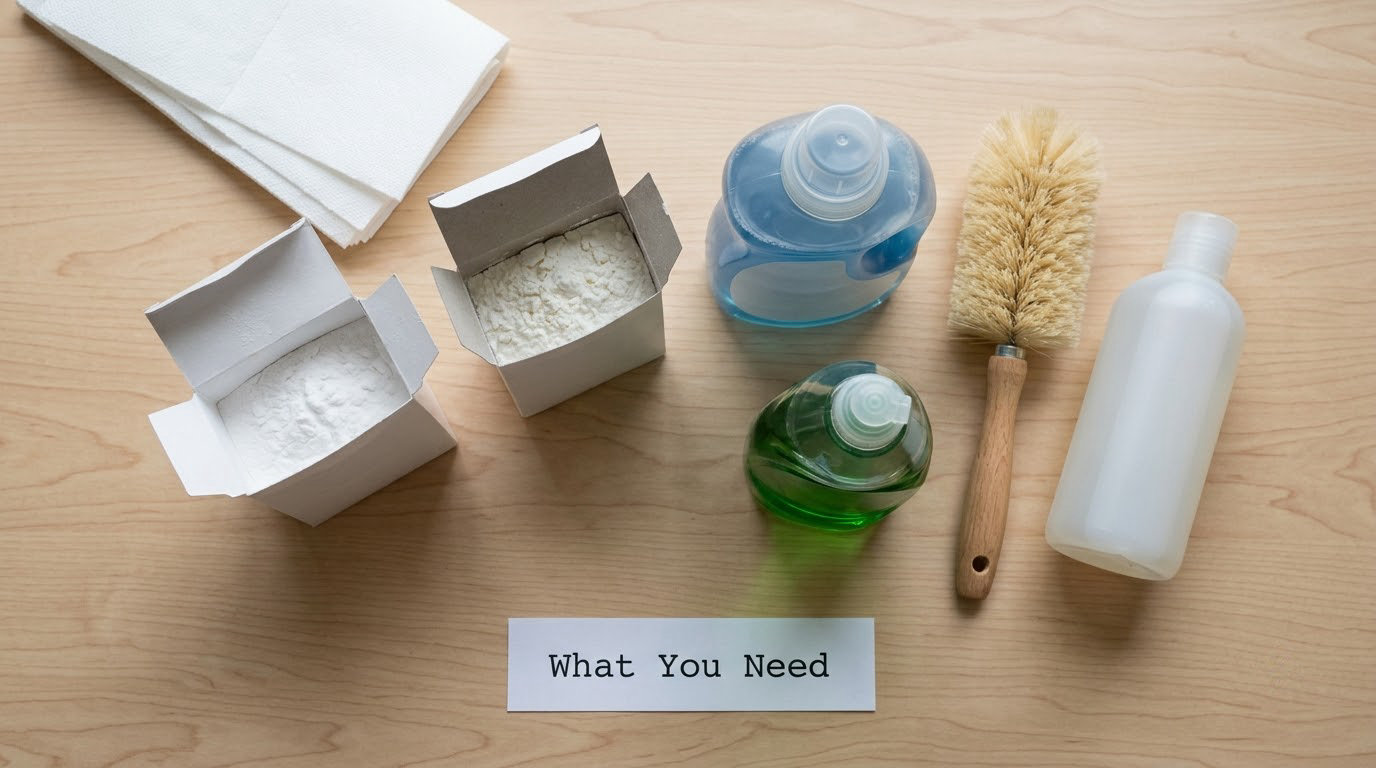
None of this is exotic, and most households already own the whole list.
- Paper towels and plain paper or newspaper for soaking up surface oil before anything else touches the fabric.
- Baking soda or cornstarch to absorb oil that has already soaked into the fibers.
- Liquid laundry detergent for heavy pretreating and for the wash itself.
- Dishwashing liquid made with a grease-cutting surfactant, the single most useful item on this list.
- A soft-bristled brush such as an old toothbrush, for working soap into the fibers without abrading them.
- A stain remover formulated for grease and oil, if you have one on hand.
- A bowl or basin for soaking, and a soft cloth for blotting.
Three variables decide which of these you actually use: the fabric, how old the stain is, and what the care label says. A cotton shirt can take hot water, a full scrub and a peroxide follow-up. A silk blouse gets a gentle blot, a small amount of dish soap and a cold rinse, and nothing else.
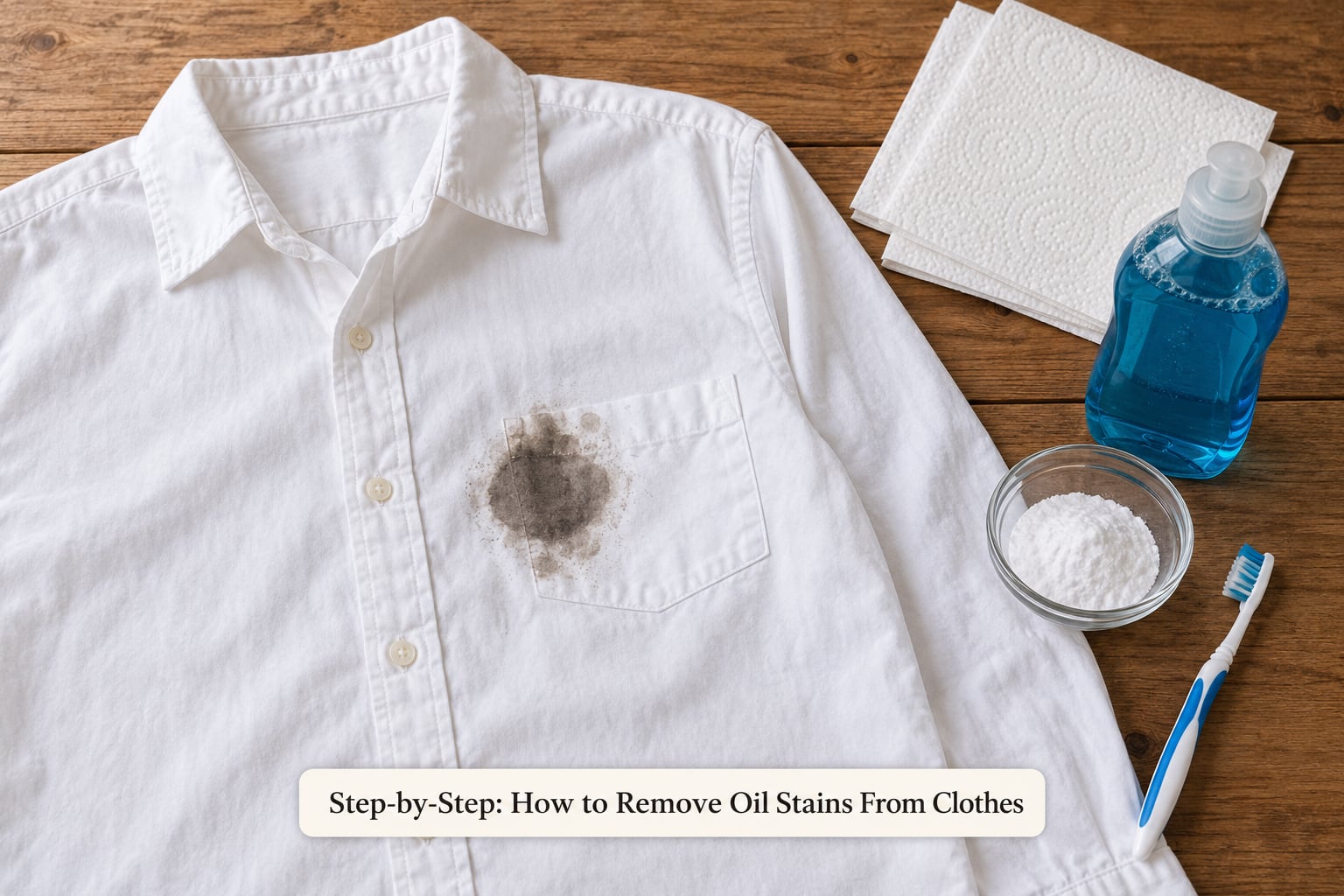
Step-by-Step: How to Remove Oil Stains From Clothes
1. Check the Fabric and Freshen the Stain
Turn the garment inside out and read the care label before you touch the spot. If it says dry clean only, stop there and skip to step 5, because water and agitation can shrink the garment, distort the seams or leave water rings that cost you more than the stain did.
For everything else, test for colorfastness. Dampen a hidden seam with the product you plan to use, wait a few minutes, then check whether the color transfers to your finger or a white cloth. If it does, dilute the product and work only from the back of the fabric.
Next, lift off whatever oil is sitting on top. Lay down clean paper towels and press firmly from the outer edge of the stain toward the center, replacing the towel as it fills. Blotting moves oil out of the fabric. Rubbing pushes it deeper into the fibers, and that is the single most common reason a stain outlives the treatment.
2. Absorb the Oil
Once the surface is blotted, cover the spot with an absorbent powder. Baking soda, cornstarch and baby powder all work, and cornstarch is the better choice on dark fabrics because it shows less. Use enough to fully coat the area, roughly a tablespoon for a grease spot the size of a coin.
Leave the powder in place for 15 to 30 minutes. It is pulling oil out of the fiber the whole time, which is why the stain usually looks and smells much better when the powder comes off. Brush or shake off the residue gently, or lift it with a barely damp cloth, and never rub it back into the fabric.
If you have no powder, sandwich the stain between paper towels and press with a warm, dry iron for a few seconds. The towels wick the grease out. Skip this on synthetics and anything that can scorch.
3. Pretreat the Remaining Mark
Put the garment in a bowl or on a towel, because grease-cutting dish soap will spread further than you expect. Apply about a quarter-sized amount directly to the remaining mark, then work it in with a soft toothbrush using short, gentle strokes from the back of the fabric forward. You are aiming for a damp paste, not a wet one.
Give it 10 to 15 minutes. Liquid laundry detergent works the same way if it is all you have, applied a little heavier. Commercial sprays formulated for grease and oil are built for this step and usually need about 5 to 10 minutes.
One rule matters here. Do not use hot water before the oil has been treated. Hot water sets protein and plant-based grease into the fiber and drives it deeper, which is why the rinse in this step is cool or lukewarm and the wash comes later. If you are dealing with motor oil rather than cooking oil, an enzyme-based powder cleaner has more effect than dish soap.
4. Wash According to the Care Label
Rinse the treated area under cool to lukewarm water, from the back of the fabric, so you push the grease out instead of through the fabric again. Then wash the garment on the warmest temperature the label allows, using the amount of detergent the load needs rather than a doubled scoop.
A warm or hot cycle helps once the grease has been emulsified, and a presoak for 15 to 30 minutes is worth it when the mark is still visible after treatment. Give the dryer a wide berth: hang the garment or lay it flat and let it air dry fully. Heat at this stage is what locks a partly lifted stain in permanently.
Check the result while the fabric is still slightly damp, because a mark that looks faint wet can look worse dry, and a mark that has already faded can darken again as it dries. If oil stains on clothes after drying are still there, treat them again and run a second wash.
For dry-clean-only garments, or for items like a suit jacket where the whole panel would need soaking, take it in and say exactly what the stain is. Mention how long it has been there and whether it has been heat dried, because that changes which solvent cycle the cleaner uses.
5. Treat a Set-In or Persistent Stain
A stain that has already been washed and dried needs more than the same steps once. Repeat the powder absorption, this time leaving the powder for several hours or overnight for an old mark, then pretreat again with dish soap and let it sit a full 30 minutes before rinsing.
On white and colorfast cotton and denim, 3 percent hydrogen peroxide applied for 5 to 10 minutes after the soap step can break down what the surfactant missed. Never use it on wool, silk, spandex or anything colored without a spot test, and never mix peroxide with bleach. Never mix bleach with ammonia either, full stop.
Soak the garment in warm water with dish soap for 20 to 30 minutes if the label allows washing at all. After two full cycles with no improvement, stop and take it to a dry cleaner. Continuing to scrub at a set-in mark on silk or wool trades a small spot for permanent damage.
Common Mistakes
Rubbing instead of blotting. Friction spreads grease across a wider area and presses it into the fiber. The correction is always the same: press and lift with paper towels, replace the towel often, and let the powder and soap do the work.
Using hot water first. Heat sets oil into fabric, especially plant-based grease and anything with protein. Hold off on hot water until the stain has been pretreated with detergent or soap.
Drying before the stain is gone. Tumbler heat and a hot iron both set whatever grease remains, and they do it quickly. Air dry every time, inspect, and only re-wear the garment once the mark has fully vanished.
Skipping the care label. A missing stain is replaceable. A shrunken cashmere sweater or a faded silk print is not. Read the label before the first drop of anything hits the fabric.
Applying household chemicals indiscriminately. Bleach, ammonia, peroxide and alcohol all have fabric limits and cannot be combined safely. Stick to dish soap and detergent first and escalate only when you have spot tested.
Treating delicate or dry-clean-only fabrics at home. Silk, wool, viscose, acetate and anything with a dry clean only symbol belongs with a professional if the stain matters. A five-minute dish soap treatment is a gamble on a blouse you actually care about.
Speed is the real advantage most people waste. Blotting within a few minutes of a spill removes most of the oil before it bonds, and a spot test costs thirty seconds. Do both before you start worrying about which product is best.
Frequently Asked Questions
Does baking soda remove oil stains from clothes?
On its own, not really. Baking soda is an absorbent, not a degreaser, so it lifts surface oil out of the fabric but does not emulsify what is bonded to the fiber. Use it for the absorption step, then follow it with dish soap or laundry detergent for the actual removal. A 30-minute sit works better than a quick sprinkle, and cornstarch is the better choice on dark fabrics.
Can oil stains be removed from silk or wool?
Sometimes, but the margin for error is tiny. Silk and wool are protein fibers, and hot water plus agitation can felt, shrink or glaze them permanently. Blot gently, apply a small amount of dish soap, rinse with cool water, and air dry flat with no heat. For anything valuable or heavily stained, stop at home and let a dry cleaner handle the solvent work.
Is dish soap safe for removing oil stains from clothes?
Yes, on most fabrics. Dish soap contains surfactants that break oil into droplets that water can carry away, which is exactly what laundry detergent does at a larger scale. Apply it to the back of the fabric, work it in gently, wait 10 to 15 minutes, and rinse cool. The exceptions are dry-clean-only garments and any fabric you have not spot tested first.
Why does an oil stain reappear after washing?
Two things are usually happening. Either the stain was never fully emulsified before the wash, so it stayed in the fiber and simply re-wetted, or the machine itself is the source. A washer drum that has been used for greasy loads can hold residue that transfers to clean clothing. Treat the spot again and run an empty hot cycle with a washer-cleaning product.
Does heat remove oil stains or make them worse?
Heat makes them worse, every time. Warm or hot water after the stain has been treated with soap helps carry grease out, but dry heat from a tumble dryer or a hot iron bonds remaining oil to the fiber and makes the mark permanent. Air dry, inspect while the fabric is still damp, and only use an iron on the reverse of the garment once nothing is visible.
Conclusion
Identify the fabric and read the care label, blot from the outside in rather than rubbing, absorb the grease with baking soda or cornstarch, pretreat with dish soap, then wash on the warmest temperature the label permits. That sequence, with no shortcuts, is how to remove oil stains from clothes without a second trip to the dry cleaner. Do not put the garment in the dryer until the mark is completely gone, because that one habit is responsible for most permanently ruined clothes.
Fresh stains are simply easier to remove, so act in the first few minutes. When the garment is silk, wool, or dry clean only, or when two full cycles have not moved the mark, let a professional assess it rather than escalating to harsher chemicals.