You find a hairstylist you can trust the same way you vet anyone you hand something irreversible to: gather proof, ask direct questions, and watch how they answer. The whole process takes about a week of research and one honest conversation, and it works whether you are in your hometown or three days into a new city with no contacts at all.
A bad cut is not a two-week inconvenience. Fringes, layers, and big chops take six to twelve months of regrowth to undo, and a wrong colour decision costs far more to correct than to get right the first time. That math is why a little homework beats salon roulette.
Table of Contents
- What You Need
- Step-by-Step: How to Find a Hairstylist You Can Trust
- 1. Define the service and what you want before you look for a hairstylist you can trust
- 2. Ask about training, experience, and specialization
- 3. Examine a portfolio that matches your hair
- 4. Check reviews and ask for recent references
- 5. Use a consultation to test communication and trust
- 6. Understand the treatment plan and total cost
- 7. Make a deliberate first-appointment decision
- Common Mistakes
- Frequently Asked Questions
- Are online reviews enough to tell me if a hairstylist is good?
- Should I book with a salon or an independent hairstylist?
- Do I really need a consultation before getting my hair done?
- How do I check that a hairstylist is licensed?
- Why do some hairdressers struggle with curly and coily hair?
- What do I do if I hate my haircut?
- Conclusion
What You Need

You need five things written down before you contact a single salon. None of it takes long, and all of it makes you harder to talk into the wrong service.
- The exact service. Not “haircut” but “dry cut, layers at the front, keep length below the shoulder.” Precision here is what lets a stylist quote honestly.
- Your hair history. Box dye, bleach, relaxers, keratin, extensions, past perms, and the last time anything chemical touched your hair.
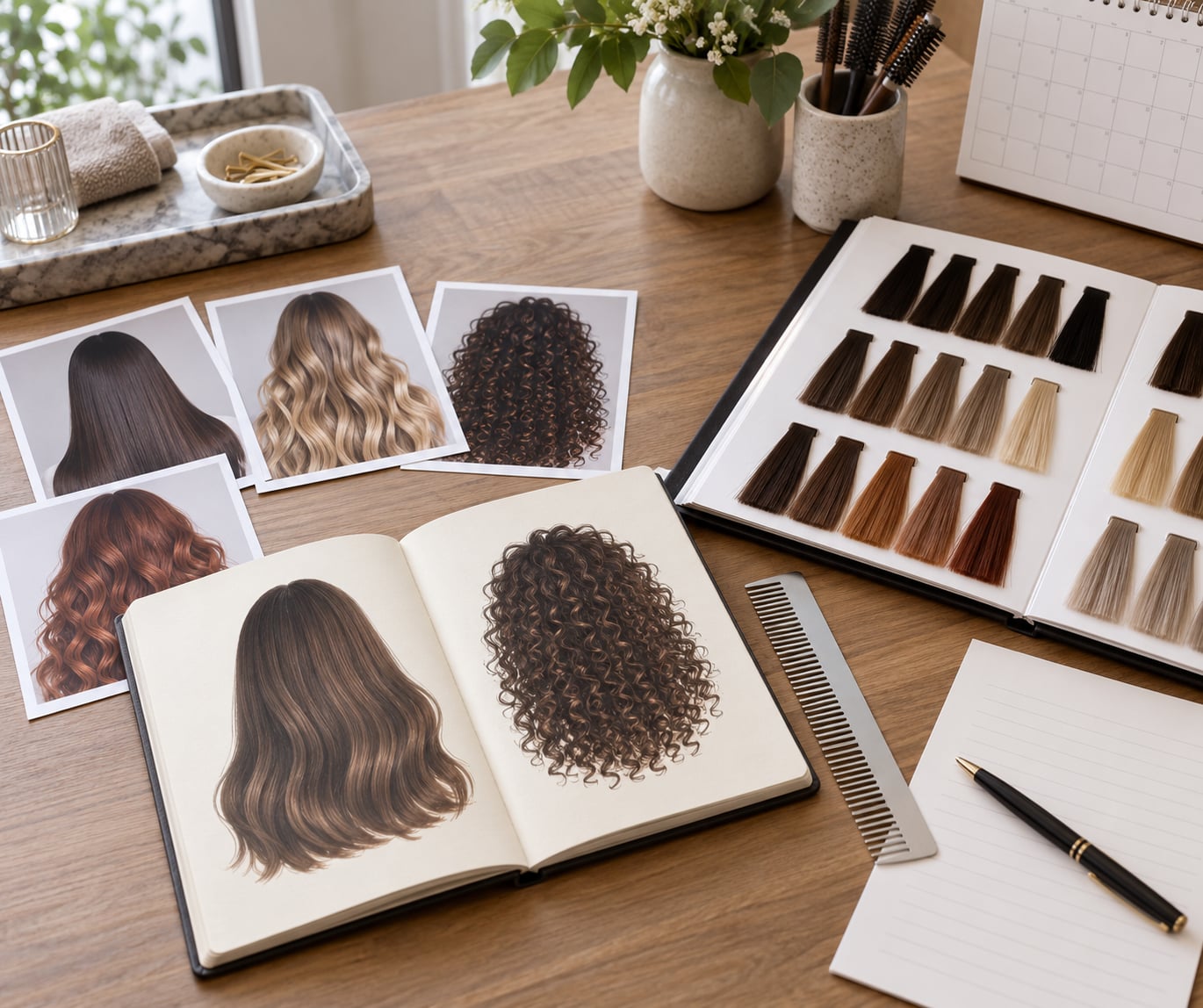
- Three to five reference photos. Save pictures of hair you actually like, not aspirational ones you found once.
- A budget range you can say out loud. Every stylist has a floor, and you would rather find out now than in the chair.
- A place to track comparisons. A phone note with the stylist name, what you saw in their portfolio, what they said, and what they charged.
Add your state’s cosmetology board lookup page to your bookmarks while you are at it. Verifying a licence takes about a minute once you know where to look, and it is the only fully objective check available to you.
Step-by-Step: How to Find a Hairstylist You Can Trust
Seven steps, in this order. The early ones narrow the field cheaply, and the late ones confirm what the research suggested. Skip ahead and you will book on vibes.
1. Define the service and what you want before you look for a hairstylist you can trust
The clearest description you can write is the best filter you have. Include your face shape if it matters to you, your texture and how much of your styling routine you are willing to keep up, and how low-maintenance you want the result to be.
“I want layers” is a starting point. “I want layers I can blow-dry in five minutes on weekdays and that look intentional when it grows out a little” tells a stylist something real. Grow-out preference is worth mentioning early because it changes the shape more than most people expect.
Note your hair concerns too. Scalp issues, breakage at the ends, a section that will not hold a style, or a history of bad over-processing all belong in the first conversation. A stylist who hears a breakage problem and still reaches for the same scissors every visit is telling you something.
2. Ask about training, experience, and specialization
A cosmetology licence proves the minimum, not the fit. It confirms someone completed required hours and passed a state exam, nothing about whether they can cut your texture. Every US state maintains an online licence lookup through its cosmetology board, so search for the state board plus “licence verification” and run the stylist’s name.
Disciplinary history usually shows up on the same lookup when it exists, and it is worth checking even for stylists who came recommended. No record is not a promise, but it is information nobody volunteers unless you ask.
Then ask the questions that separate trained from certified. How long have you been cutting? Do you keep up with continuing education? Have you apprenticed under a senior stylist? Do you specialise in a texture or a service like curly cutting, blonde corrections, or grey coverage? Stylists who specialise tend to say so plainly and unprompted.
3. Examine a portfolio that matches your hair
Skip the dramatic transformations. A stylist’s most reposted before-and-after is usually their best lighting and their most forgiving client, not their typical work.
Look for clients who share your starting point: similar density, similar curl pattern, similar length coming in. Then check how the hair looks in the finished shot. Air-dried and styled-down photos mean one thing. Fresh-out-of-the-shower, no product, natural part photos mean something else entirely, and that second set is the one you actually live with.
On curly and coily hair specifically, a stylist who shows mostly wet, weighed-down curls is a warning. Wet hair stretches and hides texture, which is why cuts that look fine in the chair fall apart at home. Trade and curly-hair blogs both flag this wet-cutting problem as the single most common technical failure, so ask directly whether they cut curls dry or wet.
4. Check reviews and ask for recent references
Read reviews for behaviour, not for compliments. A five-star review that says the stylist listened for twenty minutes and explained aftercare is worth more than ten that say the blowout looked amazing, because look depends on taste and listening is a skill.
Search the comments for words like listened, explained, hair health, on time, and repeat. Equally useful: a stylist’s name appearing repeatedly across years of reviews for the same client shows a real working relationship rather than a one-off.
Ask a recommended person one more question than feels polite: did they see the same stylist every time, and do you have the same hair type and goals? A referral is only valid if the referrer shares your texture. Someone with fine straight hair is a weak reference for a curly client, however much they loved the cut.
If you have just moved, city subreddits and local parent or neighbourhood groups are where the honest answers live. Ask specifically for a stylist who cuts your texture, and be prepared to offer to share your own referrals back.
5. Use a consultation to test communication and trust

A consultation is where trust is either built or quietly lost. A trustworthy stylist asks about your routine, your maintenance tolerance, and your history before touching your hair, then explains the options with their trade-offs attached.
Some questions worth reading straight off your phone: Have you cut this texture before? Will this style grow out well, and when should I come back? What will you do if the result dries differently than expected? Is this achievable in one appointment or does it need two? What product routine supports this result at home? What is the total price including any add-ons, and what would trigger those add-ons? Do you do this service often, and how many clients a day do you take on?
Red flags sound like dodging. “Whatever you like” after you have explained your hair history is a deflection. So is a promise that the result will be identical to a photo taken on a different texture under different lighting. Also watch for pressure at the chair: a stylist upselling a package or a colour change you did not ask about before the service even starts.
If you have had bad cuts before and the idea of a salon chair sets off some real anxiety, say so at the booking stage and ask for a slower appointment with a consultation first and no service on the same visit. Good stylists are used to that request, and plenty of people in curly and protective-hair communities specifically ask for it.
6. Understand the treatment plan and total cost
Before anything starts, you should be able to repeat back the sequence: what will be done in what order, which products go on, how long the appointment runs, and what happens afterwards. If the stylist cannot summarise the plan without hedging, the plan is not settled yet.
Ask what maintenance this result demands in real terms. A style that needs a blow-dry every morning is a different commitment from one that air-dries into shape, and the honest stylist will tell you which one you are booking.
Get the full price before the service, not after. Understand what a toner or gloss costs, whether a root touch-up is a separate add-on, and when the next appointment will be due. Senior stylists and specialists usually cost more, which is reasonable, but price still correlates with skill more reliably in colour correction than anywhere else.
7. Make a deliberate first-appointment decision
After the first visit, compare three things: the result against the plan you agreed, the stylist’s communication during the work, and your own comfort level. If the cut is slightly off but the stylist explained exactly why and offered to adjust, that is a good long-term relationship. If you felt rushed and unclear the whole time, a great result will not make up for it.
If you are still deciding, use the trial service ladder instead of betting everything on a full appointment. Book a consultation first, then a blowout, then a fringe or bang trim, then a gloss or toner, and only then a full cut and colour. Each rung costs less and tells you something the last one did not.
Know when to walk. If the stylist dismisses your hair history, refuses to explain a step, pressures you at the chair, or waves off a concern you raised twice, leave politely and do not rebook. You are allowed to keep looking.
Common Mistakes
Most bad outcomes come from skipping a step, not from picking the wrong stylist. These are the mistakes I see most, and the fix for each is small.
Booking from one dramatic photo. Fix: ask to see three before-and-afters of hair like yours at a similar starting length.
Treating star ratings as the answer. Fix: read the two- and three-star reviews, and search the good ones for mentions of listening, hair health, and repeat visits.
Hiding your hair history. Not mentioning box dye, a bad bleach, or years of relaxers is how people end up with breakage that takes a year to grow out. Fix: say it in the first two minutes, before any consultation ends.
Skipping the consultation and booking the full service. Fix: for colour, bleach, or any first visit with a new stylist, book consultation-only first.
Chasing a discount. Promotional pricing is fine for a routine trim. It is a poor reason to let an unknown stylist near a bleach or a colour correction. Fix: spend your first visit with a stylist doing the job you want done repeatedly.
Never asking about maintenance. A style you cannot recreate at home is not maintainable. Fix: get the at-home routine in writing before you leave.
Not checking the licence. Fix: run the name through your state board lookup, once, before booking.
A few habits cover most of it: ask someone whose hair type matches yours, look at a portfolio before you book, verify the licence, and make the consultation do real work. Anyone comfortable with those four will tell you what they are good at, and anyone who bristles at them has given you their answer.
Frequently Asked Questions
Are online reviews enough to tell me if a hairstylist is good?
Reviews help, but they measure taste rather than skill for your hair. A stylist may be excellent with fine grey hair and mediocre with curly cuts, and the reviews will average that into four stars. Read for behaviour instead: does the stylist explain, listen, warn you about maintenance, and get rebooked by the same clients? Use reviews to shortlist two or three names, then confirm with a portfolio and a consultation.
Should I book with a salon or an independent hairstylist?
Both can be excellent. An independent stylist working from a licensed chair often books more slowly and charges less overhead, and the working relationship can be very close. A salon usually offers more colour services on site, easier access to a second opinion, and a manager if something goes wrong. Judge the individual stylist the same way either way: check the licence, the portfolio, and the consultation, and ask where they trained.
Do I really need a consultation before getting my hair done?
Yes for colour, bleach, or a big change in length, and ideally for your first visit with any new stylist. A consultation costs little and takes minutes, and it is where you find out whether the stylist understands your texture and whether your goal is realistic in one appointment. For a routine trim with someone whose work you have already seen, you can skip it and book straight in.
How do I check that a hairstylist is licensed?
Search your state cosmetology board online, usually through the department that licenses salons, and look up the stylist by name. The lookup shows whether the licence is current and, in most states, whether there is any disciplinary action on record. A current licence confirms required hours and a passed exam. It does not confirm the stylist works well with your texture, so treat it as the floor rather than the answer.
Why do some hairdressers struggle with curly and coily hair?
Most cosmetology curricula spend far more hours on straight-hair techniques than on curls, coils, and waves, so a general licence says little about texture skill. The usual failures follow from that: cutting wet curls, which stretches and hides the real pattern, and using razors or thinning shears, which can leave hair stringy, sparse, and frizzy as it dries. Ask whether the stylist cuts dry or wet and how many curly clients they see weekly.
What do I do if I hate my haircut?
Wait about two weeks before panicking, because hair settles and shrinkage changes the shape as it dries naturally. Then contact the salon calmly, describe what you dislike in specific terms, and ask whether they can adjust it. Many stylists will fix a shape that missed the brief at no charge. If the service did not match what was agreed, ask for a partial refund in writing, and if it is ignored, escalate to a manager and leave a factual review.
Conclusion
Start by writing the service down in one honest paragraph, then save three portfolio examples that match your hair type. Book a consultation with the first stylist whose work looks like your hair and who answers your questions clearly. That combination, relevant work plus respectful communication, is the whole decision.