To clean a leather handbag at home, wipe it with a soft cloth barely dampened with lukewarm water and a small amount of mild, unscented soap, then buff with a clean damp cloth and let it air-dry at room temperature. Never soak it, never use bleach, ammonia or alcohol, and never apply heat. The whole routine takes 20 to 30 minutes and the skill level is low.
The reason for the caution is simple: leather is porous and dyed, so it absorbs what you put on it. A mark that lifts the dye or strips the finish cannot be undone at home. You can live with a slightly soft, even patina. You cannot live with a pale blotch in the middle of the front panel.
If the bag has been through a thrift haul or a damp closet, budget another 20 minutes for the lining and the seams. If it is suede or nubuck, skip most of what follows and use the dry method in the FAQ.
Table of Contents
- What You Need
- How to Clean a Leather Handbag at Home: Step by Step
- 1. Check the Leather and Test the Cleaner
- 2. Empty, Dust and Support the Handbag
- 3. How to Clean the Exterior in Small Sections
- 4. Treat Marks According to Their Type
- 5. Dry and Condition the Leather
- Common Mistakes
- Tips for Long-Term Handbag Care
- Frequently Asked Questions
- What is the best thing to clean a leather purse with?
- Can I use Dawn dish soap or household cleaners on leather?
- Can you use alcohol on a leather handbag?
- How do you clean a suede or nubuck handbag at home?
- How do I clean the inside if the lining is stitched down?
- How do I get a musty smell or mold off a leather bag?
- Conclusion
What You Need
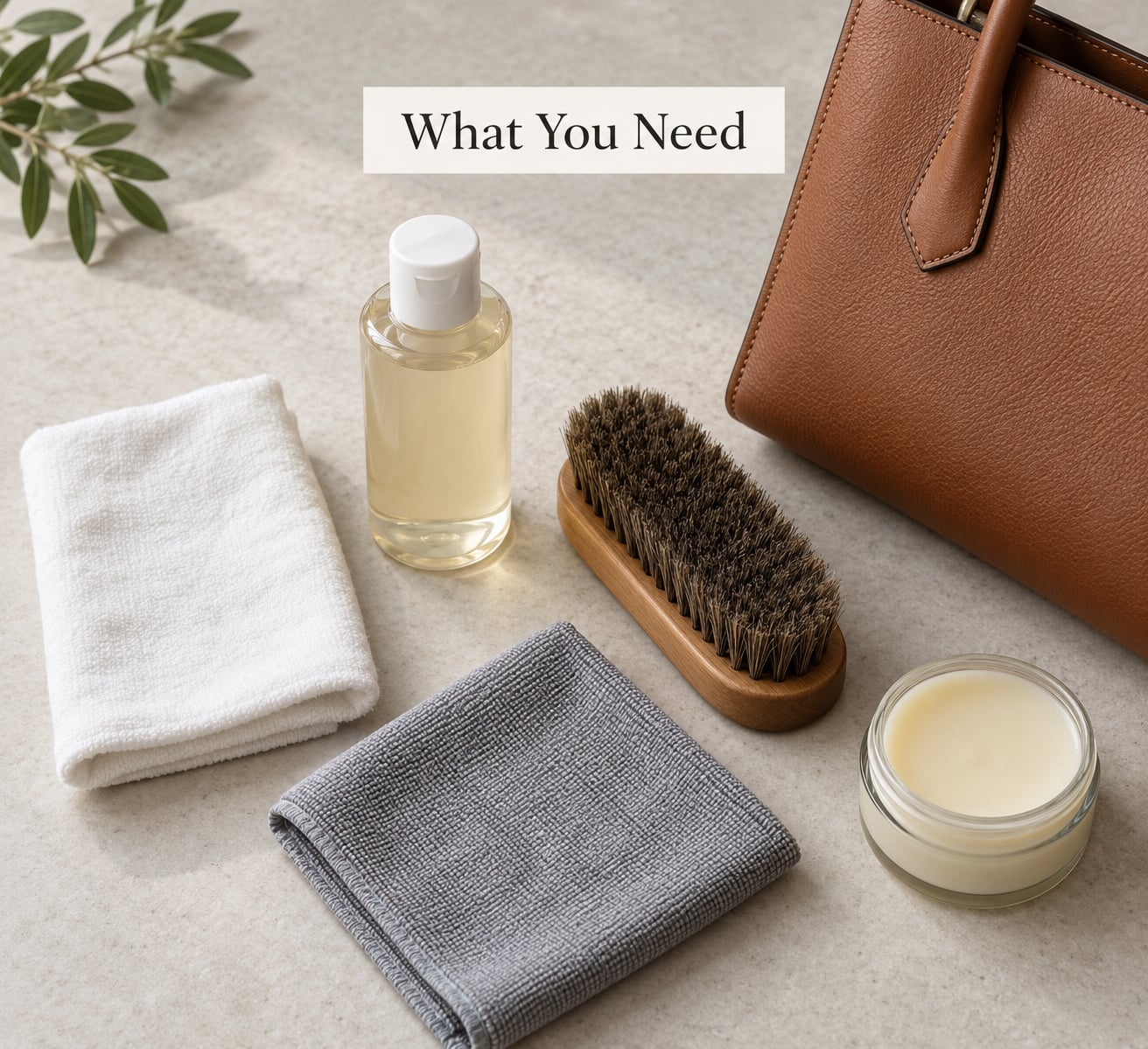
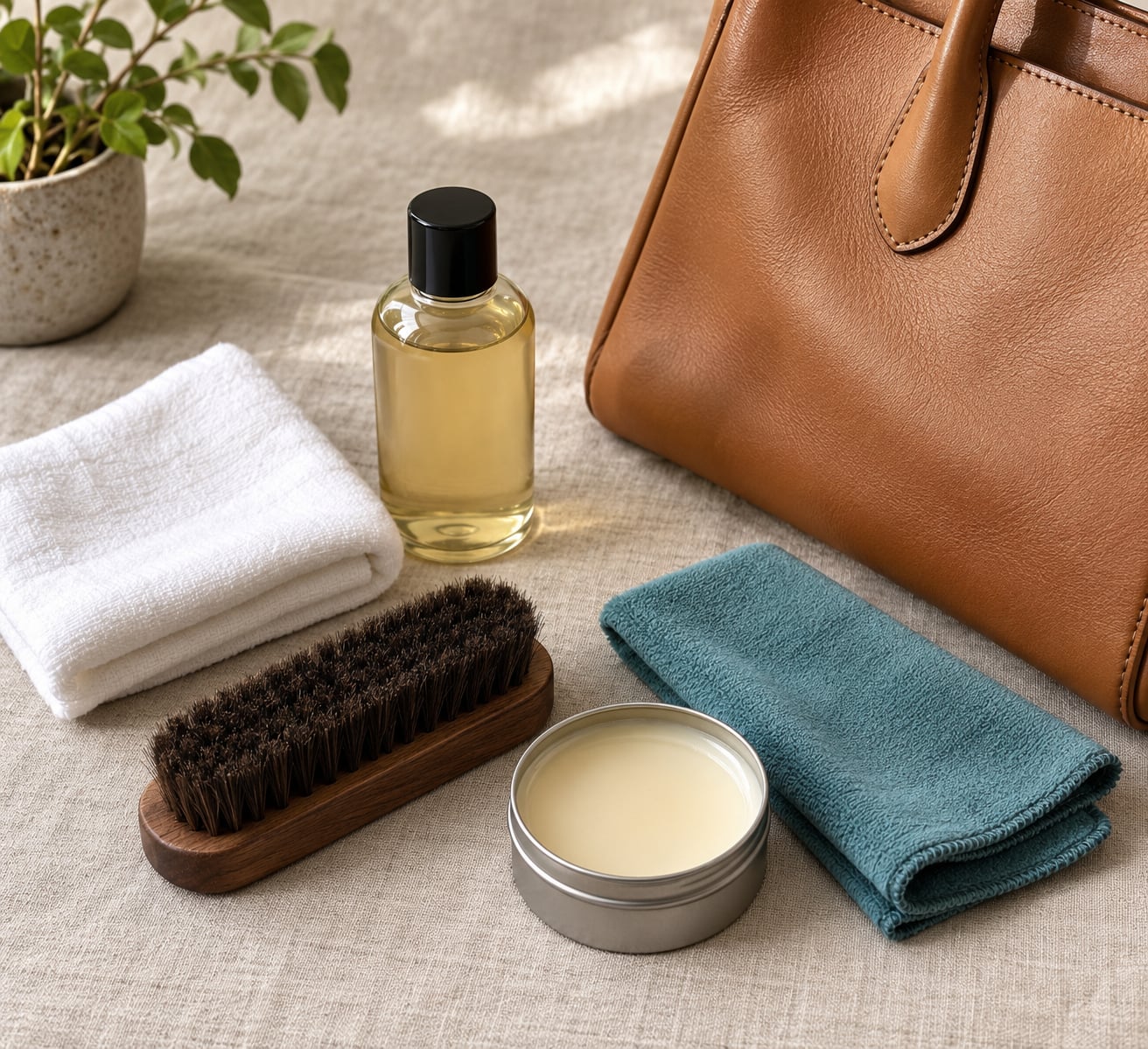
None of this is exotic, and everything on the list is reusable on future bags. The only real requirement is that nothing in the kit is alkaline or abrasive.
- A soft, white cotton or microfiber cloth for the actual cleaning, kept separate from the one you use for buffing.
- A second clean cloth, dry, for removing residue and drying the surface.
- A pH-neutral leather cleaner. Bick 1 and Chamberlain’s Leather Milk are two widely used options; a tiny amount goes a long way.
- A soft-bristled brush, horsehair if you have it, for seams, stitching and pebbled grain.
- A soft toothbrush with worn bristles for the lining and the crevice where the strap meets the body.
- Leather conditioner or balm, used sparingly once the bag is nearly dry.
- Cotton swabs for hardware and tight seams.
- Paper towels or plain white paper towels for blotting spills. Colored kitchen towels bleed dye onto light leather.
- Acid-free tissue paper or clean unprinted paper to hold the bag’s shape while it dries.
- A soft-bristled pastry brush or suede eraser, only if the bag is suede or nubuck.
Skip the household shelf. Dish detergent, all-purpose sprays and degreasers are formulated for grease and grease is what holds leather color, so they strip the finish over repeated use. A dedicated leather cleaner is gentle enough to use more than once.
How to Clean a Leather Handbag at Home: Step by Step
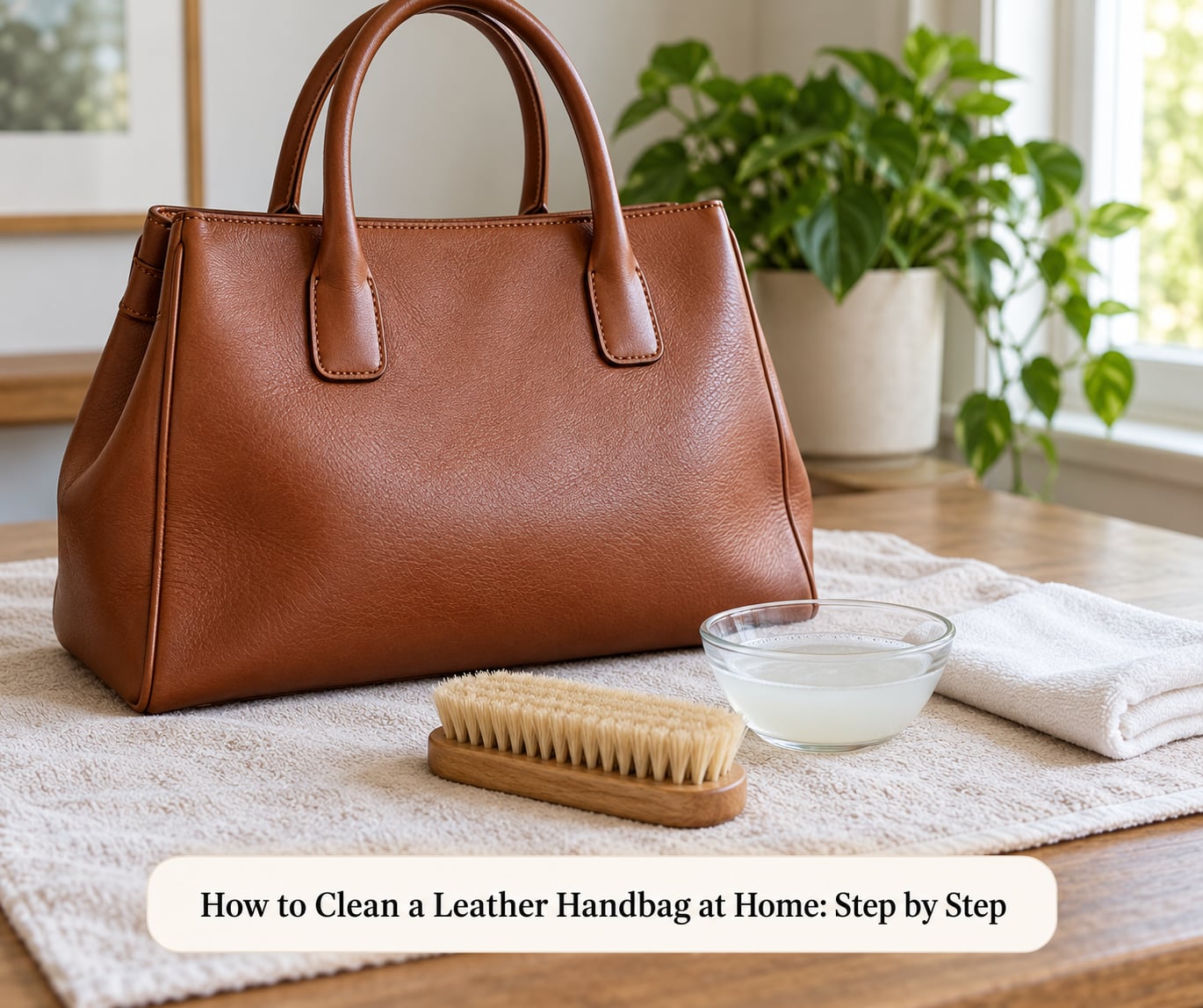
1. Check the Leather and Test the Cleaner
Find the care label or the maker’s card inside the bag before you touch anything with liquid. If it says professional cleaning only, stop there. That usually means aniline or suede with no pigment coat, and water is more risk than reward.
Turn the bag over and look at the base, the underside of the strap and the back panel. Smooth leather has a visible grain and takes light from evenly. Pebbled leather has a pebbled texture with valleys that trap dirt and need a brush. Suede and nubuck feel fuzzy and change direction under your finger. Patent leather has a glassy, reflective film that peels when abused.
Then spot test. Put a damp cloth on the underside of the strap where it meets the body, use about as much cleaner as you would for a countertop, and wait ten minutes. If the color darkens evenly and lightens back as it dries, you are fine. If it stays dark, goes patchy or feels tacky, stop and use less product next time.
2. Empty, Dust and Support the Handbag
Remove everything, including the dust bag if the bag came with one. Turn it out over a towel and shake gently; a surprising amount of grit comes out this way.
Dust with a soft brush across seams, the base and around the hardware. Take the vacuum with a brush attachment and use it on the inside, keeping the nozzle an inch away from any fabric you are unsure about.
Now stuff the bag. Acid-free tissue is ideal, folded clean paper works, and crumpled newspaper works in a pinch but its ink can transfer to a pale lining. Fill the body, the sides and the base so the bag keeps its shape while it is wet and while it dries.
3. How to Clean the Exterior in Small Sections
Dampen your cleaning cloth, not the bag. Wring it until it is barely damp and put a small amount of cleaner on the cloth, never on the leather. Squeezing cleaner directly onto a handbag is how liquid ends up pooling in a seam and sitting there for ten minutes.
Work in sections about the size of your palm, using long light strokes in one direction. Circular motions suit pebbled grain, where dirt sits in the valleys, but keep them small and slow. Wipe each section with the clean damp cloth before moving on, so you are not pushing dirt across clean leather.
4. Treat Marks According to Their Type
Different marks need different chemistry, and the differences matter more than people expect.
- Dry dust and grit: brush it off first, then wipe. Cleaning over loose grit is what creates scuffs.
- Fresh spill: blot with a white paper towel, pressing not rubbing. Repeated blotting removes more than scrubbing.
- Grease and oil on the strap: let baking soda or cornstarch sit on the spot for 15 minutes to absorb it, brush the powder off, then wipe with a barely damp cloth. Do not scrub an oil spot, you will spread it.
- Ballpoint ink: dab once with a cotton swab barely dampened with rubbing alcohol and stop immediately if the finish dulls. Test first; on aniline and finished leather, alcohol can take the pigment with the ink.
- Blue denim dye: the most common complaint on handbag forums. Dampen a cloth with water, press it onto the mark and let it wick, repeating with a clean section each time. Never rub, which drives dye deeper into the grain.
- Water rings: dab from the edge of the ring toward the middle with a barely damp cloth, then let it dry fully before judging it. Rings often disappear after one full dry cycle.
- Makeup and lipstick: lift with a soft cloth and a drop of mild soap. Long-wear liquid foundation needs a specialist leather cleaner or a professional, not more scrubbing.
Two marks deserve a professional: an unknown stain on a secondhand bag, especially on light or untreated leather, and anything that leaves a pale mark after a spot test. The pale mark means the dye is gone, and no home method puts it back.
5. Dry and Condition the Leather
Fill the bag with paper, set it on a towel away from radiators, sunlight, vents and hair dryers, and let it dry at room temperature for a day. Heat drives water out of the surface faster than it leaves the inside, which is what causes leather to crack and stiffen.
Check the base and the areas under the flap before you call it done. Damp leather left folded against itself develops a musty smell and, in warm weather, mildew.
Once it is nearly dry, put a pea-sized amount of leather conditioner on a clean cloth and buff it in with wide circles. Let it absorb for 15 minutes, then buff off the excess. The leather should feel supple and slightly matte. If it looks wet or shiny, you used too much.
Common Mistakes
Most ruined bags were not cleaned by a craftsman. They were cleaned by someone working fast with the wrong product, and each mistake below has a simple fix.
- Soaking the bag. Leather holds water for hours. Blot the surface damp instead of wetting it through.
- Baby wipes. Most contain alcohol, detergents and preservatives. They strip finish in a single pass and are the fastest way to get a sticky, mottled panel.
- Rubbing alcohol, acetone and nail polish remover. Effective on ink and disastrous on pigment. Use a cotton swab, the smallest possible amount, and only after a spot test.
- Magic Eraser and other melamine sponges. Physical abrasives. They take color off smooth leather and flatten pebbled grain.
- Scrubbing. Every hard rub pushes the stain deeper and dulls the surrounding leather. Blot, press and pat.
- A hair dryer or a heater. Never. This is the single fastest route to cracked, warped leather.
- Over-conditioning. Leather that never dries between applications goes sticky and attracts dust. Once a month for a lightly used bag is plenty.
- Skipping the lining and hardware. Lining takes the actual spill, and metal tarnishes faster when it sits in damp residue. Clean the interior, then wipe hardware with a barely damp cloth and dry it immediately.
Tips for Long-Term Handbag Care
Most bags need cleaning twice a year, more if you carry one daily. Wipe the exterior with a dry microfiber cloth weekly; it takes a minute and removes the grit that becomes scuffs later.
Store it upright rather than flat, stuffed with tissue, in a breathable cotton dust bag or the original pillow box. Plastic bags trap moisture, which is how bags come out of storage with mildew on the lining.
Keep denim, light cotton and newspaper away from the bag for the first weeks of ownership, and be deliberate about where you set it. Blue dye transfers onto cream leather in a single contact and nothing you do later brings that color back.
Watch the handles and the strap ends, where sweat and hand lotion build up unnoticed. Wipe them monthly, and once a year treat the whole bag with a stain protector made for leather, applied when the surface is clean and dry.
Frequently Asked Questions
What is the best thing to clean a leather purse with?
For routine care, a soft white cloth barely dampened with lukewarm water and a small amount of mild unscented soap is enough. For a deeper clean, a pH-neutral leather cleaner such as Bick 1 applied to the cloth rather than the bag works well. Owners of expensive bags on handbag forums tend to use a two-product system: a leather cleaner plus a separate leather conditioner. Never apply either product directly onto the bag.
Can I use Dawn dish soap or household cleaners on leather?
Diluted dish soap is survivable in a genuine emergency, and a single small spot test will tell you quickly whether it is fine on your finish. Repeated use is the problem, because detergent strips the oils that hold color in the hide and leaves the surface tacky. All-purpose sprays, degreasers and bleach are worse and have no safe version for leather. Saddle soap or a dedicated leather soap is the right choice for routine cleaning.
Can you use alcohol on a leather handbag?
It depends entirely on the finish. On smooth, pigment-coated leather, a cotton swab barely dampened with rubbing alcohol can lift fresh ballpoint ink. On aniline, suede, nubuck and many treated finishes, alcohol lifts the dye along with the ink and leaves a pale patch that does not come back. That is why it is on so many lists of what not to use. Spot test, use the least amount, and change your mind at the first sign of dulling.
How do you clean a suede or nubuck handbag at home?
Keep it dry. Skip soap, water and conditioner entirely, because suede and nubuck will darken, mat or lose their nap. Brush the bag with a suede brush or a soft-bristled brush in one direction, then the other, to lift dust and lift the nap back up. For a mark, use a suede eraser or a rubber creaser gently. For anything deeper, take it to a specialist who works with suede, not a general leather cleaner.
How do I clean the inside if the lining is stitched down?
Turn the whole bag inside out through the widest opening you have, which exposes the interior seams, then run a soft brush along the seams and corners. For a spot, use an old toothbrush with barely damp water and a drop of mild soap, working gently into the seam. Blot the area with a white towel from the inside and dry it open, not folded, so nothing stays damp against the lining.
How do I get a musty smell or mold off a leather bag?
Baking soda is the first move. Fill the bag loosely with baking soda, leave it closed overnight, and tip it out the next day; it absorbs odor without touching the leather. For visible mildew, wipe the lining with a cloth dampened with a solution of white vinegar and water, then let the bag air-dry completely in indirect light. If the smell returns, the lining may have mold inside the padding, which only a professional can reach.
Conclusion
Start by identifying the leather, then spot test a hidden area and let it dry fully before you touch anything visible. From there, the whole job is three habits: cleaner on the cloth rather than the bag, blotting and patting instead of scrubbing, and air-drying at room temperature with no heat anywhere near it. Condition once it is nearly dry, store the bag upright in a breathable dust bag, and most cleaning never has to happen again.