Yes, you can shrink jeans back to size at home, but only so far. Here is how to shrink jeans back to size without ruining the fit: wash 100% cotton denim in hot water and tumble dry on high until the measurements stop moving, which usually takes one or two cycles and gives you back roughly half a size. The catch is where the shrinkage lands — length, mostly, not the waistband.
That detail matters more than any other fact on this page. Jeans go loose at the waist for two different reasons: the cotton has relaxed, or the pair was always too big. Heat only fixes the first one. So before you reach for the dryer, measure the pair flat on a table and write down the waist, the rise, and the inseam, because you will want those same three numbers again twenty minutes later.
I have pulled this together from denim care labels, textile testing conventions, and a lot of trial and error that shows up repeatedly on denim forums. Take the measurements first. Everything below depends on knowing how far you actually need to go.
Table of Contents
- What You Need
- Step-by-Step: How to Shrink Jeans Back to Size
- How to Shrink Jeans Back to Size With Hot Water
- How to Shrink Jeans Back to Size With Steam
- How to Shrink Denim Without Distorting the Legs
- How to Shrink Stretch Jeans and Other Synthetic Blends
- How to Shrink Only the Waistband or Legs
- When to Use Dry Cleaner or a Tailor Instead
- Common Mistakes
- Boiling the Whole Jean Garment
- Ignoring the Care Label and Fiber Blend
- Overshooting the Heat and Losing the Original Fit
- Machine-Drying Too Hot or Leaving the Jeans Wrapped in Dye
- Tips for a Cleaner, More Even Result
- Frequently Asked Questions
- Can I shrink jeans back to their original size?
- Will jeans shrink more than once?
- How much can cotton jeans shrink in the dryer?
- Can I shrink jeans without washing or boiling them?
- How do I shrink only the waistband of jeans?
- Is it better to shrink jeans at home or take them to a tailor?
- Conclusion
What You Need
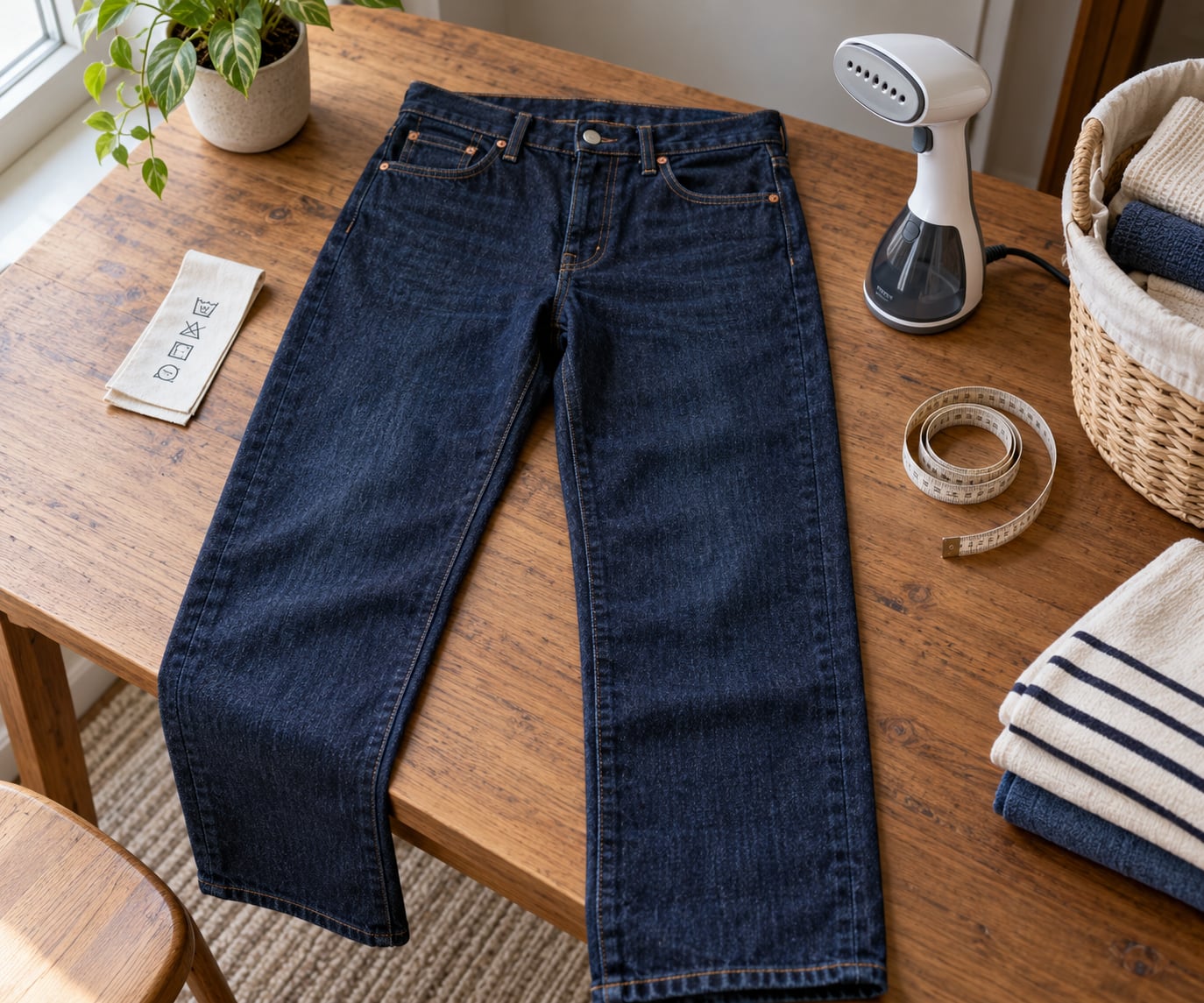
You need very little, and most households already own all of it: the jeans themselves, a washing machine with a hot cycle, a dryer, a measuring tape, and a care label you actually read. That last item decides which of the methods below you can safely use.
Read the fiber content line first, because it tells you whether heat will do anything at all.
| Fabric content | Expected shrinkage | Heat risk |
|---|---|---|
| 100% cotton denim | About 3 to 5 percent across all cycles | Low — responds well to heat |
| Raw denim, unsanforized | About 5 to 10 percent on the first soak alone | Low, but expect a large single jump |
| 98% cotton / 2% elastane | About 1 to 2 percent total | High — the elastane can go brittle |
| Pre-shrunk or sanforized denim | About 1 to 2 percent extra | Low, but you have almost no room to work |
| Polyester, nylon or rayon blends | Under 1 percent, sometimes none | High — these melt or glaze at high heat |
For a steam method you also want a garment steamer or an iron with a steam setting, a spray bottle, a heat-resistant surface to work on, and a pair of heat gloves. For the whole-garment soak method you want a bathtub, a basin, or your sink, plus a pair of tongs so you are not fishing jeans out of hot water with bare hands.
Also useful: a cloth or press cloth to sit between the iron and the denim, and a soft-bristled brush for the dust and loose dye that dry indigo leaves behind. You will want gloves for the dye stage as well, since wet denim transfers color to everything it touches.
Step-by-Step: How to Shrink Jeans Back to Size
The order below runs from least aggressive to most aggressive. Try them in that order and stop as soon as the measurements hit your target, because you cannot reverse most of what heat does. Each method works on a different problem, so pick by the outcome you need.
| Method | Best for | Temperature and time | Realistic result |
|---|---|---|---|
| Hot wash and high dry | Overall size, inseam length | Hot cycle plus two or three high-heat dry cycles | Length moves most, waist moves a little |
| Bathtub soak and wear-in | Moulding the denim to your body | 40 to 60°C water, 20 to 30 minutes, then wear damp | Custom fit at the seat and knee |
| Steam and press | Waistband, back pocket, one spot | Iron under 150°C, 10-second presses | A centimetre or two in a small area |
| Boiling | Cheap 100% cotton only | Rolling boil, 20 to 30 minutes | Fast and uneven, harder to control |
How to Shrink Jeans Back to Size With Hot Water
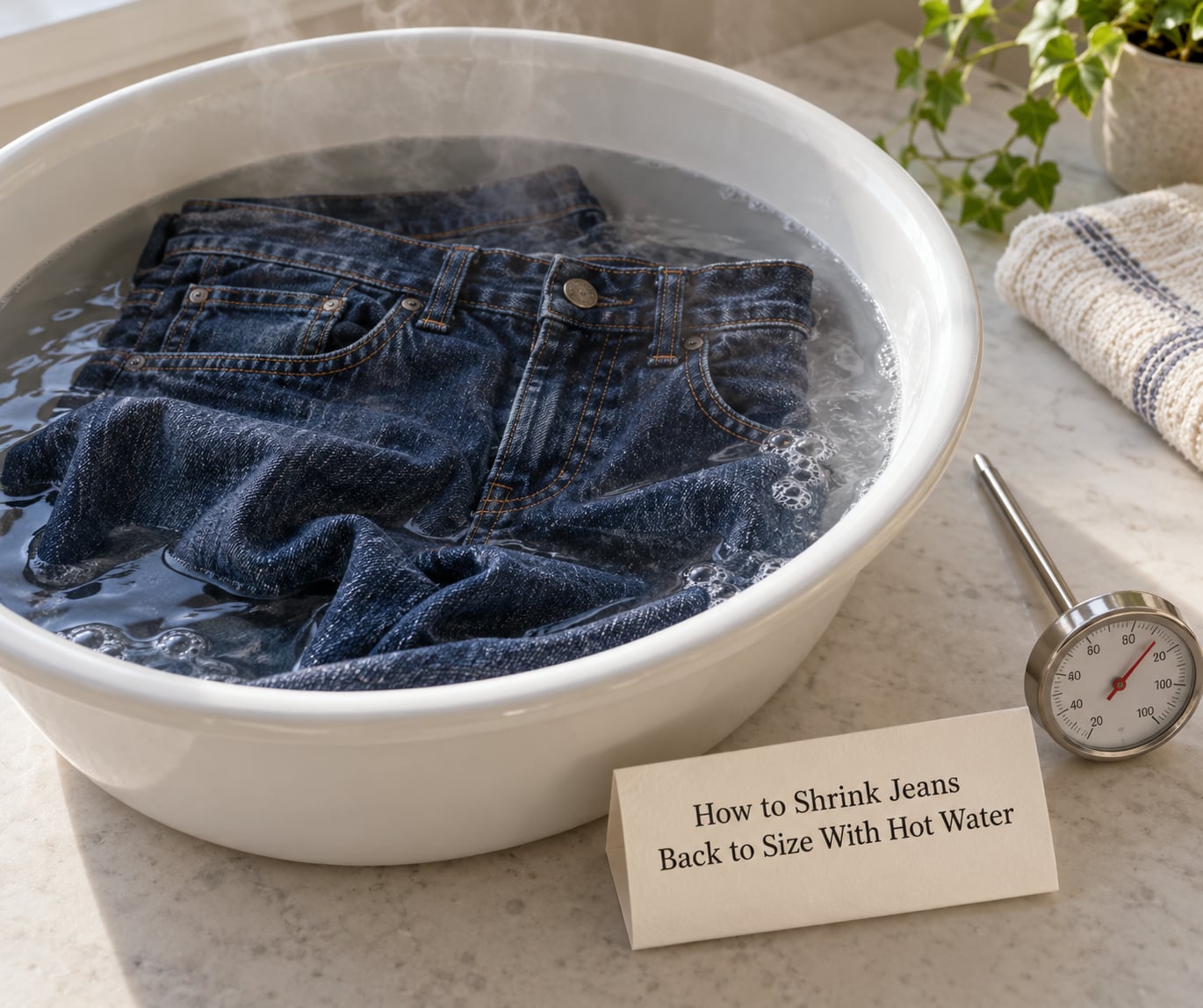
Hot water and a high-heat dryer is the standard method, and for 100% cotton denim it is the one that actually works. Turn the jeans inside out, put them in the machine alone with a normal amount of detergent, and run the hottest cycle your machine offers.
Then move them straight to the dryer on high heat. Take them out every 15 minutes to measure the inseam, lay them flat, smooth the fabric with your palm, and check again. The number stops dropping somewhere between the second and third round for most pairs.
You are looking for roughly 3 to 5 percent off the inseam, which on a 32-inch leg is about an inch to an inch and a half. Two or three cycles usually gets you there, and extra cycles past that mostly buy fading and weakened fabric rather than extra shrinkage.
Stop the machine the moment your measurement matches, and pull the jeans out while they are still slightly damp. That damp state is what lets you reshape them before the fibers set.
How to Shrink Jeans Back to Size With Steam
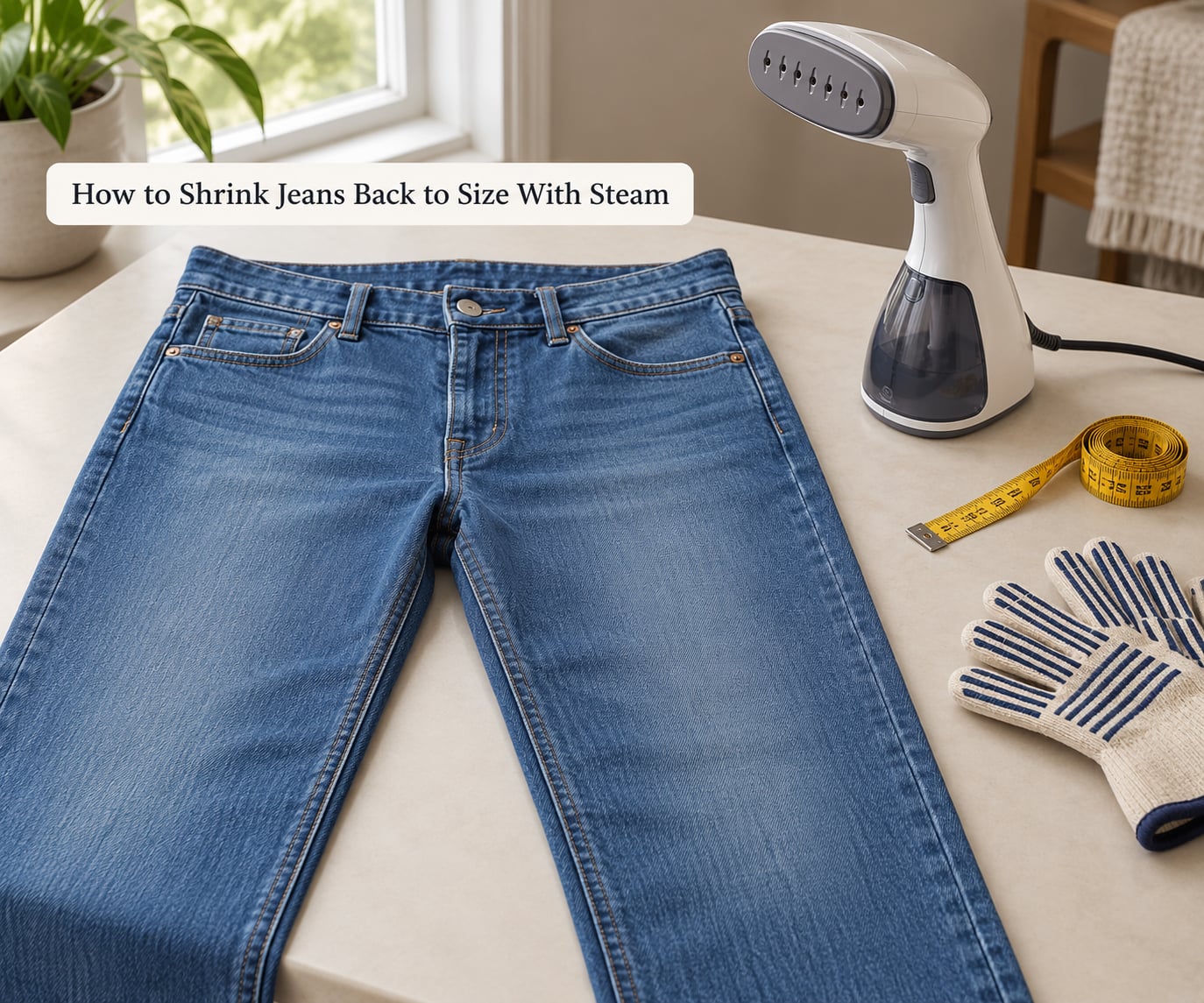
Steam is the gentler method and the only one that lets you work on a single area. It suits a loose waistband, a gaping back pocket, or one baggy knee, and it puts far less stress on the seams than a full wash-and-dry cycle.
Turn the jeans inside out and hang them on a sturdy hanger. Hold the steamer about an inch away from the fabric and keep it moving — parking the steam head in one spot leaves a mark and can weaken the dye.
Work the steam until the denim is damp through, not wet. Then, while it is still damp, press the area with a warm iron set below 150°C, using a cloth between the iron and the jeans. Ten-second presses, lift and reposition, ten seconds again. Three or four passes usually does it.
Reshape the waistband flat with your hands, let the jeans cool completely on a flat surface, and only then measure. Measuring warm denim gives you a falsely small number, which is how people accidentally over-shrink a pair.
How to Shrink Denim Without Distorting the Legs
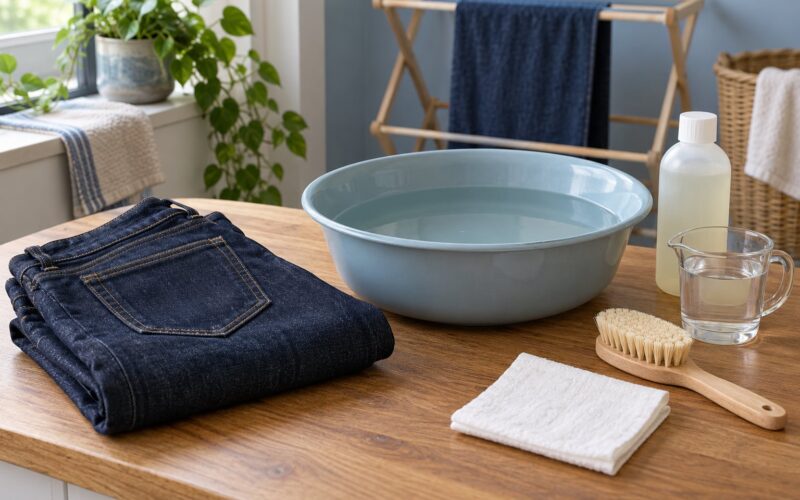
The gentlest way to shrink denim treats it like a wet fabric you mould to your body rather than something you cook. Fill a bathtub or large basin with water at 40 to 60°C, add a small amount of mild detergent, and submerge the jeans for 20 to 30 minutes until they are saturated.
Drain the water, wring the jeans out gently, and put them on while they are still soaking wet. Wear them for 30 to 60 minutes, moving through normal motions — standing, sitting, walking up and down. Lunges and deep squats push the denim into the shape of your knee and seat.
Take them off, smooth them flat, and air dry. Regulars on denim forums describe this as the method that moulds a pair to a body rather than just making it smaller, and one wearer who had put more than 40 wears into a pair still got visible shrinkage from a cold soak.
Skip the dryer in this method. Air drying keeps the moulded shape instead of letting gravity and tumbling pull the legs straight again.
How to Shrink Stretch Jeans and Other Synthetic Blends
Stretch jeans resist shrinkage because the elastane fibers in the blend do not contract the way cotton does. Anything with polyester, nylon or rayon barely shrinks at all and can glaze, melt or turn brittle under dryer heat.
So the answer for these is mostly no. Keep to cold water, a gentle cycle, and a delicate or no-heat dry. Steam on low is the only heat most elastane blends tolerate, and even then expect a fraction of an inch.
If your stretch pair is too big, heat is not going to rescue it. A tailor can take in the waistband or taper the leg without touching the stretch fibers, which is safer than any at-home shortcut.
How to Shrink Only the Waistband or Legs
This is the most common real problem, and the awkward one, because a whole-garment cycle shortens the inseam whether you wanted that or not. Work the area instead of the pair.
Turn the jeans inside out and dampen just the waistband with a spray bottle or a wet cloth. Steam it thoroughly, then press with a warm iron under 150°C, ten seconds at a time, keeping the iron flat along the band so the fold stays square.
While the band is warm and damp, pull it inward and hold it there for thirty seconds, then lay the jeans flat and let them cool under something gently weighted. Repeat up to three times before you measure.
Be realistic about the ceiling here. Whole-garment heat gives you about half a size, and a spot treatment gives you less than that. If you need more than an inch taken out of the waist, sewing is the only method that delivers it.
When to Use Dry Cleaner or a Tailor Instead
Send the pair to a tailor, or buy a different size, whenever heat cannot safely do the job. That covers structured waistbands with a fixed facing, jeans with leather patches or rivets near the area you would heat, expensive selvedge or vintage denim, and anything you cannot afford to ruin.
A tailor also wins when you need a specific number taken out, when the waist needs to come in without the legs moving at all, or when the pair needs tapering rather than shrinking.
Take your written measurements with you: waist, rise, inseam, and the finished leg opening you want. Precise numbers turn a vague complaint into an exact job, and a tailor works far faster from measurements than from a fitting conversation.
Styleforum regulars are blunt about this: there is no way to shrink jeans permanently, and for an expensive pair they would simply replace it. That advice holds up whenever the jeans cost more than the alteration.
Common Mistakes
Every mistake below has a fix, and most of them happen in the same order — too much heat, too fast, too many times.
Boiling the Whole Jean Garment
Boiling is fast, and that is the problem. A rolling boil for 20 to 30 minutes shrinks different areas at wildly different rates, which twists seams, puckers waistband linings and distorts the leg taper. It also drives out more dye than a wash cycle.
Reserve it for cheap, plain 100% cotton jeans with no trim, patches or contrast stitching. Everything else gets the wash-and-dry route, which is slower and far easier to stop halfway.
Ignoring the Care Label and Fiber Blend
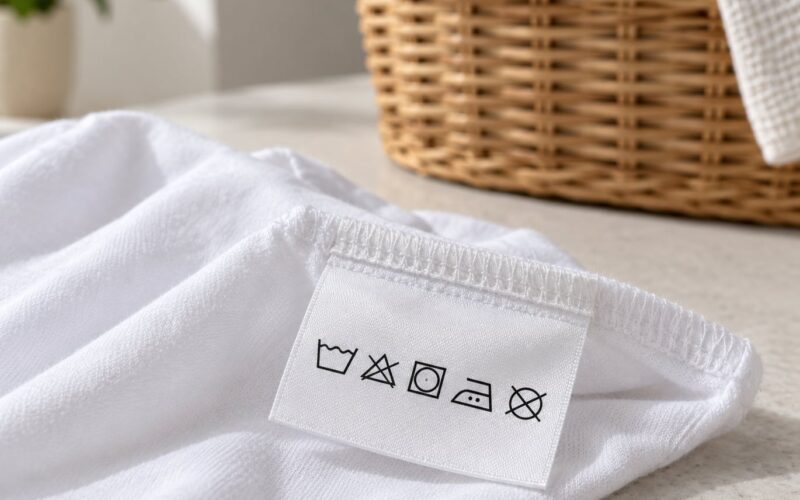
The label tells you the maximum temperature the manufacturer tested the garment for, and washing above it is how people end up with a size that no longer exists. Wash symbols also tell you whether the jeans are pre-shrunk, which caps how much you have to work with.
Read the symbol before you read any online guide, including this one. A label that says line dry only is not a suggestion you can overrule with a dryer.
Overshooting the Heat and Losing the Original Fit
The most common failure is not checking. People run three full high-heat cycles because the first one seemed to do nothing, then find the inseam is two inches shorter than the shoe they planned to wear.
Measure every 15 minutes, use the same reference points each time, and stop the cycle the second the number matches. Test a hidden seam allowance first if you are nervous — press there first and see how the fabric responds.
If you overshoot, most of it comes back. Soak the jeans in lukewarm water with a small amount of fabric softener for 20 minutes, then stretch them gently by hand and put them on damp while you do it. Denim communities report mixed results on full recovery, so treat it as a partial rescue rather than a reset.
Machine-Drying Too Hot or Leaving the Jeans Wrapped in Dye
Excessive dryer heat flattens denim, dulls the twill and fades it unevenly. Repeated hot cycles also break down fibers early, which denim enthusiasts notice long before a garment looks worn.
For the dye: turn the jeans inside out, use cold or warm water for the first rinse after the shrink, and remove them from the machine promptly rather than letting them sit soaked. Blot dry with old towels instead of rubbing, and never put saturated indigo denim in a dryer unattended.
Tips for a Cleaner, More Even Result
Prewash the pair on a normal cycle first. Washing removes excess indigo and surface finish, so the shrinking that follows is the real shrinkage instead of a layer of dye coming off.
Spot-test the colour with a damp white cloth before you start. If it comes back blue, keep the iron moving and work from the inside.
Reshape while damp, air dry flat when you can, and always measure from the same reference points — the seam, not the edge, since the edge moves. Then try one conservative method before moving to a more aggressive one; you cannot add length back, but you can always run another wet cycle.
Frequently Asked Questions
Can I shrink jeans back to their original size?
Usually not exactly. Heat and moisture make cotton fibers contract, and once the garment has relaxed back to its natural measurements there is nothing left to give. If your jeans stretched out with wear, you can often recover most of that. If they were bought a size too large, whole-garment shrinking gives about half a size and no more.
Will jeans shrink more than once?
Yes, but with diminishing returns. The first hot cycle takes the most, typically 2 to 3 percent for 100% cotton denim. Later cycles add a fraction of a percent each while fading the fabric and weakening the fibers faster than they shrink it. Two or three cycles is the practical limit for most pairs.
How much can cotton jeans shrink in the dryer?
Expect about 3 to 5 percent across repeated high-heat cycles for 100% cotton denim, which works out to roughly an inch to an inch and a half on a 32-inch inseam. Raw unsanforized denim can lose 5 to 10 percent on its first soak. Pre-shrunk and elastane blends move very little.
Can I shrink jeans without washing or boiling them?
Yes. Steam plus a warm iron is the standard no-wash method. Dampen the area, steam it while moving the head continuously, then press with short ten-second passes below 150°C. It gives you less than a full wash cycle does, but it targets one area and puts far less stress on the seams.
How do I shrink only the waistband of jeans?
Dampen just the waistband, steam it thoroughly, then press with a warm iron under 150°C in ten-second passes with a cloth between the iron and the denim. While it is warm and damp, pull the band inward and hold it, then lay the jeans flat to cool before measuring. Repeat up to three times.
Is it better to shrink jeans at home or take them to a tailor?
Take them to a tailor when you need a precise change, when the jeans are expensive or vintage, or when the fabric contains elastane or polyester that will not respond to heat. A tailor can take in a waistband or taper a leg by an exact measurement. At home works well for cotton, for a general half-size reduction.
Conclusion
Start with the fabric content and the care label, then take your three measurements before you touch anything else. For 100% cotton denim, run one hot wash with one high-heat dry cycle and measure again, then decide whether you need a second. For a loose waistband on an otherwise good pair, use steam and a warm iron on the band alone so the legs stay put.
And for expensive, structured or stretch-blend jeans, skip the DIY route and take written measurements to a tailor. That is how to shrink jeans back to size without trading one problem for another: one careful cycle, measured every fifteen minutes, stopped the moment the numbers match.