Turn your jeans inside out, wash them in cold water on a gentle cycle with a mild colour-safe detergent and about a cup of distilled white vinegar, then air dry them in the shade. Skip the tumble dryer. That routine takes about ten minutes of attention and is the whole difference between a pair that looks good for three years and one that looks tired by Christmas.
The frustrating part is that denim fades no matter how gently you treat it, because most of the indigo sits on the outside of the yarn rather than deep inside it. Heat, friction and time loosen that outer layer, and it comes away on your hands, your shirt or the inside of the washing machine drum.
You cannot stop fading entirely. You can slow it down a lot, and the slow part is mostly about temperature, friction and how often the jeans see water at all.
Table of Contents
- What You Need
- Step-by-Step: How to Wash Denim to Keep the Color
- 1. Check the label and run the bleed test
- 2. Turn the jeans inside out
- 3. Soak new or heavily bleeding denim first
- 4. How to wash denim to keep the color in the machine: cold and gentle
- 5. Add a colour-safe detergent plus the vinegar
- 6. Keep the load small and denim separate
- 7. Rinse and press out the water instead of wringing
- 8. Air dry in the shade and reshape while damp
- 9. Wash less between full washes
- Common Mistakes
- Frequently Asked Questions
- Can I wash dark jeans without fading them?
- Should I wash denim inside out?
- Does vinegar really stop jeans from fading?
- Is it better to hand wash jeans or use a washing machine?
- How should I dry jeans to keep their color?
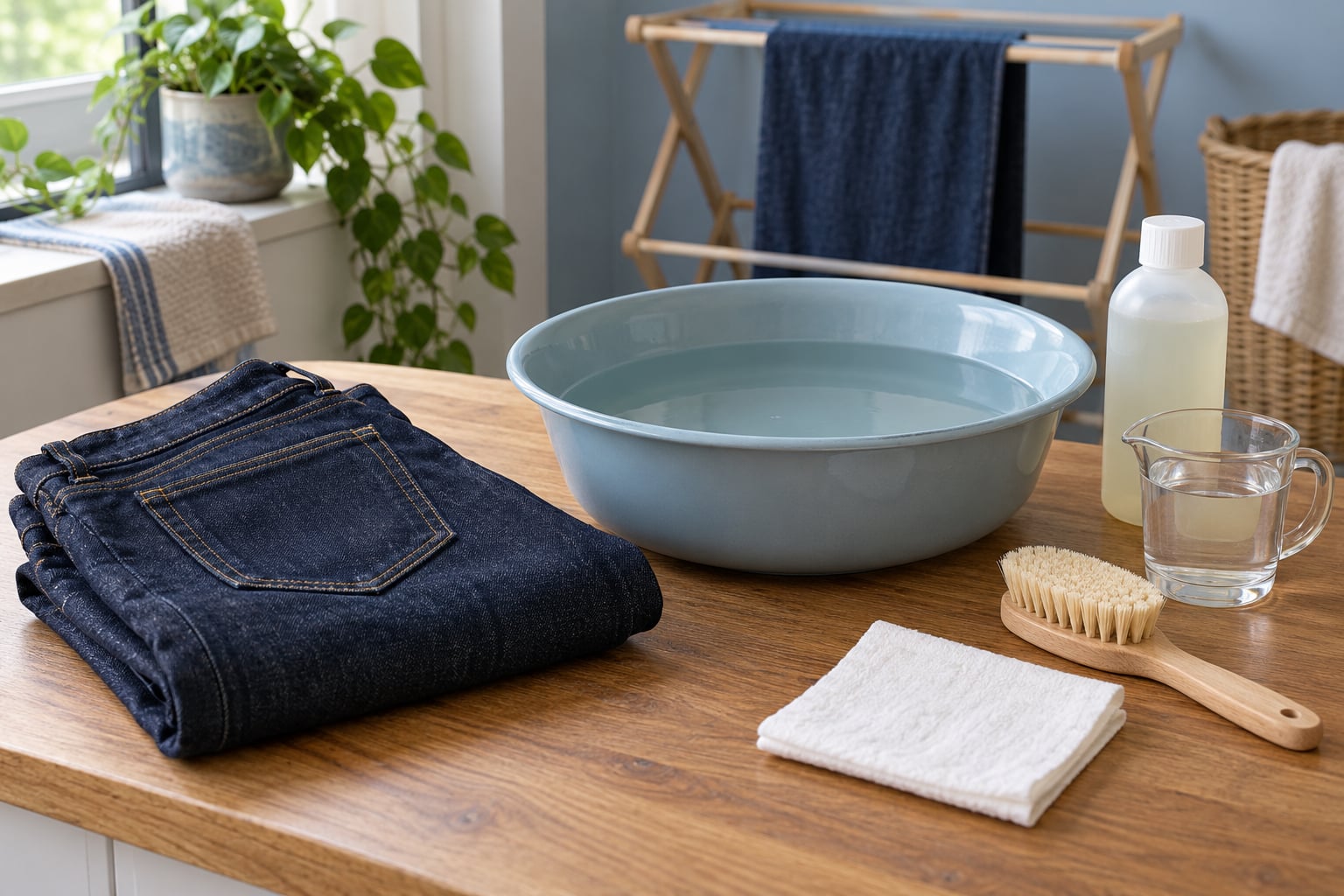
What You Need

Nothing exotic. Most of it is already in your laundry room, and the item that actually makes a difference is the vinegar.
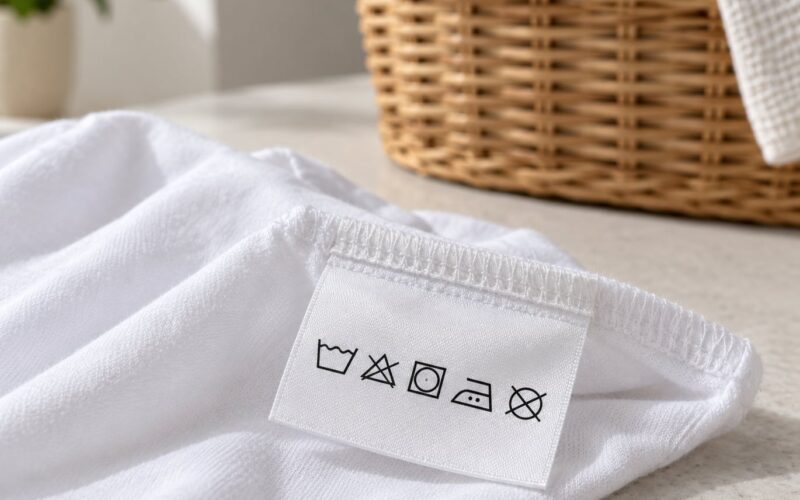
- The care label. Check it first. It tells you the maximum temperature and whether the garment is machine washable at all, which matters more than any tip that follows.
- A mild, colour-safe detergent. Anything labelled for darks or colours, used at half the dose on the cap.
- Distilled white vinegar. Half a cup to one cup. The distilled kind matters because the brown colour of malt vinegar can tint light denim.
- Cold water and a container. A washing machine, or a basin if you are hand washing.
- A soft brush or a mesh laundry bag. One or the other. The bag keeps denim from tangling and rubbing against itself.
- A drying rack or hanger in the shade. Out of direct sun, out of the dryer.
Add a white paper tissue to that list. It turns out to be the most useful ten seconds in the whole process, and I will come back to it in the first step.
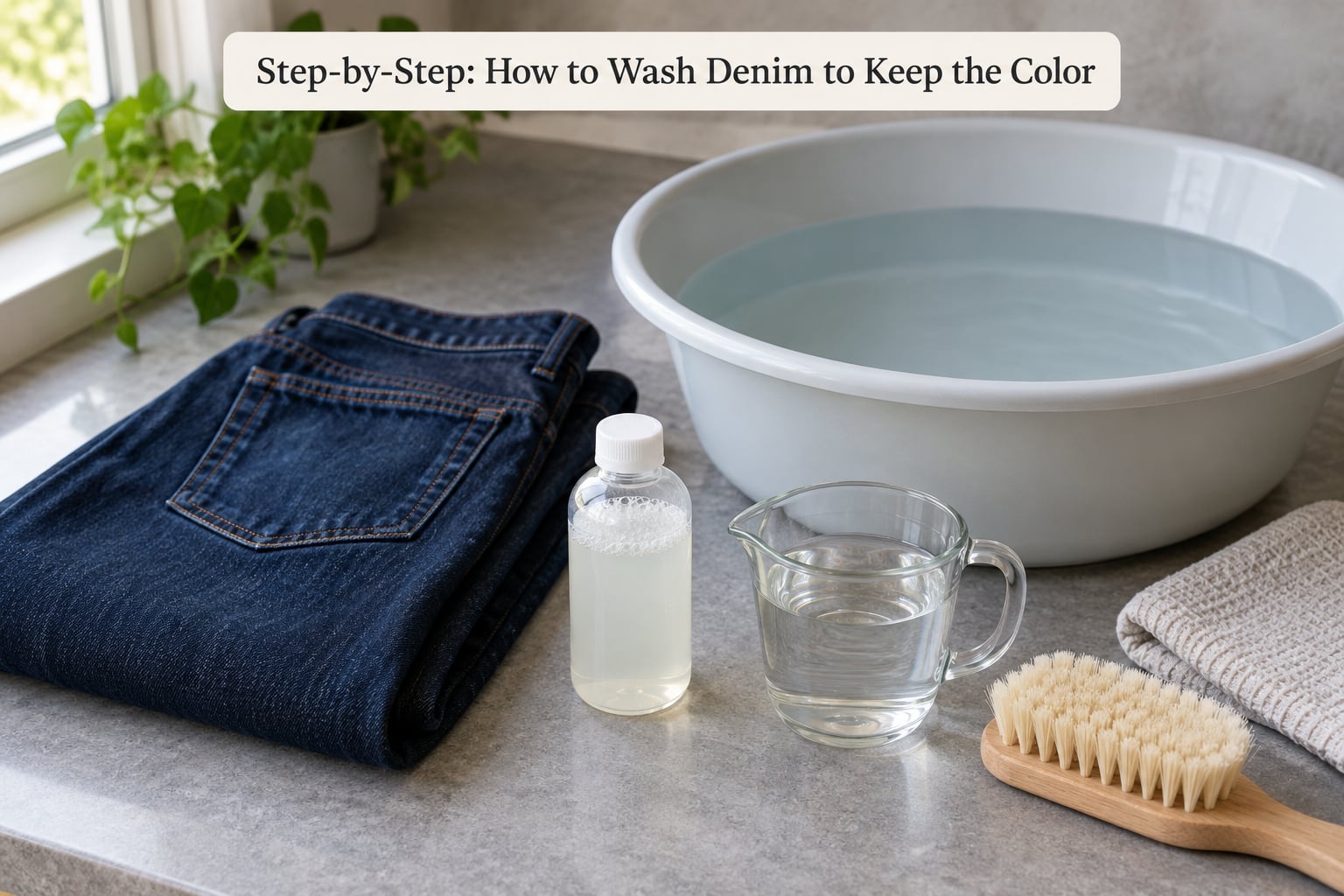
Step-by-Step: How to Wash Denim to Keep the Color
1. Check the label and run the bleed test
Read the care label, then dampen a spot on the leg and rub it hard with a white paper tissue. If the tissue comes back blue, the pair bleeds heavily and needs the full first-wash treatment below. If it barely marks, it can go into a normal darks load.
2. Turn the jeans inside out
Doing this before the wash puts the dyed surface against itself instead of against your other clothes, and it cuts the rubbing action in half. This single habit does more for your hands and your white shirts than any product on the shelf.
3. Soak new or heavily bleeding denim first
Fill a basin with cold water, add a cup of vinegar and the jeans, and leave them for 30 to 45 minutes. Lift them out, rinse, and wash as normal. On new dark denim this pulls out a surprising amount of loose dye before the garment ever meets detergent.
4. How to wash denim to keep the color in the machine: cold and gentle
Set the machine to cold water, 20C or below, on a gentle or delicate cycle. Skip the pre-soak, because denim is not heavily soiled and extra soaking time is extra dye time. Choose a slow or medium spin, since a hard spin at high speed twists and abrades the twill.
5. Add a colour-safe detergent plus the vinegar
Use half the usual dose of a mild detergent, then pour in half a cup to one cup of distilled white vinegar during the fill. Vinegar is mildly acidic, which helps hold dye on the fibre rather than letting it float loose in the water. The sharp smell disappears on the rinse cycle.
6. Keep the load small and denim separate
New dark denim goes in on its own or with other darks of a similar depth. Never with whites, towels or anything new and light, because loose indigo transfers to them permanently and quickly. Put the jeans in a mesh bag if you are mixing them with dark clothing, and close the bag.
7. Rinse and press out the water instead of wringing
Run an extra cold rinse if the water looks blue at the end of the cycle. Then press the water out with both hands, roll the jeans in a towel, and squeeze. Wringing twists the fibres and puts stretch into the knees that never comes out.
8. Air dry in the shade and reshape while damp
Reshape the waistband, smooth the legs, fold gently at the knee and hang in shade or dry flat. Direct sunlight fades denim faster than almost anything else you can do to it, and the dryer is worse still because it adds heat and friction together. You have now learned how to wash denim to keep the color and how to keep it there.
9. Wash less between full washes
Most denim does not need a wash after every wear. Air it out overnight, spot clean the knee and waistband with a damp cloth and a drop of detergent, and wash on a schedule of roughly every five to ten wears. Fewer washes means fewer chances for the dye to move.
Common Mistakes
Almost every fading problem traces back to one of these. The mechanism is worth knowing, because it explains all of them at once: indigo bonds to the yarn surface through oxidation and does not penetrate the cotton core. That thin surface layer is what heat and friction strip away, so anything that adds heat or rubbing takes colour with it.
Washing in hot water. Hot water opens the cotton fibres and releases dye that cold water would have held. Fix: cold, every time, unless the care label says otherwise.
Using chlorine bleach, or heavy enzyme powders. Both attack the dye itself. Fix: a mild detergent at half dose, and a stain remover applied to the spot rather than the whole leg.
Washing denim right side out with rough items. Towels, fleece and anything with zips rub against the dyed surface. Fix: inside out, and in a closed mesh bag.
Overloading the drum. Crowded loads force fabric against fabric and stop the rinse working properly, so dye stays in the water and settles back on the jeans. Fix: a half-full drum for denim.
Tumble drying on heat. Heat plus fast tumbling is the single worst combination for an indigo surface layer. Fix: shade air drying, every time.
Hanging jeans in direct sun. Ultraviolet light breaks down dye molecules on the exposed face of the fabric. Fix: indoors, on a rack, away from a sunny window.
Skipping the care label. Sanforized denim is pre-shrunk, stretch denim with elastane behaves differently again, and vintage pairs may not survive a machine cycle at all. Fix: read the label before the water goes on.
Using fabric softener. It leaves a coating on the fibres that traps dye at the surface and dulls the colour over time. Fix: skip it, use less detergent instead.
Two more honest notes. Colour-catcher sheets do what their name says: they catch dye heading for your other laundry. They do nothing for the fading of the jeans themselves. And vinegar cannot bring back a pair that has already gone grey; once the indigo is gone, it is gone.
What vinegar and salt actually do is worth separating out. Vinegar is mildly acidic and helps keep dye fixed to the fibre during the wash. Table salt, a teaspoon or so, does a similar job in the soak stage and denim enthusiasts on forums add it to rinses for black denim. Salt water is not a treatment to repeat weekly, though, and it does nothing on stretch denim blended with synthetic fibres.
My short list of habits that hold up over years: inside out every time, cold water, half dose of mild detergent, vinegar on the first three washes, air dry in shade, and wash every five to ten wears rather than every wear.
Two last situations you will probably hit. First, how many washes until jeans stop bleeding: usually three to five, faster with the cold soak and vinegar rinse, slower with hot water and a heavy load. Second, denim that has already faded — a proper re-dye needs a kit or a professional, but spot cleaning, a gentle wash and staying out of the sun will stop it getting worse and will often make a grey patch look more deliberate than it does.
Frequently Asked Questions
Can I wash dark jeans without fading them?
Not completely, but you can slow it down a great deal. Wash dark jeans inside out in cold water on a gentle cycle, use half a dose of mild colour-safe detergent with a cup of white vinegar, and air dry in the shade instead of using the dryer. The first three to five washes matter most, so take extra care early on.
Should I wash denim inside out?
Yes, and denim wearers on forums consistently say it makes a measurable difference. The indigo sits on the outer surface of the yarn, so turning the garment inside out puts the dyed face against itself and away from your skin, your shirts and your towels. You will notice the blue staining on your hands drop within a wash or two.
Does vinegar really stop jeans from fading?
It helps, and it is the most widely used home remedy for a reason. A half cup to one cup of distilled white vinegar in the wash is mildly acidic, which encourages dye to stay bonded to the cotton fibre instead of washing out. Use it on the first few washes especially. It will not restore a pair that has already faded to grey.
Is it better to hand wash jeans or use a washing machine?
Machine washing is fine for normal washed denim if you use cold water and a gentle cycle. Hand washing is the better choice for raw, vintage or heavily bleeding denim, where you control the soak time exactly. Soak for 30 to 45 minutes, rinse, then press the water out rather than wringing. Never wring denim.
How should I dry jeans to keep their color?
Air dry in the shade, away from direct sunlight, and reshape the waistband and legs while the fabric is still damp. Fold gently at the knee and hang on a rack or a hanger. Skip the tumble dryer whenever you can, because heat and fast tumbling together strip more indigo than almost any other part of the wash.
Start with the next wash, not a new pair of jeans. Inside out, cold, gentle, half the detergent, a cup of vinegar, and hang them in the shade. Those five moves done consistently will hold the colour long past the point where most jeans give up.