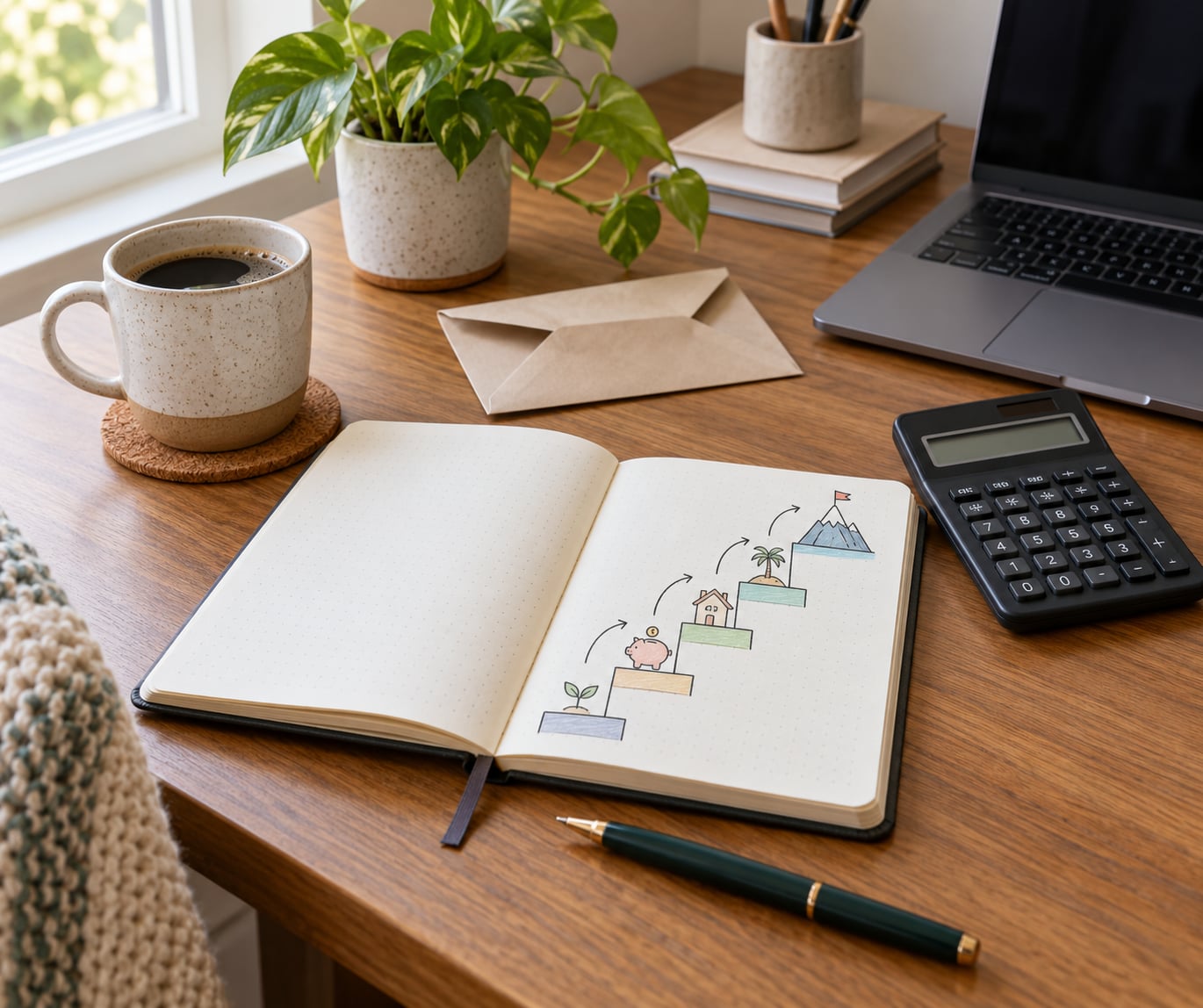
How to build an emergency fund as a freelancer works the same way it does for anyone else, with one big adjustment: you save a percentage of every payment instead of a flat amount each month. Figure out your essential expenses, pick a target of three to six months, open a separate high-yield savings account, and transfer money there every time a client pays you. The rest is consistency.
Freelance income has no safety net baked in. There is no payroll, no sick pay, and no severance, so a single slow month or a lost client turns into credit card debt pretty fast unless cash is already sitting somewhere. The freelancers who ride out those months are usually the ones who decided long before to move a slice of every payment somewhere they could not see.
What follows is the exact sequence I would follow, and the sequence most people in freelance forums arrive at after learning it the expensive way. It takes about two hours to set up and then runs on autopilot.
Table of Contents
- What You Need to Build an Emergency Fund as a Freelancer
- Step-by-Step
- Set a Freelance Emergency Fund Target
- Separate the Fund From Everyday Spending
- Calculate a Safe Monthly Contribution
- Automate Transfers on a Reliable Schedule
- Build the Fund From Windfalls and Peak Months
- Create an Emergency Withdrawal Policy
- Review and Adjust the Fund Every Quarter
- Common Mistakes
- Frequently Asked Questions
- How much should a freelancer keep in an emergency fund?
- Where should a freelancer keep an emergency fund?
- What if my freelance income changes from month to month?
- Should my emergency fund be separate from my freelance tax money?
- Can I use my emergency fund for a planned business expense?
- How long does it take to build an emergency fund as a freelancer?
- Conclusion
What You Need to Build an Emergency Fund as a Freelancer
You need five things before you start moving money. None of them require an accountant, though a tax professional is worth the money if you have never filed as self-employed.
- Three months of bank statements, so you can see what actually leaves your accounts instead of what you assume leaves them.
- A list of income sources, including which clients pay on net 15, net 30, or net 60. Payment terms tell you how long you can be unpaid.
- A separate savings account at an institution where you do not hold your checking, so reaching it takes more than one tap.
- Your tax set-aside account, ideally already open. It is not part of the emergency fund, and mixing the two is the most expensive mistake freelancers make.
- A written withdrawal policy, even three lines of it. Deciding what counts as an emergency while calm is far easier than deciding mid-crisis.
One clarification matters here. An emergency fund is accessible cash held in an FDIC- or NCUA-insured account, not money parked in an index fund or a retirement account. A SEP-IRA is a great vehicle later; it is the wrong place for money you may need in nine days.
Three buckets of freelancer money need three different jobs, and the labels keep them apart:
| Bucket | What it covers | Where it lives |
|---|---|---|
| Tax set-aside | Quarterly estimated tax payments and the final balance at filing | Separate savings or money market account, never your spending money |
| Emergency fund | Lost client, slow months, illness, urgent repairs | High-yield savings account at a different institution |
| Retirement savings | Long-term goals, ideally 15 or more years out | SEP-IRA, solo 401(k), or IRA once the reserve is funded |
If the money in your account is already owed to the IRS, it is not a safety net. Set aside roughly 25 to 30 percent of every payment for taxes before anything else, then build the emergency fund from what remains.
Step-by-Step
Seven steps, in this order. Skipping ahead to the account opening without a target is how people end up with a vague balance and no idea whether they are done.
Set a Freelance Emergency Fund Target
Your target is your essential monthly expenses multiplied by three to six. Essential means rent or mortgage, utilities, groceries, insurance including your own health coverage, minimum debt payments, and the software and equipment your work requires.
Run the math on a typical freelance household. Essential expenses of 3,200 a month give a three-month target of 9,600 and a six-month target of 19,200. If one client sends more than 40 percent of your income, move up a tier and aim for six months anyway, because losing that client costs you both money and the pipeline.
Start with one month. A starter target of 3,200 that you actually reach beats a six-month number you abandon in March. Freelancers on tight budgets often start at a flat 1,000 and treat it as milestone one.
Separate the Fund From Everyday Spending
Open a separate high-yield savings account and move the money out of reach. Same institution is acceptable if you cannot find a good rate elsewhere, but a different bank adds friction that saves you from impulse withdrawals.
Turn on balance alerts and skip the debit card. If your bank offers a savings account with a minimum balance and no card, that is the right shape. A working setup: a checking account for business receipts and bills, one savings account for taxes, one high-yield savings account for emergencies, and a separate card or no card at all for spending.
Calculate a Safe Monthly Contribution
Fixed monthly savings amounts fail on variable income. Instead, base contributions on a conservative average of your income, not your best month, and subtract taxes and business costs first.
Say you averaged 5,000 a month over the last twelve months. Setting aside 28 percent for taxes leaves 3,600. Minus 1,000 in business costs and 2,400 in living costs, you have 200 a month available, so 200 goes to the fund before discretionary spending. In a month where you invoice 8,000, the same percentage moves more; in a 1,500 month, contribute what is left after essentials, even if that is 40.
A zero-revenue month is not a reason to stop the habit. Keep the account open, skip the contribution, and restart at the next payment. Restarting on time matters more than the size of any single transfer.
Automate Transfers on a Reliable Schedule
Schedule the transfer so it happens before you decide what to spend. Two setups work well: a fixed date each month, such as the day after your biggest expected invoice clears, or a rule you run manually after every payment that lands.
The fixed date is easier to ignore, which is the point. The manual rule produces larger deposits in strong months, but it depends on you remembering. If your income is steady enough, automate the fixed date and add a manual top-up after windfalls.
Build the Fund From Windfalls and Peak Months
A fixed percentage leaves money on the table in good months. Add a second rule for surplus income: when a payment lands that is larger than your average, send the excess above your normal contribution straight to the fund.
A workable rule for a large client payment: if your normal contribution is 15 percent and a project pays double your average, move 30 percent to the fund that week. Tax refunds, retained bonuses, and money from selling unused equipment follow the same path. One freelance month built from a strong project can shorten the timeline by months.
Create an Emergency Withdrawal Policy
Write down what qualifies before you need it. Reasonable withdrawals cover essential housing costs, medical bills, urgent repairs to a car or home, replacing work equipment that failed, and a temporary drop in income. A planned purchase, a vacation, or a conference ticket does not qualify, even if you would rather it did.
A short policy you can adapt: withdrawals require a genuine, unplanned expense or a documented income drop, the lowest available account is used first, and any withdrawal above one month of expenses triggers a written replenishment plan. Decide now that one withdrawal does not end your contributions. Replenishing slowly beats abandoning the fund after a single dip.
Review and Adjust the Fund Every Quarter
Block 30 minutes at the end of each quarter. Check four things: the balance, whether your essential expenses changed, whether your average income moved, and whether any known cost is coming, such as insurance renewal or a laptop replacement.
Raise the target when your essential expenses rise or client concentration increases. Pause contributions only when income collapses, and pause after a withdrawal while you rebuild. Quarterly estimated tax deadlines and lean seasons are predictable enough to plan around rather than react to, and the review is where you notice them coming.
Common Mistakes
Most failed freelance emergency funds come down to six habits, and each one has a straightforward fix.
- Saving before setting aside taxes. The money was never yours. Fix: transfer your tax percentage the day a payment clears, before it reaches your spending account.
- Keeping the fund in checking. A balance you can see daily is a balance you will spend. Fix: move it to a separate high-yield savings account with no card attached.
- Using it for planned purchases. One dip in the balance normalizes touching it. Fix: write the withdrawal policy and check any spend above a small threshold against it first.
- Sizing the target from your best months. Targets built on peak income never get funded. Fix: average your income over a full twelve months, including the slow quarters.
- Stopping contributions after a withdrawal. The account refills fastest right after you use it. Fix: restart the transfer the following month, even at a reduced amount.
- Mixing the fund with business runway. Payroll taxes and software renewals are operating costs, not emergencies. Fix: keep a small separate buffer for business overhead and let the fund handle personal shocks.
If money is genuinely tight this month, prioritize in this order: taxes, a minimal emergency buffer, high-interest debt, then retirement contributions. Skipping the tax set-aside is the only shortcut with penalties attached, so protect that first.
Frequently Asked Questions
How much should a freelancer keep in an emergency fund?
Three to six months of essential expenses is the standard range. Freelancers often aim higher than employees because income is less predictable, so use six months if one client provides more than 40 percent of your income or your work is seasonal. Start at one month if six feels unreachable, then climb.
Where should a freelancer keep an emergency fund?
A high-yield savings account held at a different institution than your checking. It is FDIC or NCUA insured, pays a competitive rate, and gives same-day access without withdrawal limits. Money market accounts work too, but check for per-month withdrawal caps. Avoid stocks and retirement accounts for this money.
What if my freelance income changes from month to month?
Save a percentage of each payment rather than a fixed monthly amount, and base that percentage on a conservative twelve-month average instead of your best month. In lean months, contribute whatever remains after taxes, business costs, and essentials, even if that is a small amount. Consistency of the habit matters more than the size of any single transfer.
Should my emergency fund be separate from my freelance tax money?
Yes, and this is the mistake that costs freelancers the most. Tax set-aside money is already owed, typically 25 to 30 percent of every payment, and spending it creates underpayment penalties and interest. Keep it in its own account and build the emergency fund only from the remainder, so a withdrawal can never eat into money the IRS expects.
Can I use my emergency fund for a planned business expense?
Not for anything you could have budgeted for. Software renewals, a new laptop, or conference travel belong in a business reserve or next month’s plan, not in the fund. Emergency withdrawals are for unplanned essentials such as medical bills, urgent repairs, or a sudden income drop. If the expense was known in advance, it is not an emergency.
How long does it take to build an emergency fund as a freelancer?
It depends on your margin and your starting point. If you can move 200 a month toward a 9,600 target, that is about four years, which is why a one-month starter target matters. A 15 percent contribution rule plus windfall transfers shortens it considerably, and reaching one month of expenses quickly builds the habit that makes the larger target achievable.
Tax rates, account terms, and estimated tax deadlines change, so confirm the details that apply to your situation with the IRS or a tax professional. This is general information, not financial or tax advice.
Conclusion
Start with one action today: pull three months of statements, total your essential expenses, and multiply by three to see your first target. Then open the separate high-yield savings account and schedule one sustainable transfer for the day after your next expected payment.
How to build an emergency fund as a freelancer comes down to one transfer that keeps happening. A modest amount moved automatically every month beats an ambitious target you abandon, and a target you revise each quarter beats a number you picked once and never looked at again.