Most people do not need a big bag. They need a medium one. For daily use, look for a handbag roughly 11 to 13 inches wide, 9 to 11 inches tall and 4 to 6 inches deep, then check that your largest rigid item actually fits through the opening. That single measurement does more work than any size label ever will.
The reason people get this wrong is that bag sizing is a measurement problem dressed up as a label problem. Mini, PM, MM, GM, 25, 30 and 32 are brand names, not standards, and two bags carrying different labels can hold the same volume. Updated for 2026, this guide walks through the method I use: list what you really carry, measure the biggest thing on that list, and let the numbers pick the size.
Table of Contents
- What You Need
- Step-by-Step: How to Choose a Handbag Size for Daily Use
- 1. List Your Everyday Essentials
- 2. Measure or Estimate the Space You Need
- 3. Choose Between Mini, Medium, and Large Bags
- 4. Check Comfort With a Realistic Load
- 5. Check Organization and Access
- 6. Make the Final Size Decision
- Handbag Size Chart: What Each Size Actually Measures
- Common Mistakes
- Frequently Asked Questions
- What is the best handbag size for everyday use?
- Should I choose a small or large handbag for daily wear?
- How do I know if my everyday essentials will fit in a bag?
- What size handbag is most comfortable to carry all day?
- Is a medium handbag versatile enough for work and weekends?
- How can I organize a small handbag for daily use?
- Conclusion
What You Need
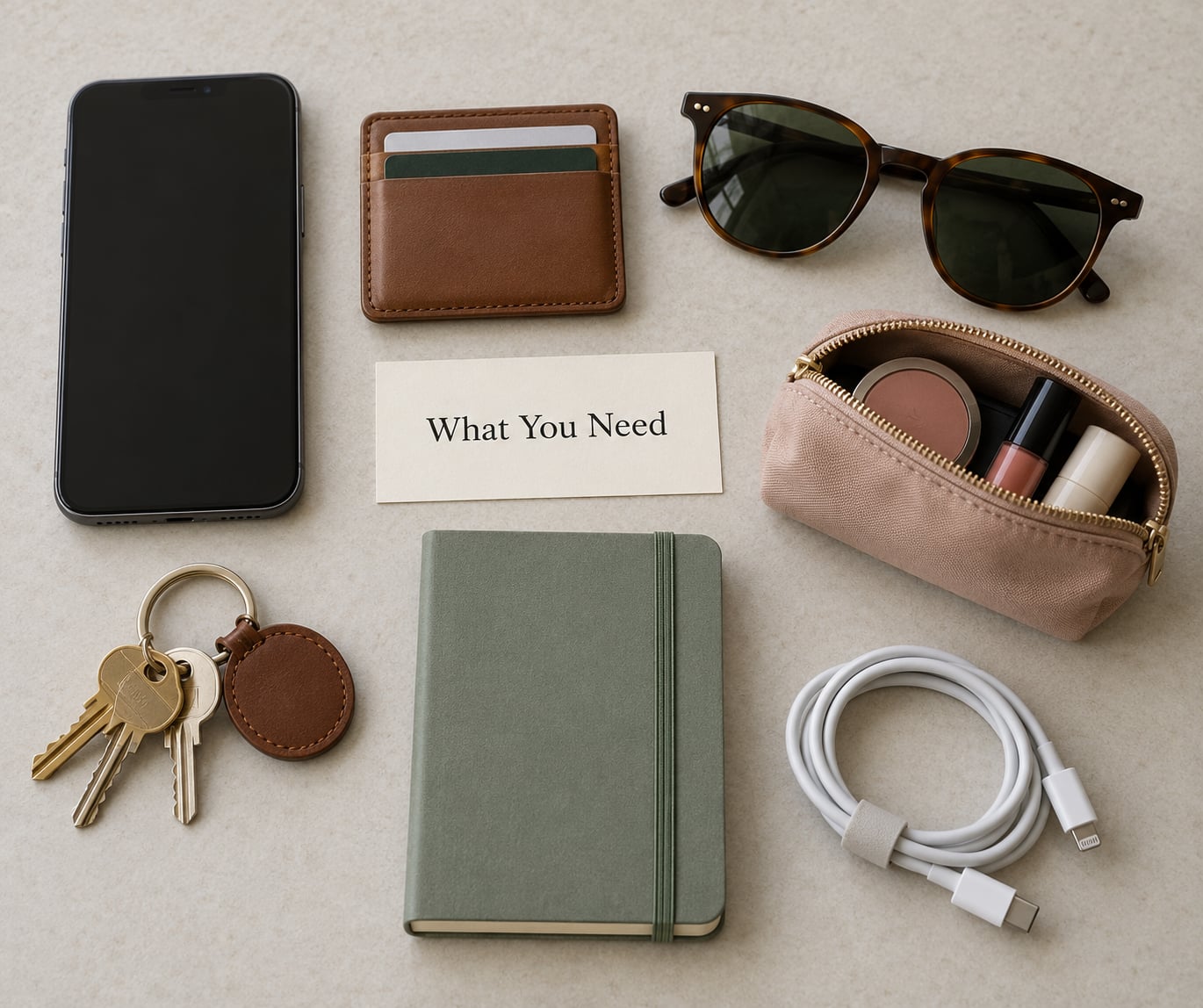
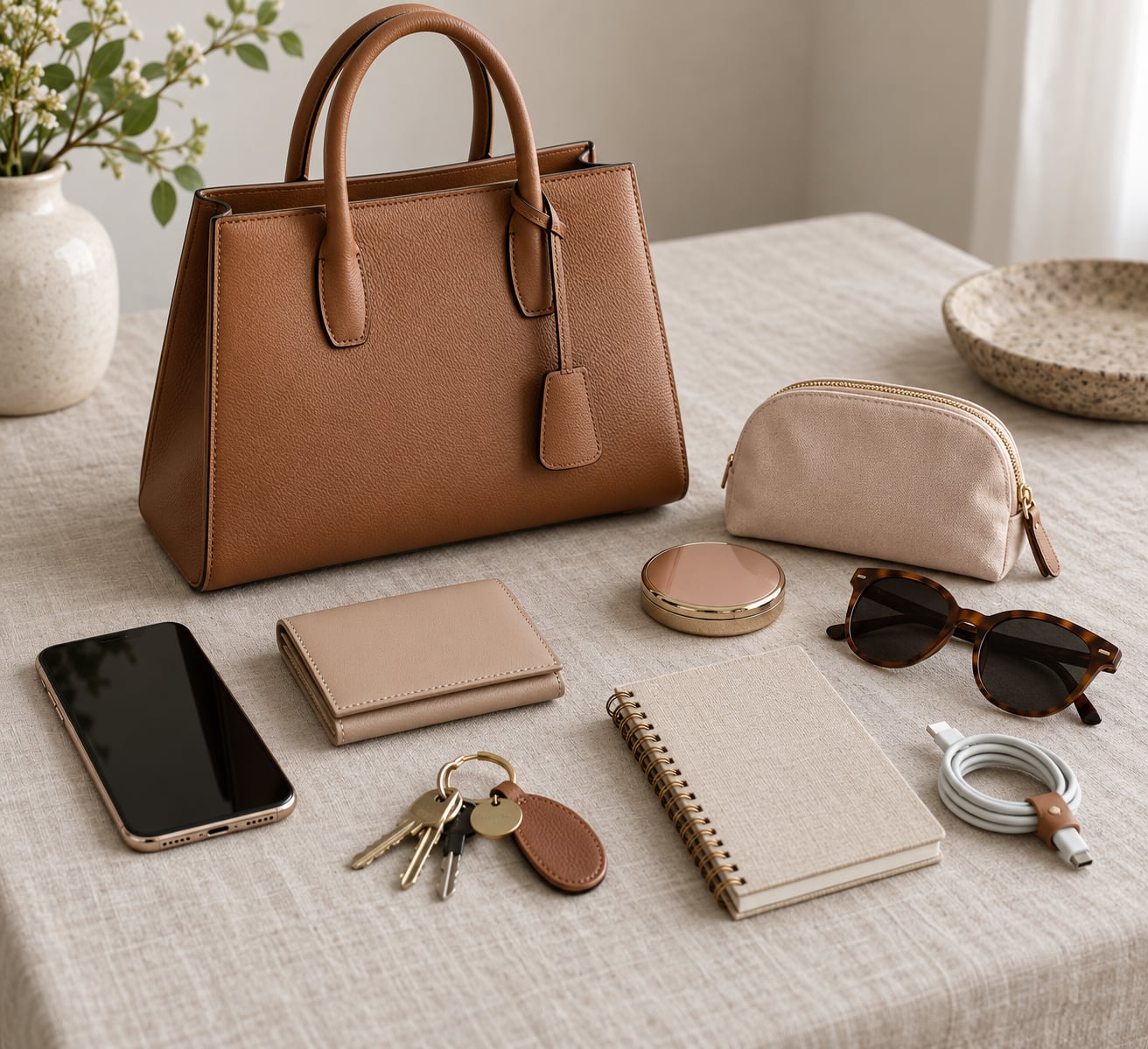
Before comparing sizes, gather what you actually carry on a normal day. Most people underestimate this step, then blame the bag when it will not close.
- A phone, in its case
- A wallet or cardholder
- Keys, with anything else on the ring
- Sunglasses
- A small makeup pouch or lip balm
- A notebook, charger or a pair of wireless earbuds
- Anything you carry only sometimes, kept in a separate list
A phone and a tape measure are the two things that matter most. A notepad helps if you own more than one bag and want to compare them honestly.
Step-by-Step: How to Choose a Handbag Size for Daily Use
1. List Your Everyday Essentials
Write your daily items on one line and the occasional items on another. Design the bag around the first list only, or it will be sized for the busiest day of the year and fight you the other 360.
Overlap happens in real life. The bag only needs to fit both lists a few times a month, and a pouch or a quick trip to the car usually covers the rest.
2. Measure or Estimate the Space You Need
Measure your largest rigid item in width, height and depth, then add 1 to 2 inches of clearance on each axis. That padding is what stops a phone from fighting the lining every time you reach in.
A 13-inch laptop is about 12 inches wide and 9 inches deep, so a laptop bag needs a different calculation than a purse. For bags where measurements are missing, use a packing cube, a shoe pouch or your current bag as the reference object and measure that instead.
Volume is a useful sanity check. Phone, wallet, keys and lip balm together run roughly 2 to 3 liters. Add a 13-inch laptop or a water bottle and you are past 8 to 12 liters, which is tote territory rather than purse territory.
3. Choose Between Mini, Medium, and Large Bags
Pick the smallest size that holds your regular load without forcing things in. A mini or small bag suits phone, wallet, keys and glasses only, and it works when you want hands-free movement. Medium is the everyday default for most people. Large and jumbo exist for work, travel and gym gear, not for daily essentials.
Depth is the dimension people forget. A bag 14 inches wide and 2 inches deep looks generous and holds almost nothing, while a bag 12 inches wide and 6 inches deep swallows a small notebook without trying.
4. Check Comfort With a Realistic Load
Pack the bag the way you would on an ordinary day, then carry it across your body and on your shoulder for a few minutes of walking. Empty, every bag feels fine.
Two numbers matter here. Shoulder drop, the distance from the top of the bag to where the strap sits on your shoulder, lands comfortably around 9 to 11 inches for everyday wear. And once the empty weight passes roughly 1.5 pounds, a full day of carrying starts to register on your shoulder.
If you are buying online, check the listed strap drop and empty weight before you commit. They are published more often than people expect.
5. Check Organization and Access
A correctly sized bag with no pockets is a small suitcase you have to dig through. Look for at least one interior zip pocket, one open slip pocket and a phone slot, and note whether the closure is a zipper, a magnetic snap or nothing at all.
Check the opening too. It is the narrowest point your items have to pass through, and a wide bag with a narrow opening will frustrate you every single morning. A water bottle that does not fit through the opening is a water bottle that lives at home.
Removable dividers and pouches are worth more here than you would think. They let a smaller bag handle a wider range of loads without changing size.
6. Make the Final Size Decision
Balance five things: whether the essentials fit, whether the filled bag is comfortable, whether the empty weight stays low, whether the interior keeps you organized, and whether the size looks balanced on your frame rather than overwhelming it.
Between two nearby sizes, size up if your largest item needs the clearance or your days include long walks. Size down if you want the bag to read as polished rather than roomy, or if the smaller version still holds your essentials with the zipper or snap closed. The wrong feeling is the one to avoid: a bag that always looks slightly too full looks worse than one that looks slightly empty.
Handbag Size Chart: What Each Size Actually Measures
These ranges are a practical guide, not a brand standard. Brands cut the same label very differently, so treat them as a starting range and always check the published interior dimensions.
| Size | Width x Height x Depth | In centimeters | What it fits | Best for |
|---|---|---|---|---|
| Mini | 6-8 x 4-6 x 2-3 in | 15-20 x 10-15 x 5-8 cm | Phone, cards, keys | Evenings, minimal carry |
| Small | 9-10 x 6-8 x 3-4 in | 23-25 x 15-20 x 8-10 cm | Phone, wallet, keys, sunglasses, lip balm | Errands, lunch, weekends |
| Medium | 11-13 x 9-11 x 4-6 in | 28-33 x 23-28 x 10-15 cm | All daily essentials plus a small makeup pouch or notebook | Commuting, work, everyday use |
| Large | 14-16 x 11-14 x 6-8 in | 36-41 x 28-36 x 15-20 cm | Everyday load plus a tablet or folding umbrella | Office days, travel |
| Jumbo | 17+ x 15+ x 8+ in | 43+ x 38+ x 20+ cm | Large loads, gym gear, weekend shopping | Short trips, not daily carry |
For daily use, the medium row is the one to shop. It is the smallest size that still holds a full day of essentials with the closure shut, and it stays comfortable on the shoulder for hours.
One more note on proportion. Bag width reads best when it sits somewhere near the width of your torso or a little wider, no more. A bag that stretches past your hip width on a smaller frame reads as borrowed, not as a statement, whatever the label says.
Common Mistakes
Buying one step too small. If the closure only closes when you sit on the bag, it is too small. A bag you cannot zip will not survive a real week.
Sizing up for the occasional overflow. Most people who go too large do it for something that happens twice a year. You end up carrying dead weight and storing the bag most of the year.
Ignoring empty weight. Check the listed weight, or pick the bag up in a store. Weight adds up over a workday faster than capacity ever does.
Trusting the label. A 30 from one house and a 30 from another can be several inches apart. Convert everything to width, height and depth before you compare anything.
Testing the bag empty. An empty bag tells you how it looks hanging on a chair. Pack it and walk with it, which is the only test that predicts how it will behave in a week.
Skipping the opening measurement. Interior length means nothing if items cannot physically get through the top. Check both before you buy.
Frequently Asked Questions
What is the best handbag size for everyday use?
A medium bag, roughly 11-13 inches wide, 9-11 inches tall and 4-6 inches deep, fits the standard daily load: phone, wallet, keys, sunglasses, a small makeup pouch and a notebook. It stays comfortable on the shoulder for a full day. Size up only if you regularly carry a tablet, laptop or water bottle.
Should I choose a small or large handbag for daily wear?
Small if you carry a phone, wallet, keys and little else, especially if you want to move hands-free. Large if your work day includes a tablet, a notebook, a charger or a bottle. Most people land in the middle, and the safest default is the smallest size that holds your regular load with the closure shut.
How do I know if my everyday essentials will fit in a bag?
Measure your largest rigid item in width, height and depth, add 1 to 2 inches of clearance per axis, then compare that with the bag’s published interior dimensions and opening width. Exterior numbers overstate usable space because zippers, lining and structure eat into them, so always check the interior when it is listed.
What size handbag is most comfortable to carry all day?
Comfort comes down to two numbers: strap drop and empty weight. A shoulder drop of 9-11 inches sits in the crook of your arm instead of pressing your forearm. An empty weight under roughly 1.5 pounds leaves room for your load before your shoulder notices. Both are usually published.
Is a medium handbag versatile enough for work and weekends?
Yes, and that is exactly why medium is the everyday default. The same 11-13 inch width handles a work day, then dresses up or down for a weekend depending on the material and finish. Structured medium bags read more professional, while slouchy leather ones read more casual. One bag, two contexts.
How can I organize a small handbag for daily use?
Use a removable pouch for the small loose items, and assign every other thing a fixed slot: keys in an interior zip pocket, cards in a slip pocket, sunglasses in a sleeve. Pockets turn a small bag from a pile into a working bag. A pouch also lets you move a load between bags without unpacking anything.
Conclusion
Start with the boring part: put your daily essentials on the floor, measure the largest one, and add an inch or two of clearance. Then buy the smallest bag that holds that load with the closure shut, and pack it before you pay.
Most people end up in the medium range, 11-13 inches wide and 4-6 inches deep. Add capacity only when your regular day actually requires it, not for the days that almost never happen.