If you are stuck on how to pick a shampoo for your hair type, work from the scalp outwards: decide how oily or dry your scalp gets between washes, how much cleansing your styling routine actually needs, then choose a formula built for that job. Texture and porosity come next, and the ingredient list settles it. It takes about ten minutes of thinking plus a few washes to know if you got it right.
Most people approach this backwards. They read a front label, fall for a promise about shine or repair, and carry the bottle home — then blame their hair when nothing changes after three weeks.
The order that actually works is simpler. Shampoo’s job is to lift oil and product residue off your scalp. Everything else is a supporting act, which is why scalp type matters more than the length of your hair.
Table of Contents
- What You Need Before You Compare Bottles
- Step-by-Step: How to Pick a Shampoo for Your Hair Type in 6 Steps
- 1. Identify your scalp and hair needs
- 2. Decide how much cleansing your hair needs
- 3. Read the ingredient list to see how to pick a shampoo for your hair type
- 4. Choose a formula that suits your hair texture
- 5. Check performance, safety, and value
- 6. Test the shampoo for two to four weeks
- Common Mistakes
- Frequently Asked Questions
- What shampoo is best for my hair type?
- How often should I use shampoo based on my hair type?
- Is a sulfate-free shampoo better for every hair type?
- Should I use clarifying shampoo if my hair is dry?
- Can the wrong shampoo cause hair loss?
- How do I know if a shampoo is working for me?
- Conclusion
What You Need Before You Compare Bottles
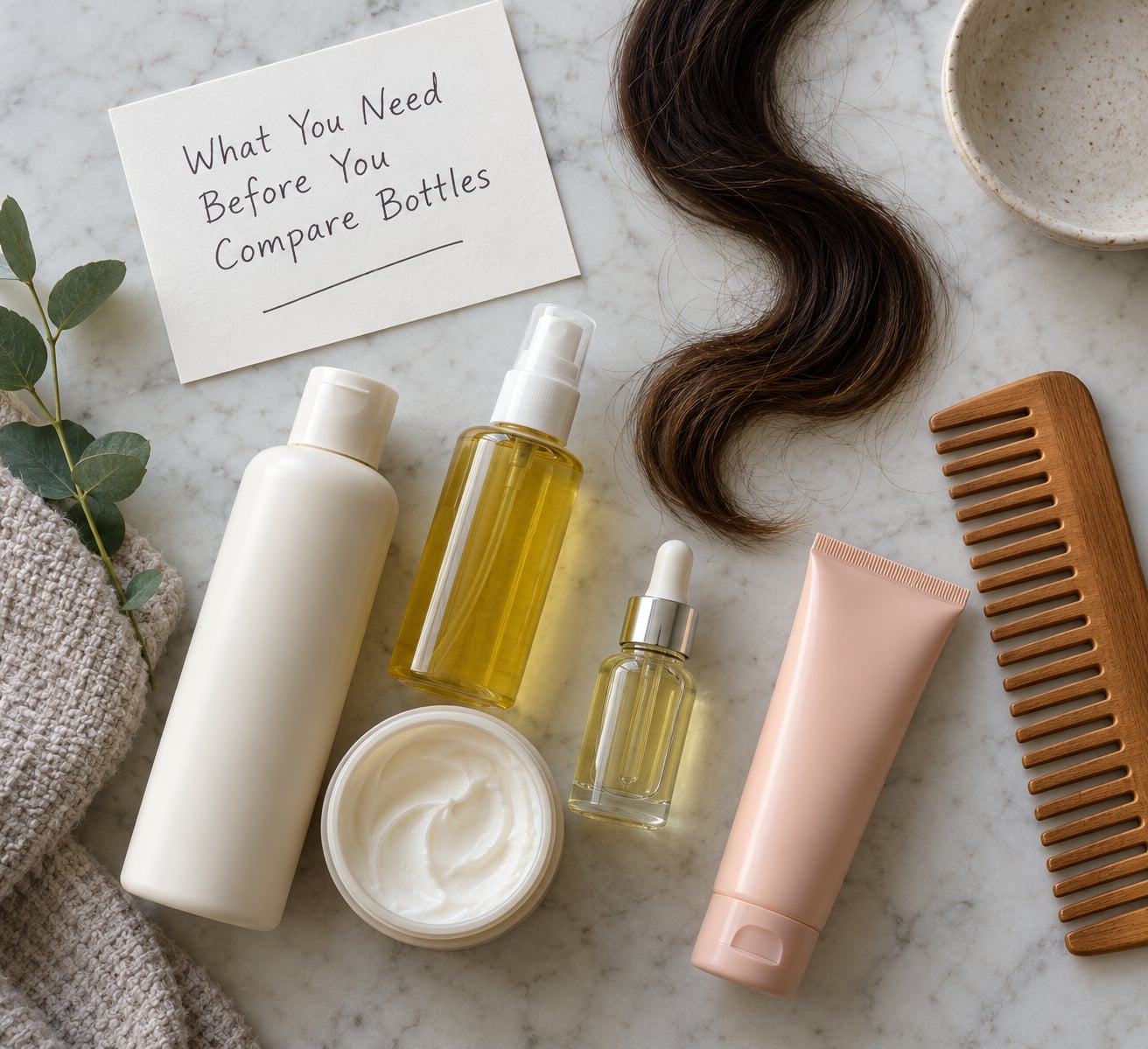
Five things. Most people have them in their head and have never written them down, which is why the shelf looks identical every time.
- Your scalp condition between washes — how soon it gets greasy, itchy or flaky.
- Your hair type and pattern, plus its density (fine or thick).
- Recent treatments: colour, bleach, chemical processing, a keratin service.
- Your styling routine, including how much product builds up.
- The outcome you actually want, stated in plain words.
| What you observe | What it tells you about the shampoo you need |
|---|---|
| Roots are oily two days after washing | A lightweight, easily-rinsed cleanser rather than a rich creamy one |
| Scalp feels tight or flaky after washing | Something gentler with a conditioning component, used sparingly |
| Roots fine, ends dry and split | Cleanse the scalp only, condition the lengths separately |
| Curls or coils that lose definition fast | A gentle surfactant base, plenty of slip from conditioner and leave-in |
| Colour-treated or highlighted hair | A colour-safe formula, plus a toning shampoo if brassiness shows up |
| Visible product or hard-water residue | A clarifying cleanser every few weeks, not every wash |
One more thing worth doing before you buy: a patch test. Put a small amount of the new formula on the skin behind your ear or along the hairline, leave it for 48 hours, and watch for redness, itching or burning. Shampoo runs across your scalp every single wash, which makes a reaction much more likely than with a leave-on product.
Step-by-Step: How to Pick a Shampoo for Your Hair Type in 6 Steps
1. Identify your scalp and hair needs
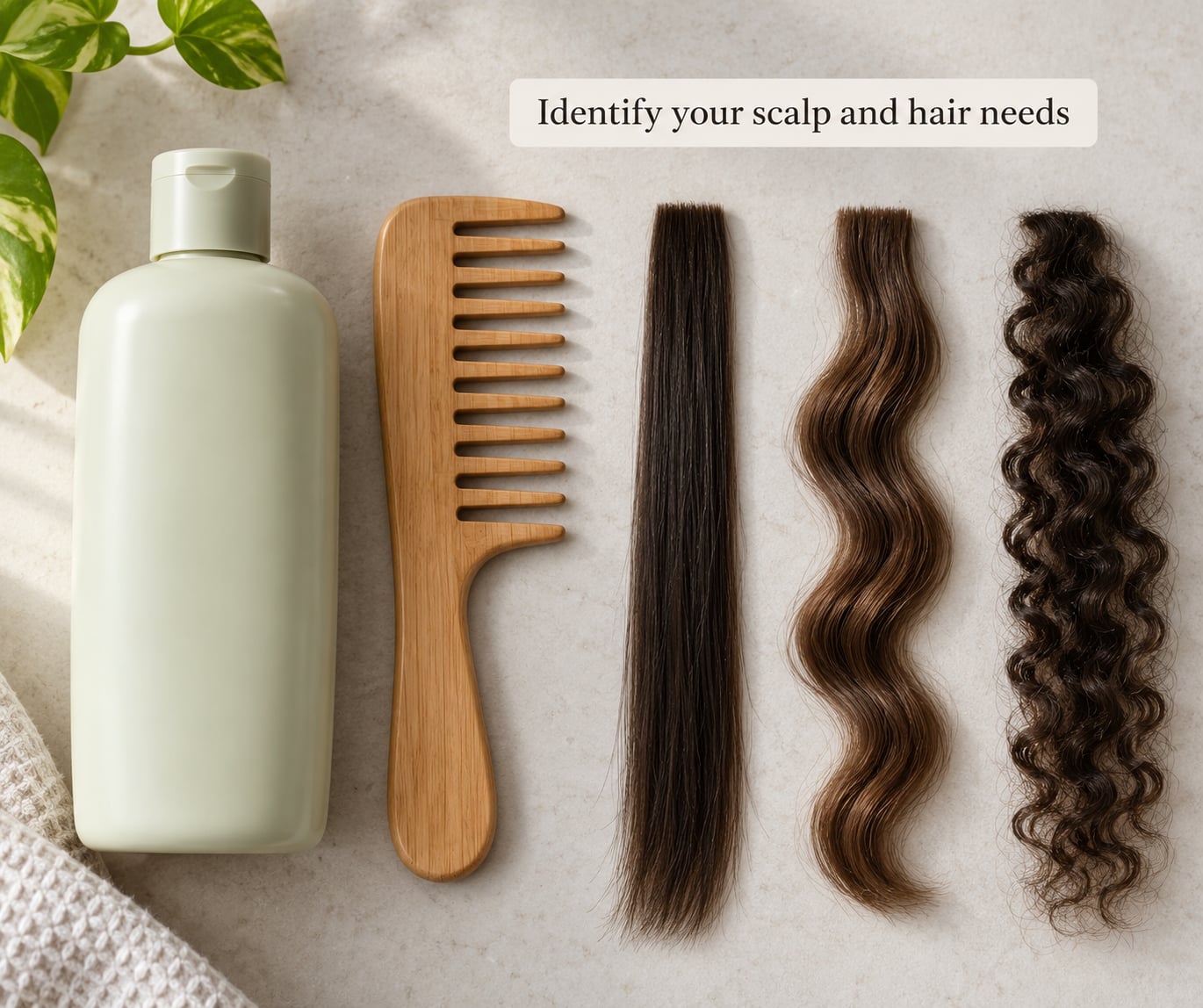
Start by describing what your scalp actually does, not what the marketing calls it. Oily means visibly greasy roots, sometimes with small bumps. Dry means tight, flaky or itchy, often worse in winter. Combination means the roots get oily on a normal schedule while the lengths stay dry. Sensitive means it reacts to fragrance, hard water or frequent washing.
Here is the part people get wrong: an oily scalp and dry hair are not opposites. Many people have oily roots with bleached, heat-damaged or porous lengths. Shampoo only touches the scalp, so those two conditions need two different products, not one compromise bottle.
Note what your hair has been through too. Bleached, coloured, relaxed and heat-styled hair all have a partly damaged cuticle, which reacts differently to a strong cleanser than untreated hair does. Reading how to pick a shampoo for your hair type without that context leads you to the wrong category.
| Visible need | What to prioritise in the formula |
|---|---|
| Oily roots, normal lengths | Lightweight liquids, amino-acid surfactants, no heavy silicone |
| Dry, flaky scalp | Fewer harsh detergents, humectants such as glycerin or panthenol |
| Fine hair that goes limp fast | Very light body, minimal oils and butters, volumising types |
| Thick, coarse hair | Creams and hydrating formulas, shea butter or similar occlusives |
| Curl or coil pattern | Gentle cleansing, conditioning ingredients, no waxy build-up |
| Straight hair with some wave | A middle path: light hydration plus enough body to hold a bend |
| Colour-treated or bleached | Colour-safe claims, acidic or pH-balanced formulas, less stripping |
| Noticing more shedding than usual | A gentle, non-stripping formula, plus a conversation with a clinician |
Sign it is working: your scalp feels comfortable for the rest of the day, and your hair behaves predictably at the next wash.
2. Decide how much cleansing your hair needs
Match cleansing strength to how much oil and product your scalp produces. Daily washing suits some oily scalps and is fine as long as the cleanser is gentle. Dry, curly or colour-treated hair usually does better washed two or three times a week, and often needs a second smaller wash to clear buildup.
Concretely: if fine hair goes limp after one wash, wash the scalp more often but keep the conditioner off the roots. If curls need three days to recover between wash days, extend the interval rather than using a harsher product. If you use gel, wax or heavy cream, expect to need more cleansing power than a bare scalp does.
Wash frequency is personal and changes with season, stress and exercise. Nobody’s schedule is the correct one for your head.
Sign it is working: the amount of oil at day two looks like your normal, not a crisis.
3. Read the ingredient list to see how to pick a shampoo for your hair type
Read the list for the job the formula is doing, not for a single trendy ingredient. Ingredients are listed in descending order by amount, so the top three tell you what this bottle mostly is.
- Surfactants lift oil and residue. Sulfates such as sodium lauryl sulfate and sodium laureth sulfate clean fast and can strip; gentler amino-acid surfactants clean more slowly but respect the scalp’s barrier.
- Conditioning agents such as panthenol, glycerin, hydrolyzed proteins and fatty acids reduce the friction you feel when you detangle.
- Botanicals and oils such as argan, jojoba and coconut act mostly as conditioners rather than cleansers.
- Active ingredients like salicylic acid, zinc pyrithione or glycolic acid target oil, dandruff and scalp buildup. They are what makes a shampoo do a specific job.
- Fragrance appears near the end and has no performance function at all.
Two honest caveats. A clean label tells you nothing about whether the formula suits your scalp — sulfate-free can absolutely be drying, and a “natural” oil can irritate reactive skin. And nothing on a shampoo label treats a medical condition, so don’t expect one to.
Sign it is working: you can name the job the bottle is doing, in one sentence, from the ingredients alone.
4. Choose a formula that suits your hair texture
Texture decides how the product feels and how much of it you need. Lightweight liquids suit fine hair and oily roots. Creams and hydrating washes suit thick, coarse and curl-patterned hair. Clarifying washes strip residue and are a tool, not a daily formula.
Porosity changes the result too. Low porosity resists heavy products and gets coated fast, so light formulas rinse clean. High porosity absorbs moisture quickly and needs richer conditioning. Curl pattern matters more than the a/b/c sub-type — shampoo choice barely differs between a 2b and a 2c.
Whatever you choose, expect to pair it. Shampoo handles the scalp, and a conditioner or leave-in handles the lengths. Skipping the second step is the most common reason a “wrong” shampoo seems to have failed.
Sign it is working: hair detangles with your fingers and dries without a coating feeling.
5. Check performance, safety, and value
Before buying, judge the bottle on things you can actually assess. Does it smell pleasant rather than medicated? Does the scent linger after drying? Is the packaging easy to hold with wet hands, and does it dispense the amount you want? Is the ingredient list short and readable, or mostly unpronounceable?
Value matters more than cost. Compare price per wash rather than per bottle — a small bottle that lasts five months on fine hair can beat a large one you finish in a month.
If your scalp reacts to things, treat fragrance and essential oils as the first suspects, since they are among the most common triggers. An anti-dandruff shampoo carrying a heavy perfume is a poor trade for a sensitive scalp. Cruelty-free status matters to plenty of people, and it’s reasonable to check a brand’s own statement or certification rather than assume it.
Sign it is working: you look forward to using it, which sounds small but predicts consistency better than anything on the label.
6. Test the shampoo for two to four weeks
One wash proves nothing. Hair responds over several cycles, so run a simple log for two to four weeks and note the same things each time.
- Scalp itchiness, flaking or redness
- Tightness right after rinsing
- How much oil returns by day two
- Stiffness, frizz or breakage after drying
- Whether colour looks brighter or duller
- Overall comfort
Stop and change products if itching, burning or flaking appears — that is information, not a settling period. Otherwise, decide at the end of the trial, not at the end of the first wash.
Common Mistakes
Choosing by the front label. Promises about shine and repair sit on the same bottle as the claims. Fix: turn it over and read the ingredients first.
Using conditioner as a second shampoo. Cleansing and conditioning pull in opposite directions, and alternating them randomly leaves hair coated but not clean. Fix: shampoo the scalp, condition the lengths, every wash.
Assuming the biggest lather cleans best. Lather comes from surfactant strength and does not measure how well a formula suits you. Fix: judge how your scalp feels the next day, not how the sink looks mid-wash.
Copying a friend’s routine. Shampoo choice is personal. Fix: run your own diagnosis even when someone else’s bottle works perfectly for them.
Chasing free-from labels. “Sulfate-free” and “paraben-free” describe what’s absent, not what works. Fix: read for the job the formula performs instead.
Switching too quickly. Three days is not a trial. Fix: give any formula two to four weeks before deciding.
Judging only by fragrance. Fix: test the scent on your own scalp rather than the strip in the aisle.
One more: if itching, flaking, redness or shedding persists across several products, see a dermatologist. Scalp conditions such as seborrheic dermatitis or psoriasis are medical issues, and no shampoo over the counter treats them.
Frequently Asked Questions
What shampoo is best for my hair type?
The best shampoo for your hair type is the one matched to how your scalp behaves between washes, not the one with the most flattering bottle. Start with scalp type, add texture and porosity, then pick the formula category that does that job. Keep a note of what each wash does and change one variable at a time.
How often should I use shampoo based on my hair type?
Oily scalps usually tolerate daily washing, often with a gentle formula. Dry, curly, coily or colour-treated hair commonly does better on a two or three day cycle, sometimes with a second smaller wash per session. Watch how much oil returns at day two and use that as your baseline rather than anyone else’s schedule.
Is a sulfate-free shampoo better for every hair type?
No. Sulfate-free formulas suit many people, but they clean more slowly, need more water and a longer rinse, and can still dry out a scalp if the rest of the formula is heavy. Sulfates are efficient and are not automatically damaging. Pick based on your scalp type and how your hair responds over several washes.
Should I use clarifying shampoo if my hair is dry?
Yes, but occasionally. Clarifying shampoos remove product, oil and hard-water residue that build up on dry hair too. Using one every wash will strip and worsen dryness. Once every two to four weeks is enough for most people, followed by a conditioning treatment on the lengths.
Can the wrong shampoo cause hair loss?
A harsh shampoo can irritate or dry a scalp, and breakage from that looks like shedding. It does not usually damage follicles directly. If you are noticing more hair than usual coming out at the wash, along with scalp pain, patching or redness, that needs a dermatologist rather than another bottle.
How do I know if a shampoo is working for me?
Give any shampoo two to four washes before deciding. Track scalp itchiness, flaking, tightness, how much oil returns by day two, and how your hair feels once dry. If those numbers improve and your scalp stays comfortable, it is working. If irritation appears, stop and switch rather than pushing through.
Conclusion
Start by describing what your scalp does between washes, then choose a formula built for that job rather than for a marketing promise. Patch-test it, use it the way it was meant to be used, and give it two to four weeks before you judge it. That process is how to pick a shampoo for your hair type without buying three bottles first — and if a persistent scalp symptom keeps coming back through all of it, that is a dermatologist question, not a shopping one.